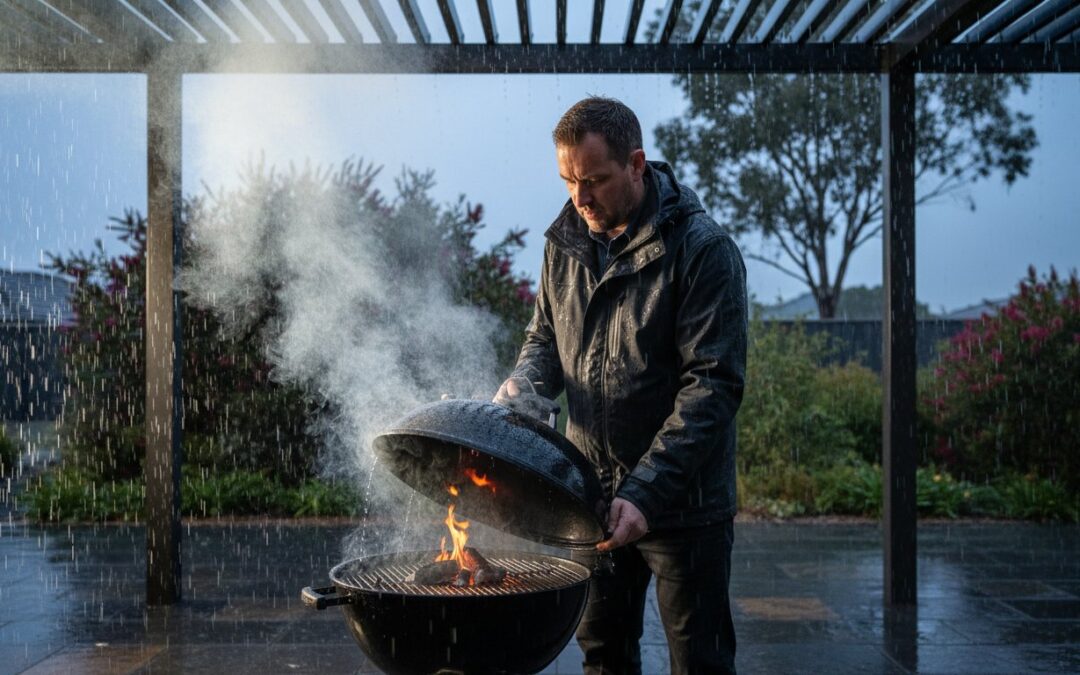
Rain isn’t a dealbreaker for your BBQ; it’s an airflow challenge that rewards high-density fuel and aggressive vent management. While a 2022 poll found that 39% of adults have attempted cooking in the rain on a charcoal grill, many struggle with the sudden temperature drops that can ruin expensive cuts of meat. You’ve likely experienced the frustration of watching your Hardwood Lump Charcoal turn into a soggy, useless mess as the clouds open up. It’s a common pain point for pitmasters who value performance, but you don’t have to pack up the smoker just because of a downpour.
You can master the techniques of temperature control and fuel protection to deliver a perfect charcoal feast, regardless of the Australian weather. This professional guide provides the exact steps to maintain a stable 225°F to 250°F or hit high searing temperatures while keeping your fuel source bone dry. We’ll break down how to manage your vents effectively, the best ways to utilize shelter without risking carbon monoxide poisoning, and the safety limits every griller needs to respect when the ground gets slick.
Key Takeaways
- Rain on the grill exterior acts as a heat sink. You must learn to counter this energy loss to maintain consistent internal temperatures.
- Successful cooking in the rain on a charcoal grill depends on aggressive vent management. High humidity requires more oxygen to sustain a clean, hot fire.
- Choose a shelter that balances fuel protection with proper smoke ventilation. Never compromise safety by moving your grill into enclosed spaces like garages.
- Use Hardwood Lump Charcoal for its superior density and moisture resistance. Avoid cheap briquettes that absorb atmospheric humidity and fail to ignite.
- Implement a strict protocol for indoor preparation and shielded chimney lighting. Minimizing fuel exposure to the elements is critical for a perfect sear.
Can You Charcoal Grill in the Rain? (The Reality Check)
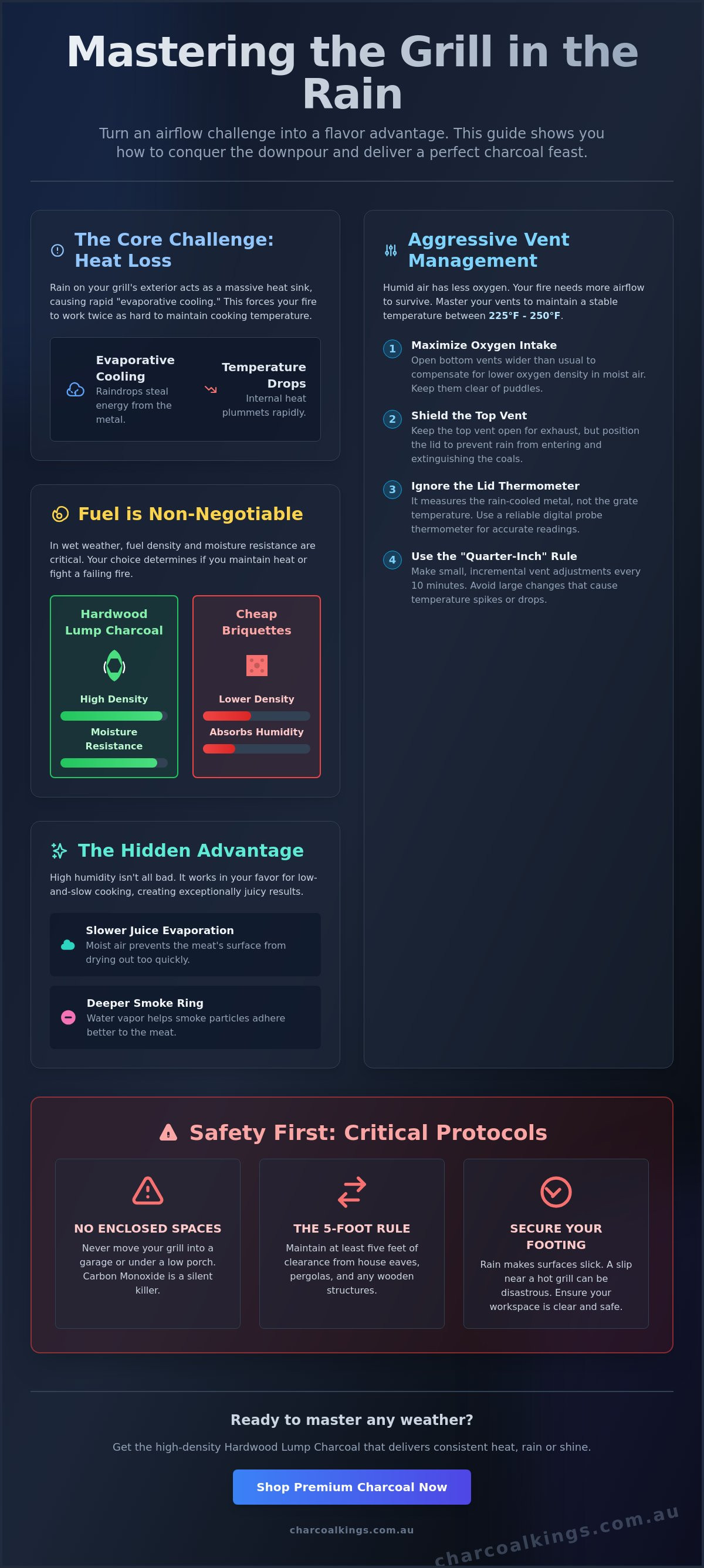
Yes, you can grill in the rain. In fact, many seasoned pitmasters look forward to a light drizzle. The fundamental physics of the grilling process don’t change when it pours, but your environmental variables certainly do. The rain isn’t your enemy because it hits the meat; it’s your enemy because it hits the grill. Every drop that strikes the hot metal lid or body of your smoker triggers “evaporative cooling.” This effect turns the exterior of your grill into a massive heat sink, sucking energy away from the fire and dropping your internal temperatures rapidly.
To better understand this concept, watch this helpful video:
Successful cooking in the rain on a charcoal grill requires understanding that your fuel is working twice as hard. You aren’t just cooking the food; you’re fighting a constant thermal battle against the elements. This is why fuel quality is non-negotiable. Hardwood Lump Charcoal provides the intense, sustained heat needed to overcome these external cooling factors. Inferior fuels often lack the energy density to keep up, leading to extinguished fires and ruined meals. When you master the airflow, the rain becomes just another variable you control.
The Benefits of High Humidity for Your BBQ
High humidity is a hidden advantage for the patient cook. Moisture in the saturated air slows down the evaporation of juices from the meat’s surface. This prevents the “bark” from becoming a dry, impenetrable shell too early in the cook. Water vapor also helps smoke particles adhere to the meat, often resulting in a deeper, more pronounced smoke ring. Professional pitmasters don’t stop for a downpour because they know the results can be exceptionally juicy and flavorful.
Safety Protocols for Wet Weather Grilling
Safety is the first priority when the weather turns. Never move your grill into a garage or under a low, covered porch to escape the rain. Carbon Monoxide is an invisible, odorless killer that accumulates rapidly in enclosed spaces. Stick to the 5-foot rule: maintain a minimum of five feet from eaves, pergolas, or any wooden structures. Rain also makes patios and decks incredibly slick. When you’re managing a 300-degree grill, one slip can lead to a disaster. Ensure your footing is secure and your workspace is clear of tripping hazards before you light the first coal. Cooking in the rain on a charcoal grill is a test of preparation and discipline.
Managing Temperature and Airflow When the Clouds Burst
Rain on the grill body acts as a relentless heat sink. It sucks energy directly from the cooking chamber. In the Australian climate, this challenge varies by region. A heavy tropical downpour in Queensland presents a different thermal hurdle than a cold, misty rain in Melbourne. Both require aggressive management. Expert advice on Safely Grilling In The Rain emphasizes that your fire is fighting for survival. Humidity also plays a critical role. Moist air is less dense in oxygen. Your fire requires more air intake to maintain the same heat levels it would achieve on a dry day.
The “Chimney Effect” facilitates natural convection within the grill. Rain disrupts this flow. Cold water on the lid cools the rising air inside, slowing the draw and potentially stalling your cook. Don’t trust your lid thermometer during a storm. These analog gauges measure the temperature of the metal lid itself, which is being constantly cooled by the rain. They will often read significantly lower than the actual air temperature near the grate. Relying on them leads to over-stoking the fire and scorching your meat.
Adjusting Your Vents for Maximum Efficiency
Vent management is a game of precision. Your top vent must remain open to allow exhaust, but it needs shielding. If rain enters the top vent, it can strike the fuel and create steam or extinguish the coals. Position the lid so the top vent is on the leeward side of the wind. Bottom vents must stay clear of rising puddles or splashes that can choke the intake. Follow the “Quarter-Inch” rule. Make small, incremental adjustments every ten minutes. Large movements of the dampers cause wild temperature swings that are difficult to correct in wet conditions.
Thermodynamics: Heat Loss vs. Fuel Burn
Expect to burn 20-30% more fuel when cooking in the rain on a charcoal grill. The constant cooling of the exterior forces the fire to work harder to maintain a stable 225°F. Thin steel kettles lose heat much faster than ceramic kamados due to their low thermal mass. If you’re using a steel grill, you’ll need a higher volume of high-quality fuel to compensate. Using a digital probe is the only way to get an accurate reading. It bypasses the external cooling interference of the lid. For those looking to stock up before the next storm, you can find professional-grade Hardwood Lump Charcoal that stands up to these high-demand conditions. High-density fuel ensures your fire stays hot even when the atmosphere is working against you.
The Best Setups for Grilling in Wet Weather
A successful cook begins with the physical environment. While you cannot move the fire into the house, you can modify the space around it to neutralize the impact of water. Ceramic ‘Kamado’ style grills are the gold standard for all-weather performance. Their heavy, insulated walls act as a thermal battery. They resist the external cooling effects of rain far better than thin-walled steel kettles. If you use a steel smoker, your setup must prioritize shielding the metal body to prevent the fire from stalling.
Windbreaks are equally critical. Sideways rain is a fire-killer. It forces water into intake vents and strips heat from the windward side of the grill. Position your grill behind a permanent structure or use heavy-duty BBQ Accessories to create a temporary barrier. This ensures a stable environment for cooking in the rain on a charcoal grill without the constant battle against gusting moisture.
Shelter Comparison: Gazebos, Umbrellas, and Eaves
Pop-up gazebos provide the most comprehensive coverage. They protect both the pitmaster and the fuel. However, you must ensure a minimum height of 2.5 meters to prevent smoke accumulation and heat damage to the canopy. Patio umbrellas are a fast solution for light drizzle. They are vulnerable to wind. One strong gust can topple the umbrella into your hot grill. The “High-Eave” strategy involves placing the grill near the house. This utilizes the natural overhang for protection. You must still maintain the professional safety standard of a 10-foot clearance from combustible materials as required in many urban fire codes. This distance prevents heat transfer to the structure while allowing for adequate smoke ventilation.
Grill Modifications for Rain Protection
- DIY Vent Shields: Shape heavy-duty aluminum foil into a “hood” over your top exhaust. This allows smoke to escape while preventing rain from dropping directly onto your Hardwood Lump Charcoal.
- Insulation Blankets: For thin-gauge steel smokers, use a dedicated thermal blanket. It keeps the heat in and the water off the metal surface.
- Dry Fuel Staging: Keep your next load of Charcoal Briquettes or Binchotan Charcoal in a sealed, waterproof container next to the grill. Never leave fuel bags open to the atmosphere.
Preparing your staging area is just as important as the cook itself. A dry fuel supply ensures that when you need to refuel, you aren’t introducing moisture into the heart of your fire. This keeps your temperatures stable and your smoke clean. Professional results require professional preparation. Don’t wait for the first drop to fall before you consider your shielding strategy.
The Rainy Day Grilling Protocol: Step-by-Step
Discipline is the difference between a successful cook and a ruined roast. When the weather turns, you cannot rely on casual habits. You must follow a rigid protocol to protect your fire and your food. Successful cooking in the rain on a charcoal grill requires minimizing the time your fuel and meat are exposed to the open air. This process begins before you even step outside.
- Step 1: Indoor Preparation. Season your meat, insert your digital probes, and organize your tools entirely indoors. Do not bring your tray outside until the grill is at the target temperature.
- Step 2: Shielded Ignition. Use a chimney starter in a dry, outdoor spot. A large patio umbrella or a deep eave provides enough cover to get your coals glowing without them getting soaked.
- Step 3: Extended Pre-heat. Give your grill an extra 15 to 20 minutes to reach temperature. You need the internal grates and walls to be searing hot to recover quickly from the cooling effect of the rain.
- Step 4: The Lid-Down Mandate. If you’re looking, you’re losing. Opening the lid lets heat out and allows moisture to settle on the meat. Trust your probes and keep the cooking chamber sealed.
- Step 5: Immediate Post-Cook Care. Once the food is inside, don’t leave the grill to cool in the rain. Shut the vents immediately to preserve the remaining fuel and prevent water from entering the firebox.
Lighting the Fire in High Humidity
Damp air makes ignition difficult. High-quality Hardwood Lump Charcoal is the superior choice here. It’s more energy-dense and lights significantly faster than standard briquettes in high humidity. Use natural firelighters rather than chemical fluids. Humid air is heavy; it can trap chemical odors inside the grill, tainting your food. Professionals use the “Dry-Box” technique. Keep your next load of fuel in a sealed plastic tub right next to the grill. This ensures that every piece of charcoal you add is bone dry and ready to combust instantly.
Clean-up and Rust Prevention
The work doesn’t end when the meat is rested. Rainy day grilling creates a unique maintenance challenge. Ash is highly alkaline. When it mixes with rainwater, it creates a corrosive paste that eats through steel and ceramic glazes. Empty your ash catcher as soon as the coals are extinguished. Wipe down the exterior of the grill with a dry cloth to prevent water spots and surface rust. If you use a grill cover, wait until the unit is completely cool and dry. Putting a cover on a damp grill traps moisture against the metal, which is a guaranteed recipe for mold and oxidation. For the best protection, invest in professional-grade BBQ Accessories to keep your gear in peak condition regardless of the season.
Why Fuel Quality Matters Most During a Downpour
Fuel selection is the most critical variable when the weather turns hostile. While some claim any fuel works if the lid stays on, the reality of cooking in the rain on a charcoal grill proves otherwise. Rain and high humidity create a heavy, oxygen-poor atmosphere that punishes low-quality fuels. You need a fuel source that generates maximum thermal energy with minimal interference from the elements. High-purity carbon is the only way to ensure your fire stays hot enough to overcome the evaporative cooling effect on the grill’s exterior.
Lump Charcoal vs. Briquettes in the Rain
The physical composition of your fuel determines its survival. Cheap briquettes are manufactured using binders, fillers, and cornstarch. These additives are hydrophilic; they act like sponges, absorbing atmospheric moisture even before the first raindrop hits the grill. Once damp, briquettes struggle to ignite and produce a thick, acrid smoke that ruins expensive cuts. Hardwood Lump Charcoal is the superior choice because it is pure carbonized wood. Its high density and low surface-to-volume ratio prevent it from soaking up humidity.
Low ash production is another vital factor for wet-weather success. When ash gets wet, it turns into a thick, cement-like paste that clogs your bottom vents and chokes the fire. Lump charcoal produces significantly less ash than briquettes, ensuring that your airflow remains consistent throughout the cook. For a deeper look at fuel dynamics, see our guide on Mastering the Art of Barbecuing with Charcoal.
The Charcoal Kings Advantage
Performance in the rain requires a fuel that doesn’t quit. Our Hardwood Lump Charcoal is screened for consistent sizing to ensure your fuel bed has the necessary gaps for oxygen to circulate, even when the air is thick with moisture. We maintain a strict “No Additive” promise. This purity ensures a clean, intense burn that maintains your target temperature when thin steel grills start to lose heat. It provides the reliable, high-octane performance required for cooking in the rain on a charcoal grill.
For those seeking the ultimate wet-weather solution, Binchotan Charcoal is the professional choice. This Japanese-style white charcoal is carbonized at extreme temperatures, resulting in a fuel that is as dense as steel. It produces a powerful infrared heat that penetrates meat regardless of external cooling. It is virtually impervious to humidity and can burn for several hours, providing unmatched stability during a long, rainy smoke session.
Don’t let a storm ruin your next feast. Equip your pit with fuel that thrives in the wet. Shop Premium Hardwood Charcoal for Your Next Cook and maintain total control over your fire, regardless of what the Australian clouds deliver.
Master the Elements for Your Next Cook
Rain doesn’t have to extinguish your passion for the pit. By aggressively managing your airflow and shielding your setup, you turn a potential weather event into a professional victory. Successful cooking in the rain on a charcoal grill depends on using high-density fuel that resists atmospheric moisture. You now have the protocol to adjust vents with precision and the knowledge to select a shelter that prioritizes safety without compromising ventilation.
Consistency in difficult conditions requires professional-grade materials. As a wholesale supplier to Australia’s top BBQ restaurants, we provide the 100% Natural Hardwood with zero chemical additives used by the masters of the craft. We are a South Australian owned and operated expert team focused on your performance. Stock up on Premium Hardwood Lump Charcoal for your next rainy day cook. Don’t let the clouds dictate your menu. Get the fire started and own the storm.
Frequently Asked Questions
Can I use my charcoal grill in the garage if it’s raining?
No, you must never use a charcoal grill in a garage or any enclosed space. Carbon monoxide is a lethal, odorless gas that accumulates rapidly even if the garage door is partially open. This creates a high risk of poisoning and fire. Always keep your grill in a well-ventilated outdoor area at least five feet away from any structures.
Will rain make my charcoal grill explode or crack?
Rain will not cause a steel grill to explode, but ceramic grills require careful management. Extreme thermal shock can occur if heavy, cold rain hits a ceramic Kamado body at peak temperatures, potentially leading to hairline fractures. Steel kettles are durable against rain but lose heat quickly. Maintain a stable fire to prevent the metal from contracting too rapidly during a downpour.
How do I keep my charcoal dry while I’m cooking?
Store your fuel in a sealed, waterproof container or a dedicated plastic bin next to your grill. Never leave open bags of Hardwood Lump Charcoal on the ground where they can absorb ground moisture or rain splashes. Transfer only what you need for immediate refueling. This ensures your fuel remains bone dry and delivers the high-heat performance required for wet-weather cooking.
Does it take longer to grill in the rain?
Yes, cooking in the rain on a charcoal grill generally takes longer due to external heat loss. The rain hitting the grill body acts as a heat sink, stripping energy away from the cooking chamber. You should expect to use 20 to 30 percent more fuel to compensate for this energy loss. Plan for a longer pre-heat time and slower temperature recovery after opening the lid.
What happens if water gets into my charcoal vents?
Water entering the vents can extinguish your fire and create a corrosive ash slurry. This paste clogs the intake holes and chokes the fire of necessary oxygen. It also accelerates rust on the internal steel components of your grill. Use a DIY foil shield over the top vent and position the bottom intake away from the wind to prevent moisture ingress.
Is it safe to use a grill cover while the grill is still warm to protect it from rain?
No, you must wait for the grill to cool completely before applying a cover. Placing a cover on a warm grill can melt the waterproof lining and trap steam against the metal surface. This trapped moisture creates a breeding ground for mold and causes rapid oxidation. Ensure the unit is dry and cool to the touch to maintain the integrity of your equipment.
Can I use a chimney starter in the rain?
You can use a chimney starter in the rain provided it is placed under a temporary outdoor cover. Utilize a large patio umbrella or a high building eave to keep the fuel dry during the ignition phase. Wet charcoal in a chimney will produce heavy, acrid smoke and may fail to ignite properly. Once the coals are glowing, move them immediately into the grill and close the lid.
How do I stop my meat from getting soggy on the grill?
Maintain high internal temperatures and keep the lid closed to prevent meat from getting soggy. The intense heat inside the grill should evaporate surface moisture before it can settle. When you’re cooking in the rain on a charcoal grill, every lid lift allows humidity to condense on the food. Trust your digital probes and keep the cooking chamber sealed to preserve the bark.