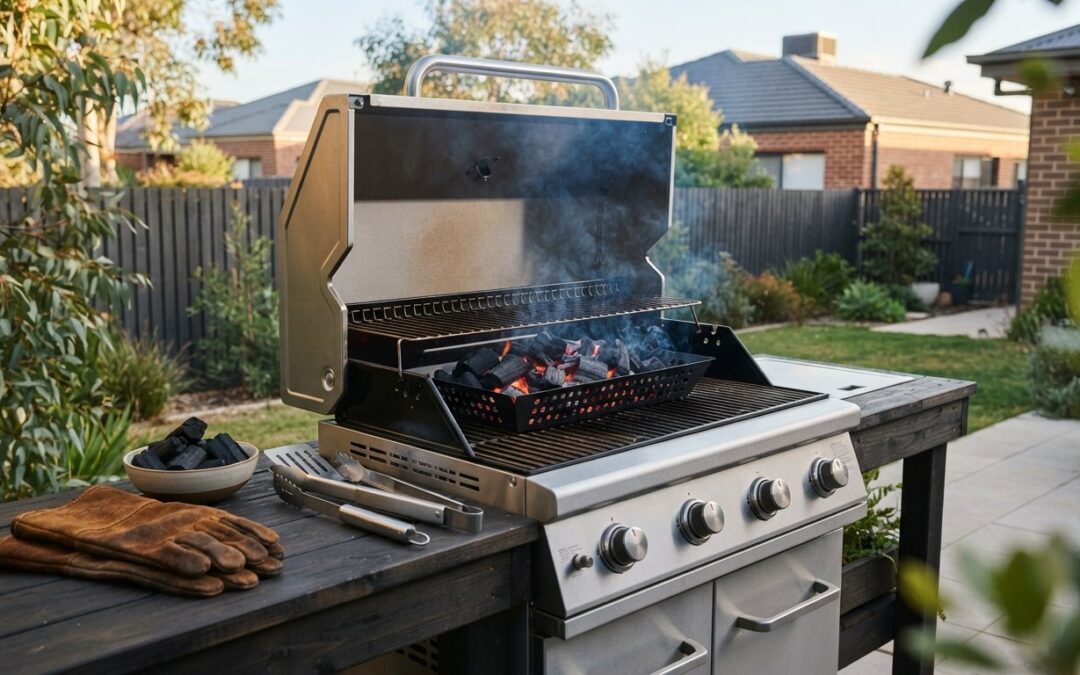
Your premium gas grill is essentially an outdoor kitchen stove, and your palate knows it. While propane offers undeniable convenience, it lacks the primal soul of a real fire. You want that deep, complex smoke profile, yet the fear of damaging a costly investment keeps you tethered to the gas dial. It is a common frustration for many Australian backyard cooks who value performance over convenience. Mastering the process of converting a gas grill to charcoal allows you to bridge the gap between push-button ease and authentic wood-fired results.
This 2026 expert guide provides the technical blueprint for a safe, effective transition. You will learn how to use engineered conversion trays to protect burner ports from corrosive ash and extreme radiant heat. We also detail the critical airflow differences between gas and charcoal units and why premium hardwood lump charcoal is the only fuel that delivers superior heat without clogging your system. We are going to show you how to stop simmering your meat and start grilling with the authority of a master craftsman.
Key Takeaways
- Understand the science of flavour and why gas burns clean while hardwood charcoal releases the aromatic compounds essential for authentic BBQ.
- Learn the non-negotiable safety rules for converting a gas grill to charcoal to avoid damaging your firebox or clogging your burner ports with ash.
- Compare the most effective conversion methods, focusing on heavy-duty tray inserts that protect your internal components from extreme radiant heat.
- Identify why premium, additive-free hardwood lump charcoal is the only recommended fuel for conversions due to its superior heat and minimal ash production.
- Establish clear performance benchmarks to help you decide when a conversion kit is the right move and when it is time to invest in dedicated charcoal hardware.
The Flavour Gap: Why Switch from Gas to Charcoal?
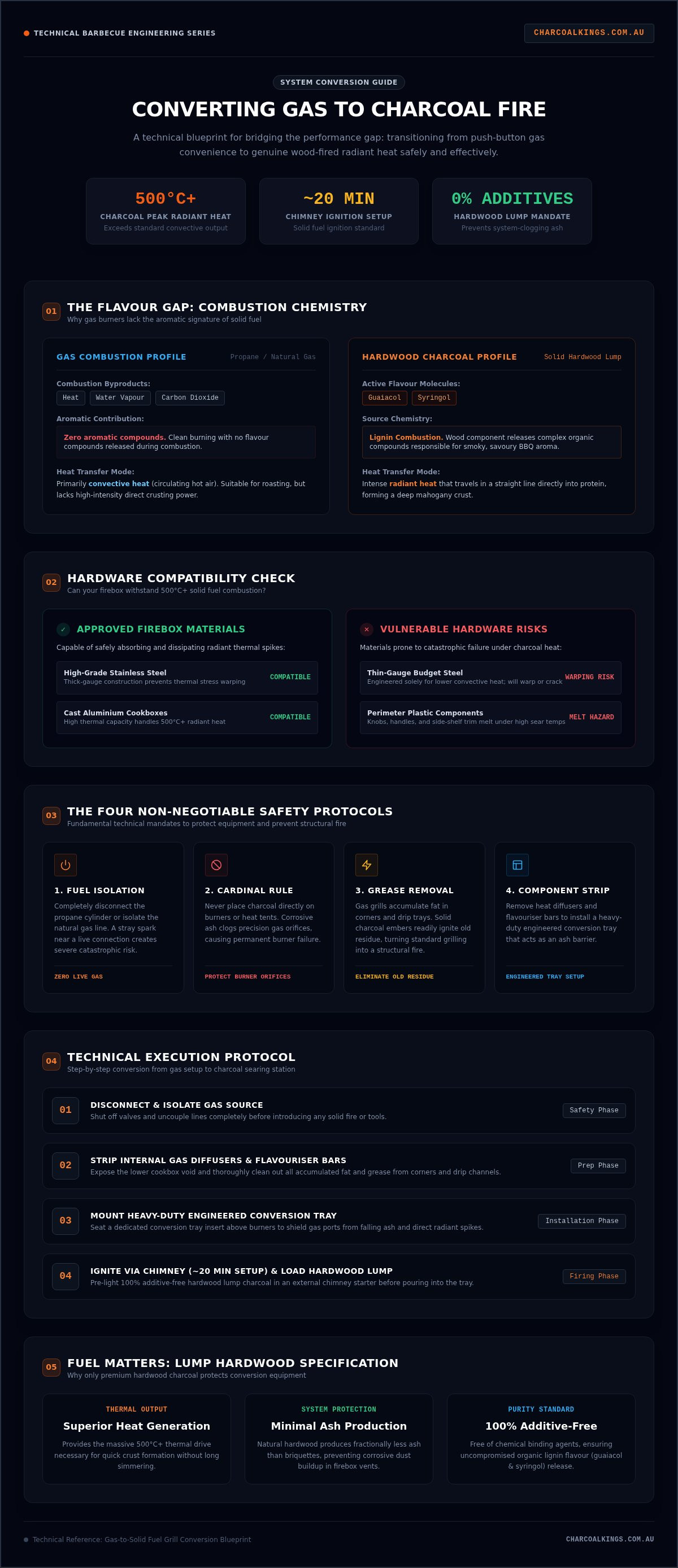
Propane and natural gas are clean-burning fuels. They produce heat, water vapour, and carbon dioxide, but they offer zero aromatic contribution to your food. In contrast, premium hardwood charcoal contains lignin. When this wood component burns, it releases complex organic compounds like guaiacol and syringol. These are the molecules responsible for the smoky, savoury profile that defines real Australian BBQ. Converting a gas grill to charcoal is the most direct way to introduce these compounds without buying a completely new rig.
Many enthusiasts try to bridge this gap with stainless steel smoker boxes or foil packets of wood chips. These often underperform because gas burners don’t provide the sustained, high-intensity radiant heat required to fully combust wood into flavour. The structural differences in barbecue grill designs and mechanics mean that gas units are vented for safety, often allowing expensive smoke to escape before it ever touches the meat. This transition shifts the experience from ‘cooking’ on a stove to ‘barbecuing’ with real fire.
To see a practical example of how these components are modified, watch this walkthrough of a firebox conversion:
Gas vs. Charcoal Heat Dynamics
Charcoal provides massive radiant heat. This is the energy that travels in a straight line from the coal to the protein, allowing for a professional, mahogany crust that gas burners struggle to match. Gas grills rely heavily on convective heat, which is essentially hot air moving around the food. While effective for roasting, it lacks the raw power needed for high-heat searing. Managing a charcoal fire is a hands-on experience. It requires you to understand airflow and fuel density, turning a chore into a craft.
Is Conversion Right for You?
Success depends on the quality of your existing hardware. A high-grade stainless steel or cast aluminium firebox can withstand the 500°C+ temperatures generated by hardwood lump charcoal, but budget models may warp. You must never place charcoal directly on gas burners; instead, use a dedicated tray to protect the components. You must also accept a longer setup time. Lighting a chimney of charcoal takes about 20 minutes before you can start cooking. If you’re ready for that commitment, read our guide on Mastering the Art of Barbecuing with Charcoal to prepare your mindset. Converting a gas grill to charcoal is a serious upgrade for those who prioritise taste over speed.
Safety First: Is Your Gas Grill Compatible with Charcoal?
Safety is the foundation of converting a gas grill to charcoal. You cannot simply dump fuel into the cookbox and hope for the best. The cardinal rule is absolute: never place charcoal directly on gas burners or heat tents. This creates a direct path for corrosive ash to clog gas orifices and can lead to permanent burner failure. If you are serious about converting a gas grill to charcoal, you must first isolate the fuel source. Disconnect the propane cylinder or shut off the natural gas line completely. A stray spark near a live gas connection is a catastrophic risk.
Assess your firebox before you begin. High-quality hardwood lump charcoal generates intense radiant heat that can exceed 500°C. Many budget gas grills use thin-gauge steel designed for the lower, convective heat of propane. These units often warp or crack when exposed to solid fuel. Old grease is another major hazard. Gas grills accumulate fat in corners and drip trays that charcoal embers can easily ignite. Following NFPA outdoor grilling safety guidelines is essential to prevent a standard cookout from turning into a structural fire.
The Essential Safety Checklist
Start by stripping the grill to its core components. Remove the heat diffusers and flavouriser bars to create space for a dedicated charcoal tray. Identify any plastic components near the firebox, such as knobs, handles, or side shelf trim. These parts often melt when the grill runs at the higher temperatures required for charcoal searing. You must also evaluate airflow. Gas grills are designed to vent gas quickly to prevent explosions, but they often lack the intake dampers needed to control a charcoal fire. Without proper oxygen control, your fuel will burn too fast and too hot.
Understanding Thermal Stress
Thermal stress can ruin a grill in a single session. Budget models with porcelain-coated steel are particularly vulnerable; the coating can flake off as the metal expands at different rates under extreme heat. Cast iron grates are the preferred partner for this conversion because they handle thermal expansion far better than thin wire racks. Using a dedicated tray keeps the coals elevated, protecting the bottom of the cookbox from direct contact with the hottest part of the fire. Before you light your first chimney, ensure you have sourced high-performance fuel that burns clean and produces minimal ash to keep your system safe and functional.
How to Convert a Gas Grill to Charcoal: 3 Proven Methods
Success in converting a gas grill to charcoal depends on the hardware used to bridge the gap. DIY solutions like tinfoil trays are a recipe for disaster. They lack the structural integrity to hold heavy coals and fail to provide the airflow needed for clean combustion. Poor airflow leads to acrid, bitter smoke rather than a pure hardwood profile. You need a solution that manages heat and ash without compromising the grill’s structural integrity.
Method 1: The Charcoal Tray Insert. This is the cleanest and safest path. These heavy-gauge stainless steel or cast iron trays sit securely above the burner tubes. They act as a protective barrier, catching all falling ash while allowing the gas burners to serve as a high-powered ignition source for your coals.
Method 2: The Cast Iron Grate Swap. This method focuses on heat retention. By replacing thin wire racks with heavy cast iron grates, you create a system capable of holding the massive radiant energy of a charcoal fire. It is the best choice for those prioritising a professional sear.
Method 3: Dedicated Hybrid Kits. Manufacturers like Napoleon and Char-Broil produce engineered kits, such as the Napoleon Cast Iron Charcoal and Smoker Tray (Part #67732). These are specifically designed for the 2026 model year to ensure firebox compatibility. Following USDA safe grilling practices ensures you manage flare-ups and internal temperatures correctly during this transition.
Installing a Charcoal Tray
Precise measurements are non-negotiable. Measure the internal width and depth of your cookbox above the burner tubes. The tray must fit securely without blocking all air gaps. A V-shaped tray design is superior; it funnels the coals together to maintain a consistent core temperature. Position the tray to allow oxygen to rise from the bottom vents, past the burners, and into the fuel bed. This creates the convective flow necessary for a clean burn.
Managing Airflow and Ash
Controlling temperature in a gas unit is challenging because they are designed to vent gas quickly. Use the rear lid vent as your primary exhaust. If your grill lacks adjustable dampers, you may need to prop the lid slightly to prevent the fire from choking. The ash problem is your biggest maintenance hurdle. You must clean the grill basin after every session. Fine ash mixed with old grease creates a corrosive paste that destroys metal. Light your coals using the gas burners for 10 minutes, then shut off the gas and disconnect the bottle. Never use chemical lighter fluid. It ruins the purity of the hardwood flavour your conversion is designed to achieve.
Fuel Matters: Choosing the Right Charcoal for Success
The fuel you choose dictates whether your project is a success or a costly mistake. Converting a gas grill to charcoal demands a fuel that burns clean and produces minimal residue. Premium hardwood lump charcoal is the only logical choice for this application. Unlike supermarket options, it contains zero additives, binders, or fillers that can off-gas and taint your grill’s interior components. Purity is the priority when you are repurposing hardware not originally designed for solid fuels.
Ash management is the primary technical challenge. Standard briquettes are engineered with clay binders that produce up to 30% more ash by volume than natural lump charcoal. In a gas grill, this volume of ash quickly clogs the narrow drainage points and burner ports, leading to corrosive buildup. High-performance lump charcoal leaves behind a fraction of the waste, preserving the longevity of your hardware. For those seeking the absolute pinnacle of clean, intense heat in small conversion trays, Binchotan charcoal offers a carbon-pure alternative that burns for hours without smoke or spark.
Lump Charcoal vs. Briquettes in a Gas Grill
Lump charcoal is superior for conversions because it reaches cooking temperature faster and delivers higher peak heat. It is essentially charred wood in its purest form. Briquettes rely on chemical binders that can leave a persistent, industrial smell inside a closed gas lid. When you are converting a gas grill to charcoal, the goal is authentic flavour. Natural hardwood provides a clean, organic aroma that gas and chemical-laden briquettes simply cannot replicate. Using high-quality fuel protects your investment while delivering the professional results you expect.
How Much Fuel Do You Actually Need?
A ‘less is more’ approach prevents thermal damage to your firebox. You do not need to fill the entire tray to get results. Concentrate your fuel on one side to create a high-heat searing zone while leaving the other side for indirect finishing. This prevents the internal temperature from spiking beyond the grill’s design limits. Aim for approximately 1.5 kilograms of lump charcoal for every 1,500 square centimetres of grate surface area to achieve a concentrated high-heat zone. Stock up on professional-grade hardwood fuels to ensure your conversion delivers the results your palate deserves.
When to Stop Tinkering and Upgrade Your Hardware
Converting a gas grill to charcoal is an excellent proof of concept for the flavour obsessed. It validates that hardwood is superior to propane for weekend cooks. However, every gas unit has a thermal ceiling. Gas grills are engineered for rapid heat loss and safety ventilation. This design is the opposite of what is required for low and slow mastery or efficient fuel consumption. A converted unit will never match the thermal retention or the deep smoke penetration of a dedicated offset smoker or ceramic cooker.
Consider the economics of your setup. High quality conversion trays and heavy cast iron grates represent a significant investment. If your existing gas firebox is already showing signs of age, spending money on modifications is a sunk cost. Dedicated charcoal kettles in Australia often start at price points comparable to premium conversion kits. At this stage, the smart move is to stop modifying and start investing in hardware built for the task.
Signs Your Gas Grill is Struggling
The most obvious sign of failure is warped metal. If your lid no longer seals or your burner tubes are cracking, the radiant heat of the charcoal has exceeded the grill’s material tolerance. Airflow is another bottleneck. Gas grills are intentionally ‘leaky’ to prevent gas buildup. This causes smoke to bypass the meat too quickly, resulting in a weak or ‘stale’ flavour profile. If you find yourself struggling to remove ash from a basin with narrow drainage ports, you are fighting against the machine’s primary design. These are clear indicators that converting a gas grill to charcoal has reached its functional limit.
Choosing Your First Dedicated Charcoal Grill
Transitioning to purpose built hardware unlocks a new level of control. Ceramic kamados offer incredible insulation, allowing you to maintain steady temperatures for over 12 hours with minimal fuel. Traditional kettle grills provide a versatile entry point for high heat searing and indirect roasting. These units feature adjustable dampers and dedicated ash management systems that make cleanup effortless. Dedicated grills outlast converted units because their porcelain or thick steel construction is designed specifically for the 500°C+ temperatures of hardwood lump charcoal. For a detailed breakdown of the best hardware for the Australian climate, consult our BBQ Buying Guide. Stop fighting your hardware and start mastering the fire.
Take Command of the Fire
Converting a gas grill to charcoal is the fastest way to reclaim the authentic, wood-fired taste that propane simply cannot deliver. By using engineered conversion trays and isolating your gas lines, you protect your equipment while unlocking professional-grade searing capabilities. The success of this transition relies entirely on the purity of your fuel. Low-grade briquettes will clog your system with ash, so always opt for high-performance hardwood lump to ensure a clean burn and superior heat.
Ready to upgrade your weekend sessions? Shop Premium Hardwood Lump Charcoal for Your Next BBQ from Charcoal Kings. As Australia’s #1 Hardwood Charcoal Specialist, we provide 100% natural fuel with no additives or chemicals. We offer fast shipping across Australia so you can start grilling with authority. Your backyard deserves better than clean-burning gas; it’s time to master the primal craft of real fire.
Frequently Asked Questions
Can I put charcoal directly on my gas grill burners?
No, you must never place charcoal directly on gas burners or heat tents. This causes immediate damage to the burner tubes and clogs gas orifices with corrosive ash. This can lead to permanent failure of the ignition system and create uneven heating patterns. You must use a dedicated heavy-gauge charcoal tray or cast iron insert to elevate the fuel and protect the internal gas components from direct contact with burning coals.
Will converting my gas grill to charcoal void the warranty?
Yes, converting a standard gas grill to charcoal will almost certainly void your manufacturer warranty. Companies like Weber and Broil King design their units specifically for gas combustion. Using solid fuels creates radiant heat levels and ash accumulation that these units are not built to handle. Unless you are using a manufacturer-approved hybrid conversion kit, you assume all risk for structural damage, warped fireboxes, or failed burner components caused by the conversion.
How do I light charcoal inside a gas grill safely?
The safest way to light your fuel is by using a dedicated charcoal chimney starter outside the grill. If you are using a manufacturer-approved tray, you can use the gas burners to ignite the coals for approximately 10 minutes. Once the coals are lit, you must turn off the gas supply and disconnect the propane bottle. Never use liquid lighter fluid inside a gas grill, as it can pool in the bottom and cause a fire hazard.
Can I use wood chunks instead of charcoal in my gas grill?
You can use wood chunks in a smoker box to add flavour, but they should not be used as the primary heat source in a converted gas grill. Wood produces more flame and volatile smoke than charcoal, which can quickly overheat a standard gas cookbox. For the best results, stick to premium hardwood lump charcoal as your base fuel and add one or two small wood chunks for aromatic complexity during the cook.
How do I clean up ash from a converted gas grill?
You must wait for the grill to cool completely, which typically takes several hours. Once cold, remove the charcoal tray and dump the ash into a metal bucket. Use a dedicated ash vacuum or a small hand shovel to remove any residue that fell into the grill basin. Consistent cleaning is essential because ash mixed with grease creates a corrosive paste that can eat through the metal floor of your gas grill.
Is it safe to use the gas burners to light the charcoal?
It is only safe to use gas burners for ignition if you are using a tray specifically engineered for this purpose. These trays feature a perforated design that allows the gas flame to reach the coals. You should only run the burners for 5 to 10 minutes to start the ignition process. After the charcoal shows a light grey ash coating, shut off the gas valves and the main cylinder to ensure a safe cooking environment.
What is the best charcoal for a gas grill conversion?
Premium hardwood lump charcoal is the superior choice for any gas grill conversion. It produces significantly less ash than briquettes, which is critical for protecting the narrow drainage points of a gas unit. Lump charcoal also reaches higher searing temperatures and contains zero chemical additives or binders. This purity ensures that your food takes on the authentic wood-fired flavour you are seeking without leaving industrial residue inside your grill.
Can I still use my gas grill for gas cooking after using charcoal in it?
You can return to gas cooking as long as you perform a thorough cleaning of the entire unit. Every trace of ash must be removed from the burners and the firebox to prevent clogs and corrosion. If you have been converting a gas grill to charcoal regularly, inspect the burner ports for any blockages before lighting the gas. Maintaining a clean system allows you to alternate between the convenience of gas and the flavour of charcoal.