
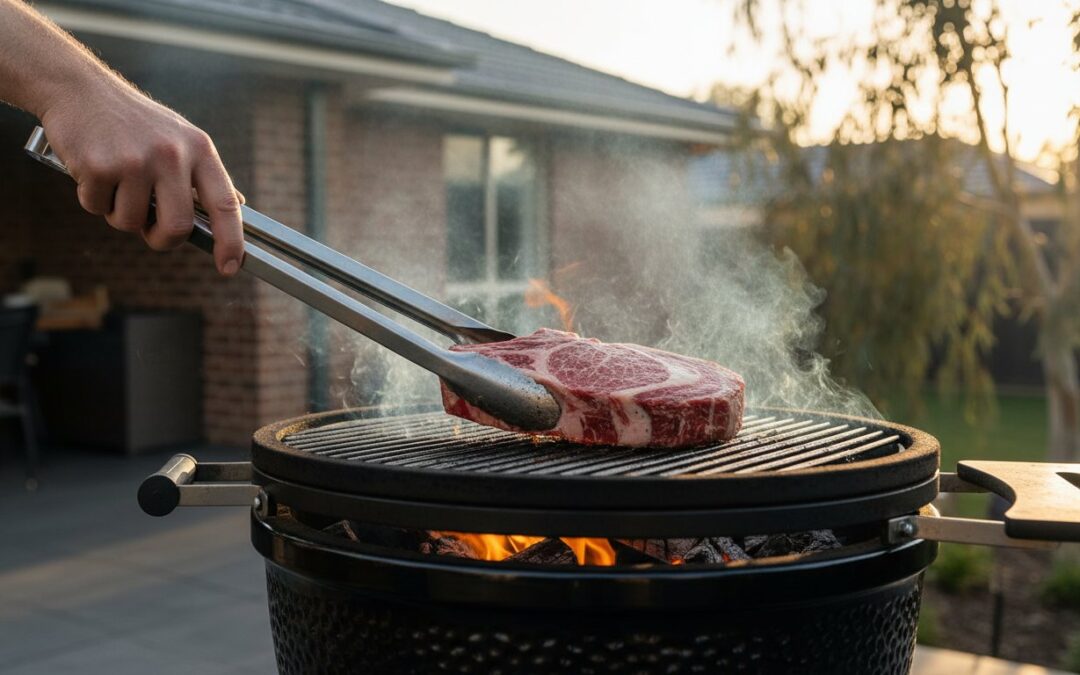
You just spent $250 on a single pound of Japanese A5 Wagyu, and the pressure to perform is heavy. As you stand over the grill, that familiar tightness in your chest returns. It is a high-stakes moment where the margin for error is razor-thin. Most pitmasters have felt this fear of ruining expensive meat, particularly with retail beef prices hitting record highs of $9.64 per pound in April 2026. You don’t want to waste a significant investment or face the embarrassment of serving a dry, overcooked meal to your guests.
This guide helps you master the technical precision and fuel secrets required to cook premium Australian beef with absolute confidence. You will learn a repeatable system for perfect results by understanding the critical variables of heat and fuel purity. We provide the professional framework you need to host high-stakes dinner parties without the stress of uncertainty. By the end of this article, you’ll understand how to select the right hardwood lump charcoal and manage internal temperatures to ensure every cut is a success.
Key Takeaways
- Learn why pure, additive-free hardwood lump charcoal is the best insurance policy for high-end cuts. Stable, predictable heat prevents chemical off-gassing from ruining delicate beef flavours.
- Master the reverse sear technique using a two-zone fire to eliminate guesswork. This method ensures a perfect internal temperature for thick-cut Tomahawks and premium Wagyu.
- Eliminate the fear of ruining expensive meat by identifying and neutralizing “steak killers” like surface moisture and cold cores. Proper preparation turns a high-stakes cook into a repeatable science.
- Understand how selecting the right smoker or charcoal grill creates the ideal environment for specific beef grades. The right hardware is the foundation of consistent, professional-grade results.
The Psychology of High-Stakes Grilling: Why We Fear the Burn
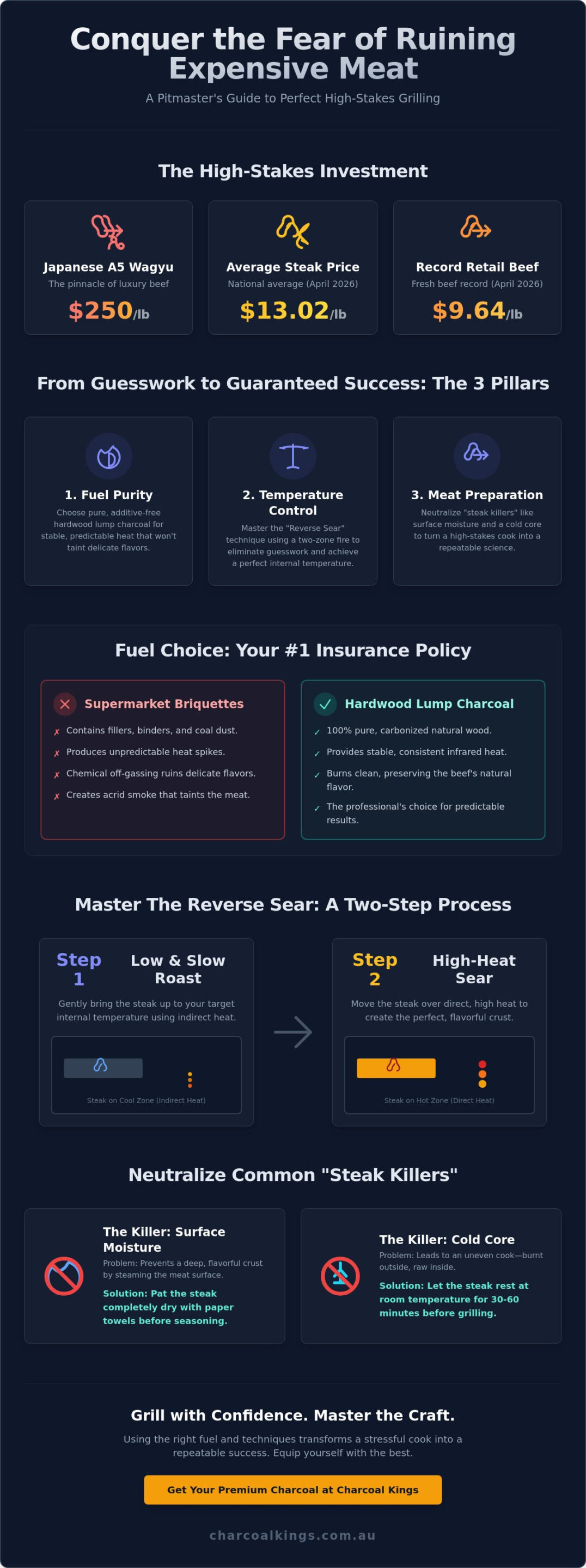
Standing over a grill with a premium cut of beef can be a nerve-racking experience. As of April 2026, the average retail price for fresh beef reached a record high of $9.64 per pound, while the national average for steaks hit $13.02 per pound. If you have invested in Japanese A5 Wagyu, you are looking at costs between $100 and $250 per pound. These figures create a legitimate fear of ruining expensive meat before the charcoal is even lit. This isn’t just about a meal; it’s about protecting a significant financial investment and avoiding the social sting of a failed dinner party.
Successful pitmasters move away from “winging it.” While intuition might get you through a pack of standard sausages, it often fails when handling high-marbled Tomahawks or dry-aged ribeyes. To eliminate anxiety, you must transition from guessing to knowing. This requires professional-grade equipment and a strict focus on three controllable variables: Surface Moisture, Fuel Consistency, and Internal Temperature. When you control the environment, the result becomes a matter of science rather than luck.
To better understand the common pitfalls that lead to ruined steaks, watch this helpful video:
The Cost of Failure vs. The Value of Preparation
Preparation is the only effective antidote to high-stakes stress. High-quality fuel serves as your primary insurance policy. Supermarket briquettes often contain fillers and chemical binders that produce unpredictable heat spikes and unpleasant off-gassing. These impurities can easily ruin the delicate, natural flavor profile of expensive Australian beef. Using pure Hardwood Lump Charcoal or Binchotan ensures a clean, steady infrared heat source. We recommend performing a “dry run” with more affordable Choice-grade cuts to identify your grill’s specific hot spots. Even professional chefs rely on digital thermometers and consistent fuel sources because they know that relying on “feel” is a gamble you don’t need to take.
Understanding Your Meat: MSA Grades and Marbling
The Australian and global markets have seen a shift in quality standards. By May 2026, roughly 88.8% of cattle graded as Choice or higher. This high level of marbling requires a specific heat management strategy. Intramuscular fat conducts heat differently than lean muscle; it melts at lower temperatures and can cause sudden flare-ups if not managed correctly. Utilizing The “Reverse Sear” Method allows you to bring the meat to a precise internal temperature before finishing with a high-heat crust. Dry-aged meat presents another variable. Because it has less water content than standard supermarket cuts, it browns faster and reaches its target temperature more quickly. Recognizing these differences allows you to choose between a fast-sear for thin steaks or a low-and-slow approach for cuts with heavy connective tissue.
Fuel Choice: The Best Insurance Policy for Your Steak
Choosing the right fuel is the best insurance policy for your steak. It is the foundation of every successful cook. If you want to conquer the fear of ruining expensive meat, you must stop viewing charcoal as a mere utility. High-end cuts like Wagyu or dry-aged ribeye possess delicate flavor profiles that are easily compromised by low-quality heat sources. Premium fuel provides stable, predictable infrared heat without the risk of chemical off-gassing. When your heat source is pure, you can focus entirely on the meat itself.
Conquering the fear of ruining expensive meat starts with a commitment to fuel purity. Many beginners reach for supermarket briquettes, but these often contain coal dust, starch binders, and chemical fillers. When these materials burn, they release acrid smoke that permeates the meat’s fat. This can turn a $150 investment into a meal that tastes like a laboratory. For professional results, we recommend using hardwood lump charcoal. It is pure carbonized wood that burns clean and hot. For the ultimate Japanese-style grilling experience, Binchotan offers the highest level of purity and longevity available on the market today.
Lump Charcoal vs. Briquettes for High-End Cuts
Lump charcoal is essential for the high-heat sear required for thick steaks. It allows you to create a crust quickly without overcooking the center. Low-quality fuels produce a heavy, soot-filled smoke that masks the natural sweetness of the beef. Consistent chunk size is another critical factor. Large, dense pieces of lump charcoal provide better airflow and a more sustained burn. When your charcoal is uniform, you get a predictable temperature curve that makes timing your cook much easier. This predictability is vital when you are aiming for specific USDA safe cooking temperatures. You shouldn’t have to fight your fire while trying to monitor a sensitive, high-marbled cut of meat. A stable fire allows you to focus entirely on the internal temperature of the beef.
The Purity Factor: No Additives, No Regrets
Chemical-free fuel is non-negotiable because any additive in your fire will eventually end up on your plate. Clean smoke allows the Maillard reaction to occur perfectly. This creates a deep, mahogany crust without the interference of bitter chemical residues. Charcoal Kings prioritizes natural Australian hardwood because it delivers the consistent high-density performance that professional pitmasters demand. Our hardwood lump charcoal is processed to remove all volatiles, ensuring that only pure carbon remains. This results in a fire that produces minimal ash and maximum heat. There are no shortcuts to quality. If you are serious about your craft, it is time to upgrade your fuel supply to match the quality of your protein. You will taste the difference in the first bite.
The “Reverse Sear” Method: Eliminating the Guesswork
The reverse sear is the gold standard for thick, premium cuts of Australian beef. It is a technical approach that mitigates the fear of ruining expensive meat by providing total control over the cooking process. Unlike traditional searing, which risks a raw center and a burnt exterior, this method ensures edge-to-edge perfection. It turns a high-stakes cook into a predictable, manageable task. By following five specific steps, you move from hoping for a good result to guaranteeing one.
First, temper your meat at room temperature for at least 45 minutes and dry the surface completely with paper towels. Any surface moisture will steam the meat rather than sear it. Second, set up a two-zone fire in your grill or smoker using high-quality hardwood lump charcoal. Pile the charcoal on one side to create a hot zone and leave the other side empty for indirect heat. Third, place the meat on the cool side and slow-roast it until the internal temperature is 10 to 15 degrees below your final target. Fourth, remove the meat and let it rest for 10 minutes BEFORE the final sear. This pro-level secret allows the internal temperature to stabilize and the juices to redistribute. Finally, finish with a 60-second high-heat blast on the hot zone to develop a perfect, mahogany crust.
Why the Two-Zone System is Your Safety Net
Arranging your charcoal for a two-zone system creates a literal “safe zone” on your grill. If a flare-up occurs due to melting fat, you simply move the meat to the cool side. Never use water to extinguish flare-ups; it creates ash clouds that ruin the flavor. Control the intensity of your fire by managing the grill lid. Closing the lid restricts oxygen, which lowers the temperature and prevents the meat from drying out. This setup allows you to manage the high-marbling of premium cuts without the risk of charring the exterior before the interior is ready.
Internal Temperatures You Need to Memorise
Precision is the only way to protect your investment. For premium Australian beef, follow these internal pull temperatures to account for carry-over cooking. Rare requires a pull temp of 120°F (49°C) for a final 130°F. Medium-Rare, the industry standard for quality steak, needs a pull temp of 130°F (54°C) for a final 140°F. Medium should be pulled at 140°F (60°C) for a final 150°F. Carry-over cooking is the primary reason people ruin expensive meat; the internal temperature will continue to rise by roughly 5 degrees after you remove it from the fire. Always pull your meat 5 degrees early to ensure it reaches its destination perfectly. Use a reliable digital thermometer from our BBQ accessories range to confirm these numbers every time.
Common “Steak Killers” and How to Neutralise Them
Technical errors are the primary cause of failure when grilling premium cuts. Identifying these “steak killers” allows you to neutralize risks and eliminate the fear of ruining expensive meat. One of the most common mistakes is surface moisture. If your steak is damp, the energy from your charcoal is wasted on evaporating water rather than browning the protein. This leads to a grey, unappealing exterior. Always pat your meat dry with paper towels before it hits the grates. A dry surface is the only way to achieve a professional crust.
The “Cold Core” trap is another frequent pitfall. Taking a thick steak directly from the fridge to a high-heat fire creates a massive thermal gradient. The exterior will char and burn before the center reaches a safe internal temperature. While the 2022 FDA Food Code specifies 145°F for intact meat, reaching this target without burning the outside requires starting with tempered meat. Similarly, “peeking” by constantly opening the lid destroys your heat momentum. Each time you lift the lid, you lose the stable convection environment created by your hardwood lump charcoal. Trust your vents and your thermometer rather than your eyes.
Using the wrong oil also compromises quality. Low-smoke-point oils, like extra virgin olive oil, break down and turn bitter at the high temperatures produced by a charcoal grill. Use high-smoke-point fats like tallow or refined grapeseed oil to ensure a clean flavor profile. Bitter oil can ruin the taste of a $100 Wagyu steak in seconds.
The Myth of “Searing to Lock in Juices”
Scientific testing has debunked the idea that searing seals in moisture. Searing is strictly for flavor development through the Maillard reaction. If you over-sear too early, you create a thick, grey ring of overcooked meat beneath the crust. Success depends on surface pH and proper salting. Salt draws out moisture initially, but if given enough time, the brine is reabsorbed. This process seasons the meat deeply and aids in superior crust formation without drying out the interior muscle fibers.
Resting: The Most Difficult 10 Minutes in BBQ
Resting is a non-negotiable step in the process. During cooking, muscle fibers contract and push juices toward the center. Cutting the meat immediately causes these juices to pour out, resulting in a dry steak regardless of the initial quality. Resting allows the fibers to relax and reabsorb that moisture. To protect your crust while resting, tent the meat loosely with foil. Do not wrap it tightly. Trapped steam will turn your hard-earned crust soggy and ruin the texture.
Achieving these professional results requires the right tools for temperature monitoring and fire management. Explore our range of high-performance BBQ accessories to ensure your next cook is a success.
The Charcoal Kings Toolkit for Guaranteed Success
Eliminating the fear of ruining expensive meat requires more than just technique. It requires a synergy between high-quality protein and professional-grade hardware. The most skilled pitmaster cannot compensate for a grill that leaks heat or fuel that produces inconsistent temperatures. Mastering the art of barbecuing with charcoal starts with understanding how your equipment manages airflow and thermal mass. When you use tools designed for precision, you move from a state of anxiety to a state of total control.
Selecting the right smoker or grill depends entirely on the specific cut of meat you intend to cook. A thick-cut ribeye demands a different environment than a whole brisket. Our Adelaide-based experts help you choose the right fuel for your specific grill type to ensure maximum efficiency. We focus on the science of the burn. Whether you are using a ceramic kamado or a heavy-duty offset smoker, the fuel must match the machine’s oxygen intake. High-quality rubs and sauces also play a vital role. These should be used to enhance the natural profile of premium beef, not to mask it with artificial flavors or excessive sugars that burn and turn bitter under high heat. Our products prioritize purity and the absence of additives to protect your investment.
Premium Hardware for Precise Results
Offset smokers are the definitive choice for large, expensive briskets. They provide the clean, indirect convective heat flow needed to break down connective tissue over twelve hours without drying out the flat. Conversely, if you are handling high-end Wagyu, a Hibachi paired with Binchotan is the gold standard. Binchotan is the purest fuel available. It burns at extreme temperatures with zero smoke or odor, allowing the intricate fat marbling to caramelize without interference. Heavy-duty stainless steel or cast iron grates are equally important. They retain the thermal mass needed to produce professional sear marks and a consistent crust across the entire surface of the meat.
Support Beyond the Sale
Charcoal Kings provides more than just premium supplies. We offer a direct line to seasoned experts who understand the Australian grilling landscape. You can access our network of Charcoal Kings stockists and specialists for localized advice on everything from humidity management to fuel density. We prioritize straightforward, expert guidance because we want every customer to cook with absolute confidence. We don’t believe in “winging it” when high-stakes cuts are on the line. Our mission is to provide the hardware, the fuel, and the knowledge required to turn every cook into a success. Explore our range of premium fuels and grills to master your next cook.
Take Control of Your Next Premium Cook
High-stakes grilling doesn’t have to be a gamble. By prioritizing 100% natural hardwood fuel and mastering the technical precision of the reverse sear, you turn every cook into a predictable science. We’ve explored how surface moisture and inconsistent heat can compromise your results; with the right toolkit, these variables are easily managed. You can finally move past the fear of ruining expensive meat and focus on the craft of the perfect crust.
Charcoal Kings is a leading wholesale supplier to Australia’s top steakhouses. We provide the same professional-grade materials used by industry masters to ensure your home results match restaurant quality. Our products contain no chemical additives, ensuring nothing interferes with the pure flavor of your beef. If you need specific guidance, our expert-led support team is based in Adelaide and ready to help. It’s time to stop guessing and start knowing.
Master your next cook with Australia’s premium charcoal and hardware.
Pick up your tongs and light the fire. You have the tools and the knowledge to deliver a masterpiece every time you grill.
Frequently Asked Questions
Is it better to salt steak before or after grilling?
Salt your steak at least 45 minutes before it hits the grill. This creates a dry brine that draws moisture out, dissolves the salt, and then reabsorbs the seasoned liquid into the muscle fibers. This process seasons the meat deeply and ensures a dry surface for a superior crust. Salting after grilling fails to penetrate the meat and can result in a gritty texture.
How do I know if my charcoal is ready to cook on?
Charcoal is ready when it is covered in a light layer of grey ash. You should see a consistent white glow without any black, unlit spots remaining in the pile. This indicates all volatile gases have burned off, providing a clean, stable heat source. Cooking too early leads to acrid smoke and unpredictable temperature spikes that increase the fear of ruining expensive meat.
Can I use a meat thermometer on a charcoal grill without losing heat?
You can maintain heat by using leave-in probes or high-quality instant-read devices. Many modern smokers feature dedicated probe ports that allow you to monitor internal temperatures without opening the lid. If you must use an instant-read thermometer, open the lid only halfway and work quickly. Speed is critical to maintaining the convection environment and preventing the fire from surging due to an oxygen influx.
What is the best charcoal for a very thick ribeye steak?
Hardwood Lump Charcoal is the superior choice for thick ribeye steaks. It delivers the intense infrared heat required to sear through heavy marbling while providing a long, consistent burn. For ultra-premium Japanese cuts, Binchotan is the gold standard because it produces no smoke or odor. This ensures the pure flavor of the beef remains the focus of the meal without interference from additives.
Why does my expensive meat taste like lighter fluid?
Your meat tastes like lighter fluid because you used chemical accelerants or briquettes containing petroleum-based binders. These additives release toxic fumes that bond with the fat in the meat. To eliminate this risk and the fear of ruining expensive meat, use a chimney starter and natural firestarters. This ensures only pure heat and clean wood smoke touch your food, preserving the natural taste of the beef.
How long should I really rest a large roast or brisket?
Large roasts require 20 to 30 minutes of resting, while briskets often need 1 to 2 hours in an insulated environment. This allows the internal temperature to equalize and the muscle fibers to relax. Cutting into a large cut too early results in a massive loss of moisture. Use an insulated cooler or a dedicated warming drawer to maintain temperature during this critical phase for the best results.
What should I do if my grill gets too hot while the meat is still raw inside?
Immediately move the meat to the indirect “cool zone” of your two-zone setup. Close the bottom vents to restrict oxygen and lower the temperature of the charcoal. Do not use water to douse the fire, as this creates ash clouds that will ruin the meat’s surface. Once the temperature stabilizes, you can finish the cook slowly until the internal target is reached without charring the exterior.