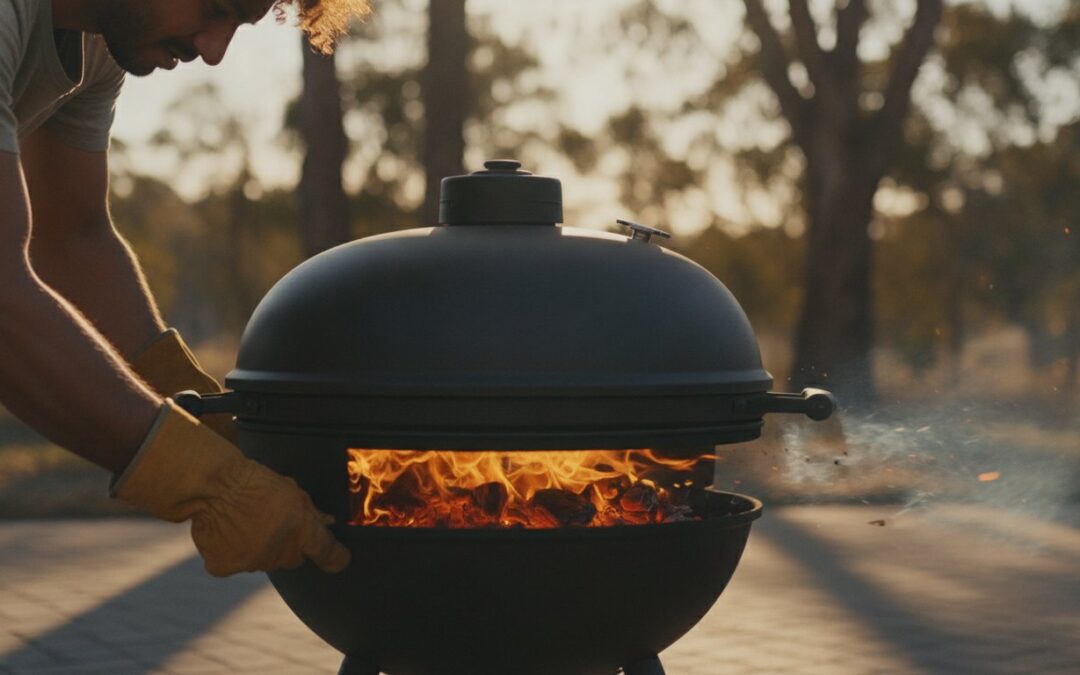
Wind isn’t just a nuisance that steals your heat; it’s an aggressive, uninvited oxygen source that can turn a controlled 225°F smoke into a dangerous inferno in seconds. You’ve likely felt that frustration when a sudden gust sends ash swirling onto a premium cut of meat or causes a temperature spike that threatens to ruin hours of work. Successfully managing charcoal grilling in windy conditions is a battle against the elements that many pitmasters lose, leading to inconsistent results and genuine safety concerns. Precision is everything when you’re aiming for perfection on the grate. Don’t let a breeze ruin your burn.
You’ll learn exactly how to maintain a rock-steady 225°F or a searing 400°F regardless of what the weather does. This expert guide provides the technical breakdown on shielding your firebox, utilizing high-density hardwood lump charcoal for superior heat retention, and the critical safety protocols required to prevent flying embers. We’ll also examine why Binchotan remains the gold standard for stability when the gusts pick up, ensuring your food stays clean and your cook stays on track. It’s time to master the tactical use of heavy-duty accessories and additive-free fuel to reclaim control of your outdoor kitchen.
Key Takeaways
- Apply the 45-degree rule to shield your vents and counter the physics of convective heat loss.
- Choose high-density Hardwood Lump Charcoal to minimize blowing ash and ensure consistent thermal performance.
- Stabilize internal temperatures using top-down vent control and precise micro-adjustments.
- Maintain safety during charcoal grilling in windy conditions by following strict ember management and starvation extinguishing protocols.
- Identify secure natural windbreaks to protect your firebox while adhering to mandatory fire safety clearances.
The Physics of Wind and Fire: Why Gusts Ruin Your BBQ
Wind transforms your grill from a controlled oven into an unpredictable forge. When performing charcoal grilling in windy conditions, the atmosphere around your cooker is no longer static. Moving air creates a pressure differential. This vacuum effect pulls oxygen through the intake vents with far more force than natural convection. The Venturi effect occurs when wind speeds increase as air is forced through the narrowed openings of your grill vents, creating a low-pressure zone that suction-feeds oxygen directly into the coal bed. This process accelerates the burn regardless of your vent settings.
This excess air creates the “Ash Problem.” High-velocity gusts enter the kettle and stir up fine particles from the fuel bed. This creates a snow-globe effect where grey ash settles onto your meat, ruining the bark and introducing a gritty texture. While using premium, additive-free fuel helps reduce the volume of debris, the physics of the wind remains the primary antagonist. Understanding The Physics of Combustion is vital because wind alters the fuel-to-oxygen ratio, often accelerating the burn beyond your control.
The Oxygen Overload: Why Wind Makes Grills Hotter
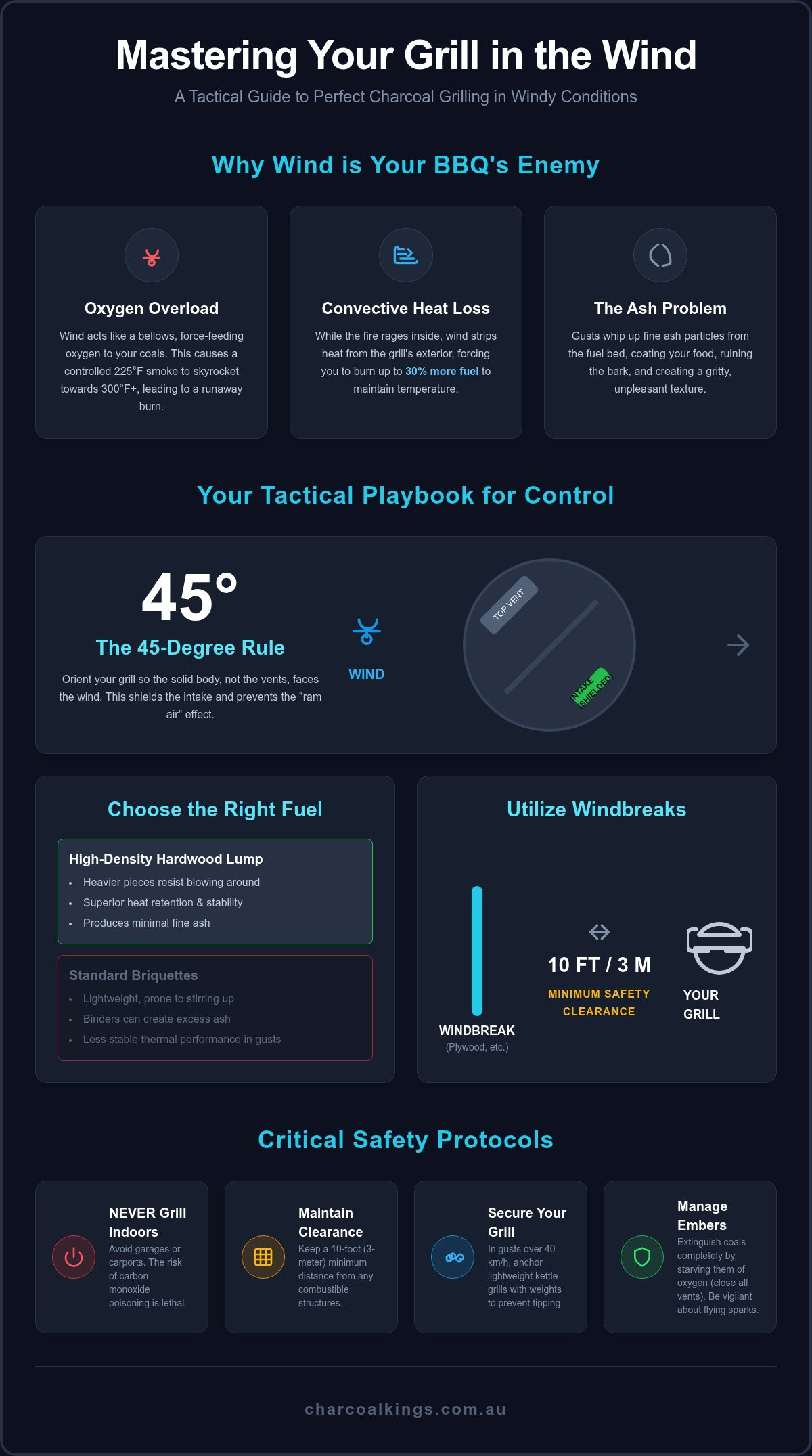
Wind acts as a constant, high-powered bellows. It forces air into intake vents, causing combustion rates to skyrocket and leading to runaway temperatures. While you might seek a steady 225°F, a strong gust can push the core temp toward 300°F in minutes. Opening the lid during a gale is particularly dangerous. The sudden influx of oxygen can cause massive internal flare-ups, singeing arm hair or damaging the gaskets on your unit. You must distinguish between “clean” airflow, which moves steadily through the system, and “turbulent” wind that creates erratic heat spikes and unpredictable charcoal grilling in windy conditions.
Convective Heat Loss and Surface Temperature
While the internal fire gets hotter, the external metal “skin” of the grill cools down. This is convective heat loss. Moving air strips the thermal boundary layer from the grill surface, stealing heat that should be radiating back into the food. You will likely burn through your fuel supply 30% faster in these conditions as the system struggles to maintain equilibrium. Heavy-duty metal smokers or ceramic units, like those stocked by Charcoal Kings, offer better thermal mass to resist these fluctuations. For the best resistance against these elements, high-density Hardwood Lump Charcoal provides the heavy, consistent burn needed to maintain temperature stability.
Strategic Setup: Positioning Your Grill for Maximum Protection
Positioning is the tactical foundation of successful charcoal grilling in windy conditions. You can’t stop the air from moving, but you can control how it interacts with your fuel. The 45-degree Rule is your primary defense. Instead of facing the wind head-on, orient your unit so the solid body of the grill acts as a shield for the intake vents. This prevents the “ram air” effect that causes runaway temperatures and wastes fuel. By angling the unit, you force the wind to break against the chassis rather than entering the firebox directly.
Safety remains the priority. National fire codes require a minimum 10-foot clearance from combustible structures. This means any fence, wall, or hedge used as a windbreak must be at least 3 metres away from your firebox. Never attempt to move your cook into a garage or carport to escape the weather. The risk of carbon monoxide buildup and structure fire is absolute. If your grill is a lightweight kettle, secure it with weights or bungee cords when gusts exceed 40 km/h. For maximum stability, professional-grade heavy-duty smokers and accessories provide the necessary mass to resist tipping and maintain thermal equilibrium.
Creating a Temporary Windbreak
If natural shelter isn’t available, build a temporary shield. Use plywood or specialized non-combustible screens placed upwind. These shields must be anchored securely to prevent them from blowing into the grill. Maintain the 3-metre safety gap to ensure flying embers don’t ignite the barrier. A well-placed shield reduces the velocity of the air before it reaches your vents, allowing for a more predictable burn. This setup is essential for long, low-and-slow cooks where temperature consistency is critical.
Vent Orientation and Shielding
Direct the bottom intake vents away from the prevailing wind. This forces the air to wrap around the unit, losing its kinetic energy before entering the firebox. When you need to check the internal temperature or flip the meat, use the lid as a physical barrier. Lift it slowly and keep it between the wind and the grate to prevent ash from blowing onto the food. For a deeper understanding of how to manage your initial firebox setup, see our guide on Mastering the Art of Barbecuing with Charcoal. Proper airflow management starts with a solid foundation before the first gust even hits.
Fuel Selection: Lump Charcoal vs. Briquettes in High Winds
Fuel weight is your best defense. When performing charcoal grilling in windy conditions, the physical properties of your fuel determine whether you maintain a steady cook or fight a losing battle against ash. Hardwood Lump Charcoal is the superior choice because of its high density and low ash production. Standard briquettes often contain fillers and binders that create a high volume of light, flaky ash. As the wind increases, this ash is easily lifted from the fuel bed, settling on your food and insulating the remaining coals. Purity is a performance metric. Fuel without additives burns with a predictable linear heat curve, which is essential when the atmosphere is erratic.
The “No Additives” advantage cannot be overstated. Chemical binders in mass-market briquettes can produce unpleasant odours and inconsistent burn rates when subjected to sudden oxygen spikes. High-density fuel provides the thermal mass required to resist the cooling effect of the wind. It ensures that the core of your fire stays lit even if the surface temperature of the grill fluctuates. Using a clean, heavy fuel source is the only way to guarantee the flavour of your meat isn’t compromised by airborne debris or chemical fumes.
Hardwood Lump: The High-Heat Champion
Irregularly shaped lump charcoal pieces create a structural advantage. They “lock” into place within the fire basket, creating a stable coal bed that doesn’t shift under pressure. Our Australian hardwood lump is harvested from dense timber species, providing a high carbon content that sustains core temperatures even when external air tries to strip heat away. This high carbon density means the fuel resists the rapid burn-off seen in lighter, porous charcoals. It stays hot, stays heavy, and stays in the tray where it belongs. Low-sparking characteristics are also vital for safety when gusts are present.
Binchotan for Small Grills and Hibachis
For smaller setups, Binchotan is the ultimate solution. This traditional Japanese white charcoal is so dense it feels like stone; it’s nearly impossible for wind to blow out a Binchotan fire once it reaches its operating temperature. Because it produces virtually no sparks and zero smoke, it remains safe and clean during charcoal grilling in windy conditions. You can learn more in The Ultimate Guide to Binchotan. Managing the high-intensity heat is the only challenge. The extra oxygen from a breeze will make Binchotan burn with incredible infrared power, requiring tighter vent control to prevent overcooking.
Mastering Vent Control and Temperature Stability
Vents are the lungs of your grill. When performing charcoal grilling in windy conditions, the atmosphere tries to breathe for you. To regain control, you must adopt the “Top-Down” control method. In calm weather, you manage heat via the bottom intake. In a gale, the bottom vent becomes a liability. High-speed air passing over the intake creates a low-pressure zone that sucks oxygen into the firebox at an accelerated rate. To counter this, close your bottom vents almost entirely and use the top exhaust vent as your primary throttle. This creates the necessary backpressure to neutralize the external vacuum effect.
Precision is mandatory. A 1mm adjustment to your vent in heavy wind has the same thermal impact as a 5mm move on a still day. You aren’t just nudging a slider; you’re recalibrating a high-pressure system. Use a dual-probe digital thermometer to monitor both the meat and the ambient air temperature inside the chamber. This data is the only way to distinguish between a genuine fire issue and external interference. For professional-grade monitoring tools, browse our range of BBQ Accessories to ensure your data is accurate.
The Exhaust Vent Strategy
Throttling the top vent prevents the wind from pulling too much oxygen through the bottom. This effectively slows the combustion of your Hardwood Lump Charcoal. Watch the exhaust closely. You want to see “thin blue smoke” barely wisping from the top. If the smoke becomes thick and white, you’ve choked the fire too much. If it disappears and your temps are climbing, the wind is bypassing your settings. Use the top vent to find the sweet spot where the fire is suppressed enough to stay stable but oxygenated enough to stay clean.
Monitoring the Internal Environment
Probe placement determines the quality of your data. Never place your ambient temperature probe on the windward side of the grill. The metal housing will absorb the cold air, giving you a “false” low reading while the internal fire is actually surging. Place probes on the leeward side, shielded by the meat or a deflector plate. This ensures you’re measuring the air that is actually cooking your food. Lid discipline is non-negotiable. Every time you lift the lid, you invite a gust to sweep away your thermal boundary layer and stir up ash. If you’re lookin’, you ain’t cookin’.
Post-Cook Safety: Extinguishing Coals and Managing Embers
The risk doesn’t end when the meat comes off the grate. In fact, the most dangerous phase of charcoal grilling in windy conditions is the cleanup. In Australia, you must remain vigilant regarding Total Fire Ban (TFB) declarations. When a TFB is active in your region, solid fuel grilling is generally prohibited because the risk of a single ember escaping is too high. High winds can carry a hot spark hundreds of metres, potentially igniting dry vegetation or neighbouring structures. Discipline in your shutdown routine is just as important as your temperature control during the cook.
The “Starvation” Method is the professional standard for extinguishing a fire. Close every vent on your unit. By sealing the intake and exhaust, you cut off the oxygen supply and snuff out the combustion process. Never use water to extinguish your coals. The resulting steam can cause severe burns, and the thermal shock often cracks ceramic components or warps heavy-duty metal. Ensure your ash catcher is fully enclosed. Open ash pans are a liability; wind can easily lift hot debris from an exposed tray and scatter it across your property. Follow the 24-hour metal bucket rule for all waste. Transfer ash to a dedicated metal container and let it sit for a full day before disposal.
Managing Flying Embers
Ghost embers are pockets of live fire hidden deep within the ash bed. They can remain active for hours after the surface appears grey and cold. If your grill design allows, use a spark arrestor or a fine mesh screen over the exhaust during the cooling phase. This adds a final layer of protection against charcoal grilling in windy conditions. Never dump coals on the ground or into a garden bed. A sudden gust can reignite seemingly dead coals, turning a peaceful afternoon into a fire emergency. Keep your workspace clear of dry leaves and debris at all times.
Safe Shutdown Procedures
Double-check your vent seals for any air leaks that might keep the fire smouldering. If your unit has gaps in the gaskets, the wind will find them and keep the coals alive. Once the fire is completely suppressed and the exterior is cool to the touch, move the grill to a sheltered outdoor location. This prevents any residual heat from being fanned back into a flame by persistent gusts. To ensure your next session is fueled by the cleanest, most stable burn possible, stock up on Premium Hardwood Charcoal. Clean fuel leaves less ash, which significantly reduces your risk profile in high-wind environments.
Take Command of the Grate
Mastering charcoal grilling in windy conditions requires a shift from reactive adjustments to proactive technical management. By implementing the 45-degree rule for positioning and prioritizing top-down vent control, you neutralize the erratic oxygen spikes that often ruin a cook. Success depends on the quality of your fuel. High-density hardwood lump provides the thermal mass and low-ash performance needed to maintain a rock-steady temperature when the elements are working against you. Safety remains the final priority; always use the starvation method to extinguish your fire and respect local fire ban regulations.
You don’t have to wait for a calm day to achieve professional results. Equip yourself with the same tools used by professional pitmasters to ensure a pure, chemical-free burn every time. We offer Australia-wide shipping on our entire range of high-performance fuels and heavy-duty accessories. Order Premium Hardwood Charcoal from Charcoal Kings and experience the difference that zero additives make to your flavour profile. Your next perfect smoke is just one solid setup away. Get out there and light the fire.
Frequently Asked Questions
Is it safe to grill with charcoal when it is windy?
Grilling is safe during light breezes if you maintain a three-metre clearance from combustible structures. High winds increase the risk of flying embers and unpredictable heat spikes. You must always check for Total Fire Bans in your local area before lighting your fuel. If gusts are strong enough to tip a lightweight kettle or scatter ash, it’s best to postpone your cook to prevent accidental fires.
How do I stop ash from blowing onto my food during a BBQ?
Use high-density hardwood lump charcoal to minimize the production of light, flaky debris. Unlike budget briquettes containing chemical fillers, pure hardwood burns clean and leaves a heavier ash that stays in the fuel bed. Keep the grill lid closed to maintain a stable environment. When you must open the unit, lift the lid slowly and use it as a physical shield between the wind and your meat.
Should I open or close my vents more when it is windy?
You should generally close your intake vents further than you would on a calm day. Wind creates a vacuum effect that forces excess oxygen into the firebox. To master charcoal grilling in windy conditions, use the top exhaust vent as your primary throttle while keeping the bottom intake restricted. This creates necessary backpressure and prevents the fire from turning into a runaway forge that’s impossible to control.
Which type of charcoal is best for windy weather?
Hardwood lump charcoal and Binchotan are the superior choices for volatile weather. These fuels are significantly denser than standard briquettes and resist being disturbed by moving air. Binchotan is particularly effective because it produces virtually zero sparks and is nearly impossible for a gust to blow out. Using heavy, additive-free fuel is essential for charcoal grilling in windy conditions because it provides the thermal mass required to resist cooling.
Can wind cause my charcoal grill to explode or flare up?
Wind won’t cause an explosion, but it’s the primary trigger for dangerous flare-ups. A sudden gust provides a massive surge of oxygen that can turn a smouldering coal bed into a high-intensity flame instantly. This risk is highest when you lift the lid and break the internal pressure. Always wear heat-resistant gloves and stand back when opening your smoker to ensure you aren’t caught by a sudden burst of heat.
How can I tell if there is a Total Fire Ban in my area?
Check the website or mobile app of your state fire authority for real-time updates. In South Australia, the CFS provides daily fire danger ratings and ban notifications for every region. These regulations are strictly enforced to protect the community from bushfires. If a Total Fire Ban is declared, all solid fuel grilling must stop immediately. Ignoring these bans during windy weather is a major safety risk and carries heavy penalties.
What is the best way to extinguish charcoal quickly in an emergency?
Use the starvation method by closing all intake and exhaust vents to cut off the oxygen supply. This is the safest way to suppress the fire without damaging your equipment or causing injury. Never throw water on hot coals unless it’s a life-threatening situation. The resulting steam can cause severe burns, and the thermal shock often cracks the body of the grill. Use sand or a fire extinguisher for escaping embers.