
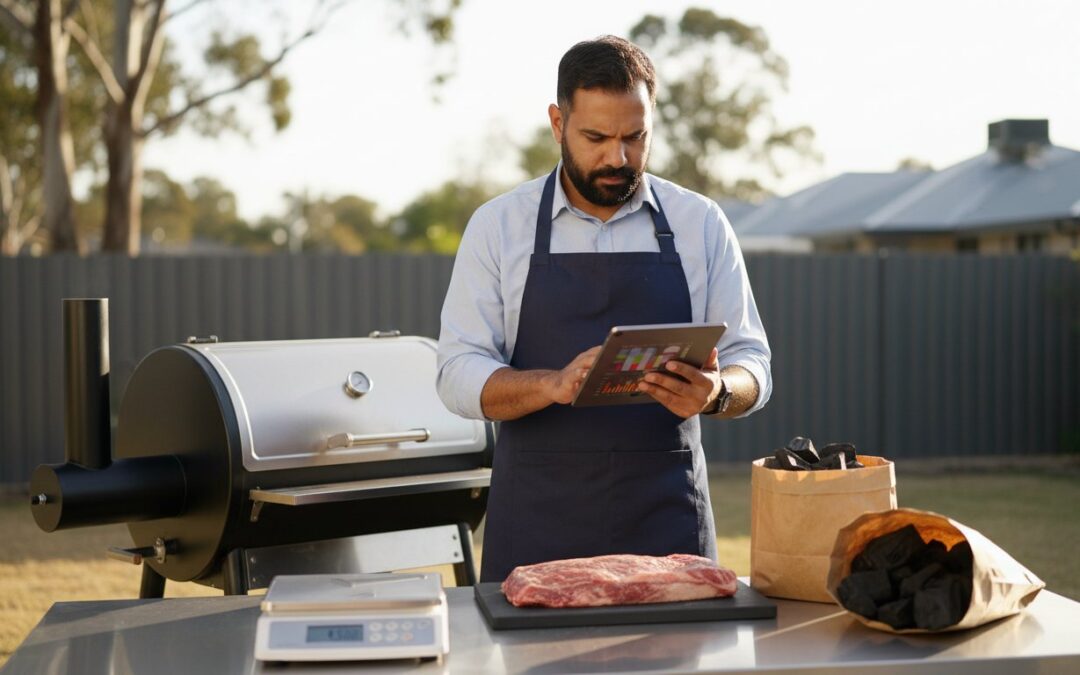
A single 5kg brisket can lose up to 50% of its total weight during a 12 hour low and slow smoke. If you aren’t accounting for that massive reduction, you’re effectively giving away half your inventory for free. Mastering the precise math behind calculating cost per plate for a bbq catering event is the difference between a thriving commercial operation and a hobby that drains your bank account. You already know that sourcing premium natural hardwood charcoal is essential for consistent heat and superior flavor. It’s time your financial planning matched the high standard of your cook.
We agree that guesswork has no place at the pit. You need a reliable, metric-based system that tracks every expense from the butcher’s block to the final serving tray. This guide promises to hand you the exact formulas needed to protect your margins, including the often-overlooked cost of high-performance fuel. We will cover precise shopping lists in kilograms, the ROI of using premium lump charcoal, and the hidden overheads that quietly kill your profit. Get ready to turn your passion into a repeatable, professional operation. Get sizzlin’!
Key Takeaways
- Stop guessing and start measuring with a professional breakdown of protein, sides, fuel, and overhead components.
- Learn to calculate true meat yields and source from wholesale suppliers to protect your professional profit margins.
- Treat premium hardwood fuel as a variable cost to ensure your burn time and heat consistency remain predictable and cost-effective.
- Master the exact formula for calculating cost per plate for a bbq catering event to establish a solid base price per guest.
- Account for “hidden” expenses like sauces, glazes, and spritz liquids that can drain your bottom line if left out of your final tally.
The Foundation: Breaking Down BBQ Plate Cost Components
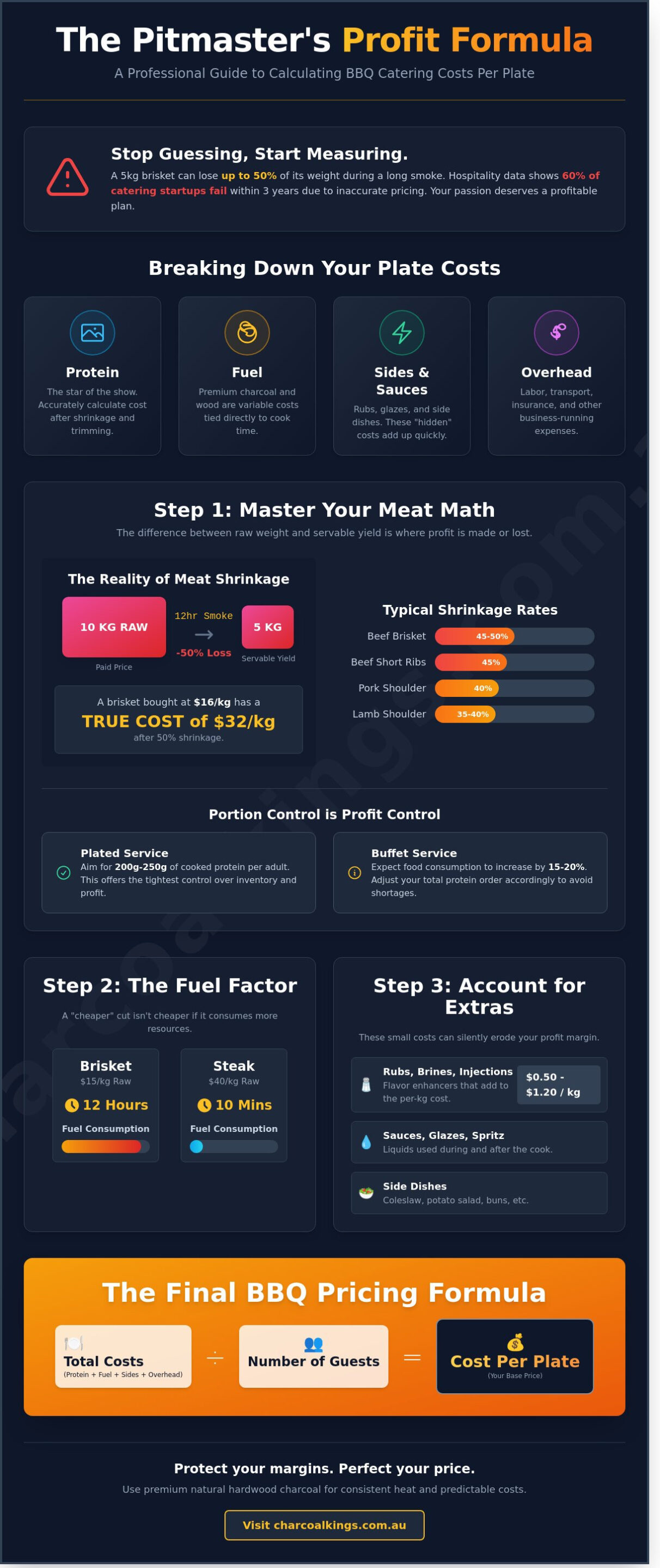
Calculating cost per plate for a bbq catering event requires more than a quick look at your grocery receipt. It’s the sum of your protein, sides, premium hardwood fuel, and fixed overheads. Most BBQ businesses fail because they “guestimate” these figures. Data from hospitality analysts shows that 60% of small catering startups close within three years due to inaccurate pricing models and hidden expenses. You must treat your smoker like a factory where every input has a price tag.
To better understand this concept, watch this helpful video:
Distinguishing between food cost and total event cost is vital for your survival. Food cost covers the raw ingredients. Total event cost includes labor, transport, and the high-performance charcoal required for long smokes. Mastering cost accounting principles ensures you account for every gram of fuel and every slice of brisket. By 2026, Australian beef and lamb prices are projected to see a 5% increase based on Meat & Livestock Australia (MLA) export forecasts. Hardwood fuel prices remain tied to regional forestry regulations, making bulk purchasing essential for margin protection.
Raw vs. Cooked: The Reality of Meat Shrinkage
Brisket and pork butt lose 40% to 50% of their weight during a low and slow cook. You pay for the fat and moisture that renders away. Use this metric formula to stay accurate: Raw Weight x (1 – Shrinkage %) = Servable Weight. For common Australian cuts, expect these typical shrinkage rates:
- Beef Brisket: 45-50%
- Pork Shoulder: 40%
- Lamb Shoulder: 35-40%
- Beef Short Ribs: 45%
The Role of Portion Control in Profitability
Standardize your portions to protect your bottom line. Aim for 200g to 250g of cooked protein per adult guest. If you offer a mixed plate with two meats, drop each portion to 100g or 125g. Self-serve buffets typically increase food consumption by 15% to 20% compared to plated service. This spike directly impacts your margins when calculating cost per plate for a bbq catering event. Plated service offers the tightest control over your inventory and profit. Get Sizzlin’!
Step 1: Calculating Protein Costs (The Metric Way)
Professional catering margins live and die by wholesale sourcing. Buying meat from a local butcher at retail prices is a fast way to lose money. Professionals source protein by the case to lock in lower per-kilogram rates from dedicated suppliers. When calculating cost per plate for a bbq catering event, you must focus on the “true yield” rather than the raw weight on the invoice. A 10kg brisket does not produce 10kg of servable food. Trimming heavy fat caps and moisture loss during a long smoke can reduce your yield by 40% to 50%. If you purchase brisket at $16 per kg and lose half the weight in the pit, your true cost is $32 per kg before you factor in labor.
Don’t forget the prep materials. Rubs, injections, and brines carry a measurable cost per kilogram of meat. High-quality seasonings are essential for enhancing premium cuts, but they aren’t free. Calculate the cost of your dry rub by the gram and your injections by the liter. Most pitmasters allocate between $0.50 and $1.20 per kilogram of meat for these flavor enhancers. Using premium, natural ingredients ensures the meat’s quality shines, which justifies a higher price point for your clients.
Pricing Low and Slow Staples
Low and slow cuts like brisket or pork shoulder often have a lower entry price than premium steaks. However, they demand more resources. A 12-hour cook requires a massive amount of fuel and constant monitoring. You’ll consume more natural hardwood charcoal to maintain steady temperatures compared to a 10-minute grill session for a scotch fillet. Always factor in the cost of the fuel and the pitmaster’s time when comparing a $15 per kg brisket to a $40 per kg steak. The “cheaper” cut often ends up costing more in overhead.
The ‘Snag’ Factor: Pricing Sausages and Skewers
High-volume items like sausages and skewers are your best friends for protecting profit margins. These items fill guests up quickly and cost significantly less per portion. When pricing skewers, use a specific formula: (protein weight + vegetable cost) + labor time. Hand-threading 200 skewers can take a staff member 90 minutes; that labor must be in the price. Use premium, high-meat-content sausages to maintain your reputation. It’s a strategic way of calculating cost per plate for a bbq catering event that keeps the total quote competitive. For a consistent, professional finish, always use high-performance charcoal to ensure your high-volume items cook evenly and taste authentic.
Step 2: Factoring in the Fuel: Charcoal and Wood Costs
Fuel isn’t a fixed overhead like rent or insurance. It is a direct, variable cost. When you are calculating cost per plate for a bbq catering event, you must track exactly how much fuel your equipment consumes. Every kilogram of charcoal used is a line item that impacts your bottom line. Cheap supermarket briquettes are a trap for professionals. They contain chemical binders and fillers that create massive ash piles. This ash smothers the fire, leading to temperature fluctuations and wasted meat. You can’t afford inconsistency when hundreds of plates are on the line.
Professional hardwood lump charcoal is the standard for a reason. It’s 100% natural and chemical-free. It burns steady and hot. To find your “Cost per Hour of Burn,” run a test cook on your specific smoker or grill. If a 20kg bag lasts for two 10-hour cooks, your consumption rate is 1kg per hour. Use your wholesale purchase price to determine that hourly cost. This level of precision prevents profit leaks. Premium fuel reduces waste because it provides the consistency required for large-scale catering. You get predictable results every time you light the pit.
Hardwood Lump vs. Binchotan for Events
Large-scale offset smokers require high-density lump charcoal to maintain a consistent coal bed. This fuel type offers the best cost efficiency for long, low-and-slow cooks. If your event features a live-fire skewer station, you should use Binchotan Charcoal. This Japanese-style white charcoal provides clean, flameless heat. It’s perfect for front-of-house cooking where smoke must be kept to a minimum. While it carries a higher price per kilo, its 4 to 5-hour burn time means you use less product over the course of the service. Cheap charcoal burns out quickly, forcing your staff to stop serving and refuel, which increases labor costs and kills your efficiency.
Adding the ‘Smoke’ Premium
The wood you choose for flavor also adds to the total bill. Most pitmasters use 2 or 3 hardwood splits per hour to maintain a clean, blue smoke. Australian hardwoods like Ironbark or Red Gum are reliable and dense. Imported fruitwoods like Hickory or Pecan often cost more per cubic meter due to shipping. You must calculate the cost of these splits based on your average hourly consumption. Consult the Ultimate Guide to BBQ Charcoal to understand which fuels suit your specific setup. High-quality wood ensures a superior bark and flavor profile, justifying the premium price when calculating cost per plate for a bbq catering event. Get Sizzlin’!
Step 3: Accounting for Sides, Sauces, and Overhead
Meat may be the main attraction, but the sides and overheads are where your profit margins are either protected or lost. When you are calculating cost per plate for a bbq catering event, you must account for the high-margin fillers that balance the expensive proteins. Potato salad, coleslaw, and corn on the cob are staples for a reason. They provide bulk at a low cost per gram, allowing you to satisfy hungry guests without over-ordering brisket or ribs. These items typically offer a 70% to 80% margin, which offsets the tighter margins found on premium meats.
Liquids represent a significant hidden expense that many beginners overlook. Spritzing liquids like apple juice, premium glazes, and vinegar-based sauces add up across a large batch. A single 10kg cook might require three liters of spritz and two liters of sauce to achieve the right bark and moisture. You also need to track the “boring stuff.” This includes heavy-duty foil, nitrile gloves, grease liners, and napkins. A box of 100 powder-free nitrile gloves can cost between $15 and $25. You might use half a box during prep and service for a single mid-sized event. These small costs chip away at your profit if they aren’t built into the plate price.
The Cost of Scratch-Made vs. Pre-Made Sides
The trade-off between labor and ingredients is the central challenge of catering. Scratch-made sides usually have lower ingredient costs but demand high labor hours. In Australia, seasonal pricing is a major factor for fresh produce. Cabbage prices for slaw can triple during supply shortages in Queensland or Victoria, forcing you to adjust your margins on the fly. For “all-you-can-eat” items like white bread and pickles, don’t guess the cost. A standard sandwich loaf provides roughly 20 slices. Factor in two slices per person as a baseline when calculating cost per plate for a bbq catering event to ensure you aren’t giving away your profit in bread.
Hidden Overheads: Ice, Transport, and Cleanup
Food safety requires a constant supply of ice to keep raw meats below 5 degrees Celsius during transport and prep. This “ice tax” often requires 40kg to 60kg of ice for a standard trailer setup. Transport costs also eat into your bottom line. With Australian fuel prices remaining volatile, it’s smarter to build a per-kilometer transport fee into the plate cost rather than a flat rate. Finally, account for cleanup. Scrubbing racks and disposing of commercial waste takes at least two hours of labor. This time must be paid for, or your profit disappears before you even leave the site.
Final Calculation: The BBQ Pricing Formula
Success in the catering business relies on math, not guesswork. You need to account for every gram of brisket and every chunk of ironbark. The formula starts with the Raw Event Cost. This is the sum of your Total Food Cost, Total Fuel Cost, and Total Overhead. Total overhead includes transport, insurance, and equipment depreciation. If you miss one of these, you’re paying the client to eat your food.
Once you have the Raw Event Cost, divide it by the Number of Guests. This gives you the Base Plate Cost. However, charging the base cost only covers your expenses. You aren’t running a charity. Industry experts suggest a 3x food cost multiplier to ensure all hidden expenses are covered. This margin accounts for the intensive labor required for 12-hour low and slow cooks. Calculating cost per plate for a bbq catering event requires this buffer to handle the volatility of meat prices and the physical toll of pit management.
The Master BBQ Pricing Formula
Professionals often use the 30/30/30/10 rule which allocates 30% for food, 30% for labor, 30% for overhead, and 10% for net profit. For a 50-person event serving premium brisket and pork ribs, your food cost might sit at $20 per person. That’s $1,000 for meat and sides. Using the 3x rule, your quote starts at $60 per plate. This total of $3,000 covers your $1,000 food, $150 in premium hardwood fuel, and your staff’s time. Quote this price with confidence. Clients pay for the expertise and the 14 hours you spent at the pit while they slept. Calculating cost per plate for a bbq catering event this way protects your bottom line.
Maximising Profit with Premium Gear
Efficiency is the fastest way to increase your margins. High-quality offset smokers retain heat better than cheap, thin-walled units. This reduces your fuel consumption by up to 25% on long cooks. Using premium natural hardwood charcoal ensures a steady, predictable burn. You won’t waste money fighting temperature swings or relighting extinguished coals in the middle of the night. Reliability saves labor costs and prevents ruined stock.
Marketing your event as “Charcoal Grilled” or “Wood-Fired” adds immediate perceived value. You can justify a higher price point when you use authentic methods. It’s a premium service that yields superior flavor. Don’t settle for inferior fuel that ruins a high-dollar brisket. Quality fuel is an investment in the final product and your reputation as a pitmaster.
Master Your Margins and Fire Up the Pit
Precision is the difference between a profitable catering business and an expensive hobby. You’ve learned that tracking every gram of protein and every bag of fuel is the only way to protect your bottom line. Calculating cost per plate for a bbq catering event requires a disciplined approach to protein yields, fuel efficiency, and overhead expenses. Professional operators don’t leave their margins to chance. They use a strict pricing formula to ensure every cook is a financial success. High-performance events demand fuel that burns hot, steady, and clean for hours on end.
Australia’s top competition BBQ teams rely on our 100% natural and chemical-free hardwood charcoal to maintain consistency during high-stakes events. This isn’t just about heat; it’s about reliable burn times that allow you to accurately predict your fuel costs for every job. We offer premium products available for wholesale and bulk orders to support your business growth. When you control your costs and your heat, you control your reputation. Get your numbers right, load the smoker, and get sizzlin’!
Shop Premium Hardwood Charcoal for Your Next Event
Frequently Asked Questions
How much meat should I allow per person for a BBQ?
Plan for 1/2 pound of cooked meat per adult guest. This requires purchasing 1 pound of raw meat per person for cuts like brisket or pork shoulder because they lose 50% of their weight during the smoking process. If you serve three or more meat options, reduce the individual portion sizes to 1/3 pound per person to minimize waste.
What is the most cost-effective meat for large BBQ events?
Pork shoulder is the most budget-friendly protein for high-volume catering. It offers a high yield and remains moist for hours in a holding cabinet. Chicken quarters are the second most economical choice, typically costing 40% less than beef brisket or pork ribs per serving according to industry wholesale reports. These two proteins keep your overhead low while filling plates effectively.
How much charcoal do I need for a 12-hour brisket smoke?
You need 15 to 20 pounds of premium natural hardwood charcoal for a 12-hour brisket cook in a standard offset smoker. High-density lump charcoal burns 30% longer than cheap briquettes, so you use less fuel over the duration of the smoke. Always keep a backup 10-pound bag on hand to handle wind or cold ambient temperatures that force the smoker to work harder.
Should I charge a flat fee or a per-person rate for BBQ catering?
Use a per-person rate when calculating cost per plate for a bbq catering event to ensure your margins stay protected. Per-head pricing scales automatically as the guest count grows and accounts for the increased labor required for larger groups. Flat fees are risky and usually only work for small private gatherings with fewer than 15 people where the menu is strictly limited.
How do I account for vegetarian guests in my BBQ budget?
Budget for 10% of your total guest count to choose a vegetarian or vegan option. Smoked jackfruit or thick-cut cauliflower steaks are excellent choices because they utilize your existing smoker space. These plant-based proteins often cost 25% less than premium beef, which helps balance your total food spend while ensuring every guest has a hot meal.
Does the type of charcoal really affect my profit margins?
Premium hardwood charcoal increases your profit by burning hotter and longer than budget alternatives. You spend less money on fuel per event because you aren’t constantly refilling the firebox with fast-burning fillers. Clean-burning charcoal also prevents bitter creosote buildup on the meat, which eliminates the risk of wasting a $150 brisket due to poor flavor.
What are the most common hidden costs in BBQ catering?
Disposable supplies like heavy-duty foil, peach paper, and serving gloves often account for 12% of your total expenses. Fuel for transport and propane for side burners are other frequent omissions when calculating cost per plate for a bbq catering event. Tracking these small variables ensures you don’t lose your 10% to 15% net profit margin to uncounted overhead.
How much should I mark up my food costs for a profitable event?
Apply a 3x markup to your total raw food costs to reach a sustainable price point. This 300% increase covers your labor, insurance, charcoal, and business overhead while leaving room for a healthy profit. If your raw ingredients cost $6 per person, your minimum charge to the client should be $18 per plate plus any applicable service fees.