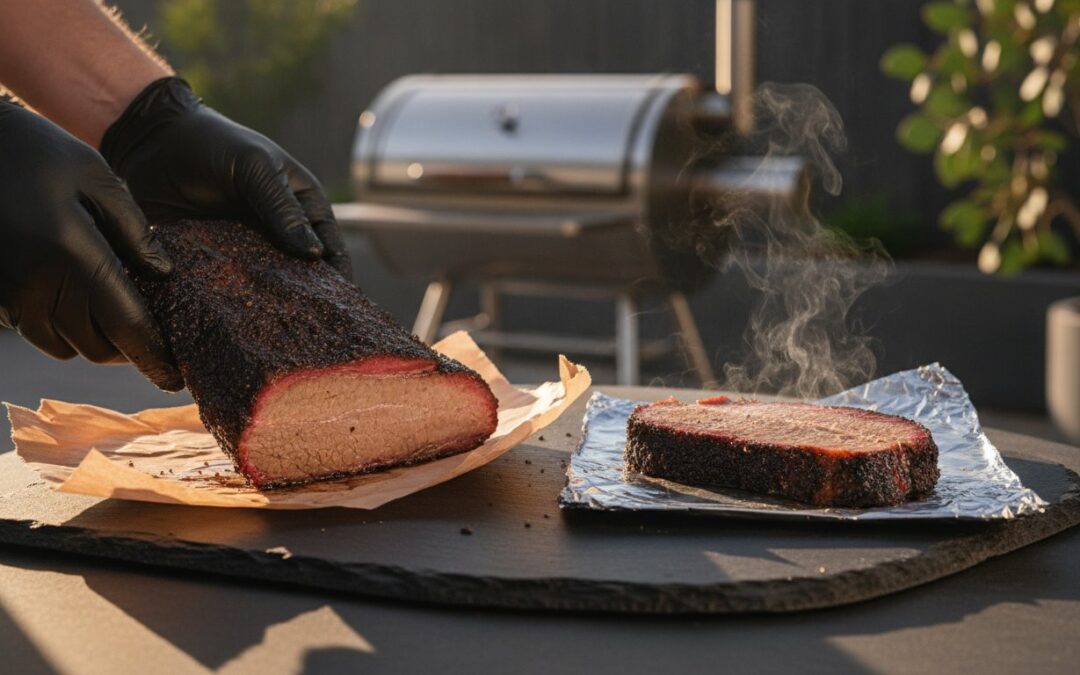
With USDA brisket values reaching $345.78 per 100 pounds this June, ruining a cook is no longer just a disappointment; it is a costly failure. Every pitmaster knows the anxiety of the stall, where the internal temperature plateaus and the clock keeps ticking. It is a common frustration to spend 16 hours at the smoker only to pull off a piece of meat with mushy bark or a bone-dry flat. Understanding the technical performance of butcher paper vs foil for brisket is the fastest way to gain total control over your final product.
Mastering the art of the wrap allows you to achieve the perfect balance of smoky bark and succulent moisture in your next cook. You don’t have to choose between speed and quality. This professional guide breaks down how to use these tools to conquer the stall and deliver competition-grade results every time. We will analyze how foil traps steam for maximum tenderness and how porous butcher paper preserves the Maillard reaction for a superior crust. Get ready to produce reliable, repeatable excellence on every single cook.
Key Takeaways
- Identify the exact mechanics of the “Texas Crutch” to reliably break the temperature stall and maintain your cooking schedule.
- Evaluate the performance of aluminum foil for rapid braising and saving up to four hours on large brisket cooks.
- Master the butcher paper vs foil for brisket choice by understanding how porous paper allows steam to escape for a firmer, professional bark.
- Compare moisture levels and bark quality side-by-side to match your wrapping technique with your specific texture goals.
- Recognize why high-quality hardwood lump charcoal is essential for preventing acrid smoke buildup under any wrap.
Understanding the Texas Crutch: Why Pitmasters Wrap Brisket
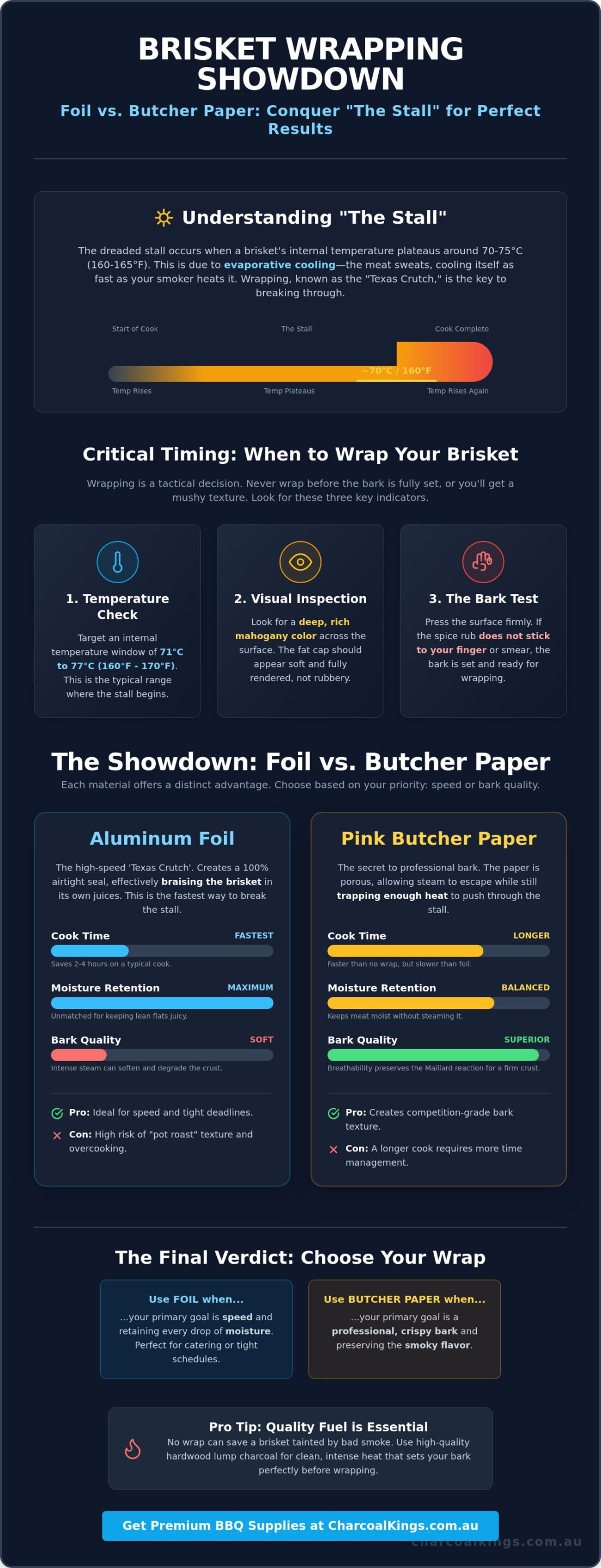
The “stall” is the most critical phase of any cook. As the internal temperature of the beef brisket reaches approximately 70°C, the rise in heat stops. This plateau occurs because of evaporative cooling. The meat releases moisture that evaporates on the surface, cooling the brisket just as fast as the smoker heats it. Wrapping the meat physically halts this process by trapping heat and humidity. This technique is known as the “Texas Crutch.”
Professional pitmasters don’t view wrapping as a shortcut. It is a tactical decision to manage the trade-off between speed and texture. While wrapping accelerates the cook and preserves moisture, it can limit smoke penetration and soften the bark. The specific choice of butcher paper vs foil for brisket allows you to prioritize either a faster finish or a superior crust.
To better understand the differences between these materials, watch this detailed breakdown:
The Role of Bark in a Successful Wrap
Bark is the combination of smoke particles, spice rub, and rendered fat. It is the result of the Maillard reaction, creating the iconic dark crust. Bark integrity is non-negotiable. You must never wrap before the bark is fully set. Perform the finger test: press your finger firmly into the surface. If the rub sticks to your skin or wipes away, the bark is still soft. Wait until the crust is firm and resistant before applying your wrap.
Identifying the Perfect Moment to Wrap
Timing the wrap requires a balance of temperature and visual evidence. Most professionals target a window between 71°C and 77°C. However, the thermometer is only half the story. Look for a deep mahogany color and signs of fat rendering. The fat should feel soft and yield under pressure rather than feeling rubbery. Your fuel choice also dictates this timing. High-quality hardwood lump charcoal produces intense, clean heat that sets the bark more efficiently than standard briquettes. Wrapping too early leads to a mushy texture; wrapping too late risks drying the meat.
Aluminum Foil: The High-Speed ‘Texas Crutch’ for Maximum Moisture
Aluminum foil is the most aggressive tool in a pitmaster’s arsenal. When you wrap a brisket in heavy-duty foil, you create a 100% airtight seal. This environment transforms the smoking process into a braise. The meat is submerged in a pressurized chamber of its own rendered fats and moisture. This total barrier is the most effective way to combat the science of the BBQ stall, as it prevents any surface evaporation from cooling the meat.
The primary benefit of foil is speed. By trapping every degree of thermal energy, foil can reduce total cook time by 2 to 4 hours on a standard 6kg brisket. This makes it the preferred choice for commercial catering or tight competition deadlines. However, this speed comes at a cost. The intense steam inside the foil package often leads to the “pot roast” effect. If left wrapped too long, the iconic crunchy bark softens into a mushy, wet texture that lacks the professional finish most enthusiasts crave. For those looking to maintain high standards while managing their equipment, using reliable BBQ accessories ensures your setup is optimized for these high-heat phases.
Pros and Cons of the Foil Wrap
- Pro: Moisture Retention. Foil is unmatched for keeping lean flats juicy and preventing stall-induced drying.
- Pro: Accessibility. You don’t need specialized supplies; high-quality kitchen foil is available everywhere.
- Con: Bark Degradation. The airtight seal prevents the Maillard reaction from continuing, often resulting in a steamed surface.
- Con: Overcooking Risk. The braising effect happens fast. It’s easy to overshoot your target temperature and end up with shredded meat rather than clean slices.
The Foil Boat Method: A Hybrid Alternative
The foil boat is a professional technique designed to bridge the gap in the butcher paper vs foil for brisket debate. Instead of a full wrap, you create a thick “cradle” or boat that covers only the bottom and sides of the brisket. This protects the meat from the direct radiant heat of the smoker floor. The top surface, where the best bark forms, remains completely exposed to the airflow. This method allows the fat cap to continue rendering and the bark to stay crunchy while the bottom of the brisket sits in a shallow pool of its own tallow. It’s a high-performance compromise that is rapidly gaining traction in professional BBQ circles for its ability to deliver moisture without sacrificing texture.
Pink Butcher Paper: The Secret to Professional Bark Texture
Pink butcher paper, often called “Peach Paper,” is the industry standard for Texas-style BBQ. Unlike the airtight seal of aluminum foil discussed in the previous section, paper is porous. It allows excess steam to escape while retaining enough heat to power through the stall. This breathability is the primary differentiator in the butcher paper vs foil for brisket debate. By letting moisture evaporate, you prevent the bark from turning into a soggy mess. The result is a brisket that maintains its structural integrity and a crust that stays firm and crunchy.
The origins of this material trace back to the legendary BBQ houses of Central Texas. Pitmasters found that paper protected the meat from the direct intensity of the fire without creating the “pot roast” environment of a braise. As noted in professional guides on Foil vs. Butcher Paper, this method is famously championed by experts like Aaron Franklin for its ability to maintain a superior crust. Using paper also allows for continued smoke interaction. While the paper eventually becomes saturated, it never completely blocks the aromatic compounds from your wood from reaching the meat surface.
Why Not All Paper is Created Equal
You must be vigilant when sourcing your supplies. Standard white butcher paper found in many Australian delis often features a plastic coating or a wax “sizing” to prevent leaks. These additives are a disaster for smoking. They will melt into your meat or block the breathability that makes paper effective. Always ensure you are using food-grade, unwaxed pink butcher paper. This specific grade is designed to withstand 16 plus hours of high-heat smoking without disintegrating or leaching chemicals into your expensive brisket.
The Fat-Soaked Advantage
One of the most significant benefits of using paper is how it interacts with rendered fat. As the brisket cooks, the paper absorbs the tallow. This creates a fat-soaked “blanket” that keeps the meat in a confit-like state. It provides enough moisture to keep the flat from drying out while the porous fibers still allow the meat to breathe. This balance creates a rich, professional mouthfeel that foil simply cannot replicate. Unwaxed, food-grade pink butcher paper is the only acceptable paper for smoking because it maintains structural integrity under heat without leaching chemicals or melting wax into your meat. By choosing the right material, you ensure your butcher paper vs foil for brisket decision leads to a competition-grade result.
Foil vs. Butcher Paper: Side-by-Side Comparison
Choosing between butcher paper vs foil for brisket requires a clear understanding of your specific goals for the cook. These materials interact differently with heat, moisture, and airflow. The following metrics define their performance under professional conditions.
- Bark Quality: Foil produces a soft, steamed surface due to trapped moisture. Paper maintains a firm, crunchy bark by allowing excess steam to escape.
- Moisture Levels: Foil offers the highest moisture retention by braising the meat in its own juices. Paper provides moderate moisture, resulting in a more natural, traditional texture.
- Cook Speed: Foil is the fastest method for breaking the stall. Paper offers a moderate speed increase compared to leaving the brisket unwrapped.
- Smoke Flavor: Foil completely halts smoke penetration once applied. Paper allows the smoke profile to continue developing slightly throughout the remainder of the cook.
Which Method Should You Choose?
Your selection depends on the variables of your specific cook. Choose aluminum foil if you are facing a strict deadline or if the brisket flat feels dangerously dry during the stall. The airtight seal provides a safety net for leaner cuts. Choose pink butcher paper if your priority is a competition-grade crust and a deep, complex smoke profile. At Charcoal Kings, we recommend using paper when cooking with premium hardwood lump charcoal. The clean-burning nature of high-quality lump charcoal produces a superior flavor that you shouldn’t stifle with an airtight foil wrap.
For the best results, ensure you have the right equipment by browsing our range of BBQ accessories and smokers.
The Resting Phase: Does the Wrap Matter?
The cook doesn’t end when the brisket leaves the smoker. Resting the meat for at least two hours is non-negotiable for protein relaxation and moisture redistribution. The material you choose for the wrap continues to influence the brisket during this phase. Foil is an excellent insulator. It retains heat for significantly longer periods, making it the ideal choice for extended rests inside an insulated cooler. However, this high heat retention can lead to carry-over cooking. If your brisket is already at the limit of tenderness, paper’s the safer resting medium. It allows the internal temperature to stabilize more gradually, preventing the meat from overcooking in its own residual heat. Both methods require a tight wrap to ensure the rendered tallow stays in contact with the meat fibers.
Maximising Results with Quality Fuel and Accessories
Your choice of fuel is the foundation of every successful cook. The technical decision between butcher paper vs foil for brisket becomes irrelevant if you are burning inferior fuel. Low-grade fuel sources often contain chemical binders and fillers. These additives release acrid, bitter smoke that becomes trapped against the meat once you apply your wrap. To achieve competition-grade results, you must use clean-burning hardwood lump charcoal. This fuel provides the pure, consistent heat necessary for a clean smoke profile that complements your chosen wrapping material.
Professional results also require the right tools. Standard kitchen foil is often too thin and prone to tearing during the wrap. Use heavy-duty, 18-inch wide aluminum foil to ensure a single-sheet, airtight seal. If you prefer paper, opt for wide-roll pink butcher paper. The extra width allows you to encase the entire brisket without multiple seams that can leak rendered tallow and heat.
Fuel Purity and Smoke Profile
Charcoal Kings hardwood lump charcoal is defined by a strict no-additives promise. We understand that purity is the key to authentic flavour. When you use butcher paper, the porous fibers allow smoke to continue interacting with the meat surface. If your fuel is dirty, the paper will absorb and concentrate those off-flavours. Clean fuel ensures that only the intended aromatics reach the beef. You can further tune this profile by matching your smoking wood to your wrap strategy. Oak provides a robust, traditional smoke that stands up well to long paper-wrapped cooks. Cherry wood offers a milder, sweeter note and contributes to a superior mahogany colour before the brisket is tucked away.
Step-by-Step: The Professional Wrap Technique
A loose wrap is a failed wrap. Air pockets create insulation gaps that slow down heat transfer and lead to uneven cooking. For butcher paper, use the double-overlap method. Lay two long sheets of paper with a 50% overlap to create a wider surface area. Place the brisket on the paper and fold the edges tightly over the meat. Every fold must be crisp and flush against the surface. For foil, the goal is a complete, pressurized seal. Wrap the meat tightly enough that the foil conforms to the shape of the brisket. This ensures maximum contact between the meat and the wrap, facilitating efficient heat transfer and breaking the stall quickly.
Ready to fire up? Shop our Premium Hardwood Lump Charcoal and take total control of your next brisket cook. Our fuel is designed for pitmasters who demand purity and performance in every bag.
Command the Smoker with Precision
Deciding between butcher paper vs foil for brisket is a tactical choice that defines your final product. Foil delivers rapid results and maximum moisture for tight schedules. Pink butcher paper preserves the Maillard reaction for a competition-grade crust. Both methods require a tight seal and a dedicated resting phase to ensure the flat remains succulent. Your technique is only as good as your fuel. Acrid smoke from chemical additives ruins the most expensive brisket, regardless of the wrap. Use 100% Natural Hardwood to guarantee a clean, authentic smoke profile every time.
We provide the tools you need to achieve repeatable, professional excellence. Our products are trusted by Australian pitmasters for their purity and high-performance heat. Stop settling for inferior fuel and start cooking with authority. Elevate your next brisket with Charcoal Kings Premium Hardwood Lump. We offer 100% Natural Hardwood with no chemical additives and provide fast nationwide shipping to ensure you are ready for your next weekend cook. Fire up your smoker and dominate the stall with confidence.
Frequently Asked Questions
Does butcher paper speed up the cooking process like foil does?
Butcher paper accelerates the cook by reducing evaporative cooling, but it is not as fast as aluminum foil. It creates a physical barrier that helps the meat move through the stall more efficiently than leaving it unwrapped. Because paper is porous, it doesn’t trap heat as aggressively as an airtight foil seal, resulting in a slightly longer cook time than the foil method.
Can I use regular brown craft paper instead of pink butcher paper?
No. Regular brown craft paper is not food-grade and often contains chemical treatments or wax coatings not intended for high-heat smoking. Pink butcher paper is specifically engineered to maintain structural integrity when saturated with fat and moisture. It is free from additives that could leach into your meat or melt under smoker temperatures.
Is it better to wrap brisket at a specific temperature or by the look of the bark?
Prioritize the appearance and texture of the bark over a specific internal temperature. While 71°C to 77°C is the standard window for the stall, you must ensure the bark is set and firm to the touch. If you wrap based strictly on temperature before the crust is established, you’ll end up with a mushy surface that lacks professional definition.
Should I add liquid like apple juice or tallow inside the wrap?
Adding liquid is optional, but rendered tallow is the professional choice for enhancing moisture without steaming the meat. Liquids like apple juice or cider can provide a flavor boost, but they increase the risk of softening the bark. Tallow reinforces the natural fats and creates a richer mouthfeel in the butcher paper vs foil for brisket comparison.
Can you reuse butcher paper after a cook?
No. Butcher paper is a single-use tool that becomes heavily saturated with rendered fat, smoke particles, and meat juices. Reusing it is unhygienic and the paper’s structural fibers are compromised after 12 plus hours in the smoker. Always start with a fresh, clean sheet to ensure the purity of your flavor profile.
What happens if I don’t wrap my brisket at all?
Leaving a brisket unwrapped results in the thickest, darkest bark but significantly extends the total cook time. The meat will stay in the stall longer as moisture continues to evaporate from the surface. This method requires precise temperature control to prevent the exterior from becoming excessively dry or bitter before the internal connective tissue breaks down.
Is foil better than paper for resting the meat in a cooler?
Foil is superior for heat retention during extended rests of four hours or more. Its airtight seal prevents thermal energy from escaping, keeping the meat in the safe serving zone for longer periods. Paper is the better choice for shorter rests when you want to prevent carry-over cooking from softening a perfect, crunchy bark.
Does the type of charcoal I use affect whether I should wrap?
Yes. The purity of your fuel determines the quality of the smoke flavor locked in before the wrap. Clean-burning hardwood lump charcoal allows for a later wrap because it doesn’t produce the acrid soot or chemical off-flavors found in cheap briquettes. High-quality fuel ensures that the smoke profile captured in the butcher paper vs foil for brisket process remains clean and professional.