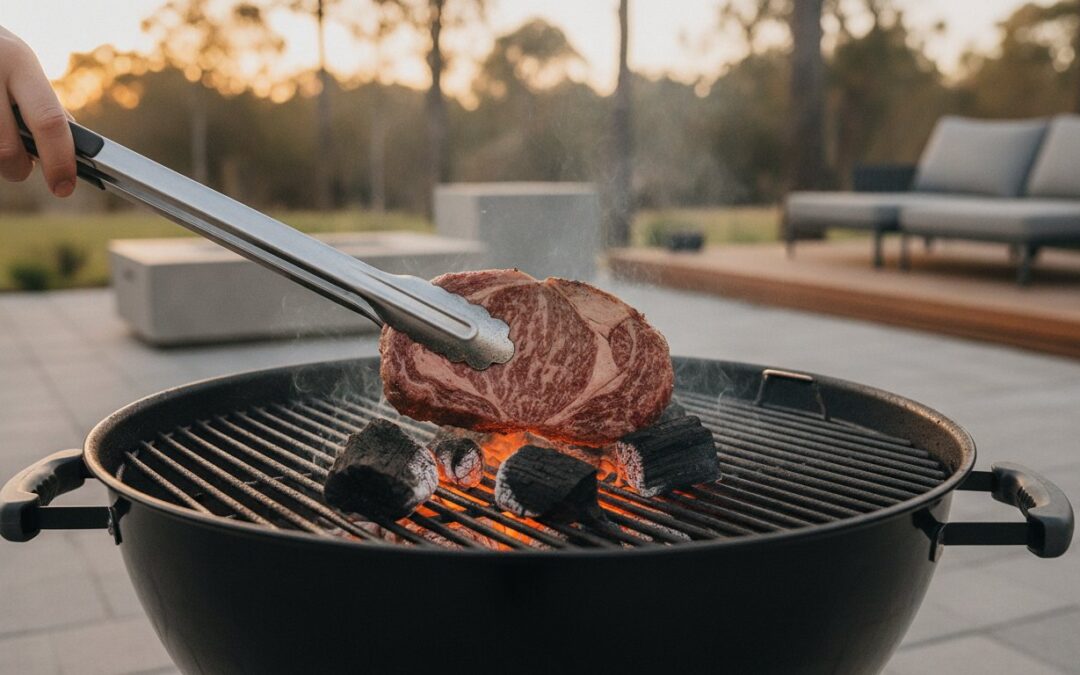
Your weekend BBQ shouldn’t taste like a hardware store warehouse. Most backyard pitmasters settle for a bag of Bunnings charcoal because it’s convenient, but that convenience often results in a face full of sparks and a steak that won’t sear. If you’ve spent more time sifting through tiny “crumbs” and dodging chemical smells than actually cooking, you’ve experienced the limits of big-box fuel.
We understand that reliable heat is the foundation of any successful cook. You want a clean burn that lets the meat speak for itself. This guide explores how retail staples like the $19.98 Jumbuck Lumpwood or $21.98 Heat Beads stack up against premium hardwood alternatives in 2026. You will learn how to identify high-quality fuel that offers longer burn times, lower ash production, and superior temperature control. We are breaking down the performance metrics of the most popular retail brands so you can decide if it’s time to move beyond the hardware aisle and toward professional-grade purity for your next cook.
Key Takeaways
- Distinguish between retail convenience and professional performance when evaluating the current Bunnings charcoal range.
- Compare heat output metrics to understand why hardwood lump is the essential choice for achieving a 700-degree sear.
- Calculate the real value of your fuel by accounting for rapid burn rates and the hidden costs of excessive ash.
- Prioritize purity and the absence of additives to protect the natural flavour of the meat and ensure a cleaner cook.
- Match your fuel selection to your specific grill type to achieve consistent temperature control and maximum efficiency.
Understanding the Bunnings Charcoal Range: Convenience vs. Quality
Convenience is the primary driver for most charcoal purchases in Australia. When you are already at the warehouse for a DIY project, grabbing a bag of fuel seems efficient. However, mass-market retail focuses on price points and shelf-readiness rather than thermal efficiency or purity. Buying your fuel in the same aisle as power tools often involves a trade-off. You sacrifice piece size, wood density, and flavour for the sake of a quick transaction. A basic understanding of what charcoal is reveals that not all carbonized wood is created equal. The manufacturing process and the wood source dictate the final performance of your fire.
Common Brands: Jumbuck, Heat Beads, and Samba
Jumbuck represents the entry-level price point for Bunnings charcoal. At $19.98 for a 7kg bag of Lumpwood Charcoal, it appeals to the casual griller looking for a budget-friendly option. Users should expect high variation in piece size and significant ash production. This brand is a basic utility fuel rather than a performance product. Heat Beads remains the Australian benchmark for briquettes. Their $21.98 Original BBQ Briquettes offer predictable burn times and reliable heat, though they rely on binders to maintain their uniform shape. Samba and other “quick-light” brands fill the specialty niche. These products often utilize chemical accelerants to ensure fast ignition. While they save time, these additives can introduce unwanted chemical smells into your meat.
Retail Packaging: Why Bag Size Can Be Deceptive
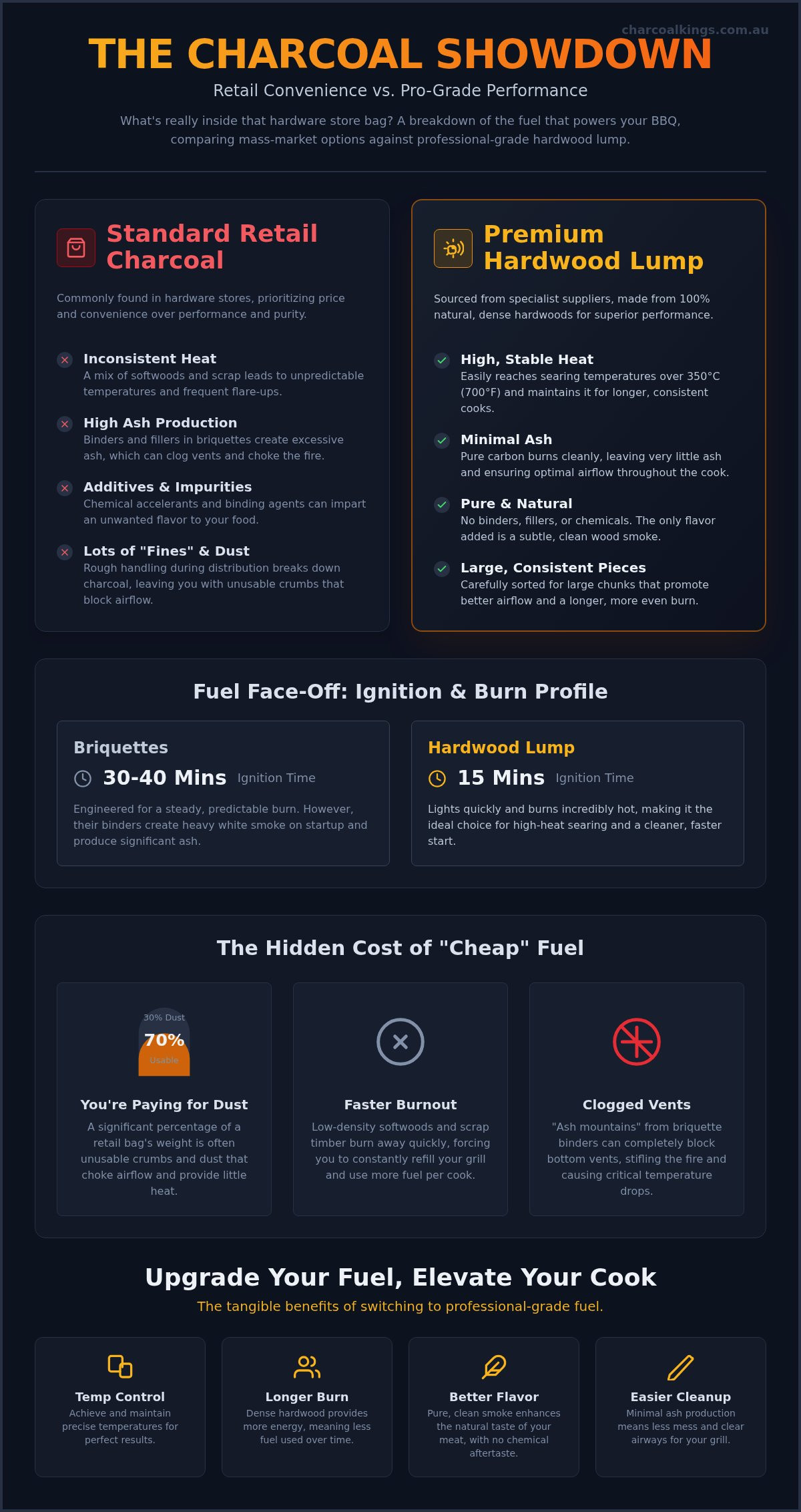
Retail packaging often hides a common industry flaw known as the “fines” problem. Mass-market distribution involves heavy industrial handling, pallet stacking, and long transport routes. This process is brutal on fragile charcoal. By the time you open a 7kg bag, a significant percentage of the weight is often unusable dust and tiny crumbs. These fines are worse than useless; they choke your grill’s airflow and prevent consistent temperature control.
Professional grade distinctions matter for serious cooks. While retail bags are filled with the leftovers of industrial production, specialist suppliers focus on hand-picked hardwood chunks. Large, consistent pieces allow for better oxygen flow and sustained high heat. If you find yourself sifting through a bag to find three usable chunks, you aren’t saving money. You are paying for dust. True value lies in the volume of usable, high-density hardwood that stays hot for the duration of your cook.
Performance Breakdown: Briquettes vs. Lumpwood Charcoal at Retail
Selecting the right fuel depends on your specific cooking goals. Most Bunnings charcoal buyers choose between the uniform reliability of briquettes and the raw intensity of lumpwood. These two fuels behave differently under the hood of a BBQ. Briquettes are engineered for duration, often providing a steady heat for 3 to 4 hours. Hardwood lump burns hotter and faster, making it the superior choice for high-heat searing where you need temperatures to exceed 350 degrees Celsius.
Ignition times also vary significantly. A chimney starter of retail lumpwood is usually ready to pour in 15 minutes. Briquettes require 30 to 40 minutes to fully ash over and stop emitting the heavy white smoke caused by their binders. If you prioritize a clean start and a better flavour profile, you should consider moving toward premium hardwood lump charcoal for your next session. The difference in start-up speed alone changes the efficiency of your weekend cook.
Briquettes: The King of Consistency?
Briquettes offer a predictable, uniform shape that simplifies airflow management for beginners. This consistency comes at a cost. Retail briquettes contain binders, starch, and sometimes mineral fillers to maintain their structure. These additives produce a neutral heat but also create a massive volume of ash. This “ash mountain” can eventually clog the bottom vents of a kettle grill, stifling the fire during long cooks. The smell of burning binders is also distinct and can mask the natural flavour of the meat.
Retail Lumpwood: The Mixed Bag
Lumpwood is the purest form of charcoal, but retail versions often fall short of professional standards. Bags of Bunnings charcoal in the budget category frequently contain a mix of softwoods or industrial scrap timber. These lighter woods burn away quickly and lack the density required for long-term heat retention. You will find yourself refilling the basket more often, which negates the lower upfront price.
Safety is another concern with low-grade lump. Carbonization is the thermal process of heating wood in an oxygen-free environment to remove moisture and gases, leaving a concentrated carbon fuel. If this process is incomplete or the wood species is resinous, the charcoal will spark and pop aggressively. This sparking is a fire hazard and a sign of poor quality control. Professional-grade hardwood lump minimizes this risk by using dense, fully carbonized timber that burns silently and steadily.
The Hidden Cost of Cheap Fuel: Ash, Chemicals, and Burn Time
Calculating the real cost of your fuel requires looking beyond the sticker price. A bag of Bunnings charcoal might save you five dollars at the checkout, but it often costs you more in the long run. Low-density timber burns through its carbon reserves in a fraction of the time. You end up dumping more fuel into the basket just to finish a standard tray of steaks. This inefficiency is a direct result of using fast-growing softwoods instead of slow-grown, dense hardwoods. If you are using twice the volume of fuel to finish a single cook, the “budget” option is actually the more expensive choice.
Ash content is a physical barrier to performance. Budget retail fuels often contain high levels of mineral fillers or bark. These materials don’t contribute to the heat; they simply turn into a thick, grey powder that chokes your grill’s intake vents. When oxygen is restricted, your temperatures drop. You lose the ability to maintain a steady 225-degree environment for smoking or a 500-degree environment for grilling. A clean burn is the only way to ensure your hardware performs as intended. Furthermore, moisture is a common performance killer in mass-market bags. If your fuel hisses or spits when it hits the heat, it hasn’t been properly carbonized. This moisture forces the fire to waste energy evaporating water rather than searing your meat.
Purity and the Absence of Additives
Charcoal Kings emphasizes purity and the absence of additives as a core standard for every bag. Many mass-produced retail brands rely on chemical “easy-light” coatings to simplify the ignition process for the casual user. You can identify these additives by the acrid, petroleum-like smell of the initial smoke. This scent isn’t just unpleasant; it’s a sign of impurities that can affect your health and the taste of your food. Clean-burning fuel is non-negotiable for long low-and-slow sessions. When meat is exposed to smoke for 8 to 12 hours, you want the natural aroma of hardwood, not the fumes of industrial binders.
Efficiency: Gram for Gram Comparison
Gram for gram, high-density woods provide superior value and more consistent temperatures. Species like Gidgee or Quebracho are prized because they pack more energy into every chunk. This density allows for a smaller fuel footprint in your grill while delivering a longer, more stable burn. Lower ash production means more oxygen reaches the coal bed, preventing the fire from suffocating halfway through your cook. Understanding these technical distinctions is the first step in mastering your fire. To see how different fuels compare across specific performance metrics, check out our guide on Charcoal: The Ultimate Guide to Fuelling Your BBQ. Get that fire roaring with the right fuel!
Matching Your Charcoal to Your Grill: A Selection Guide
Your hardware determines your fuel requirements. A standard bag of Bunnings charcoal might work for a quick sausage sizzle on a portable grill, but it won’t suffice for specialty equipment. High-end grills are designed for specific airflow patterns and thermal loads. Matching the wrong fuel to your unit leads to erratic temperatures and wasted time. Every cook starts with understanding the limitations and strengths of your specific BBQ setup.
The Kettle and Drum BBQ
The Weber Kettle and drum-style smokers are the workhorses of the Australian backyard. Briquettes are often the default choice here due to their uniform size, which helps beginners manage the “snake method” for long cooks. However, hardwood lump is the professional upgrade. Lump charcoal responds faster to vent adjustments, allowing you to spike the temperature for a final sear or drop it quickly for roasting. Proper airflow management requires consistent piece sizes that don’t fall through the charcoal grate. For those just starting their journey, our guide on Mastering the Art of Barbecuing with Charcoal provides the foundational techniques needed for these versatile units.
Specialty Grilling: Hibachi and Kamado
Specialty cookers require specialized carbon. Ceramic Kamados are highly insulated and rely on a clear air path through the fire bowl. The “crumbs” often found in budget Bunnings charcoal bags will settle at the bottom and block the intake holes, causing your fire to die out during a 12-hour brisket cook. You need large-chunk hardwood lump to maintain a robust oxygen flow. Low-spark fuel is also critical in ceramic environments to protect the internal components and ensure a clean flavour profile.
Hibachi grilling is a different discipline entirely. For authentic results, Binchotan is the only choice. This ultra-dense fuel provides a steady, high-heat infrared glow without the flames or smoke associated with standard lumpwood. It allows you to cook directly over the coals for a superior finish that retail-grade fuels cannot replicate. If you want to elevate your setup, invest in premium charcoal and accessories that match the quality of your grill. Get the right fuel for the job and stop fighting your equipment.
Offset smokers require a hybrid approach. While wood splits provide the primary flavour and heat, a base of high-quality hardwood lump is essential for establishing a long-lasting coal bed. Using dense lump ensures the firebox maintains enough thermal mass to ignite new logs instantly, preventing the “dirty smoke” caused by smouldering wood. A solid coal bed is the secret to a clean-burning fire and a consistent blue smoke profile.
Why Pitmasters Upgrade to Premium Hardwood Lump Charcoal
The transition from a weekend griller to a serious pitmaster is defined by the control you have over your fire. While Bunnings charcoal serves a purpose for basic backyard gatherings, it lacks the thermal mass required for professional-grade results. Achieving a perfect 700-degree sear on a ribeye requires a fuel that doesn’t just burn, but retains heat with intensity. Premium hardwood lump charcoal provides this density. It allows for a more efficient burn that sustains high temperatures without the constant need for refueling. You stop fighting the fire and start focusing on the meat.
The Charcoal Kings difference is rooted in performance and purity. We source our timber for its specific density and carbonization quality. Unlike global mass-market brands that prioritize volume, specialist Australian suppliers focus on the integrity of every bag. Supporting local experts ensures you receive fuel that hasn’t been crushed in international shipping or sitting in a damp warehouse for months. You get a product designed for the Australian climate and the high standards of local BBQ culture. Our Adelaide-based operation provides national shipping to ensure every pitmaster in the country has access to professional fuel.
The Flavour Profile of Natural Hardwood
Professional chefs avoid chemical-laden retail fuels because they understand the impact of smoke on the final product. Additives found in budget briquettes produce a heavy, acrid smoke that masks the natural fat and seasoning of the meat. Natural hardwood lump offers a subtle, clean smokiness that enhances the profile of your cook. Lump Charcoal is the purest form of BBQ fuel, consisting of carbonized wood with no binders, fillers, or chemical additives. This purity ensures that the only thing you taste is the quality of your ingredients and the clean essence of the timber.
Where to Find the Good Stuff
Moving beyond the hardware store aisle is the first step toward better BBQ. While convenience is tempting, the quality gap between big-box retail and specialist suppliers is vast. Specialist providers offer grade distinctions and variety-specific fuels that you won’t find next to the garden hoses. Bulk delivery from an expert source also removes the hassle of lugging heavy bags from the store every weekend. It ensures your pantry is always stocked with high-performance fuel that is ready for any session, whether it’s a quick grill or a 12-hour smoke.
Upgrade your cook with Premium Hardwood Lump Charcoal from Charcoal Kings and experience the difference that professional-grade fuel makes. Stop settling for crumbs and start mastering your fire with the finest hardwood available. Get your pit ready for a real session.
Take Control of Your Next Cook
Charcoal Kings provides the performance you need with 100% Natural Hardwood and No Chemical Additives. As a South Australian Owned & Operated specialist, we focus on sourcing high-density timber that delivers superior heat retention and a clean flavour profile. Whether you need standard lump or Professional Grade Binchotan, we serve the entire country with fuels that respect the meat. Stop settling for retail scraps—shop Premium Hardwood Lump at Charcoal Kings and start producing the results your BBQ was designed for. Your grill deserves better fuel.
Frequently Asked Questions
Is Bunnings charcoal safe to use in a ceramic Kamado?
Yes, it is safe, but it is not the optimal choice for ceramic cookers. The high volume of small fragments and “fines” often found in retail bags can settle at the bottom of the fire bowl. This debris chokes the air intake holes and prevents precise temperature control. For a Kamado, you should prioritize large-chunk hardwood lump to ensure consistent airflow and a robust burn.
What is the difference between Jumbuck charcoal and Heat Beads?
The primary difference lies in their form and intended use. Jumbuck typically offers budget-friendly lumpwood charcoal made from mixed timber, providing raw, high-heat intensity for quick grilling. Heat Beads is the Australian standard for uniform briquettes. These are engineered with binders to deliver a predictable, long-lasting burn that is better suited for roasting or the “snake method” in kettle BBQs.
Why does my charcoal spark so much when I light it?
Excessive sparking is a direct result of incomplete carbonization or the use of resinous softwoods. When wood isn’t fully processed into carbon, trapped gases and moisture expand rapidly under heat, causing the charcoal to pop and spit. Professional-grade hardwood lump is fully carbonized and utilizes dense species to minimize these hazards. This ensures a silent, steady burn without the dangerous firework display.
Does lump charcoal burn hotter than briquettes?
Yes, lump charcoal achieves significantly higher temperatures than briquettes. It is pure carbonized wood without the mineral fillers or starch binders found in compressed fuels. This purity allows for maximum oxygen flow and rapid energy release. It’s the essential choice for high-heat searing where you need to exceed 350 degrees Celsius to get that perfect crust on a steak.
Can I use firewood instead of charcoal in my BBQ?
Firewood is suitable for offset smokers but isn’t a direct substitute for charcoal in most backyard grills. Raw wood contains moisture and volatile gases that produce heavy, bitter smoke if the fire isn’t managed perfectly. Charcoal has already undergone the carbonization process. It provides a stable, clean-burning heat source that is far easier to control in a kettle or ceramic cooker.
How long does a bag of premium hardwood lump charcoal last?
A bag of premium hardwood lasts significantly longer than standard retail fuel due to its density. Dense species like Gidgee provide more energy per gram, meaning you use less volume to maintain your target temperature. While a bag of Bunnings charcoal might have a lower upfront price, the superior burn time of professional hardwood often makes it more cost-effective over multiple cooking sessions.
Is it worth paying more for Binchotan charcoal?
Binchotan is worth the investment if you are performing authentic Japanese-style grilling or using a Hibachi. It is an ultra-dense fuel that burns for up to 6 hours with a steady, flameless infrared heat. This allows you to cook directly over the coals for a superior finish. Standard charcoal cannot replicate the clean, high-intensity glow that Binchotan provides for specialty grilling.
How should I store my charcoal to keep it fresh for the next cook?
Store your charcoal in a cool, dry place away from ground moisture. Charcoal is highly porous and will absorb humidity from the air, which leads to difficult ignition and “hissing” during your next cook. Use an airtight plastic bin or a dedicated weather-proof storage bag. Keeping your fuel bone-dry ensures it lights instantly and reaches its maximum thermal potential every time you grill.