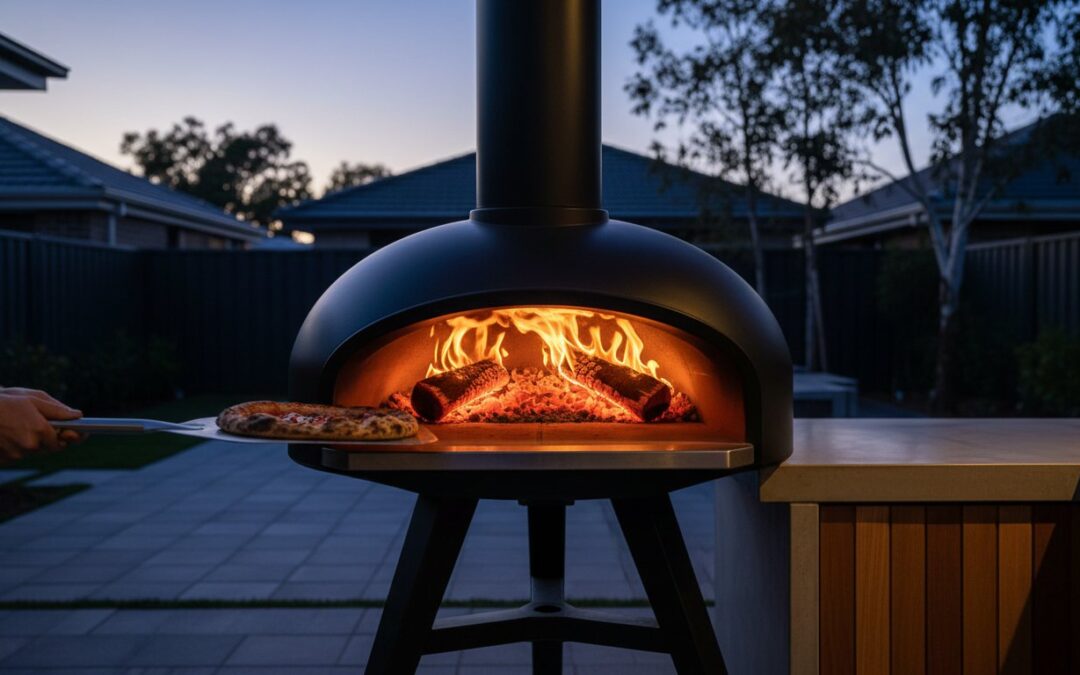
A wood-only fire is the fastest way to ruin a high-stakes pizza night with a soggy, undercooked base. You’ve likely felt the frustration when your oven floor temperature drops 50 degrees after just two pizzas, leaving you with a limp crust instead of a crisp finish. It’s a common bottleneck for Australian backyard chefs who want professional results without the constant fuel management. Choosing the best fuel for pizza oven charcoal provides the high-performance thermal mass required to keep your stone scorching through the entire session.
Using a premium natural hardwood foundation is the secret to maintaining a stable environment that supports a 60-second Neapolitan bake. You’ll achieve that coveted leopard spotting and consistent heat for every guest in the queue while eliminating the heavy smoke that ruins delicate dough flavours. This guide explores the hybrid techniques used by experts to keep temperatures locked at 450 degrees for hours. We’ll break down the specific charcoal types that offer the hottest, longest-lasting burn for your oven so you can stop fussing with the fire and start enjoying the food.
Key Takeaways
- Understand the critical balance between conductive floor heat and convective dome heat to ensure a perfectly cooked base and bubbly toppings.
- Learn why premium hardwood lump charcoal is the superior choice over briquettes for reaching the extreme peak temperatures required for authentic pizza.
- Master the “Hybrid Heat” strategy by establishing a deep coal bed that creates a saturated heat state for consistent, professional results.
- Identify the best fuel for pizza oven charcoal setups to avoid chemical-laden “fast-light” products that can ruin the natural flavour of your crust.
- Discover how 100% natural Australian hardwood charcoal provides a cleaner, hotter burn that keeps your oven at peak performance for hours.
The Role of Charcoal in Pizza Ovens: Foundation vs. Flame
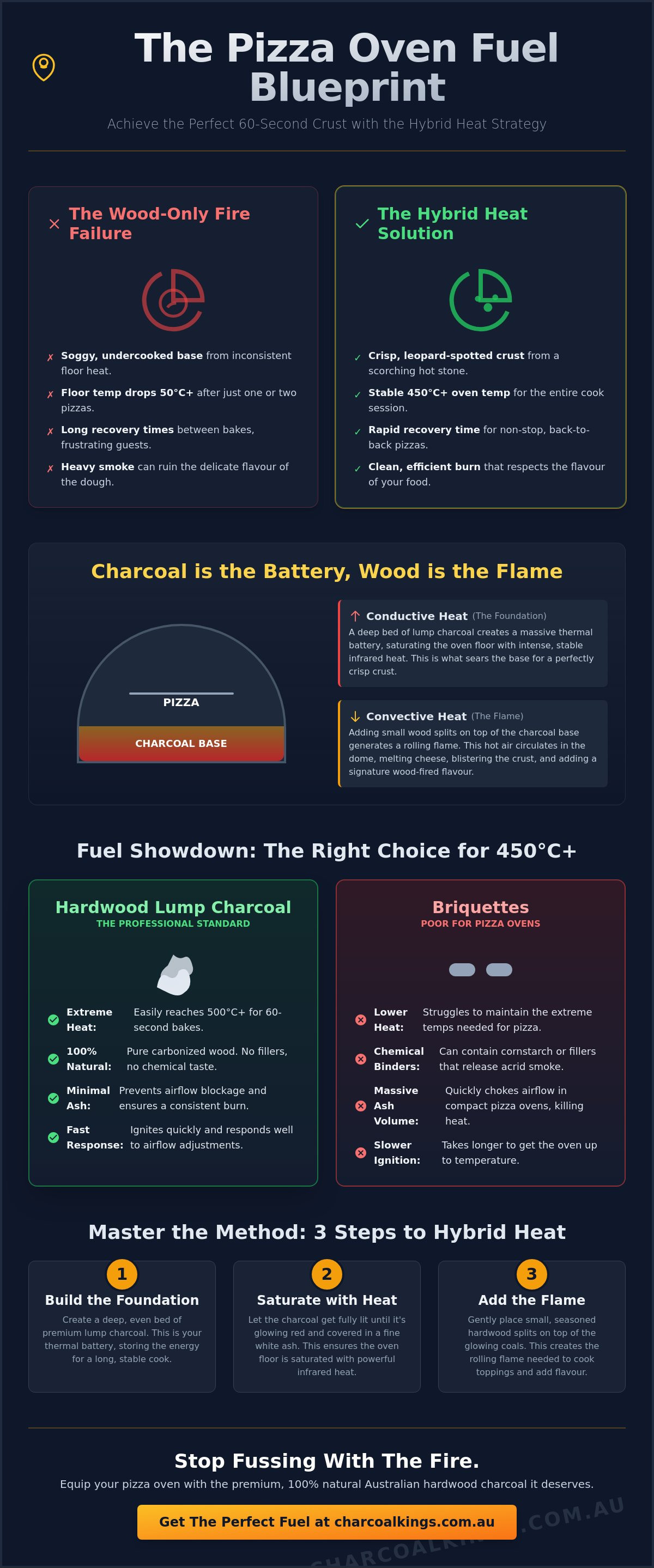
Mastering a Pizza oven requires more than just high heat; it requires thermal stability. While many beginners rely solely on wood, experienced pitmasters know that premium lump charcoal is the ultimate thermal foundation for both massive masonry builds and portable stainless steel units. Charcoal acts as the battery of your oven, storing massive amounts of energy that wood alone cannot sustain during a long cooking session.
Using a hybrid approach is widely considered the best fuel for pizza oven charcoal setups because it balances two critical heat types. Conductive heat comes from the oven floor, searing the base of your dough instantly. Convective heat rolls across the dome, melting cheese and blistering the crust. Without a solid charcoal base, your floor temperature will plummet after the first pizza, leading to “soggy bottom” syndrome and frustrating wait times.
To better understand this concept, watch this helpful video:
The Charcoal King philosophy starts with a chemical-free, natural base. We don’t use briquettes filled with binders or fillers that taint your crust. A clean-burning, natural hardwood charcoal creates a deep bed of embers that provides a consistent infra-red heat source. This foundation allows you to focus on the wood flame for flavor without constantly worrying about the core temperature of your refractory bricks.
Why Thermal Mass Matters for Pizza
Thermal mass refers to the ability of your oven’s internal materials to absorb and hold heat. In Australian conditions, maintaining a floor temperature of 400°C is vital for Neapolitan styles. Charcoal provides a steady infra-red output that permeates the bricks more efficiently than flickering wood flames. This reduces “recovery time” significantly. Instead of waiting 10 minutes for the floor to reheat between bakes, a thick charcoal base keeps the stone ready for the next launch in under 120 seconds.
Charcoal vs. Wood: The High-Heat Debate
There is a common misconception that charcoal is “too cold” for high-heat pizza. In reality, hardwood charcoal has a higher energy density than seasoned firewood. It’s concentrated carbon. While wood is essential for the rolling flame and that signature smoky aroma, it’s the charcoal that does the heavy lifting for the best fuel for pizza oven charcoal configurations. For a deeper look at how different fuels perform under pressure, check out Charcoal: The Ultimate Guide to Fuelling Your BBQ. High-quality lump charcoal can easily push oven temperatures past 500°C when airflow is managed correctly, proving it’s more than capable of handling authentic 60-second bakes.
Choosing Your Base: Lump Charcoal vs. Briquettes for Pizza
The performance of your pizza oven depends entirely on the energy density of your fuel. While backyard grillers often debate the merits of briquettes, the technical requirements of a 400°C+ pizza environment make the choice clear. Lump charcoal reaches peak temperatures significantly faster than compressed alternatives. Using charcoal efficiently involves selecting fuel with high fixed carbon content, which ensures the fire stays hot enough to flash-bake dough in 60 to 90 seconds. Lump charcoal is the superior choice because it’s pure carbonized wood, offering the aggressive heat needed for that perfect leopard-spotted crust.
Briquettes present two major problems in small, portable pizza ovens. First, they produce a massive volume of ash. In a compact fuel tray, this ash buildup quickly chokes the airflow, causing your temperature to plummet mid-party. Second, cheap briquettes often contain cornstarch binders or mineral fillers. At extreme temperatures, these additives can release acrid smoke that taints your pizza base. When you’re pushing an oven to its limit, the best fuel for pizza oven charcoal is always a natural product that leaves minimal residue. You’ll spend less time cleaning out the firebox and more time stretching dough.
Hardwood Lump Charcoal: The Professional Standard
Professional pizzaiolos insist on 100% natural hardwood lump because it provides a clean, neutral flavour profile. You don’t want the fuel to overpower the delicate notes of a San Marzano tomato sauce. Look for bags containing large, fist-sized lumps; these pieces create the gaps necessary for sustained airflow and high-oxygen combustion. Gidgee and Quebracho are the gold standards here because their incredible density results in a higher carbon percentage and a longer, hotter burn than softer woods. If you want to see the difference quality makes, try our premium hardwood lump for your next cook.
Binchotan for Pizza: Is It Worth It?
Binchotan is the pinnacle of charcoal engineering. While traditionally used for yakitori, it’s becoming a secret weapon for long pizza sessions. This Japanese-style white charcoal burns for 4 to 6 hours at a steady, intense heat. It produces zero smoke and zero odour, ensuring the integrity of your ingredients remains untouched. It’s an investment, but for those hosting large gatherings, the longevity means you won’t be refuelling the oven every twenty minutes. Learn more about this specialty fuel in our Binchotan Charcoal: The Ultimate Guide to Japanese White Charcoal. Using Binchotan as the best fuel for pizza oven charcoal setups ensures a stable thermal floor for hours on end.
The Hybrid Heat Strategy: Using Charcoal and Wood Together
Mastering the hybrid heat method is the secret to 60-second Neapolitan results. It starts with a foundation of 100% natural hardwood lump charcoal. This process isn’t just about getting things hot. It’s about building a consistent, long-lasting thermal engine. Follow these four steps to dominate your next cook.
- Step 1: Establish a deep coal bed. Load your fuel basket with premium hardwood lump. Avoid chemical-laden briquettes that produce excessive ash. You want a dense pile of glowing coals that provides a steady base. This reliability is why many pros consider hardwood lump the best fuel for pizza oven charcoal setups.
- Step 2: Reach “Saturated Heat.” Allow the oven to preheat for at least 35 to 45 minutes. You’re looking for the moment the soot burns off the internal bricks and they begin to glow. This thermal mass ensures the floor stays hot enough to blister the dough instantly.
- Step 3: Add hardwood splits. Just moments before you launch the pizza, place two or three small wood splits directly onto the hot coals. These ignite instantly, providing the intense top-down heat required for the perfect “leopard spotting” on the crust.
- Step 4: Maintain the balance. Keep an eye on your infrared thermometer. If the floor drops below 380°C, add more charcoal. If the top isn’t browning, add another wood split. It’s a constant calibration between the floor’s conductive heat and the dome’s radiant heat.
Creating the “Rolling Flame” with Wood Splits
Wood provides the visible flame that charcoal lacks. This rolling flame is essential for melting cheese and caramelising toppings before the base burns. Use “cigar-sized” splits, roughly 2 to 3 cm thick. These ignite faster than heavy logs. This rapid combustion triggers pyrolysis, where wood gases turn into a visible, licking flame that rolls across the oven ceiling. It’s the key to that authentic wood-fired flavour profile and high-temperature performance.
Managing Airflow for Maximum Temp
Oxygen is the engine of combustion. When stacking your fuel, leave gaps between the charcoal pieces to let air reach the base. A choked fire produces smoke, not heat. Your chimney damper and oven door are your primary tools here. Keep the door open during the initial heat-up to pull oxygen through the system. If you’re struggling with temperature consistency, check out our guide on Mastering the Art of Barbecuing with Charcoal for advanced airflow techniques. Proper ventilation ensures your best fuel for pizza oven charcoal performs at its peak without extinguishing. Get Sizzlin’!
Common Mistakes When Fueling Your Pizza Oven
Even the most expensive Australian-made ovens fail to perform without proper fire management. Choosing the best fuel for pizza oven charcoal is only half the battle. You have to handle that fuel with precision to avoid ruining your crust or, worse, your health. Backyard chefs often struggle with inconsistent results because they treat a pizza oven like a standard kettle barbecue. These units operate at much higher intensities, meaning every error is magnified.
- Using Treated Fuel: Supermarket briquettes often contain chemical binders and fillers. These additives release foul-smelling smoke that sticks to the dough.
- Overloading the Firebox: Dumping too much charcoal at once restricts airflow. A fire needs oxygen to reach 450°C. If you choke the intake, your temperatures will plummet and produce heavy, bitter smoke.
- Liquid Accelerants: Never use fire starter fluid in a pizza oven. In a confined ceramic or stainless steel dome, these liquids vaporise rapidly. They can cause a dangerous flashover the moment you lean in to check your stone.
- Rushing the Bake: Many beginners launch their first pizza while the oven dome is still covered in black soot. You must wait for the “clear” stage where the carbon burns off the internal bricks.
The Chemical Taint Problem
Pizza dough is incredibly porous. It acts like a sponge for Volatile Organic Compounds (VOCs) found in cheap, fast-light fuels. If you use charcoal with chemical accelerants, your 90-second bake will taste like kerosene. At 450°C, any chemical additive will vaporize into your food. This is why “Natural” isn’t a marketing buzzword; it’s a requirement for high-heat cooking. High-quality lump charcoal provides the clean, neutral heat needed for authentic Neapolitan results without the metallic aftertaste of industrial binders.
Temperature Spikes vs. Sustained Heat
A common failure is the “burnt top, raw bottom” syndrome. This happens when the ambient air is scorching but the floor hasn’t reached thermal saturation. You need a laser thermometer to verify the stone is at least 370°C before the first launch. Relying on the built-in door gauge is a mistake because those only measure air temperature near the exit. For those running indoor-outdoor setups, managing creosote is vital for safety. You can use Smartburn to reduce flue deposits and keep your ventilation clear during long cooking sessions. Maintaining a consistent bed of coals is the only way to ensure the best fuel for pizza oven charcoal delivers a perfect, blistered crust every time.
Stop settling for subpar crusts and inconsistent heat. Shop our range of premium natural hardwood charcoal and master your fire today.
Charcoal Kings: Premium Fuel for the Perfect Crust
Charcoal Kings stands as the premier supplier for Australian backyard chefs and professional pizzaiolos. Finding the best fuel for pizza oven charcoal determines whether you get a soggy base or a blistered, leopard-spotted crust. We provide 100% natural hardwood lump that hits the extreme temperatures required for authentic Neapolitan styles. Our fuel is the top choice for enthusiasts who refuse to settle for the low-grade briquettes found in local supermarkets.
Our commitment to quality starts with the source. Every bag contains 100% natural, chemical-free hardwood. We don’t use fillers, binders, or hidden additives that produce foul-smelling smoke. When you cook at 450°C, any impurities in your fuel will end up in your dough. Our charcoal ensures that the only thing you taste is the fresh ingredients and the subtle, clean aroma of premium timber.
Professional wood-fired pizzerias across Australia rely on our consistent burn rates to manage high-volume services. We offer dedicated wholesale opportunities for food service businesses requiring reliable heat 365 days a year. Our bulk supply options help restaurants maintain narrow temperature margins, ensuring every pizza comes out of the oven with a perfectly set structure. We understand that in a commercial kitchen, fuel performance is a bottom-line metric.
Get Sizzlin’! Ordering from Charcoal Kings is straightforward and efficient. We manage a robust distribution network from our South Australian base to ensure your fuel arrives ready for the weekend. Expect fast, reliable delivery whether you are in a metro hub or a regional town. We pack our charcoal to minimize breakage, giving you large, usable lumps instead of a bag full of dust.
The Hardwood Difference
High-performance pizza cooking requires the best fuel for pizza oven charcoal to sustain intense heat. Our specific hardwood blends are selected for their density and high calorific value. These timbers burn hotter and last longer than softwoods. A major benefit for oven owners is our low-ash formula. Less ash means easier cleanup and less risk of debris blowing onto your pizza stone during a cook. While we are proud of our South Australian roots, we provide nationwide shipping to keep ovens firing across the country.
Essential Accessories for Pizza Masters
Your pizza journey doesn’t end with the fuel. We stock a curated selection of rubs and sauces designed to complement the unique flavors of wood-fired cooking. To get your fire started correctly, we supply natural kindling and fire starters. Avoid chemical fire lighters at all costs; they emit odors that can ruin a delicate sourdough crust. Our natural starters ignite quickly without affecting the flavor of your food.
Master the Flame with Premium Hybrid Heat
Achieving the perfect Neapolitan crust requires more than just high heat; it demands the right foundation. You’ve learned that the hybrid strategy, combining lump charcoal for base temperature with hardwood for flame, is the gold standard for 2026. This method ensures your oven hits those critical 450 degree Celsius marks consistently. Using a chemical-free, 100% natural hardwood source prevents off-flavors from ruining your dough. Professional pizzerias across Australia rely on this specific balance to maintain high output without losing heat. When you choose the best fuel for pizza oven charcoal, you aren’t just buying fuel; you’re investing in a reliable 4 hour burn time that won’t quit halfway through your cook. Don’t settle for subpar briquettes that leave piles of ash and low heat. Stick to the performance standards set by the masters of the craft. Our 100% natural hardwood products deliver the chemical-free performance needed for a clean, authentic taste every time. It’s time to elevate your backyard setup to a professional level with fuel that burns hotter and lasts longer; you might also discover Culinary Wilderness to find luxury appliances that complete your outdoor kitchen.
Get Sizzlin’ with the Best Pizza Oven Fuel – Shop Now!
Grab your peel and get that oven fired up for the ultimate crust.
Frequently Asked Questions
Can I use regular BBQ briquettes in my pizza oven?
Don’t use standard supermarket briquettes in your pizza oven. Most contain chemical binders and coal dust that impart a foul, chemical taste to your pizza dough. High-performance pizza ovens require temperatures exceeding 400°C, which cheap briquettes cannot sustain. Stick to 100% natural hardwood lump charcoal or professional-grade briquettes for a clean, intense heat source that protects your food and your oven.
How much charcoal do I need for a 3-hour pizza session?
Plan for 3kg to 5kg of premium lump charcoal for a 3-hour cooking session. Start with a 1kg base to establish a solid coal bed. Add 500g of fresh fuel every 30 to 45 minutes to maintain a stone floor temperature of 450°C. This ensures consistent heat for the best fuel for pizza oven charcoal performance throughout the entire afternoon.
Is lump charcoal better than wood for a pizza oven?
Lump charcoal is superior for maintaining a steady base temperature, but wood provides the necessary rolling flame for top-down cooking. Charcoal burns hotter and longer, reaching 500°C with ease. Use 100% natural lump charcoal to provide 80% of your heat and add hardwood splits for the final 20% to achieve that signature wood-fired crust and char.
Why is my pizza oven not getting hot enough with charcoal?
Insufficient airflow or wet fuel usually prevents your oven from reaching peak temperatures. Check that your vents are 100% open and your charcoal is stored in a dry place with less than 12% moisture content. Low-density charcoal produces less energy. Switch to a high-carbon hardwood variety to ensure you hit the 400°C threshold required for authentic Neapolitan styles.
Can I use Binchotan in a portable pizza oven like an Ooni?
You can use Binchotan in portable ovens, but it’s difficult to ignite in small fuel trays. Binchotan burns at extreme temperatures for over 4 hours, which provides incredible heat stability. Most Australian backyard chefs find 100% natural hardwood lump charcoal more practical because it reaches 450°C faster. If you use Binchotan, pre-start it in a chimney starter for 20 minutes first.
How do I stop my charcoal from producing too much smoke?
Stop charcoal smoke by using fuel with 0% chemical additives and a low moisture content. Smoke is a sign of incomplete combustion or impurities in the coal. Ensure your charcoal is fully lit and glowing red before adding your pizza to the deck. High-quality hardwood charcoal produces minimal ash and virtually zero smoke once it reaches its target temperature.
What is the best wood to mix with charcoal for pizza?
Australian Ironbark or Oak are the best woods to mix with your charcoal base. These hardwoods have a high density, providing a long burn and a consistent 500°C flame. Use kiln-dried splits with a moisture level below 15% to avoid sudden temperature drops. This combination creates the best fuel for pizza oven charcoal setups by balancing steady base heat with aromatic smoke.
Do I need to wait for the charcoal to turn white before cooking pizza?
Wait until the charcoal is covered in a thin layer of grey ash and glowing red before launching your pizza. This process takes approximately 15 to 20 minutes in most portable and stationary ovens. Cooking too early results in thick smoke and acrid flavours on your crust. Once the coals are white, the temperature is stable enough to cook. Get Sizzlin’!