Your Weber Kettle is a precision airflow instrument, but it’s only as good as the fuel you feed it. Finding the best charcoal for weber kettle cooking means moving beyond generic fillers and focusing on high-density performance. Most backyard cooks struggle with cheap supermarket briquettes that burn out mid-cook or ruin a prime rib with foul chemical smells. You’ve likely felt the frustration of chasing inconsistent temperatures for hours only to end up with food that tastes like a campfire’s leftovers. To get the most out of your grill in 2026, you need a fuel that matches the engineering of the Kettle itself.
We agree that a Sunday roast or a twelve-hour brisket deserves better than additive-heavy fuel. This guide will teach you how to select the perfect hardwood lump or clean-burning briquette to achieve restaurant-quality searing and steady 8-hour smoking sessions. We’ll examine the specific benefits of Australian hardwoods like Gidgee and Mallee to ensure every cook delivers pure, authentic flavor without compromise. It’s time to stop fighting your fuel and start mastering the craft of professional barbecue.
Key Takeaways
- Learn how fuel density interacts with the Weber Kettle’s one-touch airflow system to optimize heat distribution and thermal control.
- Discover why high-density Australian hardwood lump is the best charcoal for weber kettle searing, providing the intense heat needed for professional results.
- Master low-and-slow smoking by using additive-free briquettes designed to hold steady temperatures for 8 to 12 hours.
- Eliminate chemical odors and off-flavors by switching to natural fuels that contain no fillers or synthetic binders.
- Understand the performance metrics of Gidgee and Mallee hardwoods to select the right fuel for every cook on your menu.
Fueling the Icon: Why Charcoal Choice Defines Your Weber Kettle Performance
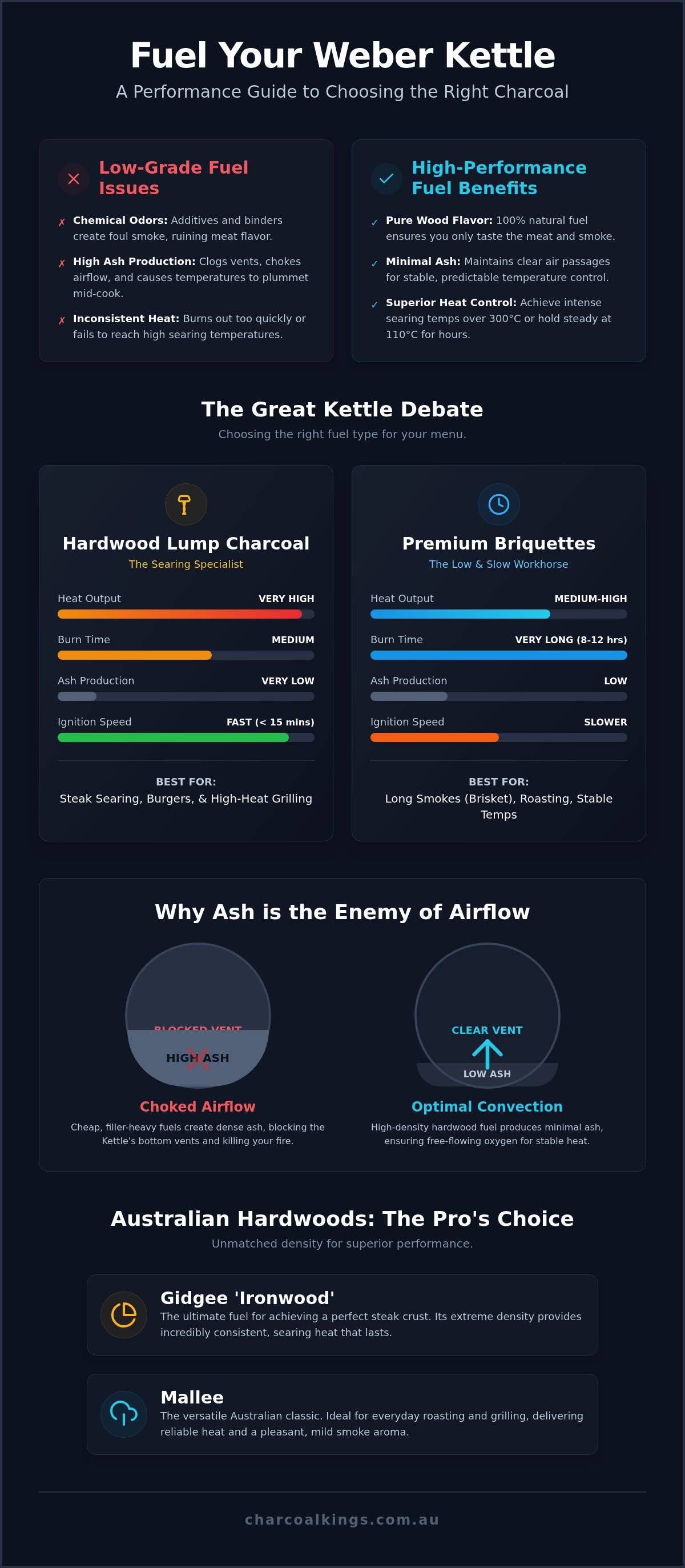
The Weber Kettle is a masterpiece of thermal engineering. Its spherical chamber creates a natural convection current, drawing air through the bottom vents and exhausting it through the lid. This “chimney effect” is entirely dependent on the quality of your fuel. If you use low-grade Charcoal, you’re essentially putting low-octane fuel in a high-performance engine. Finding the best charcoal for weber kettle use requires understanding how density and purity dictate your temperature control. Your fuel choice determines whether you’ll maintain a steady 110°C for a brisket or hit the 300°C required to properly sear a ribeye.
The Relationship Between Airflow and Ash
Ash is the enemy of the Weber Kettle. When you use cheap, filler-heavy briquettes, they collapse into a fine, heavy powder. This sediment settles directly over the bottom “one-touch” cleaning system. It chokes the oxygen supply mid-cook, causing your temperatures to plummet just when your meat is entering the critical phase. High-density hardwood fuels produce significantly less ash. They maintain their physical structure longer, allowing oxygen to circulate freely around the coals. This keeps the internal convection currents moving, ensuring your food cooks evenly from all sides without the need for constant vent adjustments.
Lump vs. Briquettes: The Great Kettle Debate
Choosing between hardwood lump and briquettes depends on your specific menu. Hardwood lump is raw carbon. It ignites quickly and generates the intense infrared heat required for a professional sear. Briquettes are the workhorses of the roasting world. They offer a uniform shape and a predictable, rhythmic burn rate. Most seasoned pitmasters keep both in their garage. You’ll want the raw power of lump for quick-seared steaks and the steady endurance of premium briquettes for a whole chicken or a Sunday roast. The best charcoal for weber kettle enthusiasts is often a strategic choice based on the length of the cook.
Purity defines the final taste of your meal. Supermarket brands often rely on starch binders, coal dust, or chemical accelerants to keep their costs down. These additives release acrid smoke that penetrates the meat, leaving a bitter, chemical aftertaste that ruins expensive cuts. Professional-grade fuel contains zero additives. It smells like clean timber and ensures that the only thing you taste is the natural flavor of the meat and your chosen smoking woods. If your fuel smells like a chemical plant when it’s lighting, it will taste like one when you’re eating.
Hardwood Lump Charcoal: Unlocking Maximum Heat and Authentic Smoke Flavour
Natural hardwood lump is the definitive fuel for those seeking the highest possible temperatures. Unlike compressed alternatives, lump is essentially pure carbonized timber. It ignites in under 15 minutes in a chimney starter, making it the best charcoal for weber kettle users who value efficiency on weeknights. Because it’s 100% natural wood, it provides a clean, subtle smokiness that enhances rather than masks the flavor of your meat. You won’t find any chemical binders or fillers here. Just raw, primal heat.
Australian Hardwoods: Gidgee and Mallee Performance
Australian timbers offer a performance level that imported softwoods like Oak or Hickory cannot match. Gidgee is often called ‘Ironwood’ because of its extreme density. It produces a searing heat that stays consistent, making it the ultimate choice for a perfect steak crust. Mallee is the versatile Australian classic. It’s ideal for everyday roasting where you need reliable heat and a pleasant, mild aroma. When compared to soft-wood lump, Australian hardwoods burn for significantly longer. This means you use less fuel per cook. This efficiency is a core part of modern, sustainable charcoal production and ensures your Weber remains at peak performance for the duration of the cook.
Optimising Lump Placement in the Kettle
The geometry of the Weber Kettle allows for creative fuel management. Using charcoal baskets helps concentrate the heat for indirect cooking. This prevents your roast from burning while ensuring a crisp, golden exterior. For those chasing maximum intensity, the ‘Vortex’ method is essential. By placing a conical accessory in the center of the grill and filling it with high-grade lump, you create a concentrated jet of heat. This technique transforms your kettle into a high-heat air fryer, perfect for crispy chicken wings.
Quality processing is vital when using lump. Poorly made charcoal often ‘sparks’ or ‘pops’ due to trapped moisture or uncarbonized wood. Professional-grade lump undergoes a rigorous carbonization process to ensure a stable, spark-free burn. This level of quality is why many serious pitmasters choose to source premium hardwood lump from specialist suppliers. You’ll spend less time dodging embers and more time perfecting your sear. Authentic smoke flavor starts with the timber, and there is no substitute for the purity of high-density Australian hardwood.
Premium Briquettes: The Secret to Low-and-Slow Consistency
Consistency is the primary requirement for any long-haul cook. When you target an 8 to 12-hour window for a brisket or pork shoulder, you cannot afford unpredictable temperature swings. Premium briquettes provide this stability because they are manufactured to a uniform size and density. This uniformity allows you to predict exactly how much energy is released at any given moment. Unlike the irregular shapes of lump charcoal, briquettes sit tightly together. This ensures a reliable, rhythmic transfer of heat from one coal to the next throughout the entire session.
The “Purity Promise” separates professional-grade fuel from retail alternatives. Many supermarket briquettes contain coal dust, limestone, and chemical accelerants. These additives don’t just ruin the flavor; they create massive amounts of ash. In a Weber Kettle, excessive ash is a cook-killer. It builds up in the bottom of the bowl and eventually chokes the vents. Choosing the best charcoal for weber kettle endurance means selecting a product that burns down to almost nothing. This keeps your airflow clear for the entire duration of the cook.
Mastering the Snake Method in a Weber Kettle
The Snake Method is the ultimate setup for a 10-hour burn. You arrange your briquettes in a semi-circle around the edge of the charcoal grate, usually two wide and two high. You light one end, and the fire slowly travels along the line. Because unlit fuel sits inside the kettle for hours before igniting, it must be free of chemicals. If your fuel contains synthetic binders, those toxins will off-gas onto your meat as they catch fire. For more technical details on fuel management, see our guide on Mastering the Art of Barbecuing with Charcoal.
The Minion Method for Kettle Roasting
For a 4-hour lamb roast or a whole chicken, the Minion Method is more efficient. Fill your charcoal baskets with unlit briquettes and drop a few glowing coals on top. The fire works its way down, providing a steady heat source that won’t “spike” like low-quality alternatives. Premium briquettes maintain their structural integrity as they burn. This prevents the fire from collapsing and causing a sudden surge in temperature. Using a water pan in the center of the grate serves two purposes. It acts as a heat sink to stabilize the internal environment and adds moisture to the air. This moisture helps the smoke penetrate the meat more effectively while protecting your fuel from burning too fast.
Searing vs. Smoking: A Fuel Comparison Framework for Your Menu
Your menu dictates your fuel strategy. A Weber Kettle is versatile enough to handle a quick-seared ribeye or a 12-hour pork butt, but using the same fuel setup for both is a mistake. Choosing the best charcoal for weber kettle success means matching the carbon structure to the specific thermal requirements of your cut. You need to understand how heat intensity and burn duration interact to produce a professional result.
Steaks and burgers require the violent infrared heat of high-carbon hardwood lump. This intensity triggers the Maillard reaction, a chemical process that browns the meat’s surface and develops the complex, savory flavors found in high-end steakhouses. Conversely, a brisket or pork shoulder demands the endurance of premium briquettes. These cooks are marathons, not sprints. You need a fuel that provides a steady, low-intensity burn for 8 to 12 hours without requiring constant intervention. For a Sunday roast dinner, a balanced approach is best. A 50/50 mix of lump and briquettes provides enough heat to crisp the skin of a chicken while maintaining the duration needed for roasted vegetables. For a deeper look at fuel types, consult The Ultimate Guide to BBQ Charcoal.
The Hybrid Approach: Mixing Fuels
Professional pitmasters often use a hybrid setup to capture the benefits of both fuel types. For a reverse-seared tomahawk, you can layer a base of briquettes for the initial low-temperature roasting phase and top it with a concentrated chimney of Gidgee lump for the final sear. This layering ensures you have the duration for the cook and the power for the finish. Be aware that a denser fuel mix changes your airflow requirements. When mixing fuels, you may need to open your bottom vents slightly wider to compensate for the tighter packing of the coals.
Adding Flavour with Smoking Woods
Clean charcoal is the canvas; smoking wood is the paint. When your charcoal is free of chemicals and binders, it produces a transparent “blue smoke” that allows the natural aroma of the wood to shine. Pair your wood species with your charcoal choice for the best results. Cherry or Apple wood chunks work beautifully with Mallee lump for poultry or pork. For beef, the aggressive profile of Mesquite or Ironbark complements the high-heat output of Gidgee. Always use chunks rather than chips in a Kettle for a sustained, clean-burning smoke profile.
Ready to upgrade your next cook? Order your professional-grade Australian hardwood charcoal and smoking woods today.
Why Pitmasters Choose Charcoal Kings for Their Weber Kettle
Charcoal Kings is the professional’s choice for those who take their Weber Kettle seriously. We specialize in high-density Australian hardwood because we understand the specific physics of the kettle environment. Based in Holden Hill, South Australia, we provide professional-grade fuel that outperforms retail alternatives in both heat output and longevity. We don’t use fillers, coal dust, or chemical binders. Our purity promise ensures your food tastes exactly how it should, with no acrid aftertaste or synthetic smells. We bring wholesale-grade quality to the home enthusiast who demands a superior standard of performance.
Sourcing the best charcoal for weber kettle cooking means looking for density and carbon purity. Most supermarket brands prioritize low costs by using softwoods or composite materials that burn through in under an hour. We prioritize the craft. Our fuel is designed for those who want to hold steady temperatures for the long haul without constantly refilling the charcoal grate. Supporting Charcoal Kings means supporting local Australian BBQ expertise while gaining access to the same fuel used by commercial kitchens and competition teams nationwide.
The Hardwood Advantage
Our Gidgee and Mallee lump charcoal outlasts standard retail options because of its extreme cellular density. These timbers grow slowly in Australia’s harsh interior, resulting in a wood that is naturally heavy and carbon-rich. We use a rigorous carbonization process that removes all moisture and volatile gases, ensuring a clean, spark-free burn from the moment you light your chimney. This level of processing prevents the “popping” and “sparking” that often plagues lower-quality fuels. High hardwood density is the key to maintaining consistent thermal mass and extending the longevity of your Weber Kettle sessions.
Expert Support and Nation-Wide Access
The team at our Holden Hill headquarters lives and breathes barbecue. We help you choose the right fuel for your specific Weber model, whether you’re running a classic 57cm kettle or a larger commercial setup. We maintain a reliable supply chain that serves competition teams and commercial kitchens, ensuring that professional-grade fuel is always available when you need it. We ship across the country, bringing South Australian expertise to backyards in every state. Stop guessing which fuel will work and start using the charcoal designed for the job. It’s time to Level up your Weber Kettle with Charcoal Kings Premium Fuels.
Master Your Fire: The Future of Weber Kettle Grilling
Your Weber Kettle is a high-performance tool that requires precision fuel. We’ve established that selecting the best charcoal for weber kettle performance relies on the extreme density of Australian hardwoods. Choosing premium Gidgee or Mallee lump ensures you have the intense thermal mass required for a professional sear, while our additive-free briquettes provide the steady endurance needed for an 8-hour smoke. By eliminating chemicals and fillers, you protect the authentic flavor of your meat and maintain clear airflow through your vents for the entire cook.
Charcoal Kings is Australian owned and operated, supplying professional pitmasters nationwide with the highest standard of carbon purity. We take pride in sourcing timbers that outperform generic retail alternatives in both heat and longevity. Don’t settle for supermarket fillers that choke your grill with ash and ruin your hard work. It’s time to feed your kettle the professional-grade fuel it deserves. Grab a bag, light the chimney, and prepare for your best results yet.
Shop Australia’s Best Hardwood Charcoal for Your Weber Kettle
Frequently Asked Questions
Can I use Binchotan charcoal in a Weber Kettle?
You can use Binchotan in a Weber Kettle, though it’s typically reserved for specialized high-heat searing. This traditional fuel burns significantly hotter and longer than standard lump charcoal, often lasting over four hours. Because it’s incredibly dense, it requires a high-intensity heat source to ignite. We recommend starting a base of regular Australian hardwood lump in your chimney and placing the Binchotan on top to ensure it catches properly.
How much charcoal should I use for a standard Weber Kettle cook?
For a standard high-heat sear, use one full chimney of the best charcoal for weber kettle cooking, which is roughly 2 to 3 kilograms. If you’re setting up for a low-and-slow smoke using the Snake Method, you’ll need about 2 kilograms of briquettes. Ambient weather conditions and the target temperature will dictate the final amount. It’s always better to have a slight surplus of fuel than to run out mid-cook.
Is it worth paying more for hardwood lump charcoal?
Investing in premium hardwood lump is worth it because of the increased energy density. High-quality Australian timbers like Gidgee burn hotter and last much longer than cheap supermarket alternatives. While the initial cost is higher, you’ll use less fuel per cook because the coals don’t turn to ash instantly. You also avoid the bitter, chemical flavors that come from the fillers and softwoods found in budget-tier charcoal products.
Why does my charcoal smell like chemicals when I light it?
A chemical smell during ignition indicates the presence of synthetic binders, coal dust, or accelerants. These additives are common in budget briquettes and are designed to make the fuel light faster or stay together. Unfortunately, they release acrid smoke that penetrates your food. Charcoal Kings products contain zero additives or chemicals. If your fuel smells like a factory instead of clean timber, you’re compromising both the flavor and the health of your meal.
Can I reuse unburnt charcoal from my last Weber Kettle session?
You can reuse unburnt charcoal by closing the top and bottom vents immediately after finishing your cook. This starves the fire of oxygen and preserves the remaining fuel. Before your next session, shake the charcoal grate to clear away ash and small debris that could block airflow. Combine the leftover chunks with fresh hardwood lump to maintain consistent heat. This is a great way to maximize the value of high-density fuels.
What is the best way to light charcoal for a Weber Kettle?
The chimney starter remains the gold standard for lighting your kettle. Place two or three natural firelighters on the lower grate, fill the chimney with charcoal, and light the starters. The vertical design creates a powerful draft that ignites the fuel from the bottom up. In about 15 minutes, the coals will be glowing and ready to pour. This method is fast, reliable, and completely eliminates the need for foul-smelling lighter fluid.
Do I need to use a charcoal chimney starter?
A chimney starter is essential for consistent results. It allows you to measure your fuel accurately and ensures every piece of charcoal is fully lit before it hits the grill. Lighting charcoal in a pile on the grate often leads to cold spots and uneven temperatures. The chimney’s design uses the natural draft to light your fuel in half the time. It’s the single most important accessory for anyone who takes their outdoor cooking seriously.
How do I stop my charcoal from burning out too fast during a long smoke?
To extend your burn time during a long smoke, focus on airflow management and fuel density. Use the Snake Method with premium briquettes to ensure the fire travels slowly. Keep the bottom vent mostly closed to restrict oxygen, which forces the charcoal to burn at a slower, more controlled rate. If your fuel still disappears too fast, switch to a denser hardwood like Gidgee, which naturally offers more burn time per kilogram.