A 12-hour brisket cook is a marathon where your fuel is the most critical ingredient in the firebox. Most pitmasters focus on the rub or the wrap, but the best charcoal for smoking brisket is what actually determines the purity of your bark and the depth of your smoke ring. If you’ve ever dealt with a fire that died out at the eight-hour mark, you know that not all fuel is created equal.
It’s frustrating to invest in a premium cut only to have it ruined by the acrid, chemical aftertaste of inferior additives. We understand the struggle of fighting your dampers just to maintain that 107-121°C sweet spot while the sun goes down. You deserve a clean, predictable burn that lasts the distance without constant intervention. This guide will teach you exactly how to select and manage professional-grade charcoal to achieve competition results on your next cook.
We’ll examine the specific performance of hardwood lump versus traditional briquettes and why purity is non-negotiable for long-duration smoking. You’ll also learn the technical secrets to firebox management that ensure your temperature stays locked in from the first light until the final rest.
Key Takeaways
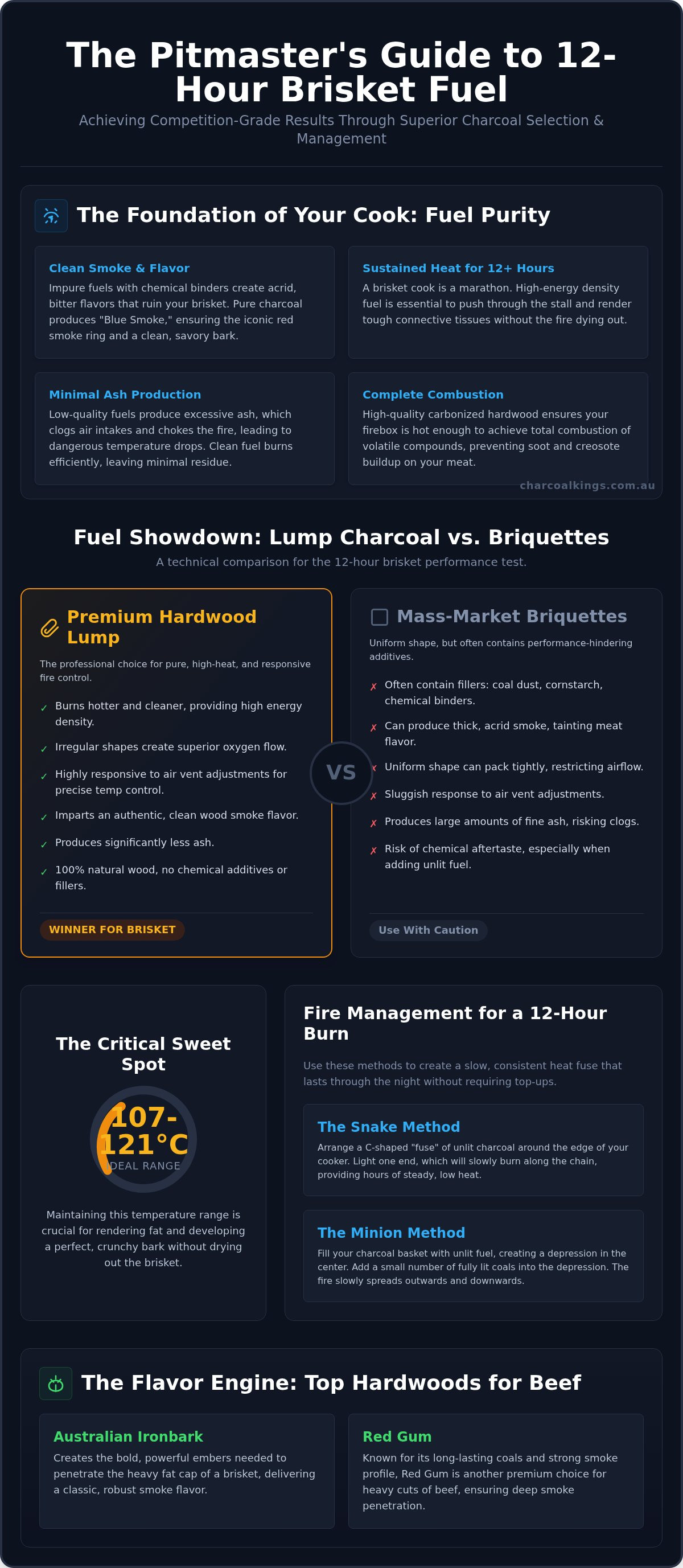
- Understand why fuel purity is the foundation of a 12-hour marathon cook, ensuring a clean smoke ring without chemical aftertastes.
- Discover why premium hardwood lump is the best charcoal for smoking brisket due to its superior heat output and responsiveness to air-vent adjustments.
- Identify the specific benefits of Australian Ironbark and Red Gum for creating the bold embers needed to penetrate heavy beef fat.
- Master the Snake and Minion methods to create a consistent heat fuse that lasts through the night without requiring constant top-ups.
- Learn how to manage your firebox to achieve competition-grade bark by maintaining the critical 107-121°C sweet spot.
Why Your Charcoal Choice Determines Your Brisket’s Success
Brisket isn’t a quick weeknight meal. It’s a serious commitment that demands hours of steady, unwavering heat. When you’re managing a 12-hour cook, your fuel choice is the most important variable in the firebox. Understanding what charcoal is and how it behaves over long durations is essential for any serious pitmaster. The best charcoal for smoking brisket must provide high energy density to survive the “stall” period. Standard briquettes often contain fillers that burn out quickly; however, premium hardwood lump offers the sustained heat required to render stubborn connective tissue without dying out halfway through the session.
Purity directly impacts your bark and smoke ring. If your fuel contains chemical binders or accelerants, those toxins will settle on the meat’s moist surface. This creates an acrid, bitter flavour that ruins expensive packer briskets. Clean-burning charcoal allows the natural wood smoke to react with the meat’s myoglobin, producing that iconic deep red ring and a crunchy, savoury bark. You want a fuel that works with your rubs, not against them.
The Science of Clean Combustion
Achieving “Blue Smoke” is the gold standard for every Australian pitmaster. This thin, almost invisible vapour indicates the total combustion of volatile organic compounds (VOCs). Cheap, uncarbonised wood or low-grade coal releases heavy, thick white smoke that tastes like soot and leaves a grey film on your food. High-quality carbonised hardwood ensures your firebox stays hot enough to combust these gases completely. Consistent airflow is your best defence against creosote build-up, which occurs when a fire smoulders at low temperatures rather than burning efficiently.
Why Brisket is the Ultimate Fuel Test
Cooking a steak is a sprint. Smoking a brisket is an ultra-marathon. During a short 2-hour session, ash build-up is rarely a concern. However, in a 12-hour brisket cook, low-quality fuels produce massive amounts of fine, powdery ash. This residue clogs the air intakes of your offset smoker or kettle, choking the fire and causing devastating temperature crashes. The best charcoal for smoking brisket leaves minimal mineral residue while delivering maximum BTUs. This high efficiency means you spend less time clearing the grate and more time maintaining the perfect 107-121°C environment. You need a fuel that burns to a fine dust without smothering its own heat source.
Lump Charcoal vs. Briquettes: The 12-Hour Performance Test
Choosing between lump and briquettes isn’t just a matter of preference. It’s a technical decision that impacts your temperature control for the next twelve hours. While many retailers claim briquettes are superior for consistency, professional pitmasters know that Hardwood Lump Charcoal is the industry standard for competition-grade results. Lump charcoal consists of whole wood pieces carbonised into pure carbon. It burns hotter and cleaner than compressed alternatives. This heat potential is vital during the stall, where you need enough energy to push through evaporative cooling without smothering the firebox.
The biggest issue with mass-market briquettes is the “Additives Problem.” Many contain cornstarch, coal dust, and chemical binders to hold their uniform shape. These fillers produce a thick, acrid smell during the first two hours of ignition. If you add unlit briquettes to a hot fire during a long cook, you risk tainting your meat with a foul, chemical aftertaste. Premium lump avoids this entirely. It’s the best charcoal for smoking brisket because it offers pure, organic combustion from start to finish. Finding the best charcoal for smoking brisket means looking for a fuel that responds to your input immediately.
The Case for Premium Hardwood Lump
Lump charcoal features irregular shapes and sizes. These gaps in the fuel bed allow for superior oxygen flow and immediate air-vent responsiveness. If your smoker drops five degrees, opening the dampers provides an instant boost in heat. Briquettes often pack too tightly, restricting airflow and creating a sluggish fire. Lump also imparts an authentic wood flavour that briquettes simply cannot match. Because it’s more energy-dense, you’ll find yourself using less total volume to maintain your target temperature. For those seeking maximum efficiency, our professional-grade lump charcoal provides the cleanest burn available on the Australian market.
When to Consider High-Quality Briquettes
Briquettes have a place in specific setups. Our Redneck style briquettes are engineered for predictable burn rates in smaller kettle grills or ceramic cookers. They offer a steady, slow release of energy that works well for those still mastering fire management. However, you must ensure they are additive-free. Never use “easy-light” versions. These products are soaked in petroleum-based accelerants that will permanently ruin the flavour of a high-quality brisket. Stick to natural products to ensure your hard work isn’t wasted on a chemical finish.
Selecting the Best Hardwood Species for Beef Smoke
Beef brisket is a heavy, fat-rich cut that requires a bold smoke profile to cut through its richness. Light fruitwoods like apple or cherry often vanish against the intense flavour of a 12-hour rendered brisket. To achieve the best charcoal for smoking brisket, you must look at the specific hardwood species used during the carbonisation process. High-density woods produce embers that stay hot for hours, providing the consistent thermal mass needed to manage a large offset smoker. Lignin is the organic polymer in hardwood that, when combusted, releases the phenolic compounds responsible for that deep, smoky aroma and complex flavour profile.
The choice of wood species also dictates the visual appeal of your cook. Specific hardwoods release different concentrations of nitrogen dioxide, which reacts with the meat’s surface to create a vibrant smoke ring and a dark, tacky bark. Using the best charcoal for smoking brisket means selecting species that offer a balance of heat and aromatic complexity. Without the right species, your bark may end up grey or soft rather than the mahogany crust prized by professionals. Australian natives offer a unique advantage over imported varieties because they evolved in harsher climates, resulting in denser, more energy-rich timber.
Australian Hardwoods: Ironbark and Red Gum
Ironbark is the undisputed gold standard for Australian pitmasters. It provides incredible longevity and a mild, sweet smoke that enhances beef without overpowering it. If you want a heavier, more traditional aroma, Red Gum is the superior choice. Its higher oil content produces a robust scent that is synonymous with the Australian bush. Both species are far superior to softwoods or pine, which burn too fast and produce sooty black smoke. Using a high-density native hardwood ensures you aren’t constantly refuelling your firebox every thirty minutes.
Avoiding ‘Acrid’ Smoke Profiles
Purity is the hallmark of a great cook. Using unseasoned or “green” wood in your charcoal mix is a recipe for disaster. Moisture trapped in the wood creates steam and bitter creosote, leading to an acrid taste that no amount of sauce can fix. You can identify clean, well-carbonised charcoal by performing the “clink” test; high-quality lump should sound like glass or ceramic when pieces hit each other. For a deeper dive into how wood moisture affects your BBQ, check our Australian Firewood Guide. Stick to seasoned, professional-grade fuel to ensure your brisket remains the hero of the plate.
How to Manage Your Charcoal for a 12-Hour Brisket Burn
Managing a 12-hour cook is about endurance. You can’t just throw a bag of fuel into the pit and hope for the best. To maintain the 107-121°C sweet spot, you must employ a proven loading strategy. The Snake Method works best for kettle BBQs; you align your lump charcoal in a semi-circle to create a slow-burning fuse. For bullet or cabinet smokers, the Minion Method is superior. You place a small amount of lit fuel over a larger bed of unlit, high-quality lump. This allows the fire to spread gradually, providing a consistent 6-hour burn before you even need to think about a top-up.
Consistent heat is the only way to beat “the stall.” This is the point where evaporative cooling stops the internal temperature of the meat from rising. Many beginners panic and open the lid, but this only causes temperature swings that toughen the muscle fibres. Using the best charcoal for smoking brisket ensures you have the energy density to push through this phase without losing your fire. A water pan is your best tool here. It adds thermal mass and humidity, preventing the intense heat of hardwood lump from drying out the flat of your brisket during the long render.
Temperature Control and Airflow
Mastering airflow is the difference between a clean burn and a bitter mess. Use a “Top-Down” strategy: keep your top exhaust vent wide open and regulate temperature using the bottom intake dampers. Never “choke” a fire by closing the exhaust; this traps stale smoke and creates creosote. If you need to add more fuel, pre-heat your next batch of charcoal on top of the firebox. This ensures it ignites instantly without releasing the thick white smoke that ruins your bark. The best charcoal for smoking brisket stays responsive to these small adjustments throughout the night.
Using an Offset Smoker with Lump Charcoal
For those using a large offset, building a solid coal bed is the first step. You need a base of glowing embers that can support the addition of Smoking Woods for layered flavour. The interaction between your charcoal base and wood splits determines the quality of your smoke. Avoid the “yo-yo” effect by adding small amounts of fuel more frequently rather than dumping large loads that cause massive spikes. To get the right equipment for your next long cook, browse our range of professional-grade BBQ accessories.
The Charcoal Kings Advantage: Purity for Better Bark
Charcoal Kings operates on a single principle: absolute purity. We provide 100% natural hardwood with zero chemical fillers because we know exactly what’s at stake during a 12-hour session. Our ‘Bushmans Secret’ and ‘Redneck’ ranges aren’t generic imports; we’ve engineered these products specifically for the Australian climate. This ensures they withstand high ambient temperatures and dry conditions without losing their structural integrity or heat potential. When you’re in a competition environment, professional-grade fuel provides the thermal stability required to keep your pit at a dead-on 110°C for hours on end.
Consider the financial reality of your cook. A premium packer brisket in Australia can easily cost you A$150 or more. Saving a few dollars on a bag of supermarket coal is a gamble with poor odds. If that fuel burns out prematurely or imparts a chemical tang, you’ve wasted your money, your wood, and your entire day. Choosing the best charcoal for smoking brisket is essentially insurance for your meat. It’s the difference between a mahogany, competition-grade bark and a bitter, ruined dinner. You need a fuel that works as hard as you do.
Absence of Additives: The Secret to Better Bark
Chemical binders and fillers in low-grade fuel interfere with the meat’s surface moisture evaporation. This evaporation is the mechanical driver behind bark formation. Clean, additive-free heat from pure hardwood allows your specialised rubs to caramelise and bond with the meat’s proteins. Instead of a soft, “steamed” appearance, you get a dark, crunchy crust that holds its texture even after the rest. Briskets smoked with our pure lump show clear visual markers: a deep, even colour and a specific tackiness that indicates perfect fat rendering. You won’t see grey soot deposits or uneven patches when your fuel source is this refined.
Sourcing Professional-Grade Fuel in Australia
Reliability is essential when you’re planning a full season of smoking. You can find Charcoal Kings stockists across the country or order in bulk to ensure you’re never caught short before a 12-hour marathon. We prioritise sustainable, high-quality production because we believe the Australian BBQ community deserves better than industrial leftovers. Our fuel is the best charcoal for smoking brisket because it respects both the craft and the ingredients. Don’t let cheap, additive-heavy fuel ruin your hard work and expensive cuts. Grab a bag of Charcoal Kings and lock in your results. It’s time to cook like a master.
Master Your Next 12-Hour Cook
A competition-grade brisket is won or lost in the firebox. You’ve learned that sustaining a 107-121°C environment for twelve hours requires more than just luck; it requires high-density fuel that won’t choke on its own ash. Selecting the best charcoal for smoking brisket is the ultimate insurance policy for your meat. By choosing pure hardwood lump over chemical-heavy alternatives, you ensure your bark remains clean and your smoke ring stays deep. Consistent airflow and proper fire management are your best tools for pushing through the stall and achieving that perfect render.
Don’t let inferior fuel ruin a premium cut of beef. Charcoal Kings provides the 100% Natural Hardwood and No Chemical Additives required for professional results. We are Trusted by Australian BBQ Pros to deliver high heat and absolute purity in every bag. It’s time to stop fighting your pit and start focusing on the craft. Upgrade to Premium Hardwood Lump Charcoal and master your next brisket. Get your fire started right and see the difference that quality makes at your next cookout. Happy smoking!
Frequently Asked Questions
Can I use regular supermarket briquettes for a brisket?
Supermarket briquettes are not recommended for premium results. They often contain fillers and chemical binders that produce acrid smoke, which negatively impacts the flavour of a long cook. For the best charcoal for smoking brisket, stick to pure hardwood lump or professional-grade, additive-free briquettes. These provide the clean combustion necessary for a competition-grade bark without the chemical aftertaste associated with mass-market products. You want fuel that enhances, not hides, your beef.
How much charcoal do I need for a 12-hour brisket cook?
You typically need between 8kg and 12kg of high-quality hardwood lump for a standard 12-hour session. The exact amount depends on your smoker type and ambient Australian weather conditions. Efficient ceramic cookers use significantly less fuel than large offset smokers. It’s always better to overfill your tray or firebox to maintain thermal mass. Having leftover fuel is preferable to running out during the critical stall phase when consistency is most important.
Does the charcoal brand really affect the smoke ring?
Yes, the purity of your charcoal directly influences the chemical reaction that creates the smoke ring. High-quality charcoal produces more nitrogen dioxide, which reacts with the meat’s myoglobin to form that iconic red band. Brands that focus on 100% natural hardwood without fillers ensure a cleaner burn and a more prominent ring. Using the best charcoal for smoking brisket provides the consistent gas release required to penetrate the meat’s surface before the bark sets.
Should I add wood chunks to my charcoal for brisket?
Wood chunks are essential for layering complex flavours during a long cook. While hardwood lump provides the heat and a base level of smoke, adding Ironbark or Red Gum chunks introduces the specific aromatics needed for beef. Place two or three large chunks throughout your coal bed. This ensures a steady release of flavourful smoke during the first few hours of the cook. This is when the meat is most receptive to smoke absorption and ring formation.
Why does my brisket taste like chemicals or lighter fluid?
This bitter flavour usually stems from using “easy-light” charcoal or liquid fire starters. These products are soaked in petroleum-based accelerants that linger in the cooker for hours. Another cause is adding unlit, low-quality briquettes that contain chemical binders halfway through the session. Always use natural fire starters and ensure your fuel is fully carbonised. Purity is the only way to avoid ruining an expensive cut of meat with industrial tastes and foul-smelling exhaust.
What is the best Australian hardwood charcoal for beef?
Australian Ironbark is the premier choice for smoking brisket. It’s a high-density hardwood that produces long-lasting embers and a mild, sweet smoke profile. Red Gum is another excellent option for those who prefer a more robust, traditional Australian BBQ aroma. Both species offer the energy density required for 12-hour cooks. They burn cleaner and hotter than imported softwoods, leaving behind minimal ash residue. This prevents your fire from being smothered by its own waste.
How do I stop my charcoal from burning out halfway through the cook?
Use the Minion or Snake method to manage your fuel consumption effectively. These techniques allow you to light a small portion of your charcoal, which then slowly ignites the rest of the bed over several hours. Ensure you are using large, dense pieces of hardwood lump rather than small scraps. Properly banking your fuel creates a heat fuse that can last six to eight hours before you need to top up the firebox. This reduces temperature swings.
Is lump charcoal too hot for low ‘n’ slow smoking?
Lump charcoal is perfectly suited for low ‘n’ slow sessions if you manage your airflow. While it has the potential to burn very hot, you control the temperature by adjusting your smoker’s intake vents. Restricting oxygen allows you to lock in the 107-121°C range easily. Lump is actually superior for long cooks because it responds faster to vent adjustments than compressed briquettes. This gives you better control over temp spikes and ensures a steady render.