
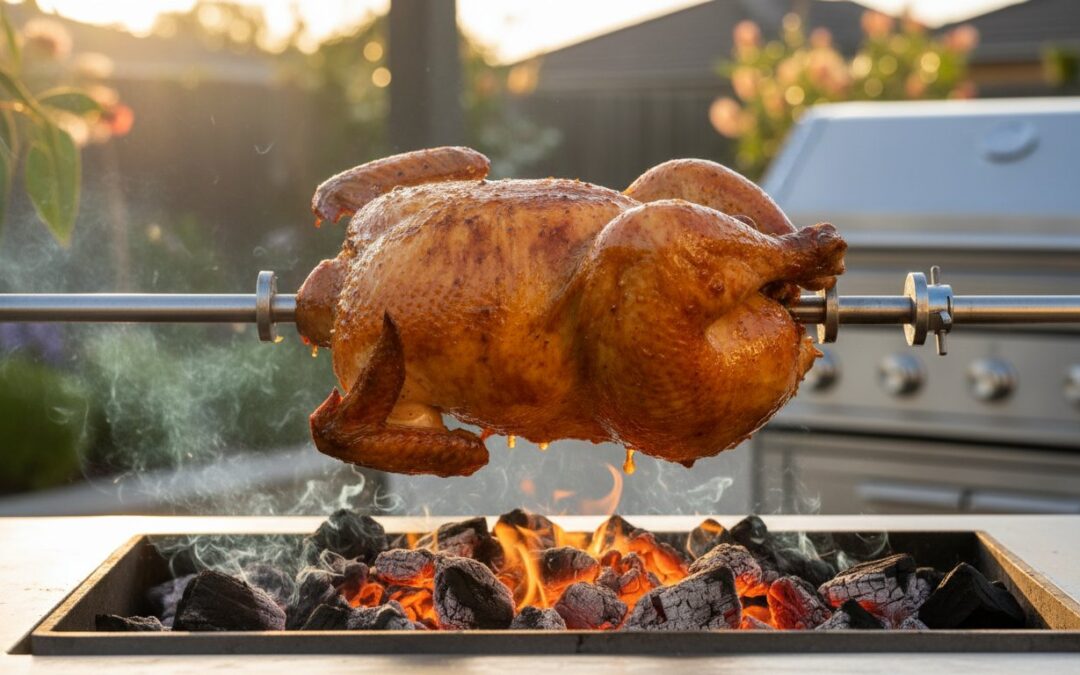
A single bag of cheap, chemical-heavy fuel can turn a A$30 organic bird into dry cardboard in under 45 minutes. Choosing the right charcoal for rotisserie chicken is the only way to avoid the sudden heat loss that leaves your roast rubbery and uneven. You’ve likely felt the frustration of a fire that quits just as the fat should be rendering. It’s the difference between a mediocre Sunday lunch and a professional-grade feast that people actually remember.
This 2026 guide reveals the professional secrets to ensuring a steady, high-heat burn for the entire 90-minute cooking process. You’ll learn how to master heat management for that elusive golden-brown, crispy skin and deep smoky flavor using premium natural hardwood. We’ll break down the specific fuel grades, long-lasting lump varieties, and the exact pitmaster techniques you need to get sizzlin’ every time.
Key Takeaways
- Learn how to choose between hardwood lump and briquettes to maintain the steady, radiant heat required for professional results.
- Master the “Two-Zone” indirect setup to guarantee a self-basting bird with a perfectly crispy Maillard reaction every time.
- Discover the secret to selecting the best charcoal for rotisserie chicken to ensure a clean, chemical-free burn that prioritizes food safety.
- Find the perfect pairing of Australian fruitwoods and premium charcoal to achieve a sweet, golden finish without over-smoking the meat.
- Calculate the exact fuel requirements for a standard 1.8kg roast to maintain high-heat performance throughout the entire cook.
Why Fuel Selection is the Secret to Professional Rotisserie Chicken
Rotisserie cooking is the ultimate test of a pitmaster’s patience and fuel choice. This method relies on radiant heat and the self-basting mechanism where the bird’s fat renders and coats the meat as it turns. Achieving the Maillard reaction, the chemical process that creates crispy, golden-brown skin, requires a steady supply of clean heat. If you use low-quality fuel, you risk depositing soot and bitter flavors onto the skin. Choosing the right charcoal for rotisserie chicken is the difference between a supermarket-grade bird and a professional result. By 2026, the Australian BBQ scene has shifted toward sustainable, natural hardwood fuels that prioritize long-term heat stability over cheap fillers.
To better understand the setup required for a successful roast, watch this video on preparing your bird for the spit:
The Thermodynamics of the Spit
Rotating meat interacts with heat differently than a stationary steak. While a grill grate provides conductive heat, the spit relies on convection and radiation. Consistency is the priority. A spike in temperature can burn the skin before the internal thigh meat reaches a safe 74°C. High-quality charcoal for rotisserie chicken provides a predictable burn rate, which is vital for the 90 to 120 minutes required for a standard 2kg bird. Research into thermal dynamics shows that natural hardwood fuels help maintain a stable humidity level inside the drum, reducing moisture loss by up to 15 percent compared to high-intensity synthetic fuels.
Chemical-Free vs. Standard Charcoal
Standard discount charcoal often contains binders like cornstarch, coal dust, or even borax to keep the shapes uniform. These additives release acrid fumes that penetrate the chicken fat. Since poultry skin is highly porous, it absorbs these chemical taints instantly. Pitmasters now prefer 100 percent natural hardwood because it offers a neutral flavor profile that lets the seasoning shine. When comparing Lump Charcoal vs. Briquettes, the goal is always a clean burn. A clean burn for poultry applications means the fuel produces zero visible soot or acrid chemical odors once it reaches peak cooking temperature. This ensures the fat drippings remain pure as they baste the meat, resulting in a cleaner, more authentic wood-fired taste.
- Natural Hardwood: Provides high energy density and zero chemical off-gassing.
- Sustained Heat: Maintains the 160°C to 180°C range needed for perfect rendering.
- Flavor Purity: Allows the natural sugars in the meat to caramelise without interference.
Lump Charcoal vs. Briquettes: Which Wins for Rotisserie?
Choosing the right fuel defines the texture of your bird. It’s the difference between rubbery skin and a golden, crackling finish. For the 2026 pitmaster, the debate between lump and briquettes isn’t about which is better, but which suits your specific rotisserie setup. Your choice of charcoal for rotisserie chicken dictates how often you’ll be tending the fire during that critical 90 minute cook time.
Hardwood Lump Charcoal: The Flavour King
Hardwood lump is the gold standard for high-heat performance. Australian Gidgee and Mallee lump are the top contenders here. Gidgee is exceptionally dense; it provides a massive initial thermal output that renders fat quickly. This is essential for that signature rotisserie crunch. You can learn more about why professionals prefer this in our guide to Lump Charcoal: The Pro’s Choice.
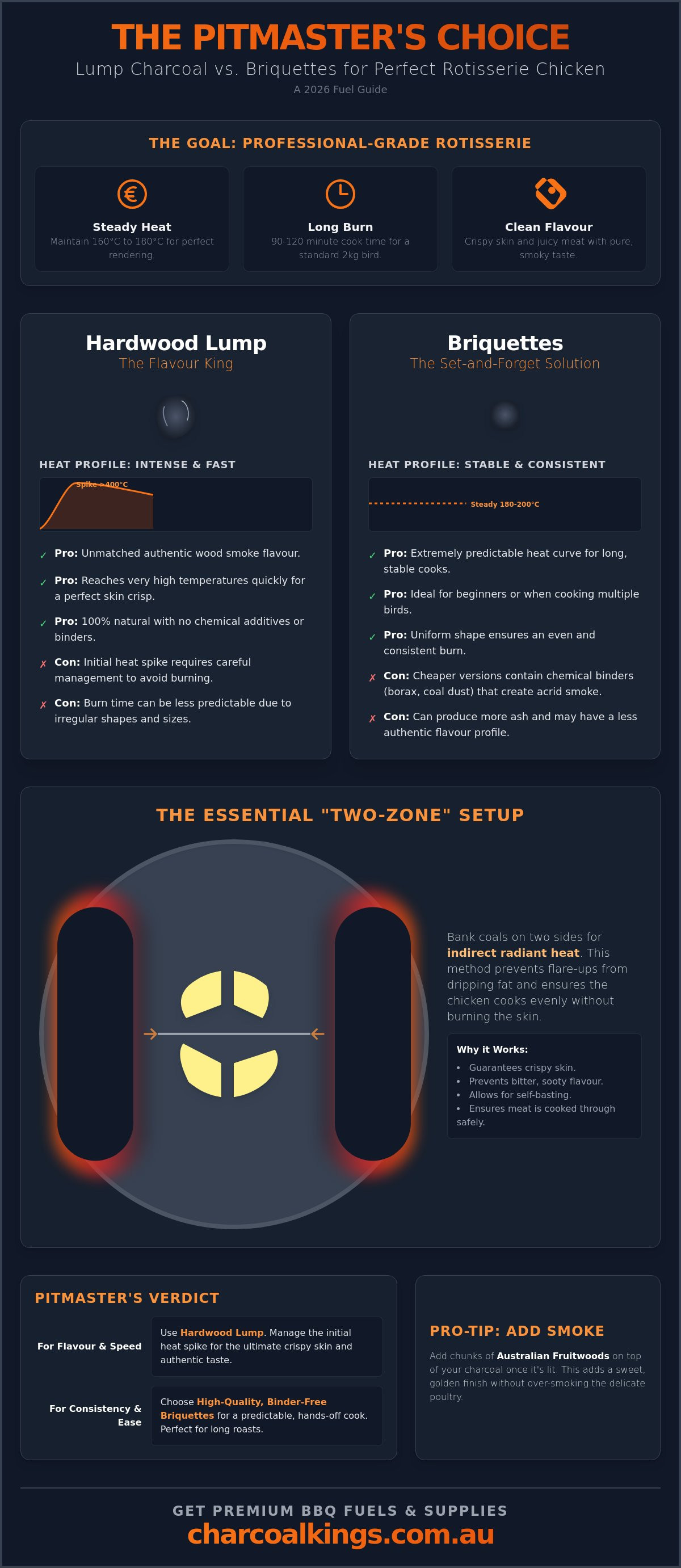
Managing the initial heat spike is the primary challenge. Lump charcoal can easily exceed 400°C in the first 20 minutes. To avoid scorching the skin before the inside is cooked, bank your coals to the sides. This indirect setup allows the infrared heat to radiate without direct flame contact. It’s a raw, natural product with no chemical additives, ensuring the smoke profile remains clean and authentic.
Briquettes: The Set-and-Forget Solution
Briquettes offer a level of predictability that lump cannot match. When you’re spinning multiple birds or a large 3kg roasting hen, you need a steady 180°C to 200°C for at least 2 hours. High quality, binder-free briquettes provide this flat heat curve. They don’t spark and they don’t pop, making them safer for open-spit designs.
When Setting Up Your Charcoal Bed, briquettes allow for advanced techniques like the “snake method” or “minion method.” By stacking them in a semi-circle, you can achieve a controlled, sequential burn that lasts the entire duration of the cook. Be aware that briquettes produce more ash than lump. This can occasionally choke the air vents on smaller kettle rotisseries, so a quick shake of the charcoal grate every hour is recommended to maintain oxygen flow.
Binchotan and Attachment Matching
For those seeking restaurant-quality results at home, Binchotan is the ultimate upgrade. This white charcoal burns with intense far-infrared heat. It penetrates the meat deeply while keeping the exterior moist. It’s expensive, but the 4 to 6 hour burn time means you use less fuel overall. Match your fuel to your gear:
- Kettle Rotisserie: Use a 50/50 mix of lump and briquettes for both flavour and longevity.
- Open Spit/Cyprus Grill: Stick to 100% Gidgee lump for maximum heat projection.
- Gravity Feed Spits: Use premium briquettes to prevent fuel bridging and ensure a constant drop.
The right charcoal for rotisserie chicken depends on your patience and your equipment. If you want a fast, high-heat sear, go with lump. If you want a relaxed afternoon while the spit does the work, choose briquettes. Explore our premium fuel range to find the perfect match for your next Sunday roast. Get Sizzlin’!
Setting Up Your Charcoal Bed for a Perfect Roast
Mastering the heat is the difference between a dry bird and a succulent feast. For a standard 1.8kg chicken, you need approximately 2.5kg of premium hardwood lump charcoal or 60 high-quality briquettes. This volume ensures a consistent burn for the 75 to 90 minutes required to reach a safe internal temperature. The two-zone indirect setup is the industry standard for rotisserie. By keeping the fire to the sides, you allow the chicken to roast through ambient heat and radiation rather than direct flame contact.
Place a heavy-duty aluminium drip pan directly under the bird. This serves two purposes. It prevents rendering fat from hitting the coals and causing acrid flare-ups, and it collects the “liquid gold” juices required for a professional-grade gravy. To gauge your heat without a digital probe, use the “Hand Test.” Carefully hold your palm at the level of the rotisserie spit. If you can only hold it there for 3 to 4 seconds, you have reached the medium-high heat ideal for charcoal for rotisserie chicken. This method remains The Charcoal Kings Professional Choice for pitmasters who trust their senses over basic dials.
Banking Your Coals
Never place your charcoal directly under the spinning bird. This creates a grease fire that will char the skin before the thighs are cooked. Use a “Side-bank” arrangement by pushing all your fuel to the rear of the grill, or a “V-shape” by splitting the coals into two piles on opposite sides. This creates a convection oven effect. Heavy-duty charcoal baskets are essential here. They keep the fuel concentrated, stop the coals from spreading, and maintain a tight, intense heat source that ensures even browning across the entire carcass.
Management and Refuelling
Maintain a close watch on the colour of your bird and the volume of smoke. If the ambient temperature inside the pit drops below 160°C before the breast hits the 75°C target, your fuel is spent. Adding cold, unlit charcoal mid-cook is a mistake because it releases “dirty” smoke that leaves a bitter, chemical taste on the skin. Always use a chimney starter to ignite a fresh batch of coals separately until they are glowing red and ashed over before adding them to your baskets. This keeps your heat spiked and your smoke clean. Get Sizzlin’!
Adding Flavour: Australian Smoking Woods for Poultry
Chicken has a porous structure that absorbs smoke faster than beef or pork. This makes it easy to over-smoke, resulting in a bitter, acrid taste that ruins the bird. When choosing the right charcoal for rotisserie chicken, you’re building a foundation of clean heat. The wood you add provides the character. Stick to a 100% natural hardwood base to ensure your flavour profile remains authentic and free from chemical taints.
The “less is more” rule is vital for poultry. A single bird only needs one or two fist-sized chunks of wood. Adding too much at once chokes the fire and creates thick white smoke. You want a steady, thin stream of blue smoke for a balanced finish. If you’re new to managing these variables, check out our guide on Mastering the Art of Barbecuing to get your fire management right from the start.
Top Wood Pairings for Chicken
- Apple and Cherry: These are the gold standard for fruitwoods. They provide a mild, sweet flavour and give the skin a deep mahogany or reddish tint that looks incredible on a platter.
- Ironbark and Macadamia: For a uniquely Australian profile, Ironbark offers a clean, high-heat burn. Macadamia wood adds a rich, nutty aroma that complements the rendered fat in the chicken skin perfectly.
- Avoid Mesquite and Heavy Hickory: These woods are too aggressive for delicate poultry. They’ll overpower the meat in under 30 minutes, leaving it tasting like a campfire rather than a balanced roast.
Chunk vs. Chip: Timing the Smoke
Chunks are superior for rotisserie cooking. They smoulder slowly over 45 to 60 minutes, matching the slow rotation of the spit. Chips burn out in 15 minutes, requiring constant lid-opening which kills your ambient temperature. Add your wood chunks once the charcoal for rotisserie chicken has reached its “blue smoke” phase. This happens when the coals are glowing red and the initial heavy smoke has cleared.
If you’re using a gas-assisted charcoal rotisserie, place a smoker box directly over the burner or nestled into the hot coals. This contains the wood and ensures a controlled release of flavour. Always wait for the wood to ignite properly before sliding the spit into place. You can find our full range of premium fuels at Charcoal Kings to start your next cook.
The Charcoal Kings Professional Choice
Australian pitmasters know that the secret to a perfect bird isn’t just the rub; it’s the fuel. Our Premium Hardwood Lump stands as the top charcoal for rotisserie chicken because it provides the intense, clean heat required for that iconic golden-brown skin. We source 100% natural timber with zero chemical additives. This ensures your food tastes like chicken and wood smoke, not lighter fluid or industrial binders. Food safety is our priority. Using chemical-free fuel protects your family and your customers from toxic fumes during long 4-hour cooks.
Sourcing the Best Fuel in Australia
Local Australian hardwoods like Gidgee and Ironbark are world-class. These species are significantly denser than imported alternatives, meaning they burn hotter and last up to 40% longer on average. This density prevents the temperature drops that ruin a slow-roast. To keep your fuel in peak condition, store it in a dry, sealed container off the ground. Moisture absorption leads to popping, spitting, and poor ignition. For a deeper look at how we select and season our timber, check out our Firewood and Charcoal Sourcing guide.
We don’t just cater to backyard enthusiasts. Charcoal Kings is a major supplier for charcoal chicken shops and professional rotisserie restaurants across the country. We understand that commercial kitchens need reliability. Our wholesale opportunities provide bulk access to the same high-grade fuel the pros use. This ensures your business maintains a consistent flavor profile and manageable fuel costs every day of the week.
Get Sizzlin’ with Charcoal Kings
Our inventory includes a range of Lump, Briquettes, and Binchotan to suit any setup. Whether you need the 3-hour burn of our standard lump or the extreme longevity of our Binchotan range, we have you covered. Ordering is simple. You can choose home delivery for your weekend cook or arrange a wholesale pick-up from our warehouse. Don’t settle for supermarket briquettes that are filled with sawdust and chemical binders. Upgrade your fuel, upgrade your flavor.
- At least 10kg of Premium Hardwood Lump charcoal for rotisserie chicken.
- Natural firelighters to avoid chemical taints in the meat.
- A reliable meat thermometer to hit that 75°C internal target safely.
- A clean, well-oiled rotisserie spit and a tested motor.
- Charcoal Kings signature rubs to build a professional crust.
Get Sizzlin’!
Master Your Next Rotisserie Roast
Achieving the perfect bird requires more than just a good rub. You need consistent heat and clean fuel. Professional pitmasters across Australia choose lump charcoal for its superior temperature control and ability to sear skin while keeping meat juicy. Using 100% natural and chemical free fuel ensures you don’t ruin a quality chook with nasty petrol aftertastes. Cheap alternatives often contain fillers that produce acrid smoke, but premium hardwood maintains the integrity of your ingredients.
The right charcoal for rotisserie chicken provides the longest burn times in the market. This means you won’t be refilling the tray mid-cook during a standard 90 minute roast. Charcoal Kings products are trusted by Australian BBQ pros because they burn hotter and cleaner than standard supermarket options. Pair your coal with local smoking woods to lock in that authentic wood-fired flavour. It’s time to stop settling for average results and start cooking like a master. Our premium hardwood range is designed for reliability and performance in every backyard setup.
Shop our Premium Hardwood Charcoal for the perfect rotisserie chook
Get Sizzlin’!
Frequently Asked Questions
What is the best type of charcoal for rotisserie chicken?
Premium natural hardwood lump charcoal is the superior choice for a rotisserie cook. It provides the high, consistent heat required for crispy skin and a 100% chemical-free environment. High-density woods like Gidgee or Quebracho Blanco burn for 3 to 4 hours at steady temperatures. This ensures your bird reaches a safe internal temperature of 75°C without needing a fuel refill. Natural hardwood adds an authentic smoky flavour that inferior briquettes can’t match.
How much charcoal do I need for a whole chicken on the spit?
You’ll need 2 to 3 kilograms of high-quality lump charcoal for a standard 1.8kg whole chicken. This quantity provides enough thermal energy for a 60 to 90 minute cook time at a steady 175°C. For larger 2.5kg birds, increase the fuel to 3.5 kilograms. Always use a charcoal chimney starter to ignite the coals. This ensures a clean, efficient burn from the first rotation of the spit.
How do I keep the charcoal hot for the entire rotisserie cook?
Keep your charcoal hot by using dedicated charcoal baskets placed on either side of the spit. This setup creates a convection effect that circulates heat efficiently. Keep your bottom vents 100% open to maintain maximum oxygen flow. If the temperature drops below 160°C, add 5 to 6 fresh pieces of lump charcoal every 45 minutes. High-density hardwood coals maintain heat 30% longer than standard supermarket brands.
Can I use normal firewood for rotisserie chicken instead of charcoal?
Don’t use raw firewood as your primary heat source for rotisserie chicken. Firewood produces inconsistent temperatures and excessive soot if it hasn’t been seasoned for at least 12 months. Start with a solid base of charcoal for rotisserie chicken to ensure stable, predictable heat. Add one or two 50mm Ironbark or Fruitwood chunks every 30 minutes. This adds authentic smoke flavour without the risk of burning the exterior of the bird.
Should I use a drip pan with charcoal when rotisserie cooking?
Use a heavy-duty aluminium drip pan placed directly under the chicken between the charcoal banks. This prevents rendered fat from hitting the hot coals and causing acrid smoke. Fill the pan with 500ml of water or apple juice to maintain a humid cooking environment. This prevents the breast meat from drying out during the 90 minute cook. It also makes cleaning your grill 50% faster by catching all the drippings.
How do I stop flare-ups from ruining my rotisserie chicken?
Stop flare-ups by arranging your charcoal for rotisserie chicken in two banks on the sides of the grill, never directly under the meat. This indirect method ensures fat drips into a pan rather than onto the fire. If you see a flame, close the top vent by 50% to restrict oxygen. Maintaining a 10cm gap between the coals and the rotating chicken reduces the risk of singeing the skin during the rendering process.
Is lump charcoal better than briquettes for poultry?
Lump charcoal is better for poultry because it reaches temperatures of 500°C and contains zero chemical binders or fillers. Briquettes often contain additives that produce more ash and a distinct chemical smell. Natural hardwood lump produces 70% less ash, which prevents the vents from clogging during long rotisserie sessions. For a 1.8kg chicken, lump charcoal provides a cleaner flavour profile that lets the natural seasoning shine.