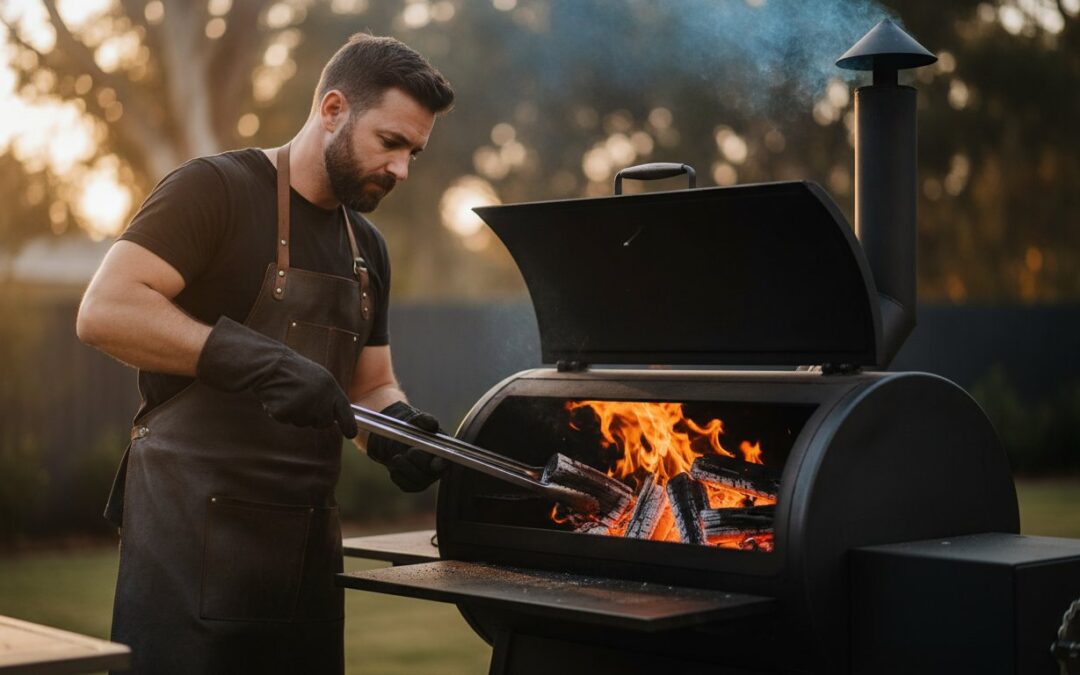
A professional offset smoker is a high-performance engine, but it’s only as reliable as the fuel you put in the firebox. Many pitmasters fail to reach their potential because they rely on low-grade coals that produce more ash than heat. Choosing the best charcoal for offset smoker performance is the most critical decision you’ll make before the first match is even struck. If you want that legendary Texas-style bark and deep smoke ring, you cannot compromise on fuel density or material purity.
It’s frustrating to watch a twelve-hour brisket cook go sideways because of fluctuating temperatures or the acrid, bitter taste of creosote. We agree that your hard work deserves better than the inconsistent results provided by supermarket-grade fuels packed with chemical binders. This guide will teach you how to select high-performance fuel that maintains thermal stability and ensures a clean, thin blue smoke profile. We’ll compare the performance of additive-free hardwood lump against professional-grade briquettes to help you achieve authentic flavour without the maintenance headaches of excessive ash buildup.
Key Takeaways
- Learn why identifying the best charcoal for offset smoker performance is the first step toward mastering consistent temperature stability.
- Understand how the thermal mass of 6mm steel smokers requires high-energy fuel to maintain a steady convection current.
- Discover why additive-free hardwood lump is essential for avoiding bitter flavours and ensuring a clean smoke profile.
- Identify the specific benefits of Australian hardwoods like Ironbark for long-burning, professional-grade heat output.
- Master firebox management by selecting fuel that minimizes ash buildup and maximizes thermal efficiency.
What Makes the Best Charcoal for Offset Smoker Success?
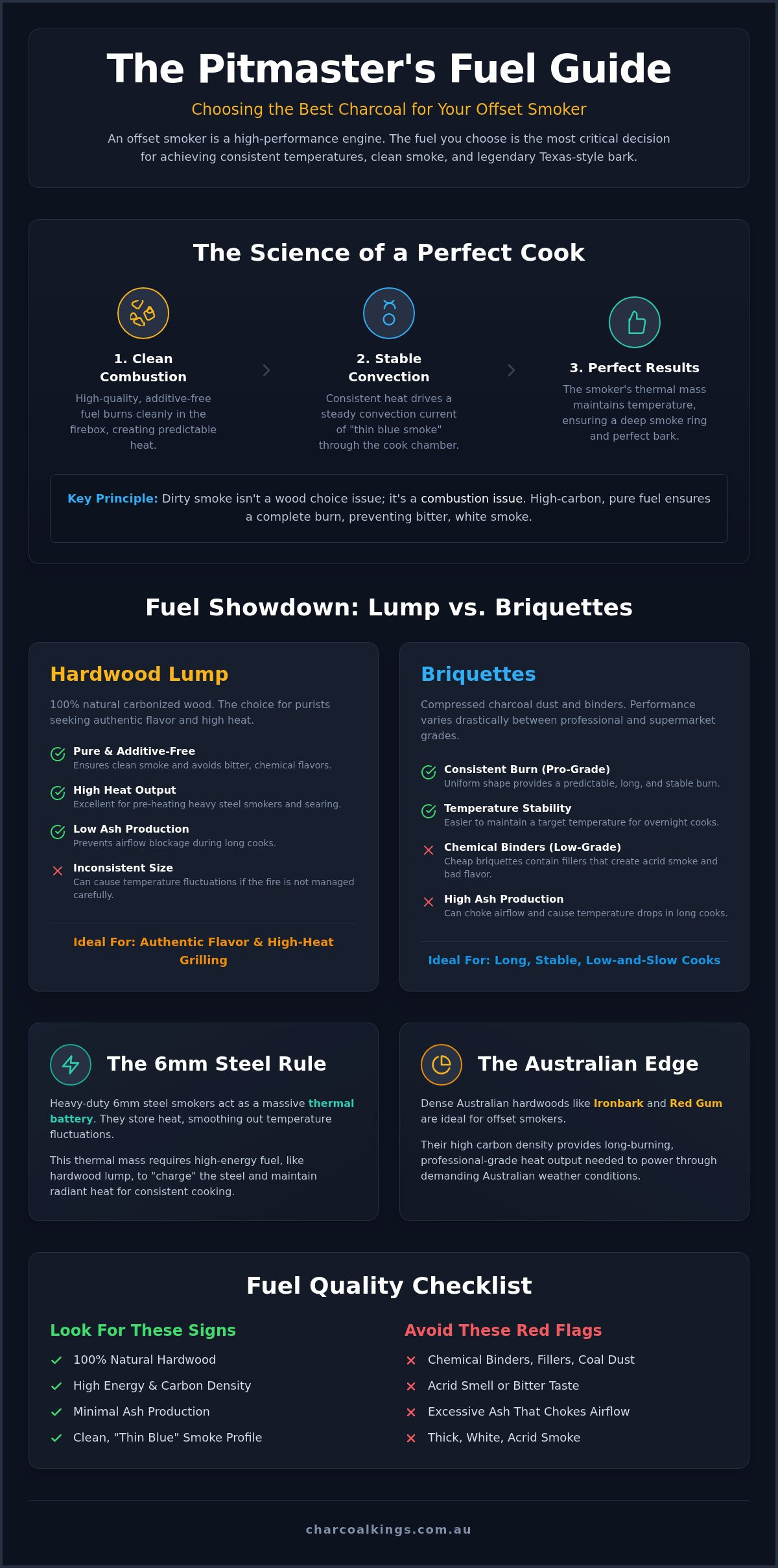
An offset smoker functions as a high-performance heat engine. Unlike a kettle or a gas grill, the offset relies on a continuous convection current. The firebox generates heat and smoke that must travel the length of the cook chamber to exit the stack. To understand the fuel behind this process, one should look at What is Charcoal? and how its carbon content dictates burn efficiency. High-quality fuel is the only way to maintain the thermal momentum required for a 12-hour brisket cook.
To better understand the fundamental differences in fuel types, watch this helpful video:
Purity is the non-negotiable standard for professional BBQ. Cheap, low-grade fuels often contain chemical binders, fillers, and coal dust that produce acrid, dirty smoke. When you’re cooking a large cut of meat for half a day, these additives settle on the surface, creating a bitter creosote flavour. The best charcoal for offset smoker performance must be 100% natural and additive-free. Pure hardwood lump provides the energy density needed to reach the thin blue smoke stage quickly and stay there.
The Science of Indirect Heat and Convection
The firebox acts as the driver for the entire system. As fuel burns, it creates a drawing effect, pulling oxygen in and pushing heat across the meat. If your charcoal is inconsistent, your convection current stalls. Dirty smoke isn’t usually a wood choice issue; it’s a combustion issue. High-carbon fuels ensure a complete burn, preventing the smouldering that leads to thick, white, bitter smoke. You need a fuel that behaves predictably under high-airflow conditions.
Offset Smoking vs. Direct Grilling Fuel Needs
Direct grilling is about raw heat for short durations, but finding the best charcoal for offset smoker use requires a focus on endurance. Temperature spikes in an offset can ruin the rendering of fat in a pork shoulder or brisket. Low-ash production is vital because excessive buildup in the firebox chokes the airflow, causing temperatures to plummet. The ideal fuel for an offset smoker balances high energy density with a clean, low-residue burn. It must provide enough kick to heat heavy steel while remaining stable enough for overnight cooks.
The Australian environment demands more from your fuel than standard US guides suggest. High ambient temperatures in the outback or extreme humidity in coastal regions affect how your fuel ignites and holds heat. You need a fuel that can overcome external variables without requiring constant firebox intervention. Reliable heat starts with the density of the hardwood used in the carbonization process. Choosing a fuel designed for Australian conditions ensures your smoker maintains its thermal battery regardless of the weather outside.
For those in the Melbourne region looking to clear space in their driveway for a new heavy-duty smoker, check out Melbourne Car Removal for professional vehicle disposal services.
Thermal Mass: Why 6mm Steel Dictates Your Fuel Choice
In the Australian BBQ scene, the “6mm Rule” is the benchmark for a reason. Heavy-duty steel isn’t just about durability; it acts as a massive thermal battery. Just as professional-grade construction relies on the structural integrity of systems from Bradberry Steel, a smoker’s performance is dictated by the quality of its materials. Thin-walled smokers found in department stores fail because they lack this mass. They lose heat to the atmosphere as quickly as the firebox generates it. To power a professional-grade unit, you need the best charcoal for offset smoker efficiency. High-energy fuel is the only way to saturate 100kg or more of steel with the radiant heat required for consistent results.
The relationship between your fuel and your hardware is purely scientific. Academic studies on the qualitative characteristics and properties of charcoal confirm that carbon density dictates how long a fuel source can maintain peak temperature. When you’re heating 6mm steel, you aren’t just burning coal to heat air. You’re transferring energy into the metal itself. This stored energy smooths out temperature fluctuations, ensuring that a small lapse in firebox management doesn’t lead to a disastrous temperature drop in the cook chamber.
Heating the Beast: The Pre-Heat Phase
Putting meat into a cold offset smoker is a rookie mistake. You must bring the entire structure to your target temperature before the cook begins. This pre-heat phase requires a high-performance fuel load to overcome the cold steel’s inertia. We use hardwood lump charcoal for this task because it delivers the intense heat needed to “charge” the thermal mass quickly. If you’re currently shopping for a heavy-duty rig, The Ultimate BBQ Buying Guide: Choosing Your Perfect Grill explains why steel thickness is the most important metric for success.
Maintaining Equilibrium in Australian Conditions
Australian pitmasters face unique challenges, from coastal humidity to dry outback winds. A thick-walled smoker resists these external variables far better than thin alternatives. When you use the best charcoal for offset smoker performance, you achieve a state of equilibrium where the steel does the work. High-purity fuel reduces the need for constant damper adjustments. It burns clean and steady, allowing the thermal mass to handle the heavy lifting. Serious cooks understand that quality fuel and thick steel are a single system. You can find the right combination of hardware and professional-grade fuel at our Holden Hill showroom.
Hardwood Lump Charcoal vs. Briquettes for Offset BBQ
The debate between lump charcoal and briquettes often centres on burn time, but for an offset pit, the real issue is airflow. Natural hardwood lump is the definitive choice for those seeking professional-grade results. It burns hotter and cleaner because it is essentially carbonised wood with zero additives. For a deep dive into why this matters, read Lump Charcoal: The Pro’s Choice for Flavour. While briquettes offer uniform shape, they carry a hidden cost that can ruin a long cook.
Briquettes are engineered for consistency, yet they often compromise on purity. Many brands use starch binders, sawdust, and even mineral fillers to maintain their structure. These additives don’t just affect the smell; they change the physics of your firebox. When you’re searching for the best charcoal for offset smoker success, you need a fuel that works with your airflow, not against it. High-quality lump charcoal provides the raw energy required to maintain the thermal mass of heavy steel without the chemical baggage of manufactured alternatives.
The Ash Management Problem
Briquettes are notorious for producing excessive residue. In an offset system, this buildup is a silent killer. It restricts the oxygen intake vents, choking the fire and forcing you to constantly rake out the coals to prevent a temperature crash. When comparing 5kg of premium hardwood lump to 5kg of standard briquettes, the briquettes can produce up to five times the volume of residual ash. This difference determines whether you spend your afternoon managing the meat or fighting for airflow in a clogged firebox. Lump charcoal allows for superior oxygen flow, ensuring a cleaner and more efficient combustion process.
Flavour Profiles and Purity
Your fuel is a fundamental ingredient. Offset smokers are designed to pull air across the coals and directly over the meat, meaning every chemical in your fuel ends up in your bark. Natural hardwood lump provides a clean, neutral smoke profile that lets your chosen smoking wood provide the character. Briquettes often emit an acrid, chemical smell during the initial ignition phase due to coal-based binders. This scent can permeate your brisket during the early stages of the cook when the meat is most receptive to smoke absorption. Learning these nuances is a key part of Mastering the Art of Barbecuing with Charcoal. If you want the best charcoal for offset smoker performance, purity is the only metric that guarantees a competition-standard finish every time.
The Australian Edge: Ironbark, Red Gum, and Premium Lump
While many international guides focus on Hickory or Oak, Australian pitmasters have access to some of the densest hardwoods on the planet. Density is the primary driver of duration and heat output in an offset smoker. Australian hardwoods like Ironbark and Red Gum are significantly more energy-rich than their northern hemisphere counterparts. This inherent density means you use less fuel to maintain the same temperature. When you combine these woods with the best charcoal for offset smoker performance, you create a fire that is both efficient and incredibly stable.
The secret to a successful cook is the seasoning of the wood. Wood must be dried to a moisture content of around 15 to 20 percent to burn cleanly. If the wood is too green, it smoulders and produces thick, white smoke that ruins the flavour of the meat. Properly seasoned Australian hardwood ignites instantly when added to a hot charcoal bed. This immediate ignition prevents the temperature from dipping and ensures your convection current remains unbroken throughout the cook.
The Best Australian Hardwoods for Smoking
Ironbark is the undisputed gold standard for long-burning heat in an offset firebox. It provides an intense heat profile with minimal smoke, making it perfect for maintaining the “engine” of your smoker. For those seeking a bolder, more traditional Australian profile, Red Gum is the preferred choice for beef and lamb. It delivers a rich colour and a robust flavour that stands up to heavy rubs. To master these species, consult Firewood: The Complete Australian Guide to Choosing and Seasoning.
Pairing Wood with Charcoal
A professional fire management strategy uses charcoal as the heat base and hardwood splits for flavour. The charcoal provides the steady, predictable energy that keeps the steel hot. The hardwood splits are added periodically to generate the smoke profile. This “clean fire” technique ensures that every split ignites immediately, avoiding the bitter creosote caused by smouldering logs. If you require extreme heat for specific high-end applications, you might consider our Binchotan Charcoal Guide to understand how high-carbon fuels perform under pressure.
Finding the right balance between your charcoal base and your hardwood splits is a skill that separates hobbyists from masters. It starts with sourcing fuel that hasn’t been treated with chemicals or artificial starters. We provide only the highest-grade natural fuels to ensure your bark is as clean as your smoke. You can shop our range of premium Australian hardwoods and lump charcoal to elevate your next cook.
Buying and Managing Your Fuel: The Charcoal Kings Advantage
Sourcing the right fuel is only half the battle. You need to know how to manage it within the specific environment of a heavy-duty offset. General retailers might sell you a bag of coals, but they won’t explain how those coals interact with 6mm steel. We understand that the best charcoal for offset smoker performance must be matched to the thermal mass of your rig. At our Holden Hill showroom, we provide the kind of hands-on advice that ensures you don’t waste money on low-performance fuels that simply can’t handle the heat. Our team knows the equipment because we use it ourselves.
Storage is another critical factor for Australian pitmasters. High humidity in coastal regions or sudden tropical storms can compromise the integrity of your charcoal. Damp fuel is notoriously difficult to light and produces the thick, dirty smoke that ruins a brisket. You must store your hardwood lump in airtight containers or off the ground in a dry, well-ventilated shed. This preserves the carbon density. It ensures a clean, instant ignition every time you fire up your smoker. Never leave open bags in a damp garage; the charcoal will act like a sponge and absorb moisture from the air.
Preparing for your first cook involves seasoning the steel and the fuel together. This process creates a protective, non-stick surface inside the cook chamber while allowing you to learn the heat signature of your fuel. Use a high-quality hardwood lump to bring the smoker up to a high temperature for several hours. This burns off any manufacturing residues and sets the foundation for future cooks. It’s the perfect time to practice your vent adjustments and see how the best charcoal for offset smoker stability responds to different airflow settings.
One-Stop Shop for the Australian Pitmaster
We don’t just sell fuel; we provide the complete engine for your BBQ. Bundling premium hardwood lump with our heavy-duty offset smokers ensures you have a calibrated system from day one. Department store clerks often lack the practical experience required to troubleshoot a 12-hour cook. Our team lives the craft. We focus on rugged, straightforward service and products that stand up to the harshest Australian conditions. You get professional-grade hardware and the additive-free fuel required to run it properly.
If you are looking to integrate high-performance units into a larger, permanent outdoor kitchen, The Pinnacle Patio offers expert advice on curating a culinary sanctuary with premium built-in grills.
For pitmasters looking to invest in professional-grade hardware or other high-value leisure equipment, Motorlend offers specialized brokerage services to help secure the right finance for your needs.
Fire Management Tips for Beginners
Mastering the firebox requires patience and the right tools. A charcoal chimney starter is essential for getting your base load ready without using chemical firelighters. Once the steel is charged, you transition to the maintenance phase. This involves adding small hardwood splits every 45 to 60 minutes to maintain a steady convection current. Use digital thermometers to monitor the internal temperature of the cook chamber constantly. This data allows you to make precise adjustments before the heat drops too low. Consistent results come from monitoring the fire, not just the meat.
Ready to upgrade your setup? Explore our range of Offset Smokers and Premium Charcoal today and start cooking like a professional. Get it right the first time with gear that’s built for the job. Happy smoking!
Master Your Firebox with Professional Fuel
Mastering the offset smoker requires a shift in mindset from basic grilling to precise thermal management. High-performance 6mm steel acts as a heat battery that only stays charged with high-carbon, energy-dense fuel. Purity is the absolute standard. Additives and fillers in low-grade coals will compromise the flavour of a 12-hour cook and choke your airflow with excessive ash. Investing in the best charcoal for offset smoker performance transforms your results by ensuring consistent thin blue smoke and a professional-grade bark every time.
Charcoal Kings are specialists in additive-free natural charcoal and serve as a trusted supplier to the Australian food service industry. You can get expert advice at our Holden Hill showroom from pitmasters who understand the rugged demands of local conditions. Stop fighting your firebox and start controlling it with a fuel source that matches the quality of your hardware. Upgrade your BBQ game with premium Hardwood Charcoal from Charcoal Kings and experience the difference that professional-grade purity makes.
Fire up the pit and get that next brisket on. Your hard work deserves the best fuel available.
Frequently Asked Questions
Is lump charcoal better than briquettes for an offset smoker?
Hardwood lump charcoal is superior for offset smokers because it provides higher energy density and produces minimal ash. Maintaining airflow is critical in an offset firebox to prevent temperature stalls. Briquettes often contain chemical binders and produce excessive residue that chokes oxygen intake vents. For the best charcoal for offset smoker performance, choose additive-free hardwood lump to ensure a clean, efficient burn throughout your cook.
How much charcoal will I use for a 12-hour brisket cook?
A standard 12-hour brisket cook typically requires between 10kg and 15kg of fuel, depending on the size of your rig and ambient conditions. You start with a full chimney of lit charcoal to establish a hot bed and then add fuel periodically to maintain the convection current. Larger 6mm steel smokers require more energy to pre-heat but use fuel more efficiently once they reach thermal equilibrium.
What is the best Australian wood to use in an offset smoker?
Ironbark is the gold standard for Australian offset smoking due to its extreme density and long-burning properties. It provides a steady, high-heat base with very little smoke output. Red Gum is an excellent secondary choice for those who prefer a bolder, more traditional Australian flavour profile, particularly when cooking beef or lamb. Both species must be seasoned to a moisture content below 20 percent for a clean burn.
Can I use supermarket charcoal in a heavy-duty offset smoker?
You should avoid using supermarket-grade charcoal in a heavy-duty offset smoker. These products are often low-density and packed with chemical fillers that produce acrid smoke and inconsistent heat. A professional rig requires professional fuel to maintain the necessary thermal momentum. Low-quality coals struggle to heat thick steel and will likely ruin the flavour of your meat with bitter creosote deposits.
How do I stop my offset smoker from producing thick white smoke?
Thick white smoke is caused by incomplete combustion, usually due to damp fuel or restricted airflow. Ensure your hardwood splits are properly seasoned and that your firebox has a sufficient bed of glowing coals for instant ignition. Keep your intake vents open enough to provide the oxygen needed for a clean fire. This management technique is essential for achieving the best charcoal for offset smoker results and a thin blue smoke profile.
Why is steel thickness important for fuel efficiency in a smoker?
Thick steel, such as the 6mm Australian standard, acts as a thermal battery that stores and radiates heat evenly. This mass prevents rapid temperature fluctuations caused by wind or external cold. While it takes more fuel to reach temperature initially, a thick-walled smoker is much more efficient at maintaining equilibrium. Thin-walled units lose heat constantly, forcing you to burn significantly more fuel to keep the cook chamber stable.
Do I need to add more charcoal during a long smoke?
You must add fresh charcoal or hardwood splits every 45 to 60 minutes to maintain a consistent coal bed. An offset smoker is not a set and forget system; it requires active fire management. Regular fuel additions ensure the firebox stays hot enough to ignite new wood instantly. This constant attention is what allows you to maintain the precise thermal momentum required for successful low and slow cooks.
What is the difference between traditional and reverse flow smokers for fuel use?
Reverse flow smokers generally use slightly more fuel because they must heat a heavy internal baffle plate before the air reaches the cook chamber. This design provides more even heat distribution and prevents hot spots across the cooking surface. Traditional offsets are often more fuel-efficient for smaller cooks but require more active management of the meat’s position. Both systems perform best when powered by high-quality, additive-free hardwood lump.