
Most backyard pitmasters fail their first competition because they cook for a full dinner plate instead of a single judge’s bite. It’s a hard truth to swallow when you’re used to being the neighborhood hero. You’ve likely mastered the long, slow cook at home, but the transition to the competition circuit introduces grueling turn-in times and the logistical chaos of an overnight cook away from your own patio. These bbq competition tips for amateurs are designed to strip away the guesswork and replace it with technical precision.
Winning in 2026 requires more than just good meat. It demands an understanding of the specific flavor profiles and “one-bite” intensity that judges look for. We’ll show you how to achieve a top-10 finish by focusing on fuel purity and heat consistency. This guide covers the essential gear, from high-performance smokers to the clean-burning Hardwood Lump Charcoal required for a perfect bark. You’ll learn how to handle the “money muscle” and navigate strict KCBS standards for a stress-free, successful first weekend on the podium.
Key Takeaways
- Understand the “One-Bite” theory to deliver maximum flavor and texture impact in a single mouthful.
- Master the “Holy Trinity” of competition seasoning and the technical application of high-gloss glazes.
- Compare offset, drum, and pellet smokers to select the most reliable rig for your first sanctioned event.
- Use these professional bbq competition tips for amateurs to build a precise 24-hour timeline that eliminates logistical stress.
- Discover why 100% natural hardwood lump charcoal is the superior fuel choice for purity and consistent heat.
Transitioning from Backyard BBQ to the Competition Circuit
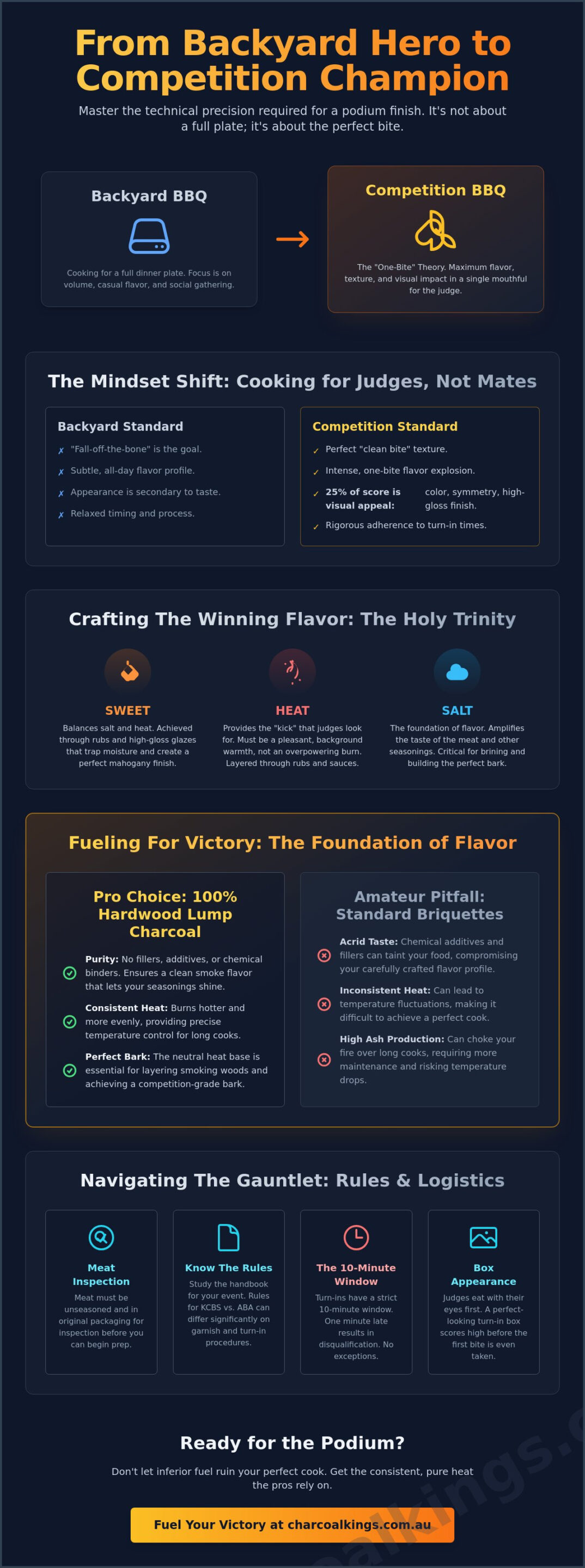
Competition BBQ is a technical sport of precision. It isn’t a casual weekend lunch or a social gathering centered around a smoker. It is a disciplined pursuit where success is measured in decimal points. Most bbq competition tips for amateurs start with this fundamental realization: your backyard habits will likely fail you on the circuit. While home cooking focuses on volume and relaxation, competition requires rigorous consistency and adherence to strict timelines. You aren’t just cooking for flavor; you are cooking to a very specific, standardized profile.
The “One-Bite” Theory is the foundation of this shift. A judge will take exactly one mouthful of your entry to determine your score for taste and tenderness. They don’t eat a whole plate. This means your salt, sweet, and heat profiles must be concentrated. If you cook meat the way you serve it to mates at a party, it will taste bland to a judge who has just sampled several high-intensity entries. This evolution from traditional American barbecue competitions has created a standard that demands superior fuel purity to ensure no off-flavors interfere with your profile.
To better understand how the atmosphere and requirements change when you step onto the competition grounds, watch this helpful video:
In Australia, you’ll primarily deal with two sanctioning bodies: the Australasian Barbecue Alliance (ABA) and the Kansas City Barbeque Society (KCBS). The ABA style is widely popular across the country, often allowing for more creative freedom in “Anything Butt” categories. KCBS remains the global benchmark for traditional categories like brisket and pork ribs. A common amateur pitfall is “cooking until it falls apart.” In a sanctioned event, overcooked meat that loses its structural integrity will result in low scores for tenderness. Precision is the only way to the podium.
The Mindset Shift: Cooking for Judges, Not Mates
Visual appeal accounts for 25% of your total score. Symmetry, color, and a high-gloss finish matter as much as the taste. Your ribs shouldn’t fall off the bone; they need a “clean bite” where the meat pulls away only where your teeth hit. This requires exact internal temperature control and high-quality Rubs and Sauces to build layers that explode on the palate immediately. Every bbq competition tips for amateurs guide will tell you: if it doesn’t look perfect in the box, the judge has already decided your score before they taste it.
Sanctioning Rules You Must Know
Rules are absolute and non-negotiable. Most competitions require a meat inspection before you light your Hardwood Lump Charcoal. Meat must be unseasoned and in its original packaging to ensure food safety and fairness. Then there is the turn-in window. You typically have a 10-minute window to get your box to the judging table. If you’re one minute late, your entire overnight cook is disqualified. Garnish rules also vary. KCBS is strict about specific greens, while ABA events often allow more flexibility. Always study the specific team handbook for your event.
Crafting the Winning Flavour Profile
Competition flavor is an aggressive, high-impact experience. You aren’t seasoning for a full meal; you are seasoning for a single, explosive mouthful. The foundation of this profile is the Holy Trinity: Sweet, Heat, and Salt. These elements must work in absolute harmony to create the “Perfect Bite” that judges demand. Most bbq competition tips for amateurs emphasize that your home rub is likely too subtle. You need to layer these flavors through injecting, rubbing, and spritzing to ensure every fiber of the meat carries your signature profile. Technical precision in your food safety and preparation skills ensures your meat is handled correctly before it ever hits the smoker.
The visual finish is just as critical as the taste. Achieving a high-gloss, mahogany glaze on ribs and brisket is a hallmark of a professional entry. This isn’t just about appearance. A well-executed glaze traps moisture and provides the final hit of sweetness that balances the salt and smoke. Clean fuel is the only way to achieve this. If your fire is tainted by chemical additives or fillers, your flavor profile is compromised from the start. High-quality Hardwood Lump Charcoal provides the neutral, consistent heat base required for layering delicate smoking woods. Without fuel purity, your competition entry will carry an acrid, bitter finish that no amount of sauce can hide.
Effective bbq competition tips for amateurs focus on the science of the cook. You must manage your fire with the same intensity you apply to your seasoning. Every layer of flavor, from the initial injection to the final glaze, must be intentional. Use these techniques to build a profile that stands out in a field of hundreds of entries.
Achieving the ‘Perfect Bite’ Balance
Salt management is your first priority. Use brines and rubs strategically to enhance natural meat flavors without overwhelming the palate. Sweetness acts as the bridge. Ingredients like honey or brown sugar mellow out the intensity of spicy rubs. Finally, use acidity to cut through the heavy fat of brisket or pork. A light spritz of apple cider vinegar or citrus juice provides the brightness needed to refresh the judge’s palate and keep them interested in the flavor profile.
Smoke Control: Clean vs. Dirty Smoke
The most important visual cue for a pitmaster is “Blue Smoke.” This thin, nearly invisible vapor indicates a perfect, clean-burning fire. Thick, white, or “dirty” smoke is the enemy of competition BBQ. It leaves a heavy, creosote-laden coating on your proteins. This is especially true for chicken, which absorbs smoke more aggressively than beef. Avoid cheap fuels with nasty fillers that produce acrid smoke. Match your Smoking Woods to your protein; use Cherry for a deep red color on pork or Hickory for a robust beef profile.
Equipment and Fuel Logistics for Amateurs
Your smoker is the engine of your competition site, but your fuel is the oil that keeps it running clean. For a podium finish, you need a rig that offers thermal stability over a 12 to 15 hour cook. Offset smokers are the gold standard for bark development and deep flavor, but they require constant fire management. Drum smokers, or UDS, are a favorite for newcomers because they offer incredible fuel efficiency and a compact footprint. Pellet grills provide digital precision, though some pitmasters find the smoke profile too light for competition standards. Regardless of the rig, you must master the technical aspects of barbecuing with charcoal to ensure your heat remains consistent from the first brisket on to the final rib turn-in.
Logistics often sink a rookie team before the first meat inspection. You are essentially setting up a commercial kitchen in a temporary outdoor space. This requires a dedicated power source for digital controllers, a portable water supply for sanitation, and robust weather protection. A sudden downpour or high winds can drop your smoker temperature by 20 degrees in minutes. These bbq competition tips for amateurs are useless if you can’t maintain your environment. High-purity fuel is non-negotiable here. Cheap charcoal with fillers produces inconsistent heat and acrid smoke that will be immediately flagged in certified BBQ judge tips. Every detail of your setup must focus on reliability.
Fuel Selection: Lump Charcoal vs. Briquettes
Hardwood lump charcoal is the superior choice for clean flavor and high-heat capability. It is 100% natural wood carbonized without chemical binders. This ensures zero chemical aftertaste on your competition chicken. Charcoal briquettes have their place in drum smokers where a slow, uniform burn is required. However, you must only use professional-grade briquettes that lack the nasty fillers found in supermarket brands. Purity is the standard. Any additive in your fuel will manifest as a bitter note in your glaze. Stick to natural products to protect your flavor profile.
Essential Gear Beyond the Smoker
Consistency requires data. An instant-read thermometer is the most important tool in your kit. You cannot guess the internal temperature of a high-end brisket. You also need insulated coolers to rest your meat effectively. Proper resting allows juices to redistribute, which is vital for achieving the correct texture. Finally, assemble a turn-in box kit. This should include sharp scissors for trimming garnish, tweezers for precise meat placement, and heavy-duty foil. These bbq competition tips for amateurs ensure you have the tools to execute the visual symmetry that judges expect during the final minutes of a category window.
The 24-Hour Competition Timeline
Friday afternoon is for bump-in. You must organize your site for maximum efficiency before the mandatory meat inspection. Most bbq competition tips for amateurs fail to mention that a cluttered site leads to missed turn-in windows; to stay organized, you can learn more about Mega Office Supplies for the stationery and filing solutions needed to keep your schedules clear. Once your meat is inspected by officials, the “Big Cook” begins. Brisket and pork butt require the longest duration; they typically hit the smoker between 8:00 PM and midnight on Friday. This timing ensures they have enough time to push through the stall and rest properly before the Saturday afternoon deadlines.
Managing the stall is a technical decision that defines your final texture. When the internal temperature plateaus around 160°F (71°C), you must choose to wrap or wait. Wrapping in heavy-duty foil or peach butcher paper preserves moisture and accelerates the cook. However, it can compromise the bark you worked so hard to build. Precision is the only way to navigate this under pressure. Saturday morning shifts the focus to chicken and ribs. These categories require shorter, more intense attention and higher stakes for visual symmetry.
For the most consistent results during your overnight cook, stock up on professional-grade charcoal and smoking woods before you head to the grounds.
The Overnight Grind: Managing Fire and Sleep
Stability is the goal for an overnight cook. Use the “Minion Method” or the “Snake Method” to ensure your fuel burns in a controlled, sequential manner. This provides long-duration heat without constant refueling. Fire management is a discipline. You cannot leave your pit unattended for extended periods. Small temperature fluctuations can ruin a high-grade brisket. For a deeper look at maximizing your burn times, check our charcoal guide for fuel efficiency tips.
Turn-in Window Strategy
Success is a result of working backward from the deadline. Standard turn-in times often follow a strict sequence: Chicken at 12:00 PM, Ribs at 1:00 PM, Pork at 2:00 PM, and Brisket at 3:00 PM. You must set your “start” times based on these deadlines, accounting for at least 60 to 90 minutes of resting time for larger cuts. These bbq competition tips for amateurs ensure you aren’t rushing the slice. The 10-minute rest rule before slicing is vital for juice retention. When preparing the box, use tweezers for exact placement. Visual impact is the first thing a judge notices.
Fueling for Victory with Charcoal Kings
Your journey from backyard enthusiast to podium contender depends on the variables you can control. Fuel is the most significant variable in any long-duration cook. Charcoal Kings serves as the secret weapon for Australian BBQ teams who refuse to compromise on quality. We provide the consistency required to manage a pit for 24 hours straight without unexpected temperature spikes or acrid smoke. These bbq competition tips for amateurs are only effective when your fire is built on a foundation of absolute purity.
Our commitment to 100% natural hardwood means zero nasty fillers and no chemical binders. In a competition environment, even a hint of chemical residue can disqualify a perfectly cooked brisket. We offer wholesale options for teams planning their 2026 season across multiple regional and national events. Bulk sourcing ensures your flavor profile remains identical from the first practice cook to the final Grand Champion announcement. Consistency wins trophies.
The Purity Difference
Chemical-free charcoal is essential for protecting your flavor profile. When you use our hardwood lump, your carefully crafted Rubs, Sauces & Cures remain untainted by synthetic odors. Our charcoal is engineered for longevity and intense heat. It burns longer and cleaner than standard supermarket alternatives. This saves you money and reduces the need for mid-cook refueling during those critical overnight hours. For those competing in specialty or “Anything Butt” categories, sourcing the best binchotan charcoal provides the steady, infrared heat needed for precision searing and traditional techniques.
Join the Charcoal Kings Community
We support the pitmasters who push the boundaries of the craft. You can find our premium products at stockists across South Australia and through our national distribution network. We provide special offers for registered competition teams and BBQ clubs to ensure the best pitmasters have access to the best fuel. The BBQ community is your most valuable resource. Don’t be afraid to ask veteran teams for advice during bump-in. Most are happy to share their knowledge with anyone who shows respect for the fire.
Winning your first competition is about preparation, technical skill, and the right equipment. You’ve mastered the timing and the flavor profiles. Now, ensure your fuel is up to the task. Gear up for your first comp with Charcoal Kings premium fuels and take your place on the podium. Let’s get to work.
Secure Your Podium Finish
Success on the competition circuit is earned through technical discipline and superior preparation. You now have the essential bbq competition tips for amateurs to move beyond the backyard. You understand the intensity of the “One-Bite” flavor profile and the importance of a rigid 24-hour timeline. These elements separate the hobbyists from the champions. Every decision you make, from your rub layers to your fire management, must be intentional and precise.
Charcoal Kings is the standard for pitmasters who demand performance. Our products consist of 100% Natural Hardwood with No Additives or Fillers. This purity is why we are Trusted by Australia’s Top BBQ Teams to provide the clean, stable heat required for a winning bark. Don’t risk a bitter finish with supermarket fuel. Use the professional choice to ensure your flavor profile remains untainted from meat inspection to turn-in.
Fuel your journey to the podium with Charcoal Kings’ premium hardwood lump and start your 2026 season with confidence. The competition is tough, but you’re now equipped to win. Get to the pit.
Frequently Asked Questions
How much does it cost to enter a BBQ competition as an amateur?
Amateur entry fees for backyard competitions in 2026 typically range from $100 to $200 per team. For instance, the Mauldin Cultural Center 2026 BBQ Cook-Off registration is $200, while the Eastern Florida State College backyard entry fee is $100. These costs generally cover your designated site space but do not include your meat, Rubs, or high-purity fuel supplies.
Do I need a professional offset smoker to win my first BBQ comp?
You don’t need a massive offset smoker to reach the podium. Many successful teams use drum smokers or pellet grills because they offer superior temperature stability and fuel efficiency. The priority is mastering your specific rig and using clean Hardwood Lump Charcoal to ensure your flavor profile remains untainted by chemical additives or poor fire management.
What are the four main categories in an ABA BBQ competition?
The standard meat categories for an Australasian Barbecue Alliance (ABA) sanctioned competition are Brisket, Pork Ribs, Pork Butt, and Lamb. While international circuits often include chicken, the Australian circuit frequently swaps it for lamb. Each category is judged independently on appearance, texture, and taste to determine the overall Grand Champion.
Can I use gas or electric smokers in a sanctioned competition?
Sanctioned competitions under ABA or KCBS rules strictly prohibit gas or electric heat sources for the core meat categories. You must use wood or charcoal as your primary fuel. Professional teams often rely on premium Charcoal Briquettes or lump charcoal for a consistent, ember-based heat that provides the traditional smoke profile judges demand.
How do I keep my meat warm if it finishes earlier than the turn-in time?
Use a professional insulated cooler or a dedicated resting box to hold your meat at temperature. Wrapping your proteins in heavy-duty foil and towels before placing them in the cooler allows the juices to redistribute without losing heat. This resting phase is a critical part of these bbq competition tips for amateurs because it ensures the meat achieves the correct tenderness before slicing.
What is the most common mistake amateurs make at their first competition?
Failing to manage the strict 10-minute turn-in window is the most frequent error for new teams. If your box is one minute late, your entire cook is disqualified. Another significant pitfall is over-smoking the meat with “dirty” white smoke. This usually happens when using low-grade fuel or failing to allow the fire to reach a clean-burning state before adding the proteins.
How many people do I need on my BBQ competition team?
Most amateur teams consist of 2 to 4 members. One person typically takes the lead as the Head Pitmaster to oversee fire management and timing. Other members focus on meat trimming, box presentation, and site logistics. A well-organized team of three is usually sufficient to handle the overnight grind and the intense Saturday morning turn-in schedule.
Where can I find a list of upcoming BBQ competitions in Australia for 2026?
The best resource is the official Australasian Barbecue Alliance (ABA) website, which maintains a sanctioned event calendar. You should also check the Kansas City Barbeque Society (KCBS) international schedule for Australian events. These platforms provide the most accurate bbq competition tips for amateurs regarding entry deadlines, specific category rules, and prize money for the 2026 season.