
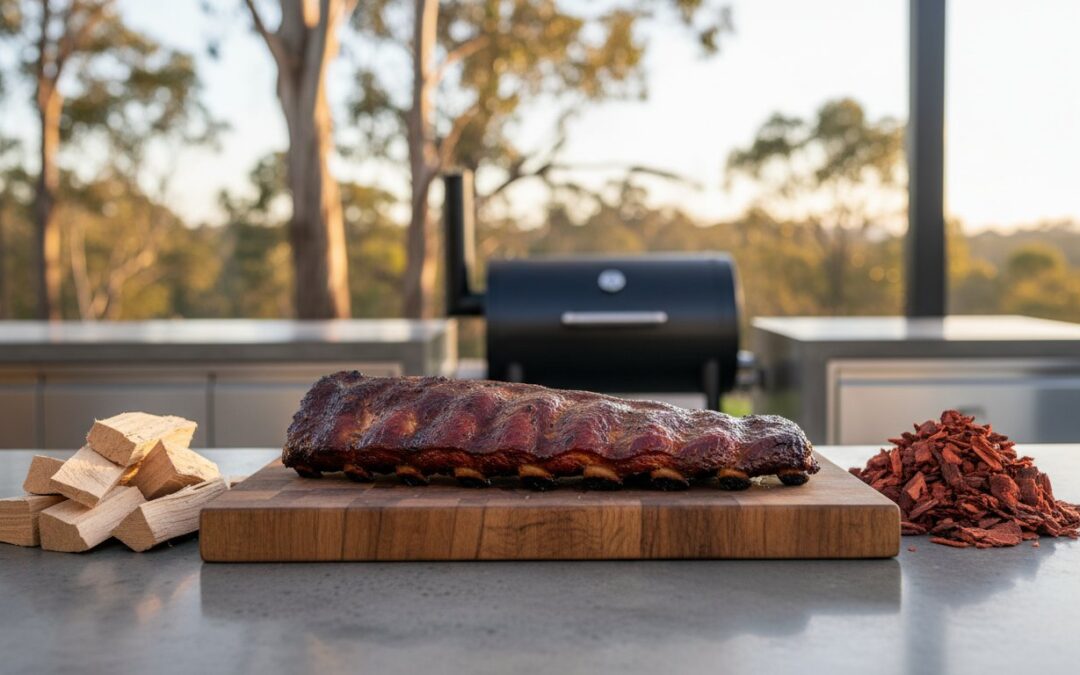
The perfect pork smoke isn’t defined by a single wood variety, but by how you balance the palate against the presentation. While many beginners reach for heavy hitters like hickory, seasoned pitmasters know that the apple wood vs cherry wood for pork debate is where the real craft happens. You’ve likely felt the frustration of a dull, grey bark on your ribs or a smoke profile that tastes more like a campfire than a meal. It’s a common mistake that ruins high quality cuts and masks the natural sweetness of the fat.
With sustained high beef prices leading into 2026, pork has become the central protein for serious BBQ enthusiasts. You need a fuel source that respects the meat without overpowering it. This guide reveals the precise differences in smoke density and color development between these two fruitwood staples. You’ll discover how to achieve a professional grade, deep red smoke ring and the perfect balance of sweetness and savory pork fat. We’ll show you how to use apple for the palate and cherry for the eyes, ensuring your next smoke delivers both world class flavor and a stunning mahogany finish.
Key Takeaways
- Identify why mild fruitwoods are the superior choice for pork, preventing the bitter, overpowering results often caused by heavier hardwoods.
- Utilize apple wood as a mellow, sweet foundation that is exceptionally forgiving for beginners and nearly impossible to over-smoke.
- Master the visual side of BBQ by using cherry wood to produce a professional-grade mahogany bark and a distinct, deep smoke ring.
- Balance flavour and aesthetics by applying the 50/50 blending rule when deciding between apple wood vs cherry wood for pork.
- Protect your final product by using a clean-burning Hardwood Lump Charcoal base to eliminate the chemical off-tastes associated with additive-heavy briquettes.
The Fruitwood Face-Off: Why Apple and Cherry Dominate Pork Smoking
Pork is essentially a flavour sponge. Its high fat content and porous structure absorb smoke compounds more efficiently than beef or game. Because of this, the choice between apple wood vs cherry wood for pork becomes a critical decision for any pitmaster. Unlike heavy hitters like Hickory or Mesquite, which can turn meat bitter during a standard 8 to 12 hour low and slow session, fruitwoods provide a gentle, controlled smoke. They respect the meat rather than masking it.
The botanical structure of fruit trees plays a major role in this performance. These hardwoods have a specific density and sap content that produces a lighter, thinner blue smoke. This ensures the natural taste of the pork remains the star of the show. Understanding the smoking process allows you to manipulate these variables for professional results. When you’re running a long cook, you need a fuel source that burns clean from the first hour to the last.
To better understand this concept, watch this helpful video:
What Defines a High-Quality Smoking Wood?
Quality starts with seasoning. You must use wood with a moisture content under 20%. Green wood contains too much water, leading to dirty black smoke and a creosote taste that ruins your bark. Purity is another non-negotiable factor. We only recommend using woods free from bark rot, fungus, or chemical treatments. High quality fruitwoods also contain natural sugars. During the cook, these sugars vaporize and settle on the meat surface, assisting in the caramelisation that creates a world class bark.
Fruitwood vs. Nut Woods: Finding the Balance
Nut woods like Oak or Pecan provide a solid foundation of heat and moderate smoke. However, they lack the specific sweet profile that only fruit-bearing trees provide. Many professionals use a base of Hardwood Lump Charcoal for consistent heat, then add fruitwood chunks for the specific flavour profile. You can use fruitwoods solo for a delicate touch or mix them with Oak to add more body to the smoke. Fruitwood is the definitive beginner-to-pro wood for pork because it offers a wide margin for error while delivering sophisticated, sweet results.
Apple Wood: The Traditional Sweetheart of Pork Flavour
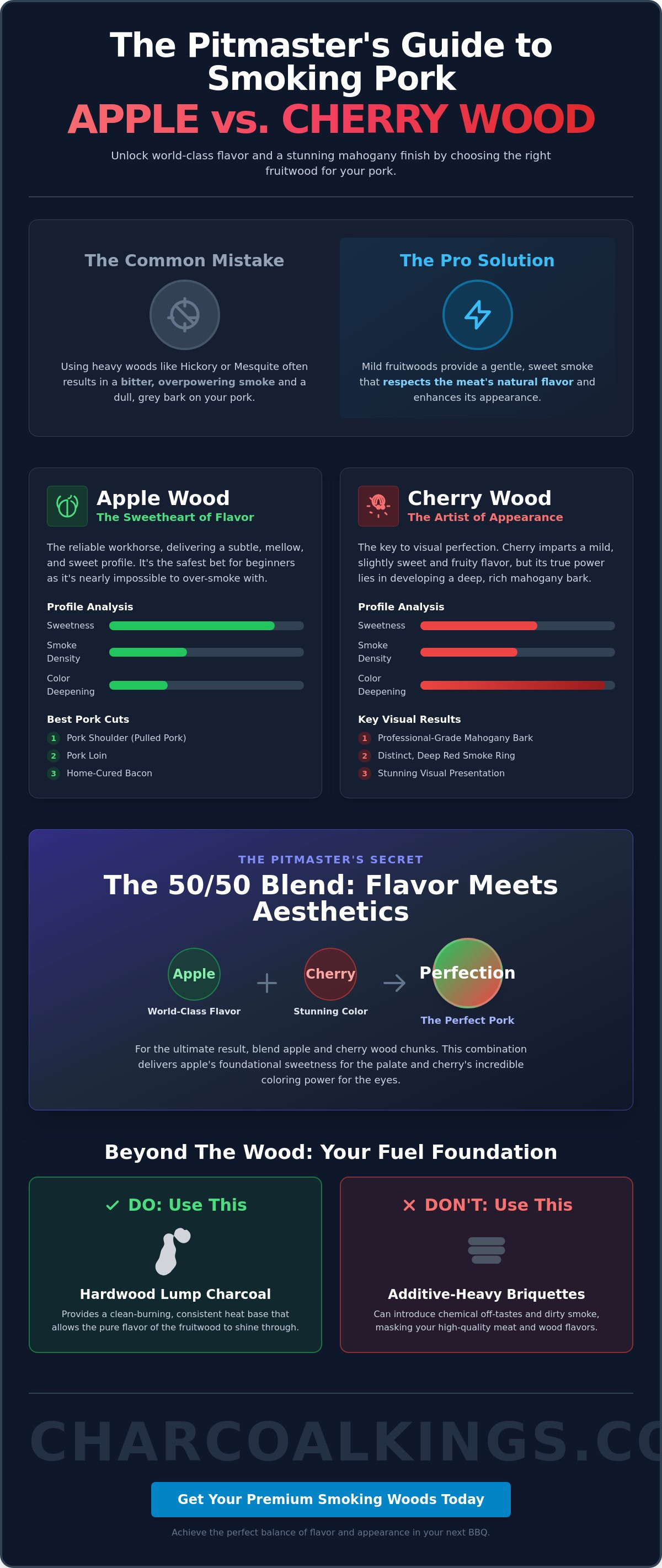
Apple wood is the reliable workhorse of the fruitwood family. It delivers a subtle, mellow profile that defined classic American BBQ. The sweetness is distinct but never cloying. When evaluating apple wood vs cherry wood for pork, apple stands out as the safest bet for beginners. It’s nearly impossible to over-smoke your meat with this variety. You can subject a large cut to 12 hours of smoke without the fear of producing a bitter, acrid result.
A heavy 4kg pork shoulder requires a long-haul commitment. Apple wood handles these extended durations with ease. It leaves no lingering ashiness on the palate. The finish is exceptionally clean. This purity allows the rich, savoury notes of the pork fat to remain the focal point of the dish. For the best results, start with a high-quality fuel source from our range of Smoking Woods to ensure a consistent, clean burn throughout the day.
Best Pork Cuts for Apple Wood
Pork Shoulder is the prime candidate for apple. The wood’s light touch allows the natural sweetness of the rendered fat to take centre stage. For leaner cuts like Pork Loin, apple is essential. It provides a gentle smoke that won’t overwhelm the delicate meat. If you’re tackling home-cured bacon, apple is the traditional choice for that classic, familiar profile. It provides a balanced finish that complements the salt-cure process perfectly without adding harsh notes.
Maximising Apple Smoke Intensity
If you want more punch from your apple wood, focus on your smoker’s airflow. Restricting the exhaust slightly can build smoke density, provided you maintain a clean, blue smoke. Apple wood pairs perfectly with fruit-based rubs containing peach, cherry, or apple components. These ingredients work in tandem with the wood sugars to build a complex, flavorful crust. Apple wood provides the most neutral sweet smoke available. It acts as a blank canvas for your spices while adding a reliable, fruity undertone to every bite.
Cherry Wood: Elevating Aesthetics with the Perfect Red Bark
Cherry wood is the definitive choice for pitmasters who prioritize visual impact. While the apple wood vs cherry wood for pork debate often focuses on taste, cherry wins the aesthetic battle every time. It offers a slightly more assertive profile than apple. You’ll notice a tart, fruity edge that cuts through the richness of pork fat. It’s the “Visual King” of the fruitwood world.
This variety is famous for producing a vibrant, defined pink smoke ring that penetrates deep into the muscle. In competition BBQ, appearance scores are vital. Cherry wood provides that deep mahogany or reddish-pink bark that signals professional quality. It elevates a standard backyard cook into a competition-grade showpiece. With pork becoming the central protein in 2026 BBQ menus due to high beef prices, mastering this visual edge is more important than ever.
The Science of the Cherry Bark
Cherry wood contains specific phenolic compounds that react rapidly with meat proteins during the cooking process. This chemical reaction darkens the surface significantly faster than other fruitwoods. You must manage this darkness with precision. If you leave a pork shoulder exposed to heavy cherry smoke for a full 12 hour cycle, the bark can transition from mahogany to a black, bitter crust. Pitmasters call this “over-redding.” To hit the sweet spot, monitor the surface color closely. Wrap your pork in butcher paper or foil once the desired red hue is achieved. This technique preserves the color while protecting the meat from excessive carbon buildup and acrid flavors.
Best Pork Cuts for Cherry Wood
Pork Ribs are the ideal partner for cherry wood. The standard 5 to 6 hour cook time aligns perfectly with the wood’s rapid color development. When deciding on apple wood vs cherry wood for pork ribs, cherry often wins for its ability to produce a stunning finish before the smoke profile becomes too dominant. Pork Belly Burnt Ends also thrive with this wood. It creates that iconic “candy” look with a deep red hue that suggests a sweet glaze even before you apply your final sauce. For fast-cooking items like chops and steaks, cherry provides an immediate infusion of color and a tartness that balances lean protein. If you want a consistent, clean burn without chemical off-flavors, pair these woods with our premium lump charcoal as your primary heat source.
The Pitmaster’s Secret: Blending Apple and Cherry for Maximum Impact
Professional results often require a strategic approach to the apple wood vs cherry wood for pork debate. Instead of picking a side, many experts utilize a 50/50 blend. This ratio leverages the strengths of both species. Apple wood establishes a foundation of mellow sweetness. Cherry wood acts as the finishing agent, delivering that signature mahogany bark discussed in previous sections. This combination ensures your pork tastes as good as it looks. It’s a proven method for consistent, high-quality results.
If your rub is heavy on heat and black pepper, you might want more depth. This is where the “Triple Threat” blend comes in. Add a single chunk of Hickory to your fruitwood mix. It provides a savoury backbone that balances the fruit sugars. For sweet, sugar-based rubs, stick to the pure fruitwood blend to avoid clashing profiles. This allows the natural pork flavour to stay front and centre. Customizing your blend based on your rub profile is what separates a hobbyist from a master.
Apple vs. Cherry: At-A-Glance Comparison
Use this data to determine your starting point based on your specific equipment and experience level.
| Feature | Apple Wood | Cherry Wood |
|---|---|---|
| Flavour Intensity | Subtle and Mellow | Moderate and Tart |
| Bark Colour | Golden Brown | Deep Mahogany |
| Sweetness Level | High | Moderate |
| Forgiveness | Very High | Moderate |
For offset smokers, wood chunks provide a more sustained smoke release than thin chips. Beginners should lean toward apple for its high forgiveness. Competition pitmasters prioritize cherry for its visual impact. Both are essential additions to your fuel arsenal.
How to Layer Smoke Flavour
You don’t have to add all your wood at once. When considering apple wood vs cherry wood for pork, layering allows you to control the cook’s progression. Start with Cherry wood for the first two hours. This is when the meat is coolest and most receptive to taking on color. Once the bark hits that reddish-pink hue, switch to Apple wood. This maintains the mellow sweetness through the middle of the cook until you reach the wrap stage. To achieve a classic, crowd-pleasing profile, blend 2 parts apple to 1 part cherry. Ready to build your custom blend? Stock up on premium Smoking Woods and start experimenting with these ratios today.
Beyond the Wood: Matching Your Smoke with Premium Charcoal Fuel
Choosing between apple wood vs cherry wood for pork is only half the battle. Your smoking wood acts as the seasoning, but your charcoal is the engine. A professional smoke requires a clean-burning foundation that doesn’t interfere with the delicate fruitwood profile. We recommend using high-quality lump charcoal as your primary heat source. Inferior fuel options, such as cheap supermarket briquettes, often contain chemical binders and petroleum-based fillers. These additives release acrid fumes that can ruin a 12 hour pork shoulder cook. When you invest in premium meat, you must invest in pure fuel.
Consistency is the hallmark of a master pitmaster. Premium charcoal provides the temperature stability needed for wood chunks to smoulder correctly. If your fire is inconsistent, your wood will either flash-burn or produce bitter, heavy smoke. Charcoal Kings is the trusted source for pure, additive-free fuel in Australia. Our products ensure that the only thing you taste is the natural pork and the sweet, tart notes of your chosen fruitwood. We focus on performance and purity so you can focus on the craft.
Lump Charcoal vs. Wood Chunks
Lump charcoal provides the intense, dry heat required for rendering fat and building a professional-grade bark. Wood chunks are added specifically for their flavour profile. Many beginners find that barbecuing with charcoal produces a much more resilient crust than gas-based alternatives. The clean fire philosophy is critical here. You want a steady stream of thin blue smoke. If you see billowy white smoke, your wood is smouldering at the wrong temperature. This is usually caused by a poor charcoal base that lacks the necessary heat density.
Getting Started with the Right Gear
Your smoker type dictates how you manage your fuel. Offset smokers provide the most traditional experience, while Kettle and Bullet smokers offer excellent efficiency for residential use. The Australian hardwoods used in Charcoal Kings’ lump charcoal provide a neutral, high-performance base. This allows you to experiment with the apple wood vs cherry wood for pork ratios without the charcoal profile becoming intrusive. Purity in fuel leads to purity in flavour. High standards in your fuel source translate directly to the quality of your bark and the depth of your smoke ring. Shop our range of premium charcoal and smoking woods today and take command of your next smoke.
Master the Art of the Fruitwood Smoke
Mastering your pork smoke requires more than just choosing a wood variety. It’s about understanding how flavour and aesthetics work in tandem. Apple wood provides the essential mellow sweetness and forgiveness needed for long-haul shoulder cooks. Cherry wood delivers the professional mahogany bark and vibrant smoke ring that wins competitions. The most balanced results come from strategic blending and layering throughout the cooking process. Understanding the technical nuances of apple wood vs cherry wood for pork allows you to tailor every cook to your specific goals.
Your wood choice only performs as well as your fuel source. A clean, consistent fire is non-negotiable for professional BBQ. Avoid the chemical off-flavours of low-grade alternatives by starting with a pure, high-performance base. Upgrade your next smoke with Charcoal Kings’ Premium Hardwood Lump. Our fuel is 100% Natural Hardwood with no additives or chemicals. We’re Australian owned and operated, providing the standards that serious pitmasters demand. Fire up your pit and start crafting your signature smoke today.
Frequently Asked Questions
Is cherry wood stronger than apple wood for smoking?
Cherry wood is slightly more assertive than apple wood. It delivers a sharper, tart fruitiness that is more noticeable on the palate. Apple wood remains the most mellow option, providing a subtle sweetness that is difficult to overdo. When comparing apple wood vs cherry wood for pork, cherry provides a more distinct flavour profile that stands up well to spicy rubs and heavier glazes.
Can I mix apple and cherry wood for pork ribs?
You can certainly mix apple and cherry wood for pork ribs. A 50/50 blend is a favourite among competition pitmasters. This combination allows the apple wood to provide a sweet foundation while the cherry wood develops a deep, mahogany bark. Using both ensures you don’t have to choose between superior flavour and professional visual appeal during a shorter 5 or 6 hour cook.
Does cherry wood make pork turn black?
Cherry wood can turn pork black if the meat is exposed to the smoke for too long. While it initially produces a beautiful reddish hue, extended exposure beyond 6 hours without wrapping can lead to a dark, carbonized surface. To prevent this, monitor the bark colour closely. Wrap the meat in butcher paper once it hits the desired mahogany shade to preserve the appearance and stop further darkening.
Do I need to soak apple or cherry wood chunks before smoking?
You don’t need to soak apple or cherry wood chunks before smoking. Soaking wood is a common misconception that actually hinders the smoking process. Wet wood must first evaporate the moisture, creating steam rather than clean smoke. This lowers the temperature of your coal bed and can result in a dirty, smouldering fire. Use properly seasoned wood with less than 20% moisture for the best results.
Which wood is better for a 12-hour pork shoulder smoke?
Apple wood is the better choice for a 12 hour pork shoulder smoke. Its mellow profile is exceptionally forgiving over long durations. It won’t produce the acrid tones that can occasionally occur with more assertive woods during extended cooks. If you want the visual benefits of cherry, consider using it only for the first few hours before switching to apple for the remainder of the session to maintain flavour balance.
Can I use apple or cherry wood in a gas BBQ?
You can use fruitwood in a gas BBQ by placing chips or small chunks in a dedicated smoker box or a foil pouch. While this won’t replicate the depth of a charcoal fire, it does provide a noticeable flavour infusion. Place the smoker box directly over the burner for the most efficient smoke production. Ensure the wood is high quality and free from bark rot to avoid bitter flavours.
What happens if I use too much cherry wood on pork?
Using too much cherry wood can result in an overly tart flavour and an excessively dark, bitter bark. Because cherry is more assertive than other fruitwoods, a heavy handed approach can mask the natural taste of the pork. It’s best to start with a few chunks and add more only if the smoke profile remains too thin. Precision and balance are the keys to a professional grade result.
Does the type of charcoal affect the fruitwood flavour?
The type of charcoal significantly affects how you perceive the apple wood vs cherry wood for pork flavour. Premium Hardwood Lump Charcoal provides a neutral, clean burning base that allows the wood’s natural sugars to shine. Cheap briquettes containing chemical binders or fillers can introduce medicinal off flavours. These additives compete with the delicate notes of the fruitwood and can ruin the final taste of your meat.