
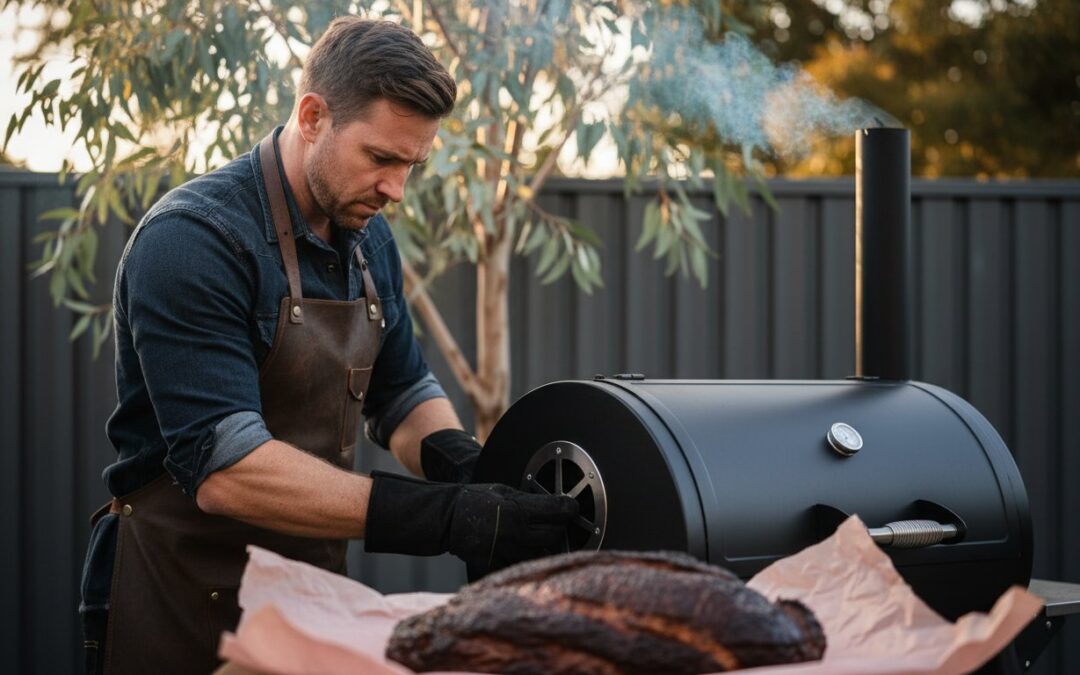
The most expensive offset smoker on the market is nothing more than an oversized paperweight if you don’t understand the chemistry of your fuel. Your backyard rig is a living, breathing combustion chamber that demands more than a simple set-and-forget approach. Most pitmasters have experienced the disappointment of a twelve-hour cook ruined by a bitter creosote coating or a stall that holds dinner hostage for four extra hours. You know that maintaining a steady 120 degrees Celsius during a sudden Australian southerly change takes more than just hope; it takes expertise.
Moving beyond the basics requires a shift in mindset toward advanced smoking techniques used by professional pitmasters to secure trophies. This guide promises to refine your fire management skills so you can produce thin blue smoke consistently. We’ll show you how to manipulate airflow and fuel density to ensure your brisket and beef ribs reach their peak potential without the guesswork. We’re breaking down the science of hardwood combustion and the physics of moisture control to give you total command over your cook. It’s time to stop chasing luck and start engineering flavor. Get Sizzlin’!
Key Takeaways
- Learn why 100% natural lump charcoal provides the carbon density needed for a clean, chemical-free burn lasting over 12 hours.
- Master advanced smoking techniques to move beyond basic temperature monitoring and achieve professional-grade bark and texture.
- Understand how to use the Venturi effect for superior draft control and adjust your fire management for the Australian climate.
- Compare the physics of the “Texas Crutch” against the “Boat” method to effectively manage the stall and preserve moisture.
- Discover how premium fuel serves as the most cost-effective upgrade for maintaining consistent blue smoke and deep flavour profiles.
Beyond Low and Slow: The Plateau of the Intermediate Pitmaster
Hitting a steady 225°F is a standard beginner milestone. True mastery requires more than just watching a digital thermometer. Many backyard cooks hit a plateau where their meat is tender but lacks the complex depth found in professional pits. To bridge this gap, you must adopt advanced smoking techniques that prioritize fire management over simple heat monitoring. Mastering the history and methods of smoking reveals that the best results come from understanding the physics of your cooker. You aren’t just cooking food; you’re managing a chemical reaction.
Basic BBQ focuses on “cooked meat” which is often just soft and salty. Mastered BBQ focuses on the perfect synergy of texture and flavor clarity. Common mistakes like over-smoking or choking the airflow lead to bitter, heavy results. You need to move away from rigid recipes and start managing the Three Pillars: Fuel, Air, and Humidity. Using premium natural hardwood charcoal or seasoned splits is the foundation. Without clean fuel, your airflow adjustments won’t matter. Get Sizzlin’ by focusing on the quality of your fire rather than just the number on the dial.
To better understand this concept, watch this helpful video on fire management and setup:
The Science of the Smoke Ring
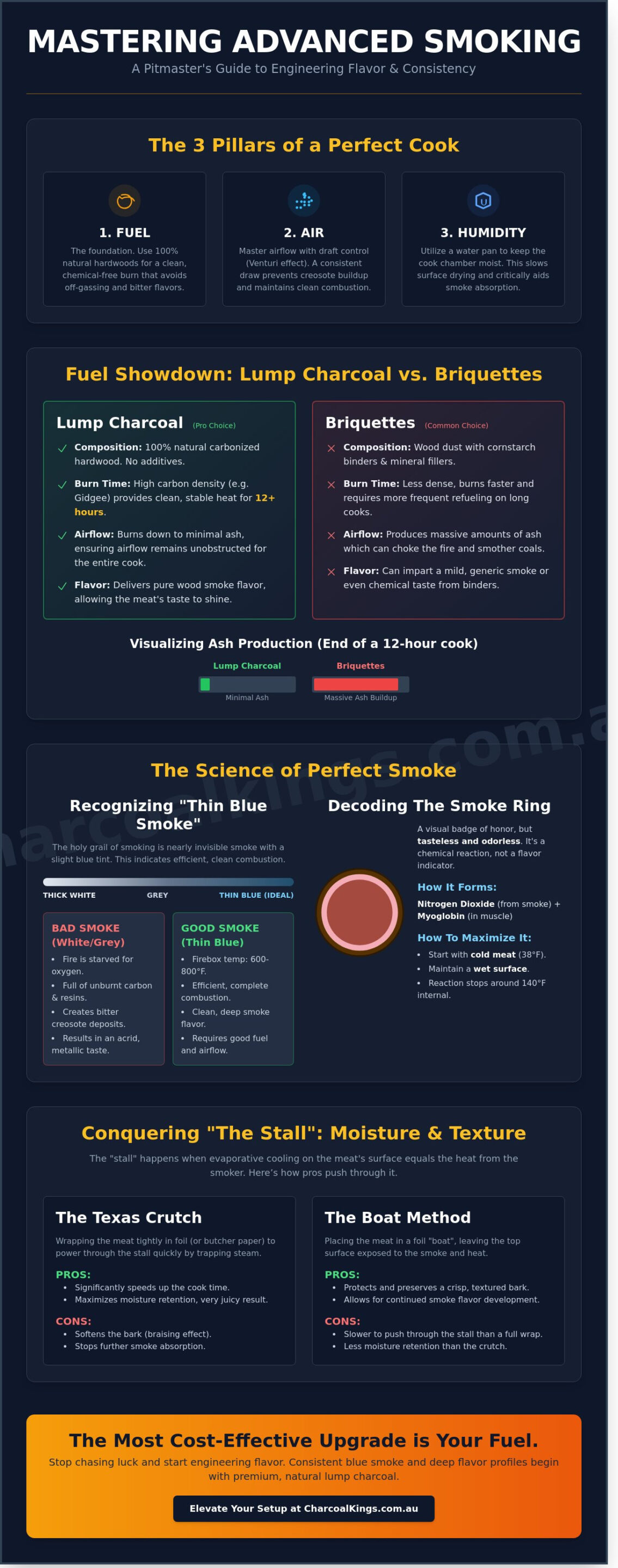
The pink ring is a chemical reaction between nitrogen dioxide gas in the smoke and myoglobin in the muscle tissue. This reaction typically stops once the meat surface reaches 140°F. For the deepest ring, start with cold meat directly from the 38°F fridge. A wet surface is essential because moisture helps the gas dissolve into the meat. It’s a common myth that the smoke ring adds flavor. It’s actually an odorless, tasteless byproduct. It serves as a visual badge of a well-managed fire and proper advanced smoking techniques.
Recognizing the Thin Blue Smoke
Clean smoke is nearly invisible with a faint blue tint. It occurs during efficient combustion when fire box temperatures stay between 600°F and 800°F. White or grey smoke is full of unburnt carbon and heavy resins. These particles create creosote deposits, leaving an acrid, metallic taste on your bark. Watch the exhaust of your offset or kettle. If you see thick, billowy clouds, your fire is starving for oxygen. Open the dampers. A clean fire needs a steady draft to ensure those bitter compounds don’t settle on your brisket.
- Fuel: Use 100% natural hardwoods to avoid chemical off-gassing.
- Air: Maintain a consistent draw to prevent creosote buildup.
- Humidity: Use a water pan to keep the cook chamber moist, which slows down surface drying and aids smoke absorption.
The Chemistry of Clean Combustion: Choosing Your Fuel
Mastering advanced smoking techniques begins with a fundamental understanding of your heat source. You cannot achieve thin blue smoke with inferior fuel. Lump charcoal is the superior choice for serious pitmasters because it consists of 100% natural hardwood carbonized without chemical additives. Unlike mass-produced briquettes, lump charcoal provides higher thermal mass and more consistent radiant heat throughout the cook.
Carbon density determines how your fire behaves over a 12-hour period. High-density Australian hardwoods like Gidgee are approximately 50% denser than standard charcoal varieties. This density allows for a “clean” fire that maintains target temperatures without constant intervention. Maintaining steady heat is vital for both the quality of your bark and food safety for smoking meat. When your fuel burns efficiently, you avoid the bitter, creosote-heavy smoke that ruins expensive cuts of protein.
Lump Charcoal vs. Briquettes for Long Cooks
Lump charcoal is the clear winner for long-duration smoking. Briquettes often contain cornstarch binders and mineral fillers that produce massive amounts of ash. This excess ash acts as an insulator, eventually choking the oxygen supply to your fire in the final hours of a brisket or pork butt cook. Lump charcoal burns down to almost nothing, ensuring your airflow remains unobstructed from start to finish.
The absence of chemicals in natural lump charcoal also impacts the flavour profile. Natural fuel allows the authentic sugars in the meat to caramelize into a dark, mahogany bark. If you want a professional result, stock up on premium lump charcoal to ensure your next cook stays clean and hot.
Advanced Wood Management
Advanced smoking techniques require precise wood management. Professional pitmasters never toss cold wood splits directly onto the coals. Instead, place your next wood split on top of the firebox to pre-heat. This ensures the wood reaches its ignition point instantly when added to the fire. Instant ignition prevents the thick, white smoke that occurs when wood smolders at low temperatures.
- The Flavour Arc: Use heavy, dense woods like Ironbark during the first 4 to 6 hours when the meat is most receptive to smoke.
- The Finish: Transition to lighter fruitwoods like Cherry or Apple in the late stages to add a subtle sweetness without overpowering the bark.
- The Soaking Myth: Never soak your wood in water. Soaking wood is a beginner mistake that creates steam and lowers your firebox temperature, which kills clean combustion.
Understanding burn rates is essential for timing. Ironbark provides a slow, steady release of energy that can last for 8 to 10 hours in a well-insulated offset smoker. Gidgee burns even hotter and longer, making it the perfect base for overnight cooks where temperature stability is the priority. Control your fuel, and you control the cook.
Managing the Fire: Advanced Airflow and Draft Control
Mastering advanced smoking techniques requires a deep understanding of fluid dynamics. The Venturi effect is the engine of your smoker. As hot air rises and exits the exhaust stack, it creates a low-pressure zone in the cook chamber. This vacuum pulls fresh oxygen through the firebox intake. A strong, consistent draw ensures the wood burns clean. This produces the coveted blue smoke instead of bitter, white soot. Without this pressure differential, your fire will smoulder and ruin the meat.
The Australian climate presents unique challenges for fire management. In regions like North Queensland, 80% humidity can slow down evaporation from the meat surface, stalling your cook longer than expected. Conversely, a 40-degree day in Perth means your firebox needs less fuel to maintain a 110°C internal temp. You must adjust your intake settings based on the air density and ambient heat to keep the burn efficient. High humidity requires a slightly more aggressive draft to move moisture out of the chamber.
Executing a ‘Hot and Fast’ cook at 150°C saves hours but risks ruining your bark. Most sugar-based rubs begin to carbonize and turn bitter at 135°C. To prevent this, use a physical barrier like a heat deflector or wait to apply sugar-heavy glazes until the final 60 minutes of the cook. This protects the rub while the high ambient heat renders the fat quickly and efficiently.
Stabilizing temperature swings is easier with added thermal mass. Placing two or three heavy firebricks in the bottom of the chamber acts as a heat battery. These bricks absorb excess energy and radiate it back when the fire dips. This narrows your temperature fluctuations from 20-degree spikes to a steady 5-degree range. It’s a simple way to bring professional stability to any offset or cabinet smoker.
Draft Dynamics in Offset Smokers
Your exhaust stack is the lungs of the machine. A stack with a 10cm diameter and 100cm height provides more “pull” than a short, wide pipe. Never fully close your intake damper during a cook. Choking the air supply starves the fire and creates creosote. Manage the 15cm “hot spot” near the firebox transition by using a steel baffle plate. This diverts direct flames downward and creates a more even temperature gradient across the grates.
The Water Pan: More Than Just Moisture
A water pan does more than keep the air damp. Moist air is more thermally conductive than dry air. This increases the heat transfer rate to the meat by up to 25%. This humidity keeps the meat surface tacky, allowing smoke particles to adhere better for a deeper smoke ring. In vertical smokers, position a 5L water pan directly above the coals. It serves as a vital heat deflector. This prevents the bottom of your brisket from scorching while the steam facilitates a superior Maillard reaction. Get Sizzlin’!
Moisture and Texture: The ‘Texas Crutch’ and Beyond
Mastering the stall is a requirement for any pitmaster using advanced smoking techniques. Around 165°F (74°C), the internal temperature of a brisket or pork shoulder will plateau for hours. This isn’t a heat issue; it’s physics. Evaporative cooling occurs as moisture reaches the surface and evaporates, cooling the meat as fast as the smoker heats it. To push through, you need to manage surface moisture and airflow.
Advanced spritzing helps build complex bark layers before the wrap. Use a 50/50 mixture of apple cider vinegar and water to provide acidity that breaks down surface proteins. For a darker, caramelized finish, add 10% maple syrup or brown sugar to the spray. Spritz every 45 to 60 minutes once the bark is set to keep the exterior from becoming brittle while the interior continues to render.
Wrapping Techniques Compared
- Foil: The traditional ‘Texas Crutch’ is the fastest method. It traps 100% of the moisture and steam, which braises the meat. It guarantees a juicy result but will soften your bark significantly.
- Peach Butcher Paper: This is the professional choice for high-end BBQ. The paper is porous enough to let steam escape while keeping the fat from evaporating. This preserves a crunchy, dark bark while protecting the meat from drying out.
- The Foil Boat: This involves wrapping only the bottom and sides of the meat, leaving the top exposed. It protects the flat of a brisket from direct heat while allowing the top bark to continue hardening and absorbing smoke.
The Long Rest and Holding
The rest is where a good brisket becomes legendary. You shouldn’t slice meat immediately after it hits 203°F. A rest of 4 to 10 hours allows the muscle fibers to relax and reabsorb rendered fats. Use a faux-cambro by placing the wrapped meat in an insulated cooler packed with towels. This slow decline in temperature prevents the ‘carry-over’ cooking that turns a tender brisket into crumbly pot roast.
For a competition-grade finish, apply the tallow method. Adding 100ml of rendered wagyu beef tallow to the wrap provides a rich mouthfeel and prevents the bark from sticking to the paper. You’ll know it’s ready when the meat is ‘probe tender,’ meaning a thermometer slides into the thickest part of the brisket with zero resistance, similar to a knife through room-temperature butter.
Ready to master your next cook? Fuel your pit with premium natural charcoal for consistent heat and better bark. Get Sizzlin’!
Elevating Your Setup with Charcoal Kings
Upgrading a smoker often involves expensive modifications or high-end digital controllers. However, the most cost-effective performance boost comes from your fuel source. Cheap briquettes often contain fillers and chemical binders that produce acrid smoke and inconsistent temperatures. Switching to premium fuel is the single most impactful change for anyone practicing advanced smoking techniques. Charcoal Kings provides 100% natural hardwood charcoal that burns cleaner and longer than standard retail options. Our products contain zero hidden chemicals, ensuring that the only flavor on your meat is the pure essence of the wood.
Reliability is critical for 12-hour cooks. Our charcoal burns steady and hot, producing minimal ash. This allows for better airflow in offset smokers and ceramic grills alike. Australian pitmasters understand that quality fuel isn’t a luxury; it’s a requirement for achieving that elusive blue smoke and perfect bark. We source hardware and fuel that meet the demands of serious competitors and backyard enthusiasts who refuse to compromise on their results. Investing in premium hardwood is the fastest way to stabilize your firebox and improve your final product.
Fueling Your Mastery
Our range of premium lump charcoal serves two distinct purposes. Use our high-density coals for high-heat searing at temperatures exceeding 300 degrees Celsius, or bank them for a stable 110-degree low-and-slow session. We offer specific natural smoking woods to complement your protein. Ironbark provides a heavy, traditional profile for beef brisket, while fruitwoods like apple or cherry offer a sweeter finish for pork ribs. For the serious competitor or food service professional, our wholesale opportunities provide bulk access to the hottest and longest-lasting coals in the country.
Get Sizzlin’ with the Right Tools
Precision tools separate the amateurs from the masters. Essential accessories like digital probes, heavy-duty scrapers, and professional-grade rubs are vital for consistency. Accuracy in temperature monitoring can be the difference between a dry brisket and a competition-grade result. Visit our Holden Hill store to speak with experts who can guide your next hardware purchase, whether you’re looking for a heavy-duty offset smoker or specialized BBQ tools. You can also follow our blog for deep-dives into mastering the art of barbecuing with charcoal to refine your advanced smoking techniques further. Get Sizzlin’!
Master the Fire and Command Your Pit
Achieving professional results requires more than just patience. It’s about the science of clean combustion and the precision of your draft control. You now have the technical tools to maintain that perfect blue smoke and push through the 160 degree stall using the Texas Crutch. These advanced smoking techniques separate the weekend hobbyists from the true masters of the craft. Precision matters when you’re aiming for a dark, crunchy bark and a tender interior.
Success in the pit depends on the quality of your fuel. Charcoal Kings is Australian owned and operated in Holden Hill. We supply 100% premium natural hardwood charcoal to retail, wholesale, and food services. Our products contain zero chemicals or fillers. This ensures a steady, hot burn that never compromises the flavor of your meat. Don’t let inferior fuel ruin a 12 hour brisket cook. It’s time to take your setup to the next level with a heat source that works as hard as you do.
Upgrade your fuel and Get Sizzlin’ with Charcoal Kings!
Grab your gear and get that fire started today.
Frequently Asked Questions
What is the Thin Blue Smoke and why is it so important?
Thin blue smoke is the visual indicator of a clean, efficient burn at temperatures between 225°F and 275°F. It shows that the hardwood is combusting properly and releasing sweet, aromatic compounds rather than bitter creosote. White or gray smoke signifies oxygen starvation or wet fuel, which leaves an acrid taste on the meat. Mastering this airflow is a core part of advanced smoking techniques for professional results.
How do I prevent my bark from becoming too hard or bitter?
Prevent hard or bitter bark by managing airflow and using a water pan to maintain 60 percent humidity inside the cooking chamber. Bitterness usually comes from creosote buildup caused by poor ventilation or smoldering wood. If the bark darkens too quickly after the 4 hour mark, wrap the meat in butcher paper. This protects the surface while allowing the internal temperature to reach a target 203°F.
Is it better to use lump charcoal or wood splits for an offset smoker?
Use a combination of premium lump charcoal for a consistent heat base and kiln-dried wood splits for flavor. Lump charcoal provides a steady 1,000 BTU per pound heat source, while hardwood splits generate the specific smoke profile required for deep bark. For a 20 inch offset smoker, adding one 12 inch split every 45 minutes maintains a clean fire. This dual-fuel approach ensures high-performance results without temperature swings.
Can I achieve advanced results on a standard kettle BBQ?
You can achieve professional results on a standard 22 inch kettle BBQ by using the snake method or a slow-and-sear attachment. These advanced smoking techniques allow for 8 to 12 hours of indirect cooking at a stable 250°F. By placing a water pan directly over the coals, you create a heat sink that prevents temperature spikes. This setup mimics the convective airflow of high-end offsets, producing competition-quality bark on smaller cuts.
What is the stall and how do I push through it without drying out the meat?
The stall is a physical phenomenon where evaporative cooling stops the internal temperature rise, typically occurring between 150°F and 170°F. To push through this 2 to 4 hour plateau, wrap the meat tightly in foil or pink butcher paper. This process traps moisture and heat, accelerating the cook time by 30 percent. Don’t wrap too early, as the bark needs to be fully set to withstand the trapped steam.
How long should I really rest my meat after smoking?
Rest large cuts like brisket or pork shoulder for a minimum of 60 to 120 minutes in an insulated cooler. During this time, the internal temperature stabilizes and the muscle fibers reabsorb 15 percent of the lost moisture. For smaller cuts like ribs, a 20 minute rest is sufficient. Proper resting ensures the rendered fats and juices stay within the meat, preventing a dry finished product when you finally slice into the piece.