
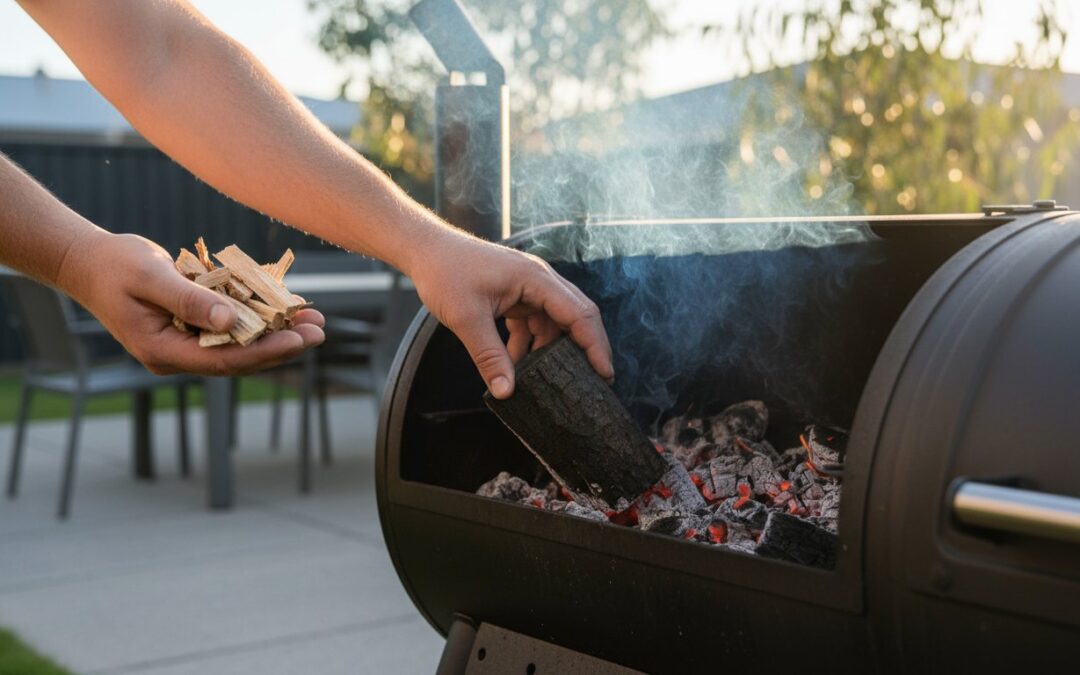
Smoke is a seasoning, and wood size is the timer that controls its delivery. Many pitmasters fail to realize that the wrong fuel source is what creates “dirty” smoke and a bitter aftertaste. Knowing exactly when to use wood chunks vs chips ensures your meat receives a clean, consistent flavor rather than a face full of soot. It’s about matching the burn rate to your specific grill and the length of your cook.
It’s frustrating when your wood burns out ten minutes into a long smoke or when you’re left wondering if soaking wood in water actually helps. You want that perfect, thin blue smoke that lasts for the duration of the cook without constant maintenance. This guide will teach you how to master the science of smoke by matching the right wood size to your equipment. You’ll learn the performance differences between kiln-dried chunks and chips, the truth about moisture content, and how to avoid the common mistakes that ruin great BBQ.
Key Takeaways
- Select wood chips for high-heat grilling sessions lasting under 60 minutes. They deliver an immediate flavor burst for quick-cooking cuts like steaks and burgers.
- Master the timing of your smoke by learning when to use wood chunks vs chips based on your specific grill type and total cook duration. Reach for larger chunks for any session exceeding three hours to maintain consistent performance.
- Match fuel to your equipment by using chunks in offset smokers and utilizing foil pouches for chips in kettle grills. Proper sizing prevents wood from burning out too early and keeps the temperature stable.
- Achieve a clean, professional finish by choosing bark-free hardwoods that are free from resins and additives. Pure, kiln-dried wood is essential for producing the thin blue smoke every pitmaster demands.
- Bury chunks deep within your lump charcoal for gradual ignition and a sustained release of smoke. This method eliminates the need for soaking wood and prevents the dirty smoke that ruins food.
Understanding the Difference: Wood Chunks vs. Wood Chips
Wood chips are essentially processed hardwood scraps, often salvaged from larger lumber production and kiln-dried to a uniform size. This drying process is critical; it reduces moisture content to a precise level, usually below 20%, which ensures the wood is pest-free and ready for immediate ignition. Wood chunks are larger, fist-sized pieces of split hardwood. They are the heavy hitters of the smoking world. The core decision of when to use wood chunks vs chips depends entirely on your desired burn rate and smoke duration.
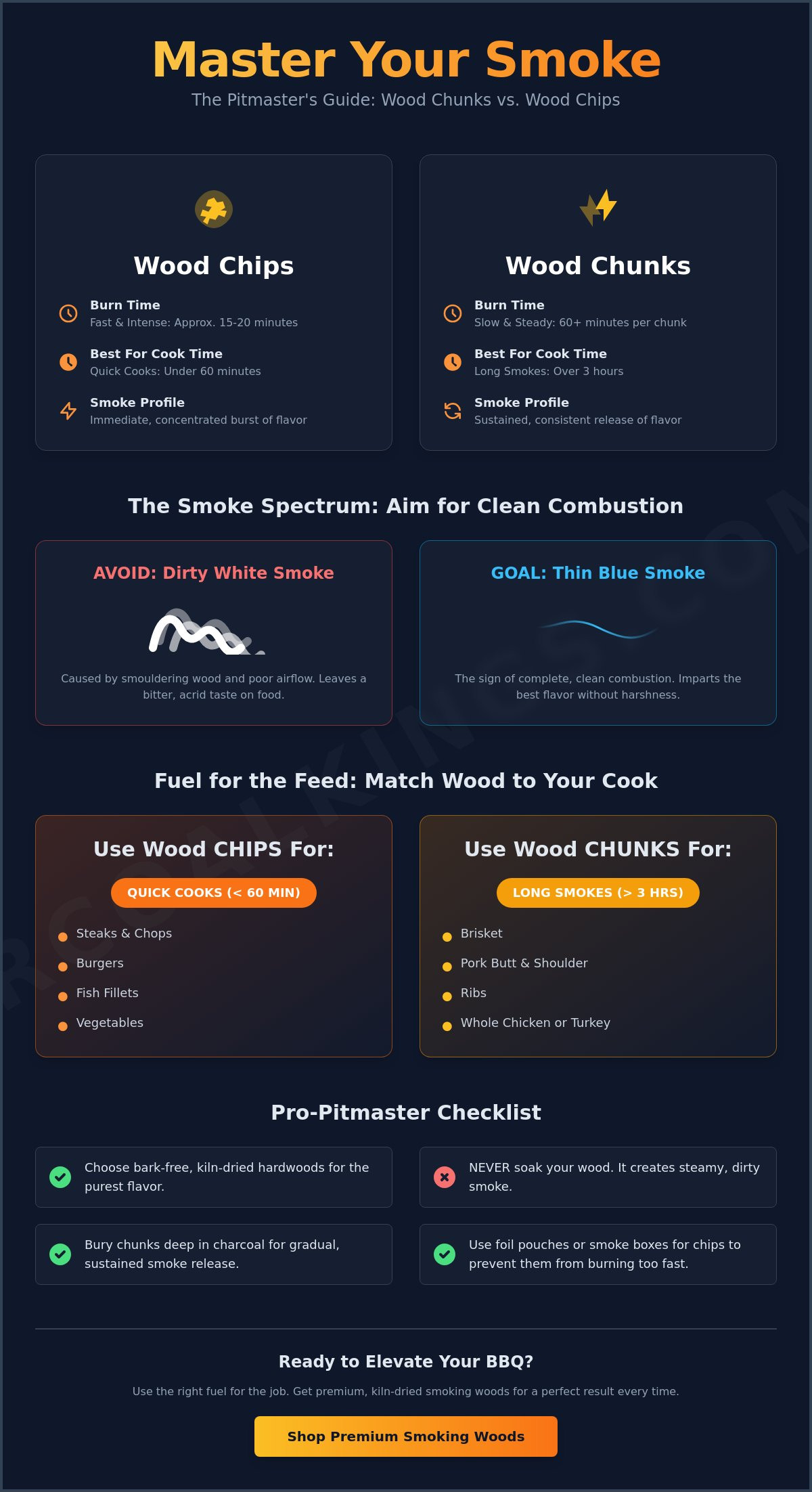
The primary differentiator lies in the ratio of surface area to volume. Wood chips possess a high surface area relative to their mass, which allows heat to penetrate the wood almost instantly. This leads to rapid combustion and a quick, intense release of flavor. Conversely, wood chunks have a massive volume compared to their exterior surface. The outer layer chars first, creating an insulating barrier that slows the ignition of the dense core. This structural density is what allows a single chunk to deliver a steady stream of flavor for an hour or more, whereas a handful of chips might be gone in fifteen minutes. Understanding these physics is essential for mastering various barbecue cooking methods.
To see how these wood sizes behave differently in a real-world scenario, watch this comparison:
The Science of the Burn Rate
Wood chips provide an immediate punch of smoke that is perfect for short-duration tasks. They require very little energy to reach their combustion point, making them highly responsive. However, they consume oxygen rapidly and fade just as fast. Wood chunks require more thermal energy to ignite, but they offer a far more stable output once they catch. In a firebox or charcoal bed, chunks allow for better oxygen circulation. A pile of chips can often choke the fire by restricting airflow, leading to temperature fluctuations that frustrate even seasoned pitmasters.
Smoke Quality: Thin Blue vs. Thick White
Clean smoke is the hallmark of professional BBQ. It is translucent with a slight blue tint, indicating that the wood is burning at a high enough temperature to fully combust. When you over-apply wood chips, they are prone to smouldering. This lack of oxygen creates thick, dirty white smoke that leaves a bitter, creosote-heavy taste on the food. Chunks are the gold standard for maintaining a consistent combustion temperature. They produce the thin blue smoke necessary for superior flavor profiles without the risk of the sudden flare-ups or smouldering common with smaller wood pieces.
When to Use Wood Chips: Quick Smoke for Short Cooks
Wood chips are the sprinters of the barbecue world. They ignite almost instantly and release a concentrated burst of flavor that is perfect for “hot and fast” grilling sessions. If your total cook time is under 60 minutes, chips are the superior choice. Using larger chunks for a quick steak is inefficient and often leads to wasted fuel. Deciding when to use wood chunks vs chips often comes down to the thickness of your meat and the intensity of your heat source. For those using electric smokers or handheld smoking guns, chips provide the necessary flexibility to add smoke without the massive heat output of a burning log.
Efficiency is the goal here. Using premium Smoking Woods in chip form allows for precise flavor control on these rapid cooks. Because they are kiln-dried and uniform, you can predict exactly how long your smoke will last. This precision is vital when you want to enhance a meal without turning the backyard into a permanent smokehouse. Mastering when to use wood chunks vs chips allows you to adapt your technique for everything from a quick weeknight burger to a weekend fish fry.
Top Cuts for Wood Chips
- Steaks and Chops: A thick ribeye or pork chop only needs 10 to 15 minutes of exposure to smoke to develop a complex profile. Chips provide this immediate finish before the meat reaches its target internal temperature.
- Fish and Poultry: These proteins are delicate. A long smoke with heavy chunks can easily overpower the natural taste of salmon or chicken breast. Chips offer a light, nuanced touch.
- Vegetables: Corn, bell peppers, and asparagus benefit from a five-minute smoke blast. This adds a charred, woody dimension without ruining the crisp texture of the produce.
The Foil Pouch Technique
If you don’t own a dedicated smoker box for your grill, a DIY foil pouch is a rugged and effective alternative. Wrap a handful of dry chips in heavy-duty aluminum foil to create a small packet. Use a fork to poke three or four small holes in the top. This restricts oxygen just enough to prevent the chips from flaming up while allowing the smoke to escape at a steady pace. Place the pouch directly over the hottest part of your charcoal bed or burner.
Venting is critical. Too many holes will cause the wood to vanish in minutes. Too few will stifle the combustion and produce bitter smoke. If you are cooking something that takes closer to an hour, like a whole chicken, prepare two pouches. When the first one stops venting smoke, simply swap it out for the second. This ensures a continuous flow of clean flavor without the bulk of a wood chunk.
When to Use Wood Chunks: Sustained Smoke for Low and Slow
Wood chunks are the gold standard for any cook exceeding three hours. These fist-sized pieces of split hardwood provide the thermal mass necessary for long-duration low and slow smoking. Unlike chips, which require constant replenishment, a few well-placed chunks deliver a steady stream of flavor for the entire session. This stability is crucial for maintaining a consistent pit temperature. When you decide when to use wood chunks vs chips, consider the size of the protein. Large cuts like brisket and pork butt demand the sustained output that only a dense hardwood chunk can provide.
Success starts with high-quality fuel. Chunks are designed to be buried within a bed of lump charcoal. This setup allows for gradual ignition as the fire spreads. It eliminates the need to open the lid every thirty minutes, which prevents heat loss and dirty smoke spikes. Using pure, bark-free chunks ensures that the combustion remains clean and the flavor stays authentic. It’s a set and forget approach that yields professional results.
Placement Strategies in the Firebox
The Minion Method is the most efficient way to manage chunks in a smoker. Place unlit charcoal in the chamber and nestle three to four wood chunks at different depths throughout the pile. As the lit coals on top slowly ignite the fuel below, each chunk catches fire at a different stage of the cook. Direct placement on top of the fire provides immediate smoke, while indirect placement near the edges allows for a delayed release. The “less is more” rule applies here. Two to three large chunks are usually sufficient for an entire pork shoulder. Overloading the firebox leads to thick, bitter smoke.
Matching Chunks to Long-Duration Cooks
- Brisket and Beef Ribs: These heavy cuts require 8 to 12 hours of heat. Chunks provide a deep, smoky profile that stands up to the rich fat content of beef.
- Pork Shoulder: Managing smoke for a 10-hour session is easier with chunks. They release flavor slowly as the connective tissue breaks down.
- Lamb Roasts: For a traditional Australian BBQ flavor, chunks offer a steady, nuanced smoke that complements the distinct taste of lamb without overwhelming it.
Equipment Compatibility: Matching Wood Size to Your Grill
Your hardware dictates your fuel choice. Offset smokers are high-draft machines designed for heavy thermal mass. They require chunks or even mini-logs to maintain a clean fire against high airflow. Chips are useless in these large fireboxes; they burn out before they can season the meat. Ceramic Kamados are the opposite. They are thermal vaults that are highly insulated and airtight. Chunks perform best in these environments because they smoulder slowly and cleanly without needing frequent lid openings. Knowing when to use wood chunks vs chips ensures you don’t fight against your grill’s natural airflow.
Kettle grills offer the most flexibility for the average pitmaster. You can use chips in a foil pouch for a quick steak or nestle chunks into the charcoal for a pork butt. If you are using a Hibachi, small chips are the standard. They provide a rapid flavor sear for thin skewers and yakitori. For those seeking the highest quality output, always match your wood size to the heat intensity of your unit. Upgrade your setup with professional-grade Smoking Woods to see the difference in smoke consistency.
The Soaking Myth: Why Experts Skip the Water
Stop soaking your wood. It is a common mistake that hinders performance. Hardwood is dense; water does not penetrate the core. It simply sits on the surface. When you put wet wood on a fire, the energy is wasted boiling that water into steam instead of creating smoke. This process significantly lowers the combustion temperature. Low-temperature burns are inefficient and produce thick, white smoke that leaves bitter creosote on your food. For the best results, use kiln-dried wood straight from the bag. It provides immediate, clean ignition every time.
Gas and Electric Smoker Limitations
Electric smokers usually have small heating elements and compact wood trays. These units are designed specifically for chips. Large chunks often won’t fit or fail to ignite properly because the internal temperature is too low to reach the wood’s combustion point. In gas grills, the challenge is preventing chips from catching fire. Always use a smoker box or a vented foil pouch to restrict oxygen. If you need a middle ground between small chips and large chunks, consider using firewood kindling. It offers more longevity than chips without the bulk of a standard chunk, making it a versatile option for medium-sized grills.
Pro Tips: Quality, Purity, and Australian Hardwoods
Bark-free wood is essential for a clean, professional finish. Bark contains tannins and environmental impurities that produce acrid, bitter smoke when burned. High-quality smoking wood is stripped of bark to ensure only the clean heartwood combusts. Avoid low-quality boxed wood found in general hardware stores. These products often contain resins and moisture levels that vary wildly, leading to the dirty smoke issues that ruin expensive cuts of meat. Knowing when to use wood chunks vs chips is only half the battle; the purity of the material determines the final taste.
Australia produces some of the densest and most flavorful hardwoods on the planet. Red Gum offers a heavy, classic smoke profile that is ideal for bold red meats. Ironbark is the ultimate all-rounder, providing high heat and a mild, sweet finish that works with almost any protein. Buloke is officially one of the hardest woods on earth. It burns incredibly hot and for a long duration, making it the superior choice for overnight brisket sessions. Proper storage is a performance factor. Keep your wood in a dry, ventilated area. Moisture absorption from the air can ruin a kiln-dried product, causing the smouldering issues that pitmasters work hard to avoid.
The Charcoal Kings Standard for Smoking Wood
We provide 100% natural, additive-free Australian hardwoods. Our wood chunks and lump charcoal are engineered as a matched system. When you use them together, you achieve a predictable burn rate and a superior flavor profile. Sourcing is the key differentiator. Firewood is for heat, but smoking wood is for flavor. We treat our smoking wood as a food-grade ingredient, ensuring every piece meets our strict standards for density and purity. This commitment to quality ensures that your smoke remains thin and blue from the first light to the final pull.
Mixing Woods for Custom Flavour
Master pitmasters utilize the Base and Accent rule. Use a high-density hardwood like Ironbark as your base to provide consistent heat and a foundational smoke layer. Add an accent, such as a fruitwood chunk, to inject specific flavor notes into the meat. A 70/30 ratio of base wood to accent wood creates a balanced profile that enhances the protein without overwhelming it. Experimenting with these ratios allows you to develop a signature flavor that is unique to your pit.
Shop our range of premium smoking woods and charcoal to start building your custom flavor profiles. Using professional-grade fuel is the fastest way to improve your BBQ consistency. Get the wood right, and the results will follow. Happy smoking.
Master Your Next BBQ Session
Mastering the science of smoke requires more than just high-quality meat. It demands a technical understanding of when to use wood chunks vs chips to match your specific hardware and cook time. Wood chips provide the immediate, intense flavor burst needed for quick-searing steaks or delicate seafood. For those dedicated to the art of low and slow, wood chunks offer the thermal mass and stability required for heavy cuts like brisket and pork shoulder. Using the right fuel size prevents temperature spikes and ensures a clean, professional finish.
Success in the pit is built on the purity of your fuel. Don’t compromise your results with low-grade wood or chemical-filled substitutes. Upgrade your smoke game with Charcoal Kings Premium Smoking Woods. Our 100% Natural Australian Hardwoods contain no additives or chemicals. This is why we are trusted by professional pitmasters across Australia to deliver consistent, authentic flavor. Get your fire right, select the correct wood size, and produce the perfect thin blue smoke every time. It’s time to fire up the grill and dominate the cook.
Frequently Asked Questions
Do I need to soak wood chips before using them?
Experts skip the water because soaking wood is unnecessary and counterproductive. Wet wood must boil off moisture before it can produce smoke, which delays flavor delivery and drops your pit temperature. This inefficiency leads to smouldering and bitter creosote. Use kiln-dried wood straight from the bag for immediate, clean combustion every time.
How many wood chunks should I use for a 10-hour brisket smoke?
Use three to five large chunks for a standard 10-hour brisket smoke. Distribute these throughout your charcoal bed rather than dumping them all on the fire at once. This ensures a staggered ignition as the coals burn through. Proper placement allows you to maintain consistent flavor without opening the lid and losing heat during the stall.
Can I use wood chunks in a gas BBQ?
You can use wood chunks in a gas BBQ by placing them in a heavy-duty smoker box or directly on the heat tents above the burners. Chunks require significant thermal energy to ignite, so ensure your grill is preheated. Chips in a foil pouch are generally more responsive for gas units, but chunks are a rugged alternative for longer sessions.
How long do wood chips last before they need to be replaced?
Wood chips typically last between 15 and 30 minutes depending on your airflow and heat intensity. Their high surface area means they ignite and consume their fuel source rapidly. If your cook exceeds 45 minutes, you will likely need to replenish the chips or use a second foil pouch to maintain a continuous stream of flavor.
What is the best wood for smoking beef in Australia?
Ironbark is the premier choice for smoking beef in Australia due to its high density and mild, sweet profile. Red Gum is another robust alternative that provides a heavier smoke flavor suited for bold cuts like brisket. Both species are 100% natural hardwoods that provide the intense heat and clean finish required for professional results.
Can I mix wood chips and chunks together?
Mixing wood chips and chunks is an effective strategy for layered flavor. Use chunks as your primary source for a long-duration cook and toss a handful of chips on the coals for an immediate smoke punch at the start. This allows you to control exactly when to use wood chunks vs chips to manipulate the intensity of the flavor throughout the session.
Why does my smoking wood produce thick black smoke?
Thick black or gray smoke is a sign of “dirty” smoke caused by restricted airflow or high moisture content. This indicates the wood is smouldering rather than burning cleanly. Open your vents to increase oxygen levels and ensure you are using seasoned, bark-free hardwoods. Clean smoke should always be thin and translucent with a slight blue tint.
Is it better to use bark-on or bark-off wood for smoking?
Bark-off wood is superior for smoking because bark contains tannins, resins, and environmental pollutants. These elements produce a harsh, acrid smoke that creates a bitter aftertaste on the meat. Professional-grade smoking wood is stripped of bark to ensure only the pure heartwood is used for flavor. This provides a cleaner, more predictable result for every cook.