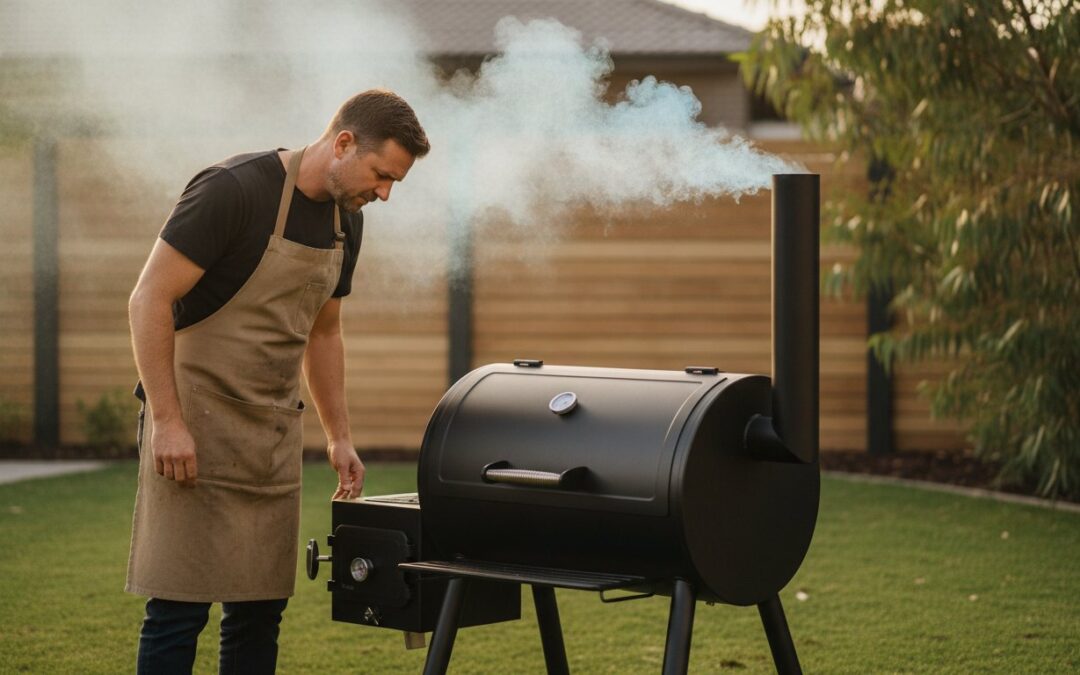
White smoke is the signature of a starved fire; true pitmasters manage oxygen, not just fuel. You might assume a heavy cloud signals more flavor, but when you notice my smoker is producing white smoke, you’re looking at incomplete combustion. This “dirty” smoke coats your meat in creosote, resulting in a bitter, acrid taste that ruins expensive cuts and wastes your time. Clean BBQ requires a hot, efficient fire that breathes correctly.
We know the frustration of fighting unstable temperatures and ending up with meat that tastes like a campfire’s ash tray. This guide provides the technical steps to identify why your combustion is failing and how to achieve the perfect thin blue smoke. You’ll learn how to stabilize your heat and manage your fuel for professional-grade results. From vent adjustments to fuel selection, we provide the definitive answers you need to master the craft and protect your investment.
Key Takeaways
- Identify thick white smoke as a sign of incomplete combustion that deposits bitter creosote and soot on your meat.
- Diagnose the specific reasons why my smoker is producing white smoke by analyzing oxygen intake, fuel moisture, and internal firebox temperature.
- Master visual cues to distinguish between the ideal thin blue smoke, “dirty” white clouds, and the immediate dangers of black smoke.
- Follow a prioritized troubleshooting checklist to restore proper airflow and stabilize your fire within the first hour of a cook.
- Understand how utilizing pure Hardwood Lump Charcoal prevents the chemical-heavy smoke caused by additives and binders in inferior fuel sources.
What is White Smoke and Why is it Ruining Your BBQ?
White smoke is often called “dirty smoke.” It consists of large particles of unburnt fuel, water vapour, and creosote. Unlike the desired thin blue smoke, thick white clouds deposit a bitter, acrid soot on your food. Dirty smoke is the result of incomplete combustion that leaves a tongue-numbing aftertaste. If you notice that my smoker is producing white smoke, the fire is failing to reach the necessary temperature for a clean burn. These heavy particles are visible because they contain moisture and carbon that haven’t been fully oxidized. When my smoker is producing white smoke, it’s a sign that the firebox is struggling to breathe. A clean fire produces particles so small they are nearly invisible to the naked eye, allowing for a gentle infusion of flavor.
Smoke is a particulate matter, not just a simple gas. These heavy particles are too large to pass over the meat without sticking. They carry harmful compounds that ruin the natural profile of the wood. Mastering your pit starts with recognizing that smoke quality is a direct reflection of fire health. The traditional process of Smoking (cooking) requires a balance of heat and oxygen to break down fuel efficiently. When this balance breaks, the smoke turns opaque and aggressive.
To better understand the visual difference between good and bad smoke, watch this helpful video:
The Creosote Problem: Why Your Meat Tastes Bitter
Creosote is a thick, oily byproduct of smouldering wood that sticks to cold meat surfaces. It causes a distinct numbing sensation on the tongue and creates a black, soot-like appearance on the bark. To identify a problem, check your smoker walls and grates for a sticky, tar-like residue. This buildup indicates your fire has been starved of oxygen or your wood is too wet. Clean your grates regularly to prevent old creosote from tainting new cooks.
The need for system purity and the removal of harmful byproducts is a challenge shared by many high-performance environments. For example, BioKem Oil Services applies similar principles of filtration and purification to industrial machinery, ensuring that ‘dirty’ contaminants don’t compromise performance or longevity.
Smoke as a Spice: The Fine Line Between Flavour and Fault
Good smoke enhances meat; bad smoke masks it entirely. Many beginners believe more smoke equals better BBQ, but this is a mistake when using quality charcoal and wood. The goal is a translucent, barely visible stream of blue-tinted air. This “thin blue smoke” allows the meat’s natural fats and the rub’s spices to shine without being buried under a layer of bitter carbon. True mastery is knowing when to let the fire breathe.
The 3 Main Culprits Behind Puffy White Smoke
Incomplete combustion occurs when the fire is starved of oxygen or overwhelmed by poor fuel. To maintain a clean burn, you must manage three critical levers: oxygen, moisture content, and temperature. In many Australian regions, high humidity levels can compromise seasoned wood stored in outdoor sheds. This moisture intake leads to smouldering rather than active flaming. A lack of oxygen forces wood to smoulder rather than burn cleanly, which is the primary reason why my smoker is producing white smoke. When the fire cannot breathe, it cannot reach the temperatures required to incinerate the heavy carbon particles that create “dirty” smoke.
Lack of Oxygen: The “Choked” Fire
Closing your intake vents too far is a common error. This action reduces the oxygen supply, causing the fire to gas out and smoulder. In offset smokers, the relationship between airflow and clean flames is absolute. When you notice my smoker is producing white smoke, check your vents immediately. Beginners often choke the fire to lower internal temperatures, but this creates a “smothered” environment. Instead of reducing the heat, you are simply creating a soot-heavy atmosphere that ruins your bark. Keep your exhaust vent wide open and use the intake vent to manage the intensity of the burn without killing the flame. Proper airflow ensures the fire stays hot enough to consume its own gases.
High Moisture Content in Smoking Woods
Green or unseasoned wood is a disaster for BBQ quality. The fire uses its energy to evaporate internal water instead of generating the heat required for combustion. You can verify the quality of your smoking woods by checking for deep cracks in the end grain and a lightweight feel. Properly seasoned wood should produce a clear, ringing sound when two pieces are struck together. If you hear a distinct “hissing” sound as wood hits the coals, the moisture content is too high. This steam carries unburnt carbon directly onto your meat, leaving a bitter film. Using high-quality, dry fuel from a trusted source like Charcoal Kings ensures your cook starts with the right foundation for clean smoke.
Low Firebox Temperature
A cold firebox cannot fully ignite the volatile gases released by fresh wood. This leads to heavy, opaque smoke that tastes like ash. Pre-heating your logs or charcoal on the side of the firebox or on top of the warmer before adding them to the coals is essential. This step ensures that the fuel reaches its ignition point instantly upon contact with the heat. Maintaining a thick, glowing coal bed is the only way to facilitate a continuous clean burn. If your coal bed dies down, the next log you add will smoulder for several minutes before catching, flooding your cook chamber with dirty white clouds.
Smoke Colour Guide: Thin Blue vs. Thick White vs. Black Smoke
Visual cues provide an immediate status report on your firebox. You don’t need to wait for a bitter bite of brisket to know your combustion is failing. The color of the exhaust reveals the efficiency of the burn in real-time. If you find that my smoker is producing white smoke, it is a clear signal that the fire is struggling to reach a clean ignition state. Thin blue smoke remains the gold standard. It should be almost invisible against a dark background, appearing as a translucent, shimmering heat wave. If the exhaust looks like a solid wall of color, the fire is inefficient.
Grey smoke is often a transition phase. It usually appears when you add new fuel to the coal bed or when wood chunks first ignite. Monitor it closely. If it doesn’t clear within 10 minutes, your firebox temperature is too low to sustain a clean burn. Black smoke is an emergency signal. It indicates a grease fire or total oxygen starvation. This occurs when fat hits the coals or when you’ve completely choked the intake vents. Act immediately to save the meat and clear the soot.
Thin blue smoke represents the peak of performance. It indicates that the fire is hot enough to incinerate heavy nitrates and creosote while leaving delicate aromatics intact. You should see a faint blueish tint that doesn’t obscure the scenery. If you can see the smoke clearly from fifty feet away, it is likely too thick. When you observe that my smoker is producing white smoke, the fire is smouldering rather than burning. This requires a systematic approach to airflow and fuel management to restore quality.
Visual Diagnosis Table
| Smoke Colour | Cause | Flavour Impact | Required Action |
|---|---|---|---|
| Thin Blue | Perfect combustion | Sweet, aromatic | No action needed. Maintain coal bed. |
| Grey | Transition/Ignition | Heavy wood notes | Monitor for 10 minutes. Check heat. |
| Thick White | Low air/Wet fuel | Bitter, acrid | Increase oxygen; check fuel moisture. |
| Black | Grease/Choked fire | Chemical, burnt | Check drip pan; open intake vents. |
The “Smell Test” for Quality Control
Quality control requires more than just sight. If the smoke smells like a campfire you would want to sit around, the flavor profile is safe. Quality smoke has a pleasant, aromatic scent that complements the meat. If the smoke stings your eyes or smells like burning plastic, it is dirty. This acrid scent is a precursor to a ruined meal. Trust your senses over your thermometer when it comes to smoke quality. A pit can hold a steady temperature while still producing foul, soot-heavy exhaust that destroys your bark.
How to Clear the Smoke: A Troubleshooting Checklist
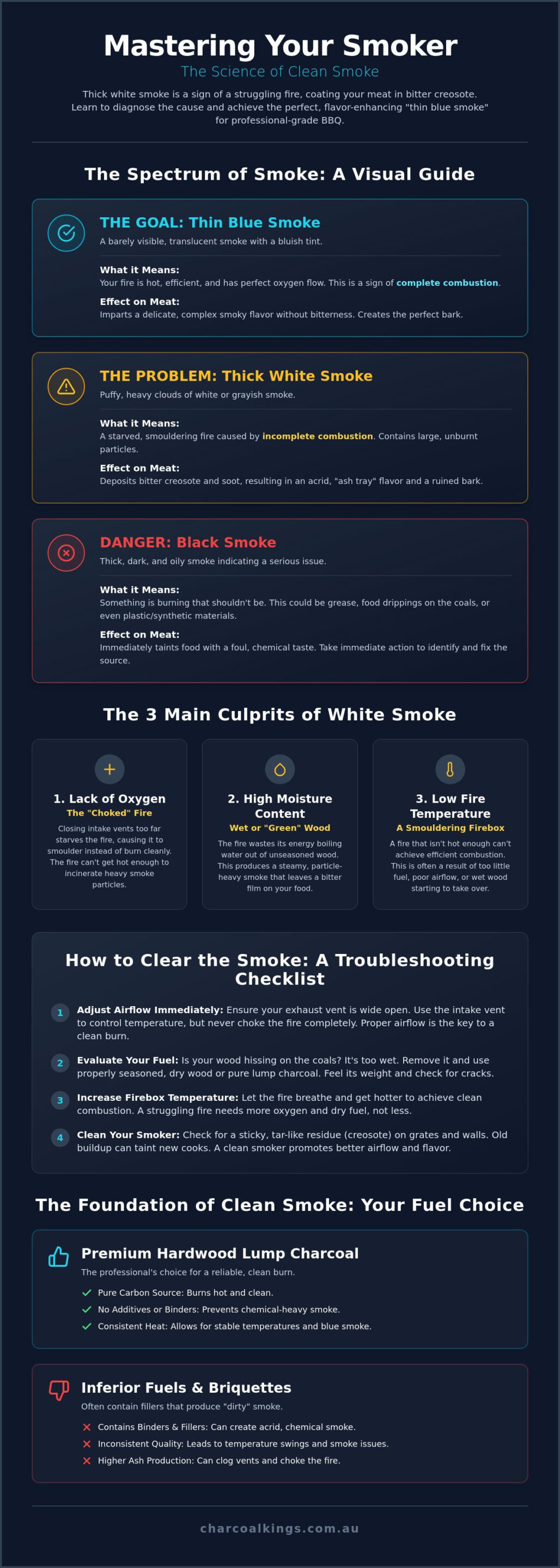
Don’t panic if you see a thick cloud early in your cook. White smoke is fixable if caught within the first hour. You must follow a strict order of operations: Airflow, then Fuel, then Temperature. Open all vents fully as the first step to clearing white smoke and restoring a clean burn. When my smoker is producing white smoke, the immediate priority is oxygen. Keep your meat away from the grates until the exhaust transitions to a translucent, shimmering blue. Adding protein to a dirty chamber only guarantees a bitter bark and a wasted cook.
Step 1: Open the Airflow
Set your intake and exhaust vents to 100% capacity immediately. This action flushes out stale, oxygen-starved air and forces the fire to react. Check for ash buildup under the coal grate. Excessive ash blocks the primary air intake and prevents the fire from reaching combustion temperatures. Use a bbq scraper to clear the grates and ensure maximum flow through the chamber. A fire that can’t breathe is a fire that can’t burn clean. In the humid Australian climate, keeping vents clear is essential to prevent moisture from dampening the combustion process.
Step 2: Manage the Fuel Source
Identify and remove any large, smouldering logs that are producing the majority of the thick white clouds. These are likely fuel pieces that haven’t reached their flash point. Break down large firewood into smaller, manageable splits. Smaller pieces ignite faster and reach high temperatures more efficiently than thick chunks. Always use high-quality, seasoned hardwood. Avoid scrap timber or treated wood that contains chemicals or high moisture levels. If you notice a hissing sound, the fuel is too wet and must be replaced with dry stock immediately.
Step 3: Build the Coal Bed
A weak coal bed is often the root cause when my smoker is producing white smoke. Add a full chimney of lit, glowing charcoal to the firebox to provide an immediate temperature boost. This helps ignite any remaining unburnt wood gases and stabilizes the environment. Wait for the “sweet blue” smoke to appear before you begin closing vents to dial in your target temperature. Patience is required. Let the fire settle for at least 15 minutes before making minor damper adjustments. To prevent these issues in future cooks, buy premium lump charcoal to maintain a consistent, high-heat base that resists smouldering.
Why Premium Hardwood Charcoal is the Key to Blue Smoke
Clean smoke starts with clean fuel. If my smoker is producing white smoke despite having wide-open vents, the chemical composition of the fuel is usually the culprit. Cheap supermarket briquettes are often manufactured with binders, coal dust, and fillers to maintain their uniform shape. These additives don’t burn away cleanly; they produce a heavy, chemical-scented white smoke that coats your food in an unpleasant film. Understanding why my smoker is producing white smoke means looking past the vents and examining the fuel itself. Natural Hardwood Lump Charcoal is different. It provides the high heat and minimal ash production necessary to facilitate consistent airflow. When you use high-quality fuel, the firebox reaches the high temperatures required for complete combustion almost instantly. This reduces the need for constant vent micro-adjustments and allows you to maintain stable temperatures for hours.
Lump Charcoal vs. Cheap Briquettes
The irregular shapes of lump charcoal are a distinct functional advantage for any pitmaster. These pieces create natural gaps and channels within the coal bed, allowing for superior oxygen circulation. This airflow is essential for preventing the fire from gassing out. In contrast, the uniform shape of cheap briquettes often leads to them packing together tightly, which effectively chokes the fire from the bottom. There is also a hidden cost to using filler-heavy fuels. These materials produce a high volume of fine ash that settles in the bottom of the firebox and blocks air intakes mid-cook. For specific grills and high-heat applications where you require ultra-clean, smoke-free heat, many professionals choose Binchotan Charcoal. It is the gold standard for purity and longevity.
The Charcoal Kings Standard: Purity and Performance
The Charcoal Kings standard is built on purity and performance. Our hardwood lump is sourced specifically for its high density and low moisture content. We ensure that every bag contains only natural timber, free from the additives that cause “dirty” smoke. Professional-grade fuel simplifies the path to the perfect smoke ring and a deep, mahogany bark. It provides a stable, predictable heat source that doesn’t require constant babysitting. When your fuel is pure, your smoke stays thin and blue. This allows the natural flavor of the meat and your chosen wood species to take center stage. If you want to eliminate the frustration of bitter BBQ, it’s time to change what you put in your firebox. Shop our Premium Hardwood Lump Charcoal to secure the cleanest burn for your next cook.
Master the Art of Clean Combustion
Achieving thin blue smoke requires a precise balance of airflow, heat, and fuel purity. You now understand that “dirty” smoke is a symptom of a starved fire or compromised fuel. When you see that my smoker is producing white smoke, you have the diagnostic tools to fix the issue before your meat is ruined. Managing your vents and selecting seasoned wood splits are critical steps, but the foundation of professional BBQ is always the quality of your fuel.
Charcoal Kings provides high-density Australian hardwood that burns longer and hotter. Our products contain no chemical additives or binders, ensuring your firebox stays clean and efficient. This superior performance is why we’re trusted by professional pitmasters across South Australia. Don’t settle for inferior supermarket brands that choke your airflow. Investing in quality fuel means fewer temperature swings and cleaner flavour profiles every time you light the pit.
The patience and discipline required to master a clean burn often mirror the focus needed for other positive life changes. For those looking to apply that same level of dedication to their personal well-being, Sober Coach provides professional recovery support and intensive workshops to help you stay on track.
Master your fire with Charcoal Kings Premium Hardwood Fuels. Get your fire right and the results will follow.
Frequently Asked Questions
Is white smoke always bad for BBQ?
White smoke is universally negative once the cooking process begins. It signals incomplete combustion where heavy carbon and creosote particles remain unburnt. These particles stick to the meat, creating a bitter, soot-like coating. While white smoke is expected for the first few minutes of ignition, you must never expose meat to it during the active cook. Clean flavour requires a hot, efficient fire.
How long should I wait for white smoke to clear before putting meat on?
You should wait at least 30 to 45 minutes for the fire to stabilize. Putting meat on too early is a common reason why my smoker is producing white smoke during the critical first hour. Wait until the firebox is heat-soaked and the exhaust transitions from a thick cloud to a shimmering, nearly invisible stream. Patience at the start prevents a ruined bark later.
Can I use a water pan to reduce white smoke?
A water pan does not reduce white smoke. Its primary purpose is to stabilize internal temperatures and add moisture to the cooking chamber. It cannot fix the chemical failure of incomplete combustion. If your fire is smouldering due to lack of oxygen, adding a water pan might actually lower the firebox temperature further; this worsens the smoke quality instead of improving it.
Why does my smoker produce white smoke every time I add a new log?
New logs are often cold and contain residual moisture. When they hit the coal bed, they smoulder until they reach their flash point. To prevent this, pre-heat your wood on top of the firebox before adding it. This ensures the wood ignites instantly, skipping the smouldering phase that causes dirty exhaust. Immediate ignition is the only way to maintain a clean burn.
Does the type of wood I use affect the smoke colour?
Moisture content matters more than wood species. However, resinous softwoods like pine should never be used as they produce thick, black, or white smoke regardless of seasoning. Always stick to high-density Australian hardwoods. These woods provide the clean, consistent energy required for the perfect smoke profile without the heavy soot associated with inferior timbers or unseasoned green wood.
What happens if I eat meat cooked in thick white smoke?
Meat cooked in thick white smoke will have a harsh, acrid flavour. The high levels of creosote can cause a distinct numbing sensation on your tongue and lips. While not immediately toxic in small quantities, the soot ruins the culinary quality of the BBQ. It masks the natural fats and spice rubs with an overwhelming taste of ash and chemicals; it’s a waste of quality meat.
How do I stop my charcoal from smouldering and producing white smoke?
Stop charcoal smouldering by ensuring your intake vents are clear of ash and wide open. Using pure Hardwood Lump Charcoal is the most effective solution. This fuel lacks the binders and fillers found in cheap briquettes that contribute to “dirty” chemical smoke. High-quality lump reaches higher temperatures faster, which is the best way to ensure my smoker is producing white smoke no longer.
Is “blue smoke” actually blue, or is it just a term?
Blue smoke is a literal description. When the combustion particles are small enough, they scatter light in a way that creates a faint, translucent blue tint. This is known as the Tyndall effect. If the smoke looks solid or white, the particles are too large. Blue smoke indicates that the fire is burning at peak efficiency, incinerating heavy nitrates and leaving only pure, sweet aromatics.