
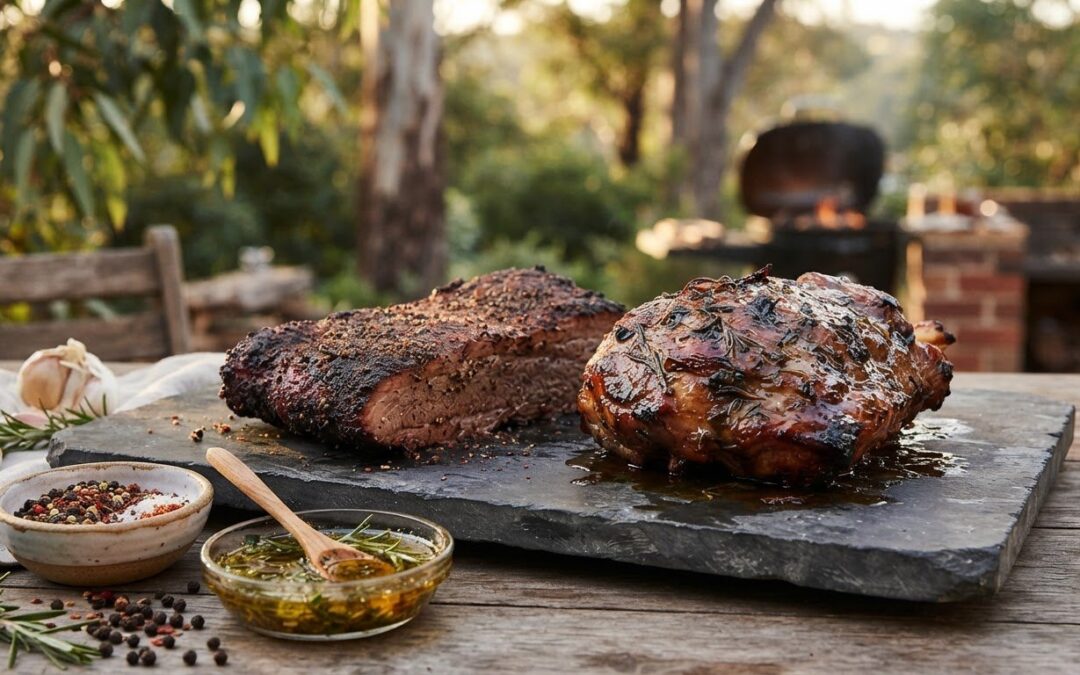
The juiciest result doesn’t always come from a marinade. Knowing when to use a rub vs a marinade comes down to the finish you want: use a dry rub for bold surface seasoning and a flavourful crust, or a marinade for deeper flavour and extra tenderness. Marinating time can range from 1 to 24 hours, depending on the cut.
Both methods add flavour, but they work differently. A marinade is a seasoned liquid that coats meat, while a rub is dry seasoning applied directly to its surface. A longer soak is not always better: the right choice depends on the cut, cooking method and whether you want a browned crust or deeper seasoning. This guide explains when to use a rub vs a marinade, how each affects the finished meat, and how to combine them without losing their impact. You’ll also find practical tips for seasoning before the grill is fired up.
Key Takeaways
- Match seasoning to the result you want: prioritise a dry surface for searing, or use a marinade when tenderness and deeper flavour matter.
- Balance a marinade’s ingredients and avoid overdoing vinegar or citrus, which can break down meat fibres too far.
- For layered flavour, marinate first, then apply the rub before grilling so both methods have a clear role.
- Apply a dry rub evenly and give it time to season the surface; keep an eye on heat when the blend contains sugar.
Choosing a rub or marinade based on the desired result
Deciding when to use a rub vs a marinade starts with the result you want: a seasoned crust or deeper flavour and tenderness. Match the method to the cut and cooking style.
Rubs for Steak, Ribs, and Crispy Crusts
A dry rub suits steak, ribs and grilled chicken wings when a concentrated crust matters more than surface moisture. Salt, pepper, garlic powder and paprika add savoury flavour; herbs or sugar can round out the blend. Apply the seasoning directly to the meat. Unlike a marinade, a rub adds no liquid that needs to evaporate before searing. Use it for grilling, roasting or smoking when colour and texture matter.
Choosing by Cooking Style
For fast grilling or a hard sear, choose a rub: a dry surface can brown without first shedding marinade. Ribs cooked low and slow also suit a rub, as the exterior develops colour over time. Choose a marinade for chicken, lamb or tougher cuts when tenderness and deeper flavour are priorities. Keep in mind that surface liquid can slow browning and crisp searing.
Match the Cut and Marinating Time
Steak and ribs suit a rub when crust matters. For tougher cuts, chicken or lamb, a marinade can support tenderness and deeper flavour. Marinating time can range from 1 to 24 hours, depending on the cut. For example, chicken breasts take 2-6 hours, pork chops 2-8 hours and steak 4-24 hours. Thin cuts need at least 30 minutes; thick cuts need at least 4 hours.
Marinating, Reuse and Common Mistakes
Keep meat refrigerated while marinating; a chicken recipe, for example, calls for 4-6 hours in the fridge. Don’t reuse marinade that has touched raw meat as a sauce. Reserve a clean portion beforehand for basting. Common mistakes include soaking too long in vinegar or citrus, which can make meat mushy, and letting sugar burn over excessive heat. These details help clarify when to use a rub vs a marinade.
| Method | Best result | Good fit | Cooking style |
|---|---|---|---|
| Dry rub | Surface crust and texture | Steak, ribs | Grilling, roasting, smoking |
| Marinade | Deeper flavour and tenderness | Chicken, lamb, tougher cuts | When the cut benefits from a soak |
Choose a rub for a crust or a marinade for tenderness, then adjust the timing to the cut.
How marinades affect flavour, tenderness and juiciness
A marinade combines liquid ingredients to season meat and affect its texture. Its balance of acid, oil and flavour determines how it works.
Acid, Oil, and Flavour in a Marinade
A marinade brings together acid, oil and flavour from ingredients such as spices, herbs and garlic. Vinegar, lemon juice and wine supply acid, which helps tenderise the meat’s surface. Oil carries flavour and coats the meat, while herbs and spices provide its distinct taste. The quality of the oil makes a significant difference; choosing a robust extra virgin variety, much like finding the best oil for bread dipping, introduces rich aromatic depth to your marinade. A 2:1 fat-to-acid ratio is a practical starting point for a balanced mixture. Adjust the seasonings to suit the meat and the barbecue flavour you want.
Marinade Effects on Flavour and Texture
Unlike surface seasoning, a marinade adds liquid and gives flavour time to develop beyond the exterior. An overnight soak can deepen the flavour, while several hours may suit pork chops or brisket. Acid also changes the meat’s texture, but too much vinegar or citrus, or soaking for too long, can break down the fibres excessively. The result may be mushy rather than tender.
Juiciness depends on more than a marinade. The liquid seasons the surface and can help tenderise, but it does not guarantee moisture inside the cooked meat. Lean flank steak, for example, can benefit from marinating before grilling because its fibres respond to acidic ingredients. Match the soak to the cut: a tougher piece can take longer than a delicate one, while seafood needs a much shorter soak. Both the marinade’s acidity and the meat’s thickness affect timing.
For a balanced barbecue marinade, combine oil with a measured amount of vinegar or lemon juice, then add garlic, herbs and spices. Taste the mixture before adding meat, and keep the flavour profile focused: smoky paprika and garlic suit a savoury finish, while lemon and herbs create a brighter one. Avoid adding extra acid simply to intensify flavour. For a different finishing approach, BBQ rubs and sauces can add seasoning without a liquid soak.
Combining a marinade with a rub
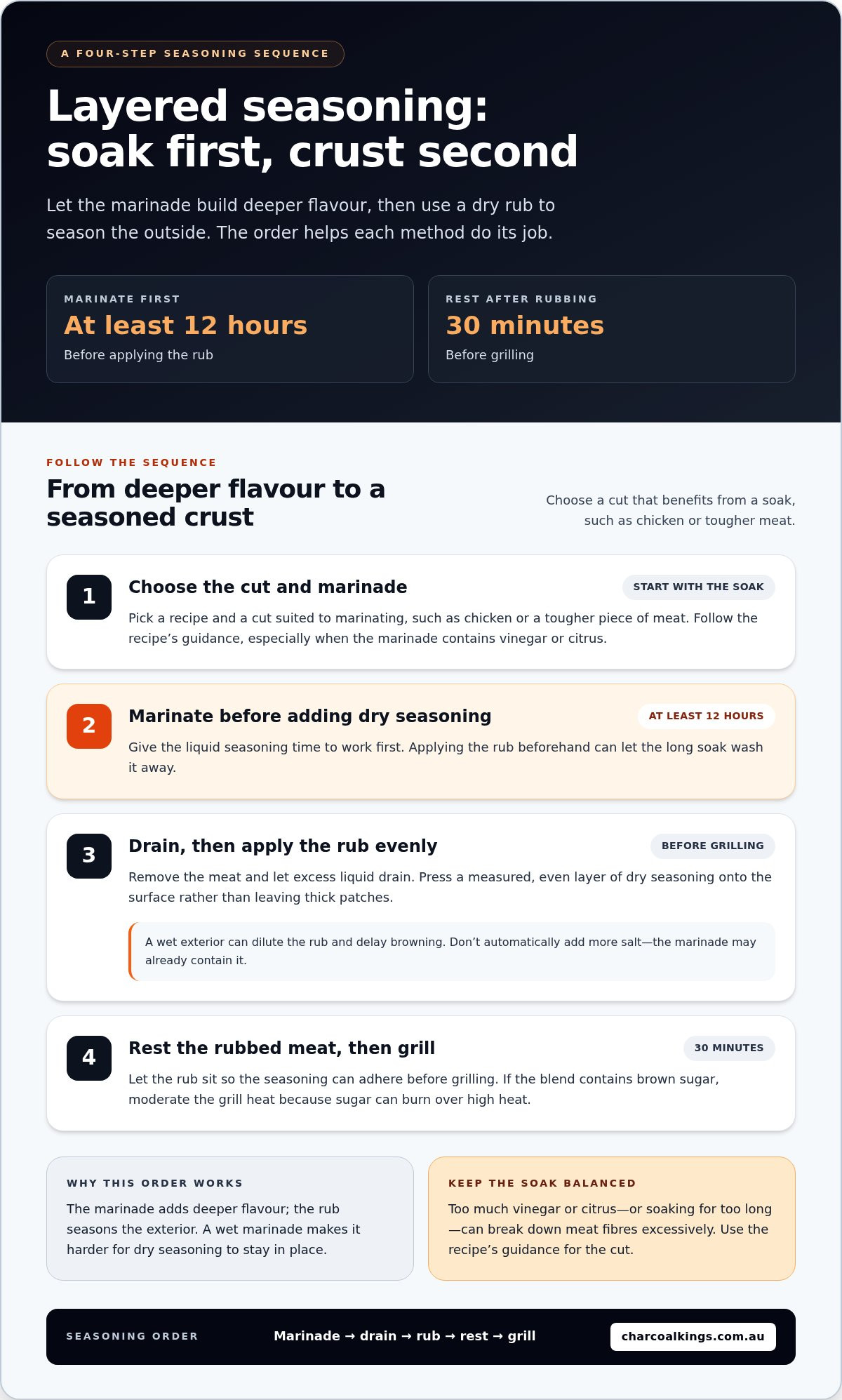
Using both methods can build deeper seasoning and a distinct outer crust. Give each a clear role: marinate the meat first, then apply a rub before grilling.
Start with a cut that benefits from a soak, such as chicken or a tougher piece of meat. Marinate it for at least 12 hours before adding the rub. This gives the liquid seasoning time to work before dry spices meet the surface. Follow the recipe’s guidance for the cut, especially if the mixture contains vinegar or citrus.
After marinating, remove the meat and let excess liquid drain. A wet exterior can dilute a dry rub and delay browning on the grill. Apply the rub evenly, pressing it onto the surface rather than leaving thick patches. For chicken, a pepper-forward blend adds a savoury edge; brown sugar brings sweetness and colour, but can burn over high heat.
Allow the rub to sit for 30 minutes before grilling. That interval gives the seasoning time to adhere while keeping the final step simple. Don’t add more salt automatically: the marinade may already contain salt, so taste and balance the rub mixture around the flavours already on the meat.
- Choose a recipe and cut suited to marinating, such as chicken.
- Marinate for at least 12 hours before applying the rub.
- Drain excess liquid, then coat the meat evenly with dry seasoning.
- Rest the rubbed meat for 30 minutes before grilling.
The order matters: a long soak can wash away a dry rub applied beforehand. A wet marinade also makes it harder for dry seasoning to stay in place. Finish with a measured layer of pepper, herbs or brown sugar, and moderate the grill heat if the blend is sweet. This way, the marinade adds deeper flavour while the rub seasons the exterior. The two mixtures are not interchangeable.
Dry rub application and resting advice
A dry rub is a blend of spices, herbs and seasonings without wet ingredients. Apply it directly to the meat’s surface, then choose the resting time to suit your cooking plan and seasoning blend.
Start with a dry surface so the ingredients cling evenly. Season all sides, including edges and creases, then press the mixture gently into the meat. A simple blend of salt, pepper and brown sugar balances savoury flavour with sweetness for caramelisation. For a stronger aroma, lightly toast whole spices before grinding and mixing them into the rub.
Timing changes how the surface seasons. Apply a dry rub an hour or two before cooking to let salt draw in flavour. For a shorter preparation, leave the rub on for at least 15 minutes before grilling. You can also rest rubbed meat for 30 minutes to 2 hours, or leave it overnight in the refrigerator when that suits the recipe.
- Pat the meat’s surface dry before adding the seasoning.
- Spread the rub evenly, covering edges as well as broad surfaces.
- Rest it for 30 minutes to 2 hours, or follow the recipe’s timing.
- Cook over controlled heat, especially if the blend contains sugar.
When smoking, a rub’s spices can develop colour and texture as the meat cooks. Take care with sugar: high heat can burn it and create a bitter taste. For a brighter finish, add lemon juice after cooking rather than mixing liquid into a dry rub. A dry blend stays on the surface; adding wet ingredients turns it into a wet rub and changes how it coats the meat.
Choose the rest that fits your schedule and desired texture, then manage the heat to protect the seasoning. Explore smoking woods to complement a dry-rubbed cut with smoke during cooking.
Charcoal Kings: Hardwood Lump Charcoal
Charcoal Kings offers Hardwood Lump Charcoal for cooks planning a charcoal-fired meal around a rub or marinade. Match the fuel and equipment to the cooking method: use a BBQ grill for direct grilling or a smoker for meat with a seasoned surface and smoky flavour. Charcoal Briquettes and Binchotan Charcoal are also available as fuel options.
For a dry-rubbed cut, manage the heat so the seasoning develops without burning. Drain excess liquid from marinated meat before grilling to help the surface brown rather than steam. Charcoal Kings’ BBQ Grills and Smokers offer equipment for different approaches, from a seared finish to a longer smoking session.
Choose charcoal and equipment to suit your cooking plan, then prepare the meat using the method that fits its cut and the finish you want. Visit charcoalkings.com.au to explore the range.
Make Your Next Cook Your Own
Use your next barbecue to turn what you’ve learned about when to use a rub vs a marinade into a routine that suits your taste. Note the cut, seasoning method and cooking style after each cook. This helps you refine the balance next time, whether you want a sharper spice profile or a richer smoky character.
Fuel is part of the plan, too. Charcoal Kings offers Hardwood Lump Charcoal, Charcoal Briquettes and Binchotan Charcoal for different charcoal cooking setups. Choose the option that suits your equipment and cooking style, then focus on building flavour with intention.
Ready to plan your next cook? Contact Charcoal Kings for advice and take your next barbecue in a flavourful new direction.
Frequently Asked Questions
What is Marinade?
A marinade is a seasoned liquid used to coat food before cooking. It commonly combines oil, an acidic ingredient such as vinegar or lemon juice, and flavourings such as garlic, herbs or spices. For a brighter taste, use citrus and herbs; for a deeper savoury profile, choose garlic, pepper and vinegar. Match the mixture to the flavour you want in the finished dish.
Which One Should You Choose?
Choose according to the result you want and how the meat will cook. For steak with a browned exterior, a rub keeps extra liquid off the surface. For lamb or chicken where tenderness and layered seasoning matter, a marinade is a practical choice. Consider the cut’s thickness and the time available, then select the method that suits both.
Can You Use Both?
Yes, you can use a marinade and a rub on the same cut, but make sure their flavours work together. A citrus-and-herb marinade pairs naturally with pepper and garlic in the rub; a sweet marinade may need less brown sugar in the seasoning. Check the marinade’s saltiness before adding a salty blend, so the finished dish stays balanced.
What Is a Dry Rub?
A dry rub is a seasoning blend without liquid ingredients, applied directly to food before cooking. Salt, pepper, paprika and garlic powder make a straightforward mix; herbs or chilli can shift its flavour. Unlike a dry brine, a rub is generally used as surface seasoning rather than left on for a long time and rinsed off. Apply the blend evenly for consistent coverage.
What are Rubs?
Rubs are seasoning mixtures applied to the outside of food to add flavour and, depending on the ingredients, texture. Dry rubs use spices, herbs, salt or sugar without wet ingredients. Wet rubs include moisture, such as oil or another liquid, to form a paste. Choose a blend that complements the food: paprika and garlic suit savoury barbecue flavours, while chilli adds heat.
What’s a Dry Rub?
A dry rub is a dry seasoning mixture applied to food’s surface before it goes on the grill, into the oven or into a smoker. It does not create a liquid coating, so it suits cooks who want direct seasoning without adding moisture. For a simple steak blend, combine salt, pepper, garlic powder and paprika, then adjust the balance to suit your preferred flavour.