A single hidden ember can stay hot enough to ignite a standard Australian wheelie bin for up to 48 hours after your grill has gone cold. Most backyard cooks treat their leftover dust as a dangerous waste product, but you’re actually sitting on a premium garden resource. It’s frustrating to finish a great cook only to face a messy cleanup or the constant fear of a fire. You want a spotless BBQ area without worrying if the residue is toxic to your lawn or the family dog. Don’t waste it.
We’ve mastered the craft of the burn, and that expertise extends to the cleanup. This guide teaches you exactly what to do with charcoal ash to stay safe and get more value from your 100% natural hardwood fuel. We’ll show you how to follow local council disposal rules and how to use ash to boost soil pH levels by up to 15 percent in acidic garden beds. From fire safety to organic gardening, this is your straightforward plan for a professional finish to every cook. Get sizzlin’!
Key Takeaways
- Safety first: Understand why charcoal ash requires a 48-hour cooling period and the essential steps to prevent fire hazards during handling.
- Quality matters: Learn to distinguish between nutrient-rich hardwood lump ash and additive-heavy briquette residue before applying it to your property.
- Garden benefits: Unlock the secrets of using ash as a natural lime substitute to balance pH levels and provide a potash boost for Australian citrus and roses.
- Practical applications: Find out what to do with charcoal ash to tackle stubborn household odours and clean BBQ glass with professional results.
- Proper disposal: Follow the “double-bag” method to comply with Australian council regulations and ensure safe waste collection for non-reusable materials.
Safe Handling: How to Cool and Prepare Charcoal Ash
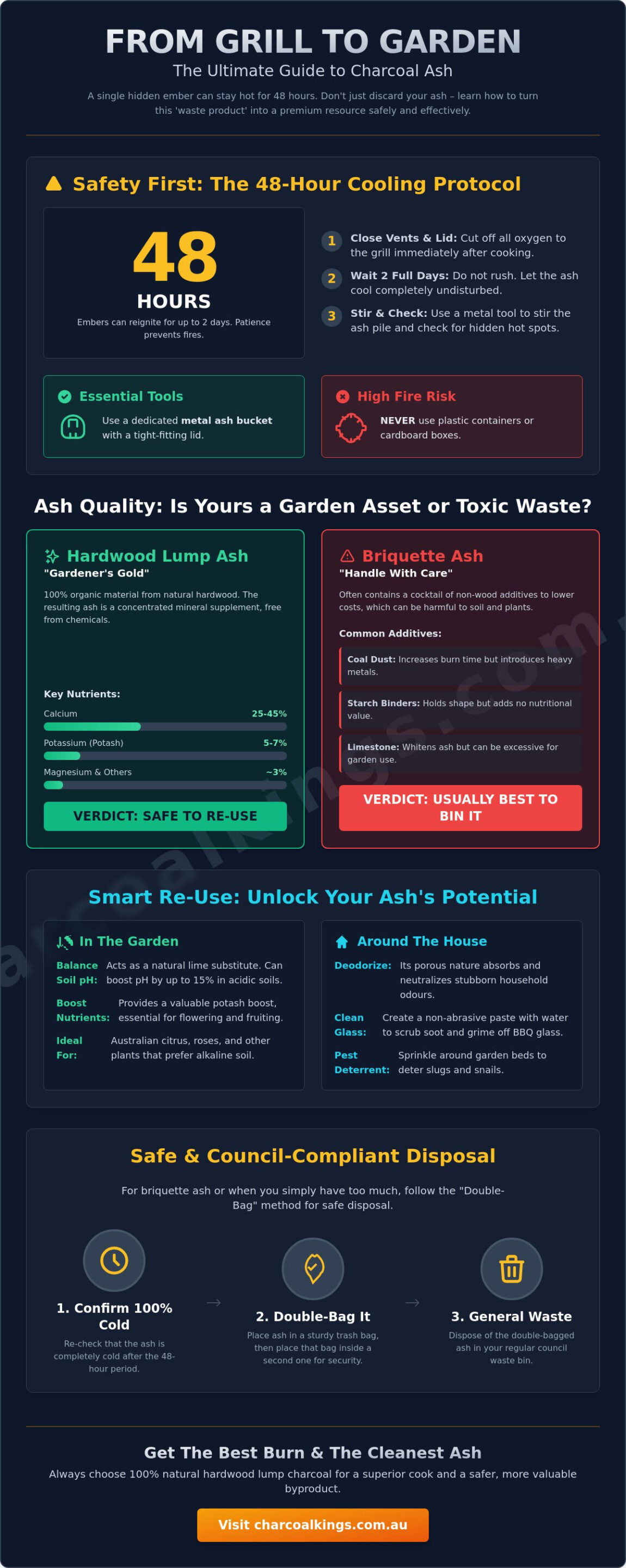
Every quality BBQ session ends with a pile of grey powder. This is charcoal ash. It’s the non-combustible mineral residue remaining after the carbon and volatile gases have fully burned off. If you’re wondering what is charcoal ash made of?, it consists primarily of calcium, magnesium, and potassium. Don’t rush to dump it. Residual heat in a pile of ash can last more than 48 hours. This creates a high risk of bin fires if handled incorrectly.
To better understand this concept, watch this helpful video:
The Golden Rule of ash management is simple. Never use plastic containers or cardboard boxes. Even ash that feels cool on the surface can harbor glowing embers at its core. In Australia, fire safety is paramount during the summer months. Using a combustible container is a recipe for disaster. You need a dedicated metal ash bucket with a tight-fitting lid and a small metal shovel to manage the waste safely.
The 48-Hour Cooling Protocol
Safe cooling starts by cutting off oxygen. Close all grill vents and keep the lid shut. Wait at least 48 hours before you attempt removal. After two days, stir the pile with a metal tool to check for hidden hot spots. If you’re in a hurry, you can use the water-dousing method. This involves spraying the ash with a fine mist until it’s damp. Be warned: this creates a thick, messy slurry that’s difficult to clean. You must ensure the ash is stone-cold to the touch through the entire depth of the pile before placing it in a bag for final disposal.
Essential Tools for Clean Ash Removal
A metal ash bin is a mandatory BBQ accessory for any serious griller. It contains heat and prevents stray embers from escaping. If your grill uses an ash basket, you’ll find cleanup much easier. These baskets improve airflow during the cook and allow you to lift the cold waste out in one motion. To avoid the “dust cloud” effect, only empty your grill on days with wind speeds below 10 km/h. Knowing what to do with charcoal ash starts with keeping your workspace clean and your home safe from fire hazards.
Lump Charcoal vs. Briquettes: Is Your Ash Safe for Reuse?
Before deciding what to do with charcoal ash, you need to know exactly what’s in it. Not all residue is created equal. The difference between premium lump charcoal and cheap supermarket briquettes determines if your ash is a garden asset or toxic waste. Understanding the source of your fuel is the first step in learning what to do with charcoal ash safely without damaging your soil or plants.
Hardwood Lump Charcoal Ash: The Gardener’s Gold
Real hardwood lump charcoal is 100% organic material. When you burn premium hardwood, the resulting ash is a concentrated mineral supplement. It contains approximately 25% to 45% calcium, which acts as a liming agent to balance soil pH. You’ll also find about 5% to 7% potassium and 1% to 2% magnesium. These are essential nutrients for plant growth. The absence of chemicals in Charcoal Kings products ensures a safe garden byproduct every time you grill.
There’s also a significant difference between standard hardwood and Binchotan. Binchotan is fired at temperatures exceeding 1,000 degrees Celsius, creating a high-carbon fuel that produces a very fine, pure white ash. This residue is even more alkaline than standard wood ash. For a detailed breakdown on application rates, Using Wood Ash in the Home Garden provides excellent scientific context for home growers. Using clean ash from natural sources is the only way to ensure you aren’t poisoning your veggie patch.
Briquette Ash: Why You Should Usually Bin It
Most briquettes aren’t just wood. Manufacturers often use a cocktail of additives to keep costs down and ensure a uniform shape. These typically include:
- Coal dust: Used to increase the burn time but introduces heavy metals.
- Starch binders: Holds the pillow shape together but adds no nutritional value.
- Limestone: Used to give the ash a white appearance, though it’s often excessive for garden use.
These additives don’t vanish during the burn. They leave behind a heavy, grey residue that can clog soil pores and introduce unwanted chemicals into your garden. If you used lighter fluid to start the fire, the ash is definitely contaminated. Petroleum-based starters leave chemical traces that ruin the recycling potential of the waste. Stick to natural firestarters if you plan on reusing your leftovers. If you’ve been using cheap fuel with chemical binders, it’s better to bag the waste and put it in the bin.
Always inspect the tray before you dump it. Clean ash should be dry, powdery, and free from oily clumps. If you’ve been cooking fatty meats like brisket for 12 hours, the ash is likely soaked in rendered fat. High grease levels can go rancid and attract pests. For the best results, start with premium natural hardwood charcoal to ensure your byproduct is safe for the environment.
Using Charcoal Ash in the Garden: An Australian Guide
Once your 100% natural hardwood charcoal has finished its burn, you are left with a mineral-heavy byproduct that shouldn’t be wasted. Knowing what to do with charcoal ash can transform your garden health. Hardwood ash acts as an effective lime substitute. It contains roughly 25% calcium carbonate, which helps raise the pH level in acidic Australian soils. This is particularly useful in coastal regions or older garden beds where soil acidity often builds up over time.
Your citrus trees and roses benefit from the significant potash boost found in every handful of ash. This potassium content, usually around 5%, is essential for promoting vigorous flowering and high-quality fruit sets. Beyond nutrition, dry ash serves as an excellent organic pest deterrent. Creating a 2cm wide barrier of dry ash around vulnerable seedlings creates an abrasive, desiccating obstacle that stops snails and slugs. In the compost bin, a light dusting every 15cm of green waste helps balance the high acidity of food scraps and nitrogen-rich materials.
Which Plants Love Ash (And Which Hate It)?
Success with ash depends entirely on your plant selection. Some species thrive on the mineral hit, while others will struggle or die if the soil becomes too alkaline. Focus your application on these specific groups:
- Top Ash-Lovers: Tomatoes, garlic, onions, and most Mediterranean herbs. Fruit trees, especially stone fruits and citrus, also appreciate the potassium.
- The Native Warning: You must avoid using ash around members of the Proteaceae family. This includes Banksias, Grevilleas, and Telopeas (Waratahs). These Australian icons have evolved to thrive in low-phosphorus, acidic environments; the alkaline nature of ash can be fatal to them.
- Acid-loving Exotics: Keep ash away from Azaleas, Camellias, Gardenias, and Blueberries. These plants require a low pH to take up iron and other essential nutrients.
Application Rates: How Much is Too Much?
When deciding what to do with charcoal ash, remember that a little goes a long way. Stick to the dusting rule. Never bury plant roots in pure ash or dump large piles in one spot. This creates a caustic environment that can chemically burn delicate root systems. Instead, scatter a thin layer across the surface and rake it into the top few centimetres of soil.
The ideal pH range for most Australian garden beds falls between 6.0 and 7.0. To maintain this balance, limit your applications to roughly 50g to 70g of ash per square metre annually. Seasonal timing is also vital. Winter is the best time to prep your beds with ash. Applying it during the dormant season allows the minerals to break down and integrate into the soil profile, ensuring the nutrients are bioavailable when the spring growing season begins. Get Sizzlin’ in the kitchen and get growing in the garden.
Surprising Household Uses for Leftover Ash
Most pitmasters toss their leftovers without a second thought. That is a mistake. High quality ash from premium hardwood charcoal is a versatile tool for home maintenance and cleaning. If you are wondering what to do with charcoal ash after your weekend cookout, look no further than your cleaning cupboard or garage.
Cleaning BBQ Grates and Glass
The fine grit in charcoal ash acts as a gentle, natural abrasive. It is particularly effective for the “Glass Trick,” which restores clarity to cloudy fireplace glass or grease-stained BBQ lids. This method works because the ash contains potassium carbonate, a cleaning agent that helps break down tough carbon deposits.
To use the ash paste method, follow these steps:
- Wait for the ash to cool completely.
- Dip a damp, lint-free cloth into the fine grey powder.
- Rub the cloth onto the glass or stainless steel in small, circular motions.
- Wipe away the residue with a clean, wet rag.
Always wear gloves when handling ash. The high alkalinity can dry out your skin or cause irritation during extended contact. This natural solution replaces harsh chemical degreasers and costs nothing.
Traction and Absorbency
In many parts of Australia, winter brings damp conditions that turn outdoor pavers and concrete paths into slip hazards. Mossy surfaces are common in shaded areas during the cooler months. Spreading a thin layer of charcoal ash provides immediate traction on these slippery paths. Unlike salt, it will not damage your masonry or kill nearby grass when the rain eventually washes it away.
Ash also functions as a powerful desiccant. It is highly effective at absorbing fresh oil and grease spills on the driveway. If you drop oil while working on the car, cover the spill with a thick layer of ash. Leave it for 24 hours to draw the liquid out of the porous concrete before sweeping it up. In the shed, a small bucket of ash can help keep high-moisture corners dry, preventing rust on your tools.
You might see online forums suggesting ash as a “natural dry shampoo” for pets to remove skunk smells or oil. Avoid this practice. The alkaline nature of the ash can cause skin burns or respiratory distress in dogs and cats. Stick to using it on inanimate surfaces where its absorbent properties shine.
Odour Neutralisation and Tradition
For a fresh-smelling garage or fridge, place a bowl of cold ash in the corner. It acts similarly to baking soda, soaking up pungent odours rather than just masking them. This reflects the traditional utility of wood ash, which was historically the primary source of lye for soap making. While modern soap making is a precise science, the cleaning power of the raw material remains a staple for the resourceful homeowner.
Ready to upgrade your fuel for better results? Shop premium lump charcoal
Disposal Best Practices: When It Has to Go in the Bin
Sometimes your garden is already well-fed, or you’ve used fuel with synthetic additives that shouldn’t touch your soil. When you’re deciding what to do with charcoal ash that can’t be reused, safety and local regulations take priority. Most Australian local councils require charcoal ash to be placed in the general waste bin (usually the red lid). It’s a common mistake to toss it into the green waste or FOGO bin. Most industrial composting facilities across Australia aren’t equipped to process the high carbon concentrations or potential chemical residues found in some charcoal brands. Leaving ash in local parks or bushland is also a major violation. It smothers native seedlings and can drastically alter the pH of sensitive ecosystems. In states like New South Wales or Queensland, illegal dumping in public spaces can result in on-the-spot fines exceeding A$2,000 for individuals.
The Right Way to Bag and Bin
Safe disposal starts with patience. You must wait at least 48 hours for the ash to be completely cold to the touch. Even if it looks extinguished, deep pockets of heat can linger and melt plastic bins or start fires in garbage trucks. Once it’s stone cold, use the double bag method to protect waste collectors and your neighbourhood.
- Use Heavy-Duty Materials: Wrap the cooled ash in heavy-duty aluminium foil or place it inside two layers of plastic bin liners.
- Seal it Tight: Ensure the bags are airtight. This prevents “ash clouds” from erupting when the hydraulic press of the waste truck compresses your bin.
- Check Council Specifics: While the red bin is the standard, some regional councils have specific drop-off points for large volumes of wood ash. Check your local council website to confirm their current policy.
Get Sizzlin’ with a Clean Start
Cleaning out your grill isn’t just about tidying up; it’s about performance. When old ash builds up in the bottom of your kettle or smoker, it restricts oxygen flow to your fresh coals. This makes it nearly impossible to maintain the high, steady temperatures needed for a perfect sear. A clean firebox ensures your vents work exactly as they should, giving you total control over the cook.
The type of fuel you choose determines how much maintenance you’ll face. Cheap briquettes often contain clay fillers and chemical binders that produce massive amounts of waste. Switching to natural hardwood lump charcoal results in significantly less ash buildup. This means better airflow, hotter burns, and less time spent bagging waste after the party ends. Our products are 100% organic and free from the nasty additives that make disposal a headache. Ready for a better burn? Shop our premium chemical-free charcoal range here. Get Sizzlin’!
Master Your Post-Cook Cleanup
Managing your fire doesn’t end when the meat comes off the grill. Safety is the first priority. Always allow your ash to cool for at least 48 hours before handling to prevent fire hazards in Australian waste bins. If you’ve used pure hardwood, that leftover material is a potent resource for your garden. It adds potassium and balances soil pH levels naturally. Knowing what to do with charcoal ash turns a waste product into a valuable tool for your backyard. Avoid reusing ash from briquettes containing chemical binders, as these can harm your soil health.
The easiest way to ensure your ash is safe for the garden is to start with superior fuel. Charcoal Kings provides the same 100% Natural Hardwood used by Australia’s top pitmasters. Our products contain no chemical additives or binders, ensuring a hotter burn and a cleaner finish every time. Stop dealing with messy, chemical-heavy waste and start using professional-grade fuel.
Upgrade to Premium Hardwood Charcoal for a cleaner, more useful burn
Get sizzlin’ and make your next cook your most efficient one yet.
Frequently Asked Questions
Is charcoal ash good for all plants?
Charcoal ash isn’t suitable for all plants because it’s highly alkaline with a pH level typically between 10 and 12. It’s excellent for “sweetening” acidic soil for plants like lavender or citrus. However, avoid using it on acid-loving species like blueberries or camellias. Always test your soil pH first to ensure you aren’t over-liming your garden beds. Excess alkalinity can stunt growth or cause nutrient deficiencies in sensitive plants.
Can I put charcoal ash in my compost bin?
You can add natural hardwood ash to your compost bin in small amounts. It provides potassium and trace elements that help break down organic matter efficiently. Limit the ash to 5% of your total compost volume to avoid spiking the pH too high. Only use ash from 100% natural lump charcoal to ensure your compost stays chemical-free and safe for food crops. This maintains a healthy environment for worms and beneficial microbes.
How long does it take for charcoal ash to cool down completely?
Charcoal ash takes a full 48 hours to cool down completely. Even if the surface feels cold, the core of a pile can retain enough heat to start a fire. Place your used coals in a metal bucket with a tight-fitting lid for two days before disposal. This safety window is critical for preventing accidental fires in your bin or garden. Never rush this process, as embers can smolder undetected for long periods.
Is it safe to use charcoal ash if I used lighter fluid?
It’s not safe to reuse charcoal ash if you’ve used chemical lighter fluid or self-lighting briquettes. These products leave behind petroleum-based residues that are toxic to plants and soil microbes. When you’re figuring out what to do with charcoal ash that’s been contaminated, the only option is to bag it and place it in your general waste bin once it’s fully extinguished. Avoid adding these chemicals to any organic garden system.
Can I use charcoal ash to kill weeds?
Charcoal ash won’t kill weeds and actually acts as a fertiliser for many species. Because it contains potassium and carbonate, it helps many plants grow rather than killing them. If you apply a thick enough layer to smother weeds, you’ll likely ruin the soil’s pH balance for future planting. Stick to dedicated organic weeding methods for better results in your backyard. Studies show 0% success in using ash as a permanent herbicide.
Will charcoal ash keep snakes or pests away from my BBQ area?
There’s no scientific evidence that charcoal ash keeps snakes away from your BBQ area. While some gardeners use it as a physical barrier against slugs and snails, its effectiveness drops to 0% once the ash gets wet. To keep pests away, focus on cleaning up food scraps and grease. A clean grill is a much better deterrent than a pile of dusty ash. 0 scientific studies support ash as a snake repellent.
Should I use ash from a Hibachi grill differently?
You don’t need to use Hibachi ash differently, but it’s often higher quality if you’re using premium Binchotan. This high-carbon ash is extremely clean and excellent for garden use. Since Hibachi grills produce smaller volumes of ash, usually less than 500 grams per session, it’s easier to manage in a small compost pile. Always ensure the ash is 100% cold before handling. This ensures your garden benefits from the pure mineral content provided by high-grade coals.
What happens if I put hot ash in my wheelie bin?
Putting hot ash in your wheelie bin will melt the plastic and likely start a fire. Standard Australian wheelie bins are made of high-density polyethylene which begins to soften and melt between 120 and 130 degrees Celsius. This creates a massive fire hazard for your property and the waste collection truck. When deciding what to do with charcoal ash, always wait 48 hours before bagging it for disposal. Safety is the priority for every grill master.
Get Sizzlin’!