The most reliable tool in your BBQ arsenal isn’t your knife or your thermometer; it’s the fuel sitting in your firebox. Most pitmasters eventually hit a wall with standard supermarket bags that produce inconsistent heat, excessive smoke, and enough ash to clog your air vents mid-cook. You’ve likely heard the buzz in professional circles and asked: what is mangrove charcoal? It is the CLEAN-BURNING WORKHORSE of the grilling world, prized for its ability to deliver intense, INDUSTRIAL-GRADE HEAT without the bitter aftertaste of inferior woods.
You want a fuel that burns long and stays clean so your seasoning takes center stage. This guide explores why mangrove is a premium choice for high-heat searing and low-and-slow sessions alike. We will detail the specific meat pairings that benefit from its neutral smoke profile and provide the facts on its sustainability and the 2026 international shipping regulations. By the end of this expert guide, you’ll understand how to leverage this high-performance fuel to achieve professional results every time you light the grill.
Key Takeaways
- Define what is mangrove charcoal and explore the high-density carbonisation process that makes it a favorite for professional pitmasters.
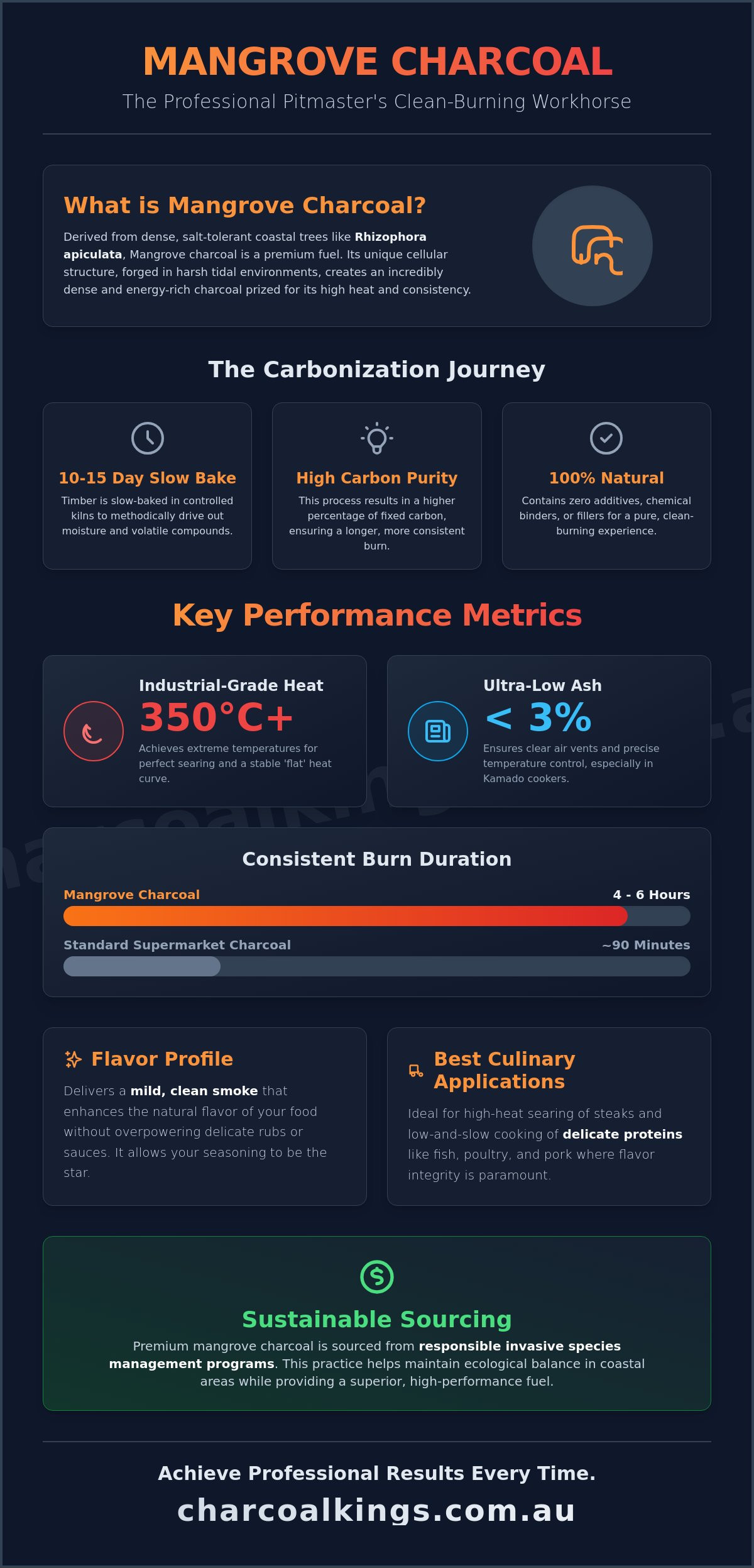
- Achieve industrial-grade heat exceeding 350°C for perfect searing while benefiting from a consistent 4-6 hour burn duration.
- Preserve the integrity of delicate meats with a mild, clean smoke profile that doesn’t overpower your rubs or sauces.
- Navigate the sustainability debate by learning how to identify premium charcoal sourced from responsible invasive species management programs.
- Compare mangrove against traditional hardwoods like Gidgee and Mallee to determine the best heat-to-ignition ratio for your specific grill.
Defining Mangrove Charcoal: Origins and Production Process
To understand what is mangrove charcoal, you must look at the harsh coastal environments where these trees thrive. This high-density fuel comes from salt-tolerant species that grow in tidal zones. Unlike standard softwoods or lighter hardwoods, mangrove timber is incredibly compact. This natural density produces a charcoal lump that feels heavier in the hand and burns with a concentrated energy that standard fuels cannot match. It is a specialized product designed for those who prioritize heat consistency and fuel efficiency.
The Science of Salt-Tolerant Wood
Growing in saline environments requires a unique biological adaptation. Trees must withstand constant tidal pressure and high salt concentrations; this creates a much denser cellular structure in the timber compared to inland forests. One of the primary species used in this process is Rhizophora apiculata, a tree known for its structural integrity and high caloric value. When this wood is converted to charcoal, that density remains. You’ll notice the difference immediately. High-quality mangrove charcoal is dark, heavy, and produces a distinct metallic clink when two pieces are struck together. This sound is a hallmark of high carbon purity and superior density.
The Carbonisation Journey
The transformation from raw timber to premium BBQ fuel is a patient process. It requires a 10 to 15 day slow-bake period in controlled kilns. During this time, the wood is heated to extreme temperatures in a low-oxygen environment to drive out moisture and volatile organic compounds. This process is critical for several reasons:
- Volatile Gas Removal: Proper carbonisation ensures a smokeless, spark-free burn.
- High Carbon Purity: A longer bake time results in a higher percentage of fixed carbon for longer burn times.
- Traditional vs. Modern: While traditional pit firing is still common, modern retort kilns allow for more precision and environmental control during the bake.
Purity is the standard for professional-grade charcoal. Our mangrove fuel contains zero additives, chemical binders, or fillers. The high mineral content found naturally in coastal wood contributes to a steady, intense heat that stays consistent throughout the cook. This is pure carbonized wood, engineered by nature and refined by heat. It provides the reliable performance that commercial kitchens and serious home pitmasters demand for every cookout.
Performance Metrics: Why Pitmasters Choose Mangrove
Professional pitmasters don’t rely on guesswork; they rely on thermal data. When evaluating what is mangrove charcoal, the performance metrics tell the real story of its dominance in the BBQ world. This fuel is prized for its ability to reach temperatures exceeding 350°C, providing the intense heat necessary for industrial-grade searing. While standard supermarket charcoal often peters out after 90 minutes, mangrove delivers a consistent burn time of 4-6 hours in open grills. This longevity reduces the need for constant refueling during long service shifts or weekend cookouts.
Heat Intensity and Thermal Stability
The BTU output of mangrove charcoal significantly exceeds that of standard softwoods or mixed hardwood blends. Density is the deciding factor here. Because the wood is so compact, it holds more energy per cubic inch. This translates to a ‘flat’ heat curve. Most fuels peak quickly and then crash, forcing the cook to adjust vents constantly to maintain a target temperature. Mangrove maintains a steady, high-output heat for the majority of its burn cycle. This thermal stability makes it the primary choice for commercial rotisseries and heavy-duty smokers where temperature fluctuations can ruin delicate proteins. Research into sustainable charcoal production methods highlights how efficient kilning processes maximize this energy density while minimizing waste.
Ash Content and Cleanup
Airflow is the lifeblood of any fire, especially in Kamado-style ceramic cookers. High ash production is the enemy of temperature control because it clogs air vents and chokes the fire. Mangrove is a specialized ‘low ash’ fuel, typically leaving behind less than 3% of its total volume after a full burn. This is a massive advantage over briquettes, which use chemical binders and fillers that create thick layers of waste.
- Airflow Efficiency: Low ash levels ensure your vents stay clear for precise oxygen control throughout the cook.
- Safety: Minimal sparking makes it safer for residential use, particularly on balconies or in tight urban backyards.
- Ease of Cleanup: Home users spend less time shoveling waste and more time focusing on the cook.
If you’re tired of fighting inconsistent temperatures, switching to a high-performance Hardwood Lump Charcoal is the most effective upgrade you can make to your setup. Reliability is the hallmark of a master craftsman, and mangrove provides the rock-solid foundation required for elite BBQ results every time you light the pit.
Flavour Profile and Best Culinary Applications
Flavour is the ultimate test for any fuel. While technical specs like density and heat are vital, the real value of a premium fuel lies in how it interacts with your ingredients. Understanding what is mangrove charcoal means recognizing its role as a neutral canvas for professional cooking. Unlike heavier woods that impose a dominant profile, mangrove provides a mild, clean, and non-intrusive smoke. This purity allows the natural juices and fats of the meat to take center stage without being masked by excessive wood notes.
The Neutral Smoke Advantage
For a professional chef, neutral smoke is a feature, not a bug. It provides total control over the final taste. Compare this to the heavy, sweet, or aggressive smoke produced by Hickory or Mesquite. Those woods can easily overwhelm delicate dishes. Mangrove burns exceptionally clean; it’s the ideal base fuel for any pit. If you want a specific aroma, you can add Smoking Woods like apple or cherry to the fire. This hybrid approach allows you to benefit from the industrial heat of mangrove while layering in precise smoke profiles. It’s a strategy used by competitive pitmasters to avoid the bitterness that often occurs during long cooks with less refined fuels.
Seafood and Poultry Pairing
Delicate proteins require a gentle touch. Mangrove is the gold standard for grilling whole fish and shellfish because it doesn’t compete with the subtle sweetness of the sea. When you’re working with poultry, clean fuel is even more critical. Dirty smoke or inconsistent heat often leads to acrid, dark skin that tastes like soot. Mangrove’s steady thermal output and pure carbon content ensure poultry stays moist with a light, golden finish.
- Steak Searing: Use mangrove for high-heat steak sessions. The intense heat creates a professional crust while the neutral smoke lets the beef’s dry-aged character shine.
- Asian Grilling: This fuel is the backbone of traditional Yakitori and Satay. It provides the searing heat needed for fast-paced skewered meats without the risk of sparking.
- Long Low-and-Slow: Because it contains zero additives or chemical binders, you can run a smoker for 12 hours without any chemical buildup or bitter aftertaste.
Precision cooking demands a predictable environment. By choosing a fuel that prioritizes purity over pungent smoke, you ensure that your rubs, sauces, and high-quality cuts of meat remain the heroes of the plate. It’s a no-nonsense choice for those who value culinary integrity over gimmick flavours.
The Sustainability Debate: Is Mangrove Charcoal Eco-Friendly?
The environmental impact of BBQ fuel is a serious consideration for the modern pitmaster. Sustainability isn’t a buzzword; it’s a supply chain reality. When asking what is mangrove charcoal in terms of eco-friendliness, the answer depends entirely on the integrity of the sourcing. Mangrove forests are some of the most efficient carbon sinks on the planet. They store three to five times more carbon per hectare than upland tropical forests. Because of this, responsible harvesting is critical to maintaining coastal stability and global carbon levels.
Global trade regulations are tightening to address these concerns. As of January 1, 2026, all charcoal shipments by sea must be classified as Dangerous Goods under the IMDG Code Amendment 42-24. This change eliminates previous exemptions and requires specific labeling and packaging for all wood charcoal under HS code 4402. These stricter controls help track the movement of charcoal from major exporters like Indonesia, making it harder for illegal, unregulated products to enter the market. For the consumer, this means more transparency regarding the origin of their fuel.
Invasive Species vs. Protected Ecosystems
Not all mangrove growth is beneficial. In specific coastal regions, certain species become invasive, choking out local biodiversity and disrupting natural water flow. In these scenarios, charcoal production serves as an essential land management tool. Clearing invasive overgrowth allows native ecosystems to recover while providing a source for high-density fuel. You must avoid ‘black market’ charcoal that lacks origin tracking. This unregulated trade is a primary driver of the 1,700 km² of mangrove loss reported in Indonesia between 1996 and 2020. Stick to suppliers who can verify their source to ensure your cookout doesn’t contribute to habitat destruction.
The Role of Reforestation
Reputable producers treat mangrove forests as a renewable resource through managed plantations. These operations follow a strict cycle of harvest where only mature trees are taken and immediately replaced by new saplings. This method maintains the forest’s role as a carbon sink while providing a steady supply of industrial-grade timber. Choosing a natural product ensures the purity and absence of additives found in premium lump. There are no chemical binders or petroleum-based starters in this fuel. It is a direct product of nature, managed by experts who understand the value of the ecosystem.
If you value both performance and provenance, explore our range of Hardwood Lump Charcoal for your next session. Supporting responsible supply chains is the best way to ensure the future of the craft while enjoying the superior heat that only mangrove can provide.
Mangrove vs. Gidgee and Mallee: Which Should You Buy?
Choosing the right fuel requires understanding the specific demands of your cook. While you now know what is mangrove charcoal in terms of its origin and purity, you must also understand how it stacks up against other premium hardwoods like Gidgee and Mallee. Mangrove occupies a strategic middle ground. It offers significantly more heat and longevity than Mallee but is far easier to ignite than the ultra-dense Gidgee. For the pitmaster who values a predictable, high-performance fire without the struggle of a difficult light, mangrove is the industrial standard.
Density and Burn Rate Comparison
Fuel density dictates your burn rate and your cost-per-hour. To simplify the selection process, visualize a scale of density. Mallee sits at the lighter end; it provides that iconic “Aussie BBQ” aroma but burns through quickly. Gidgee represents the extreme end of the spectrum, being one of the densest timbers in the world. It burns incredibly hot but can be frustrating for beginners to light. Mangrove sits firmly in the Medium-Heavy category. It provides the thermal stability needed for long sessions without requiring a blowtorch to get started.
- Mallee: Fast lighting, high smoke aroma, shorter burn time.
- Mangrove: Reliable ignition, neutral smoke, 4-6 hour consistent heat.
- Gidgee: Difficult ignition, extreme heat, longest burn time.
If you’re looking for the absolute pinnacle of density and a burn that lasts for half a day, you should consult our Binchotan guide. However, for most residential and commercial applications, the medium-heavy profile of mangrove provides the best ROI on both time and temperature.
Choosing the Right Fuel for Your Grill
Your hardware often dictates your fuel choice. If you’re running a Hibachi or a small tabletop grill, you need high radiant heat and minimal sparking. Mangrove is perfect here because it won’t spit embers at your guests. For those running low-and-slow sessions in a bullet smoker or offset, mangrove acts as a rock-solid base fuel. Its neutral profile ensures that if you decide to add hickory or cherry chunks later, those flavours remain distinct and unpolluted.
Every serious BBQer needs a bag of mangrove in their shed. It is the versatile, clean-burning workhorse that bridges the gap between everyday grilling and professional competition. It delivers the intense heat required for a perfect crust and the endurance needed for a full brisket stall. Stop fighting inconsistent heat from inferior supermarket brands. Invest in a fuel that works as hard as you do. Get your fire right. Get your flavour right. Happy grilling.
Upgrade Your Firebox Performance Today
Mastering the grill requires more than just technique; it requires a fuel that delivers industrial-grade reliability. You now understand what is mangrove charcoal: it is the neutral-flavour workhorse of the professional BBQ world. By providing intense, steady heat and minimal ash, it ensures your hardware stays efficient and your ingredients remain the hero of the plate. Whether you’re searing at high temperatures or running a low-and-slow session, mangrove provides the thermal stability that standard supermarket brands simply cannot match.
We are the wholesale supplier to top Australian restaurants, providing a 100% natural fuel with zero chemical additives. Our expertly curated range includes Gidgee, Mallee, and Mangrove to suit every pitmaster’s specific needs. Don’t settle for inconsistent results when you can use the same fuel trusted by the pros. High-performance grilling starts with the right foundation.
Shop Premium Mangrove and Hardwood Lump Charcoal at Charcoal Kings and take total control of your next cookout. It’s time to light the fire and experience the difference that pure carbon density makes to your craft.
Frequently Asked Questions
Is mangrove charcoal better than regular lump charcoal?
Mangrove charcoal is a superior choice for high-heat applications due to its extreme density. While standard lump charcoal often consists of mixed softwoods that burn out quickly, mangrove provides a more stable and intense thermal output. It offers industrial-grade performance for those who need consistent results during long service windows or high-heat searing sessions.
Does mangrove charcoal spark a lot when lighting?
Mangrove charcoal is known for its minimal sparking and popping. The extensive carbonisation process removes the volatile gases and moisture that typically cause sparks in lower-quality fuels. This makes it a safer option for residential use, particularly on balconies or in backyards where safety is a priority.
How long does mangrove charcoal burn for?
You can expect a consistent burn duration of 4 to 6 hours in an open grill. This longevity is a direct result of the wood’s natural density and high carbon purity. Because it burns slower than lighter hardwoods, you’ll use less fuel overall to achieve the same temperature, making it a cost-effective option for long BBQ sessions.
Can I use mangrove charcoal in a Weber or Kamado?
This fuel is highly compatible with both kettle-style grills and ceramic Kamado-style cookers. Its high radiant heat is perfect for fast searing in a kettle, while its low ash production prevents airflow blockages in the tight confines of a Kamado firebox. It is a versatile all-rounder for any high-quality BBQ hardware.
Is mangrove charcoal sustainable and legal to use in Australia?
Yes, it is legal and sustainable when sourced through reputable supply chains that adhere to international shipping and forestry standards. As of 2026, all legal imports must comply with the IMDG Code Amendment 42-24 for safe transport. Always buy from established Australian suppliers who can verify the origin of their stock to ensure you aren’t supporting illegal deforestation.
What food tastes best when cooked over mangrove charcoal?
Delicate proteins like whole fish, shellfish, and poultry benefit most from the clean, neutral smoke profile of this fuel. What is mangrove charcoal‘s greatest culinary strength? It provides intense heat without the heavy, acrid smoke that can ruin the subtle flavours of high-quality seafood. It is also the preferred choice for traditional Asian skewers like Yakitori and Satay.
How do I light mangrove charcoal quickly?
Use a chimney starter and natural firelighters for the fastest and cleanest ignition. Avoid petroleum-based fluids as they contaminate the purity of the charcoal and ruin the flavour of your food. Because mangrove is denser than standard wood, it may take a few minutes longer to catch, but once lit, it provides a fierce and steady heat.
Does mangrove charcoal produce much ash?
Mangrove is a specialized low-ash fuel, typically leaving behind less than 3% of its total volume. This is significantly lower than briquettes or cheaper lump varieties. Low ash levels are essential for maintaining precise oxygen control in your grill, as it keeps your air vents clear and prevents the fire from being choked during long cooks.