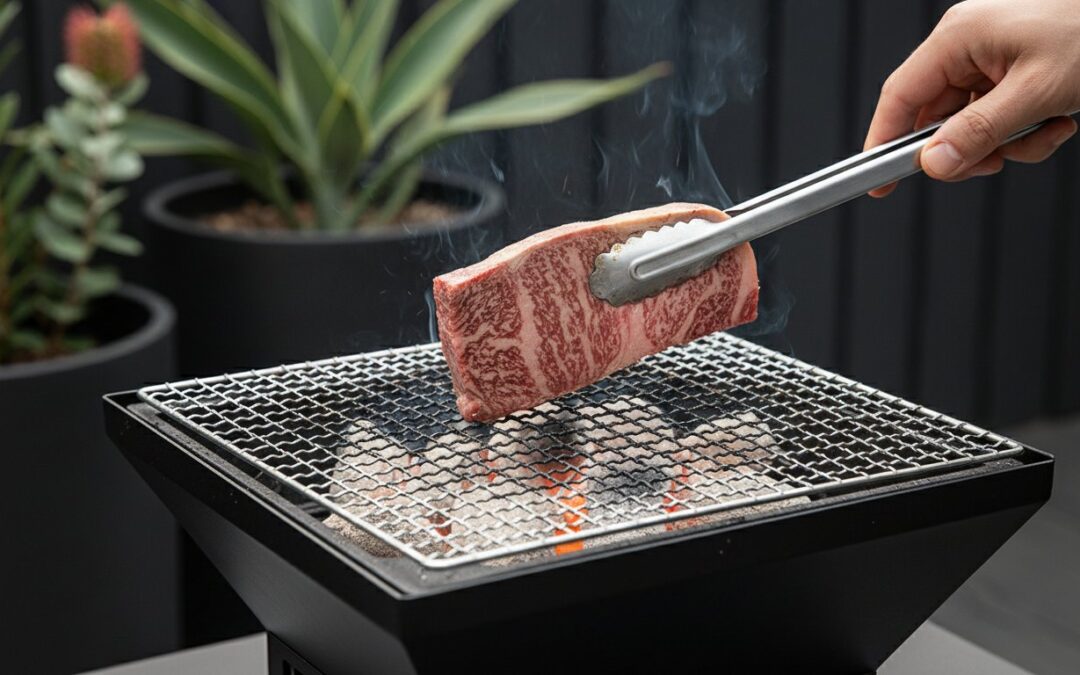
Cheap, chemical-laden charcoal is the fastest way to ruin a premium A$120 Blackmore Wagyu steak. Most Aussie pitmasters are fed up with bags of scrap wood that spark, smoke, and burn out before the meat even hits the grate. You want a fuel that respects the ingredients and provides consistent, intense heat. If you’re wondering what is binchotan charcoal used for, the answer goes far beyond the grill. It’s about achieving 1,000-degree infrared temperatures without the acrid fumes or chemical tastes of standard briquettes.
You’re about to discover why Binchotan is the world’s most coveted fuel for precision grilling, 99% effective water purification, and natural wellness. This guide breaks down the science of its 6-hour burn time and explains exactly how to master the lighting process for high-density fuel. We’ll also show you where to source authentic supply right here in Australia. It’s time to stop settling for subpar fuel and claim your title as a true Charcoal Kings. Get Sizzlin’!
Key Takeaways
- Learn why authentic Ubame oak Binchotan is considered the world’s most premium high-carbon fuel for consistent, professional-grade heat.
- Discover exactly what is binchotan charcoal used for in traditional grilling, including how Far-Infrared heat cooks meat perfectly from the inside out.
- Explore the activated properties of White Charcoal that make it a powerful natural tool for water purification and toxin adsorption.
- Compare the massive 4-6 hour burn time against standard lump charcoal to see why Binchotan offers the best value in A$ per hour of cook time.
- Master the essential technique for lighting this dense fuel using a charcoal chimney or gas burner to get your grill sizzlin’ efficiently.
Understanding Binchotan: What is Japanese White Charcoal?
Binchotan represents the absolute pinnacle of fuel for serious grillers and professional chefs. This premium, high-carbon charcoal is traditionally crafted from Ubame oak, a hardwood native to the coastal hills of Japan. Unlike standard lump charcoal, Binchotan is so dense that two pieces struck together produce a clear, metallic “clink” similar to porcelain. This unique sound serves as a direct indicator of its extreme density and carbon purity. Artisans in the Kishu province have spent over 300 years refining this craft, ensuring every branch meets strict quality standards before it reaches your grill.
The product is commonly referred to as Japanese white charcoal, though the name has nothing to do with the wood itself. The moniker describes the thin layer of alkaline ash residue that coats the logs during the final production stage. Understanding exactly what is binchotan charcoal used for helps explain why it commands a premium price in Australia, as its performance far exceeds any supermarket briquette.
To see how this premium fuel compares to other options, watch this breakdown:
The Traditional Kiln Firing Process
The production involves a multi-stage firing process in traditional clay kilns that can last up to 14 days. Initially, the wood carbonises at low temperatures. The artisan then opens the kiln vents, raising the internal temperature to a blistering 1000 degrees Celsius for a final activation phase. This intense heat burns off almost all volatile gases. Workers pull the glowing logs out and immediately smother them in a mixture of sand, soil, and ash. This rapid cooling creates the signature white surface and results in a product with nearly 100% carbon content, effectively removing all impurities.
Why Purity Matters for Performance
Purity is the main reason why professionals choose this fuel over mass-produced alternatives. Standard briquettes often contain 15% to 20% fillers and chemical binders that produce acrid smoke. Binchotan is 100% natural and chemical-free. Because it lacks volatile matter, it burns completely odourless and produces zero soot. When considering what is binchotan charcoal used for, the answer starts with flavour preservation. It provides a steady, clean infrared heat that sears meat without masking the natural taste with heavy wood smoke. This makes it the only choice for delicate proteins or high-end yakitori where the ingredient must shine.
Culinary Mastery: What is Binchotan Charcoal Used for in Grilling?
Binchotan isn’t just another fuel source; it’s a precision tool for serious cooks. Understanding what is binchotan charcoal used for starts with its origins in 17th-century Japan. Chefs across Australia, from Melbourne’s laneway yakitori bars to high-end Sydney steakhouses, rely on this white charcoal for its incredible thermal properties. It burns at temperatures exceeding 1,000°C, maintaining that heat for up to 5 hours without flickering or fading. This consistency is why it’s the gold standard for Yakitori and Hibachi grilling.
The secret to its performance lies in Far-Infrared (FIR) heat. Unlike standard lump charcoal that relies on convection, Binchotan emits waves that penetrate deep into the protein. This cooks the meat from the inside out while simultaneously creating a flawless external sear. Modern pitmasters value the purity found in traditional Japanese coal-making because it ensures zero chemical interference. When you use Binchotan, you aren’t adding a heavy “wood smoke” flavour. Instead, it lets the natural juices of a premium Wagyu or a fresh piece of seafood shine. The flavour comes from the fat hitting the coals and vaporising back into the meat.
Another major advantage is its smokeless nature. Because it’s nearly 100% pure carbon, it doesn’t produce the acrid clouds associated with cheaper briquettes. This makes it the only viable option for high-end restaurant environments with strict ventilation requirements or for hobbyists grilling on small apartment balconies. When professional chefs explain what is binchotan charcoal used for, they focus on this control and cleanliness.
The Infrared Advantage: Searing Without Burning
Standard charcoal heats the air around the food. Binchotan sends energy directly into it. This infrared heat is more efficient and prevents the outside of your steak from turning into carbon before the middle is warm. It seals in moisture instantly, creating a superior crust that locks in every drop of juice. Binchotan provides the steadiest, most intense heat of any natural fuel on earth. You get a perfect Maillard reaction every single time.
Ideal Grills for Binchotan Use
To get the most out of these long sticks, you need the right gear. The Konro or Hibachi grill is the perfect companion. These grills are often lined with diatomaceous earth, which reflects the infrared heat back toward the cooking surface. This setup maximises efficiency, meaning you use less fuel for a longer cook. While designed for small grills, you can also use it as a heat booster in a standard kettle or offset smoker. Adding a few logs of Binchotan can stabilise your temps for hours. Check out our premium Binchotan range to upgrade your next backyard session.
Beyond the Grill: Surprising Benefits of Binchotan Charcoal
Binchotan’s power extends far past the yakitori grill. While most think of it as the ultimate fuel, understanding what is binchotan charcoal used for outside of cooking reveals its true versatility. This white charcoal acts as a high-performance adsorbent due to its intense carbonisation process. During production, the wood is heated to temperatures exceeding 1,000 degrees Celsius, creating millions of microscopic pores. These pores trap chemicals, toxins, and unpleasant odours on a molecular level.
Research published by the American Chemical Society regarding the properties of Binchotan charcoal confirms its high fixed carbon content. This makes it a reliable, chemical-free tool for the home. It’s a 100% natural, zero-waste alternative to the plastic-heavy filtration systems found in many Australian kitchens. Because it’s essentially a piece of carbonised wood, it can be composted at the end of its life, leaving no footprint behind.
Natural Water Purification and Alkalising
Drop a single Binchotan stick into a glass carafe to transform your tap water. The charcoal adsorbs chlorine and heavy metals while releasing vital minerals like calcium and magnesium back into the liquid. Science backs this up. One gram of Binchotan has the surface area of two tennis courts, which is roughly 520 square metres. This massive surface area works constantly to balance pH levels and improve taste. You should boil the sticks in water for 10 minutes every three weeks to maintain performance. This clears the pores and reactivates the stick for up to six months of use.
Air Purification and Humidity Control
Small or broken pieces of Binchotan shouldn’t be discarded. These fragments are perfect for deodorising enclosed spaces. Unlike synthetic sprays, Binchotan doesn’t mask smells. It physically removes the organic compounds causing them. Common uses include:
- Deodorising leather work boots and shoe cupboards.
- Removing “old food” smells from refrigerators.
- Absorbing moisture in laundry rooms to prevent mildew.
This focus on using natural elements to improve the home environment doesn’t have to stop with air quality. The same principle of choosing high-quality, natural materials applies to creating a comfortable living space. For example, when it comes to bedding and bath essentials, sourcing from a specialist like King of Cotton ensures you get premium, natural fibres that enhance your home’s comfort and aesthetic.
It also regulates humidity by absorbing excess moisture from the air when it’s damp and releasing it when conditions dry out. Many Australians also use the sleek, metallic-black sticks as minimalist home decor. They offer a rugged, organic aesthetic that serves a functional purpose. Get Sizzlin’!
Why Experts Choose Binchotan Over Standard Lump Charcoal
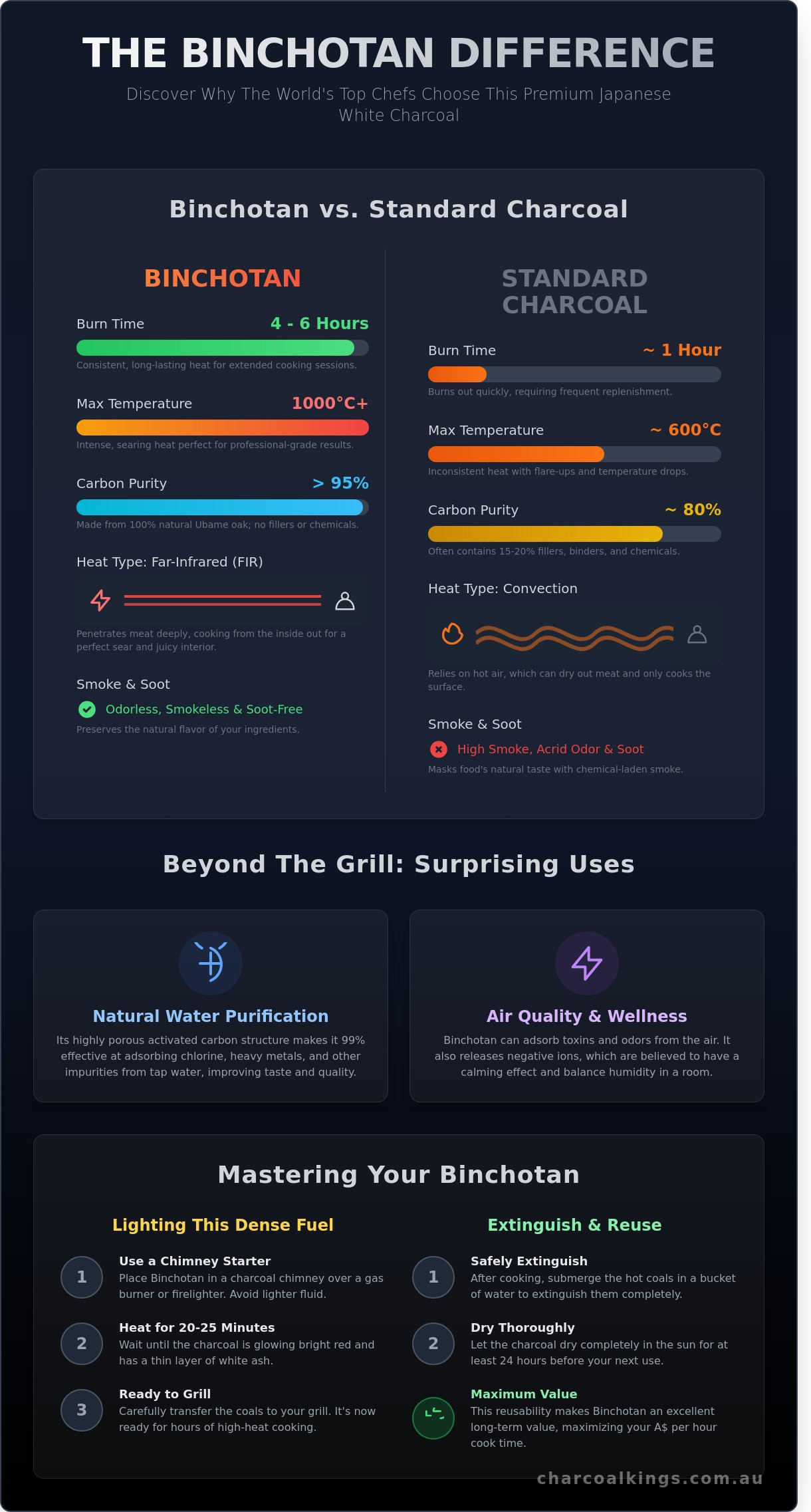
Standard lump charcoal usually dies out after 60 minutes of intense heat. Charcoal Kings Binchotan keeps going for 4 to 6 hours. Professional chefs prioritize this efficiency because it eliminates the need to refuel mid-service. While a 10kg bag of standard lump might sit around A$25, the math changes when you look at the cost per hour. You’d need four times the amount of standard charcoal to match the burn time of a single Binchotan session. You’re buying concentrated energy, not just carbon. It’s a smarter investment for anyone serious about the craft.
- Standard Lump: 1 hour burn time; frequent ash buildup; erratic heat spikes.
- Charcoal Kings Binchotan: 4-6 hours burn time; minimal ash; rock-steady temperature.
Extreme Longevity and Steady Heat
Binchotan provides a steady-state heat profile that standard wood charcoals can’t match. Most charcoal spikes in temperature then drops off rapidly. Binchotan maintains a flat line of energy for hours. This predictability is exactly what is binchotan charcoal used for in high-end yakitori bars where timing is everything. It burns at a lower surface temperature than some high-airflow charcoals, yet it emits far higher infrared radiant energy. This cooks food deeply from the inside out without scorching the exterior. A single load can easily power three or four consecutive dinner services in a commercial kitchen.
The Purity and Health Factor
Charcoal Kings Binchotan is 100% natural. It contains zero chemical binders, fillers, or accelerants. Standard briquettes often contain coal dust or starch that produces heavy soot and off-flavours. Binchotan produces almost zero smoke once it’s fully lit. This purity is vital when you consider what is binchotan charcoal used for in delicate seafood or vegetable grilling. The ash is naturally alkaline. This helps neutralise acidic fats as they render and drip, preventing that acrid, bitter taste found in cheap fuels. Minimal ash production also means your food stays clean. You won’t find grey dust settling on your Wagyu or prawns. It’s a cleaner, healthier way to grill.
Stop wasting money on fuel that burns out before the party starts. Upgrade to premium Binchotan at Charcoal Kings and experience the difference in every bite.
Practical Guide: How to Use and Reuse Binchotan at Home
Binchotan isn’t like the cheap briquettes found at a local service station. It’s a premium hardwood product with a carbon content often exceeding 95 percent. This extreme density makes it nearly impossible to light with a standard match or lighter fluid. If you try, you’ll only waste time and fuel. Understanding what is binchotan charcoal used for helps clarify why it requires a specific approach; it’s a high-performance fuel designed for intense, steady, and clean heat that lasts for hours.
The Best Way to Light Stubborn Coals
- Step 1: Place your Binchotan sticks vertically in a heavy-duty charcoal chimney starter. Position this over a portable gas burner or the side burner of your gas grill. You need constant, direct flame for 15 to 20 minutes.
- Step 2: Wait for the sticks to glow a deep, consistent red. High-quality Binchotan won’t spark or pop, but it takes time for the heat to penetrate the dense core.
- Step 3: Transfer the coals to your Konro or Hibachi grill only once they’re fully ashed over and glowing through the centre.
Extinguishing and Saving Your Charcoal
Don’t ever pour water on Binchotan. The thermal shock will shatter the expensive sticks and create a dangerous cloud of scalding steam. To save your investment, use a “Mikeshi-Tsubo,” which is a traditional ceramic extinguishing pot. If you don’t have one, an airtight metal container with a tight-fitting lid works just as well. This is a crucial part of knowing what is binchotan charcoal used for in a home setting, as it allows you to manage your fuel costs effectively.
By cutting off the oxygen supply, the combustion stops entirely. This preserves the internal structure of the wood for your next session. You can typically reuse these coals 2 or 3 times before they’re fully spent. Considering premium Binchotan can cost between A$15 and A$25 per kilogram in the Australian market, this reuse makes it a smart, cost-effective choice for serious pitmasters. It’s a multi-use investment for anyone who values high-purity, chemical-free cooking. Get Sizzlin’!
Master the Art of White Charcoal Grilling
Binchotan isn’t just another fuel source; it’s the gold standard for anyone serious about fire and flavor. You’ve seen that this premium white charcoal burns hotter and longer than standard alternatives, consistently delivering over 4 hours of steady heat. It’s 100% natural hardwood, meaning you get a clean burn without the chemical aftertaste found in cheaper briquettes. When people ask what is binchotan charcoal used for, the answer spans from professional yakitori kitchens to high-end home water filtration. It’s the ultimate tool for precision and purity.
Charcoal Kings provides professional-grade Binchotan to both retail enthusiasts and wholesale food services across the country. We ship our 100% natural stock Australia-wide from our hub in South Australia, ensuring you always have access to the best timber on the market. Our products are chemical-free and designed for peak performance in any environment. Stop compromising on your heat source and start cooking with the intensity your ingredients deserve.
Get Sizzlin’ with Premium Binchotan from Charcoal Kings
Grab your bag today and experience the difference that genuine white charcoal makes at your next barbecue.
Frequently Asked Questions
Is Binchotan charcoal better than regular charcoal?
Binchotan is superior for precision grilling because it burns 3 to 5 times longer than standard lump charcoal. It stays completely smokeless and odourless throughout the entire cook. The far-infrared heat penetrates proteins up to 20mm deep, cooking food evenly from the inside out. It’s a 100% natural product that delivers pure heat without any chemical interference or acrid smoke flavours.
Can I use Binchotan in a regular BBQ?
You can use Binchotan in a regular BBQ, though it’s most efficient in ceramic-lined grills like a Konro or Hibachi. In a standard 57cm kettle, many Aussie pitmasters use it as a finishing coal or mix it with 2kg of lump charcoal to extend the burn. Because it requires high airflow to ignite, it performs best when concentrated in smaller, insulated environments rather than large open pits.
How long does Binchotan charcoal last?
A single 15cm piece of Binchotan burns for 4 to 6 hours in a professional kitchen environment. This is 4 times longer than the 90 minute lifespan of standard briquettes. If you’re asking what is binchotan charcoal used for beyond the grill, a single stick purifies drinking water for 90 days. You only need to boil the stick for 10 minutes every 21 days to maintain its effectiveness.
Why is Binchotan so expensive?
The price reflects a 14 day artisanal manufacturing process involving traditional kilns and Ubame oak. Craftsmen carbonise the wood at temperatures exceeding 1000 degrees Celsius to reach nearly 100% carbon purity. While a 5kg bag costs between A$70 and A$110 in Australia, the extended 6 hour burn time means you use significantly less fuel per cook. It’s an investment in quality and performance for serious cooks.
Does Binchotan charcoal expire?
Binchotan doesn’t expire and maintains its quality indefinitely if stored in a dry place. If your charcoal absorbs moisture during a humid Australian summer, simply dry it out before lighting. You can leave it in direct sunlight for 5 hours or place it in a 100 degree oven for 30 minutes. Once dry, it’ll light cleanly without the popping or sparking caused by internal moisture.
How do you know if Binchotan is real?
Authentic Binchotan has a white, dusty surface and feels remarkably heavy for its size. When you strike two pieces together, they produce a sharp metallic “tink” sound like glass or porcelain. Knowing what is binchotan charcoal used for helps spot fakes; real Binchotan is 100% smokeless. If the charcoal feels light, crumbles easily, or produces a dull thud when struck, it’s not genuine Japanese style Binchotan.