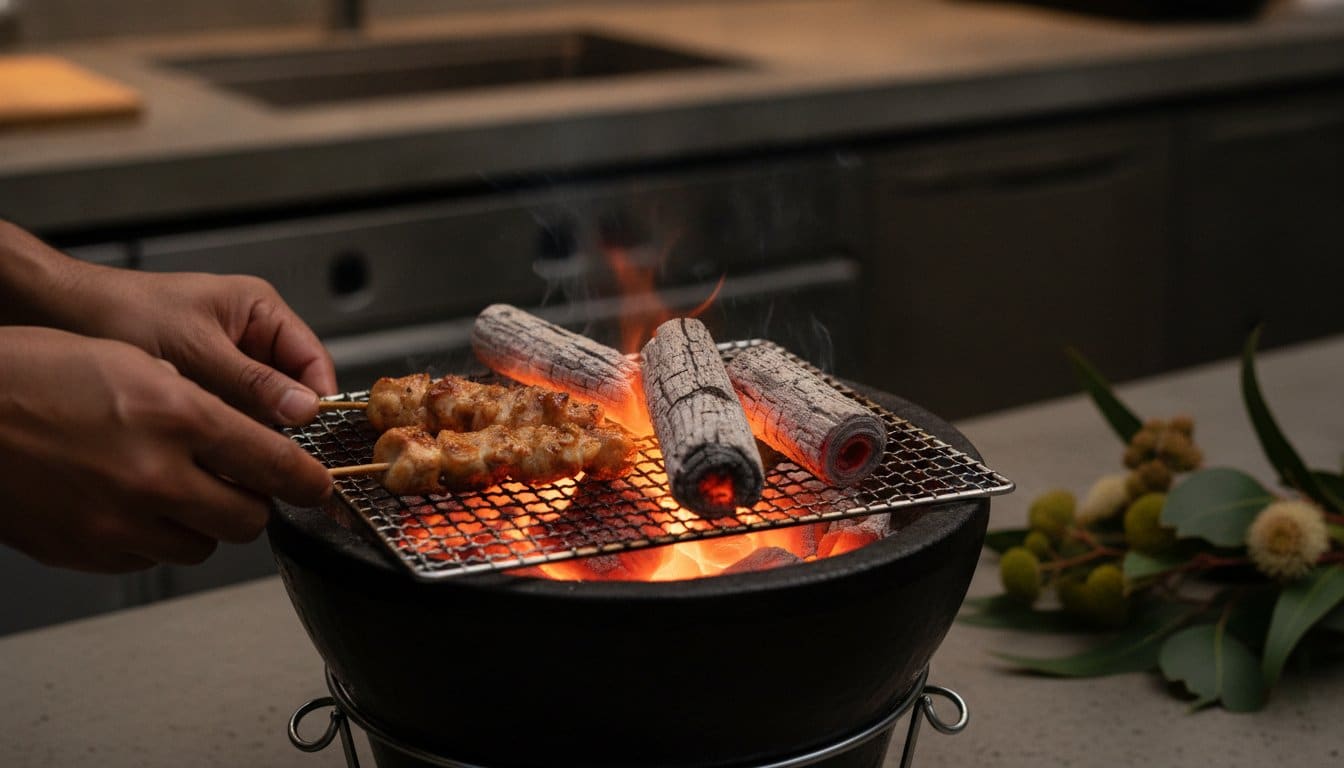
A piece of authentic Binchotan charcoal looks more like a branch of petrified wood than a standard briquette, and it rings with a distinct metallic chime when struck. This is not just fuel; it is a precision culinary tool engineered by centuries of Japanese tradition. If you have ever wondered what is binchotan charcoal, you are looking at the world’s purest burn. It is a high-performance material that reaches incredible temperatures without the acrid smoke or chemical additives found in cheap, low-grade alternatives.
You likely know the frustration of inconsistent heat or a fire that produces more soot than flavor. It is difficult to maintain the steady, high-intensity environment needed for perfect yakitori or a seared steak when your fuel is unpredictable. We understand that serious cooks demand reliability and performance over decorative flourishes. This guide breaks down the unique science of infrared heat and explains why this “white charcoal” remains the gold standard for professionals. You will discover how to identify authentic Kishu Binchotan by its official yellow sticker, understand why it requires a 90% carbon content to be effective, and learn how to use it efficiently so you never waste a single gram of this premium resource.
Key Takeaways
- Understand what is binchotan charcoal and how the traditional “white” cooling process creates a high-density fuel with a carbon content of 90% or higher.
- Learn how far-infrared radiation seals in moisture and cooks meat from the inside out for a cleaner, more intense flavor profile.
- Compare the performance metrics of Japanese White Charcoal, which provides a steady 4-6 hour burn time compared to the 1-2 hours of standard lump charcoal.
- Master the vertical lighting method using a charcoal chimney to achieve optimal airflow and consistent high-heat performance.
- Identify the specific characteristics of Kishu and Tosa grades to ensure you are using authentic, additive-free fuel for your culinary needs.
Defining Binchotan: The “White Gold” of Japanese Charcoal
Professional chefs and pitmasters often ask what is binchotan charcoal when they see its unique, branch-like appearance. It’s a high-carbon hardwood fuel sourced primarily from Japan. Unlike standard lump charcoal, this material is celebrated for its purity and incredible longevity. The most prized variety comes from the Ubame Oak (Quercus phillyraeoides) found in the Wakayama prefecture, historically known as Kishu. You can identify the highest quality pieces by striking them together; they produce a distinct metallic “ping” rather than a dull thud. This sound indicates a density similar to steel, which is a direct result of the extreme carbonization process.
The term “white charcoal” refers to the finish of the logs rather than the wood itself. At the end of the firing process, artisans pull the glowing charcoal from the kiln and immediately smother it in a mixture of sand, earth, and ash. This rapid cooling leaves a fine white dust on the surface. This technique prevents the charcoal from burning away and preserves its high-density structure. It also creates a surface that is hard enough to scratch glass, distinguishing it from the soft, brittle texture of common BBQ fuels.
The History of Kishu Binchotan
The craft dates back to the Genroku era in Tanabe, Wakayama. A craftsman named Bichu-ya Chozaemon popularized the fuel, which eventually took his name: Binchō-tan. Kishu remains the undisputed gold standard because of the region’s strict adherence to traditional kiln-building and harvesting methods. Master artisans spend decades perfecting the timing required to produce a product that burns for hours without smoke or odor. This historical consistency is why top-tier yakitori restaurants around the globe refuse to use any other fuel.
The Traditional Carbonization Process
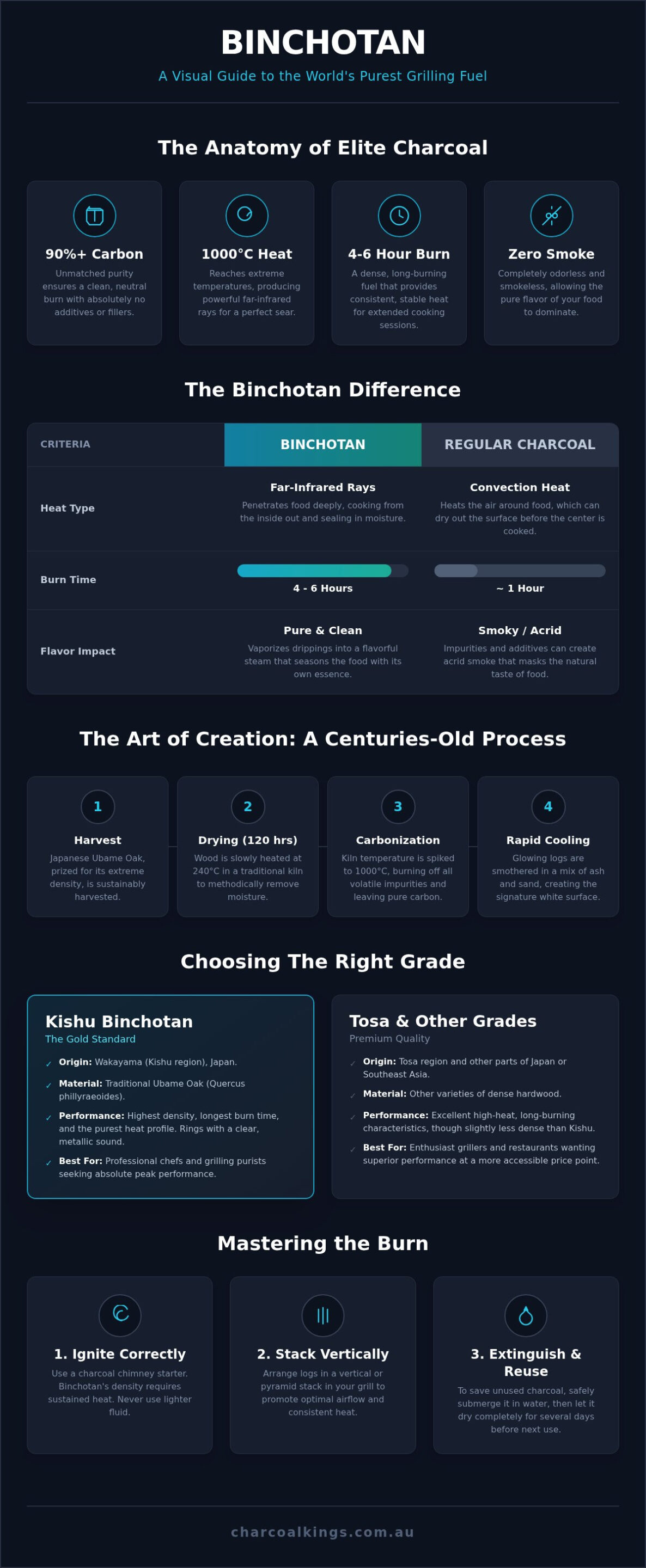
Creating this fuel is a test of patience and precision. It begins with a slow-burn stage where the wood stays at approximately 240°C for 120 hours. This initial phase removes moisture and begins the transformation of the raw oak. Once the wood is stable, the artisan opens the kiln vents to trigger a massive temperature spike, reaching upwards of 1000°C. This intense heat forces out any remaining volatile organic compounds. Carbonization is the process of stripping wood down to its purest carbon form. This purity is the defining answer to what is binchotan charcoal and why it outperforms every other solid fuel on the market. The result is a fuel that is nearly 95% carbon, ensuring a clean, odorless burn that won’t taint the flavor of your food.
The Purity of Infrared: How Binchotan Transforms Flavour
Binchotan is more than just a heat source. It is a precision tool that uses Far-Infrared Rays (FIR) to cook. While standard charcoal relies on convection, which is the movement of hot air around the food, Binchotan emits waves of energy that penetrate deep into the protein. This allows the meat to cook from the inside out. It seals in moisture and prevents the dry, uneven results common with cheaper fuels. If you are researching what is binchotan charcoal, you’ll find that its ability to maintain high surface temperatures while cooking the core of the meat is its greatest advantage.
The specialized kilns used in traditional Japanese coal-making ensure the wood is stripped of all resins and impurities. Because the finished product is nearly 100% carbon, there is zero acrid smoke produced during the burn. This creates a “Pure Flavour” environment. When natural juices or fats drip from the meat and hit the 1000°C coals, they vaporize instantly. This vapor carries the food’s own essence back into the protein. It enhances the natural taste without adding the bitter soot or resinous aftertaste associated with lower-grade coals.
Why Chefs Prefer Infrared Heat
Professional chefs choose infrared heat for its consistency and searing power. Standard briquettes often fluctuate in temperature, making it hard to time a perfect cook. Binchotan provides a steady, intense heat that can reach 1000°C. This allows for a perfect crust on the exterior without overcooking the center. Because the charcoal is odorless and tasteless, the quality of your ingredients remains the focus. There is no lingering chemical smell to mask the flavor of high-quality beef or seafood. You get the true taste of the ingredient, intensified by the clean heat of the coals.
Zero Additives, Zero Impurities
The Charcoal Kings promise is built on purity. Our Binchotan contains no chemicals, binders, or fillers. This is essential for health-conscious cooks who want to avoid inhaling synthetic byproducts during their BBQ sessions. Pure fuel also extends the life of your equipment. Without the corrosive additives found in cheap briquettes, your grill stays cleaner and lasts longer. The high-density structure of this charcoal also prevents the dangerous “popping” and sparking seen in low-quality lump charcoal. You get a controlled, predictable, and safe cooking experience every time. If you want to elevate your next cook, consider adding our premium Binchotan to your toolkit.
Binchotan vs. Regular Charcoal: Is it Worth the Investment?
When evaluating what is binchotan charcoal in a commercial or home setting, the primary metric is efficiency. Standard hardwood lump charcoal typically burns for one to two hours before losing its intensity. Binchotan, by contrast, offers a dense carbon structure that sustains a steady infrared output for four to six hours. This longevity means you spend less time refueling and more time managing the cook. The heat intensity is also far more consistent. While regular charcoal creates fluctuating convection heat that can lead to hot spots, Binchotan provides a uniform infrared field that stays at peak performance for the duration of your session.
The cleanliness of the burn is another critical factor. Binchotan contains almost zero volatile matter, which results in nearly zero ash production. Cheap briquettes often leave a thick layer of grey dust that can clog air vents and smother your fire. With white charcoal, the logs remain intact until they are completely consumed. This makes cleanup faster and ensures that your airflow remains unobstructed. If you value a precision environment for high-end ingredients, the performance gap between these fuels is impossible to ignore.
The “White” vs “Black” Charcoal Debate
In the world of BBQ fuels, “Black Charcoal” refers to standard lump charcoal. It is softer, easier to light, and provides the classic smokiness many associate with outdoor cooking. Black charcoal is the superior choice for low-and-slow smoking where you want the wood’s essence to permeate the meat. You can learn more about these traditional options in our guide to Lump Charcoal: The Pro’s Choice for Flavour. White charcoal, however, is designed for high-heat searing and clean, neutral cooking. It does not compete with the flavor of your rubs or sauces; it simply provides the purest heat possible.
Economic Value for the Home Cook
The upfront cost of Binchotan is higher than a standard bag of supermarket briquettes, but the cost-per-hour reality tells a different story. Because of its extreme density, a smaller volume of fuel produces more heat for a longer period. More importantly, Binchotan is reusable. Once you finish cooking, you can extinguish the coals by placing them in a ceramic pot or a specialized extinguishing bucket to cut off the oxygen. You don’t use water. These same coals can be relit for a second or even third BBQ session. This reusability makes it a practical investment for the serious hobbyist who wants master-craftsman results without wasting fuel. You get more sessions per bag and a significantly better culinary outcome every time.
Mastering the Burn: How to Light and Extinguish Binchotan
Lighting this fuel requires a different strategy than standard briquettes. Because of its extreme density and high carbon content, you cannot simply throw a match at it. To understand what is binchotan charcoal in a practical sense, you must treat it like a thermal battery that needs a slow charge. It does not ignite instantly, but once it catches, it provides a level of heat stability that regular lump charcoal cannot match. Follow these steps for a successful ignition:
- Step 1: Prepare a charcoal chimney starter. Place a bed of regular Hardwood Lump Charcoal at the bottom to act as a “starter” fuel.
- Step 2: Place your Binchotan logs vertically on top of the lump charcoal. This vertical alignment is essential to allow maximum airflow between the logs.
- Step 3: Ignite the base fuel. Wait approximately 20 to 30 minutes until the Binchotan logs are glowing red throughout.
- Step 4: Once fully ignited, move the coals to your grill. You are now ready for hours of intense, steady infrared heat.
The Golden Rule: No Chemical Starters
Never use liquid fire starters or chemical-laden briquettes to light your white charcoal. Binchotan has a microscopic porous structure that easily absorbs external odors. If you use petroleum-based starters, those chemicals permeate the logs and transfer directly to your food. Use natural wood wool or a high-powered gas torch for the cleanest start possible. Once tainted with chemicals, the purity of Binchotan is lost forever. This preservation of purity is the core reason chefs invest in this fuel. It ensures that the only flavor profile present is the natural essence of your ingredients.
Extinguishing and Reusing Your Coals
One of the most significant advantages of Binchotan is its reusability. When your cooking session ends, do not let the coals burn out on their own. You have two primary options for recovery. The first is the “Air-Tight Pot” method using a ceramic or metal extinguishing pot known as a Mekkeshi-tsubo. Placing the glowing logs inside and sealing the lid starves the fire of oxygen, stopping the burn almost instantly. Alternatively, use the “Water Dip” method. Use tongs to briefly submerge each log in a bucket of water, then set them in the sun to dry completely. Reusing Binchotan makes it more affordable than standard fuels because you can often get three full sessions from a single load. If you are ready to start your journey with professional-grade fuel, explore our range of authentic Binchotan Charcoal today and experience the difference in performance.
Choosing the Right Grade: Kishu, Tosa, and Beyond
Selecting the right variety is as important as understanding what is binchotan charcoal itself. While all white charcoal follows the high-temperature carbonization and rapid cooling method, regional differences in wood density and kiln techniques affect your cooking results. Kishu Binchotan remains the undisputed pinnacle of quality. Produced in the Wakayama prefecture, it features the highest carbon density and the longest burn time of any fuel on the market. If you are looking for the absolute gold standard for a professional kitchen, Kishu is the primary choice. Authentic Kishu logs are often identified by the Japanese Charcoal Cooperative’s yellow sticker, which guarantees the product’s origin and purity.
For home users or those who find Kishu difficult to ignite, Tosa Binchotan is an excellent secondary grade. Sourced from the Kochi prefecture, Tosa logs are slightly less dense. This makes them easier to light while still providing the intense infrared heat required for high-end BBQ. Hyuga Binchotan, originating from the Miyazaki prefecture, is another high-performance variety. It is particularly popular in commercial Konro setups because the logs are often harvested and cut to more consistent, uniform sizes. You can find these premium varieties in the Charcoal Kings selection of Binchotan Charcoal, ensuring your fuel is free from chemicals and additives.
Shapes and Sizes: Which Should You Buy?
Binchotan comes in several forms to suit different hardware. Long logs, known as Maru, are cylindrical and thick. These are the preferred choice for deep Konro grills and professional chefs who need a fire to last through an entire dinner service. Split logs, or Wari, are easier to stack and light, making them the practical option for home enthusiasts. If you are using a compact hibachi or simply need to top up an existing fire, small cuts provide the same infrared power in a more manageable size. Always match the log diameter to the depth of your grill to ensure proper airflow.
The Perfect Pairing: Binchotan and the Konro Grill
To maximize the benefits of this fuel, you must use the right hardware. Binchotan works best in a Diatomite Konro grill. These grills are made from ancient volcanic clay that acts as a powerful insulator. The clay walls reflect the charcoal’s far-infrared rays back toward the food, amplifying the searing power and efficiency of the burn. Using white charcoal in a standard thin-walled metal grill wastes a significant amount of energy. The combination of high-density carbon and Diatomite insulation creates the ultimate environment for precision cooking. For more information on choosing the right equipment for your setup, consult The Ultimate BBQ Buying Guide to find your perfect match.
Elevate Your Culinary Craft with Japanese White Charcoal
Understanding what is binchotan charcoal is the first step toward mastering the art of high-heat grilling. This fuel is not just carbonized wood. It is a precision-engineered tool that uses far-infrared radiation to cook with unmatched consistency. By choosing authentic Kishu or Tosa grades, you eliminate the acrid smoke and chemical impurities that ruin the flavor of high-quality ingredients. You now have the knowledge to light, extinguish, and reuse this “white gold” like a professional pitmaster.
This is a professional-grade investment that pays for itself through extreme burn times and the ability to reuse your coals. Purity is our core promise. We provide 100% natural, additive-free fuels for both retail and wholesale applications. Our expert team ensures reliable Australia-wide shipping so you can access the world’s finest charcoal regardless of your location. Shop Premium Binchotan Charcoal at Charcoal Kings and transform your next BBQ session into a masterclass in performance. It’s time to stop fighting your fuel and start focusing on the craft.
Frequently Asked Questions
Is Binchotan charcoal reusable?
Yes, Binchotan is highly reusable. If you are learning what is binchotan charcoal, you’ll find that its density prevents it from breaking down quickly. You can extinguish the logs after cooking and relight them for subsequent sessions. Use a ceramic extinguishing pot to cut off the oxygen supply or briefly submerge the logs in water and sun-dry them. This reusability significantly lowers the long-term cost compared to single-use briquettes. It remains a cost-effective choice.
How long does Binchotan charcoal take to light?
It typically takes 20 to 30 minutes to fully ignite Binchotan. Because of its extreme density, it requires a steady heat source to start. The most efficient method involves using a chimney starter with a bed of regular hardwood lump charcoal at the base. Once the logs glow red throughout, they are ready for the grill. Avoid chemical starters as they ruin the fuel’s purity and transfer unwanted odors to your food.
Can I use Binchotan in a regular Weber or Kamado grill?
You can use Binchotan in a Weber or Kamado, but it is optimized for Diatomite Konro grills. The insulation in a Konro reflects the infrared heat back into the food, maximizing efficiency. In a standard metal grill, much of this heat is lost through the thin walls. If you use it in a Kamado, ensure the charcoal is stacked vertically to maintain the necessary airflow for a consistent, high-intensity burn throughout the session.
Why does Binchotan charcoal “ping” or sound like glass?
The metallic “ping” is a hallmark of high-density carbonization. During the final stage of production, temperatures exceed 1000°C, stripping away all volatile matter and leaving a structure that is nearly as hard as steel. This density creates a ringing sound when logs strike each other. It serves as a reliable indicator of quality, distinguishing authentic Japanese white charcoal from softer, lower-grade alternatives. This sound confirms the fuel’s purity and superior performance metrics.
Does Binchotan charcoal produce smoke?
Authentic Binchotan produces zero smoke and is completely odorless. This is possible because the multi-day carbonization process removes all resins and impurities that typically cause smoke in regular charcoal. When you ask what is binchotan charcoal, the answer lies in this extreme purity. The only smoke you’ll encounter during a cook comes from the natural fats and juices of the meat vaporizing on the hot coals, which enhances the flavor of the food.
What is the difference between Kishu and Tosa Binchotan?
Kishu Binchotan is the highest grade, sourced from Ubame Oak in Wakayama. It has the highest density and longest burn time. Tosa Binchotan comes from the Kochi prefecture and is slightly less dense. While Kishu is the professional standard, Tosa is often preferred by home users because it is slightly easier to ignite while still providing intense infrared heat. Both varieties offer a clean burn without the additives found in standard BBQ fuels.
Is Binchotan charcoal safe for indoor use?
While Binchotan is smoke-free, it still produces carbon monoxide. It is only safe for indoor use in commercial kitchens equipped with high-powered, professional ventilation systems designed for charcoal cooking. Home users must always use Binchotan in well-ventilated outdoor areas. Never use any charcoal in an enclosed space without proper extraction, as carbon monoxide is odorless and potentially lethal. Safety remains the priority for any serious cook using high-performance solid fuels.
Why is Japanese Binchotan so much more expensive than other charcoals?
The price reflects the labor-intensive artisan process and the scarcity of the raw materials. Producing a single batch takes up to ten days of constant monitoring by a master craftsman. The use of slow-growing Ubame Oak and the high-temperature firing process results in a fuel that burns three times longer than regular charcoal. When you factor in its reusability, the cost per hour becomes comparable to premium hardwood lump charcoal for most users.