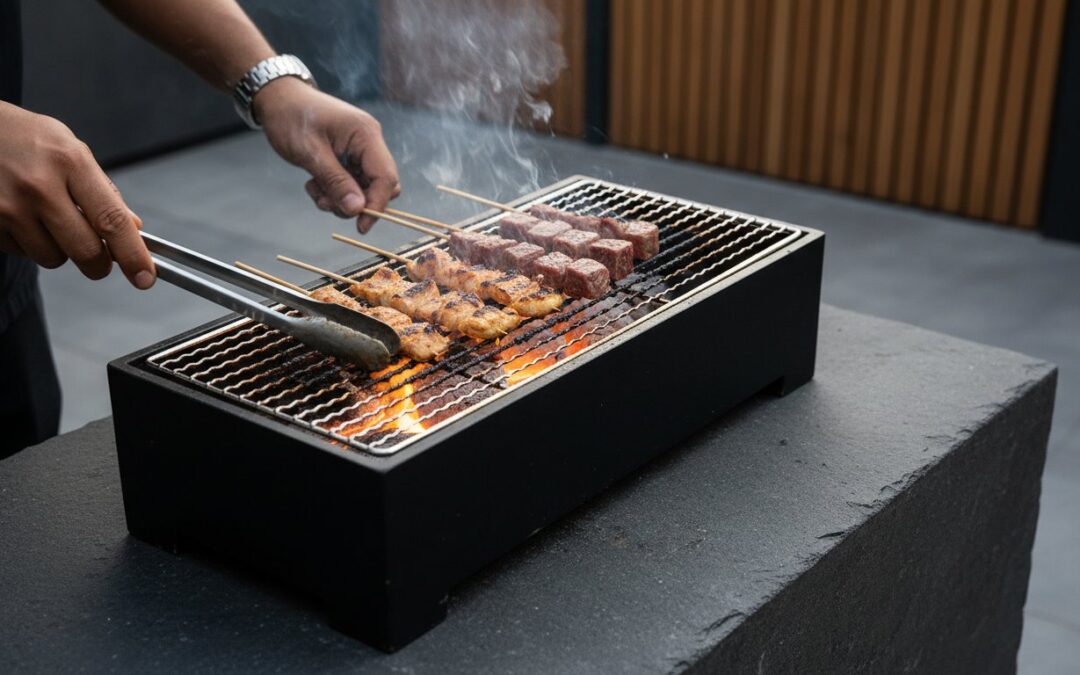
Forget the theatrical flair of a teppanyaki cooktop. The authentic Japanese hibachi is a different beast entirely-a compact powerhouse designed for one purpose: achieving an unparalleled, high-heat sear. Understanding the traditional hibachi grill and its capabilities is the first step. The second, and most crucial, is pairing it with the right fuel. Many aspiring grill masters are left with subpar results, simply because they haven’t unlocked the secret to generating pure, intense, and consistent heat in a small space.
This is where premium Binchotan charcoal enters the picture. This is no ordinary fuel; it’s a dense, natural hardwood charcoal that burns incredibly hot, clean, and long. In this guide, we provide the straightforward facts you need. You will learn what defines a true hibachi, why Binchotan is the superior choice for performance, and how to master the techniques to unlock incredible flavour in everything from classic yakitori to premium Aussie steak. It’s time to get the right gear and achieve a professional-grade sear.
What is a True Hibachi Grill? History and Modern Use
When you hear “hibachi,” you might picture a chef theatrically flipping food on a large, flat steel grill. That’s teppanyaki. A true Japanese hibachi (火鉢, or “fire bowl”) was traditionally a heating device, not a cooking appliance. It was an open-topped container, often made of ceramic, designed to hold burning charcoal and warm a room. Over time, this concept evolved into the compact, high-performance cooking tool we use today.
To see how these powerful little grills work, watch this video:
The modern cooking version is more accurately called a Konro or Shichirin. These grills are prized for their compact size, open grate design, and ability to produce incredibly focused, high heat. Understanding the authentic hibachi grill and its construction is key to unlocking a superior grilling experience, especially for yakitori, seafood, and thin cuts of meat.
Hibachi vs. Konro vs. Shichirin: Clearing Up the Confusion
In Japan, the correct term for these small charcoal cooking boxes is Konro or Shichirin. However, in Australia and across the Western world, “hibachi” has become the common name. Regardless of the label, the function is the same: a small, portable, and powerful charcoal grill designed for direct, high-heat cooking. Its open grate allows fats to drip down, creating the signature smoky flavour that defines this style of barbecue.
The Magic of Diatomaceous Earth Construction
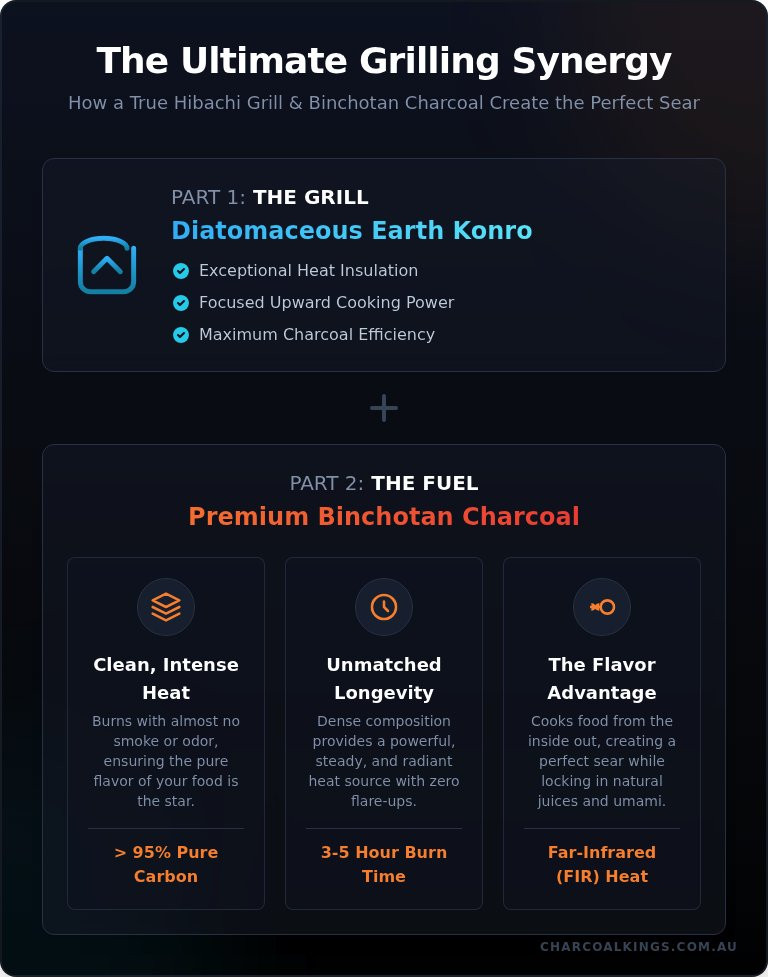
Premium Konro grills are not made from simple ceramic or metal. They are crafted from diatomaceous earth (keisodo), a porous, naturally occurring material made from fossilised algae. This material is a game-changer for charcoal grilling. Its microscopic pores trap air, providing incredible insulation that reflects heat back up towards the cooking grate. This superior heat retention is why they pair perfectly with premium fuels like Binchotan charcoal.
This construction delivers unmatched performance:
- Exceptional Heat Insulation: The exterior of the grill stays cool, making it safer to use on a tabletop while directing all energy upwards.
- Focused Cooking Power: Heat is concentrated directly on the food, searing it quickly and locking in juices.
- Charcoal Efficiency: The insulation means you need less charcoal to achieve and maintain scorching-hot temperatures for longer.
The Perfect Fuel: Why Binchotan is Essential for Hibachi Grilling
A premium hibachi grill is an investment in flavour. Fuelling it with cheap briquettes or inconsistent lump charcoal is like putting standard unleaded in a high-performance engine-it simply won’t deliver. Binchotan is the traditional, natural hardwood charcoal of Japan, crafted specifically for this style of cooking. It’s not just an option; it’s the essential component. The insulated ceramic body of a hibachi grill and the unique properties of Binchotan charcoal work together to create a cooking experience that standard grilling cannot replicate.
The Science of Clean, Intense Heat
True Binchotan boasts an incredibly high carbon content, often exceeding 95%. This purity is the secret to its performance. It burns with almost no smoke or odour, ensuring that the only thing you taste is the food itself-not the fuel. Unlike briquettes loaded with chemical binders, this 100% natural fuel provides a clean heat that allows the delicate flavours of wagyu, seafood, and vegetables to remain the hero of the dish.
Unmatched Longevity and Consistent Temperature
Forget constantly topping up your fuel. Binchotan is incredibly dense, giving it a burn time of three to five hours from a single lighting. This density provides a powerful, steady, and radiant heat source with zero flare-ups, giving you complete control over the cooking process. When you’re finished, simply extinguish the coals by submerging them in water and let them dry. They can be relit and used again, delivering maximum value from a premium product.
The Flavour Advantage: Far-Infrared Heat
This is where Binchotan truly separates itself from all other fuels. It burns so hot and clean that it releases far-infrared (FIR) radiation. This type of heat penetrates the food, cooking it quickly from the inside out. This process creates a perfect sear on the exterior, locking in natural juices and umami flavours instantly. It’s this unique cooking method that top yakitori chefs rely on and why Binchotan is frequently associated with the best charcoal grills on the market for achieving professional results.
How to Set Up and Use Your Hibachi Grill Like a Pro
Mastering your hibachi grill and its unique fuel source is simple with the right technique. Unlike a standard BBQ, a hibachi offers direct, intense heat that requires precision. This guide provides the no-nonsense steps to go from beginner to pro, ensuring a safe and flavourful cook every time.
Lighting Binchotan: The Right Way
Premium Binchotan charcoal is incredibly dense and pure, which is why it burns so cleanly and for so long. Due to its unique structure-a result of traditional Japanese production (you can learn more about what is Binchotan charcoal here)-it requires a dedicated lighting method. Forget lighter fluid; it will ruin the charcoal’s purity and taint your food. The only professional method is a charcoal chimney starter.
- Fill the chimney with Binchotan and light it from below with natural firelighters.
- Be patient. It will take 20-30 minutes to light fully.
- Look for the key visual cue: the coals will be glowing a brilliant, uniform orange.
Arranging Coals and Managing Heat
Once your Binchotan is lit, carefully transfer the glowing coals into your hibachi. Heat management is about coal placement and airflow. For total control, create a two-zone fire:
- Hot Zone: Stack coals two or three layers deep on one side of the grill. This creates an intense heat source perfect for searing steaks or vegetables.
- Cooler Zone: Arrange a single layer of coals on the other side. Use this area for gentler cooking or to keep food warm without overcooking.
Use the ventilation slides on your hibachi to fine-tune the temperature. Opening them increases oxygen flow for higher heat, while closing them dampens the flame and lowers the temperature.
Essential Safety and Post-Cook Care
Safety is non-negotiable when using a hibachi grill. The intense heat and carbon monoxide emissions demand respect. Follow these critical rules:
- NEVER Indoors: Do not operate your hibachi indoors, in a garage, or in any enclosed space without professional-grade extraction. The risk of carbon monoxide poisoning is severe.
- Stable Surface: Always place the grill on a sturdy, heatproof surface like concrete or stone, well away from flammable objects.
- Extinguish Properly: To extinguish Binchotan for reuse, cut off its oxygen supply. Carefully transfer the hot coals into a ceramic extinguishing pot or a metal bucket with a tight-fitting lid. Do not use water, as the thermal shock can crack your ceramic grill.
Ready to get started? Find the perfect Binchotan and chimney starter here.
What to Cook on a Hibachi: From Classic Yakitori to Modern BBQ
The compact size of a hibachi grill is deceptive. Its true potential is unlocked by the intense, direct heat it produces, especially when powered by premium Binchotan. The combination of a traditional hibachi grill and high-performance charcoal delivers unparalleled searing power and clean flavour, making it a versatile tool for far more than just simple skewers. From delicate seafood to hearty steaks, the hibachi excels at cooking ingredients that benefit from a fast, powerful cook.
The Ultimate Yakitori and Skewers
The long, narrow shape of a hibachi is purpose-built for yakitori. Skewers can rest perfectly across the grill, allowing for precise control and even cooking. Classics like Negima (chicken and spring onion) and Tsukune (chicken meatballs) are staples for a reason. For an authentic finish, brush your skewers with tare sauce multiple times during the final moments of grilling to build up a sweet, savoury glaze.
Searing Steaks and Seafood
The incredible radiant heat from Binchotan charcoal is exactly what you need for a perfect steak crust. The intense, direct energy sears the surface instantly, locking in juices without overcooking the interior. This same principle applies to seafood. Prawns, scallops, and fatty fish like salmon or mackerel cook in minutes. The clean, smokeless burn of Binchotan is crucial here, as it preserves the delicate flavour of the seafood without imparting any bitter taste.
Grilling Vegetables to Perfection
Don’t overlook vegetables. The high heat of a hibachi rapidly caramelizes their natural sugars, creating a delicious char and tender-crisp texture. This method works brilliantly for:
- Asparagus spears
- Strips of capsicum
- Corn on the cob (cut into rounds)
- Whole shiitake or king oyster mushrooms
Pro Tip: Create a simple miso butter glaze by melting 2 tablespoons of butter with 1 tablespoon of white miso paste. Brush it over your vegetables during the last minute of cooking for an incredible umami boost. The right fuel makes all the difference, so ensure your hibachi grill and its contents are powered by the best. Find your premium Binchotan charcoal at Charcoal Kings.
Master the Flame: Your Hibachi Journey Begins Now
You now have the knowledge to embrace the authentic art of Japanese grilling. The key takeaways are simple but powerful: a true hibachi is a compact, open-grate grill, and its perfect partner is premium Binchotan charcoal. Mastering your hibachi grill and the clean, consistent heat of Binchotan unlocks intense, smoky flavours in everything from classic yakitori to premium steaks. It’s about precision, quality, and tradition, all focused on creating an unforgettable culinary experience.
As Australia’s trusted supplier of premium, natural hardwood charcoal, Charcoal Kings is the expert source for your grilling needs. We provide the authentic fuel and expert advice relied on by retail, wholesale, and food service customers across the country. Ready to elevate your cooking and experience the difference quality makes? Get Sizzlin’! Shop our premium Binchotan charcoal and hibachi grills.
Fire up the coals and bring the taste of authentic Japanese BBQ to your home.
Frequently Asked Questions
Can I use regular lump charcoal or briquettes in a hibachi grill?
You can, but for superior results, we recommend against it. Standard briquettes often contain chemical binders and fillers that produce excess ash and can impart an unwanted flavour to your food. While natural lump charcoal is a better alternative, it burns hotter and faster than Binchotan. For the controlled, clean heat that a hibachi grill is designed for, premium Binchotan charcoal is the only choice for an authentic, pure-tasting result.
Is a hibachi grill safe to use on a wooden deck or balcony?
No. A diatomite hibachi grill radiates significant heat downwards and can easily scorch or ignite a wooden surface. Always place your grill on a non-combustible base like concrete pavers or a specialised heat-proof mat. Ensure adequate ventilation and never leave the grill unattended. Safety is non-negotiable when dealing with live fire, especially on balconies where local council or strata rules may apply. Check your local regulations before use.
How do I clean a diatomite hibachi grill after cooking?
Never use water to clean a diatomite hibachi. The porous material will absorb the liquid and can crack upon the next use. After the grill is completely cool, simply tip it upside down to empty out the ash and Binchotan remnants. Use a small, stiff brush to sweep out any remaining dust from the interior and vents. The exterior can be wiped with a dry cloth to remove soot. This simple process preserves the integrity of the grill.
What are the essential accessories I need for my hibachi grill?
To get the best performance from your hibachi, a few key tools are essential. You will need a charcoal chimney starter for clean and efficient lighting of your Binchotan. A set of long, high-quality metal tongs is crucial for handling both the hot charcoal and your food. We also strongly recommend a heat-resistant base for safety and a set of metal skewers (kushi) for authentic yakitori-style cooking. These tools provide the control you need for a premium grilling experience.
How is a hibachi different from a small Weber or portable BBQ?
The primary difference lies in material and heat delivery. A hibachi grill and its traditional construction from diatomaceous earth provides superior insulation, radiating intense, consistent infrared heat. This sears food quickly, locking in juices without the smoky flavour produced by a lidded kettle BBQ, which cooks more with convection. A hibachi offers a direct, clean heat source designed for precise cooking of smaller cuts of meat and vegetables, delivering a fundamentally different result.
Is Binchotan charcoal worth the extra cost?
Absolutely. While the initial A$ price is higher, premium Binchotan is an investment in quality and performance. It burns for three to five hours, far longer than standard charcoal, and maintains an incredibly steady temperature. Its clean, smokeless burn ensures you taste the food, not the fuel. Because Binchotan can be extinguished and reused, a single bag offers superior value over time. For authentic hibachi cooking, there is no substitute for its unmatched purity and efficiency.