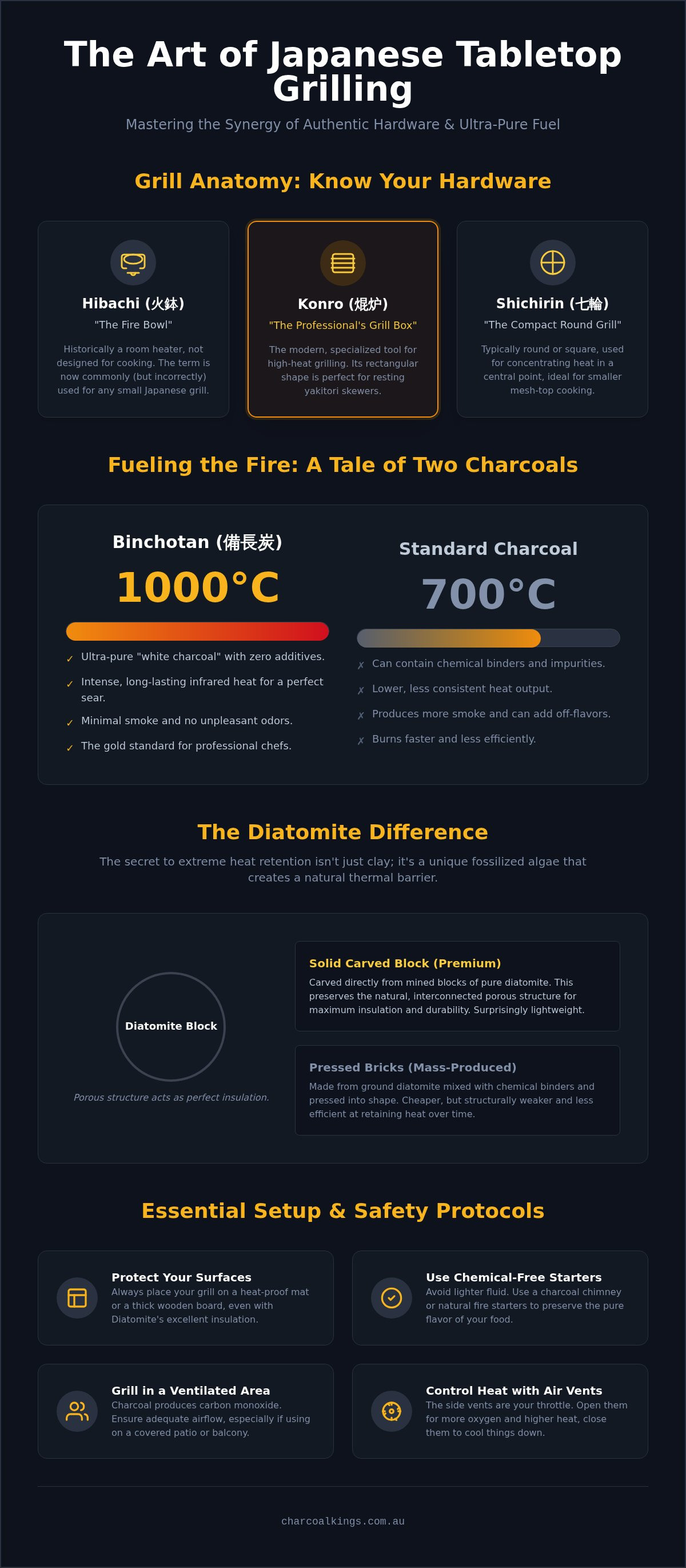
Standard charcoal burns at roughly 700°C, but authentic Binchotan reaches a staggering 1000°C. This intense heat is the secret behind the perfect sear, yet it’s also why many beginners fear damaging their furniture. Understanding the connection between a professional hibachi grill and its fuel is the first step toward safety and ELITE performance.
You’ve likely felt the frustration of confusing terminology like Hibachi, Konro, and Shichirin while struggling to get consistent results. We agree that the hardware matters just as much as the fuel. This article will help you master the art of Japanese tabletop grilling by explaining the essential relationship between authentic hardware and the purity of BINCHOTAN.
This guide provides a clear understanding of hardware requirements, specifically focusing on why DIATOMITE insulation is a game changer for heat management. You’ll learn the technical differences between various grill styles and gain the confidence to host a tabletop session that rivals any high-end restaurant. It’s time to move past cheap supermarket alternatives and embrace the rugged reliability of professional-grade tools.
Key Takeaways
- Identify the technical differences between a traditional Hibachi “fire bowl” and the Konro “grill box” to choose the correct hardware for your needs.
- Learn why authentic Diatomite construction is the gold standard for thermal efficiency and protecting your surfaces from extreme temperatures.
- Understand the performance gap between standard charcoal and Binchotan, the ultra-pure “white charcoal” favored by professional chefs.
- Master the essential safety protocols for your hibachi grill and fuel setup, including the use of heat-proof bases and chemical-free lighting methods.
- Discover why professional-grade hardware and 100% natural fuel with zero additives are the only way to achieve consistent, restaurant-quality results at home.
What is a Hibachi Grill and How Does it Differ from Konro?
Most people use the word Hibachi to describe any small Japanese grill. This is technically incorrect. Historically, a Hibachi was a traditional Japanese heating vessel, essentially a “fire bowl” used for warming rooms. It wasn’t designed for cooking. The modern tool you see in professional kitchens is actually a Konro, a specialized “grill box” built for high-heat endurance. Over time, the term Hibachi became the global shorthand because it was easier for Western markets to identify than Konro or Shichirin. Despite the linguistic shift, the core purpose remains the same: high-performance, tabletop cooking with unmatched thermal efficiency.
A professional-grade Konro consists of three core components that work in synergy:
- Insulated Body: Typically made from DIATOMITE for maximum heat retention and exterior safety.
- Charcoal Grate: A heavy-duty internal grate that allows oxygen to flow beneath the fuel for a consistent burn.
- Mesh Wire Top: A stainless or chrome-plated surface designed for direct cooking.
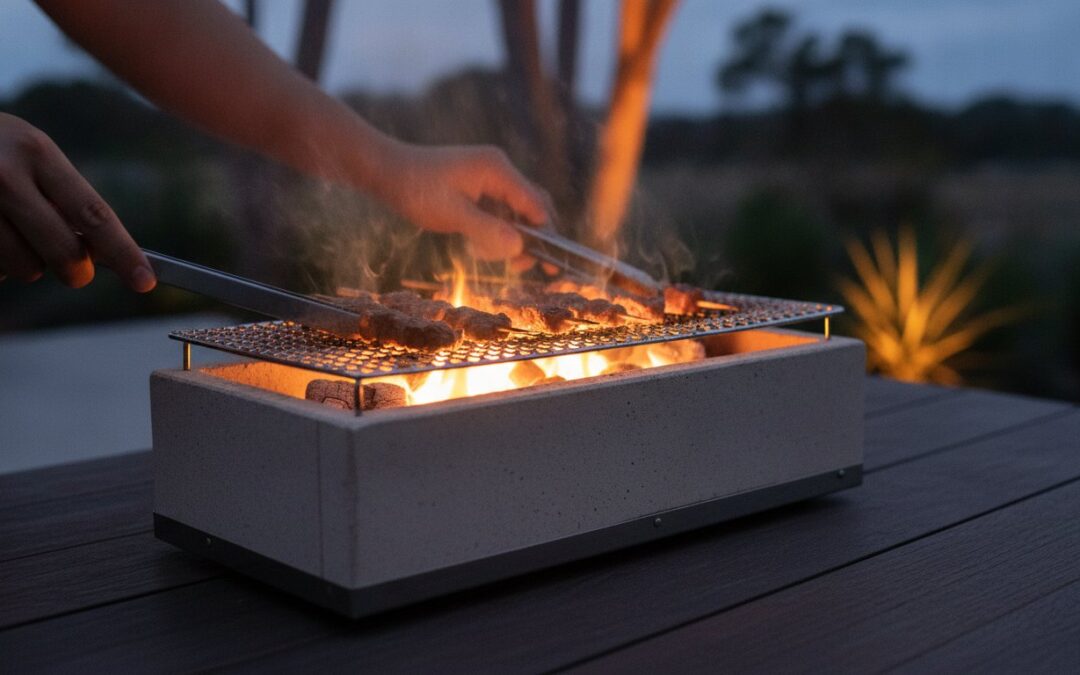
Pairing a high-performance hibachi grill and BINCHOTAN charcoal is the gold standard for yakitori. This combination ensures the meat sears instantly without the hardware cracking under the pressure of intense infrared heat. It’s the ultimate setup for anyone serious about Japanese BBQ.
Hibachi vs. Konro vs. Shichirin
Shape dictates function in the world of Japanese BBQ. A Konro is typically rectangular. This design is intentional. It allows long yakitori skewers to rest across the edges without falling into the coals. A Shichirin is the round counterpart. It’s often used for smaller, circular mesh grates where the heat needs to be concentrated in a central point. In a professional kitchen, the rectangular Konro is the workhorse. It maximizes the cooking surface area for high-volume service and provides more uniform heat across the entire grate. Choosing the right shape depends on your specific menu requirements.
The Evolution of Tabletop Grilling
These tools have transitioned from ancient heating vessels into modern culinary icons. Early versions were often made of cast iron or clay. These materials were heavy and prone to heat loss. The shift to DIATOMITE changed the industry. This fossilized algae material provides superior insulation. It allows the exterior to remain manageable while the internal temperature reaches up to 1000°C. Modern Australian BBQers appreciate this rugged simplicity. You don’t need complex dials or gas lines. The synergy between a hibachi grill and premium BINCHOTAN is what separates a hobbyist from a master. You only need pure fuel and a well-insulated box to achieve restaurant-quality results every time.
The Science of Diatomite: Why Material Matters
Diatomite isn’t just common clay. It’s a sedimentary rock composed of the fossilized remains of microscopic algae called diatoms. This material possesses a unique, highly porous structure. These millions of tiny air pockets act as a natural thermal barrier. It’s the reason a professional hibachi grill and its high-carbon fuel can reach extreme internal temperatures without melting through your dining table. Without this specific geological composition, the intense infrared heat would dissipate too quickly or destroy the hardware itself.
The manufacturing process determines the grill’s lifespan and performance. Artisans in specialized regions mine solid blocks of diatomite and carve them directly into shape. This preserves the natural, interconnected structure of the stone. In contrast, mass-produced versions use ground diatomite pressed into bricks with chemical binders. These are cheaper but lack the structural integrity of a solid-carved unit. You can identify quality by weight and texture; solid block grills are surprisingly light for their size because of the air trapped within the stone, and they feel like a single, cohesive piece of earth.
Thermal Insulation and Safety
Diatomite is a natural thermal barrier used in high-end Japanese grills. It keeps the exterior at a temperature that won’t cause structural failure in the surface beneath it. You should still use a heat-proof mat or wooden board for absolute safety, but the material does the heavy lifting. The air vents on the side serve as the manual throttle for your Binchotan charcoal. By opening or closing these vents, you control the oxygen flow and the burn rate of the fuel with precision.
Solid Block vs. Pressed Diatomite
Serious chefs demand solid block construction for its superior longevity. It resists the thermal shock of repeated high-heat sessions better than pressed bricks. Over time, pressed bricks often crumble as the artificial binders fail under stress. A solid block grill develops a seasoned patina and maintains its insulating properties for years of service. If you’re looking for professional-grade gear that lasts, explore the premium hardware collection at Charcoal Kings.
Durability in the Australian climate requires specific care. Diatomite is porous. It absorbs water. If you leave it in the rain or store it in a damp shed, the moisture trapped inside will turn to steam when you light the grill. This causes the stone to crack or even explode. Always store your grill in a dry area. Never wash it with water; simply brush away the ash once the unit has cooled completely. This no-nonsense maintenance routine ensures your investment remains a reliable tool for a lifetime of grilling.
Fueling the Fire: Binchotan vs. Standard Charcoal
Binchotan is the undisputed choice for professional chefs. Often called “white charcoal” due to its metallic sheen and high density, it represents the pinnacle of fuel performance. While standard lump charcoal serves general purposes, authentic Binchotan contains over 95% carbon. This extreme purity is achieved through traditional Japanese coal-making techniques involving slow carbonization followed by rapid cooling with a mixture of sand, earth, and ash. The result is a fuel that’s virtually smokeless and odorless.
Purity is our core promise. Standard supermarket fuels often contain chemical binders, fillers, or mineral additives that taint the flavor of your food. Binchotan is 100% natural wood energy. It produces zero acrid smoke and minimal ash, allowing the natural juices of the meat to provide the seasoning. The synergy between a hibachi grill and Binchotan charcoal creates a cooking environment that standard briquettes cannot replicate. For a deep dive into technical specifications, read our Ultimate Guide to Japanese White Charcoal.
The Benefits of High Infrared Heat
Binchotan generates intense INFRARED heat. Unlike the convection heat produced by standard charcoal, infrared energy penetrates the food deeply and evenly. This seals in moisture instantly. It prevents the “charred wood” bitterness associated with inferior fuels. Longevity is another critical factor. High-quality Binchotan has a burn time of approximately 4-5 hours. Standard coal typically expires after 60 minutes. This sustained heat allows for long, consistent sessions without the need to constantly reload your grill.
When to Use Premium Hardwood Lump
Premium hardwood lump charcoal is a viable alternative for shorter sessions. It lights faster than Binchotan and provides excellent heat for quick midweek meals. We maintain a strict purity standard even with our lump varieties. Charcoal Kings Hardwood Lump is 100% natural and free from chemical additives. It’s a massive step up from supermarket briquettes that rely on petroleum-based starters. If you’re looking for a balance between speed and quality, learn why this is the pro’s choice for flavour. Choose your fuel based on the duration of your cook, but never compromise on the absence of additives.
How to Use a Hibachi Grill: Setup and Safety
Operating a professional-grade hibachi grill and its high-carbon fuel requires a disciplined approach. You’re managing temperatures that can exceed 1000°C. Success depends on following a precise sequence to protect your hardware and ensure the purity of your cook. This isn’t a standard backyard BBQ; it’s a precision tool that demands respect for the craft.
- Step 1: Prepare the Base. Diatomite provides excellent insulation, but heat transfer still occurs over long sessions. Always place your grill on a thick wooden board or a dedicated heat-proof mat. This prevents scorching stone or timber tabletops and protects the surface from stray sparks.
- Step 2: Light the Charcoal. Use a chimney starter or a portable gas burner. Never use lighter fluid or chemical firestarters. These additives produce acrid smoke that lingers in the porous Diatomite and ruins the flavor profile of premium Binchotan.
- Step 3: Manage Air Vents. The sliding doors at the base of the grill act as your throttle. Open them fully to increase oxygen and boost the infrared output. Close them partially to stabilize the temperature for delicate seafood or thin-sliced vegetables.
- Step 4: Extinguish and Reuse. Binchotan is a high-value fuel that can be reused if handled correctly. Use a ceramic extinguishing pot to starve the coals of oxygen. Alternatively, dunk individual pieces in water and allow them to dry completely in the sun before the next use.
Lighting Binchotan: The Pro Method
Chemical starters have no place in a Japanese grill setup. They leave a residual film on the stone and impart a chemical taste to the meat. The most efficient method is using a chimney starter over a clean flame. Binchotan requires 20 to 30 minutes of direct flame to ignite due to its extreme density. Once the edges of the charcoal glow red and a light grey ash begins to form, it’s ready for the grill box.
Safety and Indoor Use Warnings
Carbon monoxide is an odorless, lethal gas produced by burning charcoal. Ventilation is non-negotiable. If you’re cooking indoors, you must have a high-volume commercial extraction hood. For home users, we recommend outdoor sessions or semi-enclosed spaces with constant airflow. Protect your investment by keeping the unit dry. Diatomite is a porous material that will crack if heated while damp. Store your hardware in a dry environment to maintain its structural integrity. If you need professional-grade accessories to complete your setup, shop the Charcoal Kings range for gear that meets our standards for purity and performance.
Selecting Your Setup: Charcoal Kings Recommendations
General hardware stores sell generic solutions. For authentic Japanese grilling, you need hardware built for specific thermal loads. A specialist supplier understands the relationship between a professional hibachi grill and the extreme infrared output of Binchotan. We source gear that withstands 1000°C sessions without structural failure. Choosing the right size is your first decision. A small tabletop unit is ideal for intimate sessions, camping, or couples. Larger catering-size Konro units are the standard for high-volume yakitori service and commercial kitchens where surface area is critical for workflow. Professional setups require the durability of solid-carved Diatomite to handle the rigours of daily service.
Essential accessories define your efficiency. Heavy-duty stainless steel skewers are non-negotiable for yakitori to prevent spinning and uneven cooking. You also need long-reach charcoal tongs to manage the fuel safely without exposing your hands to intense heat. A high-quality grill brush ensures your mesh remains clean between courses. The Charcoal Kings promise is simple: we provide purity, performance, and Australian expertise. We don’t deal in chemical-laden fuels or flimsy supermarket grills. Our focus is on the primal nature of the craft and providing the rugged tools required to master it.
The Starter Kit Essentials
Pairing your grill with the correct grade of Binchotan is essential for performance. Entry-level users should start with mid-grade white charcoal for a balance of lighting speed and burn time. Maintenance is the key to longevity. You should invest in a high-quality BBQ scraper to remove carbon buildup without damaging the mesh top. For our local Adelaide customers, we invite you to visit our Holden Hill SA stockist. Seeing the hardware in person helps you appreciate the weight and texture of genuine Diatomite construction before you commit to a purchase.
Wholesale and Commercial Solutions
We support the Australian food service industry with reliable, bulk fuel supplies. Purity is a commercial requirement; restaurant guests can taste the difference when you use fuel with zero additives. We also facilitate custom orders for venues requiring specific dimensions or fleet setups. If you are looking to elevate your restaurant’s output with authentic Japanese hardware, contact the Kings for expert advice. We provide the technical support and high-performance fuel needed to maintain a professional yakitori line. Our operation is built on large-scale reliability and a deep passion for the utility of the product. Grab your gear and get grilling.
Master the Art of Professional Tabletop Grilling
Success in Japanese BBQ relies on the precise synergy between hardware and fuel. You now understand that while “Hibachi” is the common name, the rectangular Konro is the true workhorse for serious yakitori. Authentic DIATOMITE construction provides the thermal barrier needed to handle extreme temperatures while protecting your surfaces. This material is the foundation of a reliable setup that lasts for years of consistent service.
Purity remains the non-negotiable standard for any master of the craft. The relationship between a professional hibachi grill and premium BINCHOTAN ensures a clean, smokeless burn that standard supermarket fuels cannot match. As a Premium Hardwood Charcoal Specialist based in South Australia, we focus on providing 100% natural products with no chemical additives or binders. This commitment to quality ensures that the natural flavor of your ingredients is never compromised by acrid smoke or mineral fillers.
It’s time to move past decorative flourishes and embrace the rugged reliability of professional-grade tools. Upgrade your BBQ game with authentic Japanese Grills and Binchotan Fuel and experience the difference that expert-grade hardware makes. Take control of your heat and start your journey toward restaurant-quality results today. Grab your gear and get grilling.
Frequently Asked Questions
Can I use a Hibachi grill indoors?
Indoor use requires professional-grade ventilation systems. Charcoal combustion produces carbon monoxide, which is lethal in enclosed spaces without high-volume extraction. For residential users, we strictly recommend outdoor use or semi-enclosed areas with constant airflow. Never operate a hibachi grill and charcoal setup in a standard kitchen without a commercial hood. Safety is non-negotiable when dealing with high-carbon fuel and open flames. Always prioritize ventilation to ensure a safe cooking environment.
How do I clean a Japanese Diatomite grill?
Never use water to clean a Diatomite grill. This material is highly porous and will absorb moisture, leading to structural cracks when heated. Once the unit has cooled completely, use a dry brush to remove ash from the internal chamber. Wipe the exterior with a damp cloth if necessary, but ensure no water penetrates the stone. Proper maintenance ensures your hardware remains a reliable tool for professional-grade results and long-term durability.
Why is Binchotan charcoal so expensive compared to regular coal?
Binchotan is a premium product due to its complex manufacturing process and high carbon content. It requires slow carbonization followed by rapid cooling, a process that takes weeks rather than days. This results in a fuel that reaches 1000°C and burns for up to 5 hours. You use less fuel per session compared to standard lump charcoal. The absence of additives and superior infrared output justifies the investment for serious chefs and enthusiasts.
How long does a Hibachi grill take to heat up?
A Konro grill takes approximately 20 to 30 minutes to reach cooking temperature. This duration depends on the ignition time of your fuel. Binchotan is extremely dense and requires a sustained flame from a chimney starter to ignite fully. Once the coals are glowing red and placed inside the insulated body, the Diatomite walls begin to radiate infrared heat almost immediately. Efficiency comes from patience during the lighting phase to ensure consistent heat.
Can I use regular wood or briquettes in a Konro?
You can use high-quality hardwood lump charcoal, but avoid supermarket briquettes. Briquettes often contain chemical binders and mineral fillers that produce acrid smoke and foul odors. These additives can penetrate the porous Diatomite walls, permanently tainting the flavor of your food. We recommend 100% natural fuel to maintain the purity of your hibachi grill and cooking surface. Using pure fuel protects your investment and ensures superior flavor profiles for every session.
Do I need to season my Hibachi grill before the first use?
No seasoning is required for a Japanese Diatomite grill. Unlike cast iron, these stone units are ready for use immediately after assembly. Ensure the internal grate is seated correctly and the air vents move freely before lighting your first batch of charcoal. The material will naturally develop a seasoned patina over time as it’s exposed to high heat and natural oils. Focus on dry storage rather than complex surface preparation before your first cook.
What is the best way to put out Binchotan charcoal?
The most efficient method is using a ceramic extinguishing pot to starve the coals of oxygen. This allows you to reuse the fuel in your next session. If a pot is unavailable, you can dunk individual pieces in a bucket of water using tongs. Once extinguished, the charcoal must dry completely in the sun for several days before relighting. Never leave burning coals inside the grill box to expire naturally; this wastes high-value fuel.
How many people can you feed with a standard 31cm Hibachi?
A 31cm grill is designed for intimate sessions of 2 to 4 people. This size provides enough surface area for several skewers or small cuts of steak to cook simultaneously. For larger groups or commercial catering, we recommend moving to a 54cm or 77cm Konro unit. Selecting the correct size ensures a consistent workflow without crowding the mesh top. Match your hardware to your expected guest count for maximum efficiency and heat control.