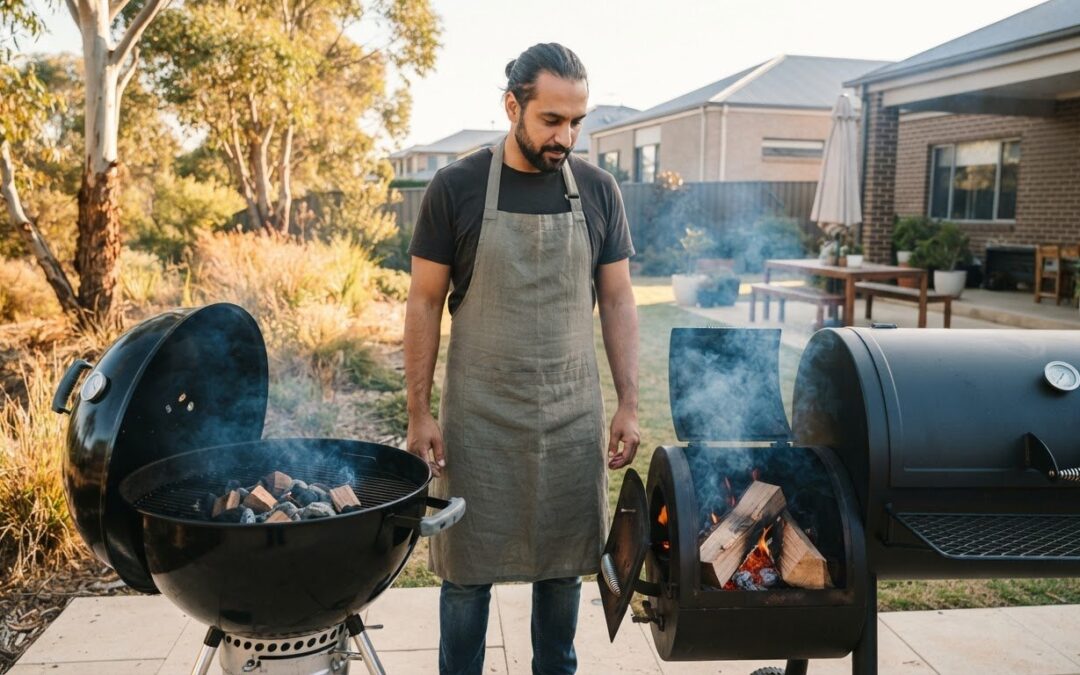
A bigger smoker doesn’t automatically make better barbecue. If you’re considering upgrading from a Weber Kettle to an offset, the real question is whether you want more than extra cooking space. A kettle can grill, roast and smoke with a relatively simple setup. An offset offers room for larger cooks and a direct wood-fire approach, but it also asks more of the person tending the fire.
That trade-off is at the heart of the decision. More capacity and smoke-focused cooking can be rewarding, but managing fuel, airflow and temperature through a long cook takes attention and practice. An offset also needs suitable space and a steady supply of fuel, so weigh the demands before making the switch.
This guide compares the cooking experience, workload and setup requirements of both cookers. You’ll see where an offset brings genuine benefits, how your fire-management routine will change, and how to plan for fuel and your first cooks. By the end, you can decide whether an offset suits the barbecue you want to make or whether your kettle is still the right tool for the job.
Key Takeaways
- Understand what changes when you move from a kettle’s charcoal layout to an offset’s separate firebox and cooking chamber.
- Decide whether upgrading from a Weber Kettle to an offset suits your cooking goals, available time and outdoor space.
- Use a practical checklist to assess capacity, construction and airflow before choosing an offset smoker.
- Prepare for your first cooks with a practice burn, the manufacturer’s instructions and a forgiving starting recipe.
- Think of fuel and fire tending as part of the offset’s routine, not just another piece of equipment.
Upgrading from a Weber Kettle to an Offset: What Actually Changes?
If your kettle has handled weeknight grilling and weekend roasts, it makes sense to pause before changing cookers. You may want more room for longer, smoke-focused cooks without taking on a demanding fire-management routine. The key point is that upgrading from a Weber Kettle to an offset changes how you cook, not simply how much food fits on the grate.
A Weber Kettle can produce excellent barbecue. An offset offers a different way to build and manage heat, with the fire set apart from the food. Neither cooker is automatically better for every meal.
What a Weber Kettle already does well
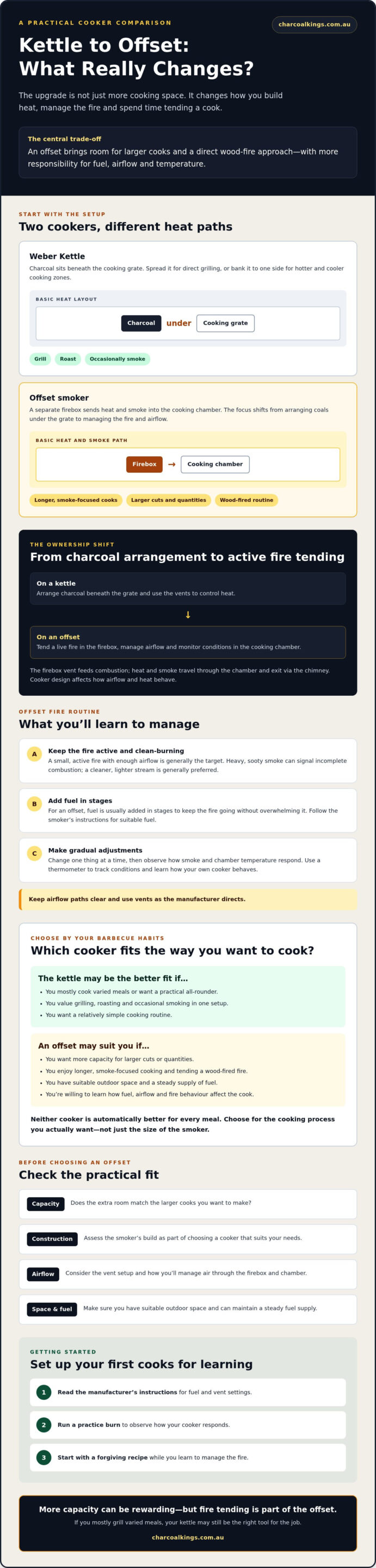
The kettle’s adaptable format makes it useful for everyday cooking. Spread charcoal beneath the grate for direct grilling, or bank it to one side to create two zones: a hotter area for searing and a cooler area for indirect cooking. That layout supports quick meals as well as low-and-slow cooks, without requiring a separate firebox. Its versatility is a strength, not a limitation to overcome.
What an offset adds to the cooking setup
An offset smoker has a separate firebox connected to a cooking chamber. Heat and smoke travel from the fire into the chamber and around the food. This indirect path shifts the focus from arranging coals beneath the grate to managing the fire and airflow. For background on the process of smoking food, including how smoke contributes to flavour, see Wikipedia’s overview.
This setup can suit cooks who want space for larger cuts and enjoy tending a wood-fired fire. It also demands more attention: airflow, fuel and fire behaviour all influence the cooking environment. An offset doesn’t guarantee a better result. You still need to learn how your particular cooker responds.
| Factor | Weber Kettle | Offset Smoker |
|---|---|---|
| Typical use | Grilling, roasting and occasional smoking | Longer, smoke-focused cooks and larger quantities |
| Fire layout | Charcoal arranged under the grate, often to one side for indirect cooking | Fire burns in a separate box beside the cooking chamber |
| Attention | Manage the charcoal arrangement and vents | Tend the fire and monitor airflow and chamber conditions |
| Versatility | Compact all-rounder for varied meals | Dedicated setup for indirect, wood-fired cooking |
Choose based on the cooks you want to do and the process you’re happy to manage. If you mostly grill varied meals, the kettle may remain the more practical fit. If you want the offset’s fire-tending routine and added cooking capacity, the change may be worthwhile.
How Offset-Smoker Fire Management Differs from Kettle Cooking
On a kettle, you arrange charcoal beneath the cooking grate and use the vents to control heat. An offset asks you to manage a fire in its firebox, then guide the resulting heat and smoke through the cooking chamber. Air enters through the firebox vent, feeds combustion and exits through the chimney. Adjusting those openings affects the fire, but the cooker’s design also shapes airflow and heat behaviour.
This is the main ownership change when upgrading from a Weber Kettle to an offset: instead of setting up a charcoal arrangement, you actively tend a live fire. There is a learning curve. The Best Smokers comparison also describes offsets as a choice for enthusiasts willing to trade some convenience for the experience.
Building and maintaining a clean-burning fire
A steady offset fire is generally a small, active fire with enough airflow to burn cleanly. Heavy, sooty smoke can signal incomplete combustion, while a cleaner, lighter stream is generally the target. Check the smoker’s instructions for suitable fuel and vent settings, since firebox design and recommended fuel vary between cookers.
Unlike loading a kettle for a longer cook, you’ll usually add fuel in stages to keep the fire going without overwhelming it. Make changes gradually, then watch how the smoke and temperature respond before adjusting again. A thermometer helps you track conditions in the cooking chamber, but the aim is to understand your own cooker rather than follow an unverified universal schedule.
- Keep airflow paths clear and use the vents as the manufacturer directs.
- Add fuel in controlled amounts instead of making several changes at once.
- Observe smoke and chamber temperature together to learn how the fire responds.
For a charcoal-based fire, explore hardwood lump charcoal and briquettes. The right choice depends on your smoker and its recommended method, so check the manual first.
How often will you need to tend an offset?
Plan to give an offset regular attention, but don’t expect one fixed tending interval to suit every cook. Cooker construction, airflow, fuel and changing conditions such as wind or cool weather can all affect temperature stability. A kettle’s vent-controlled charcoal setup is generally simpler to manage, though it still needs monitoring during a longer cook.
With an offset, you’ll check the fire, smoke and temperature, then decide whether to adjust airflow or add fuel. Some cooks find this hands-on rhythm rewarding; others would rather spend less time tending the cooker. A practice burn before cooking helps you learn how your model behaves in your own outdoor space.
Kettle or Offset: Which Cooker Better Fits Your Barbecue Habits?
The right cooker depends less on ambition than on how you actually barbecue. Think about what you cook most often, how much time you can give a cook, and whether there’s room for a larger cooker and enough working space. An offset can support a dedicated, smoke-focused routine, but it won’t make quick, varied meals more convenient.
Reasons to keep the Weber Kettle
Keep the kettle if you value flexibility, straightforward setup and compact storage. It can handle direct grilling, two-zone cooking and indirect smoking, so you don’t need an offset to make quality barbecue. For a household that shifts between weeknight sausages, vegetables and occasional low-and-slow cooks, one adaptable cooker may be the more practical choice. Keeping it isn’t a failed upgrade. It’s choosing the tool that fits your real cooking habits.
Signs an offset may suit your next step
An offset may suit you if longer barbecue sessions are your goal and tending a dedicated fire sounds like part of the enjoyment, not an interruption. Consider whether you have enough outdoor space for the cooker and safe working access around it, as well as time to monitor the fire. If your schedule usually calls for fast meals, the offset’s extra demands may outweigh its appeal.
The trade-off is simple: a kettle offers flexible cooking with less setup, while an offset suits cooks prepared to trade convenience for a more hands-on, smoke-focused session.
| Your usual priority | More suitable fit | Why |
|---|---|---|
| Quick meals and varied everyday cooking | Weber Kettle | Adaptable for grilling, roasting and indirect cooking without committing to a dedicated smoker setup. |
| Compact storage or limited outdoor space | Weber Kettle | Its smaller format is generally easier to accommodate and store. |
| Longer, smoke-focused barbecue sessions | Offset smoker | Designed around a separate fire and cooking chamber for dedicated indirect cooks. |
| You enjoy tending a fire and tracking its response | Offset smoker | Active fire management is part of the cooking routine. |
| You want occasional smoking alongside everyday grilling | Weber Kettle | It can smoke indirectly while remaining useful for other cooking styles. |
Before upgrading from a Weber Kettle to an offset, be honest about your calendar as well as your barbecue goals. If you want to practise fire management and have the space to do it, an offset could be a rewarding next step. If you mainly want dependable versatility for varied meals, your kettle may already be the right cooker.
How to Choose an Offset Smoker and Prepare for the Change
Once you’ve decided an offset suits your cooking habits, compare the specific cooker and its setup demands before buying. Models differ, so don’t assume every offset has the same capacity, airflow or construction. As you consider upgrading from a Weber Kettle to an offset, use this checklist to assess the smoker against your cooking needs and outdoor space.
Offset-smoker features worth comparing
- 1. Cooking capacity: Check the cooking area and layout against the amount and size of food you typically prepare. Consider whether the grate suits your usual cuts, not just its advertised capacity.
- 2. Construction: Review the manufacturer’s specifications for materials, dimensions, weight and care requirements. Don’t assume build quality or temperature performance based on appearance alone.
- 3. Access and airflow: Consider how you’ll reach the firebox, cooking chamber and airflow controls during a cook. Check whether the doors, vents and handles are practical to operate and clean.
- 4. Space and placement: Measure the full footprint, including room to open doors and access the firebox. Plan for a stable, level surface and follow the manufacturer’s clearance and placement instructions.
Compare each manufacturer’s operating instructions, including stated requirements for fuel and maintenance. A BBQ buying guide and an offset-smoker overview can also help clarify what to compare. Use information about the specific cooker rather than assuming all offsets are alike.
Plan the space, fuel and setup
Before bringing a smoker home, decide where it will sit and how you’ll use it. Choose a stable surface in a well-ventilated outdoor location, keep it clear of combustible materials, and follow the maker’s placement and clearance guidance. Check applicable local requirements for your location rather than assuming one setup rule fits every property.
Plan suitable, dry storage for the fuel the manufacturer recommends, including charcoal and smoking wood if required. Keep fuel protected from moisture and make sure you can access it without disrupting the cooking area. Be realistic about the time you can set aside: an offset adds a fire-tending routine, so make sure your setup allows practical monitoring and refuelling.
Read the manufacturer’s operating instructions before the first cook, and assemble and position the smoker as directed. To prepare for the change, explore BBQ fuel and smoker options and match your fuel choice to the cooker’s guidance.
Your First Cooks After Upgrading from a Kettle to an Offset
Your first session is for learning the cooker, not proving what it can do. Before cooking food, run a practice burn and follow the manufacturer’s instructions for lighting, fuel, airflow and initial use. This lets you see how the fire responds and spot setup issues without trying to manage a meal at the same time.
A simple routine for learning the new cooker
Prepare the recommended fuel, fire-starting tools and temperature probe before lighting. Once the fire is established, monitor airflow and the smoker’s response. Make measured changes, then give the cooker time to respond before adjusting again. Avoid opening doors or changing several vents at once unless the instructions call for it.
For your first food cook, choose something forgiving and familiar, such as chicken pieces or a simple roast. Keep the cook straightforward so you can focus on fire behaviour rather than juggling multiple variables. Follow the manufacturer’s guidance for safe operation and food handling.
Keep a short log after each session. Note the fuel used, when you added more, vent adjustments, weather conditions and how the food turned out. Wind, ambient conditions and the cooker itself can affect performance. Your notes will help you spot useful patterns without treating one cook as a fixed recipe.
Choose fuel and flavour with care
Fuel choice is part of the routine. Hardwood lump charcoal and briquettes provide heat, while smoking wood contributes smoke flavour. Their characteristics differ, and the right approach depends on the offset’s design and the manufacturer’s fuel instructions. Start with clean, dry fuel that’s suitable for your cooker. Don’t assume a particular type will deliver a guaranteed burn duration.
If you’re comparing options, explore hardwood lump charcoal and briquettes, then check your smoker’s manual before choosing. Add smoking wood only as directed, and adjust one element at a time so you can learn how it affects the cook.
Approach upgrading from a Weber Kettle to an offset as a series of practice sessions. Each burn teaches you something about airflow, fuel and how your cooker behaves in your own backyard. When you’re ready to prepare, explore Charcoal Kings’ charcoal and BBQ range for fuel and equipment options.
Choose the Cooker That Fits Your Next Cook
An offset isn’t simply a larger kettle. It brings extra cooking capacity and a wood-fired approach, along with more fire tending, space planning and setup. If you value quick, varied cooks, your Weber Kettle may still be the better fit. If you’re ready for longer, smoke-focused sessions and hands-on fire management, upgrading from a Weber Kettle to an offset could suit the way you want to barbecue.
Before choosing, compare each smoker’s specifications, check that you have a safe, practical place for it, and follow the manufacturer’s instructions. Start with a practice burn, then take notes as you learn how the cooker responds. A patient first session builds confidence for the cooks that follow.
Charcoal Kings is an Australian-based supplier of natural hardwood lump charcoal and other BBQ fuels, with retail and wholesale ranges that include grills, smokers and BBQ accessories. Explore Charcoal Kings’ charcoal and BBQ range as you prepare for your next setup. Choose the cooker that matches your time, space and appetite for tending a fire, then enjoy learning what it can do.
Frequently Asked Questions
Is an offset smoker better than a Weber Kettle?
Neither cooker is universally better; each suits different barbecue habits. A kettle is a versatile choice for grilling, roasting and indirect smoking, while an offset is designed for cooks who want a dedicated fire and longer, smoke-focused sessions. Consider your available time, outdoor space and preferred cooking style. Upgrading from a Weber Kettle to an offset makes sense if you want that hands-on process, not simply because you expect every cook to improve.
Can you smoke meat on a Weber Kettle?
Yes, a Weber Kettle can smoke food using an indirect setup. Arrange the charcoal to one side and place the food away from the direct heat, following the kettle’s instructions and monitoring the cooking temperature. The kettle’s smaller cooking area may limit how much you can smoke at once, but it can still produce satisfying barbecue. An offset isn’t required to learn smoking or make a smoke-focused cook.
Is an offset smoker harder to use than a kettle?
Yes, offsets generally demand more active fire management. Rather than mainly arranging charcoal and adjusting vents, you’ll tend the fire, monitor airflow and temperature, and add fuel as needed. How challenging that feels depends on the cooker, conditions and your experience. Start with the manufacturer’s instructions and a practice burn before cooking. Expect to learn how your own offset responds instead of relying on a universal fire schedule.
How much charcoal does an offset smoker use?
There’s no reliable amount that applies to every offset or cook. Fuel use varies with the smoker’s design, the fuel recommended by its manufacturer, cooking method and outdoor conditions such as wind and temperature. Check the manual for suitable fuel, then track what you use during practice sessions. Recording fuel additions alongside weather and temperature observations will help you plan future cooks without relying on a generic estimate.
Can I use lump charcoal in an offset smoker?
You can use lump charcoal in an offset if the manufacturer’s instructions allow it. Some cooking methods use charcoal to establish or support a fire, while smoking wood can provide the wood-fired character associated with offset cooking. Fuel requirements differ by cooker, so check the manual before lighting up. Use clean, suitable fuel and observe how your smoker responds. Don’t assume a fuel choice guarantees a particular burn time.
What should I look for when buying an offset smoker?
Compare the cooking area with the food you typically prepare, then check the manufacturer’s stated materials, dimensions, care instructions and fuel recommendations. Look at access to the firebox, cooking chamber and airflow controls, and make sure the cooker will fit in a safe, practical location with the required clearances. Offsets vary, so compare specifications for the exact models you’re considering rather than assuming they’ll perform alike.
Should I keep my Weber Kettle after buying an offset?
Yes, keeping it can be useful if you still grill quick meals or want a compact cooker for varied everyday cooking. The kettle can handle direct heat and indirect smoking, while the offset is better suited to cooks where you want to manage a dedicated fire. Keeping both gives you options, but it isn’t essential. Base the decision on your space, cooking habits and how often you’ll use each cooker.