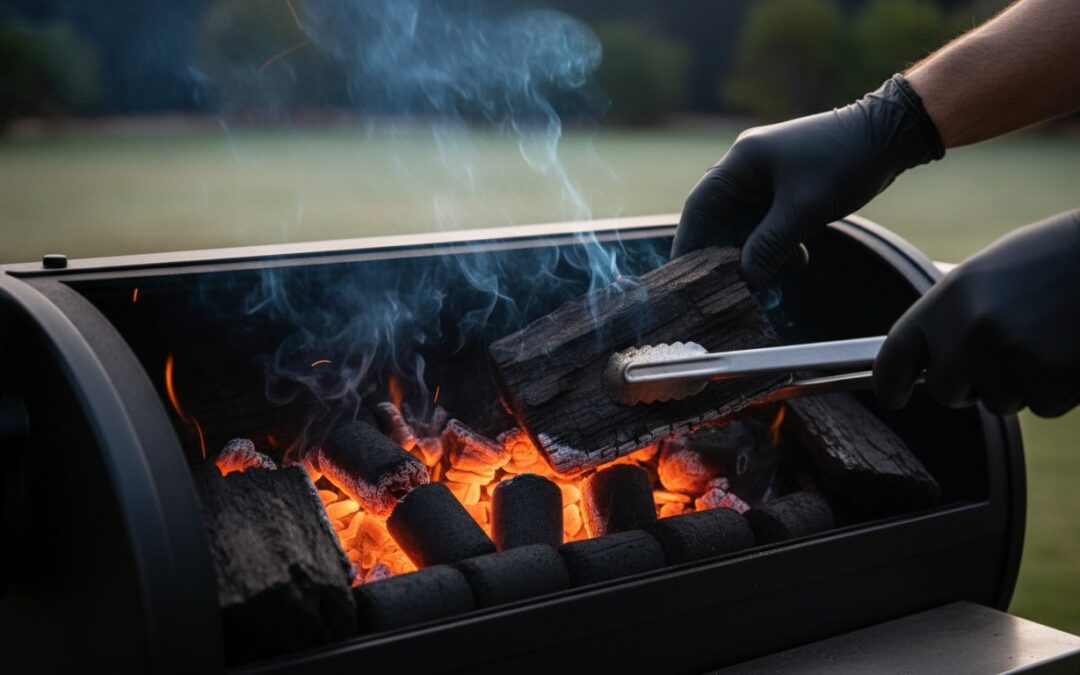
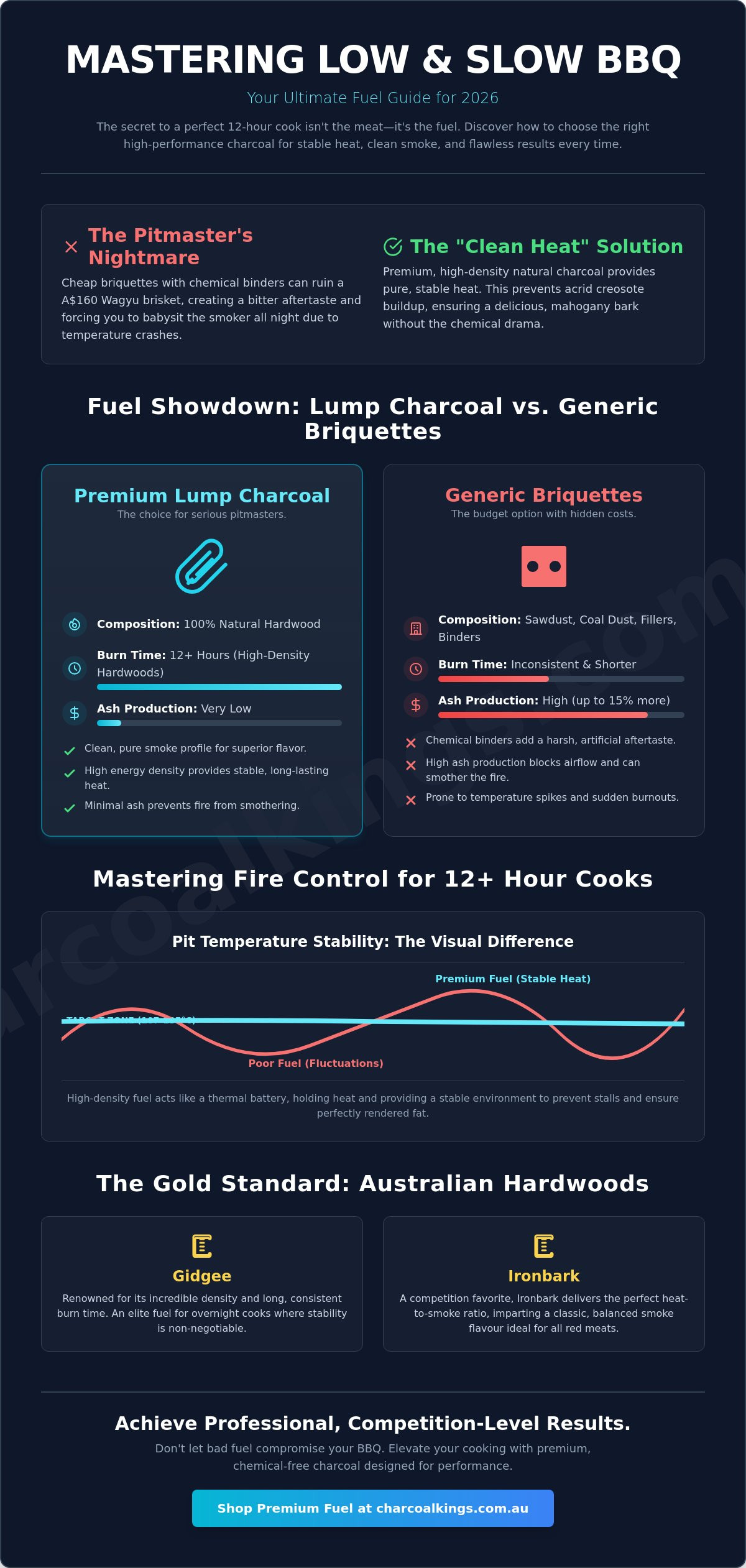
Your choice of fuel matters more than the expensive cut of meat sitting on your grill. A single bad batch of cheap briquettes can ruin a A$160 Wagyu brisket by injecting a nasty chemical aftertaste into the bark. To get the best results in 2026, you need a high-performance low and slow cooking fuel that delivers clean heat without the drama. Most pitmasters have felt the sting of a 3:00 AM temperature crash because their fuel burnt out too quickly.
It’s frustrating when constant fluctuations force you to babysit the smoker all night instead of getting some sleep. We agree that stable pit temperatures and clean blue smoke are the non-negotiables for any serious Australian BBQ. This guide will help you master the art of long-duration smoking by choosing the right fuel for consistent heat and superior flavour. We will break down the specific burn rates of premium natural hardwoods and high-density briquettes that provide maximum fuel efficiency for 12 hour overnight cooks.
Key Takeaways
- Understand the science of “Clean Heat” and how high-density carbon sources prevent acrid creosote buildup during long cooks.
- Compare the energy density of lump charcoal versus compressed briquettes to select the most reliable low and slow cooking fuel for your smoker.
- Discover why premium Australian hardwoods like Gidgee and Ironbark are the gold standard for achieving a perfect heat-to-smoke ratio.
- Master advanced fire control techniques, including smoker pre-heating and fuel arrangement, to maintain stable temperatures for 12+ hours.
- Learn how to align chemical-free product tiers with your specific BBQ rig to achieve professional, competition-level results across Australia.
The Science of Low and Slow Cooking Fuel: Why Purity Matters
Low and slow cooking fuel is more than just a heat source. It is a high-density carbon engine designed for stable, long-duration combustion. When you are aiming for a 12-hour brisket cook in a standard offset smoker or a ceramic kamado, you need fuel that maintains a steady 107°C to 135°C without constant fussing. Understanding the Science of Charcoal helps you see why carbon purity is the foundation of every successful pit session. Impure fuels release volatile organic compounds that settle on cold meat as acrid, black creosote. Clean heat ensures your bark is mahogany and delicious, not covered in soot.
To better understand this concept, watch this helpful video:
High-density fuel provides superior thermal mass within your smoker. This means the fuel itself holds heat, acting like a battery that stabilises the internal environment against external wind or temperature drops. 100% natural hardwood charcoal provides the cleanest burn and the most reliable heat output. Generic fuels often use chemical binders that ruin the flavour profile of premium Australian beef and produce a harsh, artificial smell that lingers in the cook chamber.
The Impact of Fuel on Pit Stability
High-carbon fuel allows you to set your vents and walk away. When fuel contains high moisture levels, energy is wasted evaporating water instead of heating the cook chamber. This leads to frustrating temperature spikes and stalls that can add hours to your cook time. Pyrolysis is the thermochemical decomposition of organic material at elevated temperatures in the absence of oxygen that creates high-quality charcoal. Using fuel that has undergone complete pyrolysis ensures you aren’t fighting your equipment all day.
Health and Flavour: The Chemical-Free Advantage
Cheap, generic briquettes often contain fillers like sawdust, coal dust, and even limestone. These additives increase ash production by up to 15% compared to premium lump charcoal. Excessive ash smothers the fire and blocks oxygen flow through the grates, forcing you to clean the firebox mid-cook and lose your heat. Premium, chemical-free fuel leaves minimal residue and protects the health of your family. For a deeper dive into how these fuels are manufactured for performance, check out the Ultimate Guide to BBQ Charcoal. Choosing natural hardwood is the only way to ensure your low and slow cooking fuel delivers professional results every time. Get Sizzlin’!
Lump Charcoal vs. Briquettes: Evaluating Burn Time and Consistency
Lump charcoal and briquettes offer distinct performance profiles for the 2026 BBQ season. Lump charcoal is 100% natural hardwood, carbonized to provide maximum energy density. It burns cleaner and leaves significantly less ash than compressed alternatives. A common myth suggests lump is only for “hot and fast” grilling. This is incorrect. High-quality lump is an elite low and slow cooking fuel because it provides a pure smoke profile over long durations. Charcoal Kings selects specific hardwood grades, such as Gidgee or Quebracho, because their dense cellular structure sustains a steady temperature for 12 hours or more without the fuel collapsing into a heap of dust.
The trade-off involves ignition speed and physical shape. Lump charcoal ignites in roughly 15 minutes but comes in irregular sizes. Briquettes take about 25 minutes to ash over but offer a uniform shape that fits perfectly in gravity-fed systems. Understanding these thermal properties helps you master the science of cooking meat. Consistent heat prevents the “stall” and ensures the internal fat renders perfectly once the meat reaches its target temperature.
When to Choose Premium Hardwood Lump
Lump is the primary choice for ceramic Kamados and offset smokers. These cookers require high airflow control to maintain temperatures between 107 and 121 degrees Celsius. Large-chunk lump is essential for preventing “fuel packing.” This occurs when small charcoal pieces settle together and choke the oxygen supply. Our premium grades feature chunks sized between 80mm and 150mm. This creates the necessary air gaps for a 16-hour burn. You get a superior, natural flavour profile that processed fuels cannot match.
The Case for Natural Briquettes in Low and Slow
Predictability is the main benefit of briquettes in bullet smokers or gravity-fed units. These cookers thrive on a “predictable burn rate” where every piece of fuel is identical. Always identify high-quality natural briquettes that use vegetable starch binders. Avoid any product using petroleum-based additives. Many pitmasters use briquettes as a “base layer” for overnight cooks. This ensures a failsafe heat source that won’t fluctuate while you sleep. For a stable, long-lasting fire, our natural briquette range provides the reliability needed for 12-hour brisket runs. Get Sizzlin’!
Australian Hardwood Profiles: Matching Fuel to Your Meat
Australian hardwoods are world-class because of their extreme density and high lignin content. When you select your low and slow cooking fuel, you’re looking for a specific balance between heat output and smoke intensity. Denser woods like Gidgee and Ironbark burn longer and hotter than softwoods or low-quality imports. This efficiency reduces the amount of fuel you need to manage during a 12-hour brisket cook. It’s vital to source seasoned timber with a moisture content below 20%. Green wood produces “dirty” creosote smoke that leaves a bitter, black film on your meat and ruins the flavour profile.
Use this quick-reference guide to match your timber intensity to your protein choice:
- Beef (Brisket, Beef Ribs): Use Ironbark or Gidgee for a heavy, robust smoke profile that stands up to rich fats.
- Pork (Shoulder, Ribs): Match with Apple, Cherry, or Peach for a sweet, mellow smoke and a deep reddish smoke ring.
- Lamb: Ironbark or Red Gum provides a traditional, strong Australian flavour that complements the natural gaminess of the meat.
- Poultry and Fish: Use Macadamia or light fruitwoods to avoid overpowering these delicate proteins with heavy smoke.
Gidgee and Ironbark: The Heavyweights of the Outback
Gidgee is the undisputed gold standard for long-duration heat. With a density often exceeding 1,200 kg/m3, it provides incredible thermal mass. You get a steady, predictable burn with almost zero ash production. This is vital for maintaining consistent airflow in ceramic grills or offset smokers over 14 hours. Ironbark is the versatile workhorse of the Australian BBQ scene. It’s the go-to choice for beef because it delivers a distinct, classic smoke flavour without becoming acrid. For shorter sessions under 5 hours, Mallee Root is an excellent choice. It burns with high intensity and provides a unique earthy aroma that’s perfect for reverse-searing thick steaks or roasting heritage chickens.
Layering Flavours with Smoking Woods
Professional pitmasters treat their fuel like a recipe. Use high-quality lump charcoal as your primary heat engine to maintain a stable temperature between 110°C and 125°C. Then, add fruitwood chunks like Cherry or Apple as your flavour engine. The “chunk vs chip” debate is settled by the clock. Chunks are superior for low and slow cooking fuel sessions lasting 8 hours or more because they smoulder slowly. Chips ignite too quickly and require constant replenishment, which leads to temperature spikes. If you want the cleanest burn possible for high-end cuts, consider Binchotan Charcoal. It’s a high-carbon, flameless fuel that offers a pure heat source, allowing the natural flavours of premium Australian wagyu to stand out. Get Sizzlin’ with the right wood combination and you’ll see why Australian hardwoods are the envy of the BBQ world.
Mastering Fire Control: Fuel Management Techniques for 12-Hour Cooks
Choosing the right low and slow cooking fuel is only half the battle. How you arrange that fuel determines if you spend the night sleeping or fighting temperature swings. Professional pitmasters focus on the “thermal mass” of their cooker. You must pre-heat your smoker for at least 45 minutes before the meat touches the grate. This allows the steel to soak up heat. If you skip this, the cold metal will suck energy from your fire, leading to inconsistent temperatures and a stalled cook.
Australian weather conditions play a massive role in fuel consumption. A 20km/h wind across a Melbourne backyard can strip heat from an offset smoker faster than the fire can produce it. High humidity in Queensland requires more airflow to keep the coals glowing. You are looking for “Clean Blue Smoke.” This is a thin, almost invisible shimmer. If you see thick, billowing white clouds, your fuel is smoldering rather than combusting. It will leave a bitter, creosote taste on your food.
The Snake and Minion Methods Explained
The Minion Method is the standard for bullet smokers and gravity feeds. You fill the fire chamber with unlit charcoal and place a small cluster of 10 to 15 lit coals on top. The fire travels downward, igniting new fuel slowly over 10 hours.
- The Snake Method: Ideal for Weber kettles. Line up briquettes in a semi-circle two wide and two high.
- Lighting the Fuse: Place 3 lit coals at one end of the snake.
- The Burn: The fire moves like a fuse, providing a predictable heat source for up to 12 hours.
Don’t light too many coals at the start. It is easier to raise the temperature than it is to bring it down once the thermal mass is overheated.
Managing Airflow and Exhaust
Control your temperature from the intake vents, not the exhaust. Keep your top vent wide open to ensure smoke moves freely across the meat. Restricting the exhaust traps “dirty” smoke and creates a bitter bark. You can monitor fuel levels by watching your thermometer. A steady drop usually indicates the fuel is spent. Remember the golden rule: “If you’re lookin’, you ain’t cookin’.” Every time you open the lid, you lose significant heat and moisture.
If you need to add fuel mid-cook, never add cold, unlit charcoal directly to the bed. This creates a spike of thick, acrid smoke. Use a chimney starter to get the coals white-hot before pouring them in. This maintains your temperature and keeps your smoke profile clean.
Ready to level up your next barbecue? Shop our range of premium hardwood charcoal to get the longest burn for your low and slow sessions.
The Charcoal Kings Solution: Choosing the Right Product for Your Rig
Selecting the right low and slow cooking fuel determines whether you’re fighting your fire or focused on the meat. Charcoal Kings provides both Standard and Premium grades to ensure every pitmaster has the exact heat profile they need. Our chemical-free manufacturing process remains the standard for winning BBQ teams across Australia. Competing at events like Meatstock requires a clean burn, as judges detect chemical accelerants immediately. We provide a consistent, organic product that lets the natural flavor of ironbark or gidgee shine through without interference.
Consistency is the backbone of our operation. We supply retail, wholesale, and food service sectors across the country. Whether you’re a backyard enthusiast or running a high-volume smokehouse, we maintain stock year-round. This reliability ensures your low and slow cooking fuel supply never runs dry during peak summer periods or major holiday events. We handle the logistics so you can focus on the cook.
Fuel Recommendations by Smoker Type
- Offset Smokers: These rigs demand high airflow and high heat. Use our large-format hardwood lump or split logs. These provide the convection needed to move clean blue smoke across the meat.
- Kamados: Ceramic cookers are built for efficiency. Premium Gidgee lump is the best choice here. It offers tight temperature control and lasts for 12 plus hours on a single load.
- Bullet and Drum Smokers: For a set-and-forget experience, our natural briquettes are the go-to. They burn steady and predictable, maintaining the 225 to 250 degree Fahrenheit range for hours.
Get Sizzlin’ with the Right Gear
Great fuel is the foundation, but the final flavor comes from the finish. Our range of rubs and sauces provides that professional crust and tang. We’ve designed these to complement the smoky profile of our natural hardwood charcoal. If you’re looking to scale your business, contact us for wholesale enquiries. We’re always looking for new partners to become a Charcoal King. Visit our website to find a local stockist or shop the full range online today.
- Match your fuel size to your firebox for optimal airflow.
- Ensure your charcoal is 100% natural to avoid chemical taints.
- Keep a backup bag of Gidgee for long overnight cooks.
- Apply your Charcoal Kings rub 30 minutes before the meat hits the grate.
Ready to level up? Get Sizzlin’!
Dominate the Pit with Precision Heat
Success in the pit comes down to heat consistency. You’ve seen why high-density Australian hardwoods outlast standard briquettes and how pure carbon prevents acrid smoke from ruining a 12-hour brisket. Managing your fire requires more than just skill; it requires the right low and slow cooking fuel that won’t flake out when the internal temperature hits the stall. Professional pitmasters across Australia rely on fuels that offer a 4-hour minimum burn time for standard cooks and much longer for heavy-duty smoking sessions.
Don’t settle for supermarket bags filled with scrap wood and chemical binders. Your rig deserves a clean, predictable burn that lets the meat speak for itself. We’ve vetted the best options for 2026 to ensure your backyard results match the standards of the country’s top smokehouses. Every bag we supply is 100% Natural & Chemical Free and Trusted by Professional Pitmasters to deliver championship results every time you light the chimney.
Upgrade your next cook with Premium Hardwood Charcoal from Charcoal Kings. We provide Fast Australia-wide Shipping so you’re never left waiting when the cravings hit. It’s time to take control of your temperature and produce the best bark of your life. Get sizzlin’!
Frequently Asked Questions
What is the longest-burning fuel for a 12-hour low and slow cook?
Gidgee lump charcoal is the longest-burning low and slow cooking fuel available for a 12-hour session. This Australian hardwood has a density of approximately 1,300 kg/m3, which allows it to burn hotter and longer than standard charcoal varieties. High-quality Gidgee provides a consistent heat source that minimizes the need for refueling during long overnight cooks. It’s the professional choice for reliability. Get Sizzlin’!
Can I use regular supermarket briquettes for smoking meat?
You shouldn’t use cheap supermarket briquettes for smoking meat because they often contain chemical binders and coal dust fillers. These additives produce a harsh, acrid smell that ruins the flavor of your brisket or pork shoulder. Stick to 100% natural hardwood briquettes to ensure your food tastes like smoke, not chemicals. Premium fuel produces 70 percent less ash, keeping your airflow clean and your temperatures stable.
How much charcoal do I need for a full brisket cook?
A standard 12-hour brisket cook typically requires 8 to 10 kilograms of premium charcoal. This estimate assumes you’re using a well-insulated smoker like a Kamado or a bullet smoker in 20 degree Celsius ambient temperatures. Always keep an extra 5-kilogram bag on hand to account for wind or colder weather conditions that increase fuel consumption. Managing your fuel efficiently is the key to a perfect bark.
Why is my charcoal producing thick white smoke instead of clear blue smoke?
Thick white smoke indicates incomplete combustion or wet fuel, while clear blue smoke signals a clean, efficient burn. White smoke contains creosote and soot that leave a bitter, metallic taste on your meat. Achieve the “thin blue smoke” by ensuring your fire has enough oxygen and your wood has a moisture content below 20 percent. Clean air is essential for a professional result every time you light up.
Is lump charcoal better than briquettes for an offset smoker?
Lump charcoal is superior to briquettes for an offset smoker because it offers better airflow and reaches higher temperatures faster. Premium lump charcoal consists of 100% natural hardwood pieces that produce significantly less ash than compressed briquettes. This reduced ash buildup prevents your firebox from choking during a long cook. It’s the most authentic low and slow cooking fuel for those who value performance and traditional flavor.
Should I soak my smoking wood chunks in water before adding them to the charcoal?
Don’t soak your smoking wood chunks in water before adding them to the charcoal. Wet wood must evaporate all moisture before it can produce smoke, which lowers your cooking temperature and creates steam rather than flavor. Dry wood chunks with a moisture level under 15 percent ignite quickly and provide the best aromatic profile. Using dry wood ensures your fire stays hot and your smoke stays clean.
What is the best Australian hardwood for smoking beef?
Ironbark is the premier Australian hardwood for smoking beef due to its mild, sweet flavor and high heat output. It’s a dense timber that provides a long, steady burn, making it the industry standard for Texas-style BBQ in Australia. Other options like Red Gum provide a stronger flavor profile, but Ironbark remains the most reliable choice for consistent results. It’s the backbone of the Australian smoking scene.
How do I stop my charcoal from burning out halfway through the night?
Use the Minion Method or the Snake Method to prevent your charcoal from burning out prematurely. These techniques involve lighting a small section of fuel that gradually ignites the rest of the unlit coals over 8 to 12 hours. This controlled burn ensures a steady temperature and eliminates the need to open the lid and lose heat during the night. Set your vents correctly and let the fuel do the work. Get Sizzlin’!