Your backyard barbecue shouldn’t be a crime against the Australian landscape. Most people don’t realise that standard supermarket briquettes often contain coal dust and chemical binders that ruin the taste of a premium wagyu steak. Global charcoal production is linked to 2 million hectares of forest loss every year according to WWF data. You need a fuel that hits 300°C without the environmental baggage. Choosing the right eco-friendly bbq charcoal ensures you get professional-grade heat while protecting the bush for the next generation of grillers.
The global BBQ community is always exploring high-performance fuels. In the UK, for instance, brands that prioritize pure, high-carbon content are also in high demand. If you’re interested in seeing what a popular, sustainably-sourced option looks like overseas, you can learn more about Big Eds Charcoal.
It’s frustrating when “natural” labels turn out to be marketing fluff rather than a guarantee of sustainability. You deserve to know exactly what’s under your grill grates. This guide explains how to identify genuine FSC-certified timber and why agricultural waste products like coconut shells are changing the game for low-and-slow fans. We’ll help you decode ethical sourcing labels so you can achieve a consistent 4-hour burn using nothing but 100% organic fuel. Let’s get sizzlin’ with a clean conscience.
Key Takeaways
- Learn why premium eco-friendly bbq charcoal actually outperforms standard coal by delivering higher peak temperatures and longer burn times.
- Identify the best sustainable fuel sources for the Australian landscape, including how harvesting invasive Gidgee aids local land restoration.
- Master the “Eco-Friendly Checklist” to decode FSC certifications and ensure your fuel is 100% natural and free from hidden chemical binders.
- Compare performance benchmarks between Gidgee, Coconut, and briquettes to select the high-density fuel that suits your specific grilling style.
- Discover the flavour benefits of switching to chemical-free hardwood lump that delivers professional-grade results without the environmental cost.
What is Eco-Friendly BBQ Charcoal?
Eco-friendly bbq charcoal isn’t just a marketing buzzword. It’s a high-performance fuel sourced from renewable biomass, invasive plant species, or agricultural waste. Unlike standard options, this fuel contains zero chemical binders or synthetic starters. True sustainability comes from the pyrolysis process. This involves heating organic material in a low-oxygen environment to temperatures exceeding 400 degrees Celsius. The result is a clean-burning, high-carbon fuel that delivers consistent heat without the environmental guilt. Many grillers assume natural means green, but that’s a mistake. A bag of lump charcoal can be 100% natural wood yet still contribute to the 420 million hectares of forest lost globally since 1990, according to FAO data.
The Problem with Standard Supermarket Coal
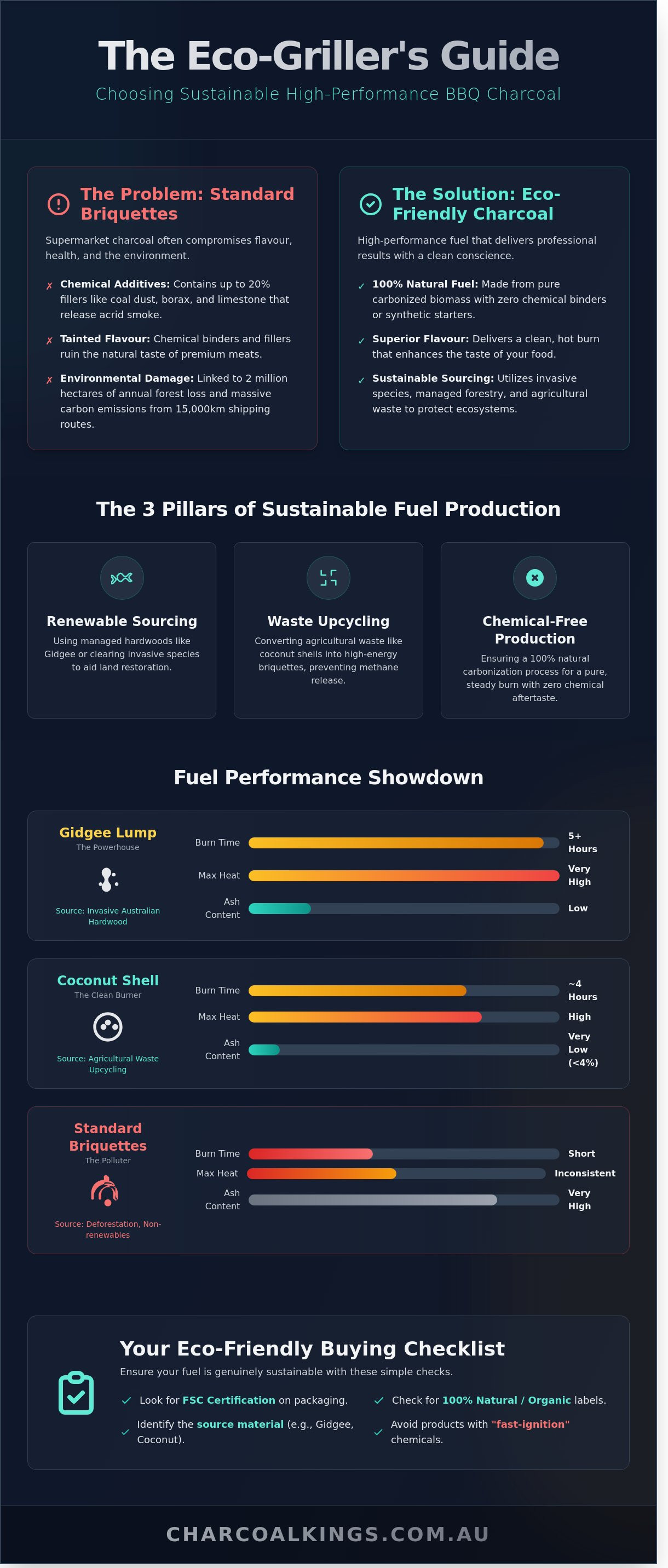
Standard briquettes found in Australian supermarkets often contain up to 20% non-carbon additives. Manufacturers use borax for easy release from moulds, limestone for ash colour, and paraffin as a fast-ignition agent. These fillers don’t just pollute the air; they ruin your cook. When these chemicals burn, they release acrid smoke that taints the flavour profile of a premium A$60 ribeye. Cheap imports also rely on clear-cutting practices in sensitive regions, where lack of regulation leads to permanent habitat loss and massive carbon emissions from 15,000-kilometre shipping routes.
Key Pillars of Sustainable Fuel
Choosing eco-friendly bbq charcoal means looking for products that adhere to three specific pillars of production:
- Renewable Sourcing: We focus on species like Australian Gidgee or Mallee that are managed under strict environmental codes. These hardwoods regrow or are harvested as part of invasive species management.
- Waste Upcycling: This involves turning coconut shells or macadamia husks into high-energy briquettes. It prevents these materials from rotting in landfills and releasing methane, which is 25 times more potent than CO2.
- Chemical-Free Production: 100% natural carbonization ensures no synthetic fillers. You get a steady, hot burn with minimal smoke and zero chemical aftertaste.
High-quality fuel is the foundation of every great cook. When you use responsibly sourced coals, you’re supporting better forestry and getting a superior sear. Get Sizzlin’!
Types of Sustainable Charcoal: From Gidgee to Coconut
Choosing the right fuel defines your entire BBQ experience. High quality eco-friendly bbq charcoal comes in two main formats: lump and briquettes. Lump charcoal is 100% carbonised wood. It lights fast and hits searing temperatures quickly. Sustainable briquettes use natural starch binders instead of chemical accelerants to provide a uniform, long-lasting heat source. Your choice depends on whether you’re chasing a quick steak sear or a 12-hour brisket smoke.
Australian Hardwoods and Land Management
Gidgee and Mulga are the heavyweights of the Australian outback. These species are often classified as invasive native scrub in regions across Queensland and New South Wales. Thinning these dense stands is a vital part of modern land management. It helps restore native grasslands and improves water access for livestock. Gidgee is one of the densest woods on the planet, with a density rating often exceeding 1,300 kg/m3. This incredible density translates to a burn time that outlasts almost any other hardwood. You’ll find that a single load of Gidgee lump charcoal can maintain cooking temperatures for over 5 hours in a controlled ceramic grill.
Coconut Shell: The No-Tree Alternative
The global coconut industry produces over 60 million tonnes of fruit every year. This leaves behind a massive volume of waste shells that would otherwise rot in landfills. Turning these shells into charcoal is a masterclass in agricultural recycling. The shells are carbonised and compressed into high-density briquettes. They don’t require a single tree to be felled. Coconut charcoal is a favourite for urban grillers because it produces almost zero smoke and very little ash. It typically leaves behind less than 4% ash by weight, making cleanup effortless. If you want a neutral scent that lets your expensive cuts of meat do the talking, check out our premium charcoal options for a cleaner burn.
For those seeking the absolute peak of performance, Binchotan is the artisan’s choice. Traditionally crafted through a weeks-long process of kiln firing and rapid cooling, this “white charcoal” is nearly pure carbon. It doesn’t just provide heat; it emits far-infrared radiation that cooks food deeply and evenly. It’s an investment in precision. While a bag might cost more than standard fuel, its ability to burn for up to 6 hours makes it surprisingly efficient for long sessions. Using this eco-friendly bbq charcoal ensures your cookout remains sustainable without sacrificing the high-heat performance required for professional results.
- Gidgee: Best for high-heat searing and long-lasting roasts.
- Coconut: Ideal for low-smoke environments and neutral flavour profiles.
- Binchotan: The gold standard for yakitori and precision grilling.
- Lump Charcoal: The go-to for traditionalists who want 100% natural wood.
Performance Analysis: Does Eco-Friendly Mean Less Heat?
A common misconception suggests that choosing eco-friendly bbq charcoal requires a sacrifice in raw power. This is false. High-quality sustainable lump charcoal often outperforms mass-produced briquettes because it contains higher carbon concentrations and zero chemical fillers. When you use 100% natural products, you aren’t just helping the planet; you’re upgrading your grill’s capabilities.
Heat and Duration Comparison
Australian Gidgee lump charcoal consistently reaches temperatures exceeding 300°C, while standard supermarket coal often struggles to maintain a peak of 220°C. Density is the primary driver of this performance. Heavy hardwoods like Gidgee or Ironbark are incredibly dense, meaning they pack more thermal energy into every centimetre of fuel. This high density ensures the fire burns longer and more consistently than softwoods or scrap-wood alternatives.
The economic factor is equally compelling for the serious griller. While a 20kg bag of premium hardwood might cost A$55 compared to A$30 for a budget brand, you’ll find that you use approximately 40% less fuel per cook. Because the carbon content is so high, these coals require fewer refills during an eight-hour smoke. You’re paying for heat, not ash and binders.
- Gidgee Lump: 300°C+ peak heat; 4-6 hour burn time.
- Coconut Shell: 280°C peak heat; 3-4 hour burn time.
- Standard Briquettes: 220°C peak heat; 2 hour burn time.
The Flavour Factor
Standard briquettes often use cornstarch or chemical binders that produce a “petroleum” aftertaste during the initial ignition. This chemical smoke can ruin delicate proteins like Atlantic salmon or organic poultry. Premium eco-friendly bbq charcoal provides a clean burn that lets the natural fats and juices of the meat do the talking. It’s the difference between a clean, campfire aroma and a harsh, industrial scent.
Sustainable fruitwoods like cherry or apple provide distinct aromatic profiles for specific recipes. These woods add a mild sweetness that pairs perfectly with pork ribs or chicken. For those who prefer their sauces and rubs to take centre stage, neutral coconut charcoal is the professional’s choice. It delivers intense heat without adding any competing smoke flavour. It’s pure, reliable energy that keeps your temperature dial locked in. Get sizzlin’ with a fuel that respects the meat.
The Eco-Friendly Buying Checklist: What to Look For
Buying eco-friendly bbq charcoal requires a sharp eye. Don’t let marketing jargon fool you. Look for the Forest Stewardship Council (FSC) or PEFC (Programme for the Endorsement of Forest Certification) labels. These certifications prove the wood comes from responsibly managed forests that provide environmental and social benefits. If a bag lacks these marks, you’re likely buying timber from unmanaged land clearings that damage local ecosystems. Transparency is the hallmark of a premium product.
Check the “fuel miles” on the back of the bag. Charcoal shipped from South America or Southeast Asia carries a heavy carbon footprint before it even reaches your grill. Stick to Australian-made products. Local hardwood charcoal supports the domestic economy and cuts down transport emissions. Packaging matters too. Choose multi-wall paper bags because they’re recyclable and biodegradable. Avoid plastic-lined bags that sit in Australian landfills for decades; they aren’t worth the convenience.
Identifying Greenwashing on the Bag
Marketing teams use vague terms like ‘Eco-style,’ ‘Green-burn,’ or ‘Natural-lite’ to trick buyers. These words have no legal definition. Identifying genuine eco-friendly bbq charcoal becomes easier once you look past these flashy labels. If the bag doesn’t explicitly state ‘100% Natural Hardwood,’ it likely contains chemical binders or mineral fillers. You’ll spot these additives after your cook. Pure charcoal leaves behind minimal ash, typically less than 3% of its original weight. If your grill is buried in thick white powder, the manufacturer used clay or limestone as a bulking agent. Demand transparency regarding wood species. Premium brands specify types like Gidgee or Ironbark rather than generic hardwood mixes.
Sourcing and Ethics
Talk to your local supplier. Ask if their wood is sourced from invasive species management or sustainable thinning programs. Supporting small-scale Australian producers ensures better quality control than buying from global conglomerates that prioritize volume over ethics. It keeps your money in the local community and protects native bushland. For businesses wanting to make a larger impact, check out the Charcoal Kings Wholesale options for bulk sustainable supplies. It’s the best way to ensure your supply chain remains as clean as your burn.
Ready to switch to a cleaner burn? Shop our range of premium Australian charcoal today.
Grill Like a King: Why Charcoal Kings Chooses Natural
Choosing the right fuel defines the flavor of your cook and the health of your family. At Charcoal Kings, we provide 100% chemical-free, premium hardwood lump charcoal because quality shouldn’t come with a hidden cost. We prioritize high-density fuels that respect the Australian landscape, sourcing timber that provides a steady, reliable heat. This isn’t just about burning wood; it’s about providing a high-performance eco-friendly bbq charcoal that leaves a minimal footprint. Our curated range ensures every conscious griller finds their match:
- Binchotan: The gold standard for clean, high-heat grilling with zero smoke or odour.
- Premium Hardwood: Versatile lump charcoal perfect for low and slow or hot and fast cooks.
- Redneck Charcoal: Rugged, reliable, and designed for those who want maximum heat without the fuss.
You get a cleaner burn, superior taste, and the peace of mind that comes from treating the earth right. When you burn our charcoal, you aren’t just grilling; you’re supporting a sustainable cycle that values the environment as much as the end result on the plate.
The Charcoal Kings Difference
Performance is our priority. We supply fuel that meets professional standards for both commercial kitchens and backyard enthusiasts. Our ‘Redneck’ and ‘Premium’ ranges focus on pure carbon content. We don’t use fillers, coal dust, or chemical binders that ruin the flavor of your meat. These coals burn hotter and longer, with our premium lump often reaching 4 hours of consistent heat. We support the local BBQ community with expert advice and sustainable products that help you cook like a pro every time. We believe a eco-friendly bbq charcoal should never compromise on the searing temperatures required for a perfect crust.
Ready to Upgrade Your Grill Game?
Stop settling for supermarket briquettes. Many of those products contain up to 35% non-wood additives and chemical accelerants that leave a nasty residue. Transitioning to premium sustainable lump is the fastest way to upgrade your results. It produces less smoke, sparks less, and results in a deeper, more authentic flavor profile. Shop our range of premium natural hardwood charcoal today and experience the Charcoal Kings standard. If you need help choosing between our varieties for your specific smoker or grill, contact us for personalised fuel advice. Get Sizzlin’!
Fire Up Your Grill the Sustainable Way
You don’t have to compromise on heat to maintain a clean conscience. Switching to eco-friendly bbq charcoal means you’re ditching the 20% chemical fillers often found in mass-produced supermarket briquettes. Premium options like Australian Gidgee offer a 4-hour burn time, providing consistent temperatures that outperform synthetic alternatives every time. These natural hardwoods produce significantly less ash and zero chemical fumes, ensuring your meat tastes like smoke and spice rather than petrol or binders.
Australian BBQ professionals trust these high-performance fuels because they deliver reliable results for long low-and-slow sessions. We source our timber from premium natural hardwoods to ensure every bag is 100% natural with no chemicals or binders used during production. It’s the same professional-grade quality used in top-tier smokehouses across Australia. Don’t settle for inferior fuel that ruins your hard work and the environment. Take control of your cook with a product that’s built for performance and sustainability.
Get Sizzlin’ with our 100% Natural Hardwood Charcoal
Grab your gear and get ready for the best cook of your life.
Frequently Asked Questions
Is lump charcoal better for the environment than briquettes?
Lump charcoal is better for the environment because it’s 100% natural carbonised wood with no chemical binders. Standard grocery store briquettes often use cornstarch, anthracite coal, or borax to hold their uniform shape. These additives release synthetic fumes when lit. Pure lump charcoal produces 50% less ash and contains zero fillers. It’s the cleanest way to ensure your eco-friendly bbq charcoal doesn’t taint your food or the air.
What is the most sustainable wood for BBQ charcoal in Australia?
Invasive species and dead-standing hardwoods like Gidgee or Ironbark are the most sustainable choices for Australian grillers. These woods are frequently harvested from managed lands where removing dead timber reduces bushfire fuel loads. Buying 100% Australian hardwood ensures your fuel hasn’t travelled 15,000 kilometres on a cargo ship. This local sourcing significantly lowers the carbon footprint of your backyard cookout compared to imported alternatives.
Does eco-friendly charcoal produce more smoke?
High-quality eco-friendly charcoal actually produces less smoke because it has a higher carbon content and lower moisture levels. Natural hardwoods carbonised at temperatures between 400 and 600 degrees Celsius remove the volatile organic compounds that cause heavy, acrid smoke. You’ll see a clean, blue heat shimmer rather than thick white clouds. This results in a 100% natural flavour profile that doesn’t overpower your meat with soot.
Can I use coconut charcoal in a standard Weber or offset smoker?
You can use coconut charcoal in any standard Weber kettle or offset smoker, and it’s particularly effective for low-and-slow sessions. Coconut shells are a byproduct of the food industry, making them a zero-waste fuel source. These briquettes burn for up to 6 hours, which is 2 times longer than traditional wood charcoal. They maintain a steady temperature of 200 degrees Celsius with very little intervention required from the pitmaster.
How do I know if my charcoal contains chemicals or additives?
Check the bag for a “100% Natural” label and avoid any products that claim to be “easy-light” or “instant-start.” These varieties usually contain petroleum-based accelerants or mineral coal to help them ignite. If the charcoal produces a chemical smell during ignition or leaves behind a yellow ash, it likely contains synthetic additives. Professional grade eco-friendly bbq charcoal should only list one ingredient: hardwood. Don’t settle for anything less than pure timber.
Is sustainable charcoal more expensive to use in the long run?
Sustainable charcoal often costs 20% more upfront but saves you money because it burns hotter and longer. A 10kg bag of premium Gidgee lump charcoal can last for 6 separate grilling sessions, whereas cheap supermarket briquettes often burn out in 45 minutes. You’ll use less fuel per cook to reach the same 300 degree searing temperatures. This efficiency means your cost per cook actually drops by roughly 15% over a full year of BBQing.
What does FSC-certified charcoal actually guarantee?
FSC certification guarantees the wood comes from forests managed according to strict environmental and social standards. This includes protecting biodiversity and ensuring the rights of local workers are respected. In Australia, look for the FSC 100% label to ensure no old-growth timber was used in the production process. It’s a verified trail from the forest floor to your grill, preventing the 13 million hectares of global deforestation occurring annually.
Why is Australian Gidgee wood considered an eco-friendly choice?
Gidgee is an eco-friendly choice because it’s a dense acacia species that grows abundantly in arid regions and is often harvested from dead-standing timber. It has a density rating of approximately 1,300 kg/m3, making it one of the hardest woods in the world. This density allows it to burn with intense heat and minimal sparks. Choosing local Gidgee supports Australian regional industries while providing a high-performance fuel that requires no chemical additives. Get Sizzlin’!