A roaring fire is not a matter of luck; it is a matter of precision. Most people treat kindling wood as an afterthought, grabbing whatever scrap or chemical-laden starter is within reach. This is a mistake that leads to immediate frustration. If your fire fizzles out before the heavy logs catch, or if you are constantly battling excessive smoke and soot buildup, the problem starts with your base. High-quality kindling wood is the essential thermal bridge that dictates the efficiency, cleanliness, and even the flavor of your entire burn.
You want a reliable fire-starting method that does not rely on foul-smelling additives or low-grade materials. We understand that performance matters most when you are firing up a pizza oven or an offset smoker. In this guide, you will discover why hardwood kindling is the professional choice for a clean, efficient burn. We will explain the vital differences between hardwood and softwood options, helping you select fuel that won’t taint your food or clog your chimney. You are about to learn how to bridge the gap between a single spark and a sustained, high-performance heat source.
Key Takeaways
- Understand why high-quality kindling wood is the critical thermal bridge required to sustain a fire and prevent premature fizzling.
- Discover why dense hardwood is the professional choice for clean heat, avoiding the soot and sparks associated with resinous softwoods.
- Master airflow dynamics and advanced lighting techniques like the “Top-Down” method to ensure a fast, efficient start every time.
- Learn to identify and avoid hazardous materials such as CCA-treated timber and painted wood that release toxic chemicals when burned.
- Recognize the value of pure, additive-free hardwood fuels in maintaining the integrity and flavor of your food during BBQ sessions.
What is Kindling Wood and Why Does Quality Matter?
Kindling wood is the precision tool that transforms a tiny spark into a roaring blaze. It serves as the intermediary fuel, bridging the gap between highly combustible tinder and the heavy logs or charcoal intended for long-term heat. Without this middle step, most fires fail before they truly begin. High-performance heating requires more than just throwing wood into a grate; it requires an understanding of how energy moves from one fuel source to the next.
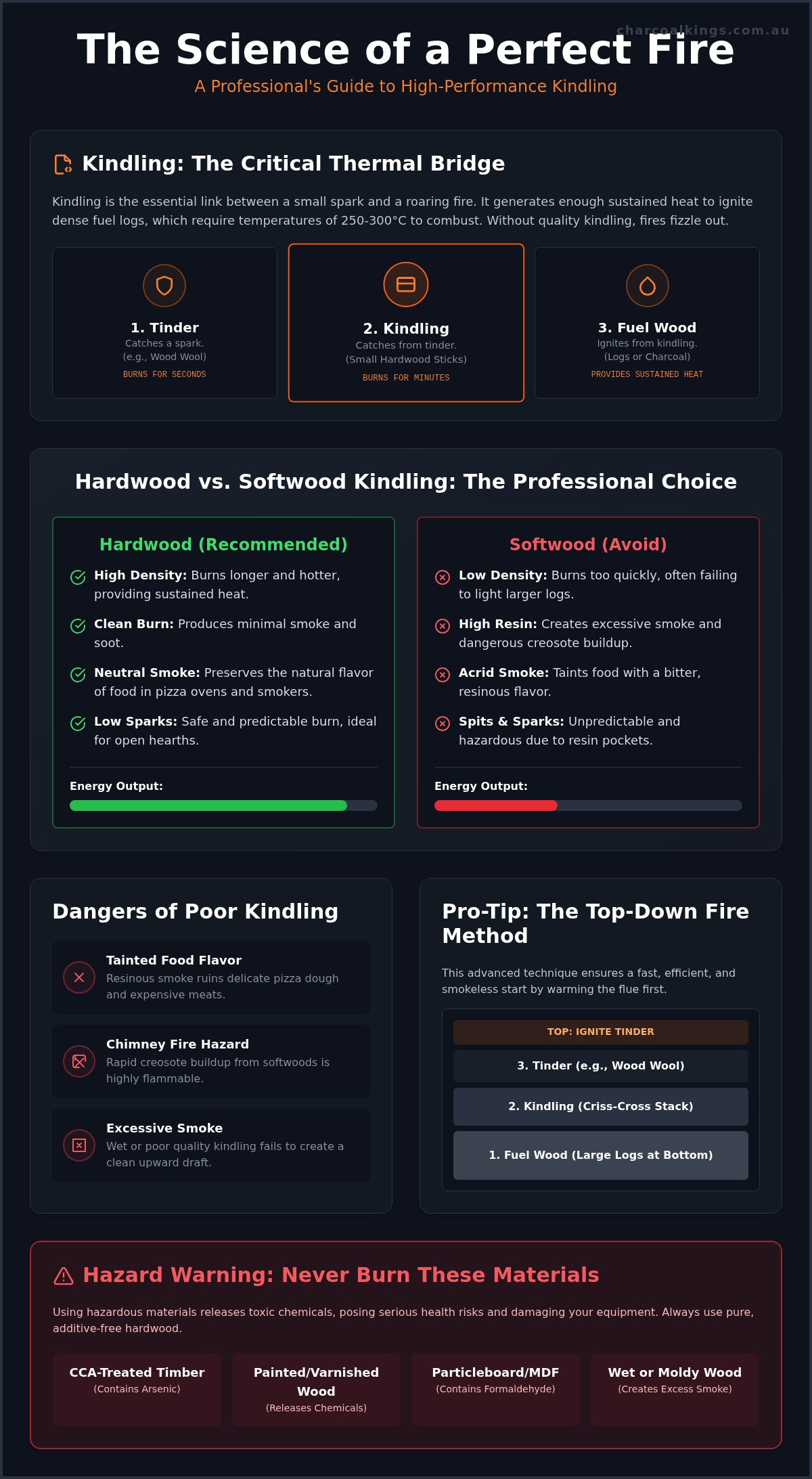
The “Thermal Bridge” is a critical concept in fire management. A standard hardwood log is dense and requires a surface temperature of roughly 250 to 300 degrees Celsius before it can sustain its own combustion. A match or a small piece of wood wool simply cannot generate enough sustained energy to reach that threshold. Kindling wood provides the necessary surface area and duration of flame to raise the temperature of the larger fuel. It acts as a heat delivery system, ensuring the transition from a flicker to a functional fire is seamless and reliable.
Beyond ignition, kindling dictates the health of your chimney or flue. Cold air is heavy and creates a plug that prevents smoke from escaping. A quick, hot start from quality kindling wood rapidly warms the flue, establishing the upward draft needed for a clean burn. At Charcoal Kings, we reject the “waste wood” mentality. Our standard is simple: we provide only pure, dry hardwood with zero chemical additives. This ensures your fire starts fast and stays clean from the very first second.
Kindling vs. Tinder: Knowing the Difference
Success in the firebox depends on using the right material for the right stage of the burn. Mixing these up leads to wasted fuel and frustration.
- Tinder: These are highly combustible materials like wood wool or paper. They catch from a single spark but burn out in seconds.
- Kindling: These are small sticks, typically 1 to 3cm in diameter. They catch from the tinder and burn long enough to ignite the main fuel.
- Fuel Wood: This includes large hardwood logs, Hardwood Lump Charcoal, or Binchotan. These provide the steady, long-term heat for cooking or warmth.
The Consequences of Using Poor Quality Kindling
Low-grade kindling ruins the experience before the main event begins. Using wet wood or resinous softwoods like pine causes excessive smoke production and rapid creosote buildup in your chimney. This is not just a cleaning nuisance; it is a serious fire hazard. For those using pizza ovens or offset smokers, poor kindling makes it nearly impossible to reach the “clean burn” temperatures required for professional results. Perhaps most importantly, low-quality starters and softwoods often release acrid, resinous vapors. These “off” flavors can easily taint expensive cuts of meat or delicate pizza dough, undoing all the work you put into your prep.
Choosing the Best Wood for Kindling: Hardwood vs. Softwood
Selecting the right material is the difference between a clean, high-performance burn and a smoky mess. Density is the primary metric that separates professional fuel from backyard scrap. Hardwood is the superior choice for kindling wood because it contains more energy per cubic centimeter than softwood. While softwoods ignite quickly, they burn out almost immediately, often failing to provide the sustained heat required to catch larger logs. Hardwood kindling burns longer and hotter, providing a reliable transition for your firebox.
The “Pine Problem” is a common trap for hobbyists. Softwoods like pine are heavily resinous. When these resins burn, they create excessive soot and a rapid buildup of creosote in your flue. This resin also causes “spitting” and “sparking,” which are unpredictable and dangerous in open hearths or near food. For a predictable, manageable fire, Australian hardwoods like Mountain Ash or Jarrah are the industry standard. These species offer a consistent burn rate and high heat output without the volatile behavior of resinous alternatives.
Consistency in sizing is equally vital. If your sticks vary from toothpicks to heavy branches, your fire management becomes guesswork. Uniform, split hardwood ensures that every piece reaches its peak combustion temperature at the same time. This predictability allows you to stack your fuel with precision, ensuring maximum airflow and a fast start. You can find premium hardwood kindling that meets these exacting standards for your next burn.
Why Hardwood Kindling is Essential for Cooking
When you are firing up a pizza oven or an offset smoker, the smoke profile is just as important as the heat. Softwood resins release acrid, bitter vapors that penetrate dough and meat, ruining the flavor of your cook. Hardwood provides a neutral, clean smoke profile that respects your ingredients. Avoiding sparks is also a priority for outdoor cooking; a single flying ember can ruin the surface texture of a searing steak or a delicate crust. For more detail on how different species affect your food, see our guide on smoking woods.
The Role of Moisture Content
Seasoning is a technical process, not just a measure of time. For kindling wood to be effective, it must sit in the 15 to 20% moisture “sweet spot.” Anything higher means the fire’s energy is wasted evaporating water rather than producing heat. You can identify wet wood by its weight and behavior; it feels heavy for its size and will hiss or bubble when it meets a flame. Dry, seasoned hardwood will feel light, look dull, and produce a sharp “clack” when two pieces are struck together. High-quality fuel should never fight the flame.
Mastering the Lighting Process with Premium Kindling
Correct airflow dynamics are as vital as the fuel itself. Fire requires a constant supply of oxygen to sustain combustion; smothering your kindling wood with heavy logs is a guaranteed way to starve the flame. Instead of a roaring fire, you get a smoldering, smoky pile that fails to reach ignition temperature. Effective lighting is about creating a structure that allows air to circulate freely while the heat builds. This preparation phase is where you set the stage for a clean, efficient burn.
Using kindling to pre-heat your setup is a professional trick that many amateurs overlook. In a traditional chimney, lighting a small amount of kindling first warms the air column, establishing a strong upward draft that pulls smoke out of the room. For pizza ovens, the kindling serves to pre-heat the thermal mass of the dome. Once the internal temperature is rising, you can seamlessly transition to premium lump charcoal for the main cook. This ensures your fuel isn’t fighting a cold environment when you start your BBQ.
The Top-Down Lighting Method
The traditional “Teepee” method is common, but the Top-Down approach is superior for reducing smoke and soot. By lighting the fire from the top, the flames consume the smoke and volatile gases released by the wood below before they can escape up the flue. This creates a much cleaner ignition cycle.
- Step 1: Place your largest logs or charcoal at the bottom of the grate, packed relatively close together to create a solid base.
- Step 2: Layer your kindling wood on top in a “log cabin” or “criss-cross” style. This structure provides maximum stability and allows oxygen to reach every surface.
- Step 3: Place your tinder at the very top of the pile and light it. The heat will slowly work its way down, drying and pre-heating the larger fuel as it descends.
Lighting for High-Heat Cooking (Pizza Ovens)
Reaching the 400°C+ temperatures required for a true Neapolitan pizza demands an aggressive lighting strategy. You cannot achieve this with softwood. Hardwood kindling is the only choice for generating the intense, focused heat needed to saturate the oven floor and dome. Build a significant kindling fire in the center of the oven to ensure the refractory bricks soak up the energy. Once the dome turns white, which indicates the soot has been burned off, you have achieved the necessary heat. At this stage, push the established coal bed to the side or back to make room for your cook, maintaining the temperature with consistent, small additions of hardwood sticks.
Safety, Storage, and What to Avoid
Scavenging for “free” wood is a dangerous shortcut that compromises your health and your equipment. Many people assume that any small piece of timber will serve as effective kindling wood, but industrial waste is often loaded with hazardous additives. Construction off-cuts, painted boards, and old pallets are the primary offenders. Pallets are frequently treated with methyl bromide or other potent pesticides to meet international shipping regulations. When burned, these chemicals vaporize, creating toxic smoke that is unsafe to inhale and even more dangerous when it comes into contact with food.
The “Never-Use” list is non-negotiable for anyone serious about fire safety. Avoid any wood that shows signs of green or blue staining, as this usually indicates chemical pressure treatment. Painted or varnished wood releases heavy metals like lead when ignited. These substances don’t just disappear; they coat the interior of your flue and pizza oven, creating a permanent contamination risk. For a clean and predictable burn, you must prioritize purity. For guaranteed safety, order your additive-free kindling wood directly from our master craftsmen.
The Dangers of Treated and Found Wood
Construction site waste is a high-risk fuel that should never enter your firebox. The chemicals used to preserve timber for outdoor use are designed to resist rot and pests, not to be incinerated. CCA treatment is a toxic preservative that must never be burned. This Copper Chrome Arsenate compound releases arsenic into the air and leaves it concentrated in the ash. This creates a significant health hazard for your household and makes the resulting ash toxic for garden disposal. Using “found” wood also risks introducing moisture and rot into your setup, which leads to the poor performance issues discussed in previous sections.
Best Practices for Kindling Storage
In the Australian climate, managing moisture is a constant battle. High humidity can quickly ruin seasoned wood if it is not stored with precision. Follow these standards to keep your fuel in peak condition:
- Off the Ground: Use a raised rack or a pallet to prevent moisture from wicking up from the soil or concrete.
- Side-Ventilation: Never pack your kindling too tightly. Air must flow through the stack to prevent mold and rot.
- Pest Management: Inspect your stock for mud tunnels or wood dust, which indicate termites or borers. Never store bulk kindling wood directly against the walls of your home.
- Safety Distances: While convenience is important, keep your indoor wood supply at least one meter away from the hearth to prevent accidental ignition from stray sparks.
Maintaining a bone-dry fuel supply ensures that every fire you light is fast, efficient, and free from the acrid smoke caused by damp or contaminated timber. Professional fire management starts with the quality of your storage as much as the quality of your wood.
Fuel Your Passion with Charcoal Kings Kindling
Excellence in fire management requires a consistent supply of premium fuel. At Charcoal Kings, we do not treat kindling wood as a byproduct or waste material. We view it as a precision instrument that dictates the success of your burn. Our commitment to quality starts at the source, selecting only the finest Australian hardwoods that meet rigorous density and moisture standards. This ensures that every piece of wood you light contributes to a clean, high-performance fire without the interference of smoke or chemical odors.
The Charcoal Kings difference is built on three pillars: purity, absence of additives, and optimal seasoning. We understand that whether you are operating a professional wood-fired kitchen or a backyard fire pit, you need a fuel system that works in harmony. By using our hardwood kindling alongside our firewood and specialist charcoal, you eliminate the risk of flavor contamination. A total fuel system ensures that the energy levels remain stable from the first spark to the final ember.
Our Hardwood Kindling Standards
We maintain strict control over our production process to deliver a product that exceeds industry expectations. Our kindling wood is designed for reliability and ease of use in any environment.
- Precision-Split: Every stick is split to maximize surface area, allowing for rapid ignition and immediate heat transfer to larger fuel sources.
- Sustainably Sourced: We source our timber exclusively from sustainable Australian hardwood forests, ensuring long-term environmental responsibility.
- Zero Additives: Our wood is 100% natural. You will never find waxes, glues, or accelerants in our bags.
- Optimized Packaging: Our heavy-duty packaging is designed for easy handling and protects the wood from ground moisture during storage.
Order Your Premium Fuel Today
Serious fire enthusiasts and professional chefs choose Charcoal Kings because we prioritize performance over convenience. If you are in South Australia, visit our Holden Hill showroom. Our team provides expert advice on fire management and can help you select the right combination of kindling, smoking woods, and lump charcoal for your specific setup. We also provide dedicated wholesale opportunities for restaurants and pizza shops that require high volumes of consistent, clean-burning fuel. Stop fighting with low-grade starters and experience the power of professional-grade materials. Get your premium kindling wood from Charcoal Kings and master your fire today.
Master Your Fire with Professional Fuel
Success in the firebox begins with the right materials. As established, high-performance kindling wood serves as the essential thermal bridge that dictates the efficiency and cleanliness of your entire burn. By choosing dense, seasoned Australian hardwoods over resinous softwoods or hazardous treated timber, you ensure a fast ignition that respects both your equipment and your ingredients. Professional results in a pizza oven or offset smoker are only possible when you eliminate the variables of moisture and chemical additives.
Charcoal Kings provides the purity and performance required by SA pitmasters and home chefs alike. Our expert-selected hardwoods are precision-split and free from additives, ensuring a neutral smoke profile for every cook. Don’t settle for “free” construction waste or low-grade starters that ruin your hard work. Upgrade your fire with Premium Hardwood Kindling and experience the difference that expert-grade fuel makes. Fire up your next BBQ with absolute confidence and master the craft of the perfect burn.
Frequently Asked Questions
Can I use pine for kindling if I am cooking food?
No. Pine and other resinous softwoods release acrid vapors that taint the flavor of your food. This is particularly problematic in pizza ovens where the smoke directly contacts the dough. Softwoods also produce excessive soot and unpredictable sparks that can ruin the cooking surface. For a neutral smoke profile that respects your ingredients, always use pure Australian hardwood kindling. It provides a clean, high-intensity heat without the bitter aftertaste.
How much kindling wood do I need to start a standard fire?
A standard fire usually requires between six and ten pieces of precision-split kindling wood to establish a functional thermal bridge. The exact quantity depends on the size of your primary fuel logs and the airflow within your grate. You must use enough material to generate a sustained flame for several minutes. This ensures the larger logs reach their ignition temperature. Using too few sticks will likely cause the fire to fizzle out prematurely.
Is it safe to use old newspapers instead of kindling?
Newspaper is suitable as tinder but it cannot replace kindling. It burns too rapidly to provide the sustained heat needed to ignite dense hardwood logs. Relying on paper alone often results in a massive amount of floating ash and a fire that dies before the main fuel catches. Use a small amount of paper to light your sticks. The wood provides the necessary duration of flame to bridge the gap to your logs.
Why is my kindling wood producing so much black smoke?
Heavy black smoke usually indicates that your kindling wood has a high moisture content or is a resinous softwood like pine. Wet wood forces the fire to spend energy evaporating water instead of producing heat. This results in incomplete combustion and the production of thick, dark smoke. It’s also a sign of poor airflow. Ensure you’re using seasoned hardwood and stacking it loosely to allow oxygen to reach the center of the flame.
Can I use “found wood” or twigs from my garden as kindling?
Found wood and garden twigs are generally unsuitable for high-performance fires. These materials are often damp, partially rotted, or infested with garden pests. Twigs lack the consistent density and surface area required for a predictable ignition cycle. Using unrefined garden waste leads to excessive smoke and low heat output. For a clean, efficient start in your smoker or pizza oven, stick to professional-grade hardwood that has been seasoned to the correct moisture level.
What is the best way to store kindling wood outdoors?
Store your kindling wood on a raised rack or pallet to prevent moisture from wicking up from the ground. Use a waterproof cover to protect the top of the stack from rain, but keep the sides open. Side ventilation is essential for maintaining airflow and preventing mold or rot. Never store large quantities of wood directly against the walls of your home. Proper outdoor storage ensures your fuel remains bone-dry and ready for immediate use.
How can I tell if my kindling is properly seasoned?
You can determine if your wood is properly seasoned by its weight, appearance, and sound. Seasoned wood feels much lighter than green wood because the internal moisture has been removed. The surface should look dull and may show small cracks at the ends. When you strike two pieces together, they should produce a sharp, hollow “clack.” A dull thud indicates the wood is still too wet to provide an efficient, clean burn.
Does kindling wood expire or go bad over time?
Wood does not expire, but its utility depends on the integrity of your storage. Hardwood kept in a dry, well-ventilated environment will remain a viable fuel source for many years. However, exposure to moisture will eventually cause the wood to rot or attract wood-boring insects. These factors destroy the energy density of the material. Always inspect older stock for soft spots or signs of pests before adding it to your firebox for a cook.