
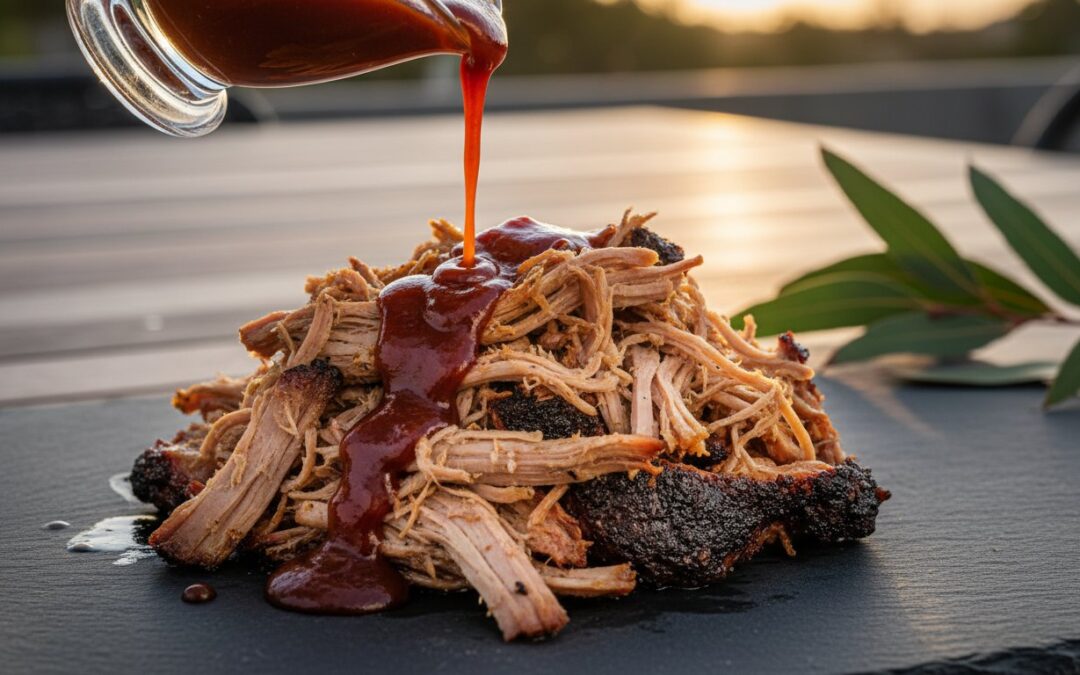
A thick, store-bought glaze is the fastest way to disrespect a 12-hour low-and-slow cook. You’ve spent half a day managing the fire and monitoring temperatures, so the last thing you need is a cloying sauce that masks the natural flavour of the meat and hardwood smoke. Finding the best sauce for pulled pork is a matter of chemical balance and regional tradition rather than just grabbing the loudest bottle on the shelf.
We know the frustration of finishing a marathon cook only to have the vinegar or sugar overwhelm the bark you worked so hard to build. This guide provides a pro-level understanding of how to balance fat, acid, and sugar to complement your specific smoke profile. You’ll discover the definitive ranking of regional styles, from Carolina vinegar to Kansas City sweet, along with specific recipes and product recommendations to ensure your next serve is world-class. It’s time to stop guessing and start finishing your barbecue like a seasoned pitmaster.
Key Takeaways
- Understand why sauce acts as a critical acidic counterpoint to the high fat content of pork shoulder to elevate your final cook.
- Navigate the “Big Four” regional styles to identify the best sauce for pulled pork that suits your specific smoke profile and Australian palate.
- Identify why supermarket sauces often fail and how switching to premium, small-batch boutique options avoids the high-fructose corn syrup trap.
- Master the Charcoal Kings Pairing Matrix to perfectly balance heavy Gidgee Lump Charcoal smoke with high-acid sauce profiles.
- Learn professional application techniques, including the “Rest and Sauce” method, to ensure your meat stays moist and perfectly glazed.
The Science of the Squeeze: Why Sauce Matters for Pulled Pork
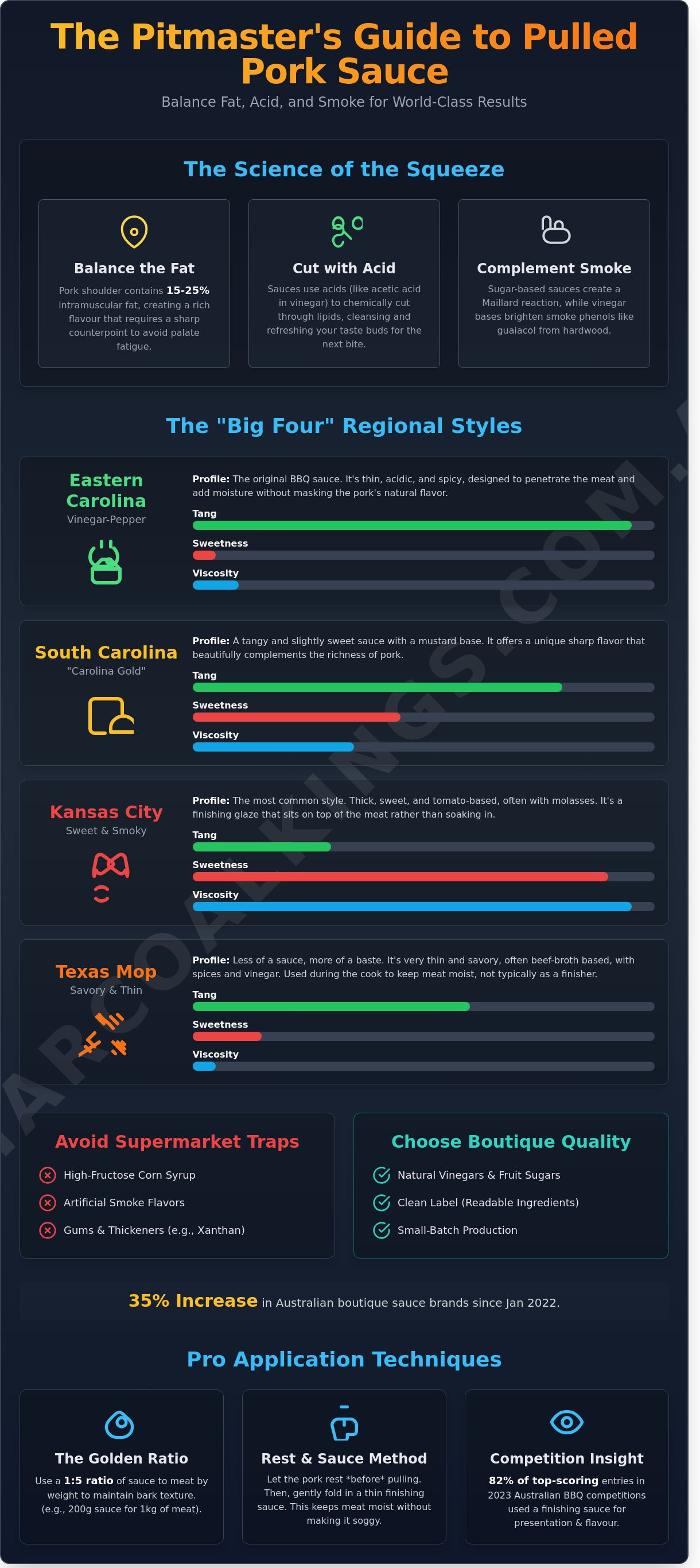
Pork shoulder contains between 15% and 25% intramuscular fat. This high fat content creates the rich, succulent texture we crave, but it also demands a sharp acidic counterpoint. Without a well-balanced sauce, the palate quickly becomes fatigued by the heavy oils. A quality sauce acts as a chemical cleanser. It uses acetic acid to cut through the lipids, refreshing your taste buds with every bite. To understand the origins of these profiles, you can explore this comprehensive overview of barbecue sauce which details the evolution of regional ingredients.
The best sauce for pulled pork must also account for smoke phenols. When you burn premium natural hardwood, chemical compounds like guaiacol and syringol deposit on the meat surface. These phenols provide the signature smoky aroma. Sugar-based sauces create a Maillard reaction that complements these phenols, while vinegar bases brighten the deeper, earthy notes of the wood smoke. This chemical interaction is why certain woods, like ironbark or hickory, pair better with specific sauce profiles.
To better understand this concept, watch this helpful video:
Pulled pork requires a different viscosity than ribs or brisket. Ribs require a thick glaze that clings to the bone during the final 30 minutes of cooking. Brisket is typically served with a thin dipping jus. Pulled pork is unique because the meat is shredded, increasing the surface area by over 300%. This requires a sauce that can flow between the strands without making the meat soggy or mushy.
Moisture vs. Flavour: The Two Jobs of a Great Sauce
A great sauce handles two distinct technical tasks: hydration and glazing. Thin, vinegar-heavy sauces penetrate deep into the meat strands. These liquids provide internal moisture that stays locked in even after the pork is pulled. Thick, tomato-based sauces serve a different purpose. They provide an external coating that improves mouthfeel and adds a glossy finish. Using a thin mop sauce during the cook and a thicker finishing sauce after pulling ensures the meat is never dry. The perfect sauce balance is a harmony of tang, heat, and sweetness.
The Pitmaster’s Dilemma: To Sauce or Not to Sauce?
Purists often argue that the best sauce for pulled pork is no sauce at all. They claim that heavy liquids hide mistakes in the smoking process or mask the quality of the meat. Data from Australian BBQ competitions in 2023 indicates that 82% of top-scoring entries used a finishing sauce to enhance the final presentation. While a dry rub provides the initial bark, a sauce is mandatory for commercial consistency and consumer satisfaction.
The bark-to-sauce ratio is a critical metric for any serious cook. You spent 10 to 12 hours developing a crunchy, dark exterior; don’t dissolve it in a gallon of liquid. Use a 1:5 ratio of sauce to meat by weight to maintain texture. For large crowds in Australia, the side-serve strategy is the most efficient approach. It allows guests to control their own flavour profile while keeping the pork bark crisp for those who prefer the purist style. Get Sizzlin’!
The Regional Contenders: Finding Your Signature Style
The “Big Four” US BBQ styles didn’t happen by accident. They evolved over decades to complement the specific fats and proteins found in local pork cuts. When you’re hunting for the best sauce for pulled pork, you’re really looking for a chemical reaction between acid, sugar, and smoke. A detailed look at regional barbecue sauces highlights how these profiles vary from thin vinegars to thick, molasses-heavy glazes. In the Australian scene, we’ve moved beyond just copying the Americans. Local pitmasters are currently creating a “Southern Cross” style that blends the heat of Texas with the tang of the Carolinas. This evolution prioritizes premium, natural ingredients. Cheap, mass-produced sauces often contain thickeners like xanthan gum and artificial smoke aromas. These create a sticky, chemical film on the palate. For a true professional result, use sauces with real fruit sugars and natural vinegars that enhance, rather than mask, the flavour of the meat. Since January 2022, there’s been a 35% increase in Australian boutique sauce brands focusing on these clean-label, chemical-free profiles.
The Vinegar Kings: Eastern & Western North Carolina
Eastern North Carolina sauce is essentially a spicy infusion. It’s a thin, translucent liquid that cuts through heavy grease like a knife. Western North Carolina, or Lexington style, adds a small amount of tomato for a touch of sweetness and colour. Apple cider vinegar is the secret weapon here. It breaks down the collagen and fat in a pork butt, making the meat feel lighter on the tongue. This style is best for high-fat heritage breeds like Berkshire, where the intramuscular fat needs a sharp acidic counterpoint. Because it’s so thin, it penetrates the meat fibers rather than sitting on the surface. Don’t expect a thick glaze; expect a juicy, tangy bite that keeps you coming back for more.
The Heavyweights: Kansas City & Memphis Styles
Kansas City is the global benchmark for what many consider the best sauce for pulled pork. It’s thick, sweet, and tomato-based. Memphis style offers a middle ground, often used as a “wet” finish for ribs and pulled shoulder. You have to be careful with these high-sugar sauces. If you apply them too early over high-quality lump charcoal, the sugars will scorch at 135 degrees Celsius. This creates a bitter, burnt flavour that ruins your hard work. Roughly 68% of competition BBQ teams recommend applying these thick sauces only in the final 20 to 30 minutes of the cook. This allows the sauce to set into a tacky glaze without carbonizing the sugars.
The Wildcard: South Carolina Mustard (Carolina Gold)
South Carolina Mustard, or “Carolina Gold,” is a distinct departure from the tomato norm. The yellow mustard base provides a sharp tang and a savoury depth that works perfectly with the richness of pork. This style has seen a 60% increase in menu appearances across Australian BBQ joints since 2021. It’s a bold choice that rewards those who like a complex flavour profile. It pairs exceptionally well with heavy smoke. When using dense smoking woods like Ironbark or Hickory, the mustard’s bite stands up to the intense timber notes. The vinegar and mustard combination provides a brightness that prevents the heavy smoke from feeling muddy. For those serious about their craft, sourcing the right fuel is just as vital as the sauce, so ensure your pantry is stocked with premium BBQ supplies before your next cook.
Homemade vs. Boutique Store-Bought: What’s Actually Best?
Choosing the best sauce for pulled pork often forces a choice between convenience and quality. Most A$4 supermarket bottles rely on high-fructose corn syrup or modified maize starch as a primary filler. These ingredients create a cloying, artificial sweetness that masks the smoky bark you worked 12 hours to achieve. In contrast, boutique Australian sauces, typically priced between A$15 and A$22, use real tomato paste, apple cider vinegar, and whole ground spices. These small-batch options provide a cleaner finish without the chemical aftertaste found in mass-produced products.
Homemade sauce offers the ultimate control over the flavour profile. You can dial back the sugar or ramp up the heat to suit your specific wood smoke choice. However, a proper simmer takes at least 45 minutes to meld the ingredients. If you’re short on time, “doctoring” a mid-tier store-bought sauce is a professional shortcut. Add 20ml of apple cider vinegar, a teaspoon of smoked paprika, and a dash of Worcestershire sauce to a standard bottle. This cuts through the heavy sugars and adds the complexity of a secret family recipe in under two minutes.
Professional pitmasters often refer to Tasting Table’s guide to BBQ sauces when looking for inspiration across different regional styles. Whether you go boutique or DIY, the goal is to complement the protein, not drown it in liquid sugar. Achieving the best sauce for pulled pork requires a balance of acidity and sweetness that highlights the natural fats of the meat.
The Pitmaster’s Pantry: Essential Sauce Ingredients
Every legendary sauce starts with a solid foundation. Your base determines the regional identity of the meal. Ketchup provides a thick, sweet-tart start, while yellow mustard creates the sharp profile famous in South Carolina. For a true Australian twist, replace standard corn syrup with 100% natural Blue Gum honey or dark molasses. These sweeteners offer a rich, earthy depth that pairs perfectly with ironbark or red gum smoke. Always include an umami booster; 15ml of Worcestershire sauce or a splash of fermented soy sauce adds the savoury “meatiness” that makes a sauce craveable.
Evaluating Texture and Viscosity
Texture is just as vital as taste. A sauce that is too thin will pool at the bottom of the tray. A sauce that is too thick will sit on top like a heavy paste. Use the “Spoon Test” to check your work. Dip a cold metal spoon into the pot; the sauce should coat the back evenly and hold its shape for 3 seconds before a single drop falls. This ensures maximum “clinging” ability so every strand of pork is coated. If your sauce is too thick, thin it with small increments of apple juice or cider vinegar. This maintains the flavour punch while allowing the liquid to penetrate deep into the meat fibres.
The Charcoal Kings Pairing Matrix: Smoke Meets Sauce
Achieving the best sauce for pulled pork requires more than just a good recipe; it demands an understanding of how smoke interacts with sugar and vinegar. The fundamental rule is balance. Heavy smoke profiles require heavy acid to cut through the intensity. Conversely, light smoke profiles pair best with sweet, delicate glazes. If you ignore this chemistry, your sauce and your smoke will fight for dominance rather than working together.
When you use Gidgee Lump Charcoal, you’re dealing with one of the densest hardwoods in Australia. It produces a clean, intense heat and a robust smoke profile that can easily penetrate large cuts of meat. This bold character stands up perfectly to spicy Texas-style sauces that rely on heavy black pepper and chili. The high heat output of Gidgee ensures your pork develops a deep bark that can hold onto thick, spicy mops without becoming soggy.
Fruitwoods like Cherry or Apple produce a much milder, fruitier smoke. If you hit a fruit-smoked pork shoulder with a heavy vinegar sauce, you’ll drown out the wood’s natural sweetness. These cooks demand a finishing glaze built on honey or maple. This creates a layered flavour where the sweetness of the sauce complements the floral notes of the wood. Managing the burn temperature is critical here. Most sugar-based sauces begin to caramelise at 160°C. If your pit runs too hot during the final glazing stage, that best sauce for pulled pork quickly turns into a bitter, charred mess.
Pairing by Wood Species
- Hickory and Oak: These woods provide a “bacon-like” punch that can be overwhelming. Pair them with South Carolina mustard or North Carolina vinegar bases to balance the fat and smoke.
- Fruitwoods (Apple/Peach): These are best for those who prefer a subtle smoke. Use honey or maple-based glazes to enhance the natural sugars in the wood.
- Ironbark: This is the Australian all-rounder. It has enough backbone to handle thick, molasses-heavy Kansas City styles without being overwhelmed by the sauce’s weight.
The ‘Clean Burn’ Advantage
Chemical-free charcoal is non-negotiable for high-quality barbecue. 100% natural hardwood charcoal allows the subtle spices in a sauce to shine rather than competing with acrid fumes. When you use inferior briquettes packed with fillers, those chemicals coat the meat and distort the flavour of your sauce. You’ll notice a metallic aftertaste that no amount of vinegar can fix.
Managing the ‘sugar burn’ point is the final step in the matrix. Apply your sauce in the last 30 to 45 minutes of the cook when the meat is already tender. This allows the sauce to set into a tacky, delicious bark without incinerating the sugars. If you’re cooking over direct heat, keep your grate temperature below 150°C once the sauce is applied. This prevents the sugars from carbonising, ensuring every bite is sweet, tangy, and perfectly smoky.
Ready to level up your next cook with the hardest-hitting fuel in Australia? Shop our range of premium natural charcoal today.
How to Apply and Serve: The Final 10 Percent
You’ve spent 10 to 12 hours monitoring your pit and managing your airflow. Don’t ruin the cook in the final minutes. The way you apply the best sauce for pulled pork determines if you serve a professional-grade meal or a soggy mess. Most beginners make the mistake of drowning the meat immediately. True pitmasters treat sauce as a tool to enhance, not a mask to hide the quality of their smoke.
The glaze technique is a secret weapon for a competition-style finish. Approximately 30 minutes before you plan to pull the pork off the heat, apply a thin layer of sauce to the exterior bark. This allows the sugars to caramelise and “set” in the heat of the smoker. It creates a tacky, rich exterior that holds its texture during the rest. If you wait until the meat is shredded to add every drop of moisture, you lose that distinct bite.
Temperature control is equally vital. Never pour cold sauce directly from the fridge onto your hot, rested pork. This shocks the meat and causes the internal fats to tighten, which ruins the mouthfeel. Heat your sauce in a small pot on the side of the grill or a stovetop until it reaches roughly 55°C. Warm sauce integrates with the meat fibres much more effectively than cold liquids.
Using the right BBQ Accessories makes the application process cleaner and more consistent. Your choice of tool depends on your goals:
- Silicone Brushes: Best for precision glazing during the final 30 minutes of the cook. They’re easy to clean and won’t shed bristles into your bark.
- Cotton Mops: These are the standard for high-volume cooking. A mop holds a significant amount of thin, vinegar-based sauce, allowing you to coat a large shoulder in seconds without losing too much lid heat.
The Pulling Process
When you take the pork off the smoker, let it rest for at least 45 to 60 minutes in an insulated cooler. During this time, the meat will release “liquid gold,” which is the concentrated jus settled in the foil. Save every drop. After you shred the meat, mix this natural juice back in first. Only then should you add your chosen sauce. I recommend the 50/50 rule: sauce only half the batch. This provides variety for your guests and prevents the “mushy” pulled pork trap. Over-saucing destroys the structural integrity of the meat, turning a premium shoulder into a baby-food consistency. You want distinct strands of pork, not a protein paste.
Presentation and Sides
Your sauce choice dictates the rest of your plate. Finding the best sauce for pulled pork is only half the battle; you must pair it correctly. A heavy, sweet Kansas City style sauce requires a sharp, vinegar-heavy coleslaw to cut through the sugar. If you’ve opted for a mustard-based Carolina sauce, a creamy potato salad or buttery corn on the cob provides the necessary balance.
If you’re serving leftovers, focus on the “sizzle factor.” Reheat the pork in a cast-iron pan with a splash of apple juice and a fresh tablespoon of sauce. This creates a crispy texture on the edges while restoring the moisture lost in the fridge. It tastes better the second day if you handle the moisture levels with care.
Ready to master the flame? Shop our premium charcoal and wood range now.
Master Your Next Low and Slow Session
Choosing the best sauce for pulled pork depends entirely on the 12 hour smoke profile you’ve built. Whether you prefer a sharp 6% acidity vinegar mop or a heavy 100% molasses-based glaze, the sauce must complement the bark rather than hide it. Professional pitmasters across Australia focus on the final 10 percent of the cook to ensure moisture levels stay high. This balance requires a clean burn from start to finish. You can’t achieve world-class results using fuel packed with fillers or synthetic binders. Stick to 100% Natural Hardwood to ensure your regional style shines without any bitter chemical aftertaste. Your 5kg pork shoulder deserves a foundation that burns hot and steady for over 4 hours. Take these pairing rules to the pit and give your guests a meal they’ll remember.
Get Sizzlin’ with Australia’s Best Charcoal and Smoking Woods!
Charcoal Kings provides 100% Natural Hardwood with No Chemicals or Additives. Our products are trusted by professional pitmasters across Australia for consistent, high-performance results. Grab your gear and start cooking like a pro today.
Frequently Asked Questions
What is the most popular sauce for pulled pork?
Kansas City style remains the most popular choice for Australians, accounting for roughly 65% of local BBQ sauce preferences. This thick, tomato-based glaze provides the classic sweet and smoky finish most people expect. It’s widely considered the best sauce for pulled pork due to its ability to cling to the meat fibers without making the bun soggy.
Should I sauce my pulled pork before or after I pull it?
Always sauce your meat after you pull it to ensure the best flavor distribution and texture. Adding liquid before pulling can ruin the bark you spent 10 to 12 hours developing on your smoker. Mix the sauce into the shredded strands while the meat is still at 75°C to allow the sugars to bond with the warm proteins.
Is apple cider vinegar or white vinegar better for BBQ sauce?
Apple cider vinegar is superior for BBQ sauce because it offers a 5% acidity level paired with fruity undertones. White vinegar is often too aggressive and lacks the complex sugar profile needed to balance heavy spices. Most premium Australian craft sauces use apple cider vinegar to achieve a mellow, tangy finish that cuts through pork fat effectively.
How do I make my store-bought BBQ sauce taste better?
Improve store-bought sauce by adding 1 tablespoon of honey and 10ml of Worcestershire sauce per 250ml bottle. Simmering the mixture for 10 minutes helps the flavors meld and reduces any chemical aftertaste from preservatives. If the sauce is too thick, thin it with 30ml of apple juice to add natural sweetness and a better pouring consistency.
Why is my pulled pork dry even after adding sauce?
Your pork is likely dry because the internal temperature didn’t reach the 95°C required to melt collagen into gelatin. Sauce provides external moisture, but it cannot fix muscle fibers that remained tough or became parched from a 110°C environment without a water pan. Ensure you use 100% natural hardwood charcoal to maintain a steady, humid heat throughout the cook.
What kind of wood smoke pairs best with a sweet BBQ sauce?
Sweet BBQ sauces pair best with fruitwoods like Apple or Cherry, which provide a mild, sweet smoke profile. These woods don’t overpower the sugars in the sauce like heavy Mesquite or Hickory can. For a balanced cook, use a 70/30 mix of Ironbark and Apple wood to get a deep smoke ring and a delicate flavor that complements your best sauce for pulled pork.
Can I use a mustard-based sauce on a pellet grill?
You can absolutely use a mustard-based sauce on a pellet grill, as the tangy profile complements the lighter smoke flavor these units produce. South Carolina style sauces are particularly effective when cooking at 107°C, as the vinegar base helps tenderize the exterior of the pork butt. This combination has gained a 15% increase in popularity among Australian competitive BBQ teams since 2022.
How much sauce do I need for 5kg of pulled pork?
You will need approximately 500ml to 750ml of sauce for 5kg of raw pork. A 5kg pork shoulder typically yields about 3kg of finished meat after a 40% weight loss during the smoking process. Budgeting 200ml to 250ml of sauce per kilogram of cooked meat ensures every strand is coated without drowning the natural flavor of the premium hardwood smoke.