
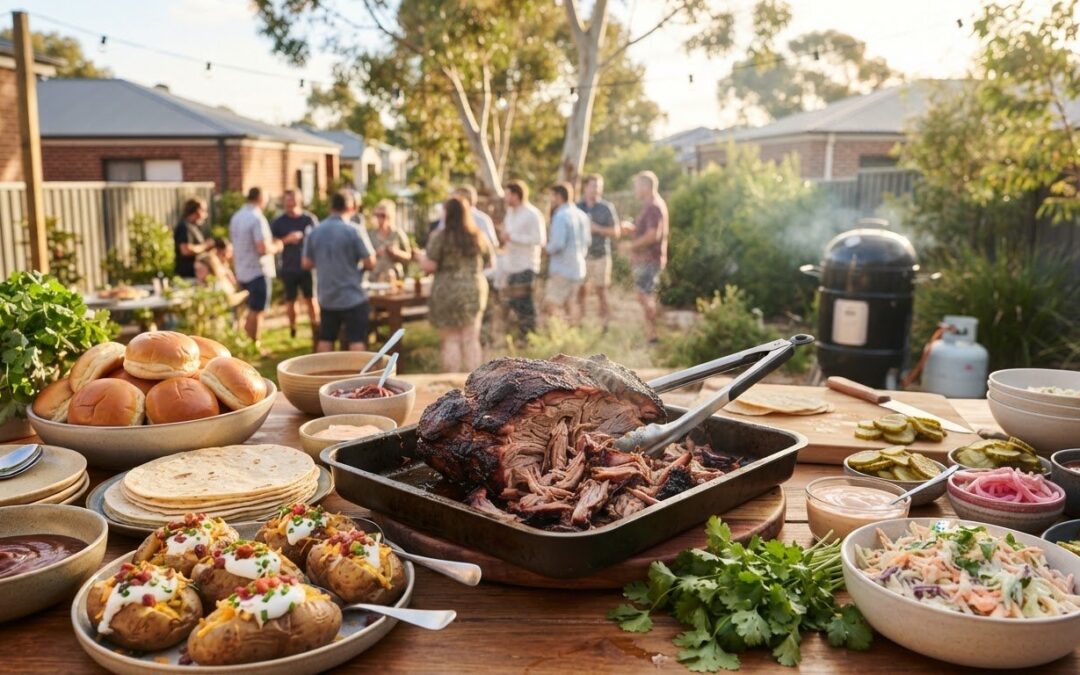
A pork shoulder doesn’t feed a crowd by itself; the serving plan does. When you’re stretching a pork shoulder to feed a large crowd, it’s easy to worry that cooking shrinkage will leave you short or that smaller portions will feel skimpy.
Those concerns are practical. Pork shoulder loses weight as it cooks, so the raw cut won’t tell you exactly how much pulled pork will reach the table. The answer isn’t to pile on more meat by guesswork. It’s to estimate the cooked yield, choose a serving style that suits your guests, and pair the pork with filling sides and toppings that bring their own flavour.
This guide will help you work out how much pork to buy, make each portion go further with options such as sliders, tacos or loaded potatoes, and plan cooking and serving with less last-minute stress. You’ll also find straightforward tips for preparing ahead, choosing charcoal and smoking wood for the cook, and handling food safely. Stretch the servings, not the flavour.
Key Takeaways
- Estimate servings from the cooked meat you expect, accounting for the cut, trimming, cooking loss and guest appetites.
- For stretching a pork shoulder to feed a large crowd, choose a serving format that helps control portions while keeping the meal satisfying.
- Use sides and toppings to add substance, variety and choice without making the pork feel like an afterthought.
- Plan backwards from serving time, but allow flexibility because tenderness and cooking conditions matter more than a fixed schedule.
- Match your charcoal and BBQ setup to the cooker’s capacity, fuel management needs and your experience.
How Much Pork Shoulder Do You Need to Feed a Large Crowd?
A raw pork shoulder can look generous on the bench, then shrink considerably as fat renders and moisture evaporates during cooking. Plan from the amount of cooked meat you want to serve, not the uncooked weight. That’s the key to stretching a pork shoulder to feed a large crowd without guessing too low or buying far more than the menu needs.
How much cooked pulled pork is a serving?
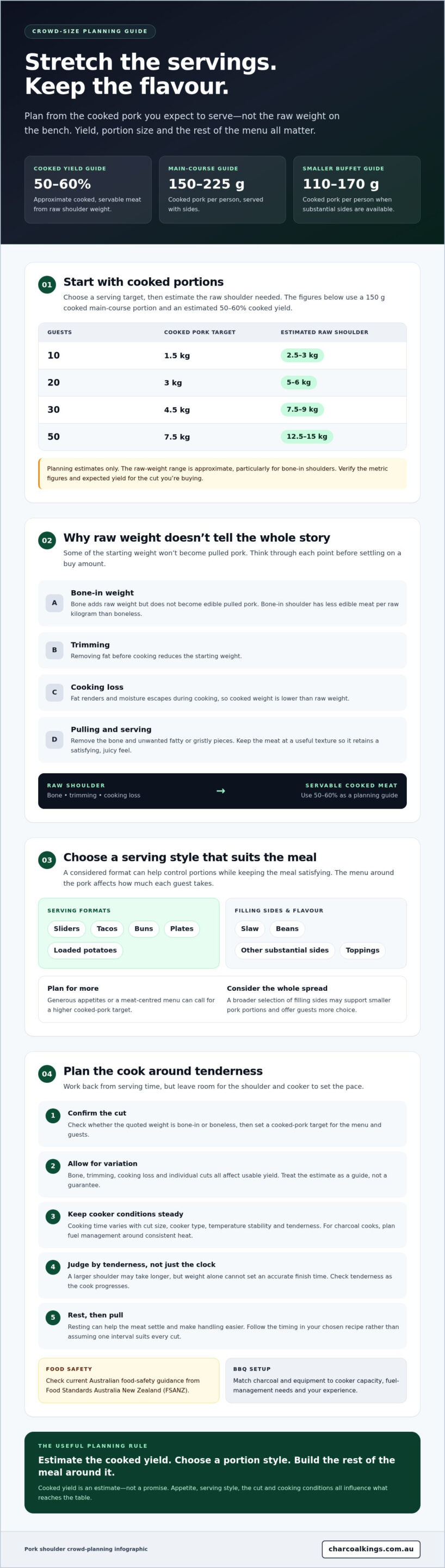
Count the meat after cooking and pulling. For a main course with sides, allow roughly 150-225 g of cooked pork per person. For a smaller buffet serving, a practical guide is around 110-170 g, especially when guests can add slaw, beans or other substantial sides. These converted metric figures are planning estimates and should be verified before publication. Appetite, serving style and the rest of the menu all affect what guests take.
For a straightforward comparison, the table below uses a 150 g cooked main-course portion and an estimated 50-60% cooked yield. The raw-weight range is approximate, particularly for bone-in shoulders.
| Guests | Cooked pork target | Estimated raw shoulder to buy |
|---|---|---|
| 10 | 1.5 kg | 2.5-3 kg |
| 20 | 3 kg | 5-6 kg |
| 30 | 4.5 kg | 7.5-9 kg |
| 50 | 7.5 kg | 12.5-15 kg |
Planning estimates only: verify metric figures and expected yield for the cut you’re buying. Increase the target for generous appetites or a meat-centred menu; a broader spread of filling sides may support smaller portions.
How do bone and cooking loss change the amount you buy?
Bone-in shoulder has less edible meat per raw kilogram than boneless shoulder because the bone contributes weight but won’t end up in the pulled pork. Trimming also reduces the starting weight, while cooking renders fat and drives off moisture. As a rough rule, expect about 50-60% of a raw shoulder’s weight as cooked, servable meat; an individual cut can fall outside that range. For background on what pulled pork is, including common preparation methods, see this overview.
Cooked yield depends on the bone, trimming and the amount of fat and moisture lost during cooking, so treat any raw-to-cooked estimate as a planning guide, not a guarantee. For a large gathering, confirm whether the quoted weight is bone-in or boneless, then build in a sensible buffer based on the full menu and your guests.
Why Pork Shoulder Works for Pulled Pork: What Affects the Final Yield
Pork shoulder is well suited to pulled pork because it contains connective tissue and fat that need time to soften during cooking. With steady, gentle heat, the firm cut can become tender enough to separate easily into strands. The result depends on the individual shoulder and how it’s cooked, so don’t expect every cut to behave identically.
What makes pork shoulder suitable for pulled pork?
Shoulder muscles do plenty of work, which makes the raw meat relatively firm. Slow cooking gives the connective tissue time to soften, while some fat renders and helps keep the meat moist. Judge the cook by tenderness, not just the clock. Food safety and pull-apart tenderness are separate considerations, so check current Australian food-safety guidance from Food Standards Australia New Zealand (FSANZ), as well as a reliable recipe for the cooking method.
Which cooking factors can change usable yield?
Bone-in cuts contribute bone weight that won’t be served, while trimming removes some fat before cooking. During the cook, fat renders and moisture escapes. Afterward, the way you pull the meat matters too: remove the bone and any unwanted fatty or gristly pieces, then shred the meat to a useful texture. Avoid pulling it so finely that it loses its satisfying, juicy feel.
Cooking time varies with cut size, cooker type, temperature stability and how readily the meat becomes tender. A larger shoulder may take longer, but weight alone can’t set an accurate finish time. Check tenderness as the cook progresses, and keep cooker conditions steady to make timing and texture more predictable. For charcoal cooks, plan fuel management around maintaining consistent heat rather than relying on a fixed timetable.
Resting the shoulder before pulling can help the meat settle and make handling easier. The ideal rest period depends on the cut and recipe, so verify the timing in your chosen cooking instructions instead of assuming one interval suits every shoulder.
Raw weight alone can’t guarantee a precise cooked yield: bone, trimming, cooking loss and the final tenderness all affect how much meat is ready to serve. That’s why stretching a pork shoulder to feed a large crowd takes more than a quick weight calculation. Build flexibility into the cooking schedule, and use a charcoal grill or smoker that suits the size of the shoulder and your experience. If you’re planning a charcoal cook, explore BBQ equipment and charcoal options that fit your setup.
Pulled Pork Buns, Tacos or Plates: Which Serving Style Stretches Further?
The serving format shapes how easily you can portion pork and how much choice guests have. Smaller buns and self-serve tacos make it straightforward to offer controlled amounts, while bowls and plated meals suit guests who want a more substantial serve. No format guarantees a particular number of servings. For stretching a pork shoulder to feed a large crowd, set the portion you intend to serve, then build a menu around it.
| Format | Portion control | Preparation and guest choice |
|---|---|---|
| Small buns | Easy to serve consistently | Quick to assemble; offer slaw and sauces separately |
| Tacos | Guests can take one or more | Good for custom toppings; prepare tortillas and toppings in advance |
| Rice bowls | Easy to portion with a serving spoon | Filling and flexible; suit guests who prefer fewer bread-based options |
| Plated meals | Host controls the amount of each component | More structured; useful for guests who want a fuller meal |
Which pulled pork format suits a buffet?
For a casual buffet, smaller buns or a taco station let guests assemble their own meal and choose toppings. Rice bowls offer another base for those avoiding bread, while plated meals can feel more substantial when you want to serve pork alongside several sides. Keep the pork replenished in manageable batches rather than putting the entire supply out at once. It’s easier to monitor portions and keep the serving area organised.
Put sauces, pickles, onions, salsa and other toppings in separate bowls. That lets guests adjust heat and flavour, and helps people make choices that suit their preferences. Label ingredients where practical, especially if sauces or toppings contain common allergens.
What sides make a pulled pork meal feel complete?
Balance rich, savoury pork with crisp, fresh or acidic sides. Slaw, green salad and crunchy vegetables bring contrast. Beans and potatoes add substance, while rice can make a bowl feel like a complete meal. These sides complement the pork; they shouldn’t be used to disguise portions that are too small.
- Fresh contrast: slaw, salad, sliced vegetables or pickled onions.
- Filling additions: beans, potatoes or rice, with recipes checked for dietary suitability.
- Custom flavour: sauces, salsa and toppings served separately.
Use separate serving utensils for each shared dish to reduce mix-ups and help prevent cross-contact. Check labels and recipes for common allergens, and make clear which dishes contain them. A well-planned spread gives guests choice, adds variety and keeps the pork at the centre of the meal.
A Step-by-Step Plan for Cooking and Serving Pork Shoulder to a Crowd
A clear schedule reduces last-minute pressure, but pork shoulder won’t finish on command. Work backwards from serving time, build in flexibility, and use tenderness rather than a fixed number of hours to judge when it’s ready. A preparation schedule helps organise the cook; it can’t guarantee the cooking duration.
- Before shopping: Confirm the guest count, serving style and sides. Use your planned cooked portions to estimate how much raw pork to buy, then check whether the cut is bone-in or boneless.
- The day before: Prepare rubs or sauces, and chop vegetables that can be stored safely. Label dishes and plan separate utensils for sauces and dietary alternatives. Cooking the pork ahead can reduce event-day work, but only if you can cool, refrigerate and reheat it according to current Australian food-safety advice.
- Before the cook: Season the shoulder and set up your BBQ or smoker, fuel and equipment. Allow enough time for the cut and cooker you’re using, plus a buffer. Don’t base the start time on weight alone.
- During cooking: Keep cooker conditions steady and follow a reliable recipe. Check progress and tenderness as the cook continues. Avoid rushing the finish just to meet the serving schedule.
- Before serving: Rest the pork according to your chosen recipe, then pull it and check the usable amount against your portion plan. Keep the meat covered and follow current Australian guidance for hot holding. Prepare or refresh sides, set out labelled toppings and sauces, and use separate serving utensils.
- After the meal: Promptly transfer leftovers into suitable shallow containers and refrigerate them in line with current Australian food-safety advice. Don’t leave cooked pork at room temperature for an extended period. Check the latest guidance for safe cooling, refrigeration, storage duration and reheating rather than relying on an unverified time or temperature.
What can you prepare before guests arrive?
Make-ahead work is useful, but food safety comes first. Prepare sauces and suitable chopped vegetables in advance, keep them stored appropriately, and label dishes with ingredients where helpful. If cooking pork ahead, follow current Food Standards Australia New Zealand (FSANZ) advice for cooling, refrigeration and reheating. Keep the shoulder covered during rest and service, and serve manageable batches instead of leaving the full supply exposed.
How should you serve leftovers safely?
Divide leftover pork into shallow containers so it can cool appropriately, then refrigerate it promptly. Reheat only what you plan to serve, and follow current FSANZ guidance for safe reheating and storage. Check the latest recommendations for exact time and temperature limits before your event, since this section doesn’t set them.
For a smoother cook, match your fuel and BBQ equipment to the shoulder and your cooking setup. Explore charcoal and BBQ equipment for your next crowd-sized cook.
Choose Charcoal and BBQ Equipment for a Crowd-Sized Pork Shoulder
A crowd-sized shoulder puts more demand on your cooker and fuel setup than a quick grill. Choose equipment based on the cut’s size, the cooking method and your ability to manage the cook. A cooker needs enough usable space for the shoulder while still allowing airflow and room to arrange the heat source appropriately. Check the manufacturer’s guidance for capacity and operation rather than relying on the cooker’s overall dimensions alone.
What should you consider when choosing a charcoal setup?
Hardwood lump charcoal and briquettes are both charcoal fuel options, but they differ in form. The best fit depends on what you’re used to handling and how you manage airflow and temperature in your cooker. Neither fuel type guarantees a particular cooking time or result. Follow the BBQ or smoker instructions, and use a reliable method to monitor heat throughout the cook.
For a long cook, think through how you’ll maintain the fire and respond if the temperature shifts. Keep fuel and suitable BBQ accessories close at hand, and avoid making adjustments that restrict airflow without understanding how your cooker responds. If you’re new to the equipment or fuel, test the setup before cooking for guests. A practice run gives you time to learn how it behaves without a crowd waiting for dinner.
How can Charcoal Kings support your BBQ plans?
Charcoal Kings is an Australian supplier of hardwood lump charcoal, charcoal briquettes, BBQ grills and smokers, and BBQ accessories. Those categories can help you plan the equipment and fuel side of a shoulder cook. Choose based on your cooker, cooking approach and familiarity with the setup; check product information for details relevant to your intended use.
For stretching a pork shoulder to feed a large crowd, good equipment planning helps you focus on the cook rather than scrambling to solve avoidable setup problems. Match cooker capacity to the cut, use a fuel type you can manage, and leave yourself time to learn unfamiliar equipment. Explore charcoal and BBQ equipment from Charcoal Kings as you prepare for your next cook.
Plan the Cook, Then Bring the Crowd Together
Good crowd cooking starts with a realistic serving plan. Estimate portions from the cooked meat you expect, then choose a serving style and sides that make the meal satisfying. Give the shoulder time to become tender, but treat your schedule as flexible rather than relying on a guaranteed finish time.
That’s the practical approach to stretching a pork shoulder to feed a large crowd: plan the portions, support the menu with flavourful sides, and prepare the serving setup before guests arrive. Thoughtful fuel and equipment choices can also make the cook easier to manage.
Charcoal Kings is an Australian supplier of hardwood lump charcoal and other BBQ fuels, serving retail, wholesale and food-service customers. For fuel and equipment as you prepare your next cook-up, explore charcoal and BBQ supplies for your next cook-up.
With a flexible plan and the right setup, you can serve a generous, flavour-packed meal with confidence. Fire up the BBQ and enjoy feeding your crowd.
Frequently Asked Questions
How much pork shoulder do I need to feed 20 people?
For 20 people, plan on roughly 3-4.5 kg of cooked pulled pork if it’s the main dish. As a rough guide, that may require about 5-9 kg of raw shoulder, based on an estimated 50-60% cooked yield. Treat this as a planning range, not a guarantee. Bone-in cuts, generous appetites and a smaller selection of sides can push the amount needed higher, so add a sensible buffer.
How many people will one pork shoulder feed?
A shoulder’s weight alone can’t tell you how many people it will serve. The bone, trimming and cooking loss all affect the amount of edible meat left. Estimate the cooked pork you need by deciding on a portion per guest and considering whether the meal includes filling sides. Before relying on serving figures, verify the estimates and clarify whether the stated shoulder weight is raw and bone-in or boneless.
Can you stretch pulled pork with beans or other sides?
Yes. Beans, slaw, salad, potatoes and other filling sides make the meal more complete while keeping pulled pork as the centrepiece. Serve the sides generously, then offer pork in buns, tacos or another self-serve format so guests can choose their portions. Keep sauces and toppings separate for easier customising. Label common allergens and ingredients relevant to your guests, and provide separate utensils for shared dishes.
How do you keep pulled pork moist when serving a crowd?
Rest the cooked shoulder before pulling, then keep the meat covered. Add a little suitable cooking juice or sauce if needed to help maintain moisture, without drowning out the pork’s flavour. Serve it in smaller batches and replenish from portions held safely. Follow current Australian food-safety guidance for holding and serving cooked meat. Check the latest recommendations before publishing or using specific temperature and holding-time instructions.
Can you cook pork shoulder the day before a party?
Yes, you can cook pork shoulder ahead if you plan safe cooling, refrigeration and reheating. Check current Food Standards Australia New Zealand guidance before deciding how to cool and store the pork, which containers to use and how to reheat it. Preparing sauces and suitable sides in advance can also reduce event-day work. Store cooked pork separately from ready-to-eat foods, and use clean utensils when handling it.
How long does pork shoulder take to cook for a crowd?
There’s no reliable cooking time based on guest count alone. The duration depends on the shoulder’s size and whether it’s bone-in, the cooker, temperature stability and the tenderness you’re aiming for. Allow a generous buffer in your schedule. Follow a reliable recipe for your cut and cooking method, then check for tenderness rather than treating a single hours-per-kilogram estimate as a guaranteed finish time.
What sides go well with pulled pork for a large group?
Build a spread with fresh, crisp options and filling sides. Slaw and salad balance the rich pork, while beans or potatoes add substance. Buns and tacos give guests flexible ways to serve themselves. A varied menu helps guests build satisfying plates without relying on larger meat portions. Keep dressings and sauces separate, label allergens and relevant ingredients, and set out a separate serving utensil for each dish.