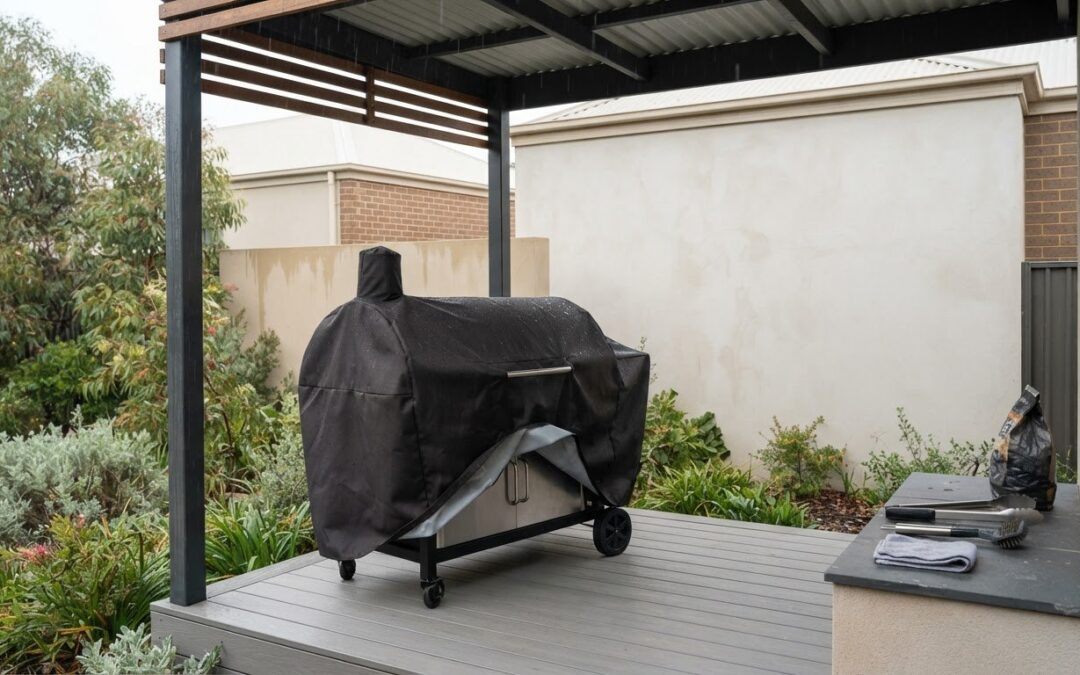
A cover can protect a smoker from rain, but one that traps damp air can create its own problems. Protecting your smoker from the rain means managing moisture on both sides of the cover, not simply keeping water off the outside.
It’s sensible to think about rust, damp ash and whether wet weather could affect your next cook. A few practical habits can help keep your smoker clean, dry and ready to use without leaving it exposed or sealing in moisture.
This guide explains how to choose a weather-protection setup, prepare for rain and check and dry your smoker afterwards. You’ll also learn why airflow matters, where to place a cover and when to follow your smoker’s care instructions. With the right balance of shelter and ventilation, you can protect your equipment and get back to cooking with confidence.
Key Takeaways
- Protect exposed surfaces from direct rain while allowing the smoker to dry between cooks.
- Understand why moisture trapped beneath a cover can slow drying, and how airflow helps.
- Compare a fitted cover, fixed shelter and naturally sheltered spot to find a practical setup for your space.
- Use a simple before-and-after-rain routine: secure accessories, cover a cool smoker, then dry and inspect it.
- Protect your smoker from rain with regular checks, and follow the manufacturer’s manual for model-specific care.
Why protecting your smoker from the rain matters
Rain-safe smoker care means limiting direct water exposure while allowing the smoker to dry fully between cooks. A smoker can stay outdoors, but repeated wetting and lingering damp can affect its condition over time. The outcome depends on its materials, finish, construction and exposure, so an occasional shower isn’t the same as leaving it exposed through prolonged wet weather.
Water sitting on exposed metal may contribute to surface rust, while repeated exposure can wear some finishes or affect seals and fittings. Moisture can also collect around doors, seams, vents and joins, where it may be harder to see and slower to dry. Rust forms through a chemical process involving iron, oxygen and moisture; the science of rust helps explain why reducing prolonged damp exposure is a sensible part of smoker care.
Accessories need attention too. Tools or other items left wet inside or beside the smoker can remain damp after the exterior appears dry. Store them separately and check areas where water could collect. Rain doesn’t guarantee damage, but spotting moisture early gives you a chance to dry surfaces before the next cook.
What rain can affect on an outdoor smoker
After wet weather, inspect exposed surfaces and the edges around doors, vents, seams and fittings. Look for standing water, persistent dampness, changes to the finish or early signs of corrosion. Vulnerabilities vary by model, so follow the manufacturer’s guidance for cleaning, drying and maintaining its materials and finish.
Why outdoor conditions in Australia deserve a simple routine
Outdoor smokers can face changing weather in Australia, so a repeatable check is more useful than relying on one setup all year. A sheltered position can reduce direct rain, but it must preserve safe operating clearances from combustible materials and the ventilation required during use. Shelter is for storage and protection, not a reason to operate a smoker in an enclosed or poorly ventilated space.
Good care supports reliable cooking as well as appearance. If you’re planning an outdoor cooking setup, the BBQ buying guide offers broader context for choosing equipment to suit your space and cooking needs. For protecting your smoker from the rain, focus on three habits: limit direct exposure, check moisture-prone areas and let the smoker dry between cooks.
How rain and trapped moisture affect smoker condition
Rain landing on a smoker and dampness lingering beneath a cover are related, but they’re not the same problem. Rain leaves visible water on exposed surfaces. Moisture can also remain in sheltered spots or form as condensation when humid air meets a cooler surface. A cover can reduce direct exposure, but limited airflow may slow drying. Whether moisture gets trapped depends on the cover’s fit and the conditions where the smoker is stored.
Weatherproofing limits water getting in; dry, ventilated storage gives leftover moisture a way to escape. That distinction is central to protecting your smoker from the rain. Choose a setup that helps keep rain off while still allowing the smoker to dry between cooks.
Rainwater, condensation, and damp surfaces
After a shower, the lid may look dry while water remains along its edge or around a door seam. A covered smoker can also feel damp if humid air has little opportunity to move away. Check the lid edges, door seams, legs, shelves and fittings, as well as spots where water could pool. Check stored accessories too. Rain alone doesn’t prove damage has occurred: the effect depends on how long the smoker stays wet, its materials and finish, its exposure and how it’s maintained.
Why airflow matters after a wet spell
Air movement helps exposed surfaces dry after rain passes. If conditions are suitable, remove or open the cover to let dampness escape, then check the smoker before covering it again. Don’t handle or uncover a hot smoker, and don’t leave it exposed if rain is still falling or conditions make drying ineffective. Follow the manufacturer’s care instructions for your model, and don’t block vents or modify the smoker’s design to create airflow.
Think of the cover as one part of the setup, not a substitute for checking and drying. A close fit may help shield exposed surfaces, but the cover shouldn’t interfere with intended ventilation. Shelter can also reduce direct rain, but it doesn’t automatically make a safe place to operate the smoker. Use it only with safe clearances and proper ventilation.
For a broader look at outdoor cooking equipment, explore the range of BBQ grills and smokers. Whatever your setup, check for dampness after wet weather and give the smoker room to dry.
Smoker covers, shelters, and placement: compare rain-protection options
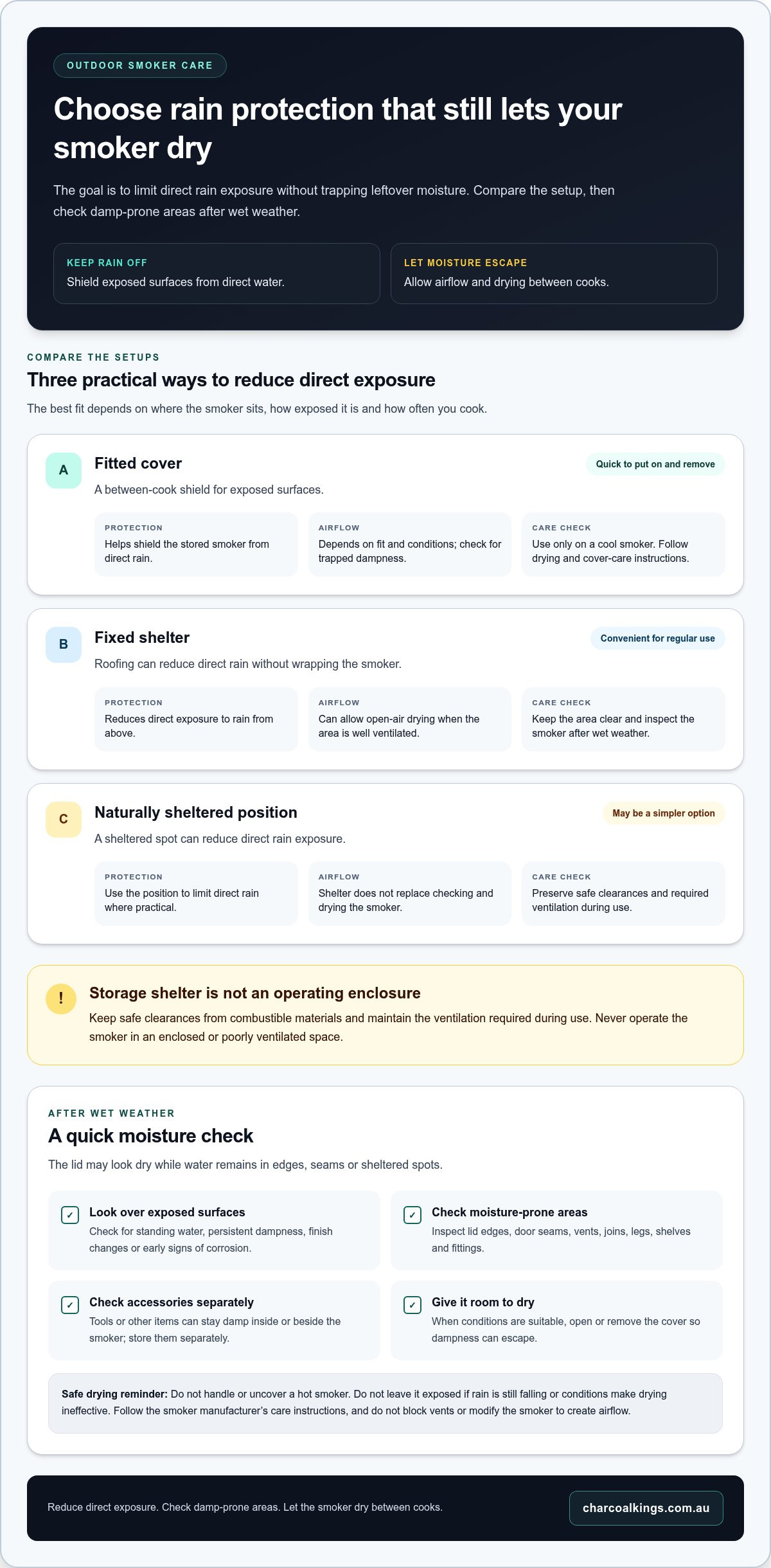
The right setup depends on where your smoker sits, how exposed it is and how often you cook. A cover can shield it between cooks, a roofed shelter can reduce direct rain without wrapping it, and a naturally sheltered position may offer a simpler option. Every choice still needs to allow drying and preserve safe clearances when the smoker is operating.
When protecting your smoker from the rain, prioritise practical fit and airflow over appearance. A cover should shield exposed surfaces without blocking vents or other intended openings. Check the cover manufacturer’s weather-suitability and care guidance, and follow the smoker’s instructions too.
| Option | Protection | Airflow | Convenience and maintenance |
|---|---|---|---|
| Fitted cover | Helps shield the smoker from direct rain when it’s stored. | Depends on fit and conditions; check for trapped dampness. | Quick to put on and remove. Use only on a cool smoker and follow its drying instructions. |
| Fixed shelter | Roofing can reduce direct exposure to rain. | Can allow open-air drying if the area is well ventilated. | Convenient for regular use, but keep the area clear and inspect the smoker after wet weather. |
| Naturally sheltered position | A nearby suitable shelter may reduce exposure, though wind-driven rain can still reach the smoker. | Usually open to moving air, depending on placement. | Simple to use, but check the position as weather changes and avoid unsafe operating locations. |
When a smoker cover is the practical option
A suitable cover works well when the smoker is cool and not in use, especially if moving it under shelter isn’t practical. Fit matters: a cover that’s too loose may leave surfaces exposed, while one that obstructs intended ventilation can restrict airflow during storage. Check the cover’s weather suitability and drying instructions, and follow the smoker manufacturer’s guidance. Remove or open the cover when conditions allow the smoker to dry.
When a shelter or better placement may help
A roofed, well-ventilated location can be a practical alternative between cooks, particularly if you want to avoid repeatedly fitting a cover. A naturally sheltered spot may also help, but it doesn’t remove the need to check for dampness. During operation, keep the smoker clear of structures and combustible materials according to its instructions. Never use it in an enclosed or poorly ventilated space. For wider charcoal-use guidance, read barbecuing with charcoal basics.
A before-and-after-rain checklist for protecting your smoker
A short routine makes protecting your smoker from the rain easier to manage. Check the forecast and the smoker’s condition, prepare it before wet weather, then dry and inspect it before the next cook. Always follow the manufacturer’s instructions for your model and any cover you use.
Before rain, secure and cover a cool smoker; after rain, uncover, dry and inspect it; before cooking, clear vents, dry cooking surfaces and confirm normal operation.
Before rain: prepare the smoker and surrounding area
- Check the location. Make sure the smoker isn’t positioned where roof runoff or ground water can collect around it. Keep its operating position consistent with the clearances and safety instructions in the manual.
- Secure loose accessories. Remove items that could blow away or stay wet, and store them in a dry place according to their care instructions.
- Wait until the smoker is completely cool. Only then fit a suitable cover. Make sure it shields exposed surfaces without blocking intended vents or openings, and follow the cover’s fitting and drying guidance.
After rain: dry, inspect, and prepare for the next cook
- Uncover when conditions allow. Once rain has passed and it’s safe to do so, remove or open the cover to help the smoker dry. Don’t uncover it in ongoing rain if that would leave it exposed without a chance to dry.
- Remove standing water and dry accessible surfaces. Use a method suitable for the smoker’s materials and finish. Avoid unapproved cleaners or treatments; the manual is the guide for model-specific care.
- Inspect vulnerable points. Check exposed metal, lid and door edges, seals, fasteners and fittings for pooled moisture or visible changes. If the smoker has electrical parts, check for signs of water exposure without touching or operating wet components.
- Pause if anything seems unsafe. Don’t use the smoker if you suspect damage or abnormal operation. Refer to the manual for next steps.
Before the next cook, check that the smoker is dry, clear vents of obstructions, and make sure cooking surfaces are clean and dry. Follow the normal start-up instructions and confirm the smoker operates as expected before adding food. If you’re planning your outdoor cooking setup, explore BBQ grills and smokers.
Build a smoker rain-protection routine that lasts
A reliable routine doesn’t need to be complicated. Limit direct rain, allow airflow, dry the smoker promptly and inspect it regularly. These habits support good care, but can’t guarantee a damage-free outcome. Materials, finishes and exposure vary, so use routine checks as general care and refer to the manufacturer’s manual for model-specific maintenance.
Set a repeatable storage and inspection habit
Check the smoker after significant wet weather and before leaving it unused for an extended period. Look for moisture around seams and fittings, and note any spots where rain regularly gets in. A recurring damp patch may point to a placement issue or a gap in your protection setup. Adjust the position or storage approach where practical, while keeping safe operating clearances.
Keep removable accessories and the cover clean and dry according to their care instructions. Before covering the smoker, make sure it’s cool and that dampness isn’t being sealed in. A seasonal reminder can help you review the setup as weather patterns change and check that the smoker and stored items are ready for the months ahead.
Know when to consult the smoker manual
General habits are straightforward: keep the smoker as dry as practical, allow airflow and inspect it after wet weather. Questions about a particular finish, electrical components, cleaning method or maintenance product need model-specific guidance. Follow the manual, and don’t apply oils, coatings or cleaners unless the manufacturer recommends them. If you spot damage or suspect unsafe operation, pause and use the manual’s instructions before cooking again.
Steady care is more useful than relying on a cover alone. Keep your routine simple, respond to what you find during inspections, and give the smoker time to dry between cooks. Consistent maintenance helps you prepare for the next BBQ session. Explore Charcoal Kings’ BBQ range for your next outdoor cooking setup.
Keep Your Smoker Ready for the Next Cook
Protecting your smoker from the rain comes down to a practical balance: reduce direct exposure, allow airflow and dry the smoker after wet weather. A cover, sheltered position or suitable placement can help, but regular checks matter too. Look for lingering moisture around seams, fittings and other exposed areas, and follow the manufacturer’s manual for care specific to your smoker.
Make the routine part of outdoor cooking. Check the smoker after significant rain, keep removable accessories dry and confirm everything is clean, dry and operating normally before you light up. Consistent care supports dependable performance without relying on a single protective measure.
For your next cook, explore Charcoal Kings’ BBQ range. Charcoal Kings supplies BBQ fuels, smokers, grills and accessories. Choose your setup, keep it cared for, and enjoy the next session with confidence.
Frequently Asked Questions
Can a smoker stay outside in the rain?
Yes, a smoker can stay outdoors, but prolonged exposure to rain and moisture may affect its surfaces, finish or fittings. The level of risk depends on the smoker’s materials, construction, placement and care. Reduce direct exposure with a suitable cover or sheltered position, and allow airflow so the smoker can dry between cooks. Follow the manufacturer’s guidance for outdoor storage and model-specific maintenance.
Should I cover my smoker when it is wet?
Don’t cover a hot smoker, and avoid trapping moisture beneath a cover. If it’s wet after rain, uncover or open the cover when conditions allow and dry accessible surfaces using care methods suitable for your model. Once the smoker is cool and as dry as practical, cover it according to the cover manufacturer’s instructions. A cover can reduce direct exposure, but fit and airflow matter too.
How do I keep rain out of my smoker?
Use a suitable cover while the smoker is cool and not operating, or place it in a roofed, well-ventilated storage area. Check that the cover shields exposed surfaces without obstructing vents or other intended openings. Avoid placing the smoker where runoff or standing water can collect. No setup will prevent every drop of wind-driven rain, so inspect the smoker and allow it to dry after wet weather.
Can rain cause rust on a smoker?
Rain and lingering moisture can contribute to rust on susceptible metal surfaces, but rain doesn’t mean rust will develop. Materials, finishes, exposure and maintenance all affect the outcome. After wet weather, check exposed metal and moisture-prone areas such as seams, fittings and edges. Dry accessible surfaces using the manufacturer’s recommended method, and follow the manual before applying any oil, coating or cleaning product.
Is it better to use a smoker cover or a shelter?
Either can help, depending on your space and how you store the smoker. A suitable cover is practical when the smoker is cool and you need to shield it between cooks. A roofed, well-ventilated shelter can reduce direct rain while allowing air to move around the smoker. In both cases, preserve intended ventilation and follow safe operating clearances and the manufacturer’s instructions.
What should I do after my smoker gets rained on?
After rain, uncover the smoker when conditions allow, remove pooled water and dry accessible surfaces using suitable care methods. Inspect the lid and door edges, seams, exposed metal, seals and fittings for lingering moisture or visible changes. Before cooking, make sure vents are clear and cooking surfaces are dry. If you suspect damage or unsafe operation, don’t use the smoker; consult its manual.
Can I use my smoker while it is raining?
Only use it in conditions and a location permitted by its manufacturer’s instructions. Keep it outdoors in a stable, suitable position with required clearances, and never operate it in an enclosed or poorly ventilated space. Don’t use a storage cover while cooking or block vents to keep rain out. If wet conditions make the smoker unsafe to operate or manage, wait until they pass.