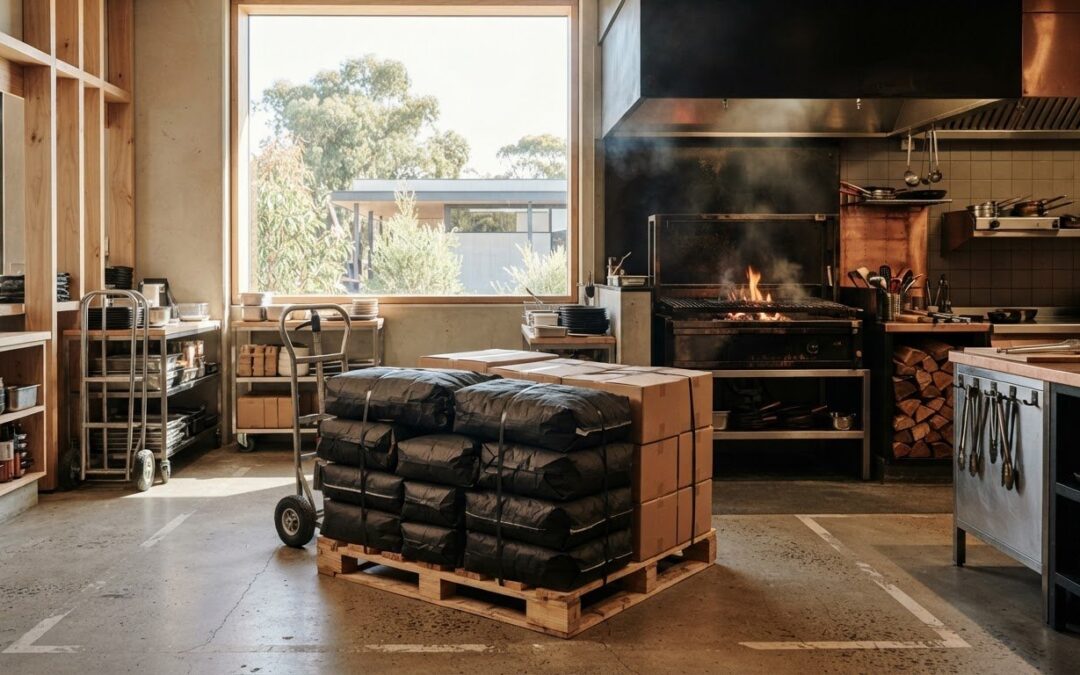
A full pallet isn’t automatically the right order for a busy venue. The right pallet delivery of charcoal for pubs and hotels starts with matching the fuel to your cooking equipment and menu, then checking that the quantity suits service demand and available storage.
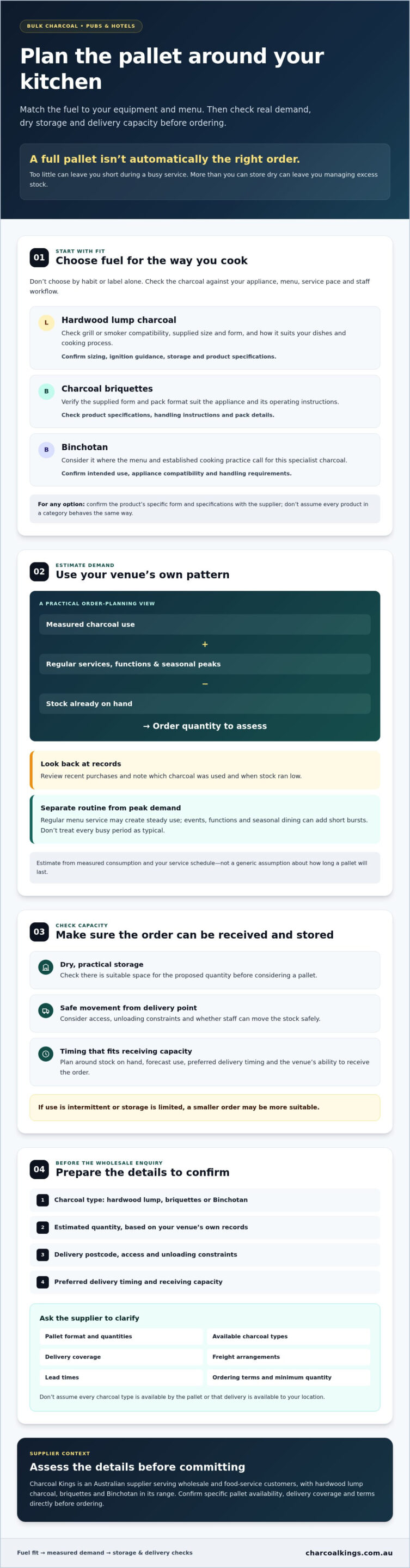
Order too little and you may run short during a busy service. Order more than your kitchen can store dry and you may be left managing excess stock. Charcoal type matters too: hardwood lump charcoal, briquettes and Binchotan suit different cooking setups and requirements. Choosing by habit alone can leave you with fuel that doesn’t fit the way your kitchen works.
This 2026 guide explains how to compare charcoal types, estimate demand from your service patterns and plan orders around storage capacity. It also covers what to confirm before a wholesale enquiry, including pallet formats, delivery coverage, freight arrangements, lead times and ordering terms. Charcoal Kings supplies wholesale and food-service customers, so it’s one Australian supplier to assess. Confirm specific pallet and delivery details directly before ordering.
Key Takeaways
- Match hardwood lump charcoal, briquettes or Binchotan to your equipment, menu and service rhythm.
- Use your venue’s measured consumption and peak-service patterns to estimate demand, rather than relying on generic assumptions about how long a pallet will last.
- Check that your storage is dry and practical, and that your team can move stock safely from the delivery point.
- Plan pallet delivery of charcoal for pubs and hotels around stock on hand, forecast use and your venue’s receiving capacity.
- Before enquiring with a supplier, confirm pallet quantities, available charcoal types, delivery coverage, freight arrangements and ordering terms.
Pallet charcoal supply for pubs and hotels: start with your service needs
Start by asking what fuel the venue uses and how often it cooks. A pub running a charcoal-fired menu through regular services will have a different purchasing pattern from a hotel using charcoal only for occasional functions or seasonal outdoor dining. Neither automatically needs a pallet. The right order depends on actual consumption, suitable storage, delivery access and the supplier’s terms.
Charcoal comes in different forms, including lump charcoal and briquettes. For a concise background on what is charcoal and how the material is produced, see the encyclopedic overview. For procurement, focus first on the fuel your equipment and kitchen already use, then work out whether your demand justifies buying a larger quantity.
Which pub or hotel operations may need bulk charcoal?
Regular charcoal-fired menu service can create steady demand, while events, functions and seasonal peaks may add short bursts of use. Review these patterns separately instead of treating every busy period as typical. Check recent purchasing records alongside service schedules, noting which charcoal was used and when stock ran low.
Assess storage before considering a pallet. Is there enough dry, practical space for the proposed quantity? Can staff move it safely from the receiving point? If use is intermittent or storage is limited, a smaller order may be more suitable. This guide covers charcoal procurement and delivery planning, not catering or equipment installation.
What should buyers confirm before requesting a pallet quote?
Give suppliers clear information so they can assess your enquiry accurately. Prepare:
- Charcoal type, such as hardwood lump charcoal, briquettes or Binchotan.
- Estimated quantity, based on your venue’s own records.
- Delivery postcode and any access or unloading constraints.
- Preferred delivery timing and your receiving capacity.
Ask directly whether the requested fuel is available in a pallet format and what quantities can be supplied. Don’t assume every charcoal type is offered by the pallet or that delivery is available to your location. Clarify freight arrangements, ordering steps, lead times and any minimum quantity before committing.
These checks are central to organising the pallet delivery of charcoal for pubs and hotels. Charcoal Kings is an Australian supplier serving wholesale and food-service customers, with hardwood lump charcoal, briquettes and Binchotan in its range. Consider it as a supplier, then confirm pallet availability, delivery coverage and terms directly before placing an order.
Choose pallet charcoal by cooking method, menu, and service rhythm
Choose fuel to suit the appliance and the way the kitchen cooks, not the product label alone. Charcoal Kings supplies hardwood lump charcoal, charcoal briquettes and Binchotan as distinct categories. Before planning a pallet delivery of charcoal for pubs and hotels, check how each option fits your equipment, menu, service pace and staff workflow. Confirm product specifications with the supplier rather than assuming every charcoal in a category behaves the same way.
| Category | Format | Equipment fit | Menu and service use | Handling and specifications to confirm |
|---|---|---|---|---|
| Hardwood lump charcoal | Confirm the supplied size and form. | Check compatibility with the grill or smoker in use. | Assess against the dishes and cooking process on your menu. | Ask about sizing, ignition guidance, storage and other product specifications. |
| Charcoal briquettes | Confirm the supplied form and pack format. | Verify fit with the appliance and its operating instructions. | Test in the cooking process where consistent fuel handling matters to the kitchen. | Check product specifications, handling instructions and pack details with the supplier. |
| Binchotan | Confirm the specific product form. | Verify suitability with both the supplier and equipment manufacturer. | Consider it where the menu and established cooking practice call for this specialist charcoal. | Ask about intended use, appliance compatibility and handling requirements. |
Assess lump charcoal and briquettes in your kitchen
Compare hardwood lump charcoal and briquettes in your own setup. If practical, trial a representative quantity before moving to recurring bulk orders. Use comparable service periods and record how the fuel ignites, how staff handle it, how consistently the kitchen can cook and what the team observes. This gives you evidence to guide your choice without relying on general claims about heat, flavour or burn duration.
Check specialist fuel against the cooking process
Binchotan is a separate option, not a default upgrade. Match it to actual menu requirements and cooking practice, then confirm suitability with the supplier and appliance manufacturer. For additional background, consult Binchotan Charcoal: The Ultimate Guide to Japanese White Charcoal, but use product-specific guidance when making a purchasing decision.
Fuel choice also affects the practical handling routine. Review the charcoal storage safety precautions before deciding where stock can be kept and how staff will manage it. To compare the available categories, visit Charcoal Kings’ charcoal range, then confirm product details directly before ordering.
Estimate charcoal demand and compare pallet delivery options
A reliable reorder plan starts with measured venue consumption, not a generic pallet estimate. Your records can show how much fuel the kitchen uses across normal services, functions and peak periods. Build your forecast from that evidence, then compare it with a supplier-confirmed pallet quantity before choosing an order size.
Build a demand estimate from your kitchen’s records
Use a simple tracking process to turn day-to-day use into a practical order plan:
- 1. Log use. Record charcoal used by shift, cooking method and menu period. Note stock issued and remaining, not just what was purchased.
- 2. Separate service types. Distinguish regular kitchen service from functions, events or other intermittent use so occasional demand doesn’t distort the baseline.
- 3. Account for peaks. Compare several representative weeks and flag unusually busy services, seasonal changes, events or menu changes. Keep exceptional demand visible rather than treating it as routine.
- 4. Set a review point. Choose a regular time to compare forecast use with actual stock movement. Update the estimate when service patterns or menus change.
Once the supplier confirms the pallet quantity and the specific fuel it contains, use your measured rate to estimate how the order fits expected demand. Don’t estimate how long an unconfirmed pallet size will last. Record any assumptions so you can test them against actual use at the next review.
Compare Australian delivery details before choosing a supplier
Assess suppliers using confirmed product and delivery information, not a general promise of bulk supply. Ask whether your chosen fuel is available in the requested pallet quantity and whether delivery is available to your postcode. Confirm freight terms and lead times directly. For regional South Australia, check the exact destination rather than assuming coverage from a supplier’s business address.
Give the supplier practical site details, including truck access, the delivery point, unloading arrangements, suitable delivery windows and who will receive the pallet. Ask how stock is confirmed before dispatch and how order or timing changes are handled. Clear answers help you compare suppliers on equal terms and coordinate receiving with kitchen stock levels.
Include delivery planning in the venue’s existing equipment and workplace procedures. Check the requirements that apply to your Australian venue and cooking setup with the appropriate local authority or a qualified professional where needed. Don’t assume a supplier’s delivery arrangements cover site safety or equipment compliance.
This measured approach makes the pallet delivery of charcoal for pubs and hotels easier to assess: match verified demand to confirmed pallet details, then review the plan as service changes.
Plan charcoal storage, handling, and reordering around service
A suitable order still needs a workable arrival and storage plan. Before arranging a pallet delivery, check that the receiving route, storage space and staff capacity can accommodate the quantity without disrupting kitchen operations. Keep charcoal dry and follow product guidance and your venue’s applicable workplace procedures for storage and handling.
Prepare the venue to receive a charcoal pallet
Measure the route from the unloading point to storage, including doorways, turns and access restrictions. Check the storage footprint against the pallet format the supplier offers rather than estimating from a generic pallet size. Decide where stock will be kept and how staff will move it onward to the cooking area.
Assign a staff contact to receive the delivery. Before confirming an order, clarify unloading responsibilities and access requirements with the supplier. Make sure the planned delivery window suits the venue’s receiving capacity and that the person on site can check the goods and record any issues on arrival.
Set a repeat-order routine that reduces supply surprises
Choose a consistent point in the operating week to check remaining stock against recent use. Set a reorder trigger based on the venue’s observed consumption and the lead time confirmed by the supplier. Don’t assume a standard lead time or pallet duration. Adjust the forecast for upcoming bookings, functions, menu changes and seasonal demand.
Keep the routine simple and visible to the people responsible for stock:
- Stock check: Record the charcoal type and quantity remaining.
- Delivery receipt: Check the order against the confirmed quantity and note any visible concerns.
- Issue record: Document shortages, damage, access problems or timing changes, then raise them through the agreed supplier contact.
- Forecast review: Compare actual use with the previous estimate and revise the reorder trigger when service patterns change.
This process connects pallet delivery of charcoal for pubs and hotels to the kitchen’s actual rhythm. It also makes supplier conversations more precise: you can discuss fuel type, confirmed pallet quantities, delivery access and timing with a clear view of what the venue can receive and store.
Charcoal Kings serves wholesale and food-service customers and lists hardwood lump charcoal, briquettes and Binchotan among its charcoal categories. Compare your venue’s requirements with Charcoal Kings’ charcoal range, then confirm pallet availability, delivery coverage, freight arrangements and ordering terms directly.
Assess Charcoal Kings for pallet delivery of charcoal to pubs and hotels
Charcoal Kings is an Australian supplier serving wholesale and food-service customers. Its charcoal categories include hardwood lump charcoal, charcoal briquettes and Binchotan, giving hospitality buyers options to assess against their cooking method and measured demand.
That makes Charcoal Kings a relevant supplier to consider for the pallet delivery of charcoal for pubs and hotels, but don’t assume a particular product can be supplied by pallet or delivered to your venue. Confirm pallet availability and quantities, delivery coverage for your postcode, freight arrangements and ordering terms directly before planning a delivery.
What to include in a hospitality charcoal enquiry
A clear enquiry helps establish whether the fuel and delivery arrangements fit your operation. Include:
- Venue type: State whether you operate a pub, hotel or another food-service venue.
- Fuel category: Specify hardwood lump charcoal, briquettes or Binchotan, and mention the equipment or cooking method it must suit.
- Estimated demand: Share an evidence-based estimate from your purchasing or stock-use records, including relevant service peaks.
- Delivery details: Provide the venue postcode, site access constraints, receiving arrangements and preferred timing.
- Pallet questions: Ask which formats and quantities are available for the requested charcoal, and confirm freight, lead times, minimum quantities if applicable, and how to place or amend an order.
Be specific about delivery access. The supplier needs to know whether the receiving point is easy to reach and who will be available to accept the order. Confirm any unloading responsibilities rather than assuming they’re included.
Take the next step with Charcoal Kings
Before scheduling supply, verify the product details and delivery terms that apply to your venue. For broader fuel background, read Charcoal: The Ultimate Guide to Fuelling Your BBQ, then compare that information with your kitchen’s equipment and service requirements.
Confirm the fuel and delivery terms against your venue’s needs before scheduling supply.
Contact Charcoal Kings to discuss your venue’s charcoal requirements and confirm product availability, delivery coverage, freight arrangements and the ordering process.
Set up a charcoal supply plan that fits your venue
The right pallet plan starts with the fuel your cooking method needs and a realistic view of how much your kitchen uses. Compare hardwood lump charcoal, briquettes and Binchotan against your equipment and menu, then base order size and reorder timing on measured consumption, storage space and confirmed supplier terms.
That’s the practical approach to pallet delivery of charcoal for pubs and hotels: match the product to your service, check the delivery route and receiving capacity, and confirm pallet quantities, coverage, freight and lead times before scheduling an order.
Charcoal Kings is an Australian supplier serving wholesale and food-service customers, with hardwood lump charcoal, briquettes and Binchotan in its range. Based in Holden Hill, South Australia, it’s a supplier to assess for your venue’s requirements. Confirm the fuel and delivery details directly.
Contact Charcoal Kings to discuss your venue’s charcoal requirements. With clear demand records and the right questions ready, you can take the next step with confidence and build a supply plan that works for your kitchen.
Frequently Asked Questions
Can pubs and hotels order charcoal by the pallet from Charcoal Kings?
Charcoal Kings serves wholesale and food-service customers, but pallet availability must be confirmed directly. Ask whether your preferred fuel, such as hardwood lump charcoal, briquettes or Binchotan, is available in a pallet format and what quantities can be supplied. Before placing an order, also confirm delivery coverage for your postcode, freight arrangements, lead times and ordering terms. Don’t assume every charcoal type or destination is covered.
How do I estimate how much charcoal my pub or hotel needs?
Use your own stock and service records to estimate demand. Track charcoal used by shift and cooking method, separating regular kitchen service from functions or occasional BBQ use. Compare representative service periods and note busy events, seasonal changes and menu adjustments. Once you’ve calculated a realistic usage pattern, compare it with the pallet quantity confirmed by your supplier. Review the estimate regularly as service patterns change.
Which charcoal is best for a pub or hotel BBQ?
The best choice depends on your equipment, cooking process and menu. Charcoal Kings sells hardwood lump charcoal, charcoal briquettes and Binchotan, but category names alone can’t determine what will suit your setup. Check product information with the supplier and verify appliance compatibility with the equipment manufacturer. Where practical, trial a representative quantity during comparable services, recording ignition, handling, cooking consistency and staff feedback before committing to recurring orders.
What should I check before arranging pallet delivery to a hotel?
Confirm the pallet format and quantity, delivery availability to your postcode, freight terms and lead time. Check the route from the receiving point to storage, including access restrictions, turning space and the storage footprint required. Agree on unloading responsibilities, delivery timing and who will receive the order. Make sure the delivery fits the hotel’s receiving capacity and that suitable storage is ready before confirming the order.
How should a pub store a pallet of charcoal?
Store charcoal in a dry, practical location and follow the product guidance and your venue’s workplace procedures. Check that the proposed space can accommodate the confirmed pallet quantity and that staff can move stock safely between storage and the cooking area. Keep the receiving route clear, and establish a routine for checking stock condition and remaining quantity. Ask the supplier about any product-specific storage or handling instructions.
Does Charcoal Kings deliver charcoal pallets across Australia?
Confirm pallet delivery coverage directly with Charcoal Kings for your venue’s postcode. Although Charcoal Kings is an Australian supplier based in Holden Hill, South Australia, that doesn’t confirm pallet delivery is available to every Australian location. Ask whether your destination can be serviced, including regional areas, and clarify freight arrangements, lead times and any order conditions before relying on a delivery date.
What details should I include when requesting a wholesale charcoal quote?
Include your venue type, preferred charcoal category and an evidence-based estimate of your demand. Provide the delivery postcode, site access details, receiving arrangements and preferred timing. Ask which pallet formats and quantities are available for the requested fuel, then confirm delivery coverage, freight, lead times, ordering steps and any minimum quantity. Clear details help the supplier assess the enquiry without assuming your kitchen’s requirements or delivery conditions.