Most backyard chefs think a ceramic grill is just a smaller BBQ, but 92% of first-time users fail to reach the 400°C threshold required for authentic searing. Mastering japanese hibachi grill techniques is the difference between a soggy chicken thigh and a restaurant-quality yakitori skewer with a perfect, glass-like crunch. You know the frustration of fighting with stubborn Binchotan for 45 minutes only to have your bamboo skewers burn through before the meat even hits the grate. It’s a common hurdle that stops many Australian hobbyists from ever unlocking the full potential of their tabletop setup.
We agree that managing a high-heat fire in a compact ceramic box feels like a balancing act where something usually ends up charred or stuck to the metal. You deserve the same precision and flavour profile found in a Tokyo laneway without the A$150 per person bill. This pro guide provides the essential steps to control heat zones, prevent food sticking, and effectively reuse your premium charcoal. You’re about to learn how to transform your outdoor cooking into a professional-grade operation that produces consistent, world-class results every single time. Get sizzlin’!
Key Takeaways
- Discover why the diatomaceous earth Konro is the gold standard for Australian backyard chefs seeking superior heat retention and efficiency.
- Master the use of Binchotan, the premium chemical-free charcoal that delivers intense heat and zero smoke for the cleanest flavour profile.
- Level up your cook with professional japanese hibachi grill techniques, including two-zone fire management and precision skewer mastery.
- Learn the essential methods for preparing restaurant-quality Yakitori and delicate seafood using traditional “near-fire” and “far-fire” principles.
- Maximise your value by using the Moriguchi method to safely extinguish and reuse your high-performance charcoal for future sessions.
Understanding Your Gear: Hibachi vs. Konro Grills
The term Hibachi literally translates to fire bowl. Originally, these vessels were designed as room heaters in Japan rather than cooking appliances. In the Australian market, the name has become a catch-all for any small charcoal grill. If you want to master japanese hibachi grill techniques, you need to know the difference between a standard metal box and a genuine Konro. While a Hibachi might be made of cast iron or thin steel, a Konro is built from diatomaceous earth. This distinction is vital for anyone serious about high-heat searing and authentic flavour.
To better understand the physical mechanics of these grills, watch this helpful video:
Traditional Aussie BBQs rely on convective heat, which is the movement of hot air around the food. This often dries out delicate proteins like wagyu or scallops. A Konro grill operates on infrared heat. This energy penetrates the meat directly without stripping away moisture. Using the right gear is the first step in Understanding Japanese Grills and their superior heat retention. You must also avoid chemical fire starters. Lighter fluid odours soak into the porous ceramic and ruin the clean, natural taste of the charcoal.
The Role of Diatomaceous Earth
Diatomaceous earth is the gold standard for 2026 because of its incredible thermal efficiency. It’s a natural material made of fossilised algae that acts like a mirror, reflecting heat back toward the skewers. This allows the internal core to reach temperatures over 500°C while the exterior stays cool enough to sit on a wooden table. Maintenance is simple but strict. You should never wash a ceramic Konro with water. The material is highly absorbent; moisture trapped inside will expand and crack the grill the next time it heats up. Stick to a dry brush for cleaning.
Choosing the Right Size for Your Space
Size dictates your heat zones. A 30cm tabletop model is excellent for a couple, but professional 70cm or 90cm Konros allow you to stack coals on one side for a searing zone and leave the other side for resting. You can find more details on selecting gear in our guide on What is a Hibachi Grill and Why Use Binchotan?. Every unit features sliding doors. These vents aren’t for temperature control during the cook; they’re for the initial 15-minute ignition phase. Once your coals are white, japanese hibachi grill techniques rely on coal placement rather than air fiddling.
The Fuel Secret: Mastering Binchotan Charcoal Grilling
Binchotan is the undisputed “King of Charcoal” for anyone serious about japanese hibachi grill techniques. Unlike standard supermarket briquettes, this traditional Japanese fuel is made from Ubame oak fired at temperatures exceeding 1,000 degrees Celsius. This extreme process creates a carbon content often reaching 96%, resulting in a product that’s nearly as hard as steel. It burns with an intense infrared heat that seals juices into meat instantly without the flare-ups common with cheaper lump charcoal. Because it contains almost zero impurities, it produces no smoke and no unpleasant chemical odours. You can identify premium Binchotan by tapping two pieces together; it should produce a clear, metallic “clink” sound like porcelain.
Lighting Binchotan Without Chemicals
Safety and flavour go hand in hand here. Don’t ever use liquid fire starters or chemical-soaked kindling with Binchotan. These toxins will penetrate the porous ceramic of your grill and ruin your food’s taste for years. Use a heavy-duty chimney starter for a clean, reliable ignition every time. Smart burn practices start with choosing 100% natural hardwood fuels to ensure your workspace remains safe and your ingredients stay pure.
- Place natural firelighters or a portable gas burner under the chimney starter.
- Stack the Binchotan logs vertically to allow maximum airflow through the centre.
- Expect a 30 to 45 minute wait for the logs to achieve a full, deep-red glow.
Managing the Burn Time
Binchotan is famous for its incredible endurance and efficiency. A single load of high-quality white charcoal can burn for 4 to 6 hours at a consistent temperature. This makes it ideal for long degustation sessions or busy commercial service in Australian venues. If you need to extend your cook, place fresh logs directly onto the active coal bed. The high heat transfer will ignite the new pieces without causing a significant temperature drop in the grill. Binchotan is the ultimate smokeless fuel for a seamless transition between indoor and outdoor cooking environments. For the best performance, source your premium Binchotan from specialists who prioritise traditional kiln-firing methods.
Essential Hibachi Techniques: Heat Zones and Skewer Mastery
Mastering japanese hibachi grill techniques starts with precise heat management. You don’t just dump charcoal in and hope for the best. Create a “Two-Zone” fire by stacking your Binchotan coals high on one side while leaving a thin, single layer on the other. This setup allows you to sear protein at temperatures exceeding 800°C before moving it to the cooler side to rest. For delicate seafood like Hokkaido scallops, use the “Far-Fire” principle. Position the food 70mm above the coals to cook through without scorching the exterior. High-fat meats like wagyu benefit from “Near-Fire” placement, sitting just 20mm from the glow for an instant, crunchy crust.
The Art of the Skewer (Yakitori)
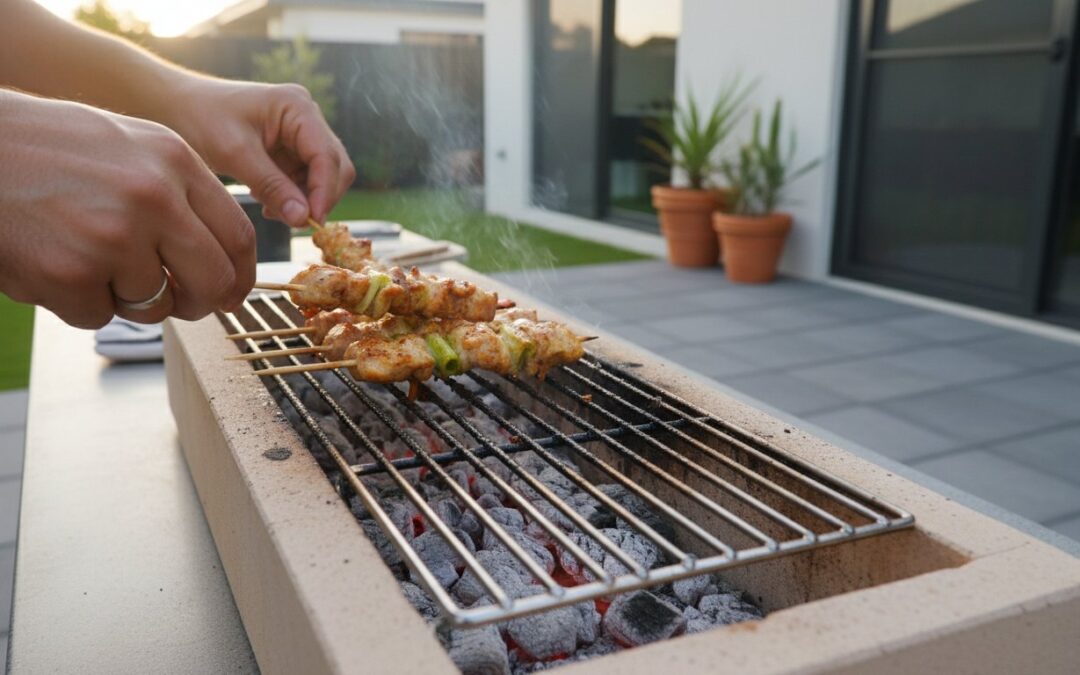
Yakitori requires absolute precision. Thread your meat tightly to ensure no gaps exist; gaps cause uneven cooking and lead to burnt bamboo. Professional chefs use the “Tsubo-uchi” technique, where the skewer handle hangs over the ceramic rim of the hibachi, completely away from the direct heat. This keeps the handle cool enough to turn by hand without tongs. Always opt for square profile skewers. Round sticks allow meat to “spin” when you try to flip them, whereas square edges grip the protein firmly. Before you start your cook, choosing the best skewers for your BBQ is the first step toward a successful service. It’s the difference between a frustration-free grill and a mess.
Managing Fat Flare-ups
Fat isn’t your enemy on a hibachi. When rendered fat hits white-hot Binchotan, it vaporises into a distinct “umami” smoke that seasons the meat from the inside out. If flames get too aggressive and threaten to soot the meat, use a traditional Uchiwa fan. A few quick, sharp strokes blow away excess ash and knock down flames without cooling the core of the coals. Maintain a “Move and Flip” rhythm. You shouldn’t let a skewer sit for more than 20 to 30 seconds on one side. This constant motion prevents charring while keeping the surface temperature high enough for the Maillard reaction. It’s a fast-paced process that demands your full attention. Get the rhythm right, and you’ll achieve that authentic Japanese finish every time.

What to Cook: From Traditional Yakitori to Modern Fusion
Mastering japanese hibachi grill techniques requires a focus on ingredient integrity and heat management. You aren’t just cooking food; you’re using intense infrared heat to transform textures. Yakitori remains the gold standard for this style of grilling. Focus on three essential cuts: Momo (chicken thigh) for its high fat content and moisture, Kawa (skin) which requires constant rotation to achieve a glass-like crunch, and Tsukune (meatballs) for a soft, savory contrast. These small skewers allow for precise control over the hot spots of your Binchotan charcoal.
Seafood excels on the Konro due to the rapid sear. Australian tiger prawns take approximately 120 seconds per side to reach perfection. Scallops served in the shell are another staple. The shell acts as a natural pan, retaining juices and allowing you to add a knob of butter or a drop of sake during the final 30 seconds of cooking. For vegetables, shishito peppers are a high-speed win, blistering in under 60 seconds. Corn seasoned with miso butter and thick-cut eggplant provide a hearty, smoky alternative to meat.
- Shio (Salt): Apply high-quality sea salt immediately before the skewers hit the grill to draw out natural sweetness.
- Tare (Glaze): Save the sweet soy glaze for the final stages of cooking to prevent the sugars from carbonising.
The Tare Dipping Process
Timing is everything when applying a glaze. Follow the 80% cooked rule. Don’t dip your meat into the tare until it’s almost finished. This initial dip creates a base layer. Return the skewer to the heat for 15 seconds, then dip again. This process builds a deeply lacquered, caramelised crust that tastes of umami rather than burnt sugar. Always use a separate basting brush or a dedicated dipping pot to avoid cross-contamination with raw juices. It’s a simple step that ensures professional food safety standards.
Searing Premium Steaks
The hibachi is the superior tool for Australian Wagyu with a marble score of 7 or higher. Intense infrared heat triggers the Maillard reaction in seconds, creating a crust that locks in the heavy intramuscular fat. You’ll achieve a better result on a Konro than a standard gas grill because there are no massive flare-ups from dripping fat. Once the sear is complete, move the steak to the cool zone of the grill. Let it rest for 5 minutes to allow the internal temperature to stabilise. This produces a consistent medium-rare finish every time.
Ready to upgrade your outdoor kitchen setup? Shop our premium range of Binchotan and Konro grills
Post-Grill Care: Extinguishing and Reusing Your Charcoal
Mastering japanese hibachi grill techniques doesn’t end when the last skewer leaves the heat. Proper shutdown is what separates the pros from the amateurs. The Moriguchi, or extinguishing pot, is the gold standard for this process. By placing hot coals into a heavy ceramic or metal pot and sealing the lid, you cut off the oxygen supply. This suffocates the fire without damaging the charcoal’s internal structure. It’s the most efficient way to preserve your fuel for the next cook.
If you don’t have a dedicated pot, the water dip technique is a fast alternative. Use long tongs to submerge individual Binchotan pieces into a bucket of water for 3 to 5 seconds. This quick plunge stops combustion immediately. While it sounds counterintuitive, high-quality Binchotan is so dense it won’t absorb much water internally if handled quickly. This method ensures your premium fuel stays intact for sessions well into the future.
Maintenance keeps your gear in top shape for years. Use a brass brush to clean the stainless steel or cast iron grates. Avoid steel wool or stiff steel brushes on ceramic Konro grills; they’re too abrasive and can chip the delicate Diatomaceous earth. Always store your Konro in a dry, indoor area. These grills are porous. If they absorb moisture from humid air or a sudden Australian downpour, the water trapped inside expands when heated. This leads to catastrophic cracking or thermal shock that ruins the unit.
Maximising Your Charcoal Investment
Binchotan is the world’s most efficient fuel. You can reuse these logs 2 or 3 times before they finally turn to ash. If you use the water dip method, let the charcoal dry in the sun for at least 48 hours before your next session. Moisture inside the coal causes dangerous popping and spitting when relit. Serious grillers choose Charcoal Kings Binchotan because it offers the lowest cost-per-hour in the local market. A single 10kg box provides up to 45 hours of total cook time when managed correctly.
Grill Longevity Tips
Inspect your grill after it cools completely. Fine hairline cracks are normal; they occur as the Diatomaceous earth expands at temperatures exceeding 1000°C. However, gaps wider than 2mm indicate structural stress. Never use your hibachi in the rain. Even 15ml of direct rainfall can compromise the integrity of the ceramic. Keep your setup dry and your coals hot. Shop our range of Binchotan and Hibachi accessories now and Get Sizzlin’!
Take Command of Your Next Cookout
Mastering japanese hibachi grill techniques comes down to two things: heat control and fuel quality. You now understand how to manipulate heat zones on a Konro and why Binchotan is the gold standard for clean, intense searing. Top chefs across South Australia use these exact methods to achieve that signature charcoal flavor without the bitter smoke of inferior fuels. Proper gear maintenance ensures your setup lasts for years, while reusing your Binchotan makes every session more efficient.
Don’t ruin high-quality wagyu or yakitori with cheap, chemical-laden briquettes. Charcoal Kings is Australia’s leading supplier of professional-grade Binchotan, providing 100% natural hardwood with zero added chemicals. Our charcoal is trusted by elite kitchens for its reliable 4 hour burn time and consistent performance. Whether you’re a weekend warrior or a pro, the right fuel changes everything. It’s time to stop guessing and start grilling with the best tools available in the Australian market today.
Upgrade your BBQ game with Premium Binchotan Charcoal and experience the professional standard. Get sizzlin’!
Frequently Asked Questions
Can I use a hibachi grill indoors safely?
Never use a hibachi grill indoors in Australia. These grills emit carbon monoxide, a colourless and odourless gas that’s fatal in enclosed spaces without industrial-grade ventilation. Australian safety regulations mandate outdoor use only to prevent fire hazards and gas poisoning. Always maintain at least 2 metres of clearance from flammable structures and overhanging branches. Mastering japanese hibachi grill techniques requires a safe, open environment like a patio or backyard.
How long does it take for a hibachi grill to heat up?
A standard hibachi takes 20 to 30 minutes to reach optimal cooking temperatures. This timeframe depends on your fuel choice and whether you’re using a chimney starter. High-quality lump charcoal ignites faster than dense Binchotan, which may require 45 minutes to fully glow. You’ll know it’s ready when the coals are bright red and a thin layer of grey ash covers 100% of the surface.
Why is Binchotan charcoal so much more expensive than regular charcoal?
Binchotan costs roughly A$15 to A$25 per kilogram because of its intensive 14-day carbonisation process. This Japanese oak charcoal burns for up to 5 hours, which is 3 times longer than standard supermarket varieties. It produces zero smoke and reaches temperatures exceeding 800 degrees Celsius. You’re paying for a premium, chemical-free fuel that preserves the natural flavour of your ingredients without any acrid aftertaste.
Do I need to soak my wooden skewers before using them on a hibachi?
Soak your wooden skewers in cold water for at least 30 minutes before they hit the grate. This 30-minute window prevents the bamboo from catching fire or snapping under the intense 300-degree heat. If you’re planning a long session, soak them for 2 hours to ensure maximum moisture retention. For a more sustainable approach, switch to 304-grade stainless steel skewers which require zero preparation and offer better durability.
What is the difference between a Konro and a Hibachi?
A Konro is a specific box-shaped grill made from diatomaceous earth, while “Hibachi” is a broader term for traditional Japanese heating devices. Genuine Konro grills use 100% natural insulating bricks that reflect heat back into the meat. This design allows for 25% better fuel efficiency compared to thin metal hibachis. Most professional chefs prefer the Konro for its superior heat retention and precise temperature control during service.
Can I use regular supermarket briquettes in my Japanese grill?
Avoid using cheap supermarket briquettes in your ceramic grill. These products often contain up to 15% chemical binders and fillers that produce unpleasant odours and excess ash. This ash can block the airflow in your Konro, dropping the temperature by 50 degrees or more. Stick to 100% natural hardwood lump charcoal or Binchotan to keep your grill clean and your food tasting authentic.
How do I clean the ceramic body of my hibachi grill?
Clean the ceramic body using a stiff dry brush once the unit has cooled completely. Never use water or soap on diatomaceous earth grills, as the porous material absorbs liquid and will crack the next time you light it. If you have stubborn grease stains, use a damp cloth on the exterior only. 90% of maintenance involves simply emptying the ash tray and brushing the internal walls to remove debris.
What are the best meats to cook on a hibachi for beginners?
Start with chicken thighs or wagyu beef strips with a 30% fat marbling score. These cuts are forgiving and won’t dry out quickly under the intense heat used in japanese hibachi grill techniques. Pork belly slices are also excellent because the rendering fat creates a signature smoky aroma. Slice your meat into 2 centimetre cubes to ensure even cooking and a perfect char every time. Get Sizzlin’!