
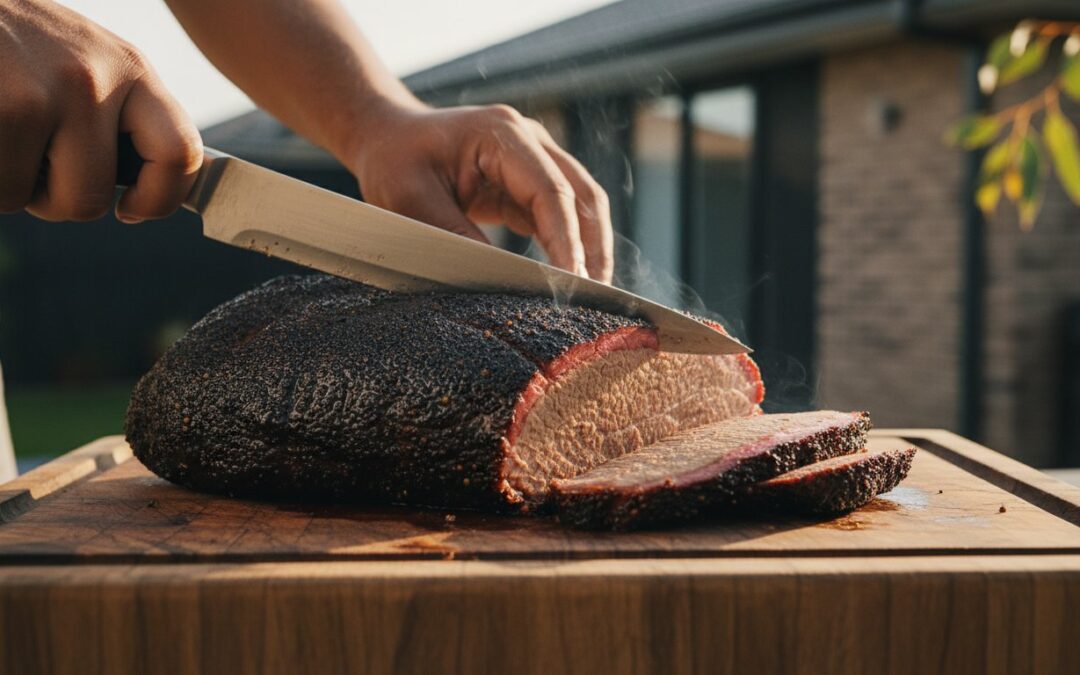
Spending 12 hours tending a fire only to slice into a dry, tough slab of beef is a mistake that ends today. Achieving an authentic texas style brisket at home requires more than just patience; it requires a mastery of fire and fuel that most backyard cooks overlook. You’ve likely felt the panic of a six hour stall or the disappointment of a bark that looks more like grey mush than the dark, peppery crust found in Austin. It’s a common frustration for Australian pitmasters who are often left guessing which local hardwoods, like Ironbark or Red Gum, actually deliver that competition grade flavor.
We agree that a premium A$160 brisket deserves better than a mediocre result. This guide provides the exact techniques and fuel secrets required to produce a professional grade brisket in your own backyard. You’ll learn the specific timing and fire management needed to produce a jiggly, tender result every single time you light the smoker. We are breaking down the science of the stall, the secrets of the wrap, and the wood selection process that ensures your BBQ rivals any commercial smokehouse in the country.
Key Takeaways
- Master the “low and slow” discipline by maintaining precise temperatures between 107°C and 135°C for optimal collagen breakdown and tenderness.
- Learn why premium, chemical-free fuel is non-negotiable for 12-hour cooks to ensure clean smoke and consistent heat performance.
- Identify the best Australian beef grades and “Packer” cuts to ensure your meat has the marbling required for a succulent result.
- Navigate the science of the “stall” and the wrap to successfully produce an authentic texas style brisket at home with a perfect bark.
- Apply the “Pencil Test” and directional slicing techniques to guarantee every serving meets competition-grade standards.
The Pillars of Authentic Texas Style Brisket
Achieving an authentic texas style brisket at home starts with respecting the traditions of Central Texas. This style relies on four basic elements: salt, pepper, heavy smoke, and extreme patience. The history of Texas smoked brisket shows that German and Czech settlers in the 19th century influenced these methods. They used what was available, focusing on the meat rather than sugary sauces or complex marinades. Simplicity is the ultimate sophistication here.
Temperature control is non-negotiable. You must maintain a steady heat between 107°C and 135°C. This specific range allows connective tissues and tough collagen to break down into silky gelatin over 12 to 16 hours. If you rush the process or spike the heat above 150°C, the muscle fibres tighten and push out moisture. You’ll end up with a dry, tough slab of beef instead of a tender masterpiece. Low and slow isn’t just a catchy phrase; it’s a biological requirement for the cut.
The bark is the hallmark of a pro cook. This dark, textured crust forms through the Maillard reaction. As the beef sweats, smoke particles stick to the surface. Sugars and amino acids in the meat react with the heat to create a complex flavour profile. It isn’t burnt meat; it’s a concentrated layer of seasoning and smoke. A proper bark should be firm to the touch but not bitter or charred.
Don’t fall for the trap that you need a custom-built, A$8,000 offset smoker to produce world-class results. While big rigs are impressive, a standard A$500 charcoal kettle or a vertical bullet smoker can get the job done. Success depends on fire management and meat quality, not the price tag of your steel. Focus on airflow and fuel consistency instead of expensive gadgets.
The ‘Dalmatian’ Rub Philosophy
The Dalmatian rub is a simple 50/50 mix by volume of Kosher salt and 16-mesh coarse black pepper. This specific pepper size is critical. Fine table pepper will make the brisket too spicy and won’t contribute to the bark. Coarse 16-mesh grains create the necessary surface area for smoke to grab onto. Many pitmasters use a thin layer of yellow mustard as a binder. It doesn’t add flavour once cooked, but it ensures the rub stays put during the first few hours of the stall.
Understanding the Smoke Ring
A bright pink smoke ring is the badge of honour for backyard cooks. This occurs when nitrogen dioxide gas from burning hardwood reacts with myoglobin in the meat. It’s a chemical reaction, not a flavour indicator. A deep ring doesn’t mean the meat tastes better, but it proves you used a clean-burning fire. Using premium natural hardwood lump charcoal is the best way to facilitate this. It burns hotter and cleaner than cheap briquettes, providing the consistent gas exchange needed for that visual pop.
Choosing the Right Fuel: The Charcoal Kings Advantage
Achieving an authentic texas style brisket at home requires more than just a high-quality cut of meat; it starts with the fire. For a 12-hour cook, you cannot compromise on fuel quality. Cheap, supermarket-grade fuels often contain chemical binders and fillers that release acrid fumes. These toxins penetrate the meat over long durations, resulting in a bitter, “off” flavor that ruins a hundred-dollar investment. We recommend using 100% natural, chemical-free fuel to ensure the beef’s natural fats and your rub remain the stars of the show.
Lump charcoal is the professional choice for maximum heat and minimal ash production. Our premium natural hardwood charcoal burns hotter and cleaner than standard alternatives, providing the intense energy needed to render tough connective tissues. While some pitmasters use briquettes for their uniform shape and predictable burn rate, you must ensure they are free from mineral coal or limestone. A steady heat source is the backbone of a successful brisket, and high-carbon lump charcoal offers the most reliable performance for long-haul smoking.
Clean smoke is the visual indicator of a perfect cook. You are looking for “thin blue smoke,” which is a faint, translucent vapor. This signifies that your fuel is combusting efficiently. If you see billowing white smoke, your fire is likely starved of oxygen or your wood is too wet, which deposits soot and creosote on the bark. Following USDA brisket safety guidelines is essential during this process to ensure your meat reaches safe internal temperatures without lingering in the “danger zone” for too long. Proper combustion helps maintain that safety while delivering elite flavor.
Layering your fuel is a critical skill for long-duration burns in kettles or offset smokers. In a kettle, the “snake method” involves ringing the outer edge with unlit coals and placing a few hot ones at the start. For offsets, you need a concentrated coal bed. Start with a full chimney of lit premium hardwood charcoal and layer unlit chunks on top. This setup provides a gradual ignition that can sustain steady temperatures for up to 8 hours before you need to intervene. It allows you to focus on the meat rather than constantly fussing with the firebox.
Selecting Smoking Woods for Texas Flavor
Post Oak is the gold standard in Central Texas for its mild, sweet profile. In the Australian market, Ironbark is the superior local equivalent. It is dense, burns for ages, and delivers a similar authentic texas style brisket at home experience. Avoid using Mesquite for the entire 12-hour cook. As Jerz from the BBQ forums famously noted, Mesquite is too oily and overpowering for long smokes; it is best reserved for quick-searing steaks. If you want a unique profile, mix 70% Ironbark with 30% fruitwood like Apple or Cherry for a subtle hint of sweetness and a deeper mahogany bark.
Fire Management Basics
Control your temperature through oxygen flow. The intake vent on your firebox is your throttle, while the exhaust stack acts as your draft. Never choke your fire by closing the vents completely to lower the temperature. This creates “dirty smoke” and kills your coal bed. Instead, use smaller, frequent wood splits to maintain a consistent flame. The “Charcoal Kings” signature method involves starting with a massive, high-quality coal bed that fills at least 50% of your firebox. This thermal mass acts as a battery, absorbing fluctuations and keeping your pit stable even when the ambient temperature drops at night.
Meat Selection and the ‘Texas Trim’
Success starts at the butcher shop. To produce an authentic texas style brisket at home, you must start with a full “packer” brisket. This cut consists of two distinct muscles: the lean “flat” and the fatty “point.” In the Australian market, you’ll often see these sold separately, but for a true Texas result, they must remain attached. The point provides the moisture and fat that bastes the flat during the 12 hour cook. If you buy just the flat, you’re likely to end up with a dry, tough slab of beef that lacks the soul of real BBQ.
Quality grading is your insurance policy against a failed cook. In Australia, we use the Meat Standards Australia (MSA) grading system. While grass-fed beef is popular, grain-fed brisket is the standard for smoking because it offers consistent intramuscular fat, known as marbling. Look for a Marbling Score (MS) of 2+ or 4+ for the best results. This fat renders slowly at 107°C, keeping the protein strands lubricated. Without this internal fat, the meat will dry out long before the connective tissue breaks down. For those wanting to dive deep into the science of meat quality, Texas A&M’s Camp Brisket provides the technical data used by the world’s top pitmasters.
Sourcing Brisket in Australia
Don’t settle for supermarket pre-packs. Visit a dedicated craft butcher and ask for a 5kg to 6kg whole packer brisket. This weight range is the sweet spot for home smokers like the Weber Kettle or a standard offset. Anything larger often requires a 16 hour cook time, which is difficult to manage without professional equipment. Perform the “Bend Test” before you buy. Pick up the brisket in its cryovac bag and see if the flat end is flexible. If it’s stiff and resists bending, it likely has too much hard connective tissue or lacks the proper fat structure. Grain-fed cattle from regions like the Riverina or Darling Downs typically yield the most consistent results for this specific cooking style.
Step-by-Step Trimming Guide
Trimming is about thermodynamics and airflow, not just aesthetics. Start by removing the “deckle,” which is the hard, waxy fat found on the inner side of the brisket where the point meets the flat. This fat is solid at room temperature and won’t render during the smoke. If you leave it on, you’ll end up with a greasy, unappetizing chunk in your final slice. Next, flip the meat over and address the fat cap. You want to leave exactly 6mm of fat across the top. This layer acts as a heat shield, protecting the meat from the direct convection of the pit while slowly melting into the bark.
The Texas Trim is an aerodynamic shape that promotes uniform airflow. Use a sharp 6 inch boning knife to round off any sharp corners. Square up the thin end of the flat by removing about 2cm of the tapered edge. These thin parts cook twice as fast as the rest of the brisket and will turn into “potato chips” or burnt scraps if left attached. By creating a smooth, pill-shaped profile, you ensure the smoke rolls over the meat without turbulence, resulting in an even bark and a consistent internal temperature across the entire 6kg protein. Getting this shape right is the secret to a professional finish when cooking an authentic texas style brisket at home. Get it right, and every slice will be competition quality.

The Cook: Navigating the Stall and the Wrap
The first 5 to 6 hours of the cook are about chemistry. This is the foundation of an authentic texas style brisket at home. During this window, the meat is most receptive to smoke. You’re looking for the Maillard reaction to take hold. This process turns your dry rub into a dark, mahogany bark. Keep your pit temperature stable. A variance of more than 10 degrees can toughen the exterior. Focus on maintaining a clean, blue smoke from your hardwood source.
Around the 65°C to 70°C internal mark, the temperature will stop rising. This is the stall. Beginners often panic and spike the heat. Don’t do it. The meat is releasing moisture to cool itself down through evaporative cooling. This stage can last 4 hours or more. Wait until the bark is fully set and dark before you intervene. If you can’t scratch the rub off with your fingernail, the bark is ready for the wrap.
The Power of Pink Butcher Paper
Achieving an authentic texas style brisket at home requires the right wrapping material. Pink butcher paper is the professional standard. Unlike foil, which creates a humid environment that ruins bark, paper is breathable. It protects the meat from getting too much additional smoke while allowing just enough moisture to escape. This prevents the mushy texture often found with foil-wrapped briskets. Wrap the meat as tightly as possible. Loose paper creates air pockets where steam collects. You want the paper to become saturated with rendered tallow, essentially confitting the brisket in its own fat during the final stage.
Knowing When It’s Done
Temperature is a guide; feel is the law. While 95°C to 100°C is the standard window for pull-off, the probe test is the final word. Every animal is different. A brisket might be tough at 96°C but perfect at 98°C. Use these markers to decide:
- The Probe Test: Insert a thermometer probe into the thickest part of the flat. It should feel like sliding a hot knife through soft butter.
- The Jiggle Test: Pick up the brisket with gloved hands or poke the top. It should move like a tray of jelly.
- The Bend: If you lift the brisket from the middle, the ends should droop effortlessly without the bark cracking.
The final secret is the rest. Move the wrapped brisket into an empty, insulated cooler. Let it sit for at least 2 hours; 4 hours is even better. This allows the muscle fibers to relax and reabsorb the rendered fats. If you slice at 95°C, the moisture will evaporate instantly, leaving you with dry meat. A patient rest ensures a professional, succulent result every time.
Slicing, Serving, and Gear Maintenance
You’ve spent 12 to 14 hours managing a fire and monitoring internal temperatures; don’t ruin the effort with a poor carving technique. Slicing is the final hurdle for an authentic texas style brisket at home. The most common mistake is failing to account for the muscle structure. A brisket consists of two distinct muscles: the lean flat and the fatty point. The grain in the flat runs vertically toward the point, but the grain in the point runs almost 90 degrees in the opposite direction. You must identify the “transition zone” where these two muscles overlap. Slice the flat until you reach the point, then rotate the meat 90 degrees to ensure every cut remains against the grain. This shortens the muscle fibres, making the meat tender rather than chewy.
The ‘Pencil Test’ is the industry standard for quality control. Take a single slice from the flat and drape it over your index finger. A perfect slice should bend naturally without breaking, resembling a draped towel. If it snaps, the meat is likely undercooked or dry; if it falls apart under its own weight, it’s overcooked. Aim for a slice that holds its integrity but pulls apart with the slightest tug. This balance is what separates hobbyists from pitmasters. Achieving this consistently requires patience during the resting phase, which should last at least two hours in an insulated cooler.
The Art of the Slice
Precision requires the right tools. Use a 30cm serrated slicing knife with a Granton edge to prevent the bark from tearing or sticking to the blade. Aim for a thickness of 6mm, which is roughly the width of a standard pencil. For the point, many pitmasters prefer to separate it entirely to create “Burnt Ends.” Cube the point into 25mm squares, toss them in a light glaze, and return them to the smoker for another 60 minutes. It’s the ultimate pitmaster’s treat that adds variety to your platter.
Essential Gear for Brisket Success
Accuracy isn’t optional when dealing with A$150 cuts of meat. Use a reliable dual-probe digital thermometer to monitor both the ambient pit temperature and the internal meat temperature simultaneously. High-quality thermal gloves are also vital; you need a pair rated for at least 250°C to handle heavy, hot briskets without losing your grip or burning your hands. To ensure your next cook goes off without a hitch, upgrade your setup with Premium BBQ Accessories from Charcoal Kings. Investing in professional-grade tools ensures you spend less time guessing and more time eating.
Once the meat is off the board, handle your maintenance immediately. Clean your grill grates while they’re still hovering between 80°C and 100°C. This temperature range allows grease and carbon buildup to scrape off easily with a stainless steel brush before they harden into a permanent crust. A clean pit prevents “off” flavours from old grease during your next session. It’s a five-minute job that saves you an hour of scrubbing later.
Final assembly for an authentic texas style brisket at home should be simple. Place your slices on butcher paper alongside thick-cut white bread, pickled onions, and sliced gherkins. In Texas, the meat is the star; you don’t need heavy sauces to hide the flavour of premium hardwood smoke. Lay out your spread, call the family over, and enjoy the results of your hard work. Get Sizzlin’!
Fire Up Your Pit and Master the Smoke
Mastering authentic texas style brisket at home isn’t just about the meat; it’s about controlling every variable in your smoker. You now have the blueprint for navigating the 71-degree Celsius stall and executing a perfect wrap to preserve that essential moisture. A 12-hour low and slow cook demands a fuel source that won’t quit or taint your food with nasty additives. Don’t risk a 6-kilogram premium cut on inferior fuel that fluctuates in temperature or produces acrid smoke.
Charcoal Kings offers the reliability required for championship results. Our product is 100% natural and chemical-free, which is why it’s the preferred choice for Australian BBQ professionals. Based in Adelaide, we provide country-wide shipping to ensure every backyard pitmaster has access to the highest quality hardwood. Our charcoal burns hotter and longer, giving you the consistent heat and clean blue smoke necessary for that iconic dark bark. It’s time to stop guessing and start cooking with the confidence of a seasoned expert.
Shop our Premium Hardwood Lump Charcoal for the perfect clean burn and elevate your next cookout.
Get sizzlin’!
Frequently Asked Questions
How long does it take to smoke a brisket per kilo?
Expect to spend 2 to 2.5 hours per kilo when smoking at a steady 110 degrees Celsius. A standard 6kg brisket usually requires 12 to 15 hours to reach the desired internal tenderness. Total time depends on the length of the stall and your smoker’s airflow. Always use a digital probe to track progress. Creating authentic texas style brisket at home requires patience and consistent heat rather than a strict clock.
Can I make Texas brisket on a gas BBQ?
You can produce a quality brisket on a gas BBQ by using a dedicated smoker box filled with premium hardwood chips. Set your grill for indirect heat by lighting only the outside burners. Maintain a constant 120 degrees Celsius throughout the cook. While gas lacks the deep profile of lump charcoal, quality wood chips provide the necessary smoke. Expect a 10 percent lighter smoke ring compared to traditional offset smokers.
Why is my brisket bark soft instead of crunchy?
Soft bark usually results from wrapping the meat in foil too early or using excessive liquid in the drip tray. Foil traps steam, which softens the crust and ruins the texture. Switch to pink butcher paper once the internal temperature hits 74 degrees Celsius. This material breathes, allowing moisture to escape while retaining heat. Ensure your rub contains 50 percent coarse black pepper to build a solid foundation for the bark.
Do I need to spritz my brisket during the cook?
Spritz your brisket every 45 to 60 minutes after the first 3 hours of the cook. Use a simple mixture of 50 percent apple cider vinegar and 50 percent water. This prevents the edges from drying out and helps smoke particles adhere to the meat surface. Avoid opening the lid too often; a 30 second spritz is enough. Keeping the surface moist is a vital step for an authentic texas style brisket at home.
What is the best wood for smoking brisket in Australia?
Ironbark is the gold standard for Australian pitmasters. It provides a clean, heavy heat and a mild smoke profile similar to traditional Texas Post Oak. Red Gum is another excellent choice, offering a bolder flavor for those who prefer a stronger profile. Ensure your wood is seasoned for at least 12 months. This ensures a moisture content below 20 percent for a clean burn without any bitter soot or creosote.
What happens if I don’t rest the brisket?
Skipping the rest causes the internal juices to pour out the moment you slice the meat. This leaves the brisket dry and tight. Rest your meat in an insulated cooler for at least 2 to 4 hours. During this time, the muscle fibers relax and reabsorb the rendered fats. A 6kg brisket can stay above 63 degrees Celsius for up to 6 hours if it’s wrapped properly in heavy towels.
Is it better to cook brisket fat side up or fat side down?
Face the fat cap toward your heat source to protect the meat from drying out. In most offset smokers, this means cooking fat side up. In drum smokers or pellet grills where the heat rises from below, you should cook fat side down. This 5mm layer of fat acts as a natural insulator during a 12 hour cook. It’s a matter of heat management rather than just flavor distribution.
Why did my brisket turn out dry even though it reached 98 degrees?
A dry brisket at 98 degrees Celsius often means the meat was cooked too fast, preventing the collagen from rendering into gelatin. If the probe doesn’t slide in like softened butter, it’s not ready, regardless of the temperature reading. Conversely, if you held it at high heat for 30 minutes too long, the moisture simply evaporated. Quality brisket requires a slow 1.5 degree per hour climb during the final stages.