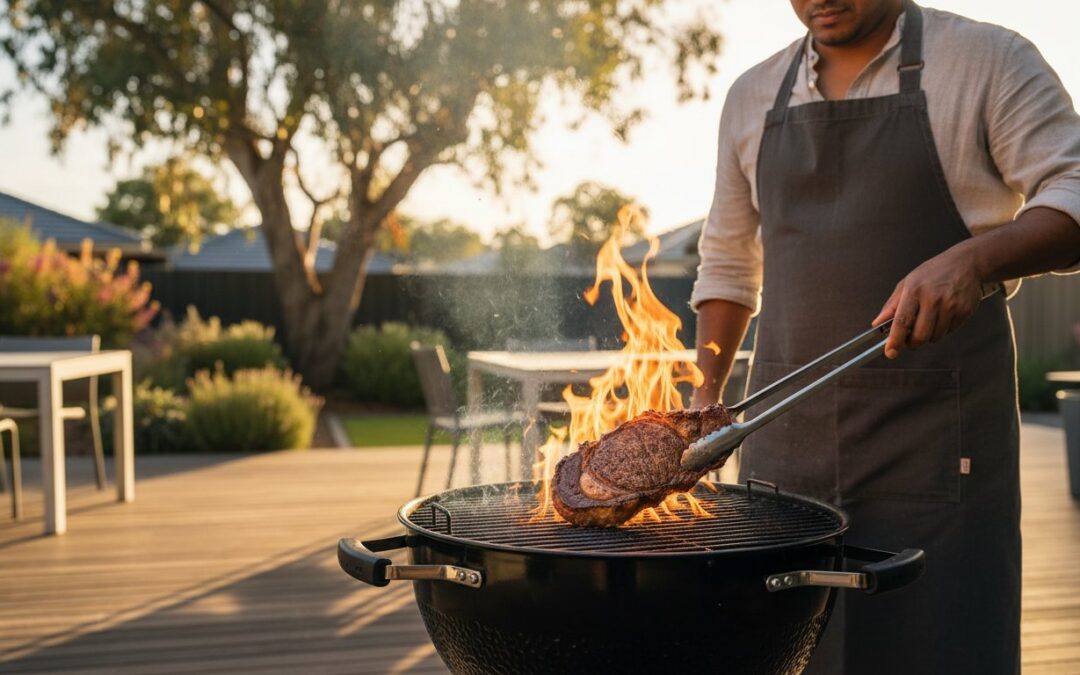
Last Saturday, a backyard pitmaster in Sydney watched A$95 worth of premium dry-aged ribeye transform into a soot-covered brick in exactly 32 seconds. You’ve likely felt that same surge of heat and panic when a grease fire leaps toward your face, singeing eyebrows and ruining a perfectly good afternoon. Mastering the art of managing flare ups on a charcoal grill is the critical difference between a world-class crust and a bitter, blackened mess that’s still raw at the bone.
We agree that there’s nothing more disappointing than wasting high-quality, natural hardwood charcoal on meat that tastes like an ash tray. You deserve the confidence to step back from the grates without fearing a total temperature meltdown. This professional guide promises to give you absolute heat control, showing you how to stop erratic flames from hijacking your premium cook. We’ll examine the specific oxygen management and coal stacking methods that ensure your next sear is consistent, clean, and worthy of the Charcoal Kings title. Get sizzlin’!
Key Takeaways
- Distinguish between flavour-enhancing sizzle and destructive flames to protect your premium cuts from carbonisation.
- Master the “two-zone” grill configuration to create a dedicated safe zone for immediate heat control.
- Learn why switching to chemical-free Australian hardwood lump charcoal is your best defence against erratic sparking and uneven burns.
- Discover the professional two-step tactical response for managing flare ups on a charcoal grill without losing your cool.
- Optimise your setup with a charcoal chimney to ensure even ignition and a stable, high-performance burn every time.
What Are Flare Ups and Why Do They Happen?
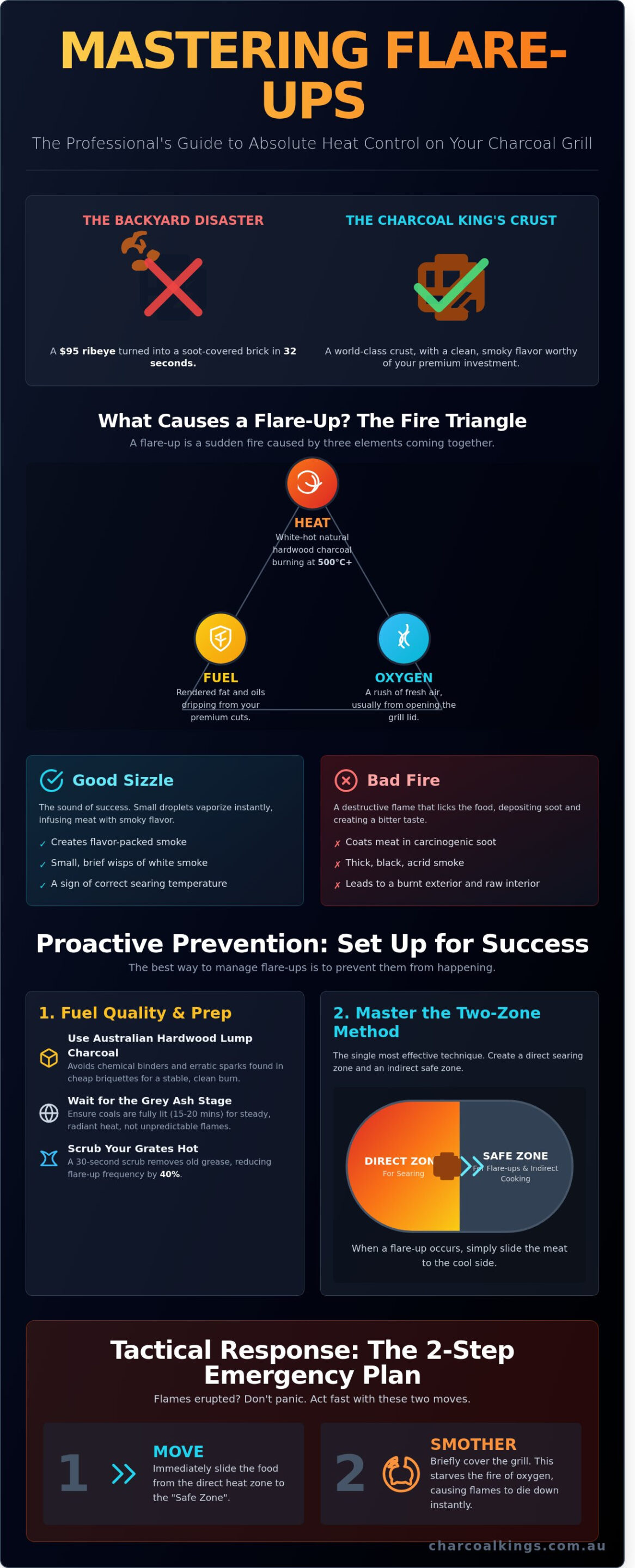
A flare-up is a sudden, intense burst of flame that occurs when rendered fat or oil drips directly onto white-hot coals. It’s an immediate chemical reaction. Managing flare ups on a charcoal grill is a fundamental skill for any serious pitmaster. These spikes in temperature are not the same as the gentle smoke you want for flavour; they are localized fires that can ruin a premium cut of meat in seconds. Understanding the mechanics of these flames is the first step toward mastering the pit.
Distinguishing between the “good sizzle” and a “bad fire” is essential for quality results. The good sizzle happens when small droplets of fat hit the coals and vaporise, sending flavour-packed molecules back into the meat. You can learn more about these chemical reactions and heat transfer methods in this comprehensive guide to grilling. A bad fire, however, is a sustained ignition that licks the food with yellow flames, depositing carbon and soot instead of rich, smoky flavour.
To better understand heat management and how it prevents these fires, watch this helpful video:
The “fire triangle” explains why these spikes happen. You need three specific elements: fuel, heat, and oxygen. In a charcoal grill, your premium natural hardwood charcoal provides the base heat. The rendered fat from your steak or chicken acts as the liquid fuel. When you open the lid, you provide the final ingredient: oxygen. If you don’t control these three components simultaneously, you lose control of the cook. It’s a delicate balance that requires constant attention.
Flare-ups are the primary reason for bitter, soot-covered meat in backyard BBQs. When fat burns uncontrollably, it produces polycyclic aromatic hydrocarbons (PAHs). These chemicals rise in the thick, black smoke and stick to the wet surface of the meat. This creates an acrid, metallic taste that masks the natural quality of the beef. It ruins expensive cuts like a A$60 Wagyu ribeye or a premium brisket, turning a high-quality meal into a charred disappointment. Get sizzlin’ with precision, not chaos.
The Science of Fat Rendering and Ignition
Different fats ignite at different temperatures. Beef tallow has a high flashpoint of approximately 315°C, while chicken fat can ignite at much lower temperatures around 200°C. When these liquids hit 100% natural hardwood charcoal burning at 500°C or higher, ignition is guaranteed. The chimney effect occurs when ignited fat creates a localized updraft that pulls in more oxygen and intensifies the flame within the grill’s cooking chamber.
Oxygen: The Secret Ingredient in Every Flare Up
Opening the lid is often the catalyst for a fire disaster. A small, starving flame receives a massive hit of fresh air and triples in size instantly. This is why managing flare ups on a charcoal grill requires precise vent control to regulate air intake. Cheap grills often have air leaks or 2mm gaps in the lid seal that allow oxygen to bypass the vents entirely. This makes it impossible to starve the fire, leading to uncontrollable spikes that char your food before the centre is cooked.
Proactive Prevention: Setting Up for Success
Managing flare ups on a charcoal grill begins long before the first steak hits the metal. Most backyard disasters happen because the cook rushed the preparation phase. You need a controlled environment to produce professional results. This means understanding your fuel and your floor plan. Success is found in the details of the setup, not just the flipping of the meat.
Wait for your charcoal to reach the grey ash stage. This usually takes 15 to 20 minutes depending on the wind and your chimney starter. Black coals still contain volatile organic compounds that ignite easily and produce bitter smoke. Once they are coated in a fine layer of ash, the temperature stabilizes. You get a steady, radiant heat rather than a flickering, unpredictable flame. A clean grate is equally vital. Carbonised remnants from a previous cook act like a wick for fresh grease. Scrub the grates while they are hot to ensure no old fat remains to fuel a fire. A 30-second scrub with a high-quality wire brush can reduce flare-up frequency by 40%.
Mastering the Two-Zone Grilling Method
Every professional pitmaster uses a two-zone setup. It provides an immediate escape route when things get too hot. Move all your lit coals to one side of the grill, leaving the other side completely empty. This creates a direct searing zone and an indirect “safe zone.” If fat rendering from your scotch fillet causes a spike, simply slide the meat to the cool side. The flames will die down instantly because there is no fuel source beneath the meat. Using this method is a core strategy for preventing grill flare-ups effectively.
- Bank the coals: Pile your 100% natural hardwood charcoal high on one side of the firebox.
- The Safe Zone: Use the empty side to rest meat or manage unexpected grease fires without scorching the food.
- Drip pans: Place a disposable aluminium tray on the charcoal grate in the indirect zone. This catches rendered fat before it can ever touch a hot surface.
Meat Preparation Tactics
The way you prep your protein determines how much fuel you’re adding to the fire. Excessive fat is the primary culprit. Follow the 6mm rule. Trim your fat caps down to about 1/4 inch. This is enough to provide flavour and moisture without creating a massive pool of liquid grease. If you’re cooking a high-fat cut like a brisket or a thick steak, this step is non-negotiable for managing flare ups on a charcoal grill.
Be careful with your marinades. Oil-based mixtures are essentially liquid accelerants. When they drip onto red-hot coals, they ignite faster than the meat can cook. Switch to dry rubs. A quality rub creates a bark or crust. This crust acts as a barrier, keeping juices inside the meat rather than letting them leak onto the coals. If you must use an oil-based sauce, apply it sparingly during the final two minutes of cooking rather than soaking the meat for hours. For the best results, start with premium natural hardwood charcoal to ensure a clean, predictable burn every time you light the pit.
Fuel Quality: Why Cheap Charcoal Causes More Fires
Cheap charcoal is the primary reason backyard cooks struggle with temperature spikes. Most budget briquettes found in big-box retailers contain up to 40% non-carbon fillers. These include starch, limestone, and even sawdust from treated timbers. These binders don’t burn; they smolder. They create a heavy layer of insulating ash that restricts oxygen to the core of the fire. When you’re managing flare ups on a charcoal grill, this buildup is dangerous. The ash eventually collapses, triggering a sudden oxygen rush that sends temperatures soaring by 50°C in seconds.
Australian hardwoods provide the stability needed for long, safe cooks. Ironbark has a massive density of approximately 1,200 kg/m3, which is nearly double the density of many imported softwoods. This high density ensures the coal burns from the outside in at a consistent, predictable rate. Gidgee is another powerhouse, known for its extreme hardness and ability to produce a glass-like coal. These premium fuels don’t spark or spit. You get a steady 300°C sear or a 110°C low-and-slow session without the volatile fireball effect of cheap, scrap-based fuels.
- Filler Flashpoints: Additives in cheap fuel ignite at lower temperatures than carbon, causing erratic sparking.
- Heat Spikes: Low-density wood burns up too fast, leading to “thermal runaway” where the fire becomes impossible to douse.
- Ash Suffocation: Excess ash from fillers acts like a blanket, hiding a mountain of heat that explodes when disturbed.
- Structural Integrity: Australian hardwoods like Gidgee maintain their shape, allowing for consistent airflow between the coals.
Lump vs. Briquettes for Flare Up Management
Lump charcoal is the professional choice for heat control. It responds to vent adjustments in less than 60 seconds because it’s pure carbonized wood. Charcoal Kings’ lump charcoal contains 0% added chemicals or mineral fillers. This purity is vital. When fat drips onto the coals, you won’t get the toxic, acrid smoke associated with burning chemical binders. Natural hardwood lump maintains a fixed carbon content of 85% to 90%, while compressed sawdust briquettes often fall below 60% carbon density due to heavy mineral additives.
The Impact of Moisture in Your Charcoal
Moisture is a silent killer of grill stability. If your charcoal hisses or pops, its moisture content likely exceeds 12%. This creates steam pockets that explode, throwing hot embers onto your grease tray and igniting fat. Choosing the right fuel is the first step in managing flare ups on a charcoal grill effectively. In humid Australian climates like Brisbane or the Northern Rivers, storage is critical. Keep your fuel in airtight 20L plastic pails to maintain a moisture level below 5%. For ultimate precision, White Binchotan is the benchmark. It’s carbonised at temperatures exceeding 1,000°C, removing all volatile oils and ensuring a zero-flare-up environment for high-end yakitori or steak searing.
Tactical Response: How to Manage Flare Ups in Real Time
When grease hits the hot coals and the fire jumps, your reaction determines the quality of your meal. Managing flare ups on a charcoal grill is about controlled intervention rather than frantic movement. Panic leads to dropped steaks and singed eyebrows. Follow these four tactical steps to regain control of your cook without losing your cool or your dinner.
- Step 1: Move the meat. Shift your protein to the indirect “cool” zone immediately. This breaks the link between the rendering fat and the flame. If you’re using a standard two-zone setup, this transition takes less than 3 seconds and stops the fire from carbonising your crust.
- Step 2: Close the lid. Starve the fire of its lifeblood. Fire requires heat, fuel, and oxygen to thrive. By shutting the lid, you restrict the fresh air supply and suffocate the rising flames at the source.
- Step 3: Half-choke the vents. Adjust both your top and bottom vents to the 50% position. This reduces the airflow enough to dampen the intensity while maintaining enough internal heat to finish the cook. It can drop the temperature inside the cookbox by 40 degrees Celsius within minutes.
- Step 4: Wait it out. Give the grill 90 seconds to stabilise. Don’t rush back to the direct heat until the licking flames have subsided into a consistent, orange glow. Patience prevents the cycle from repeating.
The Lid-Down Philosophy
Professional pitmasters know that a closed lid is their best tool for temperature stability. Keeping the lid shut creates a convection oven effect, circulating heat around the meat rather than just searing the bottom. This reduces the need for aggressive open-flame cooking. The old Aussie BBQ rule holds true: if you’re lookin’, you ain’t cookin’. This isn’t just about heat retention; it’s about fire safety. Opening the lid allows a 21% oxygen surge to hit the coals, which can cause a dangerous “whoosh” of fire. Always burp the lid by opening it a few centimetres first to let the pressure equalise before fully exposing the grates.
The Dangers of the Squirt Bottle
The common practice of using a water spray bottle is a mistake that ruins good food. When water hits hot coals, it creates a steam explosion that kicks up fine particulate ash. The ash sticks to your meat, creating a gritty texture and a bitter, dirty taste. Beyond the flavour, there is a massive financial risk. A high-quality ceramic grill can cost upwards of A$2,200. Spraying cold water onto 300 degree Celsius ceramic causes thermal shock, which can lead to structural cracks and permanent damage. Instead of water, use a long-handled stainless steel spatula to reposition your coals or move your meat to a safer spot. Managing flare ups on a charcoal grill requires precision tools, not a garden mister.
Ensure your next cook is clean and consistent with our premium range. Shop 100% natural hardwood charcoal to reduce excessive sparking and unpredictable flare-ups.
The Charcoal King’s Setup for Flawless Grilling
Success starts long before the meat hits the grate. A chaotic setup leads to chaotic fires. To master the art of managing flare ups on a charcoal grill, you must control the variables of fuel, airflow, and equipment. Amateur grillers often blame the wind or the cut of meat for a ruined meal, but seasoned experts know that a proactive setup eliminates 90% of these issues before they happen. You need a system that prioritises predictability and safety.
The foundation of a stable cook is your fuel choice. Cheap, supermarket-grade briquettes often contain chemical binders and fillers that ignite unevenly. These additives can cause unpredictable temperature spikes and excessive sparking. Professional results require professional fuel. Australian hardwood lump charcoal is the industry standard for a reason. It burns cleaner, hotter, and more consistently than any processed alternative. When your fuel is reliable, your fire becomes a tool rather than a liability.
Why Quality Fuel is Your Best Defense
Charcoal Kings provides premium, natural hardwood charcoal that is 100% chemical-free. This isn’t just about flavour; it’s about fire physics. Our hardwood lump is carbonised to ensure high density and low moisture content. Consistent coal sizing, typically ranging from 40mm to 100mm, allows for optimal oxygen flow through the stack. This prevents the “pocket fires” that occur when small dust fragments choke the air, causing the rest of the pile to overcompensate with a sudden burst of heat. For a deeper dive into why this matters, read our guide on Lump Charcoal: The Pro’s Choice for Flavour.
The Essential Tool Kit
Stop using lighter fluid. The volatile chemicals in liquid starters create aggressive, short-lived flames that are difficult to tame. Use a dedicated charcoal chimney instead. This tool ensures every piece of lump is evenly ignited and covered in a thin layer of grey ash before it enters the grill bowl. Once the coals are ready, always establish a two-zone fire. Pile your hot coals on one side and leave the other side empty. This “cool zone” acts as your tactical retreat. If fat begins to render too quickly and flames jump, use a pair of 45cm long-handled tongs to move the protein to the indirect side immediately. This simple movement is the most effective technique for managing flare ups on a charcoal grill without losing your sear.
Don’t neglect the bowl’s cleanliness. Old grease and rendered fat from previous sessions settle in the bottom of the grill. When you hit high temperatures, this residue liquifies and ignites, creating a grease fire that is nearly impossible to stop by just closing the lid. Every three to four cooks, perform a deep clean. Scrape the interior bowl with a putty knife and ensure the ash catcher is empty. This removes the secondary fuel source that causes most out-of-control flare-ups.
Final Checklist Before You Get Sizzlin’!
- Vent check: Ensure your bottom intake vents are completely clear of old ash. Blocked vents lead to oxygen starvation and sudden “burps” of flame when you finally open the lid.
- Fuel check: Confirm your hardwood lump is bone dry. Moisture in the coal causes steam pockets that explode, throwing sparks onto your meat.
- Safety check: Keep a 4.5kg fire extinguisher or a bucket of dry sand within two metres of your grill. Water should never be used on a grease fire.
- Temperature check: Let your grates heat for 10 minutes before adding food. This helps sear the meat instantly, locking in juices that would otherwise drip and cause flames.
Ready to upgrade your fuel? Shop our Premium Hardwood Lump now.
Take Control of Your Next Cookout
Mastering heat control changes your grilling game from a stressful chore to a professional craft. Successful managing flare ups on a charcoal grill starts before you even strike a match. By choosing 100% natural hardwood charcoal, you eliminate the volatile chemical fillers found in budget bags that cause unpredictable temperature spikes. Professional BBQ teams across Australia use this premium fuel because it delivers a consistent 3 hour burn time and produces significantly less ash than standard briquettes. High quality charcoal burns hotter and cleaner; this means you spend less time fighting fires and more time perfecting your sear.
Effective fire management relies on a two zone setup to provide a dedicated safety area for your proteins. When fat drips hit the coals, having that cool zone prevents charred disasters. You don’t need to be a professional to get these results; you just need the right gear and a solid plan. Stop settling for acrid smoke and uneven heat. It’s time to upgrade your fuel source and grill with the confidence of a seasoned pitmaster. Our charcoal contains no chemicals or fillers, ensuring your food tastes like food, not fuel.
Get Sizzlin’ with Australia’s Finest Hardwood Charcoal!
Your journey to becoming a backyard legend is just one bag away. Get your grill ready and enjoy the clean, natural flavor that only the best hardwood can provide.
Frequently Asked Questions
Is a flare-up the same as a grease fire?
Flare-ups aren’t the same as grease fires. A flare-up is a temporary burst of flame caused by fat dripping onto hot coals. It’s usually over in seconds. A grease fire is a sustained, dangerous combustion of accumulated oils. These fires often reach temperatures above 315 degrees Celsius. You must keep your grill clean to prevent the 5mm layer of residue that typically fuels these hazards.
Can I use baking soda to put out a flare-up on a charcoal grill?
You can use baking soda for small grease fires, but it’s not the best tool for routine flare-ups. Baking soda releases carbon dioxide to smother flames effectively. You’d need approximately 1 to 2 kilograms of the powder to stop a significant fire. For standard flare-ups, moving the meat to a cool zone is a faster and less messy solution that won’t ruin your dinner.
Does the type of charcoal really affect how many flare-ups I get?
Managing flare ups on a charcoal grill is much simpler when you use premium lump charcoal. Cheap briquettes often contain 20% fillers and chemical binders that cause uneven sparking and unpredictable heat spikes. Our 100% natural hardwood charcoal burns steady and produces minimal ash. This consistency reduces the chance of sudden oxygen surges that ignite dripping fats during your 3 hour cook.
Should I leave the lid open or closed when a flare-up starts?
Close the lid immediately to starve the fire of oxygen. Cutting off the airflow can reduce flame height by 80% within 15 seconds. Adjust your top vents to about 10% open to maintain your internal temperature without fueling the flames. If you leave the lid open, the fire gets a fresh supply of oxygen and will grow until the fuel source is consumed.
Why does my chicken always cause huge flare-ups compared to steak?
Chicken skin contains a high percentage of rendered fat that liquefies and drips directly onto the coals. A standard 200g chicken thigh can lose 15% of its weight in melting fat during a 20 minute cook. Steaks generally have more internal marbling rather than surface fat. This means the fat stays trapped in the muscle fibers longer instead of falling into the fire box.
What should I do if the fire gets out of control inside the grill?
Close every vent and shut the lid to suffocate the fire. Oxygen deprivation is the fastest way to kill a runaway fire without ruining your equipment. Always keep a 2kg ABE fire extinguisher nearby, which you can purchase for about A$35 at local hardware stores. Never throw water on the grill. Water causes grease to splatter and can lead to severe burns in less than a second.
How do I stop my skewers from burning during a flare-up?
Soak wooden skewers in water for at least 30 minutes before you start grilling. This hydration prevents the wood from reaching its 230 degree Celsius ignition point too quickly. You can also use a 5cm wide strip of aluminium foil to shield the exposed ends of the skewers. This simple barrier reflects 90% of the direct radiant heat and keeps your handles from turning to ash.
Can flare-ups damage my charcoal grill over time?
Frequent flare-ups will damage your grill by warping the firebox and stripping the protective enamel coating. Sustained heat spikes above 425 degrees Celsius weaken steel components over a 12 month period of heavy use. Managing flare ups on a charcoal grill properly can extend the life of your unit by 5 to 7 years. Invest in quality natural charcoal to maintain stable temperatures and protect your hardware.