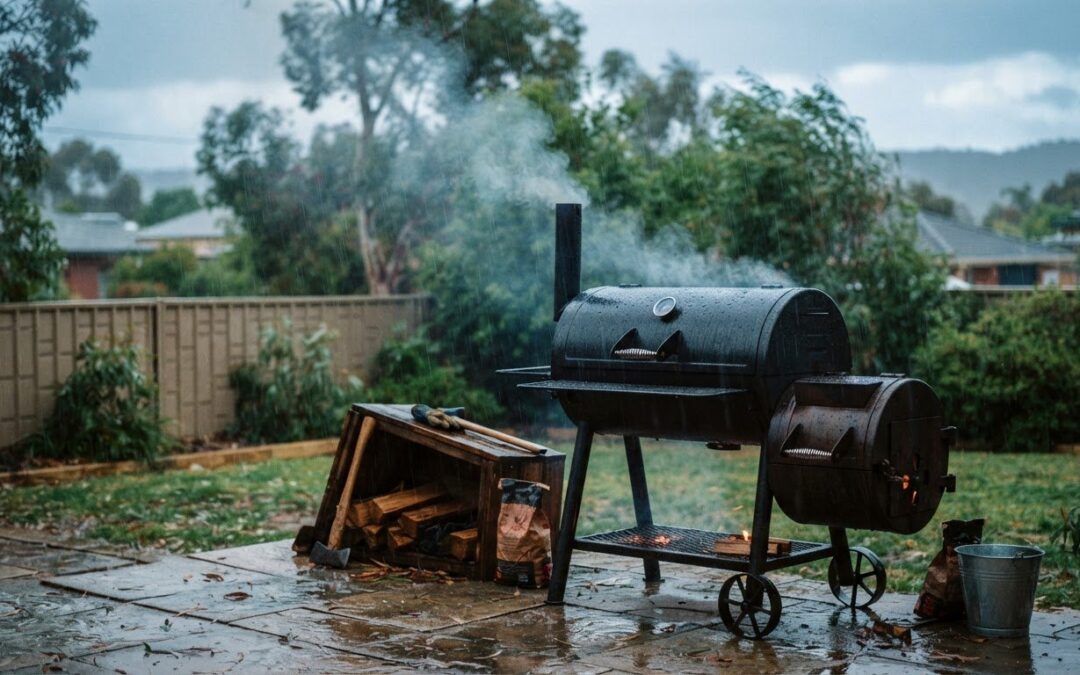
A sudden downpour doesn’t automatically end a barbecue. Managing a smoker during a sudden downpour means keeping it outdoors with clear airflow, shielding it from direct rain where practical, and monitoring the fire and cooking temperature before adjusting anything. Never move a hot smoker into a garage or enclose it to keep the rain out.
Rain and gusty wind can disrupt a steady cook, making it easy to worry about dropping temperatures or overfeeding the fire. Respond methodically: assess the weather, keep ventilation open and make small adjustments rather than changing everything at once.
This guide explains how to protect your setup without creating a fire hazard, manage airflow and fuel, and monitor the cook as conditions change. You’ll also learn when to continue and when safety calls for stopping to address the weather first.
Key Takeaways
- Keep the smoker outdoors and properly ventilated, even when rain makes shelter seem appealing.
- Use a safe windbreak to reduce gusts, while keeping it clear of the smoker and its airflow.
- Watch both the cooking-chamber temperature and the food’s internal temperature before adjusting the fire.
- Make measured changes to airflow and fuel as the weather shifts, rather than reacting to every temperature swing.
Managing a smoker during a sudden downpour
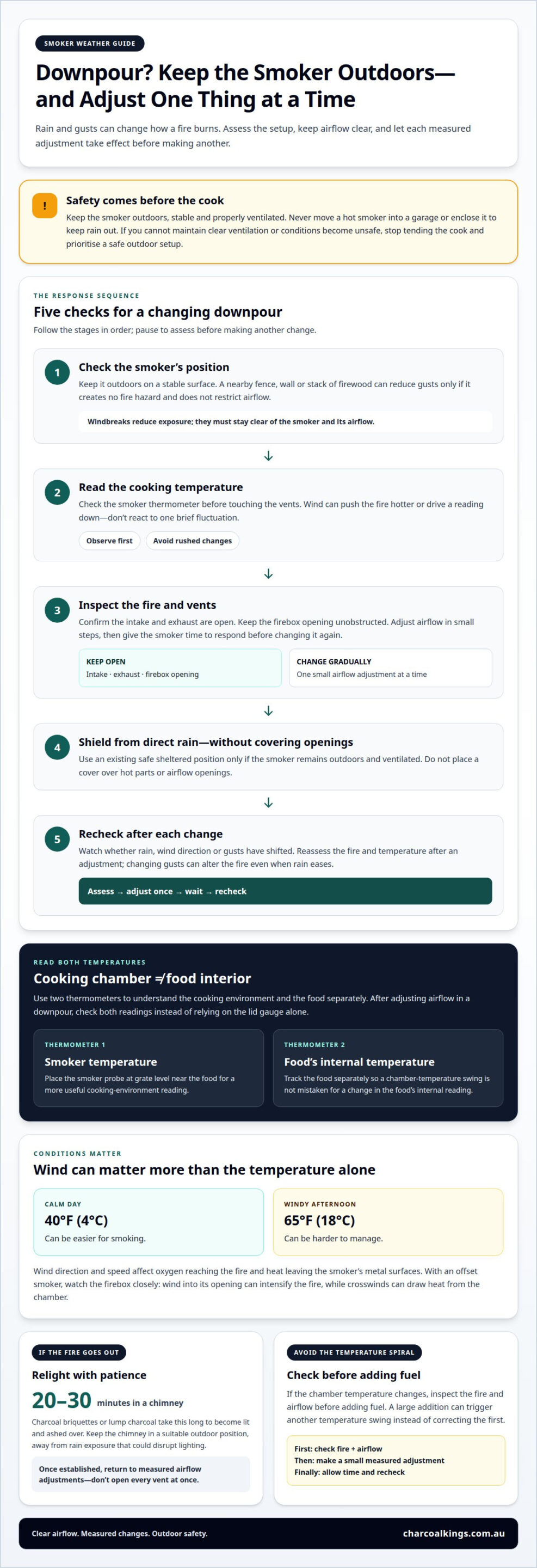
Keep the smoker outdoors, stable and well ventilated. Don’t rush it into a garage or wrap it in a way that blocks airflow. A sudden downpour can bring gusts that alter how the fire burns, while rain and wind can make cooking temperatures less steady. Pause, assess the conditions and make one adjustment at a time.
Protect the setup without enclosing it. A fence, garage wall or stack of firewood can reduce wind exposure if it creates no fire hazard and leaves ventilation clear. Keep the smoker’s intake, exhaust and firebox opening unobstructed. Wind entering an intake or offset smoker firebox can feed extra oxygen and intensify the fire; wind crossing the metal can also carry heat away.
- Check the smoker’s position. Keep it outdoors on a stable surface. If a nearby fence or wall blocks gusts safely, use it as a windbreak without restricting airflow.
- Read the cooking temperature. Check the smoker thermometer before changing the vents. Wind can drive a reading down or push the fire hotter, so avoid reacting to one brief fluctuation.
- Inspect the fire and vents. Confirm the intake and exhaust remain open. Adjust airflow in small steps, then give the smoker time to respond before making another change.
- Protect the cook from direct rain. Use an existing safe sheltered position if it keeps the smoker outdoors and ventilated. Don’t place a cover over hot parts or openings.
- Recheck after each change. Note whether the wind direction, rain or temperature has shifted. A change in gusts can alter the fire even if the rain eases.
With an offset smoker, keep a close eye on the firebox. Wind blowing into its opening can make fuel burn more aggressively, while crosswinds can draw heat from the cooking chamber. If the chamber temperature changes, check the fire and airflow before adding fuel. A large addition can trigger another temperature swing instead of correcting the first.
Use two thermometers to distinguish the smoker’s temperature from the food’s internal temperature. Place the smoker probe at grate level near the food. This gives a more useful reading of the cooking environment than a thermometer mounted high in the lid. In a downpour, check both readings after adjusting airflow instead of relying on the lid gauge alone.
If the fire has gone out and you need to relight, charcoal briquettes or lump charcoal take 20-30 minutes in a chimney to become lit and ashed over. Keep the chimney in a suitable outdoor position, away from rain exposure that could disrupt lighting. Once the fire is established, return to measured airflow adjustments instead of opening every vent at once.
Changing weather can make a calm day feel easier to manage than a warmer, windy one. A calm 40°F (4°C) day can be easier for smoking than a windy 65°F (18°C) afternoon. The key factor is not temperature alone: wind direction and speed affect both oxygen reaching the fire and heat leaving the smoker’s metal surfaces.
If conditions become unsafe or you can’t maintain clear ventilation, stop tending the cook and prioritise a safe outdoor setup. Don’t carry a hot smoker through the rain or bring it into an enclosed area. Managing a smoker during a sudden downpour is about preserving airflow, reading the fire’s response and avoiding hurried changes that compound temperature swings.
Charcoal Kings: Hardwood Lump Charcoal
Charcoal Kings can help you plan your next cook with fuel suited to charcoal smoking. Hardwood lump charcoal and charcoal briquettes suit different preferences, while Binchotan charcoal and BBQ grills and smokers round out the range. Choose fuel that matches your smoker and cooking style, then keep it dry and ready before unsettled weather arrives. During a downpour, the priority is still protecting airflow and managing the fire, not expecting a fuel change to fix exposure to rain or wind. Start with equipment suited to your approach. Explore Charcoal Kings’ range online at charcoalkings.com.au.
Prepare for the Next Cook
A calm approach to managing a smoker during a sudden downpour starts before the first drops fall. Before your next cook, choose an outdoor spot with clear airflow and keep your fuel stored and ready. Preparation gives you a steadier starting point when wind or rain changes the fire’s behaviour.
Fuel choice is part of planning, not a quick fix for changing conditions. Charcoal Kings offers Hardwood Lump Charcoal, Charcoal Briquettes and Binchotan Charcoal for different charcoal cooking setups. Match your fuel to your smoker and cooking style, then focus on managing the weather safely.
Speak with Charcoal Kings about charcoal and plan your next cook with confidence.