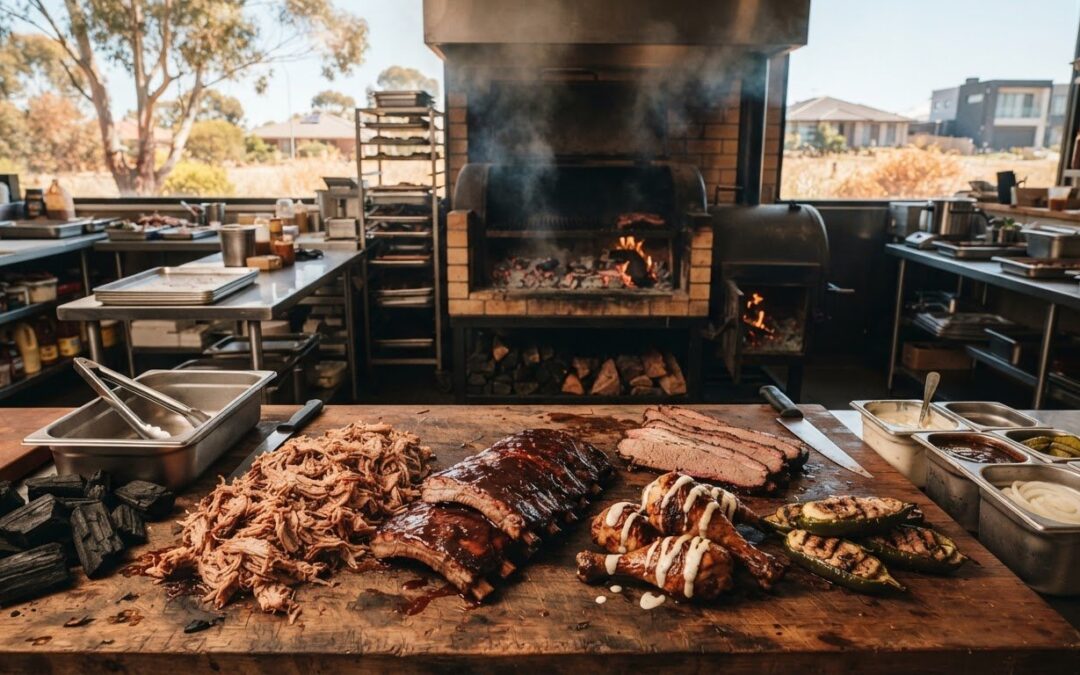
Low labour doesn’t mean fast cooking. The most practical low labour smoked recipes for restaurants include pulled pork shoulder, chicken, ribs and brisket. Pulled pork takes 7-9 hours, and beef brisket can take 10-12 hours, so plan them as prepared-ahead menu components rather than quick orders.
That distinction matters during service: a long cook can still be manageable if it yields multiple portions and needs attention only at key stages. Choose cuts and finishes that suit your prep rhythm, menu format and the hands-on work your team can manage.
This guide covers pulled pork, smoked chicken, baby back ribs and brisket, with practical approaches for each. It also explains how charcoal and smoking methods affect the cooking process, including when staged cooking or a sauce finish adds work. Use these ideas to identify dishes worth planning ahead and build a smoking workflow around your kitchen.
Key Takeaways
- Build pulled pork into your prep schedule: the smoking stage alone takes 7-9 hours, making it better suited to advance batch cooking than a quick service order.
- Pair smoked chicken with Alabama white sauce for a menu option that brings smoke and a bright, creamy finish together.
- Plan baby back ribs as a staged cook: open smoke, foil-braising and an unwrapped glaze each have a distinct role.
- Turn smoked brisket into a flexible menu component by using it as the filling for jalapeños, rather than serving it only as a sliced main.
- Choose a charcoal and barbecue method that fits the attention your kitchen can give the fire, smoke and cooking stages.
1. Low-and-slow pulled pork
Pulled pork suits advance prep, not a twenty-minute ticket. A bone-in pork butt or shoulder roast weighing 2-4 kg can take 7-9 hours to smoke. Cook it at 225°F until the meat is tender enough to pull apart. That long, steady cook gives a restaurant a versatile barbecue component for rolls, bowls and plated mains. Among low labour smoked recipes for restaurants, it stands out for its batch-friendly format.
Pork shoulder is useful to assess for yield and food cost because a single roast can supply several portions across different dishes. Compare the usable pulled meat with the raw weight, allowing for trimming, cooking loss, portion size and accompaniments. The right fit depends on your menu price and how consistently the kitchen can use each batch.
Plan the prep in stages. An overnight brine helps smoked pork shoulder retain moisture. Season the roast, set the smoker to 225°F and cook until it pulls tender; allow the 7-9-hour smoking window in the production plan. The meat can then be portioned for service, rather than requiring a full cook during a busy shift. A smell of dinner may become noticeable around hour four, but aroma alone doesn’t tell you whether the roast is ready.
There are faster routes, but they still need planning. A hot-and-fast smoked pork butt recipe is described as ready in about 5 hours. Sous vide barbecue pulled pork shoulder needs about an hour and a half on the grill to finish smoking. Smoked spare ribs offer a bone-in alternative, while maple barbecue pork tenderloin gives the menu a leaner cut with a sweet finish. Chicken wings can share the smoker, but their cooking needs and service format differ from a large pork roast.
For Australian restaurant menus, pulled pork, smoked spare ribs and maple barbecue pork tenderloin can work as distinct dishes or menu components. These low labour smoked recipes for restaurants are most practical when they suit batch preparation and require few finishing steps during service.
Cool cooked pork promptly in shallow portions, store it covered under refrigeration and reheat it thoroughly before service. Keep raw meat separate from cooked food, and use clean utensils and surfaces when portioning. These steps help control contamination while preserving the meat’s texture.
Smoking can create food-safety and consistency risks when cooking, cooling or storage varies between batches. Smoke and heat also require controlled ventilation, as prolonged exposure can affect kitchen staff. Keep the process steady, record the method for each batch, and use consistent portioning and finishing steps during service.
2. Smoked chicken drumsticks with Alabama white sauce
Chicken drumsticks can be smoked ahead of service, then finished over direct heat for crisp skin. Keep the seasoning simple: salt, black pepper and barbecue rub let the smoke come through. Alabama white sauce adds a creamy, tangy contrast. Serve it on the side or brush it on after cooking to avoid softening the skin during holding.
For an efficient batch, leave space between the drumsticks and smoke them until cooked through. Finish over charcoal to colour and tighten the skin, turning as needed for even browning. Smoke adds depth; the hotter finish builds texture. Keep sauce separate until plating, particularly for takeaway orders.
Smoked chicken wings suit the same menu family but need a different service format. One recipe uses 1.5 kg of chicken wings, making them easy to prepare as a share plate or entrée. Another method smokes wings for 90 minutes, then tosses them in butter and hot sauce before a brief grill finish. That final step adds a glossy coating and helps restore a crisp surface.
Tea-smoked chicken wings offer another option when a wok suits the kitchen better than a barbecue. Smoke the wings in the wok with green tea and spices, then briefly broil them to finish. The method gives the dish a distinct aromatic profile. Keep the spice blend consistent between batches, and pair the wings with a dipping sauce instead of adding competing flavours.
Barbecue chicken recipes can share core prep while varying the cut, seasoning or finish. Drumsticks suit Alabama white sauce; wings can take hot sauce, pepper or a sharper glaze. A cheese-based side can make either dish more substantial, but serve it separately so it doesn’t compete with the chicken’s smoke and sauce. For a crisp finish, plate the chicken soon after grilling or broiling.
Smoked hot dog burnt ends add a quick-pickup option alongside whole cuts. Use thick sausages, cut into bite-sized pieces, then coat and return them to the heat until the exterior turns sticky and browned. A recipe uses 1.2 kg of thick sausages. Portion them for sharing or serve them as a topping, so the same prep can support more than one menu format.
For a sauce-led variation, pair the chicken with barbecue rubs and sauces that complement smoke without covering it. Choose the finish to suit the cut: Alabama white sauce for drumsticks, hot sauce for wings, and a glaze for sausage burnt ends.
3. Beer-braised smoked baby back ribs
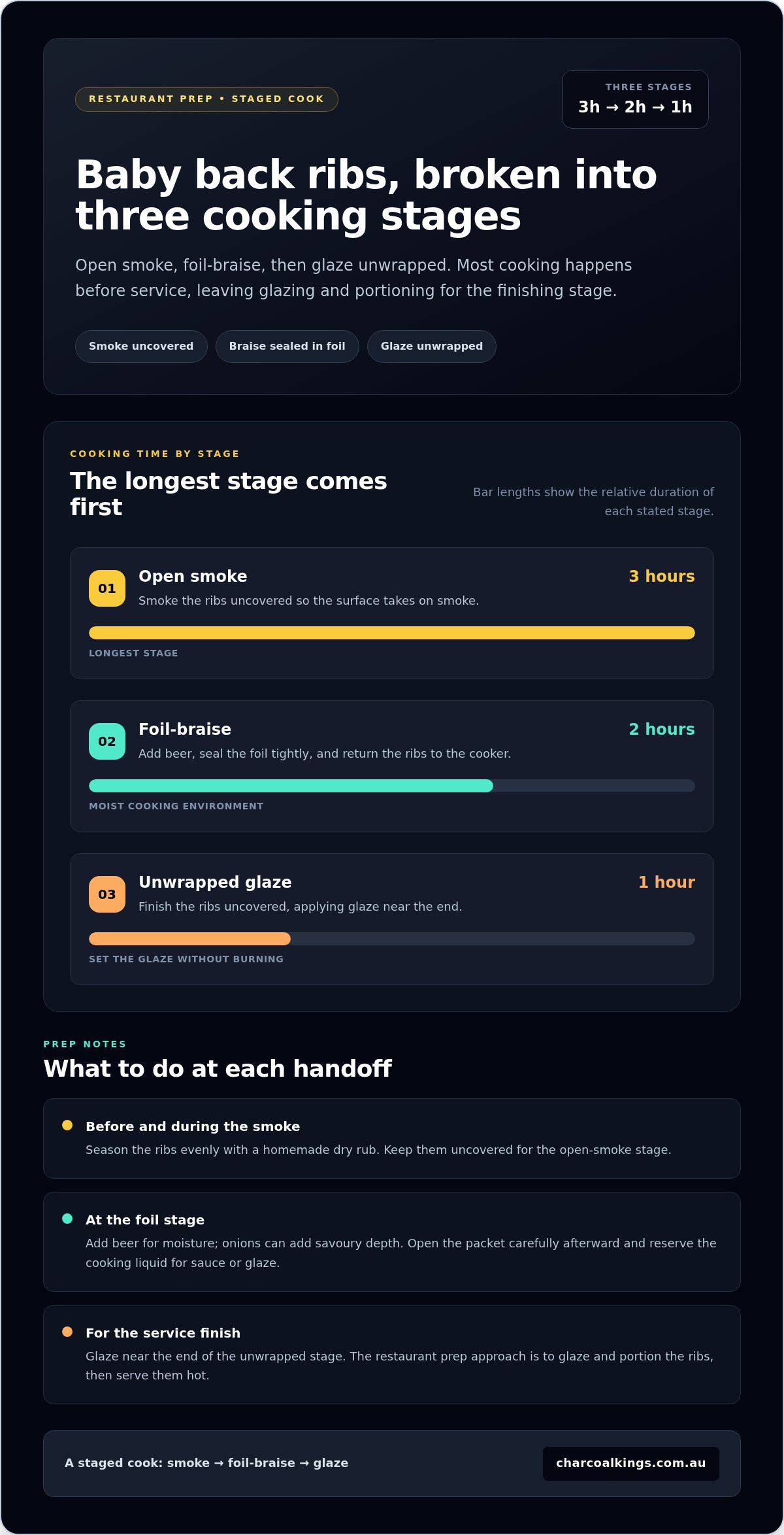
Beer-braised baby back ribs follow three stages: smoke, wrap, then glaze. The recipe calls for three hours of open smoke, two hours sealed in foil, and one hour unwrapped for glazing. This sequence suits restaurant prep because most cooking happens before service. Staff can glaze and portion the ribs, then serve them hot.
Season the ribs evenly with a homemade dry rub. Smoke them uncovered so the surface takes on smoke before braising. For the foil stage, add beer to create a moist cooking environment; onions can add savoury depth. Seal the foil tightly and return the ribs to the cooker for two hours. Open the packet carefully and reserve the cooking liquid for sauce or glaze.
Finish the ribs unwrapped for one hour, applying glaze near the end so it sets without burning. Beer adds aroma, but the final flavour depends on the balance of the rub, cooking liquid and sauce. Measure ingredients and follow the same sequence for each batch. This makes it easier to reproduce the same sticky finish at every service.
Kansas City-style barbecue ribs take a simpler route: coat them with barbecue sauce during the last half hour of cooking. That late application gives the sauce time to cling while limiting prolonged exposure to heat. For a menu with smoked ribs and brisket, use different finishes to distinguish each dish. Brisket can be sliced or pulled, while ribs arrive as bone-in portions; beef brisket can take 10-12 hours of smoking, so it also needs advance planning.
Memphis-style dry ribs suit guests who prefer a less sauced finish. Brush them with a vinegar mop every 15 to 20 minutes while cooking. The repeated application adds hands-on work, so compare that method with the staged foil cook when planning a low-labour menu. A dry rub can still give the ribs a bold crust without a final glaze.
Smoked beef ribs provide another format. A recipe uses 2-2.5 kg of beef ribs and advises smoking them uncovered for 3 hours, then wrapping and cooking them for another 2-3 hours. This staged method creates a different plate from baby back ribs, with the larger cut taking more space on the smoker. A pellet grill can reduce fire-tending demands because it doesn’t require constant monitoring of smoke and heat. Choose the cooker and rib style around your kitchen’s prep capacity, batch size and service finish.
4. Charcoal and barbecue smoking methods
Choose a smoking method to suit the dish and the attention available during cooking. Hot smoking cooks food while developing its smoky flavour. Cold smoking adds smoke without cooking, so it is a separate process, not a shortcut for ready-to-serve meat. A smoke oven contains the process in a chamber; a commercial smoker or combi oven can support planned batches, depending on its features and your workflow.
Charcoal barbecue requires active fire management, while some pellet grills reduce tending because they don’t need constant monitoring of smoke and heat. Either way, a stable fire and measured wood additions help keep flavour consistent. Smoking meat may require a handful of checks over several hours, rather than constant attention. Schedule those checks around other prep and record the method for each batch.
Prepare barbecue rub in a batch before service. Mix the recipe’s dry ingredients evenly, label the blend and apply a consistent amount to each cut. This helps keep smoked pork and chicken consistent between cooks. For porterhouse steak, one recipe suggests adding a second handful of soaked wood chips halfway through the first cooking stage for deeper smoke flavour. Match additions to the cut without overpowering it.
Batch smoking can reduce active labour by moving long cooks away from peak service. Prepare cuts and rubs ahead, load the smoker as part of a planned production run, then check the cook at set stages. Smoked sausages with onion and beer take 90 minutes in one recipe, making them a different production choice from long-cooked brisket. Use the same method and portioning routine each time, then finish dishes to order.
Smoked barbecue sides can share smoker space when their cooking windows align with the main dish. Macaroni and cheese takes 30-45 minutes to smoke, while corn cobs wrapped in foil take 45 minutes. These sides add smoke to the plate without requiring another long meat cook. Stagger them by readiness, and keep sauces and garnishes separate until plating to preserve texture.
A commercial smoker or combi oven can support batch-prepared smoked meats, macaroni and cheese, or corn. Oven controls can help standardise cooking stages, while a charcoal barbecue gives direct control over the fire and wood. Choose according to menu volume, staff attention and the finish each dish needs. The method should simplify service, not add unnecessary tending or last-minute steps.
Smoked beef meatballs can gain extra char using a foil-pack smoking technique, offering a way to deepen the exterior without changing the basic batch plan. The page advises smoking a whole chicken for 2-3 hours until its internal temperature reaches 75°C; use that temperature as the doneness check rather than relying on appearance alone. A commenter suggests smoking game hens for a couple of hours at 225-250, providing another poultry option when portions or menu needs differ.
The page gives a smoking time of 1-2 hours for salmon, so its shorter cook can be scheduled alongside longer production when equipment space and timing allow. The Food Network brisket recipe recommends wrapping brisket during the cook to help it retain heat. Record these adjustments in batch notes, keeping timing, temperature checks and wrapping decisions specific to each food.
5. Jalapeños stuffed with smoked brisket
Jalapeños stuffed with smoked brisket turn a long-cooked cut into a shareable entrée or bar snack. One recipe uses a 3-5 kg beef brisket and describes the cook as taking six hours. Smoke the brisket ahead, chill and portion it for service, then use the cooked meat as a filling. This approach gives one batch more than one menu role.
Halve the peppers lengthwise and remove the seeds and membranes. Mix chopped brisket with cheese, garlic and seasoning, then spoon the filling into each jalapeño half. A little melted butter can help the exposed filling brown during the final cook. Arrange the peppers evenly so they heat and finish at a similar rate.
Keep the filling balanced: smoked brisket brings rich, savoury flavour, while jalapeños add heat and cheese softens the contrast. For a milder dish, remove more of the inner membrane; for a sharper bite, retain some. Serve the finished peppers as a small plate or garnish beside smoked pork. Avoid overfilling them, which can make the peppers difficult to handle.
A Texas-style brisket flat can supply leaner slices for the filling or a separate main. One smoked brisket flat recipe gives a cooking window of 5 to 7 hours. For dependable prep, keep the flat whole during cooking, then portion it after resting. Use the slices for plates and reserve smaller pieces for stuffed jalapeños, reducing the number of separate preparations required.
Smoked beef brisket pairs naturally with other smoked menu items. Serve brisket-stuffed jalapeños alongside smoked chicken, or combine leftover portions with pork belly in a mixed barbecue plate. Salmon offers a lighter smoked option. Keep each protein’s seasoning distinct so the garlic, butter or cheese in the pepper filling doesn’t dominate the other dishes.
Prepare the pepper halves and brisket filling ahead, then assemble consistent batches for service. Finish the stuffed peppers close to plating and serve them hot with a contrasting sauce. Label the prepared filling, and keep raw jalapeños separate from cooked brisket during prep. These controls support clean handoffs between preparation and service.
A smoker that holds a steady cooking environment helps produce brisket suited to both sliced portions and fillings. Match the cooking setup to batch size and kitchen workflow, then standardise the recipe’s seasoning and portioning. Explore BBQ grills and smokers for equipment suited to planned brisket cooking.
For another moist smoked-beef preparation, The Food Network’s smoked chuck roast recipe recommends moving the meat to an aluminium pan with broth for the final few hours of cooking. This helps keep it moist and produces beef pan juices. Smoking meat at low temperature for a few hours can produce tender, juicy meat with smoky flavour.
A smoked beef fat vinaigrette offers another way to use beef fat: the recipe uses 1 cup of beef fat, and the beef fat for the T-bone vinaigrette is smoked for about 1 hour. For a lighter smoked option, The Food Network smoked salmon recipe recommends grilling the fish with its skin on, then separating the flaky fish from the skin with a spatula for serving.
Charcoal Kings: Hardwood Lump Charcoal
Charcoal Kings supplies Hardwood Lump Charcoal for restaurant teams developing a charcoal-fired smoking workflow. Choose fuel and a cooker to suit your menu, batch size and the level of fire management your kitchen can handle. Charcoal Briquettes, Binchotan Charcoal, and BBQ Grills and Smokers are also available for different barbecue setups.
For pulled pork, ribs or brisket, start with the cooking method and equipment, then choose fuel to suit the setup. A steady process makes it easier to schedule checks and prepare dishes ahead of service. Hardwood Lump Charcoal is an option for kitchens using charcoal in their smoking routine.
Visit charcoalkings.com.au to explore charcoal and barbecue equipment for your kitchen.
Build a Smoking Workflow That Fits Your Kitchen
Make your next step a focused menu trial. Choose one smoked dish, map its preparation and finishing steps, then assess how it fits your equipment and service rhythm. This gives your team a practical basis for deciding which low labour smoked recipes for restaurants belong on the regular menu.
Fuel choice is part of that planning. Charcoal Kings offers Hardwood Lump Charcoal, Charcoal Briquettes and Binchotan Charcoal for different charcoal cooking setups. Match the fuel to your smoker, cooking method and desired flavour, then build a repeatable process around it.
For help considering fuel and equipment for your restaurant kitchen, contact Charcoal Kings to discuss your kitchen. A clear workflow can turn smoked dishes into a purposeful part of service. Start with a dish your team can execute well, then build from there.