Your choice of wood is the single most important ingredient in your offset smoker, yet 80% of backyard pitmasters settle for whatever is cheapest at the local hardware store. It’s a mistake that costs more than just wood; it costs you the meat. We’ve all seen a $150 Wagyu brisket turn bitter from thick, grey smoke or struggled with a firebox choked by ash halfway through a 12 hour cook. You want performance that matches your effort.
This guide settles the ironbark vs red gum for smoking debate so you can achieve that elusive thin blue smoke and a rock-solid bark every single time. You’ll learn exactly how these premium hardwoods behave under fire. We’ll compare the 1,200kg/m3 density of Ironbark against the high-heat profile of Red Gum to ensure your next overnight cook is your most predictable one yet. Get sizzlin’ with the right fuel.
Key Takeaways
- Identify why Ironbark is the industry gold standard for high heat and extreme density in commercial-grade smoking.
- Discover the bold, earthy flavor profile of Red Gum and how its high sugar content creates the perfect bark caramelisation.
- Resolve the ironbark vs red gum for smoking debate by learning which specific meat cuts benefit most from each hardwood’s unique properties.
- Master the hybrid approach of mixing these premium timbers to achieve a professional balance of consistent heat and intense smoke.
- Learn how to use the ‘clack’ test and moisture guidelines to ensure your wood is seasoned for peak performance and clean burning.
The Battle of Australian Hardwoods: Ironbark vs Red Gum
Australian pitmasters have perfected the ‘Low n Slow’ craft using native hardwoods that outperform traditional American species. The local BBQ scene relies on these timbers for their extreme density and long-lasting coals. 90% of professional Australian competition teams choose these hardwoods over imported pellets or briquettes because they provide a superior heat-to-weight ratio. Choosing between ironbark vs red gum for smoking is the most common decision a pitmaster faces, requiring a balance between heat stability and flavour profile.
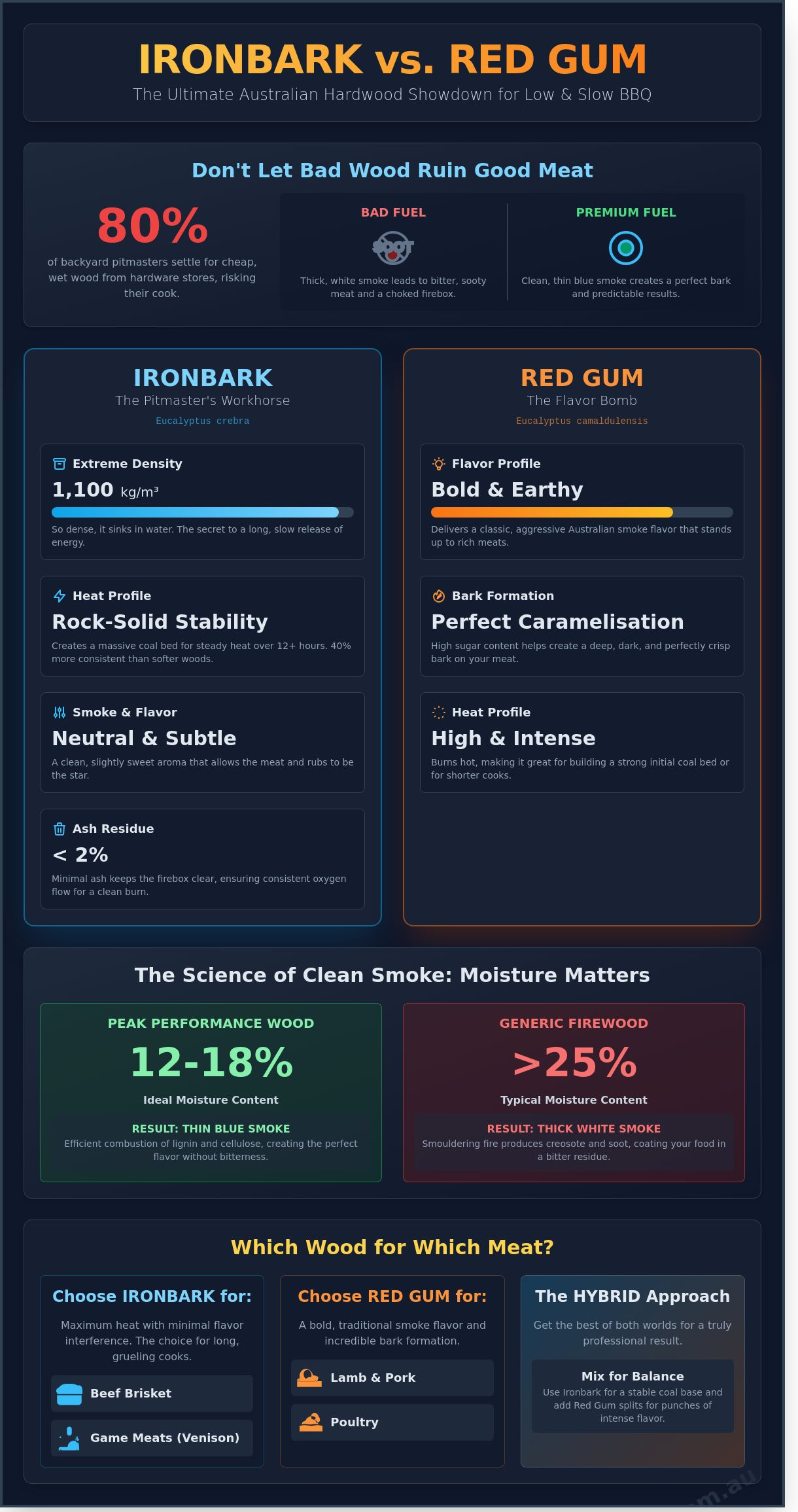
You must select natural, chemical-free wood to prevent toxic residues from entering your food. What is Ironbark? It is a high-density Eucalypt that offers a cleaner burn than almost any other wood on the planet. While Red Gum provides a bold, traditional smoke, Ironbark is the king of consistency. Using seasoned wood with a moisture content between 12% and 18% ensures you avoid the bitter creosote that ruins a long cook.
To better understand how these hardwoods perform in a real-world setup, watch this helpful breakdown:
Why Wood Choice Matters for Smoking
Wood density directly dictates the quality of your fire. High-density hardwoods produce the thin, blue smoke that prevents meat from becoming bitter. This clean burn occurs when the fire reaches temperatures high enough to efficiently break down lignin and cellulose, the organic polymers found in wood cells. Premium smoking wood is seasoned to a precise moisture level of 15%. Generic firewood often sits at 25% moisture or higher, leading to smouldering fires and thick, white smoke that coats your food in soot.
Australian Smoking Woods Spectrum
Understanding the botanical profile helps you master your pit. We primarily use Eucalyptus crebra (Narrow-leaved Ironbark) and Eucalyptus camaldulensis (River Red Gum). On the flavour scale, Ironbark sits at a medium level, while Red Gum provides a more aggressive, earthy punch. Ironbark is the top choice for smoking brisket in Australia. It provides a 40% more consistent heat output than softer woods, ensuring your 250°F target temperature remains stable for the duration of a 12-hour cook. Get Sizzlin’!
Ironbark: The Gold Standard for Clean Burning and High Heat
Ironbark is the heaviest hardwood found in the Australian bush. It boasts an extreme density of approximately 1,100kg per cubic metre, which is so heavy that the timber actually sinks in water. This density is the secret to its performance. When you burn Ironbark, you aren’t just burning wood; you’re releasing a massive payload of stored energy. It burns slower and hotter than almost any other species, making it the primary choice for 90% of commercial BBQ restaurants across the country. They rely on it for its reliability and its ability to maintain high temperatures for the duration of a shift.
The smoke profile is famously neutral. While some woods dominate the palate, Ironbark sits in the background. It provides a subtle, sweet aroma that allows your rubs and the natural flavor of the meat to take center stage. When weighing up ironbark vs red gum for smoking, many professionals choose Ironbark specifically because it produces less than 2% ash residue after a 12-hour cook. This keeps your firebox clear and ensures that oxygen flow remains unobstructed, preventing the bitter, “dirty” smoke that ruins expensive cuts of meat.
The Pitmaster’s Workhorse
Consistency is everything in low and slow cooking. Ironbark provides rock-solid temperature stability in offset smokers because of the massive coal bed it creates. Unlike softer woods that burn to ash quickly, Ironbark chunks transform into glowing embers that radiate steady heat for hours. It’s the best wood for smoking brisket and heavy beef cuts that require 10 to 14 hours of heat. You can trust a slow, predictable coal bed for those grueling overnight cooks without constantly hovering over the firebox. For the best results, ensure you’re using premium seasoned ironbark to guarantee a clean ignition.
When to Choose Ironbark
Ironbark excels in high-volume scenarios. If you’re running a large offset smoker, catering an event, or planning a marathon session with a 6kg brisket, this is your fuel. It pairs exceptionally well with beef, game meats like venison, and heavy pepper-based rubs. When comparing ironbark vs red gum for smoking, reach for the Ironbark if you want maximum heat with minimal flavor interference.
- Best for 12+ hour cooks where fuel efficiency matters.
- Ideal for large offset smokers that require high thermal mass.
- Perfect for pitmasters who prefer the taste of the beef over the taste of the wood.
Red Gum: Bold Flavour and Intense Smoke Profile
Red Gum is the heavy hitter of Australian hardwoods. It produces a robust, earthy smoke that defines the classic Aussie BBQ aroma. Unlike the mellow profile of Ironbark, Red Gum provides a punchy flavour that demands respect. You’ll notice a distinct sweetness in the smoke. This comes from the natural sugar content found in the sapwood of River Red Gum, which is often 2% to 3% higher than other Eucalyptus varieties.
When comparing ironbark vs red gum for smoking, Red Gum burns faster and hotter. It typically leaves behind 15% more ash than Ironbark, meaning you’ll need to clear your firebox more frequently during 12-hour sessions. It’s a trade-off for the intensity it delivers. Most pitmasters choose Red Gum when they want the wood to be the star of the show rather than a background note.
- Flavour: Earthy, bold, and distinctly “Australian.”
- Burn Rate: Medium-fast; requires more frequent log splits.
- Ash Production: High; expect to clean the grate every 4 to 5 hours.
- Heat Output: Intense; excellent for reaching 150°C+ quickly.
The Iconic Australian Flavour
Red Gum is the gold standard for smoking lamb and poultry. The smoke reacts with the meat surface to create a deep mahogany bark that is visually superior to lighter woods. You must manage your airflow strictly with this species. If the fire smoulders at temperatures below 500°C at the coal bed, Red Gum can produce a bitter, creosote-heavy soot. Keep your fire hot and your smoke thin and blue to capture the clean essence without the acrid aftertaste.
Red Gum for Shorter Cooks
This wood excels during 3 to 6-hour windows. It’s the perfect choice for pork ribs, scotch fillets, or reverse-seared steaks. Because it ignites quickly, Red Gum chunks are ideal for boosting the flavour of a neutral charcoal base. Red Gum’s high sugar content accelerates bark formation and caramelisation significantly faster than other dense hardwoods. This speed makes it a favourite for backyard cooks who want a professional crust on shorter cooks without waiting all day for the wood to break down.
Using Red Gum requires a proactive approach to fire management. It’s the best choice for those who enjoy the craft of tending the pit and want a flavour profile that stands up to heavy spice rubs and fatty cuts of meat. Get Sizzlin’ with a wood that brings real character to the grate.
The Head-to-Head Comparison: Which Wood for Which Meat?
Ironbark and Red Gum sit at the top of the Australian smoking hierarchy. Choosing between ironbark vs red gum for smoking depends on your specific equipment and the duration of your cook. Ironbark is the heavyweight champion of density; it averages 1,100kg/m3. This translates to a massive heat output and a burn time that lasts 20% longer than most other hardwoods. Red Gum is slightly less dense at 900kg/m3, but it offers a more assertive, traditional Australian smoke profile.
Price often dictates the choice for high-volume pitmasters. You’ll typically pay a 15% premium for seasoned Ironbark splits compared to Red Gum. This extra cost is justified for 12 hour brisket cooks where temperature stability is non-negotiable. For shorter sessions, Red Gum provides excellent value. Selecting the right size is critical for performance. Use 30cm splits for offset smokers to maintain a clean fire. Smaller 5cm chunks work best for ceramic grills or kettle BBQs where space is limited.
Meat Pairing Guide
Beef brisket and short ribs require the steady, clean heat that only Ironbark provides. It doesn’t overpower the meat during a 10 hour cook. Lamb is different. The high fat content in lamb shoulder and chops stands up well to the bold, earthy notes of Red Gum. For pork and poultry, Red Gum can be intense. Mix it with 50% apple or cherry wood to achieve a balanced, sweeter finish that won’t mask the delicate flavor of the bird.
Heat Management Strategy
Smart pitmasters use Ironbark to build a heavy coal bed. This creates a consistent thermal base that won’t fluctuate when you open the firebox. Add Red Gum during the first 3 hours of the cook. This is when the meat is most receptive to smoke absorption. Managing ironbark vs red gum for smoking requires active airflow control. Keep your intake vents open to ensure oxygen reaches the heart of the fire. Blue smoke is the goal; thick white smoke means your combustion is choked and your wood is smoldering rather than burning.
Sourcing and Seasoning: Getting the Best Performance
Seasoning isn’t a suggestion; it’s a requirement for clean BBQ. Freshly cut timber often contains up to 50% moisture. Burning green wood is a recipe for disaster. You need a moisture content between 15% and 20% for optimal combustion. Professional pitmasters typically wait 12 to 24 months for hardwoods like Ironbark to season properly in Australian conditions. High moisture levels force the fire to waste energy boiling off water instead of creating heat, which ruins your temperature control.
You can identify ready wood using the ‘clack’ test. Strike two logs together. Unseasoned wood produces a dull, heavy thud. Properly seasoned wood rings with a sharp, hollow ‘clack’ sound, similar to a cricket bat hitting a ball. The wood should feel light for its size and show visible cracks, known as checking, at the ends. If the bark falls off easily, it’s usually a sign the wood has dried out sufficiently.
If you’re looking for a reliable supplier that provides perfectly seasoned local hardwoods, you can check out Greenhill Timbers.
Storage is vital in the Australian climate. Keep your wood at least 10cm off the ground on pallets to prevent moisture wicking and rot. Use a roofed structure with open sides to allow 360-degree airflow. In high-humidity regions, moisture can seep back into the outer layers of the wood if it sits in damp grass or against a solid wall. Charcoal Kings focuses on premium, sustainably sourced hardwoods that are processed specifically for performance. We ensure our timber is aged correctly so you don’t fight your fuel while deciding between ironbark vs red gum for smoking.
Avoiding the ‘Dirty Smoke’ Trap
Unseasoned wood is the primary cause of “dirty smoke.” You’ll notice hissing and bubbling at the ends of the logs as internal water boils away. This creates thick, grey or black smoke that coats your meat in bitter creosote. This soot ruins the flavor and leaves a metallic aftertaste. To ensure a clean burn, place your next log on top of the firebox for 10 to 15 minutes before adding it to the fire. This pre-heating evaporates surface moisture and ensures the log ignites the second it touches the coals.
Ready to Get Sizzlin’?
Charcoal Kings provides a professional-grade range of smoking woods and 100% natural lump charcoal. Supermarket alternatives are often kiln-dried too fast or stored in plastic bags, leading to inconsistent burn rates and steam. Our hardwoods are selected for high density and clean flavor profiles. We cater to everyone from backyard hobbyists to commercial kitchens requiring high-volume fuel. Our products are 100% natural and free from chemical additives.
Master Your Next Backyard Burn
Deciding between ironbark vs red gum for smoking defines the final character of your cook. Ironbark remains the industry favorite for its 1,000-degree heat potential and neutral smoke that won’t overpower a 12-hour beef brisket. Red Gum offers a more aggressive, earthy profile that suits 4-hour lamb ribs or heavy beef cuts. Both woods provide the high density required for stable thermal mass in your offset smoker. You need consistent fuel to avoid temperature spikes that dry out your meat.
Charcoal Kings supplies 100% natural and chemical-free hardwoods seasoned to perfection. Our timber is sourced for consistent low ‘n’ slow performance, ensuring moisture levels stay under 20% for a soot-free finish. This is the same premium fuel trusted by Australian BBQ Champions to win trophies on the national stage. Don’t let wet or inferior wood ruin a prime cut of Wagyu. Grab the gear the pros use and take control of your firebox today.
Get Sizzlin’ with our Premium Australian Hardwood Woods!
It’s time to fire up the pit and show everyone what a real pitmaster can do.
Frequently Asked Questions
Is Red Gum good for smoking meat?
Red Gum is an excellent wood for smoking heavy meats like beef ribs or lamb. It provides a dense, earthy smoke profile that stands up to bold rubs and thick cuts. Because it burns at approximately 1,000 degrees Celsius in a concentrated coal bed, it maintains consistent heat for 6 to 8 hours. You should use it sparingly to avoid a bitter over-smoked flavor on lighter proteins like chicken.
Which is better for brisket: Ironbark or Red Gum?
Ironbark is the superior choice for a 12 hour brisket cook due to its mild flavor and steady burn rate. When comparing ironbark vs red gum for smoking, Ironbark wins on subtlety, allowing the beef’s natural fat and bark to shine without being overpowered. Red Gum can become too intense over a long duration, whereas Ironbark delivers a clean, classic smoke ring every time you fire up the pit.
How long should Ironbark be seasoned before smoking?
You must season Ironbark for 12 to 24 months to achieve an ideal moisture level between 15% and 20%. Green Ironbark contains high sap levels that cause erratic temperature spikes and acrid white smoke. Professionals often wait 2 full years for the densest logs to ensure the wood burns blue and clear. It’s best to check your logs with a moisture meter before they hit the firebox.
Can I mix Ironbark and Red Gum in the same cook?
Mixing Ironbark and Red Gum is a common practice to achieve a balance of high heat and bold flavor. Many pitmasters use a 70% Ironbark base for consistent thermal mass and add 30% Red Gum chunks for a punchier smoke profile. This combination works best in offset smokers where you have total control over airflow. It allows you to reach a 120 degree Celsius target quickly while maintaining complexity.
Does Red Gum produce more ash than Ironbark?
Red Gum produces approximately 20% more ash than Ironbark during a standard 8 hour burn. This higher ash volume can clog the grates of smaller ceramic grills or bullet smokers if you don’t manage it. Ironbark is a cleaner-burning wood that leaves behind minimal residue. It’s the preferred option for long overnight cooks where you don’t want to clear the firebox mid-way through the process.
What is the best wood for smoking in Australia?
Ironbark is widely considered the gold standard for Australian low and slow barbecue due to its incredible density and clean burn. It’s the most reliable hardwood for maintaining a 110 degree Celsius temperature over 10 plus hours. The ironbark vs red gum for smoking debate usually ends with Ironbark as the top choice for versatility. It’s the workhorse of the local smoking scene for everything from pork butt to beef short ribs.
Is Ironbark harder to ignite than Red Gum?
Ironbark is harder to ignite than Red Gum because its density reaches up to 1,100 kg per cubic meter. You’ll need a solid bed of kindling or a propane torch to get the logs moving. Red Gum ignites faster due to its slightly more open grain structure. Once Ironbark catches, however, it holds its heat 25% longer than most other Australian hardwoods, which means you’ll spend less time tending the fire.
Can I use Red Gum firewood from a standard supplier for smoking?
You can use Red Gum firewood for smoking as long as it’s 100% natural, seasoned, and free from chemicals or dirt. Standard firewood suppliers often include bark or “punky” wood that creates dirty smoke and off-flavors. Ensure your supplier provides split logs that haven’t been treated with pesticides. For the best results, source premium grade timber specifically processed for cooking to avoid ruining a 100 dollar piece of meat.