
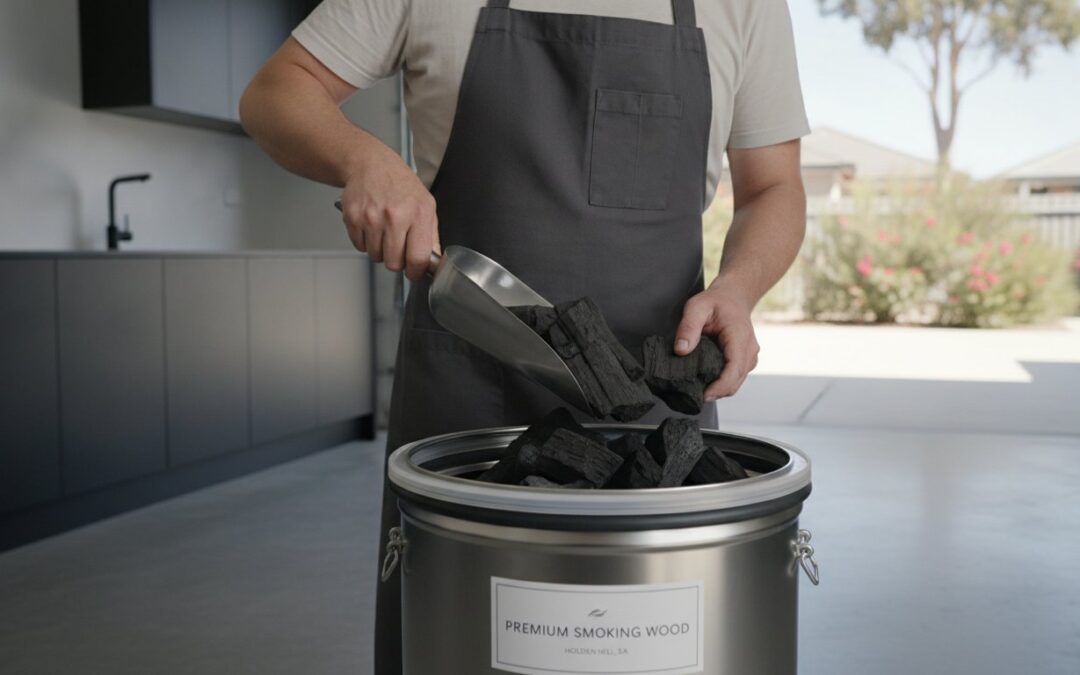
You spent a premium on Premium Hardwood Lump only to have it hiss and sputter like a wet log when you finally light the grill. It’s a common frustration that ruins the cook for many of the 75% of Australian households who own a barbecue. Learning how to store bbq charcoal isn’t just about tidiness. It’s about protecting your investment and ensuring your fuel performs at its peak. Moisture is the enemy of a clean burn. Even a small amount of humidity turns high-performance fuel into a source of acrid smoke and inconsistent heat profiles.
We agree that there’s nothing more irritating than a fire that refuses to catch or a cook ruined by bitter, damp smoke. This guide will teach you to master the art of charcoal preservation to ensure fast ignition and maximum flavour every time you fire up the pit. We’ll cover the specific containers that work, environmental factors unique to the Australian climate, and the safety protocols needed for bulk storage. You’ll gain the confidence to store your fuel long-term while keeping it bone-dry and ready for action.
Key Takeaways
- Understand the science of hygroscopy and why damp fuel kills your heat profile before you light the match.
- Implement the Gasket Rule by choosing storage solutions with rubber seals to lock out Australian humidity.
- Master how to store bbq charcoal by avoiding the Concrete Trap and selecting locations with high thermal stability.
- Identify specific storage needs for Hardwood Lump, Binchotan, and Briquettes to preserve their chemical purity.
- Execute critical safety protocols to protect fuel from Australian pests and manage combustion risks.
Why Proper Charcoal Storage is Non-Negotiable for Performance
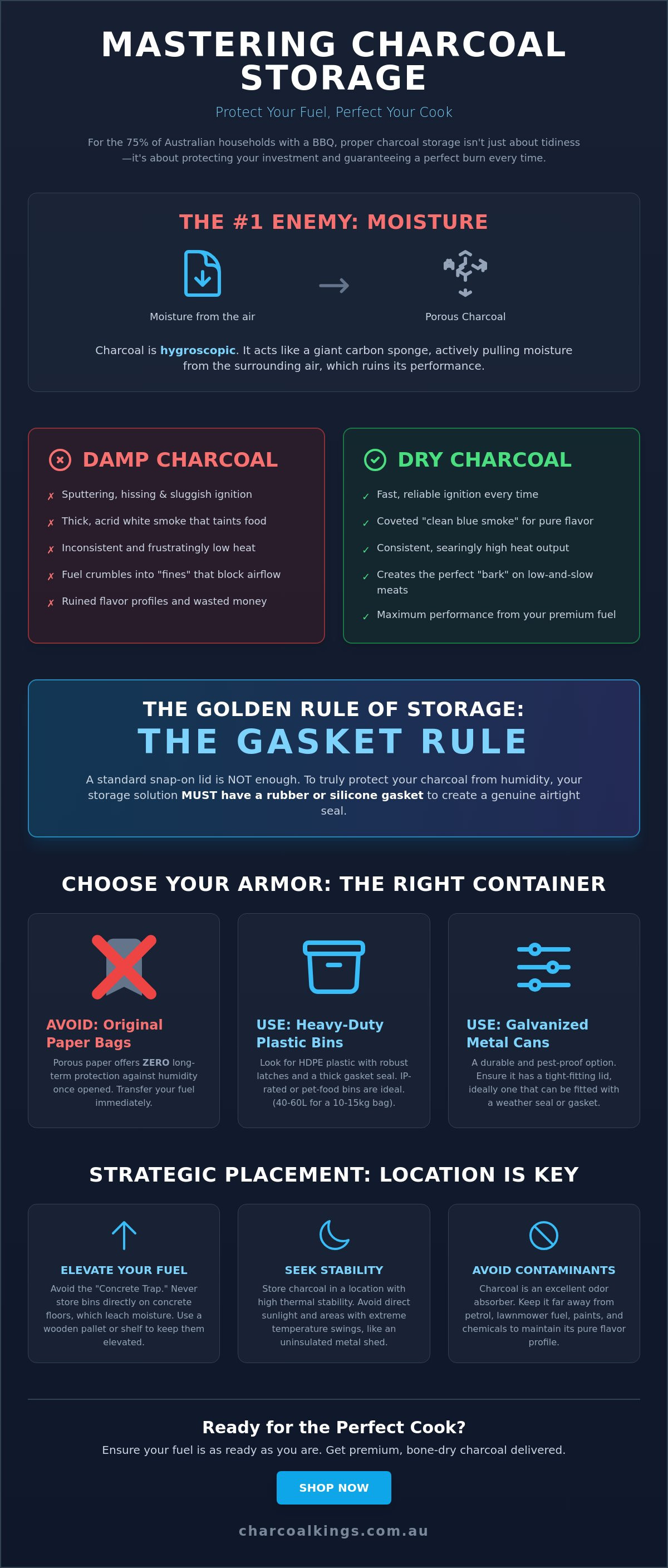
Charcoal is essentially a high-surface-area carbon sponge. Through a process called hygroscopy, it actively pulls moisture directly from the surrounding air. This isn’t just a minor inconvenience; it’s a fundamental chemical change that compromises your fuel’s ability to produce heat. Charcoal storage is the practice of isolating fuel from environmental humidity to maintain its chemical integrity. If you don’t master how to store bbq charcoal, you’re effectively burning money and sacrificing the quality of every meal you prepare.
Damp fuel is inherently inefficient. When you light wet charcoal, the fire must first use its energy to evaporate the trapped water before it can produce meaningful heat. This leads to low cooking temperatures, sluggish ignition times, and immense frustration for the pitmaster. Moisture also weakens the structural integrity of the fuel. It causes the pieces to crumble into small fragments, creating “fines” that settle at the bottom of your grill. These small particles block the grate, choking the airflow and killing your fire’s potential.
To better understand how moisture impacts your fuel performance, watch this helpful video:
The Science of the Damp Burn
Wet charcoal is the primary culprit behind thick, acrid white smoke. Clean combustion requires dry fuel to produce the coveted “clean blue smoke” that seasons meat without overpowering it. When moisture is present, combustion remains incomplete and produces bitter flavours. This moisture also impacts your ignition speed, making chimney starters unreliable and frustrating to use. Improper storage effectively ruins the Hardwood Lump Charcoal you invested in, turning a premium product into a smoky liability. While there are various types of charcoal available, all of them suffer when exposed to the high humidity often found in Australian coastal regions.
Preserving the Natural Flavour Profile
Charcoal is an exceptional odour absorber. Storing your bags near petrol cans, lawnmower fuel, or harsh garden chemicals in a shed is a recipe for disaster. The charcoal will soak up those chemical vapours and release them directly into your brisket or ribs. Maintaining the purity of your fuel means keeping it away from all additives and contaminants. Dry fuel is also essential for creating the perfect “bark” on low-and-slow meats. Excess moisture in the fuel creates a steamy environment inside the smoker. This prevents the surface of the meat from dehydrating properly, which is a requirement for forming that dark, flavourful crust every pitmaster craves.
The Best Containers for Keeping Charcoal Bone-Dry
Mastering how to store bbq charcoal begins with moving beyond the original packaging. Most premium fuels arrive in multi-wall paper bags. While these are cost-effective for transport, they are disastrous for long-term storage. Paper is porous and offers zero protection against the high humidity found in Australian coastal regions. Once a bag is opened, the clock starts ticking as the charcoal begins absorbing moisture from the air. To maintain professional-grade performance, you must transfer your fuel to a dedicated, airtight environment.
The “Gasket Rule” is the most critical factor in container selection. Many hobbyists assume a standard plastic storage tub is sufficient. However, a snap-on lid without a physical seal allows constant air exchange. You require a container with a heavy-duty rubber or silicone gasket. This creates a true airtight barrier that locks out moisture and preserves the chemical purity of your fuel. Without this seal, even the most expensive bin is just a glorified paper bag.
Heavy-Duty Plastic Bins and Totes
High-Density Polyethylene (HDPE) plastic bins are the industry standard for a reason. They are lightweight, durable, and won’t rust. Be wary of generic “weatherproof” labels; these often refer to rain resistance rather than an airtight seal. Look for “IP-rated” storage or bins specifically designed for pet food or grain storage. These typically feature robust latches and thick gaskets. A 40 to 60-litre bin is usually the ideal size to house a standard 10kg to 15kg bag of lump charcoal. Using transparent bins allows for instant inventory management, so you never run low before a big weekend cook.
Metal Drums and Trash Cans
Galvanized steel drums offer superior fire resistance and total protection against rodents. Rats and possums often find their way into Australian sheds and can easily chew through paper or thin plastic. Metal containers provide a rugged, “set and forget” solution for bulk storage. However, they possess high thermal conductivity. If you place a metal bin directly on a cold concrete garage floor, the temperature differential can cause internal condensation. Always elevate metal drums on a wooden pallet or a wheeled dolly. In coastal environments, the salt air will eventually corrode galvanized steel; in these areas, high-grade HDPE remains the superior choice.
When deciding how to store bbq charcoal for the long term, consider adding moisture absorbers. Placing a few large silica gel packs or a rechargeable desiccant canister inside your bin provides an extra layer of insurance for high-value fuels like Binchotan. Investing in high-quality BBQ accessories like dedicated fuel bins ensures your hard-earned lump remains bone-dry and ready for a clean burn. This small investment pays for itself by eliminating wasted, damp fuel that would otherwise end up in the bin.
Strategic Placement: Managing the Australian Climate
Strategic placement is the final line of defence in your quest to master how to store bbq charcoal. In Australia, environmental factors change by the hour. A bin that performs well in a dry Adelaide summer might fail during a humid Brisbane autumn. You must account for thermal stability and moisture wicking to keep your fuel in peak condition. Where you put your charcoal is just as important as what you put it in.
The “Concrete Trap” is a primary cause of fuel degradation in Australian garages. Concrete is porous and acts like a wick, pulling ground moisture upward through the slab. If you leave a paper bag or even a thin plastic tub directly on a garage floor, the bottom layer of charcoal will eventually become damp and useless. Always elevate your fuel. Use heavy-duty shelving or a standard wooden pallet to ensure a minimum 100mm gap between the floor and your containers. This simple step prevents the temperature differential that causes moisture to settle at the base of your supply.
Choosing between a garage and a shed depends on the construction material. A brick garage provides superior thermal mass, keeping internal temperatures consistent. Tin sheds are notorious for extreme heat spikes during the day and rapid cooling at night. These fluctuations cause the air inside your storage bins to expand and contract. This process can draw in humid external air through even the smallest gaps, leading to internal condensation. If you live in Northern Australia during the Wet Season, these temperature swings are your biggest enemy.
Indoor vs. Outdoor Storage
Verandas and decks are unsuitable for charcoal storage. Even if the area is under cover, morning dew and shifting winds will introduce moisture to your fuel. For high-value items like Binchotan, use the “Pantry Method”. Store small, opened batches in a climate-controlled area inside the home. This guarantees zero moisture absorption and ensures a clean, predictable burn every time. Avoid areas near laundry rooms or bathrooms where steam and high humidity are frequent.
Ventilation and Airflow
Stale air is often humid air. Your storage area requires a natural cross-breeze to prevent moisture pockets from forming around your bins. You can apply professional firewood management principles here. Just as you season wood by allowing airflow, you preserve charcoal by keeping the environment ventilated. In high-humidity regions like North Queensland, consider using a dedicated storage cabinet that allows for air circulation while keeping the rain out. This prevents the “swamp effect” that occurs when charcoal is trapped in a stagnant, humid corner of a shed.
Storage Nuances for Lump, Binchotan, and Briquettes
Different fuel types possess unique chemical structures that dictate their storage requirements. Hardwood Lump Charcoal is prized for its high heat and purity, but its irregular shape creates significant air pockets within a bag. These gaps trap ambient humidity, making it more prone to moisture absorption than compressed alternatives. If you are learning how to store bbq charcoal for a long-term supply, you must treat lump with extra care to prevent the edges from softening and crumbling into unusable dust.
Standard charcoal briquettes are generally more stable due to their dense, compressed nature. However, “Match-Light” varieties require specific handling. These products are infused with volatile petroleum solvents to aid ignition. If the bag is not sealed perfectly, these solvents will evaporate over time. This leaves you with a bag of fuel that is nearly impossible to light. Always double-bag these varieties or move them into a gasket-sealed bin immediately after purchase.
The Binchotan Protocol
Japanese white charcoal is the most sensitive fuel in your arsenal. Because it is fired at temperatures exceeding 1,000 degrees Celsius, Binchotan charcoal possesses extreme porosity and a glass-like structure. This density makes it a magnet for deep-seated moisture. Binchotan should be stored in a dedicated, small-volume container to minimize air exposure. If moisture penetrates the core, the charcoal will “snap and pop” violently when heated as internal steam attempts to escape. If your Binchotan does become damp, you can sometimes save it by placing it in a low oven at 100 degrees Celsius for several hours, though prevention remains the superior strategy.
Stock Rotation (FIFO)
High-volume BBQ hosts should adopt the “First In, First Out” (FIFO) principle. It’s easy to keep piling new bags on top of old ones, but this leads to a layer of degraded fuel at the bottom of your storage area. Use a permanent marker to label every bin or bag with the purchase date. This ensures you always use your oldest stock first while it still maintains its thermal potential. When you reach the bottom of a bin, you’ll often find “fines” or small fragments. Don’t throw these away. You can blend this older, dusty charcoal with fresh, large lump pieces to maintain airflow while ensuring zero waste. Secure your next supply of professional-grade Hardwood Lump Charcoal today to experience the performance difference that bone-dry fuel provides.
The Pitmaster’s Safety and Maintenance Checklist
Safety is the final pillar of professional fuel management. While previous sections focused on thermal performance, this checklist ensures your storage environment remains secure and functional. Mastering how to store bbq charcoal requires more than just keeping it dry; you must also manage the biological and physical risks associated with long-term fuel stockpiling. A clean storage area is the hallmark of a disciplined pitmaster.
Spontaneous combustion is a common concern among hobbyists, though the reality is less dramatic than the myths suggest. In a domestic setting, dry charcoal is exceptionally stable. The risk of self-heating typically only occurs in massive industrial stockpiles where moisture, high ambient temperatures, and restricted airflow combine to create a runaway chemical reaction. For the home cook, the real danger is storing damp charcoal in a hot, unventilated container. Ensure your fuel is bone-dry before sealing the lid to eliminate any risk of heat buildup or mould growth.
Seasonal maintenance of your storage area is non-negotiable. Between bulk buys, take the time to inspect your bins and your BBQ hardware for signs of wear. Residual charcoal dust at the bottom of a bin can absorb moisture over time and turn into a corrosive sludge. Empty your containers completely every few months and wipe them down to maintain a sterile environment for your next batch of premium fuel.
Pests and Rodents
Australian sheds are prime real estate for unwanted guests. Mice find paper charcoal bags to be ideal nesting material, and they can quickly contaminate your entire supply with droppings and urine. Even more concerning is the “Redback in the bag” scenario. Spiders love the dark, dry crevices found within a bag of lump charcoal. Always wear heavy-duty gloves when reaching into an opened bag that has been sitting in a shed. Transitioning to airtight, hard-sided plastic bins is the most effective way to lock out pests and protect yourself from a nasty bite.
The “Damp Test” and Recovery
Before you commit to a long, overnight cook, perform a quick moisture check. The “Clink Test” is the most reliable field method. Strike two pieces of lump charcoal together. If they produce a high-pitched, metallic “clink” similar to ceramic or glass, the fuel is bone-dry. A dull, muffled thud indicates moisture has penetrated the core. If you find your fuel has become damp, you can attempt to save it by spreading it out on a clean tarp in direct, hot sunlight for a full day. This is a last-resort recovery method, as the structural integrity of the charcoal may already be compromised. Ready to stock up? Shop our premium Australian hardwood charcoal to ensure your next cook starts with the highest quality fuel available.
Secure Your Heat Potential Today
Protecting your fuel is the difference between a bitter, smoky failure and a master-level cook. Proper storage ensures your charcoal retains its chemical purity and thermal power for months on end. Remember that the Gasket Rule and strategic elevation off cold concrete floors are your primary defences against the Australian climate. Mastering how to store bbq charcoal gives you total control over your fire; it ensures instant ignition and a clean, predictable burn every time you lift the lid.
Upgrade your fuel with Australia’s finest Hardwood Lump Charcoal. Our 100% Natural Hardwood contains zero chemical additives and is trusted by Australia’s leading restaurants and professional pitmasters. You’ll achieve the high-heat, low-ash performance that only bone-dry, premium fuel can deliver. It’s time to stop fighting damp fuel and start mastering the pit. Get the fire right and the flavour will follow. Fire up with confidence.
Frequently Asked Questions
Does BBQ charcoal ever expire?
Charcoal does not expire and has an indefinite shelf life if kept in a bone-dry environment. It is nearly pure carbon, which remains chemically stable forever. Standard briquettes containing additives or “Match-Light” solvents are the exception; these typically have an effective life of one to two years before the ignition chemicals evaporate. For premium hardwood lump, the only real threat to longevity is moisture absorption from the air.
Can I leave my charcoal in the original bag if I roll the top down?
No, rolling the top of a paper bag is a temporary measure that fails in the high humidity of the Australian climate. Paper is naturally porous and allows ambient moisture to seep into the fuel over time. If you want to master how to store bbq charcoal correctly, you must transfer it to a hard-sided container with a rubber gasket. This creates a true airtight seal that paper bags cannot provide.
What happens if my charcoal gets wet?
Wet charcoal becomes a major liability because it requires immense energy to evaporate the water before it can produce heat. This results in sluggish ignition, low cooking temperatures, and thick, bitter white smoke that ruins the flavour of your meat. While you can attempt to sun-dry damp charcoal on a clean tarp, the internal structure is often permanently compromised, leading to increased crumbling and restricted airflow in your grill.
Is it safe to store charcoal inside my house?
Storing charcoal inside the home is safe provided it is kept in an airtight container away from open flames or heat sources. Climate-controlled indoor environments are actually the most stable locations for high-value fuels like Binchotan. Avoid rooms with high moisture levels, such as laundries or bathrooms. For most Australian households, a brick-lined pantry or a dry garage offers the best balance of safety and thermal stability for bulk fuel.
Should I use a plastic or metal bin for charcoal storage?
HDPE plastic bins with gaskets are generally superior for most Australian environments because they are lightweight and won’t rust in coastal air. Metal bins offer excellent fire resistance and rodent protection but are prone to internal condensation if placed directly on concrete floors. If you choose metal, ensure the container is elevated on a pallet and kept in a low-humidity area to prevent the galvanized coating from failing over time.
How do I know if my charcoal has absorbed too much moisture?
Perform the “Clink Test” by striking two pieces of charcoal together to determine moisture levels. Dry fuel produces a sharp, metallic clink similar to ceramic or glass. If the sound is a muffled, dull thud, the charcoal has absorbed significant moisture. Knowing how to store bbq charcoal effectively prevents this issue. Damp charcoal will also feel heavier than usual and may leave more black residue on your hands as the surface softens.
Does Binchotan charcoal need special storage compared to regular lump?
Binchotan requires significantly more protection than standard lump charcoal due to its extreme porosity. It acts like a high-density sponge for moisture, which can lead to violent “popping” and sparking when heated. You should store Binchotan in smaller, dedicated airtight containers to minimize the volume of air inside the bin. This limits the amount of humidity available for the charcoal to absorb, preserving its unique high-heat properties and chemical purity.
How can I prevent spiders and insects from getting into my charcoal?
Transitioning to hard-sided, gasket-sealed bins is the only way to guarantee a pest-free fuel supply. Mice and rats can easily chew through paper bags for nesting material, while spiders like Redbacks thrive in the dark gaps between charcoal pieces. Airtight plastic or metal containers provide a physical barrier that insects cannot penetrate. Always wear heavy-duty gloves when handling fuel from an older bag to avoid any hidden surprises that may have crawled in.