

Making your own BBQ rubs and sauces can cost less than buying them, especially if you buy spices in bulk and use them in several recipes. If you’re asking whether it is cheaper to make your own BBQ rubs and sauces, the answer depends on the ingredients you choose, the amount you’ll use and what you already have in your pantry.
Store-bought options save preparation time, while homemade blends give you direct control over flavour and ingredients. Adjust sweetness, salt, spice and acidity to suit your taste, and choose ingredients that better fit your dietary needs.
Compare homemade and ready-made rubs, marinades and sauces by calculating the cost of the quantities you’ll actually use. Then consider batch size, leftover ingredients and convenience. A simple rub or sauce is often easy to make at home, while a ready-made option can be more practical when you need only a small amount.
Key Takeaways
- Homemade rubs and sauces can be more economical when you already have the ingredients or buy spices in bulk; compare what you’ll use, not just the cost of a full container.
- Balance sweet, salty, spicy and acidic flavours in small adjustments to make a blend suit the food and your preferences.
- Choose ingredients deliberately to tailor rubs, marinades and sauces to your taste and dietary needs.
- Weigh the control and flexibility of homemade blends against the convenience of ready-made options.
- Cut back on salt, sugar or additives by adjusting a recipe and keeping track of what goes into each batch.
Cost comparison of homemade and store-bought rubs and marinades
Homemade blends can cost less, especially when you buy spices in bulk and use them across several batches. Compare the ingredients you’ll actually use, the batch yield and the convenience of ready-made options.
- Make a marinade from ingredients already in your kitchen: combine oil, an acidic ingredient such as vinegar or citrus juice, mustard, herbs and spices. Whisk, coat the food and refrigerate it. Homemade marinades can cost less when the ingredients also suit other meals. Refrigerate a basic homemade marinade for up to a week. Discard marinade that has touched raw meat unless you boil it thoroughly before using it as a sauce.
-
Prepare a Homemade Dry Rub
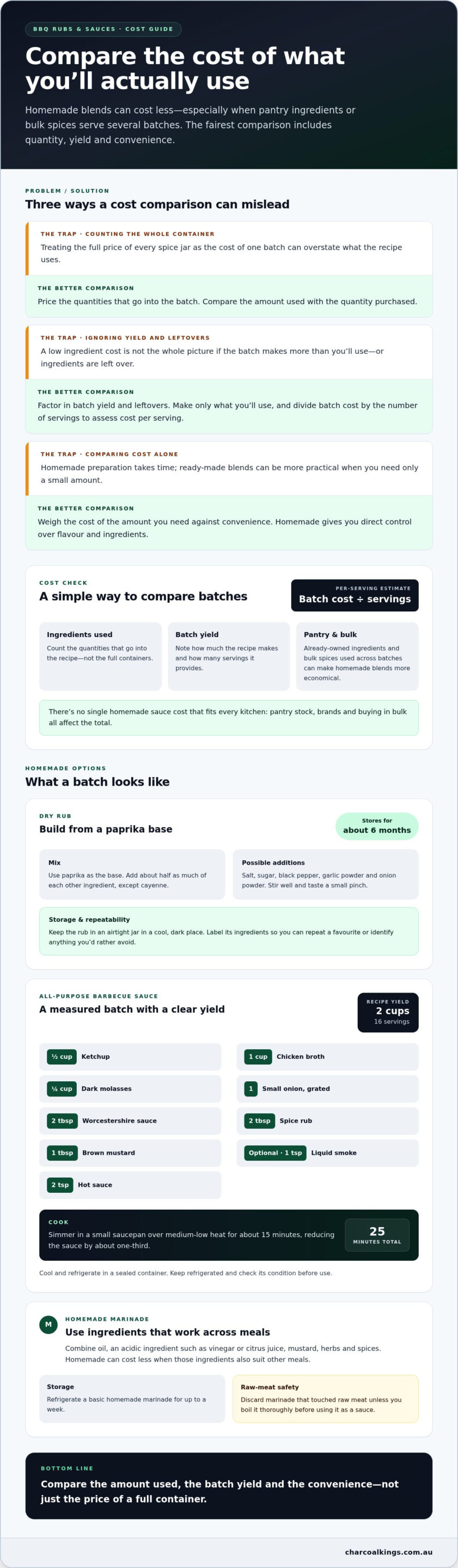
Use paprika as the base, then add about half as much of each other ingredient, except cayenne. Salt, sugar, black pepper, garlic powder and onion powder are practical options. Stir well, taste a small pinch and adjust the heat or sweetness before seasoning food. For a fair comparison, calculate the cost of the amount used rather than counting the full spice containers as one batch’s cost.
Store the finished rub in an airtight jar in a cool, dark place. It stays fresh for about six months. Label the jar with its ingredients so you can repeat a favourite blend or identify anything you’d rather avoid.
-
Make an All-Purpose Barbecue Sauce
Combine 1/2 cup ketchup, 1/4 cup dark molasses, 2 tablespoons Worcestershire sauce, 1 tablespoon brown mustard and 2 teaspoons hot sauce. Add 1 cup chicken broth, one grated small onion and 2 tablespoons spice rub. Liquid smoke is optional at 1 teaspoon. Simmer in a small saucepan over medium-low heat for about 15 minutes, reducing the sauce by about one-third.
This recipe yields 2 cups, or 16 servings, and takes 25 minutes in total. Cool the barbecue sauce, transfer it to a sealed container and refrigerate it. Keep it refrigerated in a sealed container, and check its condition before use.
-
Estimate Ingredient Costs and Batch Yield
In Australia, the cost of homemade BBQ sauce depends on what’s already in your pantry, the brands you choose and whether you buy ingredients in bulk. There’s no single total that fits every kitchen. Compare the amount used in a batch with the quantity purchased, then divide by the number of servings to assess the cost per serving. Bulk spices can make homemade rubs more economical over several batches.
A typical homemade sauce batch from this recipe makes 2 cups and 16 servings. Rub yield depends on the quantities measured into your mix. Make only what you’ll use, and store dry rub in an airtight jar for about six months.
Balancing sweet, salty, spicy and acidic flavours
Build flavour by changing one element at a time, and use a small taste test to guide each adjustment.
- Start with the food’s natural flavour. For beef, try black pepper, garlic and smoked paprika, adding a savoury sauce sparingly. Pork suits sweet and tangy combinations, such as apple sauce with molasses. For chicken, try ginger, garlic and vinegar or a gently sweet glaze. Keep your first blend simple so you can tell what each ingredient contributes.
- Balance sweetness with acidity. In a Kansas City-style sauce, combine 1 cup ketchup, 1/4 cup molasses and 2 tablespoons apple cider vinegar. Simmer for 10-15 minutes. The vinegar cuts through the molasses and ketchup, while smoked paprika and a pinch of cayenne add depth and heat. Taste before adding more sweetener.
- Use salt to sharpen other flavours, not overwhelm them. Add a small amount to a rub, mix well, then taste a pinch before seasoning food. If a sauce tastes flat, adjust its acidity or spice before adding more salt. Mustard can add tang and savoury depth; a spoonful in a pork sauce changes the balance without adding sweetness.
- Control heat in stages. Add chilli flakes or cayenne gradually, stirring and tasting between additions. A Carolina-style sauce uses 1 cup apple cider vinegar, 2 tablespoons brown sugar, 1/4 cup ketchup or tomato paste, and 1 teaspoon red pepper flakes. Its vinegar-led profile gives sharpness, while sugar and tomato soften the bite.
- Layer flavours instead of making every component loud. Coat meat with a dry rub, then let it sit for at least 30 minutes before cooking. Add barbecue sauce during the last 10-15 minutes of grilling to help prevent burning. This sequence gives the rub time to season the surface, while the sauce adds a distinct finish.
- Match the balance to your palate and the meal. For a sweeter pork glaze, increase the molasses slightly; for brighter chicken, add vinegar or citrus. For grilled vegetables, try a less sweet rub with paprika, garlic and black pepper. Change one ingredient per test batch, then record the amounts that work.
- Use a tasting spoon to assess four elements: sweetness, salt, heat and acidity. If a barbecue sauce tastes too sharp, add a little sweetness; if it feels heavy, add vinegar. If chilli masks the other ingredients, dilute the sauce with its base. Small, measured changes make the result easier to repeat.
Customising ingredients for taste and dietary needs
Start with a familiar sauce, then change one ingredient at a time. A Korean-style glaze provides a useful base for adjusting sweetness, heat and ingredients.
- Before mixing, write down any ingredients you need to avoid. A Korean glaze, for example, can include gochujang, soy sauce, brown sugar or honey, rice vinegar and sesame oil. Check packaged ingredient labels. Making a recipe yourself gives you control over what you add, but doesn’t automatically make every ingredient suitable for a particular diet.
- Build the glaze from its measured base: 1/2 cup gochujang, 2 tablespoons soy sauce, 2 tablespoons brown sugar or honey, 1 tablespoon rice vinegar and 1 teaspoon sesame oil. Stir until smooth. This ingredient list gives you a clear starting point, so you can identify which component to change for a preference or dietary requirement.
- Adjust sweetness by changing the amount of brown sugar or honey in the recipe. Choose what suits your taste and dietary needs, and keep the other ingredients steady during that test. Spencer Watts’s Korean-style sauce also combines brown sugar, soy sauce, ginger, garlic and caramelised onions with a gochujang base. It offers a savoury, sweet starting point without relying on a classic tomato barbecue sauce.
- Adjust the gochujang to change the spice level rather than adding several new spices at once. Mix the glaze, taste it, then alter the amount in your next trial. For a milder result, use less of the chilli-based paste; for a stronger chilli flavour, increase it gradually. Record the change to make the next batch easier to reproduce.
- Use vinegar or citrus to change the finish. Rice vinegar is already part of the Korean glaze, while citrus can give a marinade a brighter character. Add one at a time and taste between additions. If the result becomes too sharp, adjust the recipe’s sweet component rather than adding more spices.
- Make a small test batch before changing a full recipe. Combine the glaze ingredients, then alter just one element, such as the sweetener or chilli paste. Note the ingredients and result. This approach helps you create a flavour for a specific meal while keeping your choices clear and repeatable.
Making rubs and sauces versus buying them
Choose homemade blends for control and flexibility; choose ready-made options when speed matters. Compare the effort, ingredients and quantity you’ll use for each barbecue meal.
- Decide how often you’ll use a particular flavour before making a full batch. A garlic-and-paprika rub can season several dishes, while a distinctive sauce may suit just one meal. Homemade blends make it easy to adjust sweetness, heat or acidity. A ready-made jar saves measuring and mixing when you want a consistent flavour with less preparation.
For a fair cost comparison, count only the ingredients used in your batch. Pantry staples such as vinegar, spices or garlic may already serve other recipes. Buying a full container for one sauce can make homemade less economical if the remaining ingredients go unused.
- Choose a homemade sauce when ingredient control matters. Spencer Watts makes homemade ketchup with crushed tomatoes, tomato paste, vinegar, brown sugar and cloves. This base lets you adjust the balance before building a barbecue sauce. A prepared sauce is more convenient, but its flavour and ingredient list are already set.
Let your cooking plans guide the choice. If you want a versatile sauce for grilled food, make a small homemade batch and adjust it to suit the meal. If dinner is already underway—especially during busy family cookouts where kids are outside playing on Hoveroo electric ride-ons—ready-made sauce saves you from peeling, measuring and simmering ingredients.
- Match the method to the food. A marinade adds flavour and helps tenderise meat, while sauce can add moisture and help protect grilled food from drying out. For cooked chicken, a citrus-herb marinade gives a different result from a sweet tomato-based glaze. Homemade versions let you tune the flavour; store-bought options reduce the work.
Timing matters, too. A marinade needs time with the food, while a sauce can be applied near the end of grilling. Choose what fits your preparation routine instead of making a sauce simply because a recipe calls for one.
- Compare convenience and customisation. A purchased rub is ready to sprinkle, while a homemade mix needs measuring and blending. A ready-made blend is practical for a familiar flavour; mixing your own gives you direct control when you want a specific taste, such as less sweetness or more black pepper.
Keep a short note of successful changes to homemade blends. Record the ingredients and proportions, then repeat the mix for another meal. This makes the result more predictable without relying on memory.
- Use both approaches where they make sense. Keep a ready-made barbecue sauce for quick meals, then make a small custom rub when you want a particular garlic or spice profile. Homemade and store-bought aren’t an all-or-nothing choice. The better fit depends on your time, planned use and desired control.
Before shopping, list the ingredients you already have, the flavour you want and whether you’ll use any leftovers. This simple comparison helps you decide whether a homemade recipe or ready-made option better suits your next cook-up. If you’re planning a themed gathering or watch party around your barbecue, exploring movie and pop-culture collectables at koolthings.co.uk can be a fun way to set the mood for guests.
Reducing additives, salt and sugar
Adjust a recipe one ingredient at a time, then taste the finished blend with the food it will season. Homemade rubs and sauces make your choices visible and repeatable.
- Read the ingredient list on a packaged sauce or rub before choosing it. Note ingredients you want to limit, such as added sugar or salt, then compare them with a homemade version. Making a blend yourself gives you control over what goes in, but packaged ingredients still matter. Check labels on items such as mustard, ketchup and spice mixes rather than assuming every component is plain.
- Reduce salt gradually in a rub, then build flavour with garlic, black pepper or smoked spices. Mix the seasonings well and taste a small pinch. Salt affects the overall balance, so change one ingredient at a time and note the result. This makes the next batch easier to adjust without masking the other spices.
- Use the recipe’s nutrition information as a comparison point. One serving of the barbecue sauce in this article contains 166 mg of sodium. If you want a lower-salt version, reduce salty ingredients and taste the sauce before serving. Worcestershire sauce, mustard and prepared seasonings can each contribute flavour, so consider the whole ingredient list rather than adjusting salt alone.
- Reduce the brown sugar in a sauce by changing the amount in a small test batch. Taste it with the food, since a sauce can seem sweeter on its own than alongside burgers or pulled meat. If it needs more lift, adjust the vinegar or spices in measured amounts. Keep the original recipe nearby for comparison.
- Use smoked spices, garlic and herbs to build flavour without relying only on salt or sweetness. For example, add garlic and black pepper to a rub for grilled vegetables, then test it on a small portion before seasoning the full batch. Start with a short ingredient list, giving each addition a clear purpose.
- Record the ingredients and changes after each cook. Write down whether the rub or sauce suited burgers, pulled meat or vegetables, and whether the balance needed more acidity or less sugar. For a lower-sugar glaze, pair careful recipe adjustments with a BBQ grill or smoker suited to your cooking plans.
Charcoal Kings: Hardwood Lump Charcoal
Charcoal Kings supplies Hardwood Lump Charcoal for cooks who want to choose fuel alongside homemade rubs and sauces. Match the fuel to your cooking method by comparing Hardwood Lump Charcoal, Charcoal Briquettes and Binchotan Charcoal. Charcoal Kings also sells BBQ Grills and Smokers for your cook-up setup.
A rub or sauce shapes the flavour; your fuel and cooking setup complete the preparation. Think about the style of barbecue you plan to cook and the equipment you use before choosing between these categories. That keeps the decision practical, whether you’re preparing a quick grilled meal or planning a longer smoking session.
For charcoal and BBQ equipment, visit Charcoal Kings online.
Make Your Next Cook-Up Your Own
Whether it is cheaper to make your own BBQ rubs and sauces depends on what you already have, how often you cook and how much control you want. For your next cook-up, choose one flavour to refine, then consider how your fuel can support your cooking style.
For a charcoal cook, Charcoal Kings offers Hardwood Lump Charcoal, Charcoal Briquettes and Binchotan Charcoal. Consider these fuel options alongside your chosen rub or sauce as you plan your setup. If you’re shaping a new approach to barbecue, explore the charcoal and BBQ products from Charcoal Kings.
Contact Charcoal Kings for BBQ advice and make your next cook-up a chance to build on what you’ve learned. Keep experimenting, trust your taste and enjoy the process.
Frequently Asked Questions
How much do BBQ rub ingredients cost in Australia?
There’s no single ingredient cost for every Australian kitchen; it depends on the spices, pack sizes and quantities you use. Estimate a batch by adding the portion costs for paprika, salt, pepper, garlic powder and any other seasonings you choose. If you already use those ingredients in other meals, count only the amount used in the rub, not the full pantry purchase.
What is the cost per 100 g of homemade versus commercial BBQ rub?
Calculate each option per 100 g using its actual price and weight. For homemade rub, add the cost of the quantities measured into the batch, then divide by the finished batch weight and multiply by 100. For a commercial rub, divide its shelf price by the package weight and multiply by 100. Compare like-for-like blends, since ingredient choices affect value.
What is the cost per 100 ml of homemade versus commercial BBQ sauce?
Use the same comparison method for both sauces: divide the cost by the finished volume, then multiply by 100. For a homemade batch, count the quantities used from each ingredient, including ketchup, vinegar and sweetener. For a commercial bottle, use its price and stated volume. A recipe’s starting volume may change during simmering, so calculate from the finished sauce.
Which pantry ingredients are needed to make BBQ rubs and sauces at home?
A basic rub can include paprika, salt, black pepper, garlic powder, onion powder and cayenne. Common sauce ingredients include ketchup, vinegar, mustard, molasses or brown sugar, Worcestershire sauce and hot sauce. You don’t need them all in one recipe. Choose ingredients that suit the flavour you want, then note the combination for future batches.
How long do homemade BBQ rubs and sauces last, and how should they be stored?
Store dry rub in an airtight jar in a cool, dark place, where it stays fresh for about six months. Refrigerate BBQ sauce in a sealed container to help preserve its flavour and quality. A basic homemade marinade can be refrigerated for up to a week. Label containers with their contents and preparation details so you can tell batches apart.
Are there extra costs for jars, bottles, equipment, or food-safe storage?
The first batch can cost more if you need to buy containers or equipment. Check what you already have, such as a clean jar, measuring spoons and a small saucepan. For a fair comparison, include new purchases only when the recipe requires them, and spread reusable equipment costs across batches rather than counting the full amount against one serving.
When is buying BBQ rubs and sauces cheaper than making them at home?
Buying can make more sense when you need a small amount, rarely use a particular flavour or would have to purchase several ingredients for one recipe. It saves preparation time and avoids leaving ingredients unused. Whether it is cheaper to make your own BBQ rubs and sauces depends on how much of each ingredient you’ll use and whether the leftovers suit other meals.