
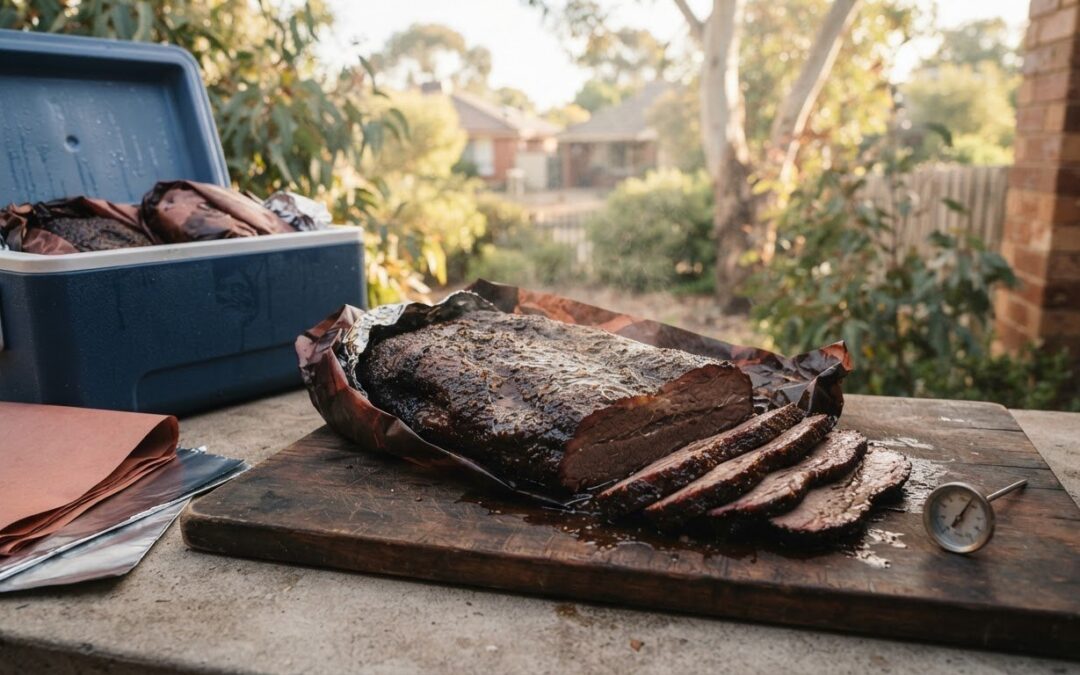
A long rest only protects brisket when it stays hot. To understand how to keep smoked brisket warm and moist for hours, hold it above 140°F; hot-held brisket can be kept safely for up to 4 hours.
It’s easy to focus on the cook and leave the finished brisket to chance. But how you vent, wrap and hold it affects both moisture and bark, so planning ahead can make a real difference.
This guide explains how to rest brisket, use an esky or oven for a longer hold, and choose between butcher paper and aluminium foil. You’ll also learn how to reheat brisket gently if serving is delayed, without making tender slices dry or softening the bark more than necessary.
Key Takeaways
- Vent the brisket briefly before wrapping and placing it in an insulated esky, so trapped steam doesn’t soften the bark.
- Choose butcher paper to better protect bark, or aluminium foil when retaining more moisture is the priority.
- For a delayed meal, reheat brisket gently while wrapped; a little broth can help limit moisture loss.
- Keep the brisket’s temperature steady during a hold, and use a thermometer to monitor it rather than relying on feel.
- Slice only what you plan to serve, keeping the remaining brisket whole and covered to slow drying.
Resting brisket in an esky or cooler
A reliable approach to how to keep smoked brisket warm and moist for hours starts with a controlled rest. Vent, wrap and monitor the brisket before using an insulated esky to hold its heat.
-
Resting After Smoking
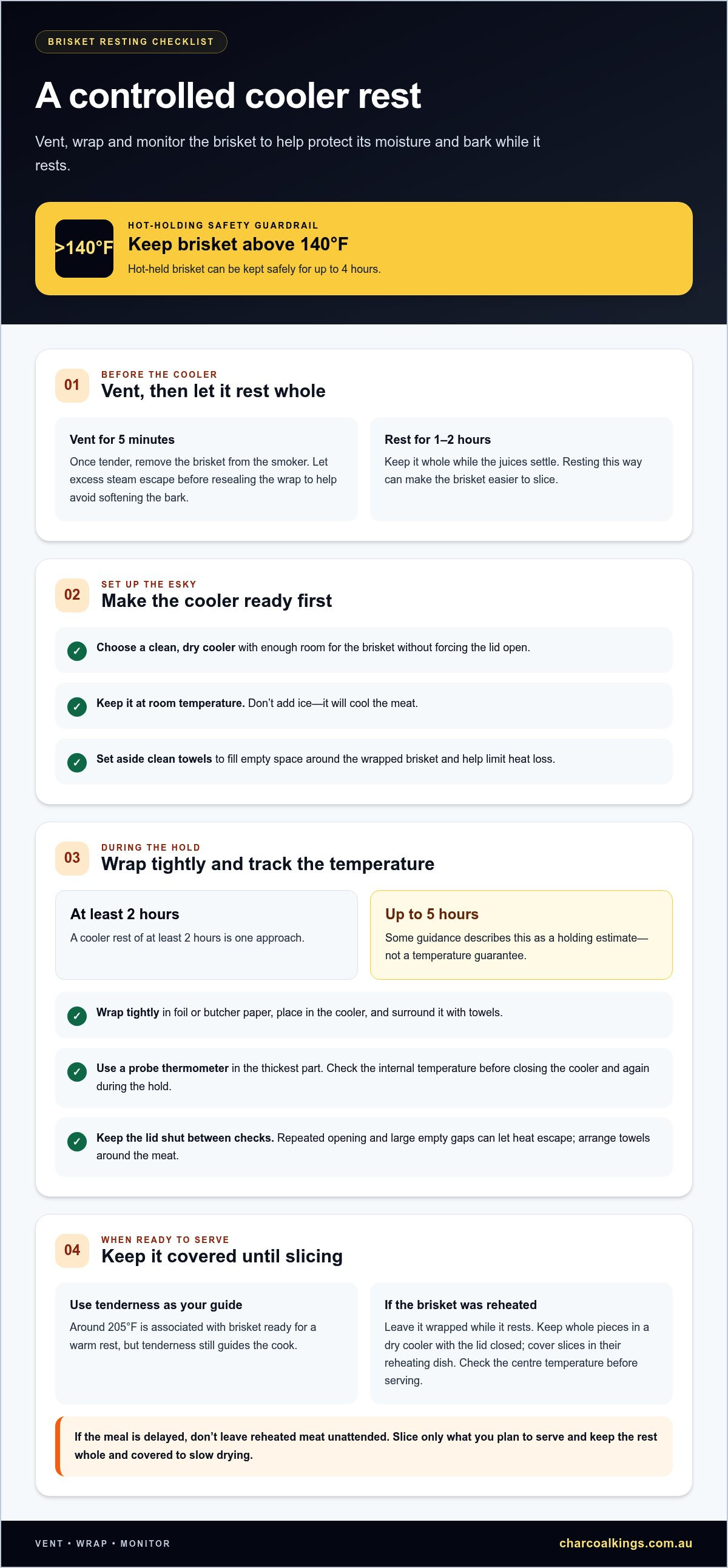
Remove the brisket from the smoker when it’s tender, then vent it for 5 minutes before resealing the wrap. This lets excess steam escape instead of collecting against the bark. Resting for 1-2 hours gives the juices time to settle, making the brisket easier to slice. Keep it whole during this stage, and avoid cutting into it while it rests.
-
Prepare the Cooler
Choose a clean, dry esky or cooler large enough to hold the brisket without forcing the lid open. A room-temperature cooler works for resting; don’t add ice, as it will cool the meat. Set clean towels aside to fill empty space around the wrapped brisket. Prepare the cooler before smoking finishes so the brisket can go straight into its insulated rest.
-
Holding Brisket in a Cooler
Wrap the brisket tightly in foil or butcher paper, then place it in the cooler and surround it with towels. A cooler rest of at least 2 hours is one approach; some guidance describes holding wrapped brisket for up to 5 hours. Treat that longer time as a holding estimate, not a temperature guarantee. Keep a probe thermometer in the thickest part and watch the reading during the hold.
-
Keep the Hold Controlled
Check the brisket’s internal temperature before closing the esky, then check it again during the rest. The temperature can fall as heat escapes, especially if the lid is opened repeatedly or the cooler has large empty gaps. Keep the lid shut between checks and arrange towels around the wrapped meat. A final temperature around 205 F is associated with brisket ready for a warm rest, but tenderness still guides the cook.
-
Resting Reheated Brisket
After reheating, leave the brisket wrapped while it rests before slicing. This helps keep the juices with the meat instead of spilling them across the board. Put a whole piece in a dry cooler and keep the lid closed; cover slices in their reheating dish. Check the centre temperature before serving, and don’t leave reheated meat unattended if the meal is delayed. These steps also help with how to keep smoked brisket warm and moist for hours when plans change.
Reheating brisket while retaining moisture
Reheat brisket gently and keep it covered so the surface doesn’t dry out before the centre warms. Choose the oven or smoker based on the time available and the texture you want.
-
Add Butter and Sauce During Reheating
Place brisket in a covered dish with a little butter for a richer finish. For sandwiches, simmer about two cups of apple juice or cider until reduced by half, then stir in about two tablespoons of barbecue sauce. Spoon a little over the meat before warming. Keep the brisket covered, and don’t flood the bark with sauce, as this can soften its crust.
-
Add Beef Broth Before Warming
Place a whole brisket or large pieces in a roasting dish, then pour beef broth into the foil around the meat. Seal the foil tightly to trap moisture without immersing the brisket. Heat gently and check the centre with a thermometer as it warms. The broth creates steam inside the packet and catches drippings, which you can spoon over sliced meat before serving.
-
Reheat Brisket in a Smoker
Preheat the smoker to about 250°F, then place the foil-wrapped brisket inside. Keep the package sealed during reheating, and allow at least an hour-and-a-half, depending on thickness. Check the centre temperature rather than judging by the outside; a thick piece warms more slowly than smaller portions. A smoker can restore a light smoke aroma, while the foil limits moisture loss. If your setup needs an upgrade, explore BBQ grills and smokers suited to smoke-led cooking.
-
Reheat Brisket in the Oven
Set the oven to 325 degrees and warm whole brisket or large pieces in a tightly covered dish. Add broth to the foil before sealing, then heat until the internal temperature reaches about 165 degrees. Large pieces may take about an hour, so use the thermometer to judge the centre. For sliced brisket, arrange slices in a single layer with a little liquid, cover the dish, and warm at about 375 degrees for 15 to 20 minutes.
-
Finish and Serve Promptly
Remove the brisket once it’s warmed through, then let it settle briefly while still covered. Pour the collected juices over slices just before serving. If you’re reheating in butter for a sandwich-style finish, warm it gently for about 2-3 hours, until heated through. Avoid repeated heating and cooling; portion only what you expect to serve, and keep the remaining brisket covered until needed.
Butcher paper versus aluminium foil
Choose the wrap based on the finish you want: butcher paper helps preserve bark, while aluminium foil retains more moisture. Let this difference guide your wrapping and holding method.
- Decide what matters most before wrapping. If a firm, textured bark is your priority, use butcher paper because it lets more moisture escape than foil. If moisture is the bigger concern, choose aluminium foil, which traps more moisture around the meat. Neither option is best for every brisket. Match the material to the planned holding time and the texture you want when serving.
- Wrap once the brisket reaches about 165-170 degrees Fahrenheit during cooking. Lay the brisket on the paper or foil, then fold the material tightly around the meat. Cover the edges and ends so the wrap stays secure during the rest. Loose folds can let heat and juices escape; a tight seal helps retain warmth and moisture. Handle the brisket carefully, since tearing the bark while wrapping can undo the crust you built during smoking.
- Use butcher paper when bark is the priority. Place the brisket near one edge and fold the paper firmly over it, keeping the folds snug without crushing the surface. Paper helps protect the bark’s texture during a hold, but it doesn’t seal in as much moisture as foil. Make sure no part of the brisket is exposed. If the paper tears or comes loose, add another layer before placing the brisket in an esky.
- Choose foil for a juicier hold or reheating. Lay the brisket on a large sheet, fold the sides over, and crimp the seam closed. Foil retains more moisture, so juices collect inside the package rather than escaping. This can soften the bark during a long hold. Keep the brisket whole in its wrap, and open the foil only when you’re ready to slice or serve. Pour the collected juices over slices if they need extra moisture.
- Match the wrap to the next step. For an esky rest, secure the paper or foil before placing towels around the brisket. For oven reheating, foil makes a sealed packet for holding broth or drippings near the meat. Butcher paper suits cooks who want more bark texture; foil suits those who prioritise moisture retention. Don’t switch materials without a reason, since opening the wrap releases heat and steam.
Wrap brisket in butcher paper or aluminium foil around 70°C (160°F). Use this temperature as a cue when planning the wrapping step, then select the material based on the finish you want. The temperature guides when to wrap; the choice between paper and foil guides the balance between bark texture and moisture.
Hot-holding brisket safely
Insert a probe thermometer into the thickest part of the brisket and monitor the meat, not just the oven. Keep hot-held brisket above 140°F; it can be held safely for up to 4 hours.
-
Set Up Safe Hot Holding
Move the brisket into a preheated oven set between 150-170°F, keeping it wrapped. This range supports a steady hold while the wrapping helps limit moisture loss. Check the oven setting with its controls, then measure the brisket itself. An oven temperature alone can’t confirm the meat remains above 140°F, especially as the hold continues.
-
Monitor Brisket with a Probe Thermometer
Insert the probe into the thickest section, avoiding a large pocket of fat that could distort the reading. Keep the probe in place during the hold and read the display without repeatedly opening the oven or esky. If the temperature approaches 140°F, restore heat promptly and recheck the meat before serving.
- Track the holding period from the moment the brisket leaves active cooking. Hot-held brisket can remain safely held for up to 4 hours when its temperature stays above 140°F. That time is not a substitute for temperature monitoring: a wrapped brisket in a warm oven and one in an unheated esky can cool at different rates. Record the start time and thermometer readings, especially when serving is delayed.
- Keep the heat source steady during the hold. If using an oven, avoid switching it off between checks; a keep-warm setting of about 170-180°F is one holding option. If using an esky, keep its lid shut and use the probe reading to judge whether the brisket remains hot enough. Don’t rely on warm towels or a hot exterior as proof of the centre temperature.
- Plan the hold around serving time, then slice only when guests are ready to eat. Each opening of the wrap releases heat and moisture, while each opened oven or esky loses warmth. If the probe shows the brisket has fallen below 140°F, don’t continue treating it as a safe hot hold. Reheat it thoroughly before serving, then resume temperature checks.
Maintaining moisture and bark
Keep brisket whole, wrapped and temperature-controlled during a long hold. To limit drying, minimise its exposure to air and slice only what you’re ready to serve.
-
Prevent Drying During a Long Hold
Keep the brisket wrapped between cooking and serving, and avoid repeatedly opening the package to inspect it. Each opening releases warm, moist air. If the meat looks dry when unwrapped, spoon its collected juices over the slices instead of adding water. The goal is to retain the brisket’s own drippings and keep it covered until serving.
- Hold the brisket whole rather than slicing it ahead of time. A whole piece has less exposed surface, so its cut face won’t lose moisture while waiting. If guests are eating in stages, slice only what’s needed for each serving, then cover the remaining brisket again. For example, keep the point and flat together until you’re ready to carve another batch.
-
Maintain the Brisket Bark
Protect the crust from trapped steam by venting the brisket for 5 minutes before resealing it. Butcher paper helps preserve bark, while foil holds more moisture and can soften the exterior during a long hold. Choose the wrap for your priority, then keep the package closed. Don’t pour liquid over the bark before serving; add juices to sliced meat instead.
- Keep the brisket away from direct heat after cooking. A hot surface can dry the outer layer while the centre stays warm, creating an uneven texture. Use an insulated hold or a low oven, and monitor the meat’s internal temperature with a probe. If the reading drops, adjust the holding setup rather than unwrapping the brisket and exposing it to more heat.
- When serving, slice across the grain with a sharp knife. Cut only enough for the plates being prepared, and keep each slice intact rather than chopping the brisket into small pieces. More cut surfaces give moisture more opportunity to escape. Arrange the slices on a warm platter and spoon collected drippings over them just before serving.
- Use the brisket’s texture as a serving cue. Tender slices should hold together while bending easily, not crumble from extended handling. If the bark has softened during holding, expose the outside briefly during serving preparation rather than leaving the whole brisket uncovered. Keep the remaining meat wrapped, and plan your next brisket cook with the same focus on controlled heat and careful handling.
Charcoal Kings: Hardwood Lump Charcoal
Charcoal Kings supplies Hardwood Lump Charcoal for cooks building a steady fire for brisket. Controlled heat during smoking gives you a stronger starting point for a tender result, while careful resting and hot-holding protect it after the cook. Choose charcoal to suit your setup, or explore Charcoal Briquettes, Binchotan Charcoal, and BBQ Grills and Smokers for other barbecue needs. The right fuel supports your cooking method, but temperature monitoring and wrapping still determine how the brisket holds. For your next smoke, browse the Hardwood Lump Charcoal range or visit Charcoal Kings at charcoalkings.com.au.
Make Your Next Brisket Even Better
Make each brisket cook a repeatable process. Note the fuel, cooking conditions, wrap choice and serving time, then adjust one variable next time. This makes it easier to identify which choices best protect bark and tenderness in your setup.
Mastering how to keep smoked brisket warm and moist for hours takes more than rescuing meat after cooking. A steady approach, from fire management to serving, helps you plan with confidence and spend less time reacting to delays.
For personalised brisket guidance and barbecue fuel for your next cook, ask Charcoal Kings for brisket advice. Keep refining your method, trust your thermometer, and enjoy the next slice straight from the board.
Frequently Asked Questions
What temperature should smoked brisket be held at to keep it safe and moist?
Keep the brisket above 140°F during hot holding, and use a probe thermometer to check its internal temperature. A wrapped brisket in a warm oven can retain moisture, while foil traps more moisture than butcher paper. If your thermometer shows the temperature dropping, don’t rely on the oven setting alone. The meat’s centre reading is the useful measure for deciding whether the hold is still working.
How long can brisket stay warm in a cooler or insulated esky?
A cooler can help keep wrapped brisket warm, but it does not guarantee that it remains at a safe holding temperature. Those figures describe different considerations: insulation can retain heat, but it doesn’t guarantee the meat stays above the safe holding temperature. Keep the lid closed and track the brisket’s temperature. If it falls below 140°F, reheat it rather than continuing the hot hold.
How to rest brisket before holding it warm?
After smoking, vent the cooked brisket for 5 minutes, then reseal its wrap and rest it for about 1-2 hours. Keep it whole during the rest, which reduces exposed cut surfaces before serving. If your meal time changes, transfer the wrapped brisket to an insulated cooler and monitor its temperature. For an example, a brisket finishing before guests arrive can rest first, then move into the cooler for the remaining wait.
Should brisket be wrapped in butcher paper or foil for holding?
Choose butcher paper when preserving bark texture matters most; choose foil when retaining moisture is the priority. If holding brisket in an esky, make sure the wrap fully covers the meat and stays closed as you move it. Foil can collect juices that are useful over slices at serving. Paper lets more moisture escape, so it may suit a shorter hold or a bark-focused finish.
Can smoked brisket be held in an oven or warming drawer, and at what temperature?
Yes. An oven keep-warm setting around 170-180°F can hold wrapped brisket, while another holding approach uses an oven set between 150-170°F. Oven settings vary, so monitor the brisket itself with a probe and keep its internal temperature above 140°F. Avoid opening the door often, since each check lets heat escape. A warming drawer can serve the same purpose if it maintains the required holding temperature.
How long can brisket be held safely before serving?
Hot-held brisket can be held safely for up to 4 hours, provided it stays above 140°F. Start timing when the brisket enters the holding setup, and record probe readings if serving is delayed. A cooler may retain warmth for longer, but that doesn’t extend safe holding time if the meat drops below the temperature threshold. If the reading falls, reheat the brisket before serving instead of relying on elapsed time alone.
How to reheat brisket if it cools too much?
Reheat the brisket covered in an oven until its internal temperature reaches about 165 degrees. For a whole brisket, an oven preheated to 325 degrees is one method; add beef broth inside the foil to help limit drying. Check the centre with a probe, since thickness affects warming time. Keep the wrap sealed while heating, then open it at serving and spoon the collected juices over slices.