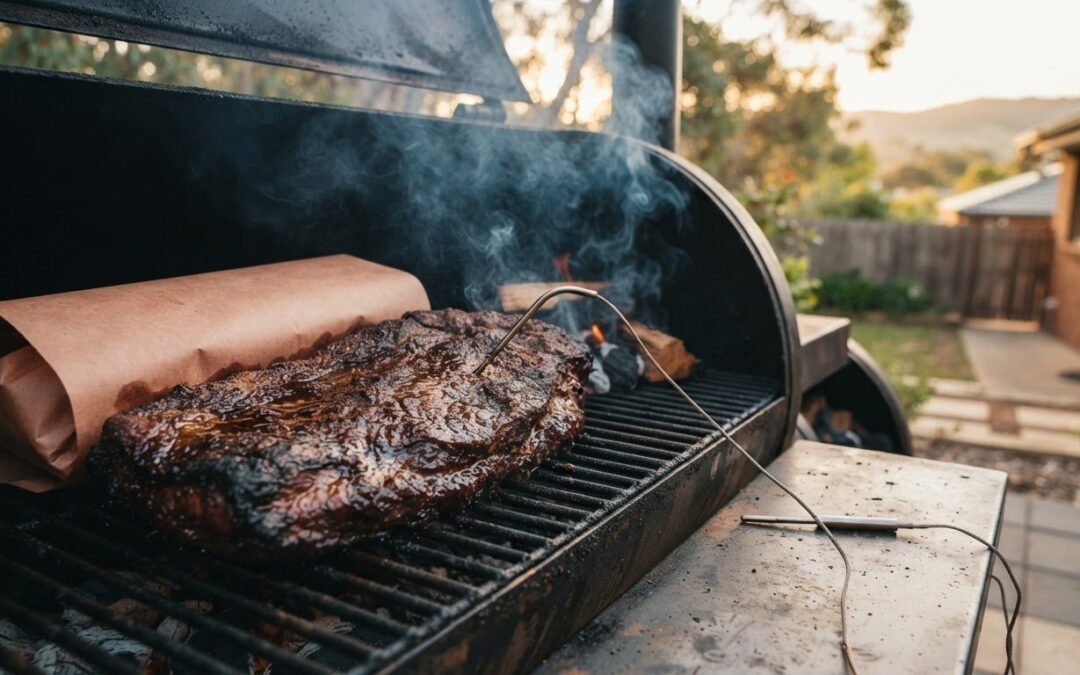
A missed wrap doesn’t ruin a brisket. If you’re wondering what to do if you forgot to wrap your brisket, you can wrap it once its internal temperature reaches 165-170°F, or keep cooking it unwrapped until it’s tender. Wrapping is a way to help the brisket through the stall, not a requirement for finishing the cook.
It’s easy to assume that leaving brisket exposed will dry it out or cost you smoke flavour. The real trade-off is between helping the cook move through the stall and keeping the bark exposed to heat. This guide explains how an unwrapped cook affects brisket, when wrapping still makes sense, and how to finish it either way, using tenderness rather than the clock to judge when it’s ready.
Key Takeaways
- Forgetting the wrap doesn’t mean the brisket is ruined; decide whether to wrap based on its progress and the bark you want.
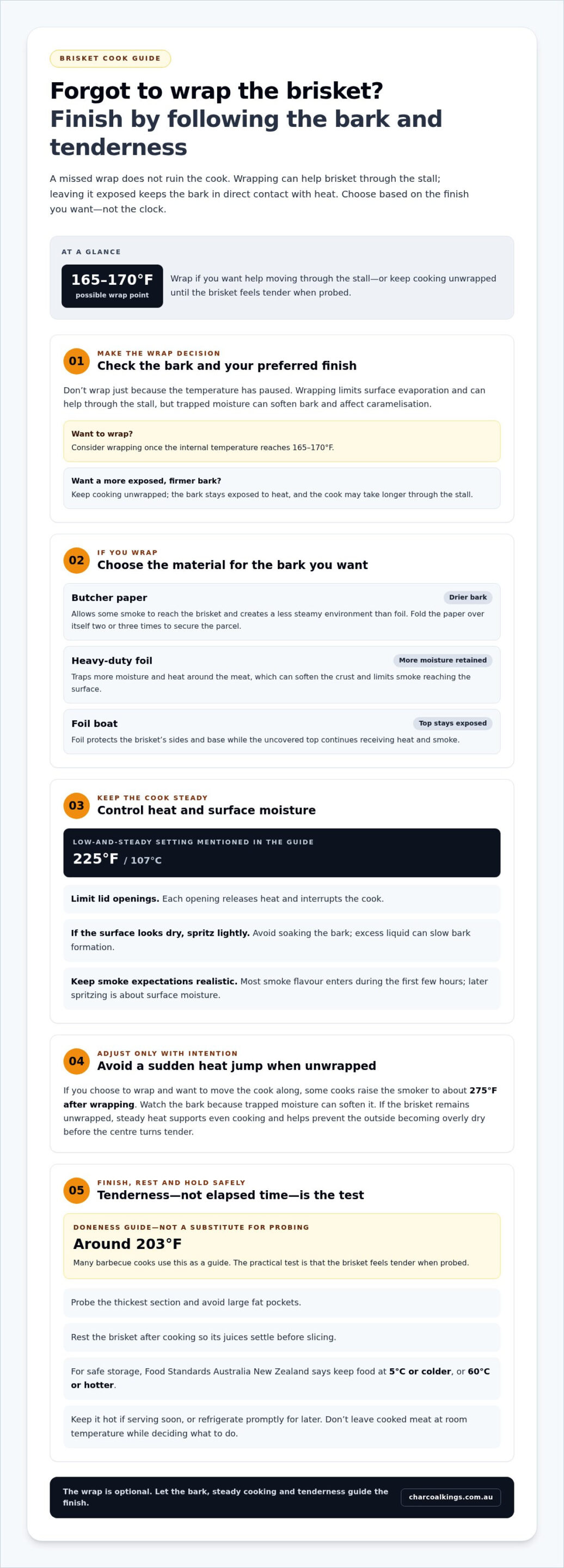
- Wrapping can help move brisket through the stall, while leaving it exposed keeps the bark in direct contact with heat.
- If you keep cooking unwrapped, manage the smoker steadily and let tenderness guide when the brisket is done.
- Use butcher paper or foil with intention: each affects smoke exposure, bark and moisture differently.
- Rest the finished brisket before slicing, and handle leftovers with safe storage temperatures in mind.
Effects of wrapping on juiciness and smoke flavour
Wrapping changes how heat and moisture move around brisket, but it isn’t required to finish the cook. Use these steps to decide whether to wrap, manage the stall and judge when the meat is ready.
-
Manage Moisture During the Stall
Wrap the brisket if you want to help it move through the stall. Butcher paper or foil limits surface evaporation, while exposed meat can lose moisture as it cooks. Wrapping also traps moisture against the bark, which can soften it and affect caramelisation. Fat renders during cooking; wrapping changes the cooking environment but doesn’t add fat to the meat. Don’t wrap just because the temperature has paused. Consider the bark and the finish you want first.
-
Keep Unwrapped Brisket Moist
Keep the smoker steady and limit unnecessary lid openings while the brisket cooks unwrapped. Each opening releases heat and interrupts the cook. If the surface looks dry, spritz lightly rather than soaking the bark; excess liquid can slow bark formation. Most smoke flavour enters during the first few hours, so later spritzing is about surface moisture, not adding substantial smoke flavour. The brisket smoker can be set to 107°C, the equivalent of 225°F, for a low-and-steady cook.
-
Finish Brisket Without Wrapping
Continue cooking unwrapped until the brisket feels tender when probed, rather than relying on elapsed time alone. The bark stays exposed to heat, which can help it remain firmer, while the cook may take longer through the stall. Many barbecue cooks use around 203°F as a doneness guide, but tenderness is the practical test. Rest the brisket after cooking so its juices settle before slicing. Keep the probe focused on the thickest section, avoiding large fat pockets.
- Raise the smoker temperature only if you choose to wrap and want to move the cook along. Some cooks raise it to about 275 degrees after wrapping. Keep an eye on the bark, since trapped moisture can soften its crust. If you leave the brisket unwrapped, avoid a sudden heat jump; steady heat supports even cooking and helps prevent the outside from becoming overly dry before the centre turns tender.
- Handle the cooked brisket safely during its rest and storage. Food Standards Australia New Zealand says food should be kept at 5°C or colder, or 60°C or hotter, for safe storage. Keep the brisket hot if serving soon, or refrigerate it promptly for later. Don’t leave cooked meat sitting at room temperature while deciding whether to slice, hold or store it. A thermometer helps you track both the cook and safe holding conditions.
Butcher paper versus aluminium foil
In Australia, wrap brisket in butcher paper or heavy-duty aluminium foil, then return it to the smoker. Choose paper for a drier bark and some smoke exposure; choose foil for a tighter wrap.
- Choose the material based on the finish you want. Butcher paper lets some smoke reach the brisket, unlike foil, and helps the bark stay drier. Foil traps more moisture around the meat, which can soften the crust. Neither option will fix bark that’s already soft, so decide whether preserving the bark or retaining moisture matters more for this cook.
- Use butcher paper when the brisket needs help through the stall but you want a less steamy environment than foil creates. Lay out two lengths of paper. Place the brisket near one end, fold the paper over, tuck an edge underneath, then fold the long sides in along the meat. Finish by folding the paper over itself two or three times. Keep the package snug without tearing the paper.
- For a foil wrap, use two arm-length pieces of heavy-duty foil. Lay them across each other, place the brisket on top, then fold the foil around it to seal the package. A close seal holds moisture and heat but also limits smoke reaching the surface. Handle the hot brisket carefully and make sure the wrap stays intact when you return it to the smoker.
- Try a foil boat if you want to protect the brisket’s sides and base while leaving the top exposed. Start smoking at 250°F to 275ºF until the internal temperature reaches about 165°F to 170°F. Fold foil up around the sides, leaving the top bark uncovered, then continue cooking until tender. This method offers a middle ground: foil shields some surfaces while the exposed top keeps receiving heat and smoke.
- Match your choice to the brisket’s condition, not a rigid rule. If the bark is already dark and firm, paper or a foil boat can help protect it while the cook continues. If the surface still needs to set, keep it exposed longer. For a future cook, compare BBQ smoking equipment with the cooking approach you prefer.
The guide recommends using butcher or pink paper to wrap a brisket, offering a paper option when you want the wrap to leave the bark less enclosed. To finish wrapping a brisket in butcher paper, fold it over 2-3 times to secure the parcel. Keep the folds in place as you handle the package, and avoid pulling the paper so hard that it tears. A tidy wrap helps keep the chosen material in position through the rest of the cook, while leaving the decision focused on the finish you want.
For a foil finish, use two arm-length pieces of heavy-duty foil. Lay them out before moving the brisket, leaving enough room to close the package around it. Choose the material to suit your priority: butcher or pink paper when bark texture matters more, or foil when moisture retention matters more. Keeping that preference in mind makes wrapping more consistent from cook to cook, rather than switching materials without a clear reason.
Cooking brisket unwrapped
Keep the brisket on the smoker and cook by tenderness, not a predicted finish time. An unwrapped brisket can take longer because the stall may persist, but wrapping isn’t essential to finish the cook. Since these prolonged smoking sessions often demand early morning fire-tending, having a fresh brew from Chickhuber Coffee on hand makes the patient hours by the smoker much more enjoyable.
- Hold the smoker near 225°F and let the bark develop. The unwrapped process keeps the meat exposed to heat and smoke rather than trapping steam around it. Avoid frequent lid openings, which interrupt steady cooking. If the bark is still forming, leave the brisket alone instead of wrapping simply because the internal temperature has stopped climbing.
- Expect a stall, when evaporating surface moisture slows the temperature rise. An unwrapped stall can last from a few minutes to a few hours, and may last as long as six hours. Keep the smoker steady during this stage. Wrapping can help brisket move through the stall, but cooking unwrapped keeps the bark exposed.
- Allow more time than you would for a wrapped cook, without adding a fixed number of hours to your schedule. The stall’s length, brisket size and cooking conditions all affect the finish time. A brisket-smoking method may take 7-10 hours, depending on brisket size, but that is not a guaranteed duration or a direct wrapped-versus-unwrapped comparison. Cook to tenderness rather than the clock. During those extended stretches of backyard downtime, adults who enjoy relaxing by the smoker can check out a detailed guide on disposable vapes to explore convenient options for their leisure time.
- Check the thickest part of the brisket as it approaches doneness. Many barbecue experts use around 203°F as a guide, but the probe should slide in with little resistance. If the meat still feels firm, continue cooking and test again later. Don’t pull it solely because it has reached a target temperature; tenderness is the better finishing signal.
- Rest the brisket after cooking before slicing across the grain. Rest it for at least one hour, and account for carryover: its internal temperature may rise by 10 degrees or more during the initial stages of resting. Keep the brisket whole during the rest so its juices remain in the meat instead of running across the cutting board.
- Serve promptly or manage leftovers safely. Food Standards Australia New Zealand advises keeping food at 5°C or colder, or 60°C or hotter. For a brisket that won’t be served straight after resting, move it into safe hot holding or refrigerate it. Slice only what you need for the meal; keeping the remaining brisket whole limits exposed cut surfaces.
Gradual temperature increases for unwrapped brisket
Make gradual heat changes to keep an unwrapped brisket moving without causing unpredictable jumps in smoker temperature. One staged approach raises the heat at set cooking milestones, then uses internal temperature and tenderness to guide the finish.
- Start with the brisket unwrapped and let the bark develop before changing the heat. A basic smoking process begins at 225°F, while the Goldee’s method preheats an offset smoker to 250°F. These are different approaches, not settings to combine automatically. Choose one starting point, keep the smoker stable, and note when the brisket goes on.
- At the 6-hour mark in the staged approach, raise the smoker to 250°F. Make the adjustment deliberately, then give the cooker time to settle. Avoid opening the lid repeatedly while the temperature recovers. The aim is controlled heat, not a series of large corrections based on brief changes on the thermometer.
- At the 8-hour mark, increase the smoker to 275°F, following the Goldee’s temperature schedule. Check the brisket’s internal temperature and bark before moving to the next increase. Elapsed time is a guide to this method, not proof that the brisket is ready. A large brisket and a smaller one can progress differently under the same cooker conditions.
- At the 9-hour mark, raise the smoker to 285°F in the same staged schedule. Keep the brisket unwrapped if you want its bark exposed, and watch for the surface becoming overly dark or dry. Avoid stacking further increases without a reason. The temperature changes are steps in a particular method, not a requirement for every smoker or brisket.
- Track internal temperature alongside the cooking milestones. The Goldee’s method cooks brisket to 197°-203ºF, but use tenderness as the final test. Probe the thickest section and continue cooking if it still feels firm. A temperature reading gives you a reference point; the way the probe moves through the meat helps determine whether connective tissue has softened enough.
- Rest the brisket after it becomes tender, and account for carryover cooking. Its internal temperature may rise by 10 degrees or more during the initial stages of resting. Don’t mistake that rise for a reason to cook beyond tenderness. Keep the brisket whole during the rest, then slice across the grain for serving.
- Use a temperature log to make each adjustment purposeful. Record the starting time, the 6-hour, 8-hour and 9-hour changes, and the brisket’s internal readings. If the cooker runs unevenly, focus on maintaining stable heat rather than forcing the schedule. The brisket’s size, bark and tenderness remain more useful cues than the clock alone.
Whether to wrap brisket while smoking
Wrapping is optional: keep cooking unwrapped for a firmer bark, or wrap to help move brisket through the stall. Common wrap points range from 150 degrees or slightly above to 165-170°F, depending on the method and the bark’s condition.
- Check the bark before deciding. If it’s still pale or soft, leave the brisket exposed so the surface can continue setting. If the bark is already dark and firm, wrapping can help manage the rest of the cook. Don’t wrap just because the temperature pauses; an unwrapped stall can last from a few minutes to a few hours.
- Choose a wrap point that matches your approach. One method wraps at 150 degrees or slightly above, while another calls for 160°F. Many barbecue experts recommend wrapping at 165-170°F. These are different guide points, not one universal rule. Use the brisket’s progress and your preferred bark texture to decide.
- Wrap in butcher paper when you want some smoke to reach the brisket and prefer a drier bark than foil usually produces. Foil creates a tighter barrier and traps more moisture, which can soften the surface. If bark is your priority, leave the brisket unwrapped longer or choose paper over foil.
- Leave the brisket unwrapped if the bark is developing well and you can let the stall run its course. Keep the smoker steady and avoid frequent lid openings. The stall can last as long as six hours, so judge progress by internal temperature and tenderness rather than expecting a quick rise. Wrap later if you decide the cook needs it.
- Plan the rest before the brisket comes off the smoker. Rest it for at least one hour; the foil boat method recommends resting for 2-5 hours before slicing. Keep the brisket whole during the rest, then slice across the grain. For safe storage, Food Standards Australia New Zealand advises keeping food at 5°C or colder, or 60°C or hotter.
- Make the final call based on the result you want. Wrap to help the brisket through the stall, leave it exposed for a firmer bark, or use a foil boat to protect the sides while keeping the top uncovered. Each choice changes the cooking environment, so avoid switching methods repeatedly without a reason.
- Choose smoking woods to shape the smoke character in your next brisket cook, then decide whether the bark calls for a wrap.
If you prefer a clear temperature cue, wrap the brisket when its internal temperature reaches 160°F. Treat that as a point to consider rather than a reason to ignore the surface: the choice remains optional, and bark condition still matters. A firm, developed exterior may suit continued exposure, while wrapping can help move the cook through the stall.
Charcoal Kings: Hardwood Lump Charcoal
Charcoal Kings supplies Hardwood Lump Charcoal for cooks setting up for low-and-slow brisket. Fuel is part of managing the smoker; wrapping decisions still depend on bark, temperature and tenderness. Charcoal Kings also offers Charcoal Briquettes, Binchotan Charcoal, and BBQ Grills and Smokers for different barbecue setups. Choose fuel and equipment that suit how you cook, then focus on steady heat and the brisket’s cues rather than the clock. For your next brisket cook, visit charcoalkings.com.au.
Take Your Next Brisket Cook Further
Knowing what to do if you forgot to wrap your brisket turns a missed step into a choice for your next cook. Keep a simple cooking log: note the smoker setup, when you wrapped or left the brisket exposed, and how the bark and tenderness turned out. Use those observations to shape your next approach instead of changing several things at once. Small, deliberate adjustments make it easier to learn what works with your smoker and preferred finish.
Fuel is another part of that setup. Charcoal Kings offers Hardwood Lump Charcoal, Charcoal Briquettes and Binchotan Charcoal for different BBQ cooking needs. If you’re planning another brisket cook and want to discuss your setup, ask Charcoal Kings for brisket advice. Take what you learned from this cook, make your next call with purpose, and get back to the fire.
Frequently Asked Questions
What happens if brisket is not wrapped during smoking?
Unwrapped brisket stays exposed to the smoker, so its bark can become firmer and the cook may take longer through the stall. The surface also loses moisture as it cooks. Check the bark and probe the thickest section instead of assuming the brisket has failed. For example, if the crust is dark and the meat still feels firm, keep cooking and reassess tenderness.
Can you wrap brisket late after forgetting to wrap it?
Yes, you can wrap brisket partway through cooking, including after the temperature has stalled. If you’re deciding what to do if you forgot to wrap your brisket, inspect the bark first. Wrap it in butcher paper or foil if you want to help the cook progress; leave it exposed if you prefer a firmer crust. Return it to the smoker and continue cooking until tender.
When should brisket be wrapped based on internal temperature or bark?
Use the temperature as a guide, then judge the bark. Common suggested points range from 150 degrees or slightly above to 165-170°F. If the crust is still soft, you may want to wait; once it has developed, wrapping is an option for the remaining cook. These temperatures are approach-specific cues, not a single mandatory wrap point for every brisket.
Is brisket safe if it stalls for several hours during smoking?
A stall can last for hours, but the pause in temperature rise doesn’t tell you whether the brisket has been handled safely. Keep it cooking in the smoker, and don’t treat the stall as a reason to leave cooked brisket sitting out. Food Standards Australia New Zealand advises keeping food at 5°C or colder, or 60°C or hotter, for safe storage and holding.