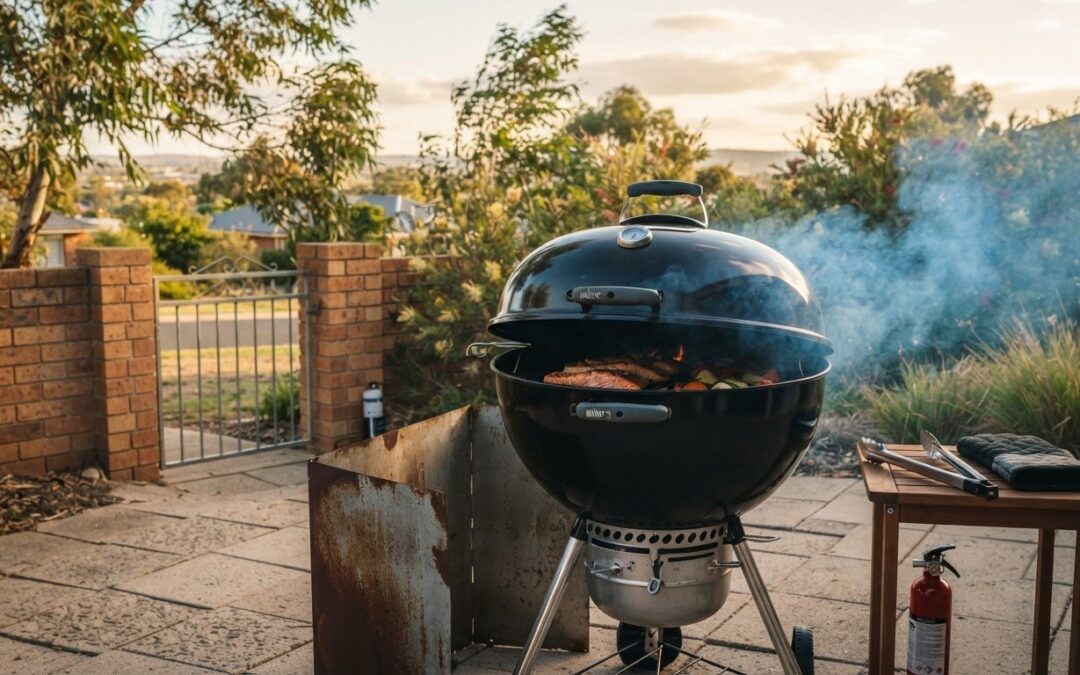
Wind control starts before you light the charcoal. Place the barbecue near a natural windbreak without enclosing it, point its back into the wind, and use the hood to retain heat. To learn how to cook BBQ in high winds and stay sane, make small vent adjustments, keep the lid closed between checks, and arrange the coals for two-zone cooking. If gusts can shift patio furniture, postpone the cook.
Wind can feed oxygen to the coals, carry heat away, and create hot and cool spots across the grill. These temperature swings can be frustrating, but a few deliberate adjustments can steady the fire and make cooking more manageable.
This guide explains how to position and shield your barbecue, manage charcoal and airflow, and secure the setup safely. You’ll also learn when a windscreen can help, how to monitor the heat, and when conditions make it smarter to wait for calmer weather.
Key Takeaways
- Use a windscreen or barrier to reduce gusts around the cooking area, without creating an enclosed space.
- Track temperature changes with a thermometer and adjust your charcoal setup when wind disrupts heat across the grill.
- Secure the barbecue against movement, keep it attended and stop cooking if gusts become hazardous.
- Keep charcoal dry and add fuel gradually to help maintain a more controlled fire during unsettled weather.
How do I control charcoal grill heat in windy conditions?
Reduce direct exposure first, then choose a stable position with room around the barbecue. Its placement affects how wind reaches the fire and cooking area.
-
Position the Grill Away From Direct Wind
If you’re deciding how to cook BBQ in high winds and stay sane, start with the grill’s position. Place it near a natural windbreak and point its back into the wind to shelter the vents and lid seams. Check that the ground is level and stable. Keep the barbecue away from trees, awnings, and buildings, with clear space around it.
-
Add a Windbreak
Use a fence, wall, or hedge to reduce direct gusts while keeping the grill in an open area. Don’t fully enclose the barbecue: airflow and smoke need room to disperse. A windscreen or secure DIY barrier can add shelter. Make sure it won’t shift towards the grill or sit close enough to catch heat or stray sparks.
-
Choose a Wind-Friendly BBQ Type
Gas or electric grills can be easier to manage than charcoal in windy conditions. Charcoal responds to changing airflow and needs close attention. If using a gas BBQ, angle it so the wind crosses the burner tubes rather than blowing along them. Keep the lid closed while lighting, and check the flames through the match-light hole without lifting it.
- Before using a gas barbecue, inspect its connections, hoses, and valves for damage or leaks. If you find a leak, turn off the gas supply immediately. These checks matter because wind can disrupt your cooking routine and make an unnoticed flame harder to spot.
- A calmer approach to how to cook BBQ in high winds and stay sane is to choose simple food and steady methods. Thinner cuts cook faster than thicker ones. Use the hood and a thermometer, and allow extra time rather than chasing high heat. If gusts make the fire difficult to manage, stop and wait for calmer weather.
Securing the barbecue and keeping a fire extinguisher nearby
Secure the barbecue before lighting, and keep a fire extinguisher accessible throughout cooking. If gusts strengthen or conditions become very dry, put safety ahead of the meal.
-
Secure the Barbecue
Set the grill on stable, level ground and block its wheels with bricks or other heavy objects. Check that it cannot roll or tip in a gust. Keep a fire extinguisher nearby, within reach but away from the hot cooking area. Stay with the barbecue throughout the cook, especially when wind could spread sparks or ash.
- Check that the charcoal bed has a consistent glow before cooking. A solid, even bed helps reduce uneven heat across the grill. For a charcoal spit roaster, arrange coals in an even line beneath the food. Watch for gusts that fan flames when fat or marinade drips, and use a drip pan to help manage flare-ups.
-
Shut Down the Fire if Conditions Worsen
Stop adding fuel if the wind strengthens, conditions get drier, or severe weather approaches. Close the barbecue vents gradually to reduce the oxygen reaching the fire. Don’t pour water directly onto hot charcoal or into an enclosed barbecue. Stay with the barbecue while the fire settles, and move people away if sparks or flames become difficult to control.
- Don’t grill when gusts can knock over patio furniture or lift roof shingles. Strong, consistent winds and very dry conditions can make outdoor cooking hazardous. There’s no single wind-speed figure that applies as a national fire-ban trigger across Australia: restrictions depend on current local declarations. Check your state or territory fire and emergency service for fire danger ratings and restrictions, and local council notices for burn limits.
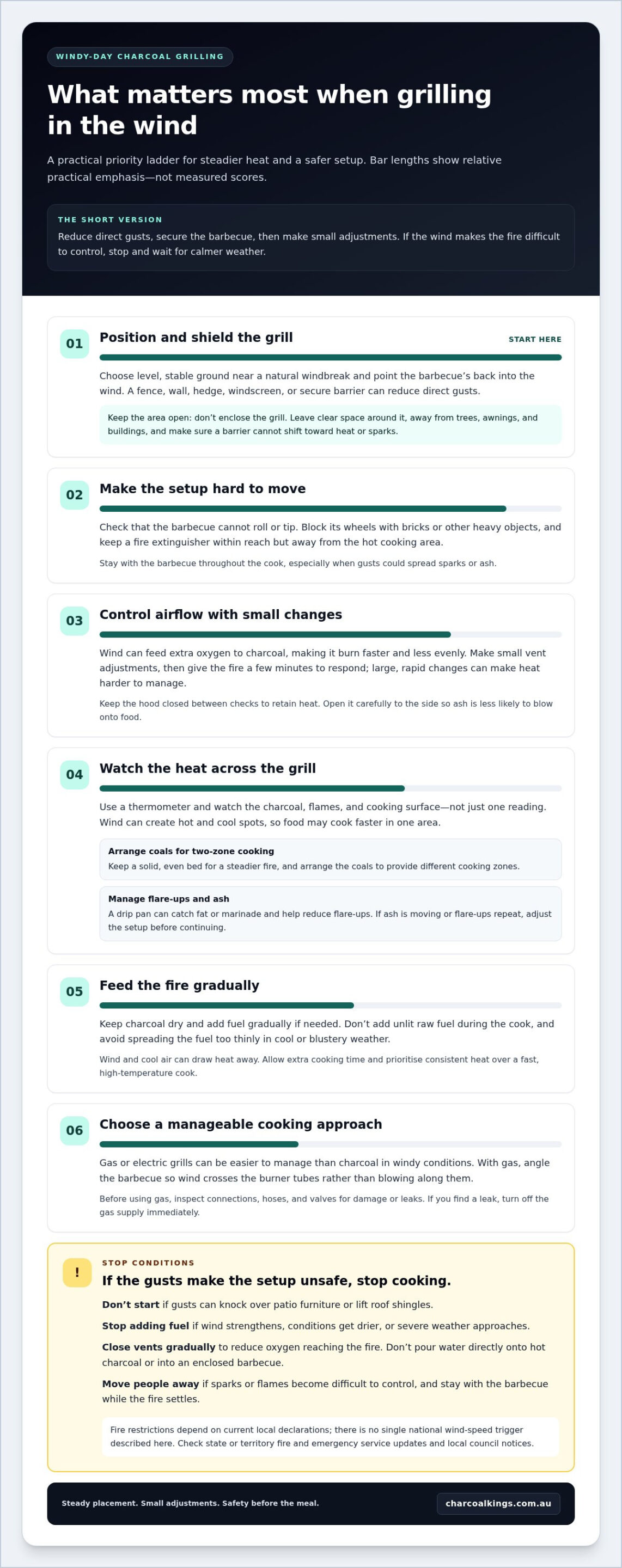
How wind affects charcoal airflow and temperature
Wind changes how oxygen reaches charcoal, how quickly it burns, and where heat collects. Watch the fire and cooking temperature, then respond to what the grill shows.
-
Understand Wind’s Effect on Airflow
Watch how gusts move around the charcoal bed and grill vents. Wind can push extra oxygen towards the coals, making them burn faster and less evenly. A sudden temperature rise may signal increased airflow, while a lull can change the fire’s behaviour. Avoid spreading the fuel too thinly in cool or blustery weather. A solid bed gives the fire a steadier foundation.
Make small vent adjustments, then give the fire a few minutes to respond. Large, rapid changes can make the temperature harder to manage as gusts shift.
-
Track Changes to Heat, Flames, and Ash
Watch the charcoal, flames, and cooking surface rather than relying on one temperature reading. Wind can push heat unevenly across the grill, so food may cook faster in one area. Ash can also blow onto food when you lift the lid. Open it carefully to the side, then check the food and fire without leaving the chamber exposed longer than necessary.
Wind may fan flames when fat or marinade drips onto the coals. Use a drip pan to catch drippings and reduce the risk of flare-ups. If you notice repeated flare-ups or ash movement, adjust the cooking setup before continuing.
-
Account for Wind and Cool Air
Allow extra time when cool air and wind draw heat away from the cooking zone. The charcoal must work harder to maintain temperature, so avoid chasing a high reading with sudden fuel changes. Use the hood to retain heat and keep it closed between checks. A thermometer helps you spot temperature swings and track cooking progress.
If the fire needs more fuel, add charcoal gradually rather than all at once. Don’t add unlit raw fuel during the cook. Keep the charcoal bed compact enough to sustain a steady glow, and prioritise consistent heat over a fast, high-temperature cook.
Using grill covers and windscreens
A windscreen can reduce gusts around a barbecue, while a cover protects it from the elements. Use either without enclosing the cooking area or placing fabric near heat.
- Choose a windscreen or stable DIY barrier to shield the grill from the gusts. Position it to reduce direct exposure without blocking all airflow around the barbecue. A fence or wall can provide a natural shield, but leave the grill in an open area where heat and smoke can disperse.
- Check the barrier’s stability before lighting the charcoal. A loose screen can shift or fall in changing weather, creating a hazard beside hot coals. Keep it clear of the grill and cooking area, and avoid materials that could catch fire from heat or stray sparks.
- Use a barbecue cover only when the grill isn’t hot or operating. Tie the cover to a stable object to help stop it blowing away, and remove it before lighting. Don’t drape a cover over an active barbecue: fabric can obstruct airflow, trap heat, or touch hot surfaces.
- Keep the barbecue away from flammable materials such as trees, awnings, and buildings, even with a windbreak in place. A barrier should reduce wind exposure, not enclose the grill. If gusts move the screen or make the fire difficult to control, stop cooking.
- Reassess the wind protection as conditions change. A windscreen that works during a steady breeze may not hold its position through stronger gusts. Strong winds can also extinguish gas barbecue flames. For equipment suited to your setup, explore BBQ grills and smokers.
Charcoal Kings: Hardwood Lump Charcoal
Charcoal Kings offers Hardwood Lump Charcoal for charcoal barbecue cooks. In windy conditions, use lump charcoal for high-heat searing, or mix a small amount with briquettes to raise the temperature while limiting runaway burning. Add fuel gradually and monitor the fire as gusts change the airflow.
If you’re refining your setup as well as your fuel choice, Charcoal Kings also offers BBQ Grills and Smokers. Choose equipment that suits your cooking style, then use the positioning and wind-protection steps above to manage changing conditions.
Visit charcoalkings.com.au to explore the charcoal and barbecue options.
Make Your Next Windy-Day Cook More Predictable
Turn the lessons from this cook into a simple routine for next time. Notice which grill position and fuel arrangement make your setup easiest to manage, and keep those choices in mind as the weather changes. A repeatable approach helps you focus on the food instead of making constant adjustments. Learning how to cook BBQ in high winds and stay sane starts with knowing your equipment and making deliberate choices, not chasing every gust.
Fuel choice is one part of that preparation. Charcoal Kings offers Hardwood Lump Charcoal, Charcoal Briquettes, and Binchotan Charcoal for different barbecue styles and cooking plans. Choose the setup that suits the cook you want to do, then put your wind-management routine to work.
Ask Charcoal Kings for BBQ advice as you plan your next cook. Stay steady, cook with purpose and enjoy the fire.
Frequently Asked Questions
When Is It Just Too Windy?
Stop cooking when gusts make the barbecue or fire difficult to control. Patio furniture shifting or roof shingles lifting are clear signs that conditions are too strong for grilling. Postpone the cook if strong gusts persist, severe weather is approaching, or wind combines with very dry conditions. Protecting the meal isn’t worth risking a fire spreading beyond the barbecue.
Will the Flames Get Blown Out?
Yes. Strong wind can extinguish a gas barbecue flame, while gusts can fan flames around charcoal. If a gas burner goes out during cooking, turn off all gas valves, open the lid, and wait five minutes before attempting to relight it. Don’t keep turning the igniter while gas may be present. With charcoal, watch for flare-ups as wind shifts across the fire.
How strong is too windy to use a BBQ in Australia?
There’s no single wind-speed figure in this guidance that defines a safe barbecue limit across Australia. Use practical signs instead: don’t grill if gusts can shift patio furniture, lift roof shingles, or make the fire hard to manage. Strong, steady gusts, severe weather, or wind combined with very dry conditions are reasons to postpone rather than rely on a number alone.
How do I safely position and secure a BBQ in high winds?
Choose level ground where the barbecue won’t obstruct a doorway or the route people use around the outdoor area. Before lighting, check that the wheels are blocked and the grill remains stable when gently nudged. Secure utensils and loose items so they don’t become windblown distractions, and place the fire extinguisher where you can reach it without crossing the cooking zone.
How do I control charcoal BBQ temperature and prevent embers blowing away?
Set up two cooking zones, with charcoal banked on one side and a cooler area beside it. This gives you somewhere to move food if a gust creates a hot spot. Use a thermometer to track temperature changes, and open the lid carefully to the side to reduce the chance of ash blowing onto food. Don’t spread the coals thinly in cool, windy weather.
What are the risks of using a BBQ near fences, trees, tents, or outdoor furniture in wind?
Wind can carry sparks or embers towards nearby combustible items, including trees, tents, and outdoor furniture. A fence may act as a windbreak, but don’t place the barbecue so close that heat or stray sparks can reach it. Keep the setup away from awnings and buildings, and move furniture that could shift into the grill or cooking area in gusts.