
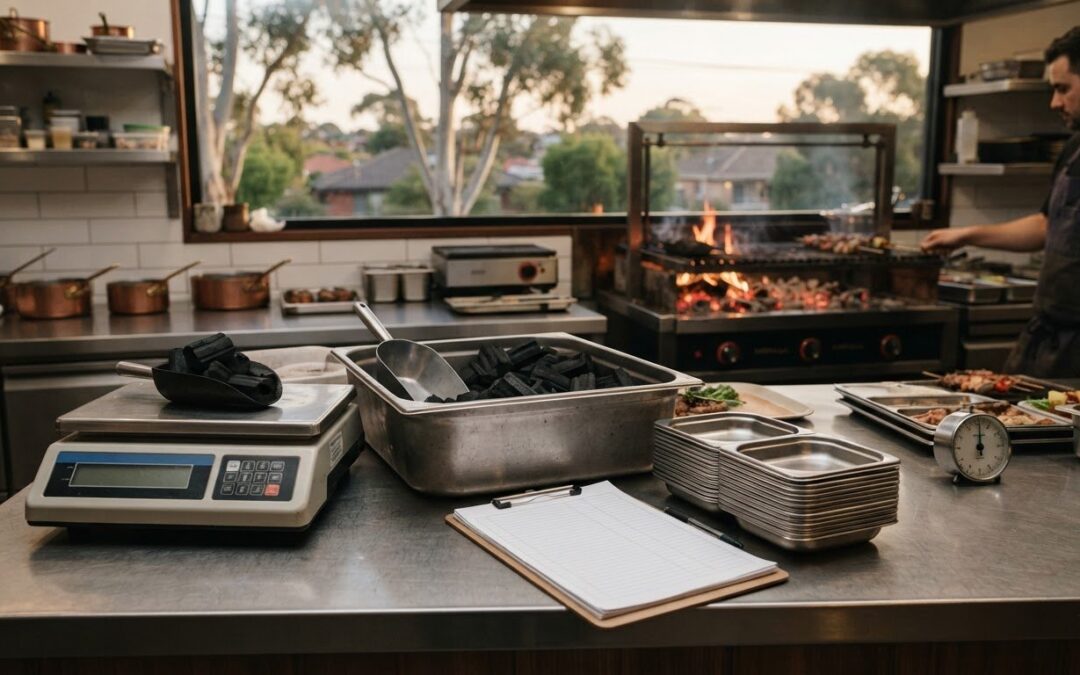
A flat charcoal surcharge can make menu costing less accurate, not more. If you’re working out how to calculate charcoal cost for a restaurant menu, remember that fuel is shared across cooking sessions, while use varies by dish, method and service. Charging every plate the same amount can hide those differences.
Start with what your kitchen buys and uses. Track charcoal consumed during a defined service or cooking period, record the dishes prepared, then allocate the fuel cost using a consistent basis that reflects how each dish is cooked. This gives you a repeatable method without assuming every plate uses an identical share. You’ll learn how to measure charcoal use, compare fuel costs across dishes and check calculations against supplier invoices and service records. You’ll also see how to assess lump charcoal and briquettes using your kitchen’s own data, so menu costs reflect actual operating patterns rather than guesswork.
Key Takeaways
- Learn how to calculate charcoal cost for a restaurant menu using measured fuel use and purchase records, not a flat surcharge.
- Apply a per-serving formula to turn the charcoal used during a cooking session into a dish-level cost.
- Choose an allocation method that reflects recorded cooking activity, whether you track dishes directly, by batch or by cooking time.
- Build a practical log for charcoal issued, fuel remaining, dishes cooked and servings produced, keeping units consistent.
- Use your kitchen’s measured costs and cooking results to compare charcoal options for your menu.
Why charcoal cost belongs in restaurant menu costing
Charcoal cost per serving is the share of fuel cost allocated to the charcoal used to cook a menu item. It belongs in the dish’s cost record because live-fire cooking consumes a purchased resource, just as cooking oil and other ingredients do. Unlike a single-use ingredient, though, charcoal is often shared across a session: one fire may cook several dishes, so its cost needs a consistent allocation method.
A measured ingredient portion can usually be assigned directly to the item that contains it. Charcoal is consumed by the cooking process, so the restaurant needs to record what went into the fire and decide how to share that cost across the dishes cooked. This allocation is an operating measure, not a claim that each dish used an identical amount of fuel.
What counts as charcoal cost for a menu item?
Start with the restaurant’s charcoal purchase records and the quantity issued for BBQ cooking. Match the supplier’s unit and purchase cost to the fuel actually used, whether the kitchen buys lump charcoal or briquettes. Charcoal production and types vary, as outlined in this overview of charcoal production and types, so record the fuel type alongside usage instead of treating every fuel as interchangeable.
Keep charcoal separate from firelighters, smoking wood and other cooking supplies. Track those as separate costs if you want to include them in a broader cooking-cost review. The charcoal figure alone measures allocated fuel, not the full cost of preparing a dish.
Why a consistent calculation matters
A repeatable method makes comparisons between menu items more useful. If a steak and a vegetable dish are cooked over the same fire, allocate fuel according to recorded cooking activity rather than assigning the full session cost to one dish or splitting it evenly by habit. Write down the assumptions so a manager can understand and apply them consistently.
Menu costing has separate components. Ingredients describe what goes into the dish, labour covers preparation and cooking, and overheads capture broader operating expenses. Charcoal allocation is one fuel input among them. It informs the dish’s total cost but doesn’t determine the selling price on its own, which also depends on the restaurant’s wider costing approach and commercial goals.
To work out how to calculate charcoal cost for a restaurant menu, define the boundary: count the charcoal used for cooking, then allocate its cost using a consistent method. Keep the records distinct from ingredient, labour and overhead figures, even when reviewing them together. For context on fuel choices and characteristics, the complete guide to BBQ charcoal can help clarify what the kitchen is recording. Next, turn those fuel records into a per-serving calculation.
How to calculate charcoal cost per serving step by step
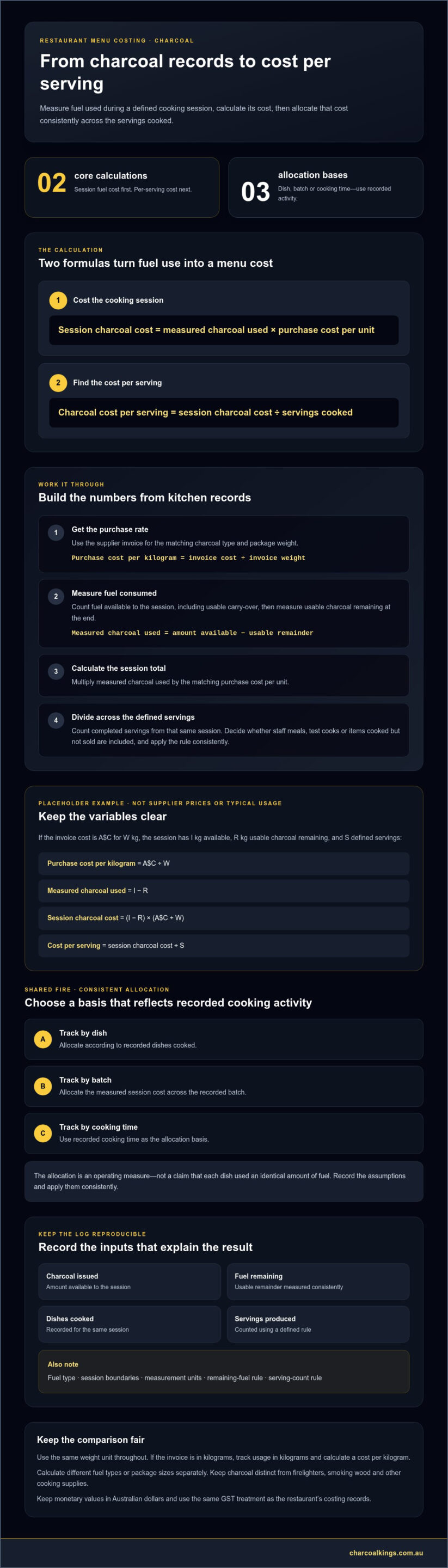
Use two calculations: first find the charcoal cost for a defined cooking session, then divide it by the servings included. Set a clear measurement period, such as one BBQ service or a specific cooking batch. The core formulas are:
- Session charcoal cost = measured charcoal used × purchase cost per unit
- Charcoal cost per serving = session charcoal cost ÷ servings cooked
Use the same weight unit throughout. If the invoice records kilograms, track usage in kilograms and calculate a cost per kilogram. Keep monetary values in Australian dollars and use the same GST treatment as your restaurant’s costing records.
Measure charcoal use and calculate the unit cost
Record the charcoal placed into the session, including usable fuel carried over from an earlier session. At the end, measure the usable charcoal remaining using the same method. Subtract the remainder from the amount available to estimate fuel consumed. Define what counts as usable fuel in your log and apply that standard consistently.
Use the supplier invoice for the matching charcoal type and package weight. Divide the purchase cost by the invoice weight to calculate the cost per kilogram. If a purchase includes different fuel types or package sizes, calculate each separately rather than blending them into one rate.
Divide the session cost across servings
Count completed servings cooked during the same session and define what the count includes. For example, decide whether to include staff meals, test cooks or items cooked but not sold, then use that rule each time. If a session cooks only one dish, divide its charcoal cost by that dish’s servings. If it cooks several dishes, allocate the session cost before calculating each dish’s per-serving figure.
Hypothetical calculation using placeholders: Suppose the invoice cost is A$C for W kg. The kitchen records I kg available to the session and R kg of usable charcoal remaining. Then:
- Purchase cost per kilogram = A$C ÷ W
- Measured charcoal used = I − R
- Session charcoal cost = (I − R) × (A$C ÷ W)
- Cost per serving = session charcoal cost ÷ S, where S is the defined serving count
The letters are placeholders, not supplier prices or typical usage figures. Replace them with invoice amounts and kitchen measurements. Record the fuel type, session boundaries, units, remaining-fuel rule and serving-count rule so another team member can reproduce the result. This is the practical foundation for how to calculate charcoal cost for a restaurant menu. Once the method is set, compare your records with the charcoal options for food-service cooking you’re evaluating.
How to allocate shared charcoal cost across different dishes
When a cooking session includes several dishes, the session total needs a fair allocation rule. The goal isn’t to claim an exact amount of fuel touched each plate. It’s to distribute the measured cost according to kitchen activity that can be recorded and repeated. Choose a method that suits your grill use, then apply it consistently.
Choose an allocation method your kitchen can repeat
Use direct tracking when a dish or cooking batch has a dedicated fuel measure. For shared fires, batch allocation can work when dishes are cooked together and use the same allocation basis. A time-based approach is useful only if recorded cooking time reasonably reflects observed fuel use in your kitchen.
Direct tracking
Measure fuel for a dedicated dish or batch, then divide its fuel cost by the servings in that batch. This is clearest when cooking activity can be separated.
Batch allocation
Assign a defined share of session cost to a batch cooked together, then divide by its servings. Record the basis for the share, such as measured fuel or a consistent batch rule.
Time-based allocation
Record the relevant grill time for each dish or batch. Allocate cost in proportion to that time only if your observations show it is a reasonable proxy for fuel use.
For example, if a mixed session’s recorded cooking activity supports allocating two-thirds of its cost to one batch and one-third to another, apply those shares to the session total, then divide each batch allocation by its own servings. These fractions are illustrative, not a standard. Derive shares from actual records and document what counts as cooking time, batch activity or dedicated fuel.
Cooking method affects what a useful record looks like. A dish that needs sustained grilling may not be comparable with one that uses the grill briefly. The guide to mastering charcoal BBQ cooking provides context for how different BBQ methods shape cooking activity. Use that context to define what the kitchen tracks, not to assume a cost per dish.
Account for different charcoal types without assuming equivalence
Keep lump charcoal and briquettes in separate calculations, using the matching purchase cost and recorded usage for each. Don’t assume equal weights produce identical cooking results or fuel use. Compare kitchen records across sessions using the same measurement boundaries, and note any change in fuel type or cooking method. Lump charcoal guidance can explain the fuel category, but it isn’t a cost assumption.
A reliable answer to how to calculate charcoal cost for a restaurant menu depends on clear assumptions. Keep the allocation rule beside the figures, review it when service practices change, and avoid applying one universal charcoal amount to every dish.
Build a charcoal-cost tracking routine for an Australian restaurant
A useful cost calculation depends on reliable records, not a one-off estimate. Set a boundary for each cooking session, assign someone to record fuel at the start and end, and use the same units as the supplier invoice. This creates a record you can compare with menu activity and purchase documents.
Create a practical service log
Keep the log with the service or kitchen records. The staff member responsible should record the amount issued before cooking and the usable fuel remaining when the session ends. Capture the dishes and serving counts cooked during that same period, linking fuel use to the activity it supported.
- Date and session: Record the service date and the session’s start and end points.
- Charcoal product: Identify the fuel type and product used.
- Quantity issued and remaining: Use one consistent unit, such as kilograms, for both measurements.
- Dishes and servings: List the menu items cooked and the relevant number of servings.
- Notes: Record unusual conditions, such as a changed cooking routine or an interrupted service.
Note unusual conditions rather than quietly changing the standard method. A session with a different cooking setup may not be comparable with routine service. These notes help explain results later and show whether an entry belongs in a like-for-like comparison.
Check the figures before using them for menu decisions
Reconcile charcoal purchases with recorded usage over the same period. Compare opening stock, purchases, fuel issued and usable fuel remaining. Investigate unexplained differences before using the calculated cost in a menu review. Keep invoice units, usage units and currency aligned. If an invoice records weight in kilograms, don’t compare it with kitchen usage recorded in bags without converting it consistently.
For Australian records, keep GST treatment consistent with the restaurant’s accounting approach. Record whether the purchase figure includes or excludes GST, and follow guidance from a qualified adviser on how that treatment should be handled in your accounts. Use A$ consistently in cost records.
Review the calculation when supplier costs, cooking routines or measured usage change. To distinguish a real shift from normal service variation, compare sessions with similar dishes, cooking methods and service conditions. Don’t treat one unusual session as a trend without context.
Keep charcoal allocation distinct from broader food-cost percentages, labour and overheads. It’s one input to menu costing, not the final menu price. A clear log gives managers a traceable basis for how to calculate charcoal cost for a restaurant menu and decide when the figure needs updating.
Ready to compare your kitchen records with the fuel you use? Explore charcoal options for food-service cooking.
Choose restaurant charcoal using measured kitchen results
Once your kitchen has a repeatable costing method, use its records to assess charcoal options. Compare purchase cost per unit with measured fuel use and allocated cost across similar cooking sessions. A lower cost per kilogram alone doesn’t establish a lower cost per serving. The amount used, dishes cooked, session length and suitability for your BBQ routine all matter. Base the comparison on your restaurant’s records, not assumed performance.
Where possible, match sessions by fuel type, cooking method and service activity. Record what the kitchen cooked, how much fuel it issued and what remained. Compare resulting session or serving costs alongside practical observations about how the fuel worked for those dishes. If the cooking routine changes, treat it as a different comparison rather than combining it with the same result.
Compare charcoal options using your own records
Track lump charcoal and briquettes separately, using each product’s invoice cost and measured usage. Compare sessions on the same basis, and don’t declare one type cheaper without comparable kitchen data. Keep product claims specific: Premium Hardwood Lump Charcoal has a 4 hour burn time. Easy Burn has an approximate 3 hours burning time and is ready to cook in just 15 minutes. Neither figure is a cost-per-serving result.
- Purchase cost per unit: Use the relevant invoice and keep units consistent.
- Measured usage: Compare the amount used in similar sessions, not just the amount bought.
- Cooking suitability: Note whether the charcoal fits the dishes and BBQ methods being assessed.
- Allocated cost: Apply the same serving or batch allocation method to each comparison.
These records help operators distinguish a purchase-price difference from a usage difference. If one fuel costs more per kilogram but the kitchen uses a different quantity during comparable sessions, evaluate the complete recorded result. Don’t transfer a burn-time statement from one product to another or treat it as a guarantee of how long a restaurant session will run. Your own measurements remain the basis for menu costing.
Explore food-service charcoal supply
Charcoal Kings supplies charcoal to food-service customers in Australia. Its range includes Premium Hardwood Lump Charcoal and Redneck Charcoal briquettes, which operators can assess against their own cooking records. No chemicals are used in the manufacturing of Charcoal Kings charcoal. Apply the same measured approach when reviewing fuel: compare what you bought, the amount used and the cooking results recorded by your kitchen.
Applying how to calculate charcoal cost for a restaurant menu to purchasing decisions means using evidence from your own BBQ sessions, not relying on a price-per-unit comparison alone. Explore Charcoal Kings charcoal for food service.
Put your charcoal records to work
Turn the costing method into a kitchen habit. Use the same session boundaries and allocation rules as you gather more records, then use the results to guide fuel reviews and menu decisions. Clear records give your team a practical basis for revisiting how to calculate charcoal cost for a restaurant menu as suppliers, cooking routines or menu needs change.
When assessing charcoal options, tie the comparison to your own BBQ sessions and cooking requirements. Charcoal Kings supplies food-service customers in Australia, with no chemicals used in the manufacturing of its charcoal.
Explore Charcoal Kings charcoal for food service and use your measured kitchen results to guide your next fuel decision. Keep tracking and refining a costing approach your team can apply with confidence.
Frequently Asked Questions
How much charcoal does a restaurant need to cost per serving?
There’s no universal charcoal amount per serving. Calculate it from your own kitchen’s records, since the result depends on fuel, cooking method, dishes sharing the fire and session output. Compare similar services rather than applying a grill-wide estimate to every plate. If measured usage changes, check whether the menu mix or cooking setup changed before adjusting the per-serving figure.
Can charcoal cost be calculated when several dishes share one grill?
Yes. Allocate the shared session cost among dishes using a documented basis, such as batch activity or cooking time when time reflects fuel use. Then divide each dish’s allocation by its serving count. To make how to calculate charcoal cost for a restaurant menu useful across shared-fire services, keep the allocation rule with the records and review it when the dish mix or grilling pattern changes.
Is charcoal included in a restaurant’s food cost percentage?
It depends on how the restaurant defines and reports its food-cost measure. An ingredient-only percentage may keep charcoal outside that figure, while an internal menu-costing model may include allocated cooking fuel as a separate cost component. Decide which measure you’re using, document the treatment and apply it consistently across dishes and reporting periods. For statutory or financial reporting treatment, follow guidance from a qualified accounting adviser.
What happens if usable charcoal remains after a cooking session?
Record remaining usable fuel as stock for the next session rather than treating it as consumed during the first. If a grill is reloaded with that fuel later, include it in the next session’s available quantity and account for it once. Apply the same rule when judging what remains usable, since inconsistent estimates can make session costs appear to change without a real difference in use.
Should firelighters and smoking wood be included in charcoal cost?
Keep them separate from the charcoal figure. Firelighters and smoking wood are different supplies, so recording them as distinct lines shows charcoal cost on its own and lets you decide whether a broader cooking-input measure should include them. If you include these items in a wider dish-cost model, label that total clearly. Don’t compare it with a charcoal-only figure as though they measure the same thing.
How often should a restaurant recalculate its charcoal cost?
Recalculate when a meaningful input changes, such as supplier invoice cost, fuel type, cooking routine or measured usage. Also investigate unusual differences between recorded fuel use and stock on hand. Set a review trigger that suits your record-keeping process rather than relying on an arbitrary calendar interval, and apply it consistently. Keep older calculations for comparison, but note changes in fuel type or cooking conditions.
Does the charcoal cost per serving determine the menu price?
No. It’s one cost input, not a complete pricing decision. The final menu price also depends on the restaurant’s broader costing approach, which may include food ingredients, labour, overheads and commercial objectives. Use charcoal allocation to improve the cost picture for a dish, then consider it alongside those other factors. A change in fuel cost alone doesn’t automatically mean the selling price should change by the same amount.