
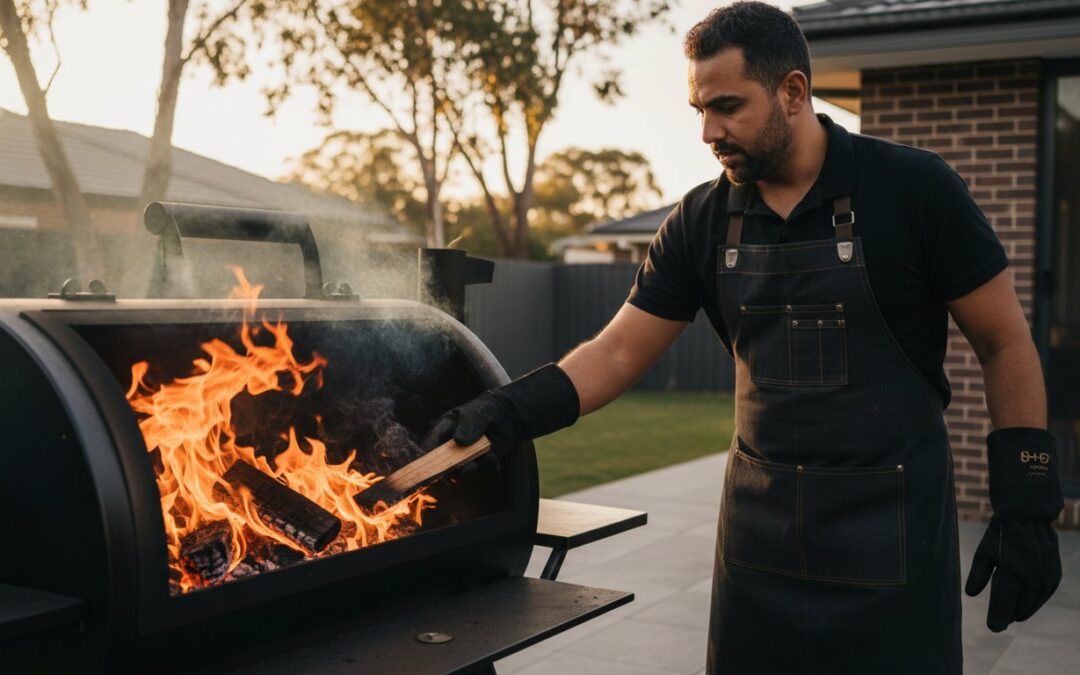
Spending 16 hours at the smoker doesn’t make you a better pitmaster; it just makes you a tired one. Most Australian backyard cooks believe that low and slow is the only path to glory, but the pros know that heat is a tool, not an enemy. We’ve all dealt with the frustration of a brisket drying out or a fire that dies right when the stall hits. It’s a waste of premium hardwood and a waste of your weekend.
You can achieve a 5-7 hour cook time with a competition-grade finish by mastering the right hot and fast brisket charcoal setup. This guide shows you how to maintain a rock-solid 148°C environment that renders fat perfectly and locks in a thick, dark bark. You’ll learn how to avoid common pitfalls like inconsistent temperature spikes or the dreaded mushy bark from improper wrapping. We’ll walk through the specific coal configurations and fuel types needed to ensure your smoker stays consistent from the first light to the final rest. Get ready to produce a jiggly, professional brisket in half the time without the typical fuel fatigue. Get sizzlin’!
Key Takeaways
- Understand the physics of smoking at 300°F to break down tough collagen rapidly while maintaining maximum internal moisture.
- Identify why premium hardwood lump charcoal is the essential fuel for reaching high temperatures without the performance-killing ash buildup of cheap briquettes.
- Configure a professional hot and fast brisket charcoal setup by mastering the “Hot Zone” configuration and precise vent management.
- Adjust your trimming and rub strategies to provide extra fat protection and build a competition-grade bark under high-heat conditions.
- Learn the critical resting techniques and carry-over cooking calculations required to ensure your fast-tracked brisket is as tender as a low-and-slow classic.
The Science of Hot and Fast Brisket: Why 300°F Works
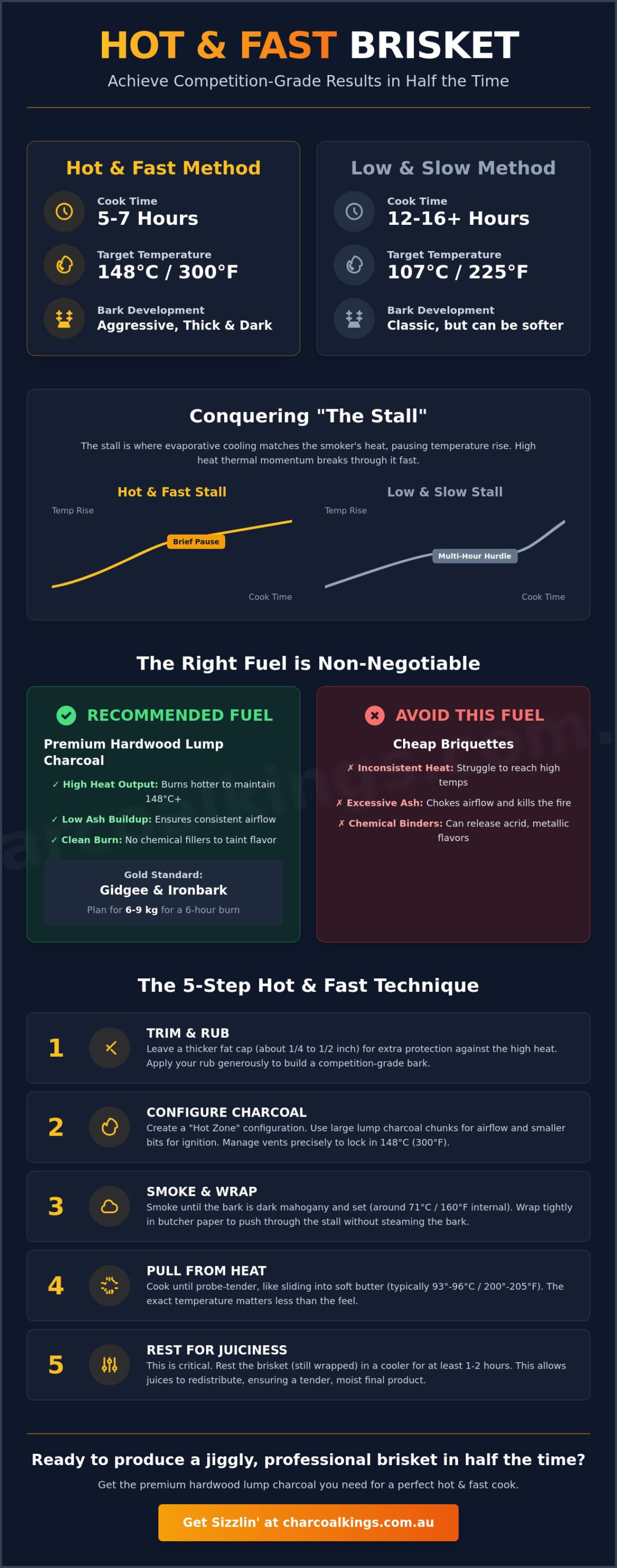
Mastering a hot and fast brisket charcoal setup requires shifting your mindset away from the traditional 107°C (225°F) standard. This method targets a temperature range between 135°C and 160°C (275°F to 325°F). While purists might worry about toughness, the physics of meat science tells a different story. High heat does not automatically mean dry meat; it means faster energy transfer. When you maintain a steady 150°C environment using premium natural hardwood charcoal, you accelerate the rendering of intramuscular fat and the breakdown of tough connective tissues.
The magic happens through the rapid conversion of collagen into gelatin. This process begins around 71°C (160°F) but gains significant speed as internal temperatures climb. The science of smoking confirms that consistent heat application is more important than the duration of the cook. By pushing more thermal energy into the brisket, you force the collagen to liquefy before the muscle fibres have time to squeeze out all their moisture. This results in a product that’s just as tender as low and slow versions but finished in a fraction of the time.
To better understand this concept, watch this helpful video:
Hot and Fast vs. Low and Slow: The Key Differences
The most obvious difference is the clock. A traditional low and slow cook often drags on for 12 to 16 hours. A hot and fast brisket charcoal setup slashes that time to 5 or 7 hours. Beyond speed, the bark development is superior at 300°F. The higher heat triggers the Maillard reaction more aggressively, creating a dark, mahogany crust that’s thick and crunchy. Humidity management is vital here. Because the air is hotter, it can strip moisture quickly; using a water pan is a non-negotiable step to protect the meat’s surface while the bark sets.
The “Stall” at High Temperatures
Every pitmaster fears the stall, which is the point where evaporative cooling matches the heat of the smoker. At 107°C, the stall can last for five hours as the meat “sweats.” When you run your pit at 150°C, the thermal momentum is too great for evaporation to win the battle. The fire provides enough energy to overcome the cooling effect almost immediately. At 300°F, the stall is a brief pause rather than a multi-hour hurdle. You’ll see the internal temperature climb steadily, allowing you to reach the wrapping stage much sooner without losing sleep.
Selecting the Ultimate Fuel for High-Heat Smoking
High-heat smoking requires a specific fuel profile. Cheap briquettes aren’t up to the task. They often contain fillers and binders that create excessive ash buildup. This ash settles in your firebox and chokes the airflow needed to maintain 150°C (300°F). For a reliable hot and fast brisket charcoal setup, you need premium hardwood lump charcoal. It burns cleaner and hotter than compressed alternatives. It’s the only way to ensure your pit stays responsive when you adjust the dampers.
Calculating your fuel load is critical for success. Plan for a 6-hour burn to cover the cook and the initial rest period. A standard offset or large bullet smoker typically requires 6 to 9 kilograms of high-quality lump charcoal for this duration. Using chemical-free fuel is non-negotiable. At 300°F, your intake vents are open wide. Any synthetic additives in the fuel will volatilize quickly, potentially ruining the meat with acrid, metallic flavours. Stick to 100% natural products for a clean, professional result.
Hardwood Lump: The Engine of Your Smoker
Density determines performance in a hot and fast cook. Gidgee and Ironbark lump are the gold standards for Australian pitmasters. Gidgee is one of the densest timbers on the planet. It provides a massive heat output and an incredibly long burn time. When you’re setting up, size your charcoal properly. Use large chunks, roughly the size of a fist, to create gaps for airflow. Mix in smaller bits to act as ignition points. This combination ensures the fire spreads evenly without suffocating. For a deeper dive into fuel types, check out Charcoal: The Ultimate Guide to Fuelling Your BBQ.
Choosing Smoking Woods for High Heat
Smoking at 300°F changes how wood combusts. High temperatures mean faster consumption, so you need dense hardwoods that won’t vanish in minutes. Oak, Mesquite, and Australian Ironbark are the top choices for beef. Oak provides a classic medium-smoke profile. Ironbark offers a heavy, traditional scent that complements the fat of a brisket perfectly. Understanding The Science of BBQ helps explain how these organic compounds interact with the meat surface during rapid cooking.
Chunk size matters more than splits in a charcoal-based hot and fast brisket charcoal setup. Use three to four fist-sized chunks buried in the coal bed. This allows for a steady release of flavour rather than a sudden burst of thick smoke. Avoid “dirty smoke” at all costs. This bitter creosote forms when wood smoulders without enough oxygen. Because you’re running at higher temps, keep your exhaust vent wide open. This pulls oxygen through the fire and ensures a clean, translucent blue stream of smoke. If you’re ready to upgrade your next cook, browse our range of premium hardwood lump to get the best results.
Smoker Setups: Configuring Your Charcoal for 300°F+
A successful hot and fast brisket charcoal setup requires a massive coal bed. You aren’t just lighting a few briquettes; you’re building a furnace. This substantial thermal mass provides the stability needed to maintain 300°F without constant fluctuations. Higher temperatures accelerate the Maillard reaction, which is the chemical process responsible for that deep, mahogany bark and complex flavour profile. Vent management is the next critical step. Most smokers hit the 300°F sweet spot with the exhaust wide open and the intake roughly 50% to 75% open. You must maintain a clean fire. At these higher temperatures, “dirty” white smoke will turn your meat bitter very quickly. Look for thin, blue wisps or nearly invisible heat waves to ensure a premium result.
Using a water pan is mandatory for this style of cooking. While it adds humidity, its primary role is acting as a heat sink. The water absorbs excess thermal energy, preventing the temperature spikes that occur when fat renders and drips. It keeps the environment stable even when your fire is roaring.
The Drum Smoker Setup (Gateway Style)
Drum smokers are built for 300°F. The direct-heat advantage is a major factor here. As fat drips directly onto the hot coals, it vaporises and seasons the meat with a distinct “steakhouse” profile. For a consistent hot and fast brisket charcoal setup, use the “crater” method. Fill your charcoal basket to the brim with premium lump, then dig a hole in the centre for half a chimney of lit coals. This allows the fire to burn outwards evenly. On a standard drum, you’ll typically need about 2 inches of intake air to hold a steady 300°F.
The Kettle BBQ Setup (Modified Snake or Vortex)
The traditional snake method is too slow for 300°F smoking. It doesn’t generate enough BTUs to push a large brisket through the stall quickly. Use the “Banking” method instead. Pile your charcoal on one side of the 22-inch kettle. Use a dedicated charcoal basket to concentrate the thermal mass, which ensures the heat stays intense and indirect. Place your water pan on the charcoal grate next to the coals. This configuration provides the high-volume heat needed to render fat efficiently while protecting the meat from direct scorching.
The Offset Smoker Setup
In an offset, everything starts with a massive coal bed. Use hardwood lump charcoal to establish a deep, glowing base before you ever introduce a log. Once the bed is established, feed small, pre-heated hardwood splits every 30 to 45 minutes. This frequency maintains the 300°F target without the temperature dipping. Keep the firebox door cracked slightly if your vents don’t provide enough oxygen for a clean burn. Draft management is the difference between a soot-covered brisket and a competition-grade crust. Get sizzlin’!
The Hot and Fast Brisket Technique: Prep, Wrap, and Pull
Cooking at 150°C requires a different approach than the traditional 110°C crawl. Your hot and fast brisket charcoal setup creates a high-energy environment where moisture evaporates rapidly. To win, you must protect the protein while maximizing bark formation. This isn’t about rushing; it’s about managing heat with precision.
Trimming and Rubbing for Success
High heat is unforgiving on thin edges. Trim your brisket to a streamlined, aerodynamic shape. Remove any “ears” or thin flaps that will char to carbon at 300°F. Leave a thicker fat cap than you would for a low and slow cook. Aim for 8mm to 10mm of fat to provide a consistent thermal buffer against the rising heat. This extra layer prevents the flat from drying out before the point is rendered.
Apply a heavy rub of coarse 16-mesh black pepper and kosher salt. A 2:1 ratio of pepper to salt works best for high-heat bark. Use a binder like yellow mustard or beef tallow to ensure every grain of spice stays put during the cook. The Texas Crutch is the essential tool for hot and fast success. This technique allows you to power through the stall without losing internal moisture to the dry air of the pit.
Managing the Cook Timeline
Efficiency is the goal. For the first 3 hours, keep the lid closed. Your charcoal needs to maintain a steady 150°C without interference. Opening the pit at this stage kills your momentum and extends the cook time by 15 to 20 minutes for every peek. Focus on the airflow and let the smoke do the work.
- Spritzing: Start after the third hour. At 300°F, the surface dries significantly faster than at lower temps. Spritz every 30 to 45 minutes with water or apple cider vinegar to keep the edges supple.
- The Wrap Point: Monitor the bark color. Once the seasoning is “set” and doesn’t rub off when touched, it is time to wrap. This usually happens around 74°C internal temperature.
- Foil vs. Paper: Use heavy-duty aluminium foil for maximum speed. It creates a braising environment that softens collagen quickly. Use peach butcher paper if you prefer a crunchier bark, though it will add 45 minutes to your total cook time.
Don’t pull the meat based on a digital reading alone. While 96°C is a common target for your hot and fast brisket charcoal setup, the “probe tender” test is the only metric that matters. Push a temperature probe into the thickest part of the flat. It should slide in like it is hitting room-temperature butter. If you feel any resistance, the connective tissue hasn’t fully broken down. Give it another 15 minutes and test again.
Mastering the Finish: Resting and Slicing for Maximum Juiciness
The high heat of a 300°F (149°C) cook creates internal tension that low and slow methods avoid. Because the meat was pushed hard, it requires a disciplined recovery period. Your hot and fast brisket charcoal setup has done the heavy lifting by building a thick bark and rendering fat quickly. Now, the rest period determines if that meat stays succulent or turns into a dry board. Carry-over cooking is a massive factor at these higher temps. When you pull a brisket at an internal temperature of 203°F (95°C), the residual heat continues to cook the center. Expect the temperature to rise by another 4 to 7 degrees while it sits. If you don’t account for this peak, you risk overcooking the flat until it becomes crumbly rather than bendy.
Slicing is the final hurdle where many cooks fail. A brisket consists of two distinct muscles: the lean flat and the fatty point. Their grains run in different directions. You must identify the transition point. Slice the flat first until you reach the area where the point overlaps. At that stage, rotate the brisket 90 degrees to continue slicing the point against its specific grain. Keep your slices about 6mm thick, similar to a standard pencil. To prevent the meat from drying out on the board, keep the brisket whole until the very second you serve. Once the internal fibers hit the air, oxidation begins and the moisture evaporates within 120 seconds.
The Long Rest Strategy
A 2 to 4 hour rest is the secret to a professional finish. This allows the rendered collagen to thicken into a gelatinous state, locking moisture between the muscle fibers. Use a high quality insulated cooler, known in Australia as an Esky, to stabilize the temperature. Before locking it away, vent the steam for 15 minutes. Open the foil or paper to let the initial heat escape. This stops the cooking process and prevents the bark from turning into mush. Once the temperature stabilizes, wrap it tight and place it in the Esky with old towels for insulation.
Get Sizzlin’ with Charcoal Kings
Achieving a consistent 300°F environment requires fuel that doesn’t quit halfway through the cook. Our premium hardwood lump is the top choice for Australian BBQ champions because it provides the intense, clean heat necessary for a hot and fast brisket charcoal setup. We use 100% natural timber with no chemical additives or fillers. This ensures your meat tastes like smoke and beef, not fuel. You can find our products at specialist BBQ stockists across the country, from Perth to Sydney. We supply the gear that professionals trust for their competition rigs and backyard smokers alike.
Ready to upgrade your next weekend cook? Shop our range of premium BBQ charcoal and smokers today!
Fire Up Your Pit for Professional Results
Mastering the high-heat method allows you to cut your total cook time by up to 50% while still achieving a competition-grade bark. Success starts with a rock-solid hot and fast brisket charcoal setup that maintains a consistent 300°F. You need a fuel source that burns clean and long. Professional results require you to wrap at 165°F and pull the meat once it hits that buttery 203°F internal temperature. Don’t rush the finish; a minimum rest of 120 minutes is essential for maximum juice retention.
Stop settling for inferior fuel that ruins your hard work with chemical aftertastes. Charcoal Kings is Australian owned and operated, providing 100% natural hardwood charcoal with no chemicals or additives. Our premium products are trusted by professional pitmasters to deliver the hottest and longest-lasting coals for every cook. Whether you’re running a commercial kitchen or a backyard smoker, we provide the reliability you need to master the flame.
Get Sizzlin’ with Australia’s Premium Hardwood Charcoal!
Grab your gear and start your next cook with total confidence. Your best brisket is only a few hours away.
Frequently Asked Questions
Is hot and fast brisket as good as low and slow?
Yes, it delivers professional results in half the time. Many competition pitmasters use 300°F to win trophies. The key is the fat render. At 300°F, fat renders quickly, keeping the meat moist. You won’t lose the smoky flavour if you use premium natural hardwood charcoal. It’s a reliable method for busy weekend cooks who value efficiency and quality.
What temperature should I pull a hot and fast brisket at?
Pull your brisket when the internal temperature hits 203°F (95°C) and the probe feels like it’s sliding into warm butter. Hot and fast cooks require a slightly higher finishing temp than low and slow to ensure the connective tissue fully breaks down. Most 6kg briskets reach this stage between 203°F and 205°F. Always rest it for at least 2 hours before slicing.
Can I use briquettes for a hot and fast setup?
You can use briquettes, but premium lump charcoal is the superior choice for a hot and fast brisket charcoal setup. Lump charcoal burns hotter and cleaner, making it easier to maintain that 300°F target. Our natural hardwood lump provides the intense heat needed for a 6 hour cook. It produces less ash, which prevents airflow blockages in your smoker during the high heat phase.
How long does a 6kg brisket take to cook hot and fast?
A 6kg brisket typically takes 5 to 7 hours to reach tenderness at 300°F. This is roughly 50 percent faster than the traditional 12 hour low and slow method. You’ll spend about 3 hours in the smoke before wrapping, followed by 2 to 3 hours to finish. Factor in a 2 hour rest period to ensure the juices redistribute properly through the muscle fibres.
Should I use foil or butcher paper for wrapping at 300°F?
Use pink butcher paper to maintain a crunchy bark while cooking at 300°F. Foil traps too much steam, which can turn your bark into mush at higher temperatures. Butcher paper is breathable, allowing some moisture to escape while still speeding up the cook. It’s the standard choice for 85 percent of professional pitmasters who value a balance of texture, flavour, and speed.
Why is my brisket bark soft after wrapping?
Your bark is soft because you wrapped the meat before the crust was fully set. At 300°F, you must wait until the fat has rendered and the surface is a dark mahogany colour. If you wrap too early, the trapped moisture steams the exterior. Ensure the rub doesn’t come off when you poke it with a finger before you reach for the paper.
How much charcoal will I use for a 6-hour cook?
You will typically use 4kg to 6kg of premium hardwood charcoal for a 6 hour cook at 300°F. This amount varies based on your smoker’s insulation and the ambient temperature in your backyard. A standard 57cm kettle or bullet smoker consumes about 1kg of fuel per hour when running hot. Using high density charcoal ensures you won’t need to refuel mid-cook.
Do I need to inject my brisket for hot and fast?
Injection is highly recommended for a hot and fast brisket charcoal setup to protect the meat from drying out. A simple mix of beef broth and salt adds internal moisture that acts as a buffer against the 300°F heat. About 300ml of liquid is enough for a standard packer brisket. It guarantees a juicy result even with the accelerated cooking timeline. Get Sizzlin’!