
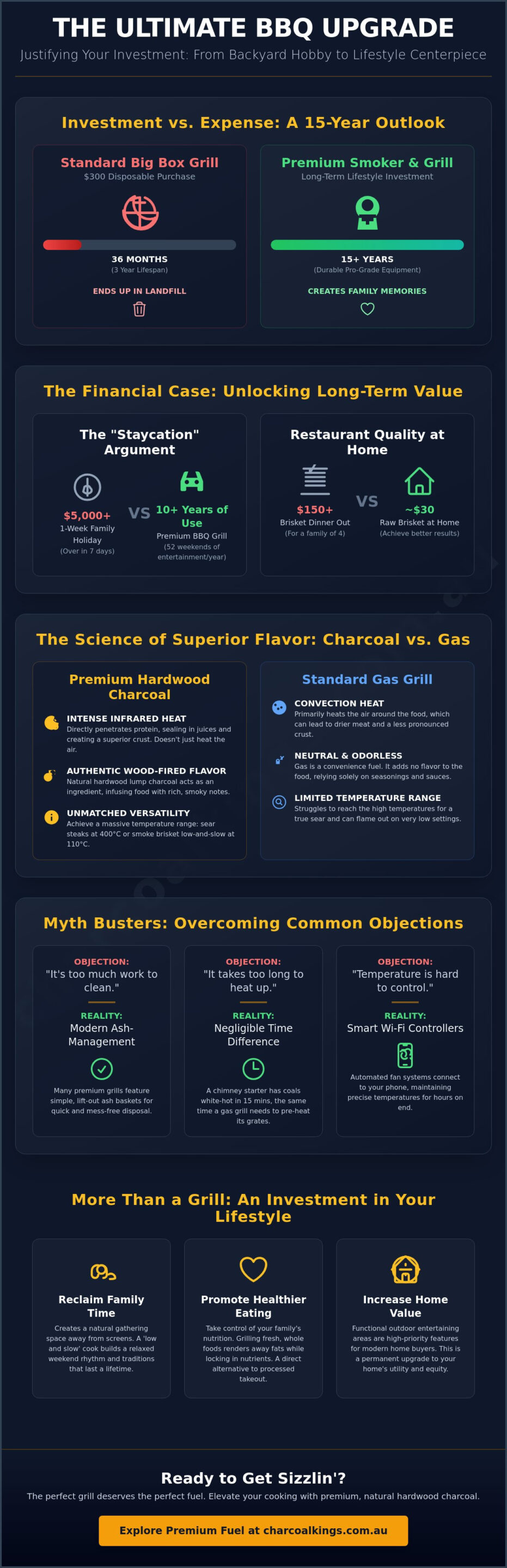
A $300 big box store grill is a disposable purchase that typically ends up in a landfill within 36 months. You understand that real flavor requires a premium setup, but explaining why a high end smoker is a necessity rather than a hobby can be a tough sell. Most homeowners hesitate because they see the upfront cost instead of the 15 year lifespan of professional grade equipment. Getting buy-in for a new bbq requires shifting the conversation from price tags to performance and lifestyle value.
You want better tasting food and a social outdoor space that actually gets used. We’ll show you how to justify the investment using data on heat retention, fuel efficiency, and material durability. This guide covers everything from managing backyard footprints to the science of natural hardwood smoke. You’ll learn how to present a logical case that turns a “maybe later” into a “let’s go.” It’s time to stop settling for average results. Get Sizzlin’!
Key Takeaways
- Shift the conversation from “buying a grill” to investing in family health and lasting outdoor living memories.
- Discover the technical superiority of infrared heat and premium hardwood charcoal over standard gas alternatives.
- Calculate the long-term ROI of high-quality hardware to simplify the process of getting buy-in for a new bbq.
- Overcome common objections by leveraging modern ash-management systems and smart Wi-Fi temperature controllers.
- Deploy a strategic three-step pitch that balances the social “dinner party” vision with a solid budget-focused argument.
The Emotional Case: Why a New BBQ is a Family Investment
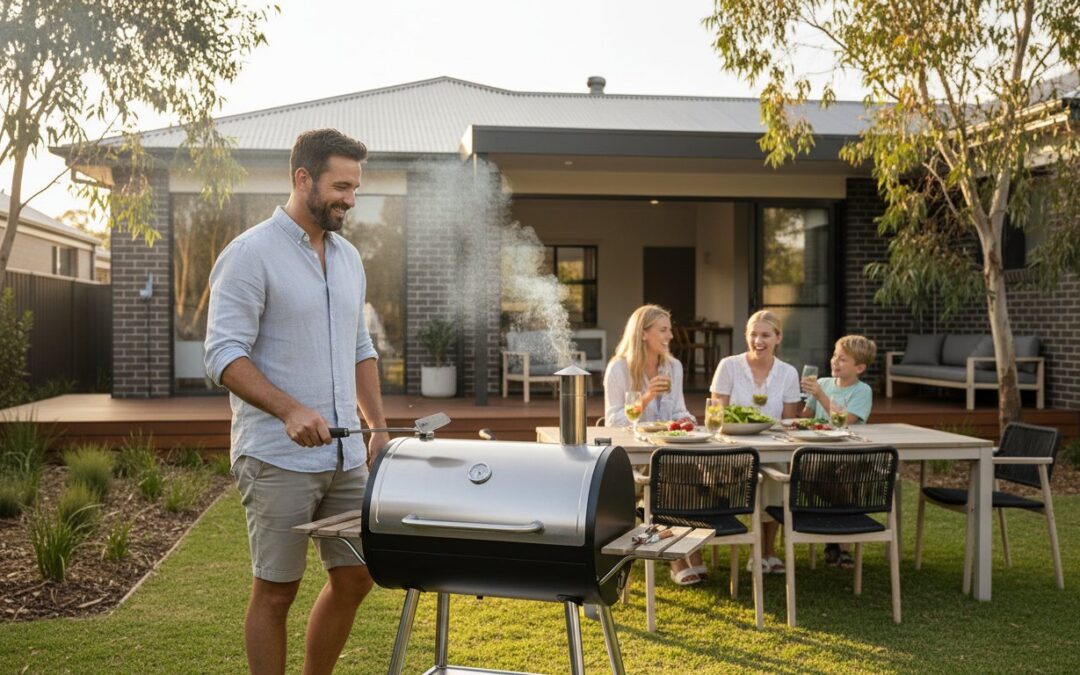
A premium grill is more than a cooking appliance. It’s the centerpiece of an outdoor living strategy. When you’re focused on getting buy-in for a new bbq, you need to move the conversation away from technical specs and toward the lifestyle it enables. A high-quality setup turns a standard backyard into a destination. It creates a space where the family naturally gathers, away from the distractions of the living room. Grilling over natural hardwood or lump charcoal provides a sensory experience that indoor cooking cannot replicate.
Health is a primary driver for this investment. Grilling fresh, whole foods over high heat allows fats to render away while locking in moisture and nutrients. It’s a direct alternative to processed, salt-heavy takeout meals. By mastering different types of barbecue grills, you take control of your family’s nutrition. You use fresh ingredients, organic rubs, and chemical-free fuel. This shift to outdoor cooking also provides a necessary digital detox. It’s hard to stare at a smartphone when you’re managing a live fire or prepping a brisket.
To better understand this concept, watch this helpful video:
The “Staycation” Argument
Compare the cost of a premium grill to a single family holiday. A week-long trip can cost upwards of $5,000 and is over in seven days. A well-built Australian BBQ lasts a decade or more. It provides 52 weekends of entertainment every year. This is a permanent upgrade to your home’s utility. A dedicated outdoor cooking zone also increases property appeal. Real estate data consistently shows that functional outdoor entertaining areas are high-priority features for modern buyers. You aren’t just buying a cooker; you’re increasing your home’s equity.
Reclaiming Family Time
The “low and slow” method is the ultimate way to slow down. Getting buy-in for a new bbq is easier when you frame it as a way to reconnect. Smoking a shoulder of pork takes eight to twelve hours. This process creates a relaxed weekend rhythm. It’s an opportunity to involve the kids in the prep work. They can learn about fire safety, wood types, and seasoning. These traditions stick. You become the go-to house for family gatherings and Sunday lunches. It’s about building a legacy of good food and better company. Get Sizzlin’!
Flavour vs. Convenience: Why Charcoal Wins the Argument
Winning the debate for a new grill requires moving past surface-level features. Most people choose gas because they believe it’s faster, but they sacrifice the fundamental science of good food. Charcoal produces intense infrared heat. Gas burners primarily heat the air around the food, which leads to dry meat. Infrared energy from glowing coals penetrates the protein directly, sealing in juices and creating a superior crust. When getting buy-in for a new bbq, you need to explain that you aren’t just buying a heat source; you’re buying a superior cooking method.
Premium natural hardwood lump charcoal acts as an ingredient. Unlike gas, which is odourless and adds nothing to the profile, hardwood lump provides an authentic wood-fired flavour. Navigating the complex process called family decision-making often involves debunking the convenience myth. Modern chimney starters get coals white-hot in 15 minutes. Most high-end gas grills require a similar 10 to 15-minute pre-heat period to get the heavy grates up to temperature. The time difference is negligible, but the results are worlds apart.
The versatility of charcoal is unmatched. A single unit allows you to sear a ribeye at 400°C or maintain a steady 110°C for a 12-hour brisket smoke. Gas regulators struggle with this range, often failing to reach the high temperatures needed for a true Maillard reaction or flame-out at low settings. You can find the right fuel for every temperature range at Charcoal Kings.
The Restaurant Quality at Home Factor
The financial argument is a powerful tool for getting buy-in for a new bbq. A high-quality brisket dinner for a family of four at a specialty smokehouse easily tops $150. You can source a raw brisket for $30 and achieve the same, or better, results at home. Using premium natural hardwood charcoal ensures a clean burn without the chemical aftertaste of cheap briquettes. For those interested in precision, binchotan charcoal offers a flameless, high-heat experience perfect for Japanese-style yakitori that gas simply cannot replicate.
The Sensory Experience
Charcoal cooking is a full sensory event that gas cannot mimic. The aroma of real wood smoke creates an atmosphere that brings the family together. Visually, the glow of a live fire in the backyard is more appealing than a blue gas flame. Texture is the final clincher. The “bark” on a piece of smoked meat, that dark, spicy, crunchy exterior, only forms in the presence of the dry, radiant heat and authentic smoke that charcoal provides. It’s the difference between a meal and an event.
Calculating the ROI: Why Quality Hardware Saves Money Long-Term
The “Buy Once, Cry Once” philosophy is a survival strategy for Australian outdoor cooking. Cheap supermarket grills are designed for a single season, not a lifetime of service. When you are getting buy-in for a new bbq, you must frame the purchase as a capital investment rather than a disposable expense. A premium unit built from high-grade materials will easily last 10 to 15 years, whereas budget alternatives often succumb to rust within 24 months. If you spend $1,500 on a quality smoker that lasts a decade, your cost is $150 per year. Replacing a $400 “bargain” grill every two years costs you $2,000 over that same decade.
Resale value is another critical factor often overlooked. Premium brands like Kamado Joe or heavy-duty offset smokers retain up to 60% of their value on the second-hand market after five years. Budget brands typically have zero resale value once the warranty expires. High-quality hardware also offers superior thermal mass. This means the unit reaches temperature faster and stays there with minimal intervention. You aren’t just buying a grill; you’re buying consistency and time. Professional-grade seals and thick walls prevent heat loss, ensuring every dollar spent on fuel goes into the meat, not the atmosphere.
Durability in the Australian Climate
The Australian sun and coastal salt air are relentless on inferior metals. Cheap units use thin-gauge steel, often less than 1mm thick, which loses structural integrity after repeated high-heat cycles. Heavy-duty offset smokers utilize 6mm or 8mm steel that absorbs and radiates heat evenly. Thick-walled ceramics are even more resilient, as they cannot rust and provide incredible insulation for low-and-slow cooks. You can find detailed material comparisons in The Ultimate BBQ Buying Guide to help explain these differences to your household decision-makers.
Fuel Economics: Lump vs. Briquettes
Fuel efficiency is where quality hardware pays for itself. When getting buy-in for a new bbq, explain that premium smokers allow you to control airflow with precision. Using premium hardwood lump charcoal is more economical because it can be extinguished and reused for your next session. Cheap briquettes turn to ash and must be discarded entirely. Understanding the pros and cons of each fuel type shows that high-performance charcoal produces more heat and less waste.
- Lump Charcoal: 100% natural, burns hotter, produces minimal ash, and is reusable.
- Briquettes: Often contain fillers, produce high ash volume, and cannot be easily extinguished for reuse.
- Bulk Savings: Buying 20kg bags of specialist charcoal reduces the cost per cook by 25% compared to small retail bags.
Quality hardware combined with high-energy fuel creates a more efficient cooking environment. This reduces the total volume of fuel needed for long 12-hour brisket cooks. Get Sizzlin’ with the right gear and the savings will follow.
Overcoming the “Too Much Work” Objection
The biggest hurdle in getting buy-in for a new bbq is the myth that charcoal cooking is a full-time job. Many people still associate charcoal with the messy, soot-covered grills of the past. That reality changed years ago. Modern ash-management systems now feature enclosed, removable ash catchers that turn cleanup into a thirty-second task. You don’t need to scrub for hours; you simply empty a canister and get back to your day.
Speed is no longer an issue either. Old methods of waiting an hour for coals to ash over are gone. A chimney starter gets your fuel ready to cook in 15 minutes. If you want even faster results, electric fire starters like the Looftlighter ignite logs or briquettes in under 2 minutes using nothing but superheated air. It’s faster than preheating a standard kitchen oven.
Cleaning the grates is equally efficient with the right tools. High-quality stainless steel or cast iron grates require a simple brush-down while hot. Modern scrapers and steam-cleaning brushes remove residue instantly, debunking the “hard to clean” narrative. When you show your partner that the “work” part of the process is now automated or streamlined, the path to a yes becomes much smoother.
Streamlining the Process
Modern insulated smokers have turned barbecue into a “set and forget” experience. Wi-Fi-enabled controllers and internal fan systems monitor the pit temperature for you. They adjust airflow automatically to maintain a steady heat for 12 hours or more. For a more efficient burn, using a smartburn approach ensures your fire stays clean and produces less soot. You can prep meat in bulk on a Sunday, utilize the massive capacity of a new unit, and have premium protein ready for the entire week.
Safety and Control
Safety is a powerful tool when getting buy-in for a new bbq. Many people don’t realize that natural hardwood charcoal is more stable than pressurized gas tanks. There are no valves to leak or hoses to perish. Precision temperature management is now a standard feature in high-quality Australian-standard hardware. You get total control over the fire, which means consistent results and zero flare-ups. This level of reliability provides peace of mind that old-school gas grills simply can’t match.
Closing the Deal: Your 3-Step BBQ Pitch
Securing the final approval and getting buy-in for a new bbq requires more than just showing a picture. You need a strategy that addresses social benefits, financial logic, and physical reality. This three-step pitch simplifies getting buy-in for a new bbq by focusing on logic and lifestyle.
- Step 1: Present the “Dinner Party” vision. Shift the focus from the equipment to the experience. Describe a Saturday afternoon with 12 friends, the smell of premium hardwood charcoal, and a spread of restaurant-quality food served at home. This is the social win. It turns a solo hobby into a household asset that brings people together.
- Step 2: Present the “Financials” (the budget win). Frame the purchase as a long-term investment. High-quality grills built from heavy-duty steel last 10 to 15 years, unlike cheap alternatives that rust within two seasons. Highlight the savings on dining out. A single high-end steak dinner for four at a restaurant can cost as much as three months of premium fuel and home-grilled wagyu.
- Step 3: The “Test Drive.” Move the conversation from the screen to the real world. Visit a local stockist to feel the weight of the lid and the quality of the welds. Physical interaction often removes the final hesitation.
Selecting the Right Model for Your Space
Success depends on choosing a unit that fits your lifestyle. You must balance the physical footprint with your required cooking capacity. If you have limited patio space, a massive offset smoker might be overkill. This is why the Hibachi grill is the perfect entry-level buy-in. It’s compact, efficient, and introduces the incredible flavor of Binchotan charcoal without requiring a permanent backyard renovation. For those with more room, an outdoor kitchen upgrade adds significant value to the property, turning a simple deck into a high-performance culinary station.
Where to Start Your Journey
The best way to build your case is to see the gear in person. Browse the Charcoal Kings range online to compare specs and fuel types. If you’re in South Australia, visit the Holden Hill showroom. Seeing the craftsmanship of premium grills and feeling the texture of natural hardwood charcoal makes the decision easy. Don’t settle for subpar equipment that won’t go the distance. Step up your game and invest in gear that performs every time you light the match.
Ready to upgrade your outdoor cooking experience? Get Sizzlin’ with Charcoal Kings today!
Command the Grill and Secure Your Investment
Mastering the pitch for a high-performance setup isn’t just about the hardware; it’s about the results on the plate. You’ve seen how a quality smoker transforms family weekends into culinary events. Focus on the 100% natural flavor profile and the long-term savings of durable equipment. getting buy-in for a new bbq becomes simple when you highlight the 4-hour burn times and superior heat retention of premium fuel. Charcoal Kings has served the community as a specialist Australian supplier since 2014. We provide expert advice for both retail and wholesale customers who demand performance without compromise. Our products are 100% chemical-free natural hardwood. This ensures your food tastes like food, not additives. Whether you’re upgrading a backyard setup or a commercial kitchen, the right gear pays for itself through reliability and unmatched taste. Don’t settle for subpar results from gas or cheap briquettes. Start your journey with the right equipment and fuel today. It’s time to show them what real barbecue looks like.
Browse our range of Premium Hardwood Charcoal and Smokers
Get sizzlin’!
Frequently Asked Questions
Is a charcoal BBQ really better than gas for a beginner?
Charcoal BBQs are superior for beginners because they provide 100 percent natural wood smoke flavor that gas burners cannot replicate. Learning to manage a real fire builds essential heat control skills that serve as the foundation for all outdoor cooking. While gas offers push-button convenience, charcoal provides a 500-degree searing capacity for professional results. Using premium hardwood charcoal ensures a clean burn without any chemical aftertaste.
How much does a decent charcoal BBQ cost in Australia?
A quality charcoal grill in Australia ranges from $150 for a basic 57cm kettle to over $2,500 for a professional-grade offset smoker. Choice Magazine reports that mid-range ceramic cookers typically retail between $800 and $1,200 depending on the included accessories. Getting buy-in for a new bbq is easier when you highlight these durable, long-term investments that outlast cheaper alternatives. High-end units often feature 10-year warranties to protect your purchase.
Does charcoal take a long time to heat up?
Charcoal reaches cooking temperature in 15 to 20 minutes when you use a chimney starter. This tool eliminates the need for lighter fluid and creates a consistent heat source much faster than traditional stacking methods. High-quality lump charcoal ignites quickly because of its natural carbon structure. You’ll spend less time waiting and more time cooking with the right ignition equipment. Get Sizzlin’!
Is charcoal more expensive to run than gas bottles?
Operating costs depend on fuel quality, but a 4kg bag of premium hardwood charcoal provides roughly 4 to 6 hours of high-heat grilling. While a 9kg gas bottle refill costs approximately $25 to $35 at major Australian retailers, charcoal offers significantly higher heat output per square inch. Efficient kamado-style grills allow you to extinguish and reuse coals, which reduces total fuel waste by 30 percent over time.
Can I use a charcoal smoker in a small suburban backyard?
You can use a charcoal smoker in small backyards provided you maintain a 3-meter clearance from flammable structures and fences. Most Australian local councils permit outdoor cooking as long as the smoke doesn’t create a persistent nuisance for neighbors. Using 100 percent natural hardwood charcoal reduces visible smoke by 40 percent compared to standard briquettes. Compact vertical smokers occupy less than 1 square meter of space, making them perfect for patios.
What is the best way to convince my partner to let me buy a smoker?
Show your partner the 50 percent savings achieved by cooking restaurant-quality brisket and ribs at home rather than ordering expensive takeaway. Getting buy-in for a new bbq requires demonstrating how the appliance serves as a social hub for family gatherings and weekend entertaining. Present a clear comparison between the 15-year lifespan of a premium smoker and the 3-year lifespan of a budget gas grill. Focus on the superior health benefits of chemical-free, natural cooking.
How long does a premium charcoal BBQ actually last?
A premium charcoal BBQ constructed from heavy-gauge steel or ceramic will last between 15 and 20 years with basic maintenance. Brands that use porcelain-enameled coatings prevent rust even in humid or coastal Australian environments. Regular cleaning and a weather-proof cover can extend the lifespan of your internal components by 5 years or more. These units are built as lifetime tools for serious cooks who value performance and durability.