That $12 bag of supermarket briquettes is likely costing you 30% more per hour than a professional grade hardwood lump. Most backyard pitmasters see a low price tag and assume they’re saving money; however, the real cost of lump charcoal vs briquettes isn’t found on the receipt. The reality hits when you burn through 5 pounds of compressed dust just to keep your smoker at 225 degrees for a short session. You’ve likely felt the frustration of inconsistent heat and the thick layers of ash that choke your airflow by the third hour. It’s even worse when a $90 brisket picks up a chemical aftertaste from cheap binders.
We’re here to help you stop overpaying for inferior fuel. This guide provides a clear framework to calculate your true BBQ fuel value based on 2026 market data and real world performance. You’ll discover how 100% natural hardwood delivers 4 hours of steady heat and superior flavor compared to standard alternatives. We’ll show you exactly how to maximize your burn times for those long, low and slow cooks. It’s time to upgrade your grill game and save money in the process. Get Sizzlin’!
Key Takeaways
- Understand the performance gap between 100% natural hardwood lump that hits 600°C+ and standard briquettes designed for steady, low-intensity heat.
- Learn why the sticker price is misleading and how to calculate the true cost of lump charcoal vs briquettes based on burn efficiency and heat density.
- Discover how using 2kg of premium lump can outperform 4kg of cheap briquettes, effectively cutting your fuel consumption in half per cook.
- Identify the flavor and health advantages of chemical-free fuels to ensure your BBQ tastes like natural wood smoke rather than burnt binders and starch.
- Get the final verdict on when to use each fuel type—or how to mix them—to achieve the ultimate high-value “hybrid” cook for any occasion.
Understanding the Price Gap: Lump Charcoal vs Briquettes
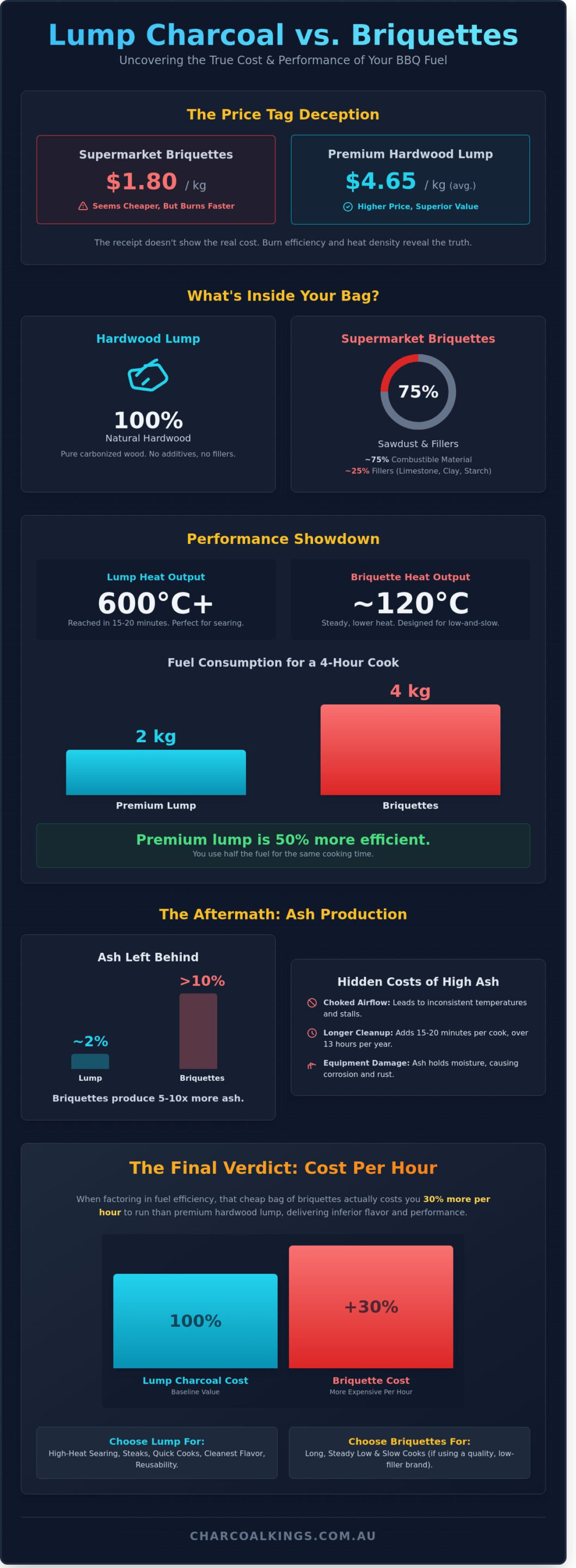
Choosing the right fuel impacts the flavor of the meat and the weight of your wallet. Lump charcoal is 100% natural hardwood carbonized in a kiln without any additives. It’s pure carbon. Briquettes are different; they’re compressed blocks of sawdust and binders designed for a uniform, predictable burn. In 2026, the upfront cost of lump charcoal vs briquettes remains a primary hurdle for many backyard grillers. High-quality Australian hardwood lump often retails between $3.80 and $5.50 per kilogram, while standard briquettes sit closer to $1.80 per kilogram. This price gap exists because lump requires more raw timber and a more intensive carbonization process.
The Manufacturing Difference
Premium hardwood lump undergoes pyrolysis, which involves heating wood to over 450 degrees Celsius in an oxygen-free environment. It takes approximately 3.8 kilograms of raw timber to produce just 1 kilogram of finished lump. Briquettes utilize industrial waste and leftovers. Manufacturers mix sawdust with cornstarch or chemical binders to ensure they hold their shape. This mechanical efficiency lowers the retail price but introduces non-wood elements into your cook.
The “Supermarket Trap”
Cheap $10 bags found in local grocery stores often hide low-quality fillers. These bags can contain up to 22% non-combustible material like limestone, clay, or brown coal. High moisture content also inflates the bag weight. You’re often paying for water that simply turns into steam rather than heat. A BTU (British Thermal Unit) is the standard measure of heat value in fuel. Premium lump delivers significantly higher BTU outputs than filler-heavy briquettes, meaning you use less fuel to reach 300-degree searing temperatures. Get Sizzlin’!
Performance Comparison: Heat Density and Burn Efficiency
Lump charcoal is raw energy. It’s 100% carbonized wood that reaches temperatures exceeding 600°C within 15 to 20 minutes of lighting. This rapid heat spike comes from the irregular, jagged shapes of the coal. These gaps allow oxygen to rush through the fuel bed, feeding the fire with maximum efficiency. In contrast, briquettes are designed for endurance. They provide a steady, lower-intensity heat that stays consistent for hours, though they rarely match the searing power of premium hardwood lump.
High-Heat Searing vs. Low-and-Slow
Lump is the undisputed king for steaks and quick sears. It delivers the intense infrared heat needed for a perfect crust. High-quality natural briquettes have evolved, however. Modern versions now sustain a 110°C to 120°C environment for 12-hour brisket cooks without constant intervention. A major advantage of lump is its “restart” ability. You can shut your vents to kill the oxygen, save the partially burnt pieces, and relight them for your next cook. Briquettes usually turn to dust once extinguished, making the cost of lump charcoal vs briquettes more competitive when you factor in reusability.
Ash Production and Airflow Management
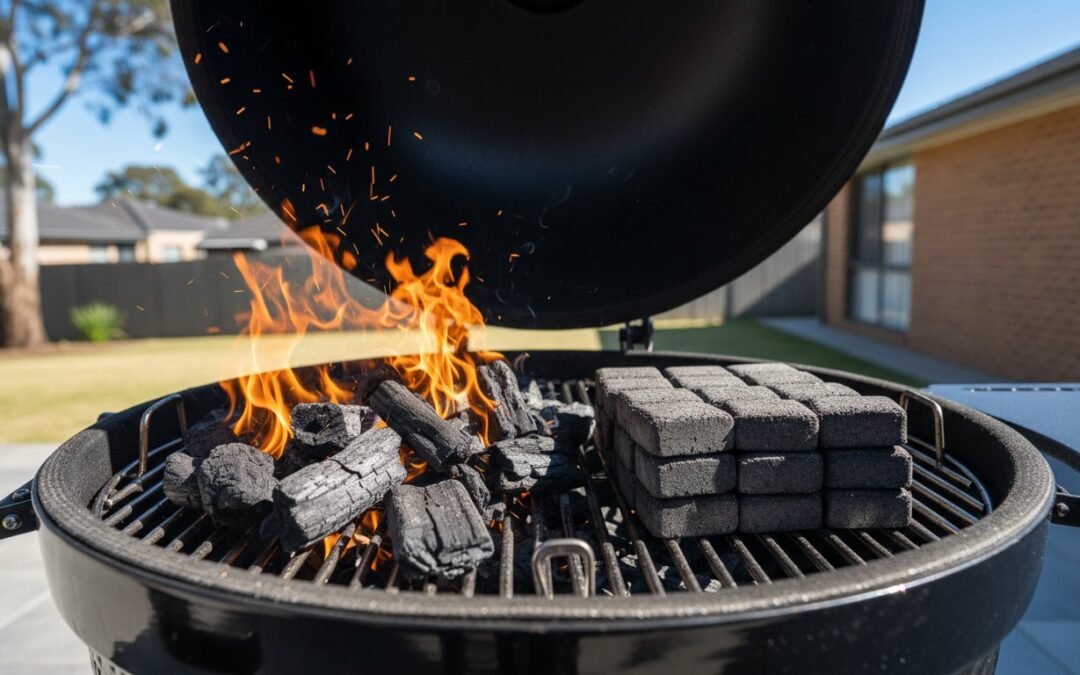
Ash is the enemy of a clean burn. Standard briquettes contain binders and fillers that can produce 10 times more ash than natural lump. While lump charcoal leaves behind roughly 2% of its weight in ash, briquettes can leave up to 10% or more. A thick layer of grey powder acts as an insulator, trapping heat where it isn’t needed and choking the embers. Using premium natural hardwood charcoal keeps the air channels open and the temperature stable.
Debris carries a hidden maintenance cost. Cleaning a ceramic kamado or a large offset smoker takes about 15 to 20 minutes longer when using high-ash fuels. Over a year of weekly grilling, that’s 13+ hours spent shoveling soot. Excessive ash also holds moisture, which can lead to premature corrosion in steel fireboxes and clogs in the delicate air systems of high-end ceramic grills. When calculating the total cost of lump charcoal vs briquettes, your time and equipment longevity are vital variables.
Calculating the Real Cost: Price per Kilo vs. Price per Cook
Don’t let the price tag on a 10kg bag fool you. Professional pitmasters never look at the retail price alone; they focus on yield. For a standard 4-hour BBQ session, you will typically burn through 4kg of budget supermarket briquettes. In contrast, 2kg of premium hardwood lump charcoal handles the same cook with ease. This 50% reduction in fuel volume changes the math on the cost of lump charcoal vs briquettes entirely.
Cheap briquettes contain up to 25% fillers like limestone, starch, and brown coal. You aren’t paying for heat when you buy these; you’re paying for rock and glue that ends up as a mountain of ash in your tray. Pure lump charcoal is 100% carbonized wood. It burns hotter and leaves less than 3% ash residue. High-performance cooks prioritize this energy density because it provides stable temperatures without constant refueling. You want heat, not waste.
The Consumption Formula
To find your true operating cost, weigh your fuel bag before and after a Sunday roast. Divide the weight used by the total hours of cook time to get your “kg per hour” rate. Premium Gidgee lump charcoal can burn up to 40% longer than standard wood char. This density means you spend less time hovering over the air vents and more time prepping the meat. It’s about efficiency, not just the initial spend. Use a digital scale to track these numbers over three cooks to see the pattern.
Reusability: The Secret Value of Lump
Lump charcoal offers a secondary saving that briquettes can’t match. When your cook is finished, shut your grill vents completely to oxygen-starve the fire. High-quality hardwood coals extinguish quickly and remain structurally sound for the next session. You can achieve up to 30% savings by simply relighting the leftover coals from your previous cook. It’s free fuel for your next sear.
Briquettes rarely survive this process. The binders and fillers often cause them to crumble into useless dust once they’ve been heated and extinguished. When calculating the cost of lump charcoal vs briquettes, remember that lump is a multi-use fuel. Stop throwing money away in the ash bucket. Get Sizzlin’!
Value Beyond the Dollar: Flavour, Health, and Australian Hardwoods
Calculating the cost of lump charcoal vs briquettes requires looking past the price tag on the bag. You’re choosing between pure carbonized wood and a manufactured composite. Most commercial briquettes contain coal dust, cornstarch, and chemical accelerants. These binders release a distinct, acrid smell during ignition. Natural lump charcoal is 100% organic timber. It produces a clean, neutral smoke that enhances meat rather than masking it with industrial fumes.
Health considerations are equally vital. When starch and fillers burn, they create significantly more ash; often up to 35% more by volume than lump. This fine dust can coat your food and clog the airflow in your ceramic grill. Choosing a natural fuel source ensures your family isn’t ingesting the byproducts of industrial adhesives. From an environmental perspective, lump charcoal uses renewable timber, whereas briquettes often rely on industrial byproducts and mineral fillers that don’t burn away completely.
The Flavour Premium
Don’t spend $120 on a Wagyu ribeye and then use $10 supermarket fuel. Fuel is an ingredient. High-quality lump acts as a seasoning agent. It provides a subtle, authentic wood smoke that defines professional barbecue. Charcoal Kings lump offers a clean burn that hits temperatures exceeding 500°C. This intense heat creates the perfect Maillard reaction without the chemical aftertaste associated with cheap fillers. While the initial cost of lump charcoal vs briquettes might seem higher, the flavour results are incomparable.
Local Sourcing and Quality Control
Australian hardwoods like Gidgee and Mallee are world-class fuel sources. These timbers are incredibly dense. They burn longer and hotter than softer woods used in overseas imports. Buying local means you get consistent sizing. Cheap bags often contain 25% unusable dust and small fragments. Charcoal Kings Hardwood Lump sets the benchmark for quality by ensuring large, usable pieces in every bag. This reduces waste and gives you better control over your fire box. You aren’t paying for a bag of dust; you’re paying for high-performance fuel.
Ready to upgrade your next cook? Buy premium Australian hardwood charcoal now and Get Sizzlin’!
The Verdict: Which Charcoal is Better Value for You?
Choosing between fuel types comes down to your specific cooking habits and hardware. Casual grillers who fire up a kettle once a month for basic burgers might prefer the lower entry price of briquettes. However, the weekend warrior needs performance that justifies the spend. When evaluating the cost of lump charcoal vs briquettes, lump charcoal wins the long-term battle for efficiency. It reaches temperatures exceeding 1,100 degrees Fahrenheit, while most briquettes peak at 700 degrees. You’ll use approximately 25% less fuel by weight when searing steaks with premium hardwood lump.
- Casual Griller: Stick to briquettes for short, 30-minute cooks where temperature precision isn’t vital.
- Weekend Warrior: Invest in hardwood lump for superior flavor, 70% less ash production, and higher peak heat.
- Long-term Value: Lump charcoal is reusable. If you shut down your vents after a cook, you can relight the remaining pieces next time. Briquettes usually crumble into useless ash.
The Hybrid Method
You don’t have to choose just one fuel. Smart pitmasters use a hybrid approach to maximize value in an offset smoker or a Weber kettle. Lay a base of high-density briquettes to provide a steady, 6-hour thermal floor. Top this base with premium hardwood lump to provide the actual cooking heat and authentic smoky profile. This technique stabilizes the cost of lump charcoal vs briquettes by using cheaper fillers for endurance and premium wood for flavor. It’s the most cost-effective way to run a 12-hour brisket smoke without burning through a $50 bag of specialty fuel.
Get Sizzlin’ with Charcoal Kings
The Charcoal Kings range is built for performance. We stock everything from 12-hour endurance Binchotan to our signature Hardwood Lump. Every product we sell is 100% natural and chemical-free. This isn’t just a health benefit; it’s a value proposition. Many grocery store brands use sawdust and limestone fillers that produce excessive ash and chemical odors. Our fuel is pure energy that burns cleaner and hotter, ensuring every cent you spend goes toward cooking your food, not filling your ash pan. Upgrade your setup and see why professionals choose us.
Ready to experience the difference? Shop the full range of premium fuels at Charcoal Kings and take control of your backyard BBQ today.
Get Sizzlin’!
Master Your Grill Performance in 2026
Choosing the right fuel isn’t just about the initial sticker price. When you analyze the cost of lump charcoal vs briquettes, the real value reveals itself in burn efficiency and heat density. High-quality lump charcoal burns up to 30% hotter than standard briquettes; this means you’ll use less fuel to reach searing temperatures. You’ll also deal with 50% less ash cleanup after your cook. By 2026, serious outdoor cooks are moving away from chemical binders and toward 100% natural solutions. Our charcoal is sourced from 100% Australian hardwoods, providing a reliable 4 hour burn time that keeps your temperature stable. It’s 100% natural and chemical free, which is why it’s trusted by professional pitmasters across the country. Don’t settle for fillers that ruin the flavor of your meat. Get the performance your barbecue deserves with fuel that’s built for professionals. Upgrade to Premium Hardwood Lump at Charcoal Kings and get sizzlin’!
Frequently Asked Questions
Is lump charcoal more expensive than briquettes in Australia?
Lump charcoal costs 40% to 60% more per kilogram than standard briquettes in the Australian market. You’ll typically pay between $3.50 and $5.50 per kg for premium hardwood lump, while supermarket briquettes sit between $1.80 and $2.60 per kg. When calculating the cost of lump charcoal vs briquettes, remember that lump burns hotter and cleaner. This justifies the higher price for cooks seeking professional results and natural flavor.
How much charcoal do I need for a 4-hour BBQ?
You need approximately 3.5kg of charcoal to sustain a consistent 4-hour BBQ session. Using 3kg of high-density Gidgee lump provides intense heat for the first 2 hours, though you might need a small top-up for the final stretch. Standard briquettes require a 4kg initial load to maintain a steady 225 degree Fahrenheit temperature throughout the entire duration. Always keep an extra 2kg bag nearby for unexpected wind or cold weather.
Can you mix lump charcoal and briquettes together?
Mixing lump charcoal and briquettes is an effective way to balance high heat with long burn times. Start your chimney with 1kg of lump charcoal to get the fire roaring quickly, then add 2kg of briquettes to provide a stable 5-hour fuel base. This hybrid method gives you the natural hardwood aroma of lump with the predictable temperature control of compressed fuel. It’s a smart move for long roasting sessions.
Does lump charcoal burn faster than briquettes?
Lump charcoal burns faster than briquettes because it’s less dense and allows more oxygen flow between the irregular pieces. A standard load of lump reaches 700 degrees Celsius in 15 minutes but often exhausts itself within 90 minutes. Briquettes are engineered for endurance, holding a consistent 250 degree temperature for up to 4 hours. Choose lump for quick searing and briquettes for long roasting sessions to maximize your fuel efficiency.
Which charcoal produces the least amount of ash?
Premium hardwood lump charcoal produces the least amount of ash, typically leaving behind less than 3% of its original weight. Because it’s 100% carbonized wood with no additives, there’s very little waste to clog your grill’s air vents. Briquettes contain fillers and binders that result in 10% to 15% ash volume. This heavy residue can choke your fire during 8-hour cooks, requiring you to clear the vents mid-cook.
Is it worth buying expensive charcoal for a basic kettle BBQ?
Buying premium charcoal for a basic kettle BBQ is worth the investment because it improves heat management and food flavor. High-quality fuel reaches 300 degrees Celsius faster than cheap alternatives, saving you 20 minutes of prep time. When comparing the cost of lump charcoal vs briquettes for a kettle, the $10 extra spent on a 10kg bag pays for itself through better searing and the total absence of foul-smelling chemical fillers.
Why does my charcoal smell like chemicals when lighting?
Your charcoal smells like chemicals because it contains synthetic binders, coal dust, or petroleum-based starters. Many mass-produced briquettes use these additives to keep the fuel uniform and easy to light. To avoid this, switch to 100% natural hardwood charcoal which contains zero chemicals. Natural fuel smells only of wood smoke, ensuring your $60 brisket doesn’t end up tasting like a gas station floor. It’s a cleaner way to cook.
How long does a 10kg bag of lump charcoal last?
A 10kg bag of lump charcoal lasts for approximately 5 separate grilling sessions if you’re cooking for a family of four. Most kettle grills require a 2kg load for a standard 2-hour cook. If you use a ceramic Kamado style grill, you can extinguish the coals and reuse them, extending the bag’s life to 8 or 10 uses. This makes professional-grade charcoal more economical than most beginners realize for their weekly Sunday roasts.