
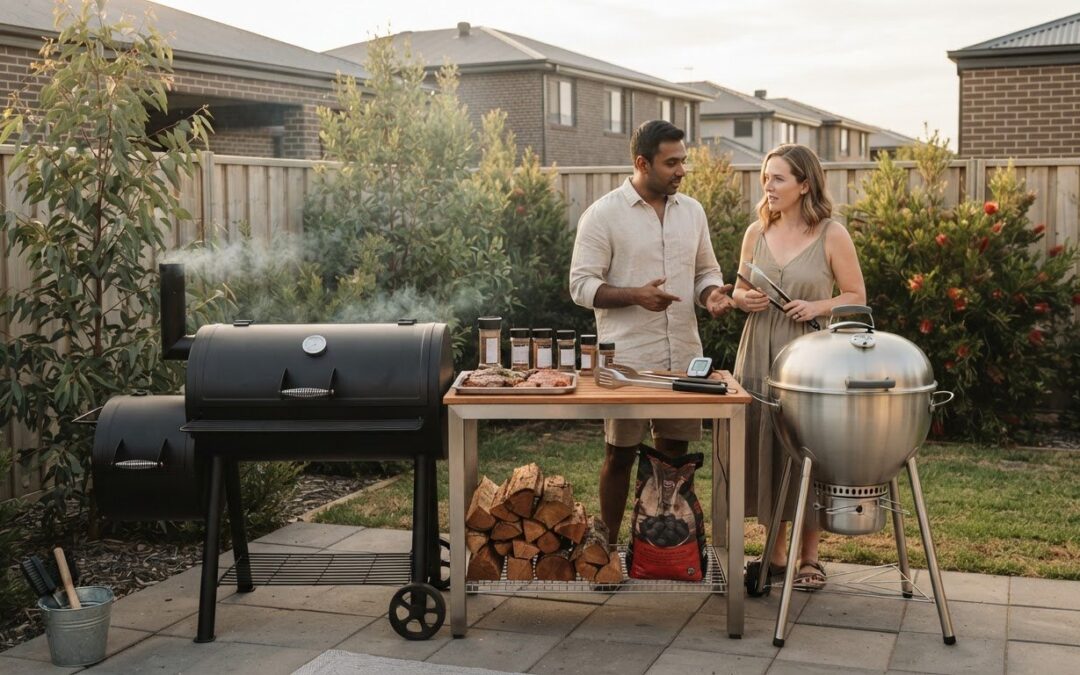
What if the best case for another smoker isn’t more barbecue, but a better way to cook what your current setup can’t handle? If your cooker limits what you can make at once, convincing your partner you need a second smoker starts with showing it has a distinct job, not just a place in the backyard.
It’s fair to consider the downsides. Another smoker takes up space, needs fuel and cleaning, and may sit unused if it doesn’t solve a regular cooking problem. A second unit makes sense when it adds a useful option, such as running a long, low-temperature cook while keeping your existing cooker free for quicker meals or searing.
This guide will help you build a practical, balanced case. You’ll compare a second smoker with upgrading your current one or changing your cooking plan, then map out space, fuel, upkeep and shared responsibilities. The goal is a decision that works for both of you, with clear expectations for how often the new cooker will be used and who will look after it.
Key Takeaways
- Separate real cooking needs from the excitement of owning another cooker, and share examples of when your current setup fell short.
- Use a clear conversation plan for convincing your partner you need a second smoker, while making room for concerns about space, upkeep and household priorities.
- Compare a second smoker with upgrading, adding suitable accessories or planning cooks differently to find the option that best fits your household.
- Agree on a practical plan for placement, storage, safe operation, cleaning, fuel and likely frequency of use.
When does a second smoker solve a real problem?
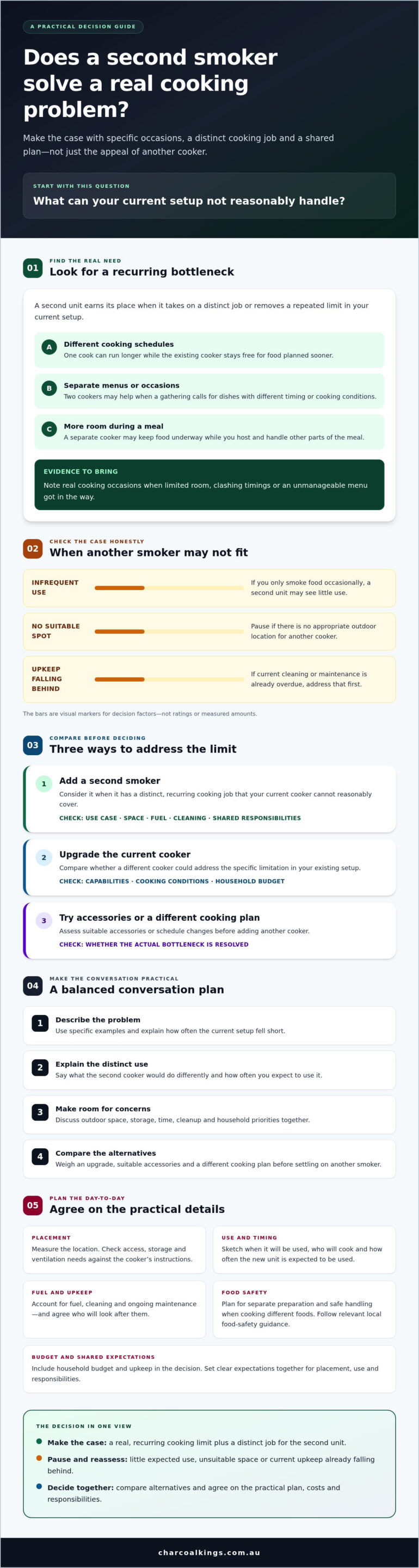
Wanting more cooking capacity doesn’t automatically mean another smoker is necessary. The useful question is whether your current setup repeatedly prevents you from cooking the food you want, when you need it. A second unit should solve a specific, recurring problem, not just add more equipment to the backyard.
A second smoker earns its place when it handles a distinct cooking job or removes a bottleneck your current cooker can’t reasonably solve. That could mean preparing different menus for separate occasions, managing cooks with different timings, or keeping food underway while you host and handle other parts of the meal. The case for convincing your partner you need a second smoker is stronger when you can point to real occasions, not just a hypothetical feast.
The smoking process can involve different methods and cooking conditions. That’s why the right use case depends on the capabilities of both cookers, rather than an assumption that two smokers automatically produce better food or make cooking easier.
Which cooking jobs could a second smoker handle?
Think in terms of timing, temperature and menu. If your equipment allows different cooking conditions, separate units may let you run one dish on a longer schedule while preparing another that needs to be ready sooner. For a household gathering, for example, you might have a larger cut cooking over an extended period while keeping the existing cooker free for food planned for a later serving.
A second smoker may also suit a different style of cook or a separate occasion. Before deciding, check what your current smoker can do and what the proposed unit is designed to handle. Smoker types and setups vary, so don’t assume a particular result without checking the equipment’s instructions and capabilities.
When is another smoker probably unnecessary?
Start with the evidence. Is the current smoker actually limiting capacity, delaying meals or stopping you from making food your household enjoys? If the answer is mostly no, more equipment may not address a genuine need.
- Use: If you only cook on the smoker occasionally, a second unit may see little action.
- Space: If there isn’t a suitable outdoor spot, pause before considering another cooker.
- Upkeep: If cleaning or maintenance of the current smoker is already falling behind, resolve that first.
Keep a simple record of cooking occasions and note where the current setup fell short: limited room, clashing timings or a menu you couldn’t manage. A practical record helps distinguish a recurring bottleneck from enthusiasm for something new, and gives you a grounded starting point for the conversation.
How to make the case for a second smoker without overselling it
A productive conversation starts with the household problem, not a model or shopping list. For convincing your partner you need a second smoker, bring specific examples of when the current setup didn’t work for your plans. Perhaps a family meal required dishes with conflicting schedules, or the cooker was already occupied when you wanted to prepare something else. Separate those observations from the simple appeal of owning another piece of BBQ equipment.
Use this conversation plan:
- Identify the problem. Describe what happened and how often, rather than relying on “we need more room.”
- Explain the use case. Say what the second cooker would do differently and how often you expect to use it.
- Hear their concerns. Give your partner room to raise questions about outdoor space, storage, time, cleanup and household priorities.
- Compare options. Consider an upgrade, suitable accessories or a different cooking plan before settling on another smoker.
Account for household budget and upkeep before comparing features. A broader BBQ buying guide can help you think through equipment considerations, but your household’s needs should lead the decision.
How do you answer concerns about space, time, and use?
Measure the proposed location and check access, storage and ventilation needs against the instructions for any shortlisted cooker. Don’t assume every smoker has the same setup requirements. Then sketch a realistic schedule: who will cook, when the smoker will be used, and who will clean it afterward. If cooking different foods is part of the plan, account for their separate preparation and safe-handling needs. The University of Nebraska-Lincoln Extension offers a reference on safe cooking temperatures; Australian readers should also follow relevant local food-safety guidance.
A trial can make the idea easier to assess. Agree on a set of planned cooking occasions using the existing setup first. Record when it falls short and whether another cooker would have made a practical difference. This tests the need before you commit space and time to another unit.
How can you frame the request as a shared decision?
Ask what would make the purchase worthwhile, and what would make it unacceptable. Discuss concerns directly instead of treating them as objections to overcome. You might agree that the idea only moves forward if there’s a suitable location, a clear division of cleaning duties and a realistic plan for regular use. If those conditions can’t be met, waiting or choosing another option is a fair outcome.
Once you’ve agreed on what you need, explore Charcoal Kings’ BBQ and smoker range together. Compare suitable options against your shared requirements, not just the most appealing features.
Second smoker, upgrade, or accessories: which option fits?
The right choice depends on the actual bottleneck. More equipment won’t automatically improve every cook, and a second smoker may add space and upkeep without fixing the problem. Before making the case, compare what each option would change in your household’s routine.
| Option | Capacity and flexibility | Space and upkeep | Likely fit |
|---|---|---|---|
| Add a second smoker | Adds cooking capacity and may allow separate cooking tasks, depending on the equipment. | Needs another suitable location, storage, fuel and cleaning routine. | Best considered when the current cooker regularly creates a distinct bottleneck and you expect to use both. |
| Replace or upgrade the current unit | A single replacement may address limitations in the current unit’s capacity or capabilities. | Uses the existing cooking area, but involves replacing rather than adding equipment. | Worth assessing when the current unit itself is the source of frustration. |
| Add suitable accessories | May improve organisation or support a specific cooking task if compatible with your equipment. | Usually requires storage and care for the accessories, not a second cooker. | Consider when a particular accessory could address the issue without additional cooking capacity. |
| Plan cooks differently | Changes scheduling and serving plans without increasing equipment capacity. | Doesn’t require another cooking footprint, though it may require more coordination. | A sensible first test when the problem is occasional or mostly about timing. |
When does an upgrade make more sense than a second smoker?
Look closely at the current unit’s condition, capacity and limitations. If the main frustration comes from one cooker being poorly suited to the cooking you routinely do, replacing it may address the underlying issue more directly than adding a second. Consider whether one replacement could serve the needs you’ve been trying to cover with separate cooking plans. Compare the practical requirements of each option, but don’t assume an upgrade will cost less; that depends on the equipment and your situation.
Could better fuel, wood, or accessories solve the problem?
First identify what’s actually going wrong. A problem with fuel selection, smoke flavour or cooking organisation is different from a shortage of cooking capacity. Charcoal type and setup can affect how you manage a cook, while compatible accessories may support a particular task. Neither necessarily creates more room for food, so confirm the limitation before choosing a fix.
If charcoal is part of your setup, review this charcoal fuelling guide to understand fuel considerations. If you need to strengthen your basic technique first, barbecuing with charcoal offers a useful starting point.
In short: Choose a second smoker for recurring capacity or task conflicts, an upgrade when the current unit is the issue, accessories for a compatible, specific need, and better planning when the bottleneck is occasional. That’s a grounded basis for convincing your partner you need a second smoker, or for agreeing that another option fits better.
Make a practical second-smoker plan your partner can assess
A clear plan turns the idea into a shared household decision. It won’t remove every concern, but it shows you’ve considered the space, work and safe operation involved, not just the cooking possibilities. This makes convincing your partner you need a second smoker a more practical conversation.
What should you check before choosing another smoker?
Use this checklist to assess the setup before choosing a cooker. Requirements vary, so check the instructions for each smoker you consider rather than assuming all units work alike.
- Location: Measure the outdoor area and allow for the clearances specified by the manufacturer. Consider access for cooking and cleaning.
- Storage: Decide where the smoker and its accessories will be kept when not in use, and whether that spot is practical.
- Safe operation: Review product-specific setup, ventilation and operating instructions. Check current local council or fire-safety guidance that may apply to your area and intended use.
- Cooking style and fuel: Confirm the smoker suits the cooking tasks you have in mind, and identify its fuel requirements before deciding how you’ll store and replenish fuel.
- Cleaning and care: Read the care instructions and agree who will handle cleaning after cooks and routine upkeep.
- Frequency: List the meals or occasions you realistically expect to use it for, rather than relying on an optimistic estimate.
Discuss responsibilities before the smoker arrives. Be specific about who will handle setup, cleaning and routine care. If one person expects to operate it while the other takes on all the cleanup, the arrangement may not feel fair. Agree on a division that works with both partners’ routines.
How can a trial plan make the decision easier?
Set an agreed review period and list the meals or occasions a second unit would support. For each planned use, record whether it happened, how much preparation and cleaning it involved, and whether it solved the original cooking problem. A simple shared note is enough.
Agree in advance to review the results together. If the smoker is used less than expected, or the setup creates more work than it solves, be open to changing the plan. The trial isn’t a guarantee that every concern will disappear. It’s a way to base the decision on your household’s actual cooking habits.
Once you’ve agreed on the requirements and responsibilities, explore BBQ and smoker options that fit your plan.
Explore smoker options together and agree on the next step
Now you can judge the idea against a shared set of criteria. A second smoker is worth considering if it has a distinct cooking job, fits your available outdoor space, comes with responsibilities you’re both comfortable sharing, and is likely to be used regularly. It isn’t the automatic answer for every BBQ enthusiast. If one of those conditions doesn’t hold, waiting, upgrading or adjusting your cooking plans may be a better fit.
What should you compare when browsing smokers?
Keep the shortlist manageable. For each option, check the current specifications and availability directly, then compare it against the needs you’ve agreed on:
- Cooking capacity and intended use: Does it address the specific meal, timing or capacity issue you identified?
- Space: Will it fit the planned location and storage area, with setup requirements met?
- Fuel: Confirm what the smoker requires and whether that suits your preferred way of cooking.
- Care: Review cleaning and maintenance instructions, then consider who will take responsibility.
- Expected use: Can you name the occasions when you’re likely to use this cooker, beyond the first few cooks?
Look at categories rather than getting attached to a particular feature too soon. Charcoal Kings offers BBQ smokers, charcoal, smoking woods and BBQ accessories, but check current product details before relying on a specific specification or availability. A small, carefully chosen shortlist makes it easier for both partners to compare like with like.
What is a fair agreement if you decide to buy?
Before making a decision, agree on where the smoker will go, where it will be stored, and who will handle setup, cleaning and routine care. Set a realistic expectation for how often it will be used. Then choose a date to review whether it solved the cooking problem you set out to fix. If it hasn’t been used as planned, discuss why and decide together what to do next.
The final call should be joint. You might decide to proceed, wait or choose another solution. That’s a fair outcome, not a failed pitch. The point of convincing your partner you need a second smoker is to reach an informed decision together, not to win an argument.
Once you’ve agreed on your criteria, browse the BBQ and smoker range together and compare the options against your plan.
Make the next BBQ decision together
A second smoker makes sense when it solves a distinct cooking problem, fits your outdoor space and comes with responsibilities you’re both prepared to share. If the issue is your current cooker’s limitations, an upgrade may be a better fit. If the bottleneck is occasional, accessories or a different cooking plan could be enough.
The strongest case for convincing your partner you need a second smoker is a practical one: show how often you’ll use it, what job it will handle, and how you’ll manage fuel, storage and upkeep together. Keep the decision open. Agreeing to wait or choose another option is still a useful outcome if it better suits your household.
When you’re ready to compare equipment and fuel together, explore options from Charcoal Kings, an Australian-based supplier of smokers, grills, charcoal and smoking woods. Browse the BBQ and smoker range and assess the available choices against the needs you’ve agreed on. A thoughtful plan makes for a better purchase, and a better cook when it’s time to fire up.
Frequently Asked Questions
How do I convince my partner a second smoker is worth considering?
Show how another smoker would solve a recurring cooking problem, rather than arguing from enthusiasm alone. Bring specific examples, such as occasions when the current cooker couldn’t handle the menu or timing you wanted. Then discuss space, fuel, cleaning, expected use and who will manage the upkeep. Compare a second unit with upgrading or changing your cooking plan. The aim of convincing your partner you need a second smoker is a fair joint decision, not winning an argument.
Is a second smoker worth it for a home cook?
A second smoker can be worthwhile for a home cook if it has a distinct job and you’ll use it often enough to justify the space and care. For example, it may suit a household that regularly cooks different menus or needs to manage separate cooking schedules. If you only smoke food occasionally, or your current unit meets your needs, another cooker may add more maintenance than value. Consider your actual habits before deciding.
Can one smoker cook different foods at the same time?
Sometimes, depending on the smoker’s capacity, layout and the foods being prepared. A single cooking chamber generally means the foods share the same cooking environment, so it may not suit items that need different conditions or schedules. Also consider flavour transfer, space between items and safe handling. Check the smoker’s instructions and plan the cook around the requirements of each food. If those needs conflict, separate cookers may offer more flexibility.
How much space do you need for a second smoker?
There’s no single space requirement for every smoker. Measure the intended outdoor location and compare it with the specific unit’s dimensions and manufacturer instructions, including any recommended clearances for safe operation. Allow for access while cooking and cleaning, plus a suitable storage spot when the smoker isn’t in use. Check local guidance that may apply to your property. If you can’t identify a safe, practical location, pause before choosing another cooker.
What is better: buying a second smoker or upgrading the one you have?
Choose based on what is limiting your cooks. A second smoker may fit if you need two separate cooking setups for recurring tasks. Replacing or upgrading the current unit may be more suitable if its condition, capacity or capabilities are the main frustration. If the issue is occasional, better organisation or a change to your cooking schedule may be enough. Compare space, care requirements and intended use rather than assuming either option is automatically better.
How can we decide whether a second smoker will actually get used?
Before buying, list the specific meals and occasions when you expect to use it. Track how often those situations arise and whether the current cooker falls short. You can also test your planned cooking schedule with the equipment you already have. Agree on a date to review the plan together, then compare expected use with what actually happened. If the need proves occasional or another approach works, reconsider whether an additional smoker is justified.
What should I discuss with my partner before buying another smoker?
Discuss the reason for buying, where the smoker will go, where it will be stored and how often you expect to use it. Agree on who will handle setup, cleaning, routine care and fuel management. Review the equipment’s instructions and check any relevant local operating or fire-safety guidance. Make room for concerns about household priorities and decide together what would make the purchase worthwhile. Waiting or choosing another option should remain on the table.