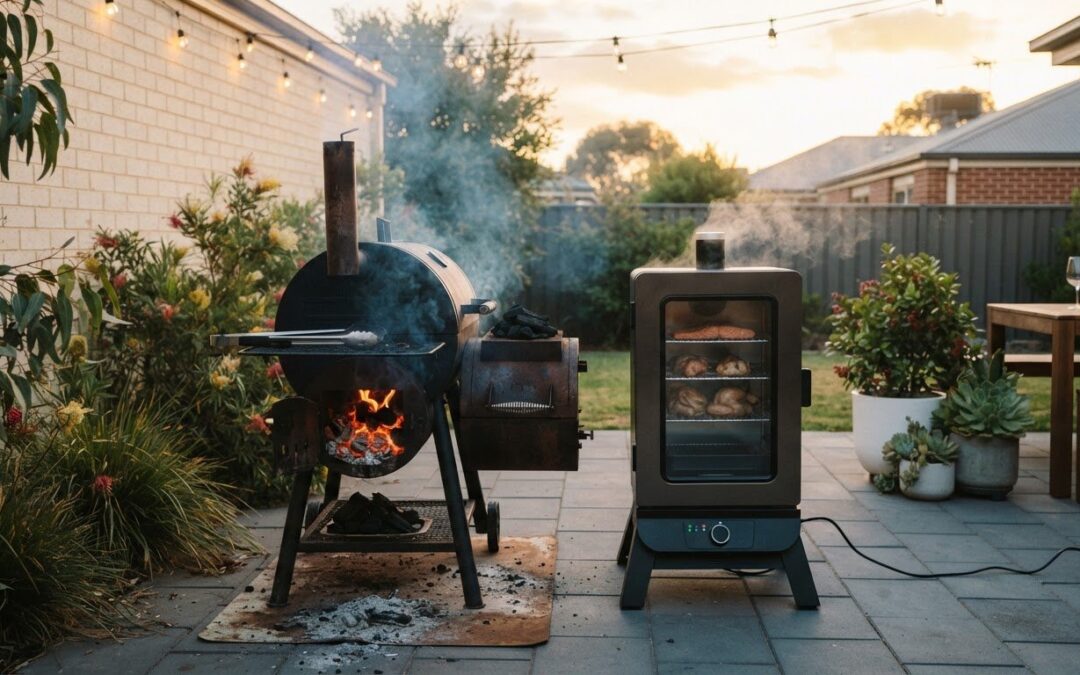
The smoker that asks less of you during a cook isn’t always the one that fits your routine best. The charcoal vs electric smoker convenience comparison comes down to how you want to spend your time: tending airflow and fuel for live-fire cooking, or setting a temperature and checking in less often.
It’s easy to assume electric means effortless and charcoal means constant work. In practice, convenience depends on your schedule, how much temperature control you want and whether managing a fire is part of the appeal. Flavour matters too. Charcoal can deliver a deeper, more complex smoke, while electric smokers offer a different smoke profile with less hands-on fire management.
This guide compares the everyday demands of both options, from setup and temperature management to fuel or power needs and cleanup. You’ll see where charcoal asks for more attention, how electric can fit a lower-fuss routine, and what each means for flavour. The aim is to help you choose based on how you cook, whether you value live-fire control or a steadier, more hands-off session.
Key Takeaways
- Convenience includes setup, temperature tending and cleanup, not just how quickly a smoker starts.
- Electric controls can reduce fire management, but features and ease of use vary by model.
- Charcoal vs electric smoker convenience depends on your schedule, preferred flavour and appetite for hands-on cooking.
- Consider how fuel, smoking wood and your cleanup routine shape the effort of each cook.
- A planned charcoal routine can make live-fire smoking easier to fit around your day.
Charcoal vs electric smoker convenience: what does “easy to use” really mean?
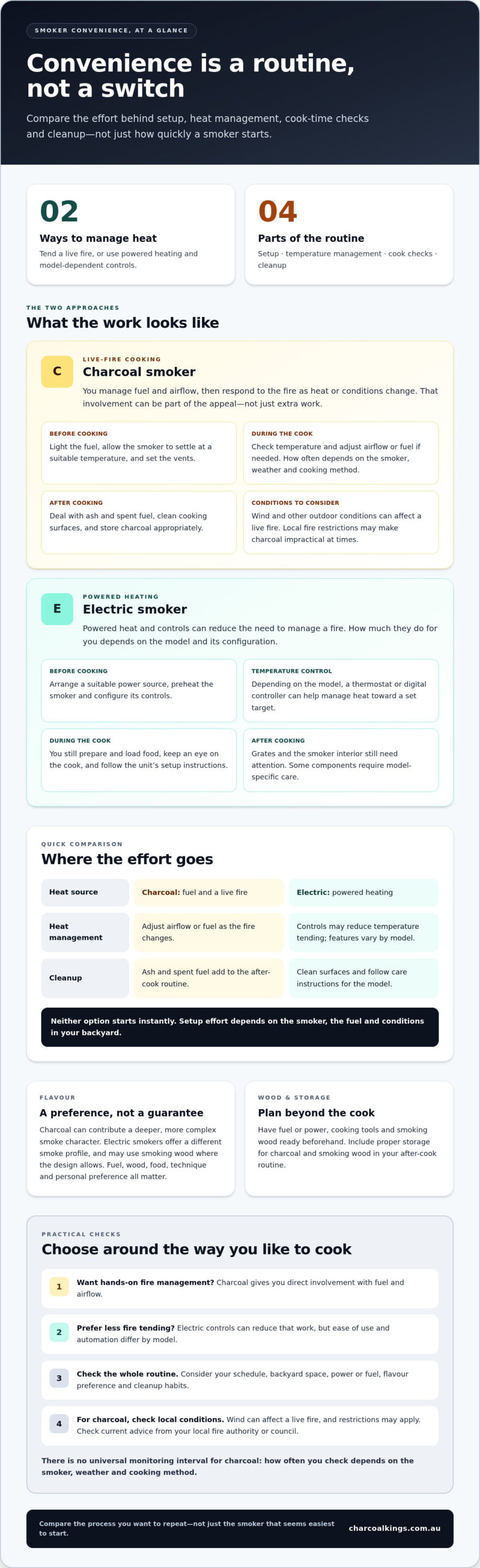
Convenience isn’t a single feature. It’s the effort involved from getting ready to smoke through to putting the gear away: setup, fuel or power, temperature management, tending during the cook and cleanup afterwards. A smoker that’s simple to start may still need regular attention, while one that holds a steady temperature may take more effort to clean.
For an Australian backyard, the practical choice depends on your space, schedule and appetite for managing a fire. Electric smokers use powered heat and controls that can reduce temperature tending. Charcoal smokers rely on a live fire, so you manage fuel and airflow. Neither approach is automatically better. Convenience is separate from flavour, cooking quality and control: some cooks enjoy hands-on fire management, while others would rather spend less time adjusting heat.
For a visual look at smoker styles and their practical differences, watch this overview:
Which parts of smoking take the most time and attention?
Think of the cook in stages. Lighting charcoal and bringing a smoker to temperature are setup tasks. An electric model also needs preheating and its controls set. These steps happen before the longer cooking period, so a quick start doesn’t necessarily mean less effort overall. Before you begin, have your fuel or power source, cooking tools and smoking wood ready.
During the cook, occasional checks are different from continuous tending. A charcoal smoker may need you to monitor temperature and adjust airflow or fuel as conditions change. Electric controls can reduce that work, though how much depends on the model. The job isn’t finished when the food comes off, either. Ash, cooking surfaces and accessories need attention, and charcoal needs suitable storage between cooks.
What is the basic difference between charcoal and electric smokers?
Charcoal smoking is live-fire cooking. You add fuel, manage airflow and respond to the fire to guide heat. Choosing a fuel that suits your smoker and cooking routine can make preparation more manageable, but charcoal still asks for active oversight. That involvement may be a pleasure for someone who enjoys tending a fire, not a drawback.
An electric smoker uses powered heating, with controls that vary by design and configuration. Some models offer thermostat or digital settings; automation and ease of adjustment aren’t identical across all smokers. In the charcoal vs electric smoker convenience comparison, focus on the routine each creates: how much control you want during the cook, and how much attention you’re willing to give it.
Setup and temperature control: when is charcoal or electric smoking easier?
Setup is where the difference becomes practical. A charcoal smoker needs fuel lit and airflow set before cooking; an electric smoker needs power, preheating and its controls configured. Neither starts cooking instantly, and the work involved depends on the smoker’s design, the fuel and conditions in your backyard.
For charcoal, temperature control is a skill you can learn through practice. Airflow influences how the fire behaves, and adjustments help you respond to changing conditions. That calls for attention, but it isn’t automatically difficult or unpredictable. In the charcoal vs electric smoker convenience comparison, the real distinction is how you prefer to manage heat: by tending a fire or using powered controls.
How much attention does a charcoal smoker need?
Start by lighting the fuel and allowing the fire and smoker to settle at a suitable cooking temperature. Set the vents to regulate airflow, then make adjustments if the temperature shifts or the fuel needs attention. How often you check depends on the smoker, weather and cooking method, so there’s no reliable universal monitoring interval.
Wind and other outdoor conditions can affect a live fire. Local fire restrictions can also make charcoal use impractical at times. Check current advice from your local fire authority or council before lighting, as guidance may depend on conditions in your area. This Australian fire-condition reference offers additional context.
Does an electric smoker manage temperature for you?
Powered heating can reduce the need to regulate a fire. Depending on the model, a thermostat or digital controller lets you set a target temperature and helps manage heat. Controls and automation vary, though, so “electric” doesn’t guarantee identical operation or remote monitoring across every smoker.
You still prepare the food, load the smoker and keep an eye on the cook. You’ll also need a suitable power source and should follow the unit’s setup instructions. If you prefer live-fire cooking, choosing charcoal suited to your smoker and routine can make preparation more manageable. Explore charcoal fuel options as part of planning a setup that fits your backyard routine.
Flavour, cleanup and daily use: which smoker suits your priorities?
Flavour is part of the routine, but no smoker guarantees a particular result. Charcoal and smoking wood contribute to a live-fire smoke character; electric smokers can also use smoking wood where their design allows. The final flavour depends on the fuel, wood, food and technique, as well as personal preference. Choose the process you enjoy, rather than expecting one method to always taste better.
Daily upkeep differs too. Charcoal leaves ash and spent fuel to handle, while either type requires attention to grates and the smoker interior. Electric models may have components that need model-specific care. Follow the manufacturer’s cleaning instructions, and include storing charcoal and smoking wood properly in your after-cook routine. For additional background on smoker use, see this smoking reference.
| Priority | Charcoal smoker | Electric smoker |
|---|---|---|
| Flavour preference | Live-fire character shaped by charcoal, smoking wood and technique. | A different smoke profile; wood can be used where the model supports it. |
| Supervision | Requires attention to fire, fuel and airflow. | Powered heat may reduce fire tending, but the cook still needs oversight. |
| Cleanup | Includes ash and spent-fuel handling, as well as cooking surfaces. | Includes grates and interior; care for components varies by model. |
| Cooking routine | Fits cooks who enjoy managing live fire as part of the session. | Fits cooks who prefer powered heat control and a different tending routine. |
Does charcoal or electric smoking deliver better flavour?
There’s no universal winner. Charcoal lets you shape the fire alongside your choice of smoking wood, while electric smokers separate powered heating from the smoke source. The wood and fuel available to each smoker, the food being cooked and the cook’s technique all affect the result. Decide which flavour profile and process you prefer, then assess convenience around that choice.
Which smoker is easier to clean and maintain?
Charcoal cleanup includes dealing with ash and leftover fuel; electric cleanup focuses on cooking surfaces and the smoker interior, with component care determined by the model. Both need routine cleaning. Store charcoal and smoking wood appropriately between cooks, and use the manufacturer’s instructions to guide maintenance. A practical charcoal vs electric smoker convenience comparison includes this after-cook work, not just time beside the smoker.
If live-fire cooking suits your routine, choosing fuel that fits your smoker can make preparation more straightforward. Explore charcoal fuel options as you plan your setup.
How to choose the more convenient smoker for your cooking habits
Choose by your routine, not by the word “convenient” on a feature list. Use this sequence to narrow it down:
- Start with your available time. If you want less fire management during a cook, prioritise the powered heat controls of an electric smoker. If preparation and tending are part of the enjoyment, charcoal may suit you better.
- Decide what flavour and process you prefer. Consider whether you want to work with live fire and charcoal, or use a smoker with a separate powered heat source.
- Check your setup. Think about outdoor space, access to power and where you’ll store fuel and accessories.
- Factor in your cooking pattern. For frequent cooks scheduled around a tight window, choose the controls and level of supervision you’re comfortable managing. Neither type removes the need to monitor food and follow safe cooking practices.
For charcoal, local fire conditions matter too. Restrictions can affect whether live-fire cooking is practical, so check current local advice before each cook. The most convenient smoker is the one that fits your space, schedule and preferred level of involvement.
When does charcoal fit a more hands-on BBQ routine?
Charcoal suits cooks who enjoy building a fire and shaping the session as it develops. Lighting, arranging fuel and managing airflow become part of the experience, rather than tasks to avoid. Hardwood lump charcoal and charcoal briquettes are distinct fuel categories, and the right choice depends on your smoker and cooking approach. Understanding the basics helps you plan fuel before cooking starts.
Use the charcoal and BBQ fuelling guide to get familiar with fuel fundamentals before settling into a charcoal routine.
When might an electric smoker fit a simpler routine?
An electric smoker may suit you if you prioritise powered heat control and less fire management, especially when you want a more predictable setup around other plans. Compare the controls on the specific model, make sure you have practical access to power, and account for its cleaning needs. Convenience doesn’t mean leaving the cook unchecked. Keep an eye on the food and follow safe cooking guidance.
The charcoal vs electric smoker convenience decision comes down to which work you’d rather do. If live-fire cooking is your preference, explore charcoal and smoker options to plan a setup around the way you cook.
Make charcoal smoking more manageable with the right fuel and routine
Electric smokers prioritise powered heat control, while charcoal smokers make live-fire cooking part of the job. If you enjoy working with a fire, a little preparation can make charcoal smoking easier to plan around a busy day. A consistent routine won’t remove the hands-on element, but it can make setup and cleanup more familiar from cook to cook.
Build a repeatable charcoal-smoking routine
Before lighting, gather the charcoal, smoking wood and cooking equipment you’ll need. Check the smoker’s instructions, prepare your cooking area and think through cleanup before the session starts. After cooking, return fuel storage and ash handling to the same routine each time. These small habits reduce last-minute searching and help you plan the full session, not just the time the food spends smoking.
Outdoor conditions matter. Follow current local fire guidance and your smoker’s instructions before use. For practical pointers on handling a charcoal BBQ, read the beginner’s guide to barbecuing with charcoal.
Choose fuel that suits the cook
Hardwood lump charcoal, charcoal briquettes and Binchotan are separate fuel categories. Don’t assume they’re interchangeable in every smoker or cooking plan. Use the fuel recommended for your smoker and consider how you want to manage the cook. Avoid choosing on an assumed burn time alone; fuel performance depends on the product and setup, so follow its guidance rather than relying on a general claim.
Set out the fuel you’ll use before lighting, and store it appropriately between sessions. Pairing a suitable fuel with a familiar setup can make live-fire cooking easier to fit into your routine. The charcoal vs electric smoker convenience decision still comes down to your priorities: powered heat control with less fire management, or the involvement of tending charcoal.
If live-fire cooking is your preference, explore Charcoal Kings’ hardwood lump charcoal as one option for your next cook.
Choose the smoker that fits the way you cook
The charcoal vs electric smoker convenience choice comes down to the routine you want. Electric models prioritise powered heat control and can reduce fire tending, while charcoal asks for more hands-on attention in exchange for the live-fire process. Neither automatically delivers better flavour or easier cleanup; fuel, smoking wood, smoker design and your habits all play a part.
Consider the whole cook, from setup and temperature checks to ash, surfaces and fuel storage. If managing a fire sounds like part of the fun, a planned routine and suitable charcoal can make it easier to work into your schedule. If you’d rather limit fire management, compare electric smokers’ controls and power needs with your setup.
Charcoal Kings is an Australian-based supplier of BBQ charcoal and fuels, with hardwood lump charcoal, briquettes and Binchotan, as well as smokers, smoking woods and BBQ accessories. Explore hardwood lump charcoal for your next live-fire cook, and build a smoking routine that suits your backyard and your appetite for hands-on BBQ.
Frequently Asked Questions
Is a charcoal smoker more difficult to use than an electric smoker?
A charcoal smoker usually needs more hands-on attention because you light the fuel and manage airflow. An electric smoker uses powered heat and may have model-specific temperature controls. Neither is automatically difficult: the better fit depends on your experience, setup and comfort with tending a fire. Smoker design and outdoor conditions also affect the work involved, so compare the complete routine rather than judging by fuel type alone.
Can an electric smoker produce a smoky flavour?
Yes, an electric smoker can produce smoky flavour, and many models are designed to use smoking wood. The type and format of wood supported depend on the smoker’s design. Charcoal can add live-fire character and may be paired with smoking wood, too. Neither method guarantees a particular result: the smoker, fuel, wood, food and technique all shape the flavour, along with your personal preference.
Which smoker is easier to leave unattended?
Electric smokers may reduce the need to tend a fire if their controls manage heat, but you should still monitor the cook appropriately and follow the manufacturer’s instructions. Charcoal smokers generally need attention to airflow and fuel. Neither type should be assumed safe to leave unattended in every situation. Equipment, placement, weather and other conditions affect how closely you need to supervise a cook.
Does a charcoal smoker take longer to set up than an electric smoker?
Not always, but setup involves different steps. Charcoal needs to be lit and brought to a suitable cooking state before food goes on. An electric smoker needs power and preheating, with controls that vary by model. Your experience, equipment and conditions all affect preparation time. Compare the full routine, including fuel or power setup, rather than relying on a fixed time estimate.
Is an electric smoker cheaper to run than a charcoal smoker?
There’s no reliable universal answer without comparing similar cooks. Running costs depend on electricity use, charcoal consumption, cook duration, and current local energy and fuel prices. For a practical comparison, record the electricity or fuel used across cooks of similar length and style. Then weigh those costs against the time, flavour and level of hands-on attention you value in your smoking routine.
What is easier to clean, a charcoal or electric smoker?
Cleanup depends on the smoker’s construction and how it’s used. Charcoal smokers require ash and leftover-fuel handling, while both types need their cooking surfaces and interiors cleaned. Electric models may have components with specific care requirements. Follow the manufacturer’s maintenance instructions, and compare cleanup after similar cooks. Fuel type matters, but the design and condition of the smoker can make a difference too.
Can I use a charcoal smoker in my Australian backyard during fire season?
It depends on current conditions and restrictions in your location, which can change with fire danger. Before lighting, check current official guidance from your local and state authorities, and follow the smoker manufacturer’s safety instructions. If conditions don’t permit charcoal use, an electric smoker may suit that cook, but it still needs to be operated safely according to its instructions and local guidance.