You have invited the crew over for a weekend cookout, the steaks are seasoned, and you have poured out a fresh pile of premium Binchotan. You strike the match, but instead of a clean ignition, you are met with thick, acrid smoke and coals that simply refuse to catch. It’s a frustrating scenario that ruins the rhythm of a great barbecue and wastes expensive fuel. Most Australian pitmasters agree that moisture is the silent killer of a perfect fire. When your hardwood absorbs humidity, it loses its ability to reach those searing temperatures required for a proper crust.
Finding the right charcoal storage solutions is the only way to safeguard your premium fuel from degradation and ensure a reliable, high-heat burn. We will show you exactly how to keep your lump charcoal bone-dry and your BBQ area organized. This guide breaks down the best methods to stop the sparking, eliminate the mess in your garage, and get the most out of every bag you buy. Get sizzlin’ with a fire that starts fast and burns clean every single time.
Key Takeaways
- Understand why moisture is the ultimate enemy of premium fuel and how to prevent the heavy smoke and sparking caused by damp coals.
- Discover the best charcoal storage solutions for your setup, from airtight heavy-duty bins to managing rust-prone metal drums in coastal Australian regions.
- Learn specific protection strategies for lump charcoal, briquettes, and Binchotan to maintain their structural integrity and ensure high heat output.
- Navigate the unique challenges of the Australian climate by mastering storage techniques designed for tropical humidity and corrosive salt air.
- Master the “Dry Run” technique to ensure your fuel lights 50% faster for a clean, consistent burn every time you get sizzlin’.
Why Moisture is the Enemy of Premium Charcoal
Understanding What is charcoal involves recognizing its incredibly porous structure. Premium hardwood charcoal acts like a carbon sponge. It naturally pulls moisture from the Australian air. This physical process is the primary reason why effective charcoal storage solutions are vital for any serious pitmaster. When fuel sits in a garage or shed without protection, it loses its ability to provide a clean, consistent burn.
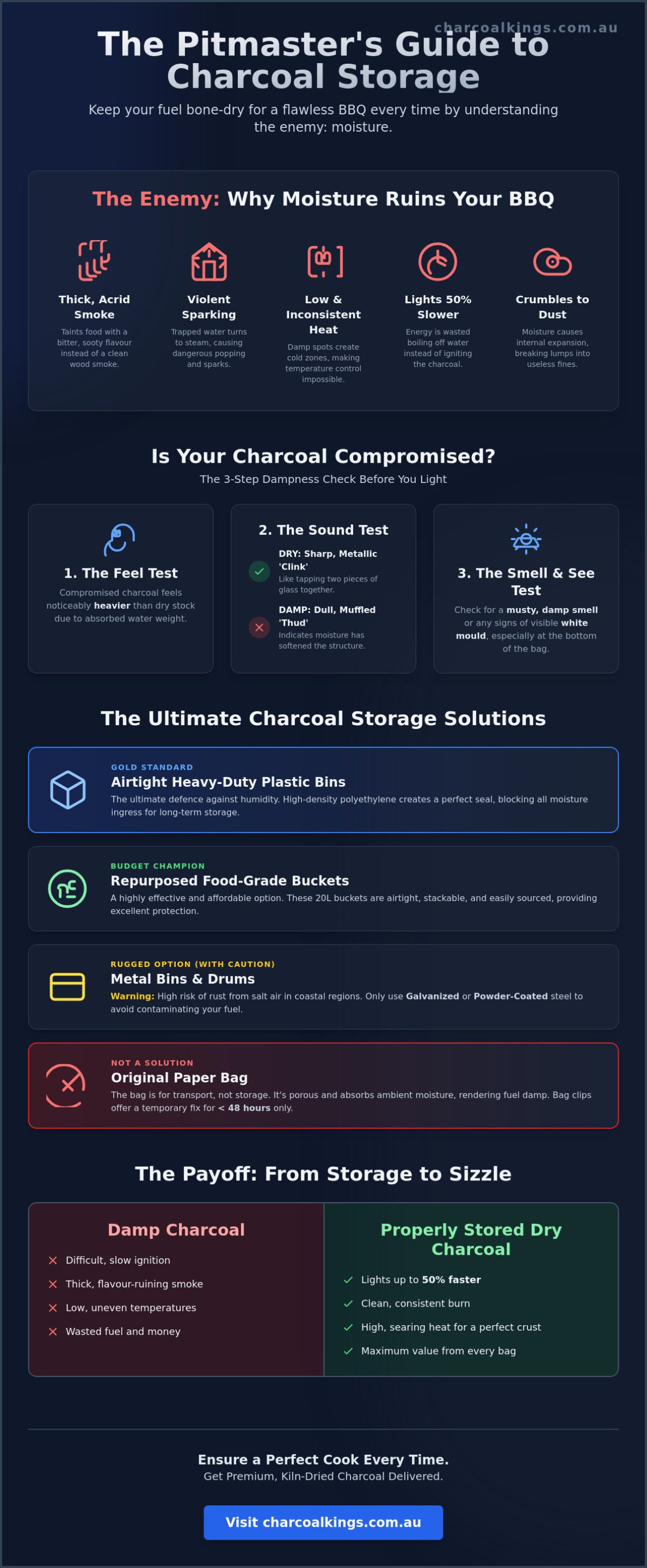
Damp charcoal doesn’t just struggle to light. It becomes a liability during the ignition phase. Water trapped inside the pores turns to steam rapidly when heated, causing the charcoal to spark violently and pop. This process produces thick, acrid white smoke that taints the flavour of your meat with bitter soot. In high-humidity regions like coastal Queensland or Northern New South Wales, where humidity levels often exceed 75 percent, unprotected charcoal can become unusable in just a few weeks.
To better understand this concept, watch this helpful video:
Wet fuel creates “cold spots” throughout your fire bed. While dry pieces might burn at 350°C, damp pieces struggle to stay lit, dragging down the overall temperature of the grill. This variance makes 12 hour low and slow cooks nearly impossible to regulate. 100% natural hardwood is particularly sensitive. Unlike cheap briquettes that use chemical binders to hold their shape, premium natural charcoal is purely carbonized wood. It lacks the artificial coatings that might otherwise slow down moisture absorption.
The Science of Charcoal Degradation
Hygroscopy in carbonized wood refers to the material’s physical property of attracting and holding water molecules from the surrounding atmosphere. When moisture enters these microscopic pores, it causes internal expansion and stress. This leads to structural crumbling where your premium lumps break down into useless dust and fines. While high-density Australian hardwoods like Gidgee offer more resistance than lighter timbers, they’ll still degrade if left in a damp environment.
Signs Your Charcoal Has Been Compromised
You can identify damp fuel before you even strike a match. Compromised charcoal feels noticeably heavier than dry stock. It also fails the “clinking” test. High-quality, dry lump charcoal should produce a sharp, metallic sound, similar to glass hitting glass, when two pieces are tapped together. If you hear a dull, muffled thud, the fuel is holding water. Always check the bottom of your bags for musty smells or visible white mould. These are certain signs that your charcoal storage solutions aren’t up to the task.
Top Charcoal Storage Solutions for Every BBQ Setup
Choosing the right charcoal storage solutions depends on your local climate and how often you fire up the grill. Heavy-duty plastic bins represent the gold standard for moisture-proof storage. These containers use high-density polyethylene to block humidity and prevent water ingress. Metal bins and drums offer a rugged, traditional look, but they have drawbacks in the Australian environment. If you live within 5 kilometres of the coast, salt air causes rust on non-treated steel in less than 12 months. Always opt for galvanized steel or powder-coated finishes to avoid contaminating your fuel with rust flakes.
For those on a budget, repurposing 20-litre food-grade buckets is a highly effective tactic. These buckets are airtight, stackable, and easily sourced from local suppliers. If you value aesthetics, specialized charcoal scuttles look excellent next to a ceramic grill. They provide quick access for small top-ups, though they rarely offer the airtight seal needed for multi-month storage. For temporary fixes, heavy-duty bag clips and the “triple-roll” technique provide a stop-gap for 48 hours, but they won’t protect your fuel during a humid Australian summer.
Airtight Containers vs. Breathable Bags
The original paper bag is a transport vessel, not a storage plan. Paper is porous and absorbs ambient moisture. In cities like Brisbane or Sydney, where humidity levels often exceed 70%, charcoal left in an open bag becomes “stale” and difficult to light. Maintaining fuel quality requires more than just keeping it out of the rain. Leading manufacturers suggest you properly store your briquets in a sealed environment to ensure they light quickly every time. A 60-litre bin is the ideal size for a standard 20kg bag of lump charcoal, while a 30-litre container comfortably holds a 10kg bag of briquettes.
Accessibility and Mobility
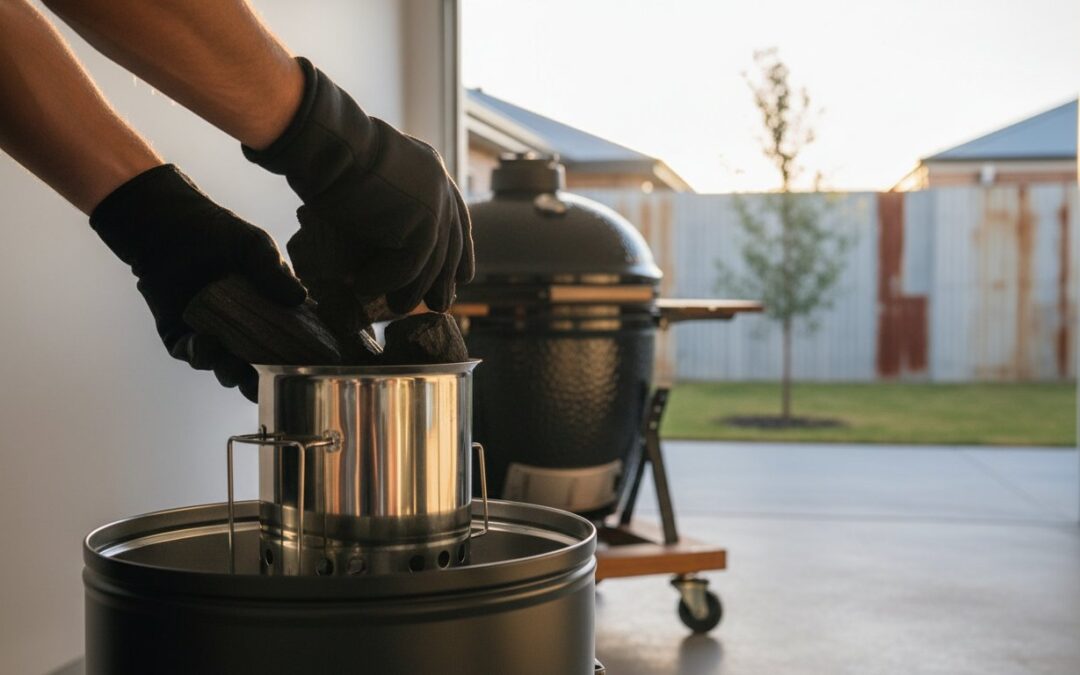
Moving 20kg of fuel from the garden shed to the smoker shouldn’t be a workout. Wheeled bins allow you to transport your entire supply with zero heavy lifting. Professional setups often use a two-tier system: a large “master bin” for bulk storage and a smaller “working bin” for daily use. This method ensures your main natural hardwood charcoal supply stays sealed and dry, while you only expose a small amount to the air during your cook. For those managing multiple fuel types, use stackable bins to keep your lump charcoal, briquettes, and fruitwood chunks organized and labeled. Investing in professional charcoal storage solutions pays for itself by reducing wasted, damp fuel that refuses to ignite. Get Sizzlin’!
Storage Nuances: Lump, Briquettes, and Binchotan
Effective charcoal storage solutions depend entirely on the physical properties of your fuel. Natural lump charcoal features a massive, irregular surface area. This porous structure acts like a sponge for atmospheric moisture. When lump charcoal absorbs water, it becomes difficult to light and produces excessive sparks and “pops” during ignition. High-quality hardwood lump must stay bone-dry to maintain its ability to reach temperatures exceeding 600 degrees Celsius.
Briquettes present a different challenge. Most contain natural binders, such as cornstarch, to maintain their uniform shape. In high-humidity environments across Australia, these binders soften. Damp briquettes often crumble into dust before they even reach the chimney starter. This dust restricts airflow and smothers your fire. Store briquettes in rigid, airtight bins to prevent them from absorbing moisture and losing their structural integrity.
Preserving the King of Fuels: Binchotan
Binchotan, or Japanese White Charcoal, is the densest fuel available. It’s fired at temperatures near 1000 degrees Celsius, giving it a metallic, glass-like finish. Because of this density, it’s less prone to moisture absorption than standard lump. However, Binchotan is highly sensitive to temperature shocks. Storing it in a damp garage and then placing it directly over a high-heat starter can cause the logs to crack or “ping” loudly.
Professional chefs use a Keshitsubo (extinguishing pot) to save partially burned Binchotan. This airtight ceramic or metal pot cuts off oxygen, preserving the charcoal for your next cook. Once cooled, keep your Binchotan in a dry, stable environment. For more details on handling this premium fuel, see our Binchotan Charcoal: The Ultimate Guide to Japanese White Charcoal.
Stacking and Seasoning Smoking Woods
Smoking wood requires a balance of moisture. Unlike charcoal, wood needs a seasoning level of roughly 15% to 20% moisture to produce “sweet” blue smoke. If the wood is too dry, it burns too fast and loses its aromatic oils. If it’s too wet, it produces bitter, creosote-heavy smoke.
- Airflow: Store wood chunks in mesh bags or crates. Air must circulate to prevent mould and rot.
- Ground Clearance: Keep wood logs at least 150mm off the ground. In Australia, this is your first line of defence against termite infestation and “white ants.”
- Separation: Keep your fruitwoods away from your heavy hardwoods to prevent cross-contamination of scents.
Proper stacking ensures your fuel is ready for the firebox every time. Learn the specifics of wood management in our Firewood: The Complete Australian Guide to Choosing, Seasoning & Burning. Using these charcoal storage solutions ensures your premium fuel performs exactly as intended. Get Sizzlin’!
Managing Charcoal Storage in the Australian Climate
Australia’s diverse weather patterns demand specific charcoal storage solutions to maintain fuel integrity. From the salt-heavy air of the Gold Coast to the bone-dry heat of the Nullarbor, your environment dictates how you protect your investment. Premium hardwood charcoal is highly porous. It absorbs moisture and odors from its surroundings, which directly impacts your burn temperature and smoke quality.
In coastal regions, salt air accelerates corrosion on metal storage bins. If you use steel drums, ensure they’re powder-coated or galvanized to prevent rust flakes from contaminating your fuel. For those in Queensland or the Northern Territory, tropical humidity is the primary enemy. Relative humidity levels often exceed 85%, turning unprotected charcoal into a damp, difficult-to-light mess. Airtight seals are mandatory in these zones to keep the moisture out.
Southern and Western Australian grillers face dry heat and dust. Constant exposure to 40°C temperatures makes charcoal brittle. Brittle fuel breaks down into “fines” or dust, which chokes airflow in your smoker. In Victoria and Tasmania, winter nights bring the risk of condensation. When warm day air hits a cold metal bin at night, moisture beads form on the inside. Using a heavy-duty plastic liner inside your bin stops this internal sweating from ruining your fuel.
The Off-the-Floor Rule
Don’t store your charcoal bags directly on a concrete garage floor. Concrete acts like a sponge, drawing groundwater up through capillary action even in dry weather. This moisture transfers directly into the paper or plastic bags, causing the bottom layer of charcoal to degrade. Use timber pallets or industrial shelving to create a thermal break. Maintaining a 10cm gap between the ground and your fuel can extend its usable life by six months by preventing moisture absorption.
Pest Prevention in the Shed
Rodents view a bag of charcoal as a premium nesting site. They chew through paper packaging to find shelter, leaving droppings that create significant hygiene risks for your next cook. Insects like Redback spiders also frequent the dark, stable gaps found in piles of lump charcoal. Switching to hard-sided, lockable containers prevents these pests from accessing your fuel. It keeps your cooking area clean and ensures your charcoal remains food-safe and ready for the grill.
Ready to upgrade your fuel? Buy premium natural hardwood charcoal from the experts who understand Australian conditions.
From Storage to Sizzle: Maximising Performance
The success of your cook starts long before you strike a match. Moisture is the silent killer of high-performance grilling. Dry charcoal lights 50% faster than fuel that has been neglected in a damp garage or left in an open bag. When charcoal absorbs moisture, the energy of your fire is wasted evaporating water instead of creating heat. This results in stubborn ignition and inconsistent temperatures that can ruin a weekend cookout.
Quality storage directly impacts the flavour of your meat. Clean charcoal storage solutions prevent the fuel from absorbing ambient odours or developing mould. Damp fuel produces thick, acrid white smoke that coats your food in a bitter creosote film. By keeping your fuel bone-dry, you ensure the fire produces the “thin blue smoke” sought after by professional pitmasters. This clean burn allows the natural aromatics of the hardwood to enhance the food rather than overpower it.
The Charcoal Kings Brand Promise
We provide the hottest and longest-lasting coals in Australia. Our Redneck and Standard grades are 100% natural hardwood, free from chemicals and fillers. Because our charcoal is a pure, organic product, it’s naturally porous and will draw moisture from the air if left unprotected. We recommend heavy-duty, airtight containers for all our fuel to maintain its premium performance. To understand the science behind our different fuel types, check out Charcoal: The Ultimate Guide to Fuelling Your BBQ.
Get Sizzlin’ with Confidence
Audit your storage setup today to ensure your next session is a success. Proper storage is the secret to achieving the rock-solid temperature stability required for “Low and Slow” cooking. If your fuel is compromised, your vents won’t respond predictably, making a 12-hour brisket stall much harder to manage. High-quality charcoal storage solutions give you total control over the firebox. Use this 30-second routine before every cook:
- The Touch Test: Reach into the bin. The charcoal should feel dusty and bone-dry, not cold or tacky.
- The Snap Test: Small pieces should snap cleanly with a sharp crack. If they bend or crumble silently, they’ve absorbed moisture.
- The Bin Check: Ensure the seal on your container is free of debris and the lid locks down tight.
- The Visual Audit: Look for any discolouration or white spots on the fuel that might indicate dampness.
Don’t let poor storage habits compromise your investment in premium fuel. Get your gear sorted, protect your hardwood, and get sizzlin’ with the confidence of a true Charcoal King. Shop our latest accessories and fuel stocks to level up your BBQ game.
Secure Your Fuel for the Ultimate Cookout
Investing in high quality fuel is only the first step toward a perfect sear. If you let humidity or rain reach your stash, you’re looking at slow ignition and excessive smoke. Effective charcoal storage solutions like airtight containers are mandatory in the Australian climate to keep your fuel ready for action. Whether you’re using dense lump or traditional briquettes, moisture protection ensures a clean burn every time. Charcoal Kings is a specialist in premium natural hardwood charcoal, serving both wholesale and retail customers across the country. Every batch is manufactured with zero chemicals, providing a pure flavor profile that won’t be compromised by additives. Our products are designed for performance, offering reliable burn times that often exceed 4 hours for standard grades. Protect your investment and ensure your next BBQ is a success.
Protect your fuel and Get Sizzlin’ with Charcoal Kings premium supplies!
Grab your gear and fire up the grill with confidence.
Frequently Asked Questions
Can I store charcoal outside if it’s in a waterproof bin?
You can store charcoal outside in a waterproof bin if the container features a rubber gasket or airtight seal. Exposure to Australia’s high humidity levels, which often exceed 70 percent in coastal regions, will degrade the fuel’s performance even without direct rain contact. A heavy duty polyethylene bin provides the best protection against moisture and pests. Keep the bin elevated off the ground to prevent condensation from forming at the base.
Does charcoal ever expire or go bad if kept dry?
Charcoal does not expire or go bad as long as you keep it 100 percent dry. Since premium lump charcoal is nearly pure carbon, it lacks the organic matter that rots or decomposes over time. Chemical additives in some cheap briquettes might degrade after 24 months, but natural hardwood charcoal remains effective for decades. Always check for a crisp snap sound when breaking a piece to ensure it hasn’t absorbed moisture.
How do I dry out charcoal that has accidentally become damp?
Dry out damp charcoal by spreading it in a single layer on a metal tray under direct sunlight for 48 hours. This method works best in low humidity environments where temperatures exceed 25 degrees Celsius. If the charcoal has become soft or crumbles easily, it’s likely absorbed too much water and should be discarded. Attempting to light wet charcoal produces excessive smoke and inconsistent heat, ruining your cook.
Is it safe to store charcoal inside the house or a garage?
Storing charcoal in a garage or garden shed is safe, but avoid keeping large quantities inside your main living areas. Charcoal produces fine carbon dust that can irritate respiratory systems and settle on furniture. Never store charcoal near open flames or water heaters, as the fuel is highly combustible. Ensure your storage area maintains a stable temperature to prevent the charcoal from sweating and losing its premium burning properties.
Should I keep charcoal in its original bag inside a storage container?
Keeping charcoal in its original multi wall paper bag inside a plastic container provides an extra layer of moisture protection. These bags are designed to handle the weight and abrasive edges of the fuel. Placing the entire bag inside one of your charcoal storage solutions prevents the bin from becoming coated in fine dust. This double layer method ensures your hardwood charcoal stays bone dry and ready for a high heat sear.
What is the best way to store partially burnt charcoal for the next use?
Save partially burnt charcoal by closing all grill vents to starve the fire of oxygen. Once the coals are completely cold to the touch, usually after 12 hours, shake off the excess ash and store them in a dedicated metal bucket. You can reuse these coals for your next session by mixing them with fresh lump charcoal. This practice reduces waste and helps you reach cooking temperatures faster.
Do different types of charcoal (lump vs briquette) need different bins?
Both lump charcoal and briquettes can use the same types of bins, but lump charcoal requires 30 percent more volume due to its irregular shapes. Briquettes are uniform and stack tightly, whereas premium natural hardwood lump needs room to breathe. Ensure your chosen charcoal storage solutions are tall enough to accommodate large chunks without crushing them. Using separate bins for different fuel types helps you manage your inventory effectively.